


A low voltage contractor's phone rings when a fire alarm fails inspection or a building's access control system goes down, not on a predictable schedule. That urgency, combined with licensing requirements and long commercial sales cycles, makes Google Ads a different game for this trade than for most local services. Many contractors also lose ground to incomplete account data, which hampers personalization and causes missed segmentation or targeting opportunities. Google Ads gives low voltage contractors a way to reach facilities managers, property developers, and homeowners at the exact moment they're searching for electrical services. Mastering search intent, tightening data accuracy, and optimizing for local leads turns that visibility into qualified traffic and booked jobs.
How to Generate Leads with Google Ads for Low Voltage Contractors: A Step-by-Step Guide

Precision matters more in low voltage contracting than in most trades, because bidding environments are competitive and a single missed lead can mean a lost commercial contract. An optimized Google Ads strategy pinpoints high-intent buyers, cuts wasted spend, and positions your business as the preferred vendor for complex, compliance-driven projects.
Commercial buyers in this space, facilities managers, general contractors, property developers, expect fast, relevant answers, often while comparing bids under a deadline. Revenue teams that pair sharp ad targeting with integrated data workflows consistently beat peers on cost per lead and conversion rate. For a deeper look at setting up and optimizing Google Ads for electricians and related trades, see this comprehensive guide for electricians. The step-by-step guide below covers how to deploy Google Ads for low voltage contractors, with practical detail for maximizing local leads and campaign ROI.
- Research and Identify Target Keywords: Start by building a robust keyword list focused on the specific services and solutions you offer. Highly targeted phrases such as "structured cabling installers," "commercial access control integration," or "fire alarm system contractors" capture buyers searching for expertise. Incorporate location-based modifiers and terms addressing urgent needs, like "emergency low voltage repair near me," to improve your ad relevance for local leads. By analyzing intent data signals, you can surface hidden opportunities and prioritize keywords that consistently drive high-value inquiries.
- Develop Audience Segmentation: Audience segmentation is foundational for matching messaging to buyer intent. Segment campaigns for commercial facilities, multi-family residences, and industrial projects, as each group has distinct pain points and decision criteria. For example, facilities managers may seek compliance documentation, while homeowners prioritize smart home integrations. Utilizing real-time audience insights allows you to dynamically adjust targeting as prospects move from research to purchase intent, ensuring your ads remain visible to those most likely to convert.
- Optimize Landing Pages: High-converting campaigns rely on landing pages tailored to each ad group’s promise. Align your landing page headlines, copy, and visuals with the exact service featured in your ad. For B2B commercial clients, include certification badges, downloadable technical documentation, and trust-building project case studies. For homeowners, showcase testimonials, interactive calculators, and visual portfolios. When site analytics are tightly integrated with your ad campaigns, real-time engagement data can reveal friction points, enabling rapid landing page optimization to lift conversion rates.
- Utilize Negative Keywords: Filtering out irrelevant traffic is crucial for improving campaign efficiency and reducing cost per lead for electrical services. Add negative keywords such as "DIY," "free," "training," or "job openings" to focus spend on prospects most likely to convert. As buyer behavior evolves, predictive models can recommend new negative terms and flag irrelevant search trends, helping you continually refine your keyword lists and audience pools for optimal performance.
With these steps, low voltage contractors can build a demand generation engine that quickly surfaces high-quality leads. Integrating advanced data unification and intent analytics further amplifies these strategies, enabling revenue teams to sync enriched audiences, measure true pipeline impact, and dynamically optimize spend as market conditions shift. To experience the benefits of advanced marketing analytics firsthand, get started for free with Sona and unlock measurable business value across each stage of the buyer journey.
Why Does Google Ads Matter for Low Voltage Contractors?

Low voltage contractors operate in a complex, highly specialized market where lead quality and speed of response directly impact revenue. Google Ads delivers a powerful channel to reach decision-makers precisely when they need solutions, whether for urgent repairs, system upgrades, or new installations. By capturing search intent at the moment it peaks, contractors ensure their expertise stands out to commercial managers, property developers, and facilities directors who are actively seeking technical partners, see this comprehensive guide on Google Ads for electricians for actionable campaign strategies.
With the ability to serve tailored ads to high-value prospects, Google Ads empowers low voltage businesses to bypass generic inquiries and focus on stakeholders most likely to convert. Targeting capabilities refine outreach to those specifying compliance requirements or searching for advanced certifications, minimizing wasted spend and maximizing project win rates. When enriched with precise audience intelligence, campaigns become even more agile: marketers can identify which companies are showing real-time buying intent and immediately shift budget to the accounts most likely to generate results.
Access to granular historical conversion data reveals which services produce the highest margins, allowing contractors to prioritize campaigns for large-scale installations and complex upgrades. With dynamic audience updating, those who move deeper into the sales funnel receive more relevant messaging, increasing efficiency and ROI. Immediate follow-up to emergency service requests becomes achievable, as enriched lead signals are synced directly to sales and CRM systems, ensuring no opportunity is lost to slow response.
For low voltage contractors aiming to expand into new neighborhoods or emerging regions, Google Ads provides precise local targeting. Businesses can quickly gain a foothold in underserved areas by analyzing demand signals and adjusting geographic coverage on the fly. This agile approach grows market share and maintains visibility where competition is low and margins are highest, while advanced campaign measurement tools attribute success to each touchpoint, proving true ROI at every stage. Ready to improve your results? Get started for free with Sona.
Common Types of Google Ads Campaigns for Low Voltage Contractors
Search, Display, Video, and Remarketing are the core campaign types below; Performance Max is worth adding to the mix for contractors who want Google's automation to manage bidding and placement across Search, Display, YouTube, and Maps from a single campaign, particularly useful for smaller teams without dedicated PPC staff.

- Search Campaigns: Search campaigns offer low voltage contractors immediate access to buyers actively seeking specialized services, from a property manager searching "fire alarm inspection company" to a homeowner typing "smart home wiring near me." Responsive search ads, an ad format within Search rather than a separate campaign type, let you test multiple headlines and descriptions to see which combinations convert best for each service line. Advanced tools now allow marketers to use predictive analytics, helping identify and prioritize search intent from companies most likely to convert. With enriched visitor identification and real-time behavioral insights, revenue teams can shift spend toward the highest-value opportunities, ensuring every dollar accelerates pipeline development and delivers measurable Google Ads ROI for contractors.
- Display Ads: Display ads keep your business visible across industry-relevant sites between the moment a facilities director first researches a system upgrade and when they're ready to request a quote, a gap that can span weeks for large commercial projects. Segmentation matters here: target decision-makers within specific verticals or geographies using behavioral and firmographic data. For a broader overview of Google Ads strategies for attracting local electrical customers, review this external guide. When these campaigns connect to unified data sources, audiences update automatically as leads move through the funnel, keeping messaging relevant throughout the buyer journey.
- Video Ads: Video ads enable contractors to showcase complex installations, system integrations, and technical differentiators in a format that builds trust and conveys expertise. Professional video content helps demystify advanced solutions, such as structured cabling or access control, while highlighting successful projects and customer testimonials. When combined with dynamic audience modeling, video campaigns can retarget viewers based on their engagement level, ensuring follow-up ads align with their specific interests and stage in the buying cycle.
- Remarketing: Remarketing campaigns reconnect with visitors who researched a service, structured cabling, access control, fire alarm systems, but left without requesting a quote, a common pattern for commercial buyers comparing multiple vendors before committing. By leveraging CRM-driven insights, segment audiences based on on-site behavior, service interest, and deal stage, personalizing follow-up messages to their specific needs. When enriched lead data and conversion outcomes sync across platforms, remarketing lists become more accurate and actionable, driving higher engagement and lowering cost per lead.
Where to Find Growth Opportunities

Growth within the low voltage contracting sector demands a data-centric approach that uncovers new market segments and channels. Sustained expansion comes from combining deep industry knowledge with advanced digital marketing tactics that zero in on untapped leads and high-conversion accounts. Exploring proven strategies for Google Ads for electricians can help you optimize campaigns for quality lead generation, while leveraging real-time audience segmentation keeps your targeting precise and adaptive.
- Keyword Targeting: Leveraging industry-specific search terms such as "low voltage contractor advertising strategies," "Google Ads for contractors," and "PPC for low voltage" ensures campaigns reach buyers searching for specialized expertise. Using granular keyword research allows your ads to surface for queries closely aligned with your services, reducing wasted spend and increasing cost per lead efficiency. As search patterns shift, dynamic keyword targeting can help you identify rising terms in niche verticals like security systems integration, structured cabling, or AV automation. With unified intent data, marketers can adapt their keyword portfolios in real time, prioritizing those that signal purchasing readiness and reallocating budget to proven high-conversion queries.
- Competitor Analysis: Monitoring the competitive landscape reveals underserved markets and keyword gaps your business can target. Digital tools enable a detailed breakdown of competitors’ ad copy, landing pages, and budget allocation, allowing you to benchmark performance and discover segments with lower competition but high intent. Identifying which service lines and geographies are overlooked by others helps you tailor offers and content to fill that void, driving a steady stream of qualified leads. To further refine your approach, explore actionable marketing playbooks that outline tactics for outperforming competitors and surfacing new opportunities.
- Content Retargeting: Educational assets like technical guides, installation walkthroughs, and compliance checklists attract engaged prospects early in the buying cycle. Retargeting those who interact with your content, such as visiting a smart building design page or downloading a wiring standards whitepaper, reinforces your authority and keeps your brand top of mind as they progress toward a purchase. Advanced retargeting solutions enable segmentation by engagement level and funnel stage, allowing for increasingly personalized follow-up ads and nurturing sequences. Marketers can automatically sync these high-intent audiences into platforms like Google Ads, ensuring timely, relevant outreach that accelerates conversion while minimizing ad waste.
Recognizing gaps in current targeting strategies hinges on observing behavioral patterns and audience interactions across digital touchpoints. By analyzing which segments engage most with specific services or content types, refine messaging and placements for each stage of the customer journey. This keeps campaigns focused on decision-makers with the highest propensity to convert, while adaptive audience building keeps your targeting fresh as new opportunities surface.
How to Apply Audience Segmentation for Low Voltage Contractors
Audience segmentation ensures low voltage contractors connect with the right prospects at the right stage of their buying journey. By structuring campaigns around clear audience distinctions, marketing teams deliver relevant messaging that aligns with genuine customer needs, improving conversion rates and campaign efficiency.
- Define Segments: Start by differentiating between commercial property managers, residential homeowners, and industry-specific buyers such as facility directors or IT leads. Separate urgent requests like emergency repairs from longer sales cycles such as new system installations or planned upgrades. This distinction allows for nuanced messaging and bid strategies, maximizing relevance and reducing wasted spend. Dive into audience segmentation playbooks for practical frameworks.
- Overlay Intent Signals: Use behavioral and contextual cues to determine where each audience is in their decision process. For example, searches for "emergency access control repair" signal immediate intent, while queries like "best building automation systems" indicate research-phase interest. Real-time engagement signals help shift budget and messaging to high-converting segments, especially when combined with visitor identification technology that turns anonymous web traffic into actionable contacts for follow-up.
- Create Customized Ad Groups: Tailor ad groups and creative to each segment, using language and offers that address their specific pain points. For commercial buyers, focus on compliance, scalability, and ROI of system upgrades. For residential leads, emphasize convenience, safety, and smart home integration. Platforms that enable dynamic audience updates ensure prospects are automatically moved between segments as they engage with your content or demonstrate new intent, keeping ad delivery relevant as leads progress through the funnel.
Data-driven segmentation also improves CRM and ad platform sync, feeding enriched audience lists and conversion data into Google Ads and sales pipelines. This increases the precision of Google Ads targeting for electricians and low voltage contractors, and provides closed-loop attribution, showing true ROI across both online and offline touchpoints. The result is a measurable lift in cost per lead efficiency and a sustainable pipeline of high-intent, qualified opportunities.
This is also where measurement changes the economics. With Sona Marketing Measurement you can identify the companies and buyers behind your ad clicks, not just anonymous sessions, and segment audiences by who actually becomes a customer. That lets you build bid adjustments and audience signals around the segments that convert and de-prioritize the ones that don't, so you feed Google's algorithms "this click became a paying low voltage contractors customer" instead of just "someone filled out a form."
Keyword Strategy & Sample Target Terms
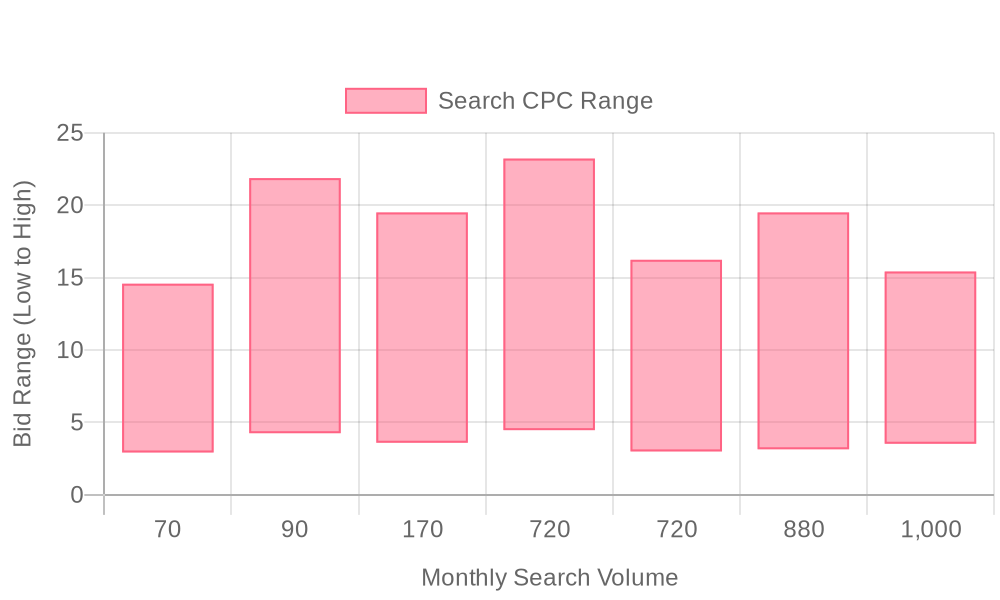
| Industry | Keyword | Monthly Search Volume | Competition Level | Low Bid | High Bid |
| Low Voltage Contractors | low voltage wiring contractors near me | 70 | LOW | 2.93 | 14.58 |
| Low Voltage Contractors | low voltage installers near me | 90 | MEDIUM | 4.26 | 21.87 |
| Low Voltage Contractors | low voltage wiring contractors | 170 | MEDIUM | 3.6 | 19.5 |
| Low Voltage Contractors | low voltage contractors near me | 720 | MEDIUM | 4.47 | 23.22 |
| Low Voltage Contractors | low voltage companies | 720 | MEDIUM | 3 | 16.23 |
| Low Voltage Contractors | low voltage companies near me | 880 | MEDIUM | 3.15 | 19.5 |
| Low Voltage Contractors | low voltage contractors | 1000 | MEDIUM | 3.53 | 15.42 |
Driving qualified demand for low voltage contractors begins with a meticulous keyword strategy that aligns with buyer intent and market realities. Success hinges on understanding how commercial and residential clients search for specialized services, as well as implementing tactical controls to eliminate wasteful ad spend. For examples of how digital marketing is transforming the trades, see this academic paper on digital marketing for trade professionals, or explore further insights from our blog articles on marketing and analytics.
- Primary keyword focus: Incorporate high-value phrases such as 'low voltage contractor advertising strategies', 'Google Ads tips for low voltage businesses', and 'PPC management for low voltage companies'. These core terms capture both the service niche and digital marketing objectives, ensuring that campaigns reach decision-makers actively seeking expertise in security systems, structured cabling, or building automation. Supplementary targeting with 'Google Ads for contractors' and 'local leads for electrical services' further extends reach into related buying scenarios. For step-by-step guidance, check out our actionable playbooks for demand generation.
- High-intent and local keywords: Emphasize actionable, geo-specific queries like 'best low voltage installer near me', 'local security system contractors', or 'commercial AV integration in [city]'. These terms connect with prospects ready to engage, driving higher conversion rates and reducing the cost per lead for electrical services. Pairing these keywords with real-time audience segments ensures your campaigns target the right prospects at the right time.
- Negative keyword refinement: Prevent budget drain by actively excluding irrelevant searches with modifiers such as 'DIY', 'amateur', or 'free training'. This targeted filtration ensures that PPC for low voltage campaigns prioritize professional buyers and serious project initiators. Discover best practices for refining your Google Ads campaigns to maximize ROI and reduce wasted spend.
Modern platforms let marketing teams go beyond manual keyword selection. Analytics and AI-driven tools continuously analyze search volumes, intent signals, and evolving market language, surfacing predictions for which keywords drive revenue outcomes. This lets marketers adapt bidding dynamically, focusing spend on audiences showing strong in-market intent. When visitor identification and CRM sync are integrated, marketers can match anonymous clicks to known companies, updating audience segments as leads move through the funnel. Low voltage marketing teams can then prioritize budget on accounts with the highest likely ROI and measure true impact, online and offline, at each stage of the customer journey.
Step-by-Step Campaign Execution Framework
Step 1: Build Targeted Keyword Lists
Precision in keyword selection is the foundation of successful Google Ads for Low Voltage Contractors. Start by segmenting keywords according to specific service lines such as access control, structured cabling, or security system installation. Organize each group by intent, from immediate project needs ("emergency low voltage repair") to longer research cycles ("commercial building automation solutions"). This structure allows for granular budget allocation and tailored messaging, ensuring every ad dollar targets relevant, high-intent searches. For a comprehensive overview of effective strategies, check out this Google Ads for Electricians guide.
With advanced data platforms, marketers can move beyond basic keyword tools. By analyzing in-market behaviors and historical engagement, you can identify not just what prospects are searching for, but which companies and decision-makers are most likely to convert. This enables real-time adjustment of keyword portfolios based on live funnel movement, keeping campaigns focused on the highest-value opportunities at all times.
The upgrade most low voltage contractors advertisers miss is going beyond raw keyword volume to layer in intent and identity signals. By connecting website-visitor data and CRM records with Sona Marketing Measurement, you can see which specific search terms bring in the accounts and customers that actually convert, and weight your keyword and bidding strategy toward those rather than the terms with the highest search volume alone.
Step 2: Develop Compelling Ad Copy
Effective ad copy for electrical contractor PPC requires a clear understanding of buyer pain points and the specific outcomes they seek. Instead of generic messaging, reference industry standards, compliance requirements, and rapid response capabilities that resonate with both commercial and residential buyers. Highlight tangible results such as faster project completion, minimized downtime, or certified expertise. For more detailed tactics, visit our blog post on Google Ads for electricians.
Sophisticated campaign frameworks allow for dynamic message personalization, automatically updating ad copy as leads progress through the sales funnel. By syncing CRM and website engagement data into Google Ads, your team can serve hyper-relevant offers, such as free site audits or urgent service discounts, only to those accounts signaling strong purchase intent. This approach maximizes click-through rates and drives higher lead quality.
Step 3: Design Effective Landing Pages
Landing pages for low voltage marketing must deliver direct continuity from the ad to the solution. Each page should focus on a single service, reinforce credibility with certifications and case studies, and provide clear next steps for both urgent requests and complex RFPs. See this step-by-step article on Google Ads for electrical contractors to learn more about connecting ad campaigns to high-converting landing experiences.
Integrating audience data with landing page experiences ensures that content adapts to each visitor’s unique profile. For example, if a facility manager from a targeted account clicks through, the landing page can automatically surface enterprise project testimonials, compliance checklists, and scheduling tools tailored to commercial needs. This level of contextual relevance improves conversion rates and shortens sales cycles.
Step 4: Implement Data-Driven Optimizations
Continuous optimization is vital for maximizing Google Ads ROI for contractors. Monitor campaign performance on a granular level, tracking not just clicks and impressions but also offline conversions, project values, and sales velocity. Use these insights to adjust bids, pause underperformers, and double down on high-converting segments. For additional insights into optimizing campaigns, check out this academic analysis of digital marketing for trade professionals.
Advanced marketing platforms empower revenue teams by unifying campaign performance and CRM data in real time. This enables quick pivoting of budget toward top-performing keywords, automatic retargeting of engaged accounts, and seamless syncing of enriched lead data into sales workflows. As a result, every dollar invested in advertising for electricians and low voltage contractors delivers measurable, compounding value across both marketing and sales pipelines.
Sona Marketing Measurement closes the gap between clicks and revenue. It captures ad clicks with first-party measurement rather than third-party cookies, then ties that click through UTM capture and ad-platform APIs to the actual record in your CRM, and reports ROAS by keyword and campaign instead of by last-click form fill. Feeding that revenue signal back into Smart Bidding and Performance Max compounds over time: the algorithms optimize toward booked low voltage contractors revenue, not cheap leads.
Tips on Expanding Your Low Voltage Presence

Low voltage contractors have a unique opportunity to elevate their market presence by extending beyond standard digital marketing tactics. Success comes from integrating precise campaign management with actionable insights that reveal where and how to invest resources for maximum growth. For a comprehensive overview of Google Ads strategies tailored to electricians, check out this guide to Google Ads for electricians.
- Cross-Promote Content: Repurpose existing educational assets such as installation guides, project case studies, or compliance checklists in targeted retargeting campaigns. By analyzing engagement metrics across previous campaigns, contractors can identify which materials resonate most with high-intent segments and use these learnings to increase the relevance of follow-up ads. Leveraging real-time audience platforms, marketers can pinpoint when a prospect interacts with a particular piece of content, then activate audience-specific ads or nurture sequences that reflect those interests. This not only extends the value of each asset but also ensures prospects remain engaged as they move through the decision-making journey.
- Service Upsell: Segment audiences based on enriched CRM data and historical behavior to surface complementary services at the right moment. For example, a business that recently inquired about structured cabling can be offered access control or surveillance upgrades through personalized ad copy and landing pages. Data unification tools allow contractors to identify accounts likely to require add-ons and sync these insights directly into Google Ads audiences. This dynamic approach ensures upsell offers are timely and relevant, driving higher conversion rates and improving cost per lead for electrical services.
- Localize Campaigns: Tailoring ads to specific regions helps build trust and brand recognition within target communities. Contractors can analyze location-based performance metrics to refine geotargeting, ensuring messaging and offers reflect local codes, incentives, or use cases. Through platforms that unify campaign data and provide real-time intent scoring, advertisers can instantly adjust budget allocation to regions displaying increased demand, capitalizing on signals such as recent permit filings or spikes in local search activity. This precision not only boosts local leads for electrical services but also ensures cost efficiency as spend is concentrated on high-value markets.
By adopting these strategies, low voltage contractors can overcome common challenges in lead personalization and engagement. Unified data insights help teams streamline campaign execution, keep messaging relevant, and drive sustainable growth across both established and emerging service lines.
Beyond Google Ads: Winning the AI Answers Low Voltage Contractors Buyers Now Trust
Paid search captures demand at the moment someone types a query. But a fast-growing share of low voltage contractors buyers no longer start at Google at all, they ask ChatGPT, Gemini, or Perplexity before they ever run a search, and Google's own AI Overviews increasingly summarize an answer above the traditional results. If your business isn't referenced in those AI answers, you're invisible at the exact moment buyers build their shortlist.
Sona AI Visibility shows where your business shows up across ChatGPT, Gemini, Perplexity, Google AI Overviews, and 10+ engines, and, much like a keyword report, which prompts actually send you buyers, so you can prioritize the ones that convert. Run the two together and you cover the entire buyer path: get cited where buyers research (AI Visibility), then prove which of that demand turns into booked revenue (Marketing Measurement).
Helpful resources
Conclusion
Precise advertising strategy, not broad spend, is what separates low voltage contractors who win commercial bids from those competing on price alone. Understanding the sector's compliance requirements, long B2B sales cycles, and urgent residential calls lets you tailor campaigns that maximize ROI and drive real growth.
The contractors pulling ahead are the ones connecting ad spend to which clicks actually became signed contracts, then feeding that signal back into their bidding and keyword strategy. As more buyers start their research in AI chat tools instead of a search bar, visibility in those answers will matter as much as ranking on the search results page. Contractors who invest now in both precise Google Ads targeting and AI visibility will hold a real advantage over competitors still relying on guesswork.
FAQ
What are the best practices for Google Ads for low voltage contractors?
Best practices include researching and identifying target keywords, developing audience segmentation, optimizing landing pages, and using negative keywords to filter out irrelevant traffic.
How can low voltage contractors effectively target local customers with Google Ads?
Low voltage contractors can effectively target local customers by incorporating location-based modifiers in their keywords and adjusting geographic coverage based on demand signals.
What budget should low voltage contractors allocate for Google Ads?
Low voltage contractors should allocate their budget based on high-intent keywords and audience segments, focusing on high-value opportunities and adjusting spend dynamically based on performance data.
Are there specific keywords that work best for low voltage contractors in Google Ads?
Keywords that work best include industry-specific phrases like 'structured cabling installers' and 'emergency low voltage repair near me,' as well as geo-specific and high-intent terms.
How do I measure the success of my Google Ads campaigns as a low voltage contractor?
Success can be measured by monitoring campaign performance metrics such as cost per lead, conversion rates, and using advanced analytics to track real-time engagement and conversion outcomes.







