


Patent infringement notices and trademark disputes don't wait for business hours, and the attorneys who win these clients are often the ones who show up first in a Google search. Credible opportunities often slip through the cracks, in part because decision-makers visit a firm's site without leaving a trace in the CRM, so the lead disappears before anyone follows up. Modern tools now let firms identify the companies behind that anonymous traffic and put ad spend against real decision-makers with real intent. Google Ads gives IP attorneys a direct way to reach high-intent searchers at the moment they need counsel, and it works best as one part of a broader strategy that also includes SEO and content. For IP attorneys, that means intercepting prospects the moment they search "patent law specialists near me" or "trademark attorney services", queries usually driven by an immediate, sometimes urgent, legal problem.
How to Generate Intellectual Property Attorney Leads with Google Ads: A Step-by-Step Guide

Intellectual property law firms compete for clients who often start their search only after a dispute, deadline, or filing decision has already become urgent. Reaching them at that moment requires a data-driven approach that puts real-time intent signals to work inside Google Ads.
Modern revenue teams no longer settle for anonymous web traffic or imprecise conversion measurement. By unifying cross-channel data, marketers can recognize specific companies and individuals engaging with their IP law content, enabling immediate, relevant follow-up that shortens sales cycles and boosts return on ad spend.
- Implement a Data-Driven Approach: Passive lead capture isn't enough in a field where urgency and specialization drive the decision. Identifying the companies behind site visits and layering behavioral insight across Google Ads, web, and CRM channels ensures no high-value inquiry, a general counsel researching patent litigation firms, say, goes unnoticed. With intent signals and real-time engagement tracking, marketing teams can surface in-market companies and route them to sales or nurture campaigns, speeding up conversion for intellectual property law advertising.
- Keyword and Audience Targeting: Selecting keywords tailored to IP law, such as "intellectual property legal advice" or "patent application attorney," is essential for reaching relevant searchers. Enhanced account-level insights enable teams to refine Google Ads audiences dynamically, focusing spend on users and businesses that exhibit active research or purchasing behavior. As prospects progress through the funnel, audiences update in real time, allowing for precise retargeting and message personalization that aligns with each stage of the client journey.
- Landing Page Optimization: Successful Google Ads for Intellectual Property Attorneys depend on seamless alignment between ad messaging and landing page experience. Dedicated pages for each service area, patents, trademarks, copyright, improve conversion rates by delivering context-specific value and clarity. By monitoring visitor behavior, marketers can identify which segments require additional nurturing and trigger tailored follow-up sequences, ensuring that high-value leads remain engaged until they are ready to convert.
- Performance Optimization: Continuous improvement is at the core of effective lawyer PPC campaigns. A/B testing of headlines, calls to action, and landing page elements reveals what resonates with IP law prospects, while advanced conversion tracking connects online and offline outcomes for true campaign ROI measurement. Accurate timing of ad exposure and follow-up increases engagement rates, as outreach is calibrated to coincide with demonstrated interest or critical legal events. This integrated feedback loop enables teams to refine strategies, allocate budget to top-performing segments, and deliver measurable growth in client acquisition for attorneys specializing in intellectual property.
By implementing these steps with a unified data infrastructure, law firms can transform Google Ads from a basic lead generation tool into a comprehensive engine for B2B demand generation, positioning their brand at the forefront of digital marketing for lawyers. To experience how unified data and audience insights can accelerate your firm’s growth, get started for free with Sona.
Why does Google Ads matter for Intellectual Property Attorneys?

Intellectual property attorneys operate in a space defined by complexity and urgency, where the audience often requires nuanced solutions to specialized legal challenges. Google Ads for lawyers enables these firms to connect directly with clients who are actively seeking resolution for patent disputes, trademark registrations, or copyright protections, making it possible to reach high-intent prospects at the moment of need. Marketers in this field must maintain consistent messaging across all digital touchpoints, ensuring that every interaction reinforces the firm’s expertise and credibility.
The financial upside for IP law firms is significant, as targeted ads can attract complex cases with higher margins. By leveraging Google Ads, attorneys showcase their depth of knowledge and secure projects that demand technical acumen. Without clear buyer signals, sales teams risk approaching leads with generic outreach, which can reduce conversion rates and erode trust. Google Ads provides these signals in real time, allowing firms to prioritize opportunities with the greatest revenue potential.
Immediate demand response is another compelling advantage. Potential clients often face urgent IP issues, an infringement notice, a filing deadline, and expect prompt legal counsel. Google Ads delivers instant visibility, ensuring attorneys appear front and center when a search signals a time-sensitive need. Sona's Identity Resolution can reveal visitor intent and behavior, letting teams redirect budget toward campaigns that capture this demand and convert it.
Geographic targeting in Google Ads allows IP attorneys to expand their reach into underrepresented regions or niche segments of the market. Precision targeting ensures that marketing efforts are not wasted on irrelevant audiences but instead focus on areas with concentrated innovation or underserved entrepreneurial communities. Integrated data tracking connects these campaigns to broader marketing strategies, making it easier to measure impact and refine tactics over time.
Integrated data analysis is essential for demonstrating the ROI of digital marketing for lawyers. Closed-loop measurement enables firms to track the client journey from initial click to consultation, ensuring that every advertising dollar is accounted for. Solutions that attribute both online and offline conversions provide a full-funnel view of campaign performance, helping decision makers optimize spend and confidently scale what works in their lawyer PPC campaigns. Ready to unlock more value from your marketing? Get started for free with Sona.
Common Types of Google Ads Campaigns for Intellectual Property Attorneys

- Search Campaigns: Search remains the premier channel for converting high-intent legal queries into consultations. Intellectual property attorneys benefit from targeting precise intent, capturing prospects who need counsel now for patent filings, infringement disputes, or trademark registration. Responsive search ads, an ad format within these campaigns, let firms test multiple headlines and descriptions to find the combination that earns the click. Prioritizing these leads lets sales teams respond fast, shortening the cycle and improving the odds of winning the client. Layering in real-time visitor identification lets marketers move past anonymous clicks to see which companies or individuals show the strongest intent, sharpening follow-up and ad spend alike.
- Display Ads: Display campaigns extend brand visibility across legal news, industry blogs, and innovation-focused publications, ensuring law firms remain top-of-mind for organizations browsing IP-related content. This always-on presence supports broader law firm marketing strategies by reinforcing organic search efforts and positioning the firm as an authority in the intellectual property space. With enhanced data unification, marketers can automatically segment and retarget audiences who have engaged with specific legal topics, allowing display banners to nurture high-value prospects and drive them back to conversion-optimized landing pages. For actionable PPC tactics designed for IP attorneys, refer to this guide.
- Video Ads: Video advertising offers attorneys the ability to explain complex IP concepts, such as patent prosecution or copyright litigation, through engaging visual content. These campaigns are particularly effective for educating prospects at various stages of the client journey, from initial research to final decision-making. When paired with advanced intent signals, video ads can be dynamically served to prospects who have demonstrated interest in related services, ensuring that the right message appears exactly when it can accelerate a lead’s progression through the funnel.
- Remarketing: Remarketing campaigns empower IP attorneys to re-engage website visitors or previous leads who have shown prior interest in legal services but haven’t yet converted. Coordinated campaign execution ensures that tailored ads address each lead’s unique concerns, whether they previously viewed case studies or downloaded legal guides. By continuously syncing enriched lead and behavioral data between CRM systems and Google Ads, remarketing lists update in real time, enabling dynamic audience targeting and higher conversion rates as prospects move closer to engaging legal counsel.
- Assets: Ad assets (formerly called extensions) build credibility at first glance. Surfacing client reviews, office locations, and professional certifications directly in search results gives in-market decision-makers social proof and reassurance. Unifying data across reviews, service coverage, and attorney credentials allows for automated, contextually relevant asset updates, so prospective clients always see the most persuasive information to prompt a call or consultation request.
Ready to elevate your law firm's advertising strategy? Get started for free with Sona.
Where to Find Growth Opportunities in Intellectual Property Law Advertising

Leveraging niche growth opportunities in intellectual property law advertising requires a data-driven approach that pinpoints high-value prospects and maximizes account-based marketing investment. Firms that layer granular analytics onto their digital marketing for lawyers consistently outperform those that rely on generic campaigns. For teams seeking deeper insight on targeting and segmentation, Sona’s Audiences tool helps build dynamic, intent-based segments that auto-sync with ad platforms.
- Vertical Keyword Targeting: Identifying specialty services such as "patent portfolio management," "copyright litigation support," or "international trademark enforcement" allows law firms to capture intent-driven traffic. By analyzing the online research habits of innovation-driven companies, marketers can align Google Ads strategies for law firms to precisely match the language and pain points of decision-makers in technology, manufacturing, or creative sectors. This vertical targeting ensures ad spend is allocated to queries that signal urgent legal needs, increasing the likelihood of converting high-intent searches into qualified consultations and long-term client relationships.
- Competitor Gap Analysis: Using advanced analytics platforms, IP attorneys can reveal gaps in competitors' advertising for IP attorneys, uncovering under-served keyword clusters or underutilized placements. With account-level granularity, law firm marketing teams track which campaign elements drive the best performance, enabling continuous optimization and more efficient budget deployment. Integrating a unified data layer provides clear attribution, making it possible to identify when a new opportunity surfaces in the market or when a competitor reduces their share of voice on specific high-value keywords.
- Industry-Specific Placements: Investing in placements on IP law forums, patent databases, and legal directories ensures ad visibility directly in front of key decision-makers. These channels often attract inventors, in-house counsel, and R&D leaders actively searching for legal expertise. By aligning IP law advertising with the unique content and community standards of these industry touchpoints, firms can elevate brand credibility and trust, supporting both brand-building and lead generation goals.
- Content Retargeting: Engaging prospective clients with educational content, such as webinars on emerging patent law issues or downloadable whitepapers on global trademark strategies, extends the buyer journey beyond the initial click. Unifying visitor engagement data across sales and marketing channels means every touchpoint is tracked, enabling dynamic audience updates as leads progress from initial interest to qualification. This approach ensures PPC for intellectual property lawyers delivers personalized follow-up, increasing conversion rates and driving Google Ads ROI for lawyers. Marketers gain the ability to re-engage site visitors with contextually relevant offers, maximizing the value of every campaign interaction and supporting a seamless client acquisition for attorneys.
Ready to uncover new opportunities and optimize your campaigns? Get started for free with Sona.
How to Apply Audience Segmentation for Intellectual Property Attorneys

Audience segmentation is a cornerstone of effective digital marketing for lawyers, especially in the intellectual property space. Proper segmentation ensures that every advertising dollar is spent engaging the right decision-makers, elevating both the quality and relevance of your outreach. For more foundational tips, explore this overview of Google Ads for IP attorneys, which includes actionable segmentation strategies.
- Define Audience Segments: Start by categorizing prospects into clear groups, such as independent inventors, corporate IP departments, technology startups, and in-house general counsel. This granular approach allows your ads and messaging to address the specific challenges and decision criteria unique to each segment. When audience segments are aligned with service offerings, like patent prosecution for inventors or litigation support for corporate counsel, your campaigns bypass generic messaging and instead speak directly to immediate needs, which increases conversion rates and shortens sales cycles. For more ways to use segmentation in your campaigns, review Sona’s Audiences tool.
- Overlay Intent Signals: Integrate behavioral data such as recent patent filings, trademark searches, or engagement with IP-related content. Assigning high-value pages and behaviors to relevant audiences helps teams prioritize leads showing urgent buying signals. A visitor downloading a whitepaper on international patent disputes signals stronger intent than one browsing attorney bios. Using Sona's Intent Signals this way directs resources to the most conversion-ready prospects and cuts wasted spend.
- Create Ad Groups by Segment: Customize both ads and budgets for each audience, ensuring consistency across channels and reducing the risk of targeting errors. For example, ad creatives for inventors emphasize rapid patent filing and confidentiality, while ads for legal departments highlight portfolio management and ongoing counsel. Leveraging Sona’s Destinations feature, marketers can keep these segments up to date as leads move through the funnel, dynamically adjusting ad messaging and spend based on real-time engagement and qualification. For more on campaign setup, visit our B2B marketing playbooks.
- Validate Conversion Paths: Ensure that the journey from ad click to qualified consultation is seamless and measurable for each segment. Accurate tracking verifies that high-intent leads are guided to the right landing page, complete relevant forms, and are properly routed into your CRM for immediate follow-up. With advanced attribution and CRM integration, sales teams receive context-rich profiles, including specific interests and previous touchpoints, so outreach is timely and tailored. For a step-by-step guide to setting up tracking for law firms, see this Google Ads setup guide for lawyers. To see how seamless segmentation and attribution can drive your IP campaigns, get started for free with Sona.
This is also where measurement changes the economics. With Sona Marketing Measurement you can identify the companies and buyers behind your ad clicks, not just anonymous sessions, and segment audiences by who actually becomes a customer. That lets you build bid adjustments and audience signals around the segments that convert and de-prioritize the ones that don't, so you feed Google's algorithms "this click became a paying intellectual property attorneys customer" instead of just "someone filled out a form."
Keyword Strategy & Sample Target Terms
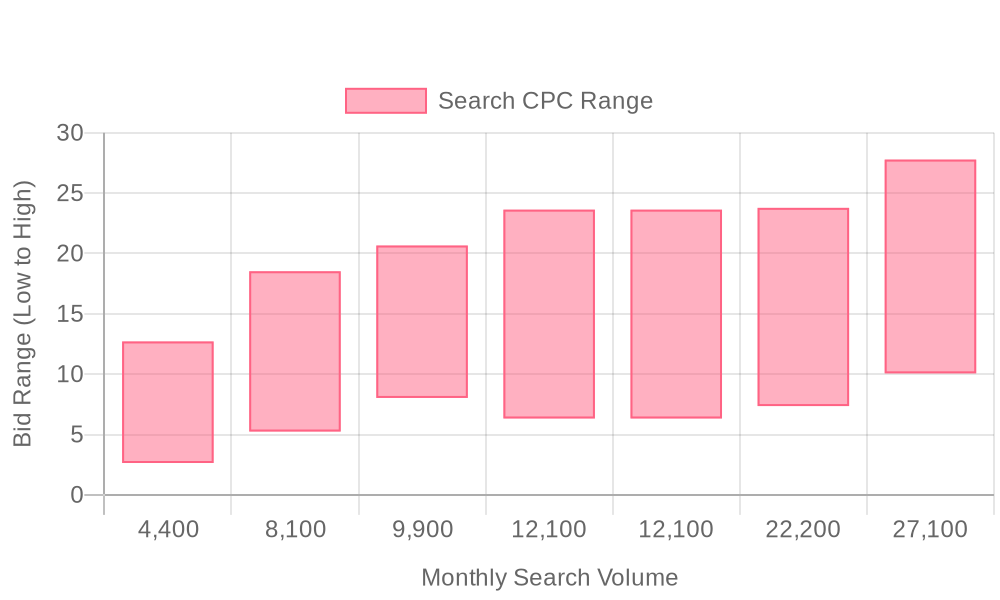
| Industry | Keyword | Monthly Search Volume | Competition Level | Low Bid | High Bid |
| Intellectual Property Attorneys | property lawyer | 4400 | LOW | 2.64 | 12.71 |
| Intellectual Property Attorneys | trademark attorney near me | 8100 | MEDIUM | 5.25 | 18.53 |
| Intellectual Property Attorneys | intellectual property attorneys | 9900 | LOW | 8.03 | 20.66 |
| Intellectual Property Attorneys | patent attorney near me | 12100 | MEDIUM | 6.33 | 23.63 |
| Intellectual Property Attorneys | patent lawyer near me | 12100 | MEDIUM | 6.33 | 23.63 |
| Intellectual Property Attorneys | trademark lawyer | 22200 | LOW | 7.36 | 23.78 |
| Intellectual Property Attorneys | patent attorney | 27100 | LOW | 10.07 | 27.78 |
A robust keyword strategy is foundational to high-performing Google Ads campaigns for intellectual property attorneys. By targeting search terms that align with urgent, solution-seeking intent, attorneys intercept business owners, inventors, and corporate counsel at the moment they seek legal counsel for patents, trademarks, or copyright issues. Precision keyword selection also enables firms to maximize their paid search investment by prioritizing terms that consistently deliver qualified leads, reduce wasted ad spend, and reinforce broader digital marketing for lawyers.
Focusing on high-value, high-intent keywords ensures advertising for IP attorneys reaches decision-makers who are actively evaluating legal solutions. Core terms such as “intellectual property lawyer near me,” “patent attorney consultation,” and “trademark registration attorney” consistently capture significant search volume and strong conversion potential. Supplementing these with niche phrases like “copyright infringement lawyer for startups” or “international trademark portfolio management” further narrows targeting to specialized prospects most likely to engage. For more guidance on campaign setup and optimization, explore our comprehensive guide to PPC advertising for lawyers.
A balanced keyword mix also includes negative keywords to prevent unqualified clicks and preserve budget efficiency. Examples such as “DIY IP filing,” “free patent advice,” or “public domain search” filter out users seeking self-service resources or information-only queries. By continually refining negative keyword lists, practitioners reduce irrelevant impressions and focus spend on leads with real revenue potential. Learn how to leverage intent signals to further optimize your paid search strategy and prioritize high-value prospects.
Integrated marketing platforms empower IP firms to identify which search terms drive actual consultations and signed engagements, unifying campaign reporting with CRM and offline activities. This unified view enables teams to attribute revenue back to specific keywords, adjust bids based on real-time pipeline value, and dynamically update audiences as prospects move through the funnel. The result is a tightly orchestrated approach to both client acquisition for attorneys and measurable Google Ads ROI for lawyers, ensuring every advertising dollar is accountable and optimized for growth. Ready to take your paid search strategy further? Get started for free with Sona.
Step-by-Step Campaign Execution Framework
Step 1: Build Targeted Keyword Lists
Precision in keyword strategy is foundational for PPC for intellectual property lawyers. Success begins with an in-depth analysis of high-intent search terms, focusing on key legal services such as patent application assistance, trademark litigation, and copyright protection. By combining these legal-specific terms with geographic modifiers, such as city, region, or industry clusters, firms can ensure ads appear only to the most relevant audiences, increasing lead quality and controlling budget expenditure. For a deeper look at actionable PPC tactics tailored for IP attorneys, review these PPC tactics for intellectual property attorneys.
With precise audience intelligence, marketers can move beyond surface-level keyword targeting to identify which companies and decision-makers are actually searching for these specialized services. This level of insight allows campaign managers to build granular lists that reflect real business demand and prioritize high-value accounts, resulting in more effective advertising for IP attorneys and a higher return on ad spend.
The upgrade most intellectual property attorneys advertisers miss is going beyond raw keyword volume to layer in intent and identity signals. By connecting website-visitor data and CRM records with Sona Marketing Measurement, you can see which specific search terms bring in the accounts and customers that actually convert, and weight your keyword and bidding strategy toward those rather than the terms with the highest search volume alone.
Step 2: Develop Compelling Ad Copy
Crafting ad copy for intellectual property law advertising requires both authority and immediacy. Headlines should clearly communicate the availability of urgent legal counsel and highlight specialized expertise, such as “Immediate Trademark Defense” or “Biotech Patent Specialists.” Including trust signals, such as industry certifications, years of experience, or notable case successes, reinforces credibility and encourages prospective clients to engage. Explore a complete overview of Google Ads strategies for legal professionals to attract new clients.
Leveraging real-time intent data, marketers can dynamically personalize ad messaging based on the visitor’s journey, ensuring that ads reflect the precise legal need and stage in the decision-making process. Updating audiences as leads progress through the funnel allows ad content to evolve, moving from educational tones at the research stage to direct calls to action when prospects are ready for consultation, driving higher conversion rates for lawyer PPC campaigns.
Step 3: Design Effective Landing Pages
A seamless user journey from ad click to consultation is critical to maximizing Google Ads ROI for lawyers. Landing pages should mirror the ad’s promise, providing clear pathways to request a case review or schedule a call. Incorporating frequently asked questions and client testimonials builds trust and addresses common hesitations, while highlighting unique practice strengths can set the firm apart in a competitive landscape. For more on leveraging Google Ads to acquire new clients, see how law firms can leverage Google Ads.
With advanced attribution tools, law firms can track both online and offline conversions from these landing pages, linking digital ad spend to real-world client acquisition for attorneys. This unified view enables continuous optimization of the conversion path, ensuring that every touchpoint is measured and improved for maximum impact.
Step 4: Implement Data-Driven Optimizations
Sustained campaign performance depends on rigorous, ongoing optimization. By integrating offline conversion data, such as signed retainers or completed filings, advertisers can fine-tune their approach and allocate budget to the channels and keywords that drive true business outcomes. Automated smart bidding, informed by unified data streams, allows campaigns to adapt in real time to shifts in market demand and intent signals. To understand more about optimizing PPC for law firms, review PPC strategies and best practices for law firms.
Connecting CRM and ad platforms ensures that enriched audience segments and lead data are always up to date, allowing law firm marketing teams to retarget high-value prospects and nurture existing leads more effectively. This closed-loop system transforms digital marketing for lawyers, enabling granular measurement, strategic adjustments, and more predictable results in intellectual property law advertising.
Sona Marketing Measurement closes the gap between clicks and revenue. It captures every ad click with first-party, company-level tracking, then ties that click through UTM capture and ad-platform APIs to the actual record in your CRM, and reports ROAS by keyword and campaign instead of by last-click form fill. Feeding that revenue signal back into Smart Bidding and Performance Max compounds over time: the algorithms optimize toward booked intellectual property attorneys revenue, not cheap leads.
Tips on Expanding Your Intellectual Property Attorney Presence
Building a distinct and authoritative presence as an intellectual property attorney requires a sophisticated, data-driven approach that maximizes every digital touchpoint. Engaging prospects with tailored content, aligning outreach with local priorities, and forming influential partnerships all contribute to sustainable growth in a competitive legal market. For ongoing industry insights, visit our blog for B2B marketing guides.
- Remarketing Strategies: Educational content is a powerful lever in reconnecting with prospects who have already signaled interest in intellectual property law. By segmenting audiences based on their on-site behaviors and engagement history, attorneys can deploy nuanced follow-up campaigns that address specific IP issues or service needs. Solutions that enable visitor identification and real-time intent signals allow for more precise targeting, ensuring remarketing budgets are spent on high-converting accounts and every touchpoint is relevant to the user's position in the decision journey. For actionable PPC tactics designed specifically for intellectual property attorneys, review this PPC tactics for IP attorneys.
- Leverage Partnerships: Collaborations with legal associations, IP-focused accelerators, or innovation hubs create co-marketing opportunities that lend credibility and widen reach. Joint webinars, resource sharing, and cross-promoted campaigns introduce your practice to new, qualified audiences while reinforcing trust. Professional partnerships can also facilitate enriched audience data, enabling seamless data sync to your CRM and ad platforms as contacts progress from awareness to active consultation. This integrated view helps tailor communications and maximize the impact of every partnership touchpoint.
- Localize Efforts: Focusing digital marketing for lawyers on high-value regions ensures that advertising for IP attorneys is not just broad, but targeted to where demand is highest. Region-based segmentation allows law firms to concentrate ad spend on innovation clusters or cities with significant startup activity, increasing share-of-voice and driving more meaningful client acquisition. Dynamic audience platforms that update as leads move through the funnel give revenue teams flexibility to shift budget in real time, capturing interest spikes in specific locales and optimizing campaign relevance.
- Generate New Topics: Using aggregated search data, intellectual property attorneys can uncover trending concerns and frequent queries among prospective clients. This inspires a steady stream of content ideas tailored to the evolving needs of innovators and business owners. Platforms that consolidate analytics across marketing channels provide a comprehensive view of what content resonates most, enabling smarter decisions around content creation and campaign themes.
Beyond Google Ads: Winning the AI Answers Intellectual Property Attorneys Buyers Now Trust
Paid search captures demand at the moment someone types a query. But a fast-growing share of intellectual property attorneys buyers no longer start at Google at all, they ask ChatGPT, Gemini, or Perplexity before they ever run a search, and Google's own AI Overviews increasingly summarize an answer above the traditional results. If your business isn't referenced in those AI answers, you're invisible at the exact moment buyers build their shortlist.
Sona AI Visibility shows where your business shows up across ChatGPT, Gemini, Perplexity, Google AI Overviews, and 10+ engines, and, much like a keyword report, which prompts actually send you buyers, so you can prioritize the ones that convert. Run the two together and you cover the entire buyer path: get cited where buyers research (AI Visibility), then prove which of that demand turns into booked revenue (Marketing Measurement).
Helpful resources
Conclusion
Google Ads works for intellectual property attorneys because it puts the firm in front of someone at the exact moment a patent, trademark, or copyright problem becomes urgent enough to search for help. Tailoring ad copy and landing pages to that specificity, rather than generic legal marketing, is what turns clicks into consultations.
The firms pulling ahead are the ones connecting ad spend to which searches actually turn into signed engagements, not just form fills, and feeding that signal back into how they bid. As more IP buyers start their research in AI tools rather than a search bar, the firms that show up in both places, cited by AI engines and ranked in paid search, will set the terms of who gets found first.
FAQ
How can intellectual property attorneys effectively use Google Ads?
Intellectual property attorneys can effectively use Google Ads by targeting high-intent keywords, optimizing landing pages, and leveraging data-driven insights to target decision-makers with real-time engagement tracking.
What are the costs associated with Google Ads for law firms?
The costs associated with Google Ads for law firms can vary based on targeted keywords, audience segments, and geographical focus, but effective management and optimization can enhance ROI by focusing on high-intent searches.
What keywords should IP attorneys target in Google Ads?
IP attorneys should target keywords like 'intellectual property legal advice,' 'patent application attorney,' and niche phrases such as 'copyright infringement lawyer for startups' to capture intent-driven traffic.
How do I measure the success of my Google Ads campaigns as a lawyer?
Success can be measured by tracking online and offline conversions, using A/B testing, and analyzing engagement rates and conversion paths to optimize future campaigns.
What are the common mistakes to avoid when using Google Ads for legal services?
Common mistakes include not aligning ad messaging with landing pages, failing to use negative keywords to filter unqualified clicks, and not leveraging audience segmentation for targeted outreach.







