


Industrial property management runs on timing: a facility manager searching for a new logistics partner or a warehouse operator hunting for lease options is often ready to act within days, not months. Google Ads lets you intercept that decision-maker at the exact moment they search, rather than hoping they find you through referrals or drive-by signage. Missing that window, or following up too slowly once a lead comes in, is what separates a full pipeline from an empty one. This guide covers how to set up Google Ads for industrial property management, from lead capture and audience targeting to ROI measurement and campaign structure.
How to Generate Industrial Property Management Leads with Google Ads: A Step-by-Step Guide
Industrial property management teams operate in a market where every qualified lead translates directly into revenue growth and long-term client relationships. Success hinges on the ability to capture high-intent prospects quickly, engage them with tailored messaging, and move them efficiently through the sales funnel.
Google Ads offers a unique opportunity to intercept decision-makers at the exact moment they signal interest in industrial property solutions. By leveraging a unified, data-driven approach, marketers can orchestrate every campaign element, from keyword targeting to conversion tracking, for measurable impact and sustained pipeline growth. For a practical walkthrough, this step-by-step guide to setting up Google Ads for property management service outlines proven tactics for capturing qualified leads in the real estate sector.
- Data-Driven Paid Search: Industrial property management faces challenges like fragmented data and missed intent signals. Adopting an analytics-first mindset ensures every paid search dollar is tracked, attributed, and optimized, minimizing wasted spend and maximizing impact. Sona's Identity Resolution goes beyond mere clicks by tying anonymous traffic back to real companies, allowing for more precise follow-up and nurturing.
- Targeted Keyword and Audience Strategies: Effective lead generation starts with curated keyword lists and audience segments specific to industrial property management. Dynamic audience building ensures that as prospects advance through the funnel, messaging and offers automatically adjust to match their buying stage. Real-time intent monitoring helps reallocate budget toward segments displaying the highest likelihood of conversion, delivering faster, higher-quality results.
- Aligned Landing Pages and Creative: Seamless alignment of ad copy, landing pages, and creative assets is critical to avoid lead drop-off and ensure a consistent brand experience. Fast access to visitor data enables industrial property marketers to personalize landing pages for each audience cohort, significantly improving conversion rates and reducing lead response time. This approach also minimizes the risk of leads cooling off due to delayed or irrelevant follow-up.
- Continuous Optimization and Performance Enhancement: Ongoing campaign refinement is essential to maintain relevance and efficiency in a competitive market. Advanced conversion tracking, including both online and offline attribution, provides a complete picture of campaign performance. This clarity allows teams to fine-tune targeting, creative, and bid strategies based on what drives real pipeline and closed deals, not just clicks.
- Cross-Channel Integration: Integrating Google Ads data with CRM and marketing automation platforms provides a 360-degree view of each prospect. Marketers can sync enriched audiences and lead data directly into Google Ads, Salesforce, or HubSpot, ensuring every channel works together to nurture and convert prospects. This unified approach strengthens industrial real estate marketing efforts and delivers transparent ROI attribution across the entire buyer journey. Explore more on integrating Sona with HubSpot CRM for streamlined data management.
For marketers and operators in industrial property management, this framework supports efficient, scalable, high-precision lead generation using Google Ads. Each tactic is designed to maximize qualified pipeline while reducing wasted spend and operational friction. Ready to put these strategies into action? Get started for free with Sona.
Why Does Google Ads Matter for Industrial Property Management
Industrial property management demands marketing strategies that move beyond generic outreach to reach specialized decision-makers. Google Ads enables direct engagement with facility managers and property administrators, delivering your message to stakeholders who are actively searching for solutions. For a step-by-step approach to launching Google Ads in this sector, consider this guide on setting up Google Ads for property management.
- Specialized Audience: Traditional marketing often fails to surface qualified prospects who remain anonymous online. Google Ads leverages advanced intent and targeting signals, ensuring your campaigns connect with verified roles, facility supervisors, operations directors, and property administrators, who control budget and scope for industrial assets. By integrating visitor identification solutions, marketers can pinpoint not only who visited but also which company they represent, driving outreach that matches your ICP. For more on identifying high-value accounts, explore our account identification strategies.
- Service Expansion: High-value projects such as site-wide renovations or multi-year lease administration hinge on reaching segments with demonstrated fit. Google Ads supports granular audience segmentation and fit scoring, letting you deploy tailored offers to prospects with budgets and timelines aligned to your service sweet spot. Dynamic audience updating ensures as leads progress through the funnel, your campaigns remain aligned with real-time opportunity.
- Responsive Demand Fulfillment: The industrial sector operates on tight schedules and often faces urgent facility needs. Google Ads provides real-time search insights, highlighting surges in service demand, such as emergency repairs or seasonal maintenance. By syncing CRM data and leveraging in-market behavioral signals, you can shift budget instantly to the accounts showing the highest likelihood to convert, reducing lag from manual follow-up.
- Enhanced Visibility: Rising industrial hubs and underserved markets offer untapped growth. Google Ads enables geo-targeted expansion, boosting visibility where new facilities emerge or legacy providers underperform. Marketers can use local Google Ads strategies to dominate high-growth corridors and appear first when key decision-makers search for partners.
- Measurable ROI: Every industrial property management dollar must deliver traceable value. Google Ads, combined with advanced conversion tracking, records every meaningful touch, from online form fills to offline contract signings, allowing for closed-loop reporting. When your Google Ads audiences and conversions sync directly into your CRM and analytics platforms, you gain a single source of truth for attribution, helping you optimize spend and prove impact at every stage.
Common Types of Google Ads Campaigns for Industrial Property Management
- Search Campaigns: Search campaigns are essential for capturing high-intent prospects who are actively searching for industrial property management solutions, whether they need warehouse space, a new facility manager, or lease renewal terms. These campaigns intercept potential clients at the moment of need, driving qualified leads directly to your team and reducing the risk of slow manual follow-up. With unified data on in-market behavior, marketers can target searchers who have already shown relevant interest elsewhere, allocating budget toward accounts with the highest likelihood of conversion. Responsive search ads, an ad format within Search campaigns, let you test multiple headlines and descriptions to find the combination that converts best for each audience segment.
- Display Ads: Display ads help maintain consistent brand presence across specialized industry sites and key publications where your target audience spends time. By leveraging insights from unified engagement data, display campaigns can be refined to reach decision-makers based on their actual engagement patterns, not just broad demographic targeting. This approach bridges creative messaging with precise outreach, ensuring visibility remains strong even as prospects move between channels.
- Video Ads: Video campaigns offer a powerful way to visually communicate expertise and value propositions during the research and consideration stages. They complement text-based content and nurture interest among stakeholders who prefer rich media. When paired with behavioral data and buying signals, video ads can be served to accounts showing early buying signals, reinforcing your brand and building credibility before direct outreach. Explore actionable playbooks for optimizing demand generation in your video strategy.
- Remarketing: Remarketing campaigns re-engage visitors who have previously interacted with your website or digital assets, keeping your brand top-of-mind as they progress in their decision journey. Dynamic audience segments update in real time as prospects engage across channels, enabling you to deliver tailored messaging that reflects their latest activity. This is crucial in industrial property management, where buying cycles are long and multiple touchpoints often drive offline conversions.
- Performance Max: Performance Max campaigns pool Search, Display, video, and other Google inventory into a single campaign optimized toward a conversion goal, useful for industrial property management teams who want incremental reach beyond core search terms without managing separate campaigns for each channel. Feeding it accurate offline conversion data, such as signed leases or completed tours, keeps its automated bidding pointed at real pipeline rather than form fills alone.
- Assets: Ad assets (formerly called extensions) act as trust signals, displaying certifications, service options, and additional contact methods directly in your ads. These enhancements boost campaign credibility and encourage engagement by addressing trust and convenience concerns upfront. Integrating real-time CRM data into ad assets ensures that only the most relevant and up-to-date information is shown, aligning with evolving market needs and reducing data fragmentation across campaigns.
Where to Find Growth Opportunities
Growth in industrial property management marketing demands a tactical approach that uncovers hidden demand and prioritizes high-value prospects. Effective strategies rely on advanced data analysis, precise targeting, and continuous optimization to ensure budget efficiency and competitive differentiation.
- Vertical Keyword Targeting: Focusing on industry-specific keywords tailored to your unique services helps mitigate overlooked opportunities common in broad campaigns. Industrial property management keywords sharpen relevance and maximize the chances of intercepting decision-makers actively seeking solutions in this space. This approach ensures ad spend is reserved for high-intent searches, directly increasing lead generation for property management and minimizing wasted impressions.
- Competitor Analysis for Market Gaps: Leveraging competitive intelligence platforms like SEMrush allows you to map out where competitors are dominant and where gaps exist. By identifying underserved keyword clusters or audience segments, you position your campaigns to address unmet needs, carving out a space where your messaging and value proposition resonate most. For more strategies on outperforming rivals in this sector, explore our B2B marketing playbooks.
- Industry Forums and Directories: Targeting specialized forums, trade association websites, and property management directories enhances visibility in channels that traditional SEO and paid search often overlook. Visibility here not only supplements Google Ads reach but also connects your brand with decision-makers and influencers engaging in industry-specific discussions. These placements contribute to a more robust commercial property advertising mix, especially when organic content is limited.
- Content Retargeting with Value Assets: Retargeting previous site visitors using downloadable industry checklists or actionable guides helps transform anonymous website traffic into qualified prospects. By synchronizing real-time audiences, marketers can re-engage high-interest accounts as they progress through the buying journey. Platforms that unify intent data and visitor identification allow you to deliver personalized content offers and follow-up communications, substantially improving conversion rates and ROI.
Modern industrial property management teams that combine these tactics with audience enrichment and CRM-to-ad platform syncs gain a competitive advantage. They capitalize on every touchpoint, turning passive interest into measurable outcomes and keeping marketing investments closely aligned with revenue goals. To accelerate your own results, get started for free with Sona.
How to Apply Audience Segmentation for Industrial Property Management

Precise audience segmentation transforms industrial property management marketing by connecting campaigns with the right decision-makers at the right stage. Leveraging segmentation enables property managers to maximize ad relevance, optimize ad spend, and elevate lead quality from Google Ads for Industrial Property Management.
- Define Segments: Start by categorizing your audience based on property type, such as commercial warehouses, logistics centers, or manufacturing plants. Focus on distinguishing high-value accounts by analyzing past inquiry behavior, industry growth signals, and historical engagement. Prioritizing high-intent prospects ensures that ad budgets are allocated toward leads with a greater likelihood of converting and delivering long-term value. Use Sona’s Audiences tool to build real-time, signal-based segments that adapt as your pipeline evolves.
- Overlay Intent Signals: Enhance each segment by layering in-market signals, such as recent searches for facility upgrades or active requests for proposals. This approach filters out routine property management needs and surfaces urgent opportunities, allowing marketers to intercept prospects when interest peaks. For actionable strategies on segmenting by buyer intent, see leveraging intent data.
- Create Ad Groups: Tailor ad groups and messaging to each segment’s needs. For example, industrial tenants seeking routine maintenance require different ad copy and offers than those needing full-scale facility modernization. Allocating budget and creative resources at the ad group level drives higher engagement and more relevant property management advertising, while dynamic audience integration keeps campaigns updated as prospects shift between needs.
- Validate Conversion Paths: Ensure every lead, whether sourced online from Google Ads or through offline channels like phone inquiries and property tours, is tracked and attributed correctly. Advanced tracking and CRM synchronization allow property managers to measure performance across the funnel, from initial click to closed contract. Integrating enriched audience data into Google Ads and CRM platforms supports timely follow-up and continuous optimization, connecting marketing efforts directly to revenue outcomes.
A segmented approach not only improves targeting in Google Ads but also creates a foundation for ongoing optimization, higher-quality lead generation for property management, and more effective commercial property advertising across every stage of the buying journey. To experience streamlined segmentation and targeting, get started for free with Sona.
This is also where measurement changes the economics. With Sona Marketing Measurement you can identify the companies and buyers behind your ad clicks, not just anonymous sessions, and segment audiences by who actually becomes a customer. That lets you build bid adjustments and audience signals around the segments that convert and de-prioritize the ones that don't, so you feed Google's algorithms "this click became a paying industrial property management customer" instead of just "someone filled out a form."
Keyword Strategy & Sample Target Terms
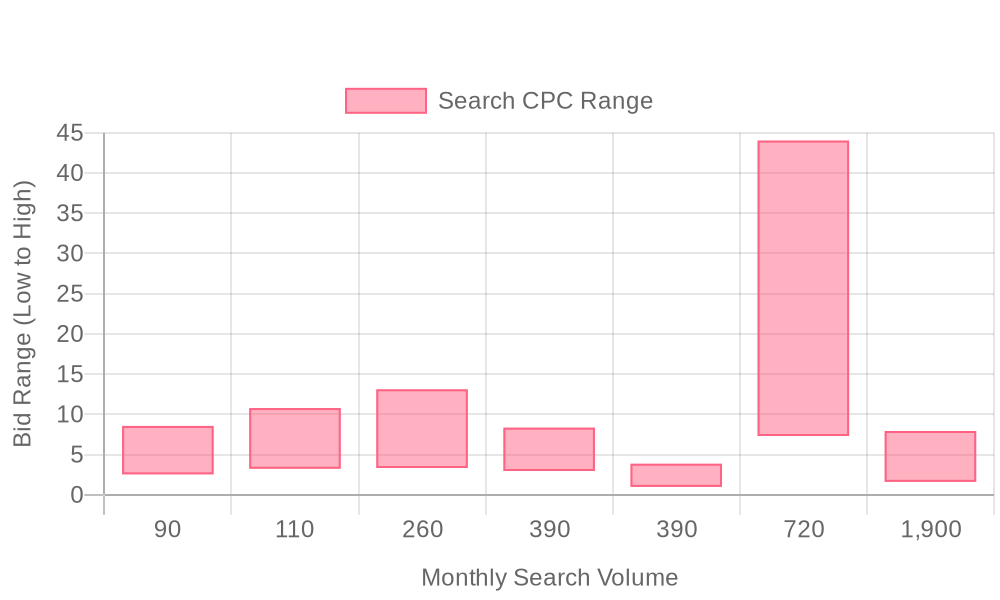
| Industry | Keyword | Monthly Search Volume | Competition Level | Low Bid | High Bid |
| Industrial Property Management | retail property management companies | 90 | LOW | 2.55 | 8.57 |
| Industrial Property Management | industrial property management companies | 110 | LOW | 3.25 | 10.79 |
| Industrial Property Management | retail property management | 260 | LOW | 3.34 | 13.12 |
| Industrial Property Management | industrial property management | 390 | LOW | 2.97 | 8.35 |
| Industrial Property Management | predix property management | 390 | LOW | 1 | 3.87 |
| Industrial Property Management | quickbooks for real estate management | 720 | LOW | 7.32 | 44.03 |
| Industrial Property Management | property management staffing agencies | 1900 | LOW | 1.62 | 7.94 |
Industrial property management requires a specialized approach to digital marketing. Google Ads enables direct access to decision-makers seeking commercial leasing, industrial space, and facility management solutions. Segment campaign targeting around core needs unique to industrial assets, such as logistics requirements, facility upgrades, or multi-site management. By identifying not just anonymous web traffic but also the organizations and personas evaluating your property listings using real-time visitor identification, marketers deliver ads to the accounts most likely to convert. Leveraging intent signals allows teams to shift budget toward high-value accounts actively searching for solutions, maximizing every impression and click.
Integrating Google Ads efforts with a unified marketing and sales stack ensures every lead, click, and conversion can be tracked from first touch to closed contract. For a step-by-step guide on setup, explore this resource for Google Ads in property management. With advanced attribution strategies, revenue teams accurately measure cost per lead (CPL) and campaign ROI. Syncing enriched lead and audience data from marketing automation and CRM platforms into Google Ads ensures the paid media budget only targets in-market accounts and excludes out-of-funnel contacts. Channel attribution enables this visibility by crediting individual touchpoints between buyers and firms with revenue.
Industrial buyers often interact across multiple channels before making a decision. Aligning Google Ads campaigns with other digital and offline touchpoints creates a cohesive experience, whether prospects engage through your website, trade shows, or outbound sales. Using dynamic audience updates ensures remarketing and nurture campaigns reflect the latest engagement and funnel status, allowing for personalized ads that accelerate deal cycles and amplify commercial property advertising efforts.
Sophisticated B2B teams deploying Google Ads for Industrial Property Management focus on keyword sets like “industrial property for lease,” “warehouse management solutions,” and “facility manager services.” Integrating these with negative keywords and tailored audiences filters out irrelevant searches, increasing both lead quality and campaign efficiency. This creates a streamlined pipeline for lead generation in property management, setting the stage for sustained marketing performance and higher ROI. To experience these strategies firsthand, get started for free with Sona.
Step-by-Step Campaign Execution Framework
Step 1: Build Targeted Keyword Lists
Precise keyword segmentation forms the foundation of high-performing Google Ads for Industrial Property Management. Segment lists by industrial property types, such as warehouses, logistics centers, and distribution hubs, alongside regional qualifiers to home in on local opportunities. Incorporate long-tail queries like "industrial warehouse property manager in Chicago" to capture high-intent searches and reduce wasted spend. For a step-by-step approach to Google Ads in property management, this guide for property management services offers actionable tactics.
Modern platforms can enrich these lists by identifying not only anonymous traffic, but also the companies visiting your site. This visitor identification capability ensures your keyword lists reflect real-time market interest, allowing you to prioritize in-market accounts and shift budget toward prospects most likely to convert.
The upgrade most industrial property management advertisers miss is going beyond raw keyword volume to layer in intent and identity signals. By connecting website-visitor data and CRM records with Sona Marketing Measurement, you can see which specific search terms bring in the accounts and customers that actually convert, and weight your keyword and bidding strategy toward those rather than the terms with the highest search volume alone.
Step 2: Develop Compelling Ad Copy
Effective ad copy for industrial property management addresses industry-specific pain points: vacancy rates, lease term mismatches, and operational downtime. Highlight incentives tailored to decision-makers, such as free site assessments or flexible contract terms, alongside urgency triggers that solve common timing challenges. For additional inspiration, explore Google Ads strategies for commercial real estate to see how other firms boost visibility and attract qualified leads.
Pairing ad copy with real-time audience intent data enables dynamic messaging to specific accounts or cohorts, allowing your ads to reflect updated offers or showcase tailored solutions as audiences progress through the buying journey.
Step 3: Design Effective Landing Pages
Landing pages for PPC in industrial property must reinforce the ad promise with continuity in messaging, keyword alignment, and visual consistency. Use testimonials from trusted industry peers, third-party endorsements, or proof of successful occupancy placements to provide reassurance and credibility. Prominent, high-contrast calls-to-action (CTAs) streamline the visitor journey, guiding high-intent users directly to schedule tours, request proposals, or download spec sheets. Learn how property management companies can leverage Google Ads to drive effective lead generation.
Integrating CRM enrichment and data syncing allows you to personalize landing pages further. By recognizing repeat visitors or high-value accounts, the user experience can dynamically adapt, increasing retention and accelerating the path from click to qualified lead.
Step 4: Implement Data-Driven Optimizations
Data-driven optimization is mission-critical for any industrial real estate marketing strategy. Leverage advanced bidding strategies, like target CPA or ROAS, to automatically adjust spend based on conversion likelihood. Consistently run A/B tests on creative, copy, and CTAs to discover what resonates most with your target market, and rapidly iterate on underperforming segments. For more details on local ad solutions, see Google's official Local Service Ads resource.
By aligning campaign performance with both online and offline attribution, revenue teams can track the true ROI of each ad dollar. Automated audience sync with CRM and marketing platforms ensures enriched audiences and new leads are continually updated in Google Ads, maintaining full-funnel visibility and enabling agile budget allocation as market conditions evolve. Ready to streamline your campaign workflows and optimize every touchpoint? Get started for free with Sona.
Sona Marketing Measurement closes the gap between clicks and revenue. It captures every ad click with first-party measurement, ties that click through UTM capture and ad-platform APIs to the actual record in your CRM, and reports ROAS by keyword and campaign instead of by last-click form fill. Feeding that revenue signal back into Smart Bidding and Performance Max compounds over time: the algorithms optimize toward booked industrial property management revenue, not cheap leads.
Tips on Expanding Your Industrial Property Management Presence
Industrial property management teams operate in a market with extended sales cycles, complex decision processes, and specialized buyer profiles. A focused digital strategy is essential for capturing and sustaining attention across these longer journeys, ensuring every qualified touchpoint is recognized and leveraged. Explore Sona's Identity Resolution tool to reveal exactly which organizations are engaging with your web content and trigger timely sales actions based on real-time visitor intent.
- Leverage educational assets: Thoughtful guides, webinars, and whitepapers support retargeting efforts, keeping your brand top-of-mind as prospects research and compare solutions. These assets help nurture contacts who may not convert immediately, providing value and building trust over time. For actionable frameworks on nurturing leads, browse the B2B marketing playbooks.
- Upsell using CRM-derived audiences: By integrating CRM data and refining Ideal Customer Profile (ICP) scores, you can identify segments most likely to benefit from additional services. Syncing these enriched audiences directly into your Google Ads campaigns ensures higher relevance and boosts upsell conversion rates as audiences evolve through the funnel. Sona’s Audiences feature enables you to build dynamic, signal-based segments that auto-sync with ad platforms for hyper-personalized targeting.
- Localize campaigns to key regions: Focus your spend on geographic areas with the highest growth potential, aligning digital outreach to areas where your offline sales teams are active. Local targeting in Google Ads enables property managers to tailor messaging by region, increasing visibility and engagement among high-priority prospects. For a step-by-step guide on setting up Google Ads for property management services, refer to this external walkthrough.
- Use search data for content inspiration: Analyze keyword and query trends to inform new content creation, addressing emerging topics and prospect pain points. This approach not only strengthens your SEO and PPC for industrial property but also ensures your content library stays aligned with real buyer intent, maximizing inbound lead generation.
To succeed with Google Ads for Industrial Property Management, combine granular keyword research, sophisticated audience segmentation, and creative tailored to the unique dynamics of industrial real estate marketing. Address gaps in prospect identification by leveraging visitor intelligence to move beyond anonymous website visits, mapping engagement data back to specific companies and decision-makers. Real-time intent signals allow for agile budget allocation, prioritizing high-value accounts as they demonstrate buying readiness. Ready to unify your digital strategy and drive measurable outcomes? Get started for free with Sona.
Beyond Google Ads: Winning the AI Answers Industrial Property Management Buyers Now Trust
Paid search captures demand at the moment someone types a query. But a fast-growing share of industrial property management buyers no longer start at Google at all, they ask ChatGPT, Gemini, or Perplexity before they ever run a search, and Google's own AI Overviews increasingly summarize an answer above the traditional results. If your business isn't referenced in those AI answers, you're invisible at the exact moment buyers build their shortlist.
Sona AI Visibility shows where your business shows up across ChatGPT, Gemini, Perplexity, Google AI Overviews, and 10+ engines, and, much like a keyword report, which prompts actually send you buyers, so you can prioritize the ones that convert. Run the two together and you cover the entire buyer path: get cited where buyers research (AI Visibility), then prove which of that demand turns into booked revenue (Marketing Measurement).
Helpful resources
Conclusion
The industrial property management firms pulling ahead aren't the ones spending the most on Google Ads, they're the ones that can trace a click to a signed lease and adjust their bidding accordingly. As buyers increasingly start their research in AI tools rather than a search bar, that same discipline, knowing which channel and query actually produced a customer, will decide who gets found first and who gets left out of the shortlist entirely.
FAQ
What are the best practices for Google Ads in industrial property management?
Best practices include leveraging data-driven paid search, using targeted keyword and audience strategies, aligning landing pages with ad creatives, continuously optimizing campaigns, and integrating Google Ads data with CRM platforms for a holistic marketing approach.
How can I optimize my Google Ads for better lead generation in property management?
To optimize Google Ads for lead generation, focus on precise keyword targeting, dynamic audience building, real-time intent monitoring, and aligning ads with landing pages to ensure seamless user experiences and higher conversion rates.
What budget should I allocate for Google Ads in the industrial property sector?
The budget allocation should be data-driven, focusing on high-intent keywords and audience segments to minimize wasted spend and maximize impact. Regular budget adjustments based on real-time performance data are recommended.
What targeting options are available for Google Ads in property management?
Targeting options include keyword targeting, audience segmentation, geo-targeting for regional opportunities, and dynamic audience updates based on real-time engagement and intent signals.
How do I measure the success of my Google Ads campaigns for industrial properties?
Success can be measured using advanced conversion tracking, both online and offline, which allows for closed-loop reporting, ROI attribution, and tracking of every meaningful touchpoint from initial contact to closed contract.







