


Commercial property management runs on relationships and renewal cycles, but the first contact with a new prospect increasingly starts with a Google search. Owners evaluating a management change, investors vetting a new asset, or tenants comparing lease options rarely respond to cold outreach; they search when a lease is expiring, a property changes hands, or a building's performance slips. Google Ads meets that moment, and paired with tools that connect anonymous site visits to the companies behind them, it turns a click into a named account your team can actually follow up with. This guide covers how to build, run, and measure that kind of campaign for commercial property management.
How to Generate Commercial Property Management Leads with Google Ads: A Step-by-Step Guide

Commercial property management firms face increasing competition from digital-first players and institutional brands. High-value B2B leads are rarely won through generic outreach; instead, targeted digital campaigns deliver measurable visibility among decision-makers evaluating new management solutions. Google Ads for Commercial Property Management offers a direct line to business owners, investors, and facility managers actively searching for professional oversight, tenant acquisition, or asset optimization services. By leveraging focused PPC for property management, teams can capture intent-rich leads and attribute marketing investment to tangible deal pipeline growth, learn more about optimizing digital campaigns in our B2B marketing blog.
- Keyword and Audience Targeting: Reaching qualified commercial property leads begins with keyword research tailored to the sector's unique search behaviors. Terms like "commercial property management company," "office building management," or "industrial asset leasing" connect your ads with stakeholders seeking expertise, not just general information. Layering in negative keywords filters out residential queries, ensuring budgets are spent exclusively on relevant commercial prospects. Advanced audience targeting, powered by real-time audience data, enables marketers to identify and prioritize companies that are actively evaluating new contracts or experiencing property turnover. By integrating visitor identification, teams move beyond anonymous web traffic, transforming unknown clicks into named accounts and actionable contacts.
- Landing Page and Creative Alignment: Success in property management lead generation hinges on directing ad traffic to highly relevant, conversion-optimized landing pages. Each click should land on a page that mirrors the user's search intent, such as asset-specific service offerings, portfolio case studies, or downloadable whitepapers for CRE owners. Ad creative must speak to the commercial mindset, emphasizing ROI, compliance, and operational scalability. Dynamic personalization technologies ensure that landing pages adapt content based on the visitor’s profile, industry segment, or funnel stage. This approach strengthens user trust and increases the likelihood of form fills or consultation requests, addressing the problem of cold, unqualified traffic common in generic campaigns. For step-by-step personalization tactics, explore our ABM guide for go-to-market teams.
- Performance Optimization: Sustained Google Ads optimization for commercial property management requires an iterative, data-driven approach. Weekly campaign audits review keyword performance, search terms, and conversion paths to identify budget waste or growth opportunities. Predictive analytics, using signals from intent signals, allow marketers to shift budget toward accounts showing immediate buying intent. Audience lists update dynamically as prospects move through research, consideration, and decision stages, ensuring that retargeting and nurture sequences stay relevant. Attribution solutions capture both online and offline conversions, such as phone consultations or property tours, enabling teams to measure true ROI and continuously refine spend allocation. For more insight, see our guide on measuring marketing’s influence on pipeline.
- Cross-channel Integration: Google Ads alone rarely closes deals in commercial property management; instead, it acts as a catalyst within a broader demand generation engine. Integrating audience data into your CRM and ad platforms enables seamless handoff of enriched leads for follow-up, personalized outreach, or multi-channel nurturing. Segmentation by account type, property size, or investment horizon allows marketers to run coordinated campaigns across digital, email, and even direct mail, amplifying the impact of each touchpoint. By connecting Google Ads to the same data backbone as your CRM, revenue teams can identify high-value leads earlier, trigger tailored messaging, and accelerate opportunities through the funnel.
Why Does Google Ads Matter for Commercial Property Management?
Commercial property management faces persistent challenges, including unpredictable shifts in tenant demand and the need for tailored solutions for diverse stakeholders. Google Ads empowers teams to precisely address these pain points, driving consistent, high-quality lead generation and elevating conversion rates by placing offers in front of decision-makers at the moment of intent.
Complex audience segmentation is a constant hurdle for property managers. With advanced targeting and dynamic audience management, campaigns can reach property owners, investors, and corporate tenants based on specific needs like asset class, lease structure, or service type. This reduces wasted spend from untimely or irrelevant outreach and ensures marketing resources fuel pipeline growth where it counts most.
Higher-margin service offerings, such as new development lease-ups, capital improvements, or facilities management, benefit from Google Ads’ ability to surface intent signals from in-market prospects. By responding to these signals in real time, commercial property managers can prioritize outreach to accounts displaying true buying readiness, capturing high-value leads before competitors enter the conversation.
Market volatility and shifting regional demand require agile digital marketing for property management. Google Ads delivers immediate visibility in emerging or underserved markets through granular geo-targeting and predictive modeling, driving engagement from previously hard-to-reach audiences. For more insights on maximizing marketing ROI in property management, explore our actionable playbooks.
Common Types of Google Ads Campaigns for Commercial Property Management

- Search Campaigns: Search ads reach decision-makers as soon as they signal intent by searching for terms like “commercial property management” or “office leasing services.” These campaigns intercept high-value prospects at the exact moment they need solutions, driving qualified property management lead generation. Within Search, Responsive Search Ads let you test multiple headlines and descriptions so Google can serve the combination most likely to convert a given searcher. By integrating real-time visitor identification, teams can immediately match search clicks to company profiles, prioritize urgent follow-up, and avoid letting prime prospects go unnoticed. For a step-by-step guide on setting up and optimizing Google Ads to generate leads for property management companies, visit this Google Ads for property managers guide.
- Display Campaigns: Display ads provide sustained visibility on industry sites, commercial real estate publications, and relevant business forums. This approach reinforces brand awareness while nurturing top-of-funnel leads who may not be ready to engage directly. Using dynamic audience syncing, display campaigns only target those who have engaged or demonstrated high in-market intent, adapting automatically as contacts progress through the sales funnel for maximum efficiency in commercial property advertising. For more strategies, explore our property management marketing playbooks.
- Video Campaigns: Video ads give property managers a powerful format to demonstrate expertise and differentiate their service offerings. Through dynamic storytelling, virtual property tours, operational walkthroughs, or client testimonials, commercial property management firms can educate and capture attention. Teams can leverage real-time engagement data to optimize creative assets and allocate budget toward video placements that drive the most interaction from decision-makers.
- Remarketing Campaigns: Remarketing campaigns re-engage visitors who previously interacted with your landing pages or requested information but have not yet converted. These campaigns keep your brand top-of-mind, using tailored messaging based on prior engagement to increase conversion rates. With advanced conversion tracking and CRM integration, every returned visitor is attributed back to the original touchpoint, allowing full-funnel measurement of ROI and more accurate Google Ads optimization across property management marketing efforts.
- Performance Max Campaigns: Performance Max lets Google allocate a single budget across Search, Display, YouTube, and Gmail inventory automatically, which suits commercial property management firms marketing multiple property types or service lines at once. Feeding it strong conversion data, ideally including which leads turned into signed management contracts, helps the algorithm prioritize the accounts most likely to close rather than simply the cheapest clicks.
Where to Find Growth Opportunities
Commercial property management teams seeking to accelerate growth must move beyond traditional prospecting channels and legacy digital tactics. Strengthening your pipeline relies on discovering new segments and optimizing every touchpoint to attract high-fit prospects, especially as markets become more competitive and digital-first. To maximize pipeline impact from anonymous website traffic, consider using Sona's Identity Resolution for revealing high-intent buyers that haven't filled out a form.
- Vertical Keyword Targeting: Targeting ultra-specific, service-oriented keywords uncovers opportunities within niche commercial property segments. Instead of broad terms, focusing on queries like "industrial asset management" or "retail center lease administration" increases relevance and attracts companies searching for specialized expertise. This approach aligns your Google Ads for Commercial Property Management campaigns with your core audience, filtering out low-value clicks and capturing intent-driven leads. When enriched by real-time audience data, teams can dynamically refine these keyword lists, reallocating budgets to terms proven to convert among high-value accounts.
- Competitive Gap Analysis: Analyzing where competitors under-serve the market exposes valuable white space for your brand to claim. Using platforms like SEMrush, teams can audit the paid search landscape to identify gaps in commercial property advertising, such as overlooked asset classes or geographic pockets. Once uncovered, integrating granular intent signals enables marketers to prioritize these audience segments, investing in Google Ads optimization that addresses unmet needs and rapidly closes lead quality gaps.
- Industry Placements: Digital marketing for property management goes beyond search engines. Securing placements within trade directories and commercial real estate-specific platforms boosts visibility where organic search is limited or highly competitive. Appearing in these curated environments raises awareness with decision-makers who may not actively search but are open to discovery. By syncing audience lists with CRM data, marketers can ensure these industry placements are reinforced by relevant, personalized Google Ads retargeting, driving consistent exposure at every stage of the buyer journey.
- Content Retargeting: Retargeting in property management marketing is most effective when paired with value-driven content. Serving educational assets, such as whitepapers on optimizing tenant retention or checklists for commercial asset due diligence, keeps your brand top-of-mind for in-market accounts. Modern PPC for property management platforms allow marketers to update retargeting audiences in real time as prospects engage, ensuring that follow-up messaging adapts to evolving interests and sales stages. Layering in advanced conversion tracking, including both online and offline actions, delivers a complete view of engagement and ROI, so teams can prove the impact of every touchpoint and continually refine their demand generation approach.
How to Apply Audience Segmentation for Commercial Property Management
Audience segmentation is essential for commercial property management teams seeking to improve digital marketing efficiency and maximize returns from Google Ads. By tailoring campaigns to distinct prospect profiles, property managers can avoid wasted spend and low-quality leads, instead building a pipeline of relevant opportunities that align with business growth objectives. For deeper strategies on setting up and optimizing Google Ads campaigns in this sector, explore this guide for property managers.
- Define Segments: Successful property management lead generation starts with clearly defined segments. Corporate leasing managers, for example, have different priorities and decision cycles compared to independent property owners. Segmenting these audiences at the outset prevents the inefficiencies of a one-size-fits-all approach and allows for the creation of more relevant messaging, ad formats, and offers. With advanced visitor identification tools, marketers can now move beyond anonymous web traffic, pinpointing which companies and decision-makers are engaging with their commercial property advertising. This accuracy ensures marketing resources are concentrated on leads with the highest business value.
- Overlay Intent Signals: Incorporating real-time intent signals significantly enhances Google Ads optimization for commercial property management. By monitoring behavioral cues such as property acquisition research or interest in renovation services, marketers can dynamically prioritize ad delivery to decision-makers actively in-market. This intent-driven approach shifts budget toward accounts already moving through the buying journey, resulting in higher conversion rates and greater efficiency. Platforms that integrate behavioral data across digital touchpoints further enrich audience profiles, enabling digital marketing for property management teams to respond instantly as priorities shift within target accounts.
- Create Ad Groups by Segment: Structuring ad groups based on audience segments ensures each receives tailored creative and budget allocation. Messaging can be personalized to address the unique challenges faced by each segment, such as compliance, scalability, or operational savings, making ads more relevant and compelling. Dynamic audience capabilities enable ongoing updates as contacts engage with new assets or move deeper into the funnel, keeping campaigns aligned with pipeline reality. Automated audience sync between CRM and ad platforms ensures that enriched segments and fresh leads are immediately actionable in Google Ads and other property management online advertising channels, supporting agile, responsive campaign management that increases ROI.
Interested in turning your anonymous website visitors into qualified leads? Get started for free with Sona.
This is also where measurement changes the economics. With Sona Marketing Measurement you can identify the companies behind your ad clicks, not just anonymous sessions, and segment audiences by which accounts actually become customers. That lets you build bid adjustments and audience signals around the segments that convert and de-prioritize the ones that don't, so you feed Google's algorithms "this click became a paying commercial property management customer" instead of just "someone filled out a form."
Keyword Strategy & Sample Target Terms
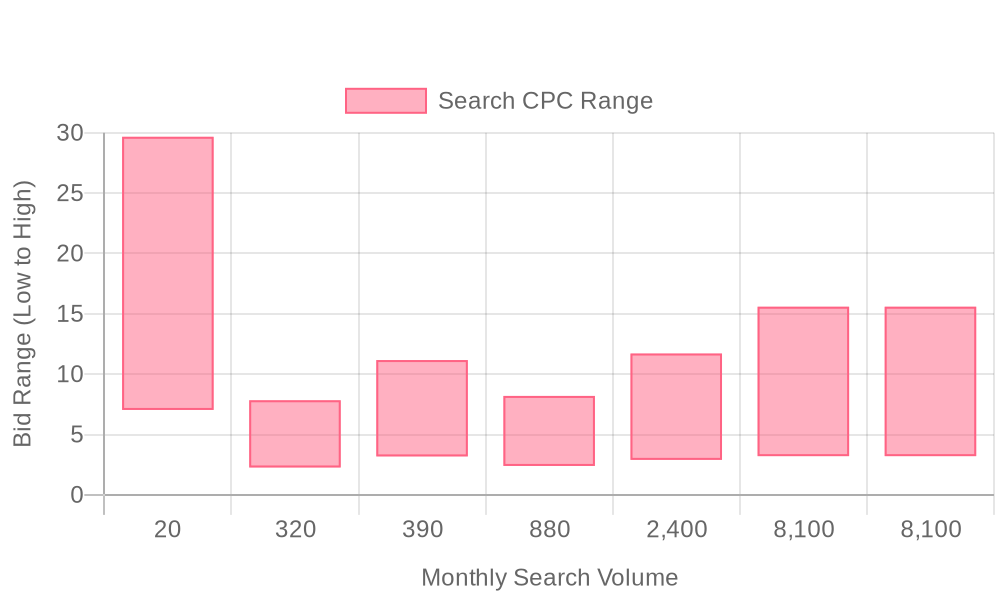
| Industry | Keyword | Monthly Search Volume | Competition Level | Low Bid | High Bid |
| Commercial Property Management | mri commercial management | 20 | MEDIUM | 7.04 | 29.67 |
| Commercial Property Management | commercial management companies | 320 | LOW | 2.27 | 7.84 |
| Commercial Property Management | commercial real estate management | 390 | LOW | 3.19 | 11.17 |
| Commercial Property Management | commercial property management companies near me | 880 | LOW | 2.4 | 8.2 |
| Commercial Property Management | commercial property management companies | 2400 | LOW | 2.9 | 11.71 |
| Commercial Property Management | commercial property management | 8100 | LOW | 3.21 | 15.59 |
| Commercial Property Management | commercial real estate property management | 8100 | LOW | 3.21 | 15.59 |
Strategic keyword selection is the cornerstone of successful Google Ads for Commercial Property Management. By aligning PPC for property management with the precise needs of investors, facility owners, and corporate tenants, marketing teams can drive qualified traffic that is ready to engage. For a comprehensive overview of effective campaign setup and optimization, explore this guide on Google Ads for property managers.
- High-Intent Keywords: Prioritize terms like ‘commercial leasing services,’ ‘property management solutions,’ and ‘commercial building maintenance’ to attract decision-makers actively seeking services. These keywords signal readiness to inquire or convert, resulting in higher lead quality and more efficient Google Ads budget allocation. Leveraging real-time audience platforms allows marketers to identify which prospects are displaying in-market intent, ensuring spend is directed to accounts most likely to close.
- Long-tail Keywords: Focus on granular phrases such as ‘office space management in downtown [City]’ or ‘industrial property asset oversight.’ These long-tail terms map to specific ad groups and landing pages, providing relevant content for each segment. This approach minimizes wasted spend on broad, generic searches and supports Google Ads optimization by increasing click-through and conversion rates. Real-time audience data ensures that ad groups dynamically adjust as market interest shifts or as prospects move from research to purchase.
- Negative Keywords: Implement a robust list of negative keywords to filter out search queries unrelated to commercial intent, such as ‘apartment for rent’ or ‘residential property manager.’ This protects your Google Ads for Commercial Property Management campaigns from unqualified clicks, conserving budget for high-value prospects. Integrated platforms automatically update these lists as new irrelevant terms emerge, allowing for continuous refinement and improved property management lead generation results.
A well-designed keyword strategy, enriched by unified audience intelligence, ensures that every dollar in property management online advertising contributes directly to pipeline growth and measurable ROI.
Step-by-Step Campaign Execution Framework
Step 1: Build Targeted Keyword Lists
Building targeted keyword lists is foundational for commercial property management marketing. Begin by researching high-intent search terms specific to your service areas, such as "commercial property management in Austin" or "industrial building leasing services." Geographic and service modifiers narrow your targeting and ensure your ads reach decision-makers searching for solutions in relevant locations. Incorporate negative keywords to filter out residential or irrelevant queries, protecting your Google Ads budget from wasted spend and improving campaign focus, explore a guide on setting up Google Ads campaigns for property managers for additional tactical advice.
With dynamic audience segmentation tools, marketers can now pinpoint which companies are engaging with ads and site content. This enables real-time refinement of keyword lists based on emerging in-market behaviors, ensuring your PPC for property management strategy continuously aligns with evolving demand. As audiences update in response to new interactions, ad groups stay focused on top-converting segments, maximizing the efficiency of your property management online advertising.
The upgrade most commercial property management advertisers miss is going beyond raw keyword volume to layer in intent and identity signals. By connecting website-visitor data and CRM records with Sona Marketing Measurement, you can see which specific search terms bring in the accounts and customers that actually convert, and weight your keyword and bidding strategy toward those rather than the terms with the highest search volume alone.
Step 2: Develop Compelling Ad Copy
Effective ad copy directly addresses pain points unique to commercial property owners and tenants. Highlight key differentiators such as lease-up velocity, tenant retention programs, or compliance expertise. Use clear, concise language paired with strong calls to action like “Request a Free Portfolio Analysis” or “Get a Vacancy Reduction Plan.” To enhance visibility and relevance, use ad assets such as sitelinks, callouts, and structured snippets, which showcase your full service offering and make your ads more compelling to high-fit accounts.
By unifying intent signals across channels, marketers can dynamically adjust messaging to reflect the real-time needs of each prospect. For example, ad creatives can shift emphasis for companies exhibiting strong leasing intent, while nurturing investor audiences with ROI-focused messaging. This fluid approach ensures that commercial property advertising is always tailored to the right segment, increasing engagement and driving higher conversion rates. Discover more tactics in our property management marketing playbooks.
Step 3: Design Effective Landing Pages
Landing pages must deliver a seamless experience that matches user intent captured in the ad. Pages should speak directly to the commercial audience, featuring relevant case studies, property portfolios, and value propositions for owners, investors, or tenants. Integrate forms that capture essential lead data and connect directly with your CRM, allowing rapid and personalized follow-up by your sales team.
Integrating landing page data with your CRM enables advanced conversion tracking, providing full visibility into which ad clicks result in high-value opportunities. This digital marketing for property management approach ensures that both online and offline engagement is attributed accurately, allowing teams to prioritize follow-up with leads most likely to close and optimize property management lead generation workflows for maximum ROI.
Step 4: Implement Data-Driven Optimizations
Continuous optimization is essential for effective Google Ads for Commercial Property Management. Leverage CRM and campaign data to run informed A/B tests on keywords, ad copy, and landing page elements. Monitor which terms and creatives deliver qualified leads, then reallocate budget to top-performing combinations. This data-driven approach reduces wasted spend on irrelevant outreach and ensures constant improvement of your Google Ads strategies.
Advanced platforms enable seamless syncing of enriched audiences and lead data between your CRM, Google Ads, and marketing automation systems. As leads progress through the funnel or exhibit new buying signals, audiences and bid strategies update in real-time, ensuring your property management marketing remains agile and always targets the most conversion-ready prospects. Ready to take your campaigns further? Get started for free with Sona and unlock advanced optimization capabilities.
Sona Marketing Measurement closes the gap between clicks and revenue. It captures every ad click with first-party tracking, then ties that click through UTM capture and ad-platform APIs to the actual record in your CRM, and reports ROAS by keyword and campaign instead of by last-click form fill. Feeding that revenue signal back into Smart Bidding and Performance Max compounds over time: the algorithms optimize toward booked commercial property management revenue, not cheap leads.
Tips on Expanding Your Commercial Property Management Presence

Expanding your commercial property management presence requires a blend of precise audience targeting, relevant content, and ongoing engagement with prospects. The most successful teams leverage advanced digital marketing strategies to ensure every touchpoint delivers value while maximizing the return on their advertising spend. For more strategies on optimizing your approach, explore this overview of property management Google Ads strategies and our blog on B2B marketing analytics.
- Cross-Promote Assets: Supporting your educational content goals with strategic retargeting is critical for nurturing leads who have shown early-stage interest. By identifying visitors and tracking engagement across your website, marketers can move beyond anonymous traffic and dynamically segment audiences based on their real-time intent signals. This approach allows commercial property management companies to deliver timely follow-up ads and nurture prospects with relevant content, increasing the likelihood of converting high-value accounts. Integrating enriched audience data into Google Ads campaigns keeps messaging consistent and aligned as prospects progress through the funnel, ensuring no opportunity is missed.
- Localize Campaigns: Engagement in commercial property management is often driven by regional market dynamics and regulatory considerations. Tailoring your messaging to address local pain points, showcase regional case studies, or highlight unique amenities improves click-through rates and conversion quality. Dynamic audience lists make it possible to automatically update and refine targeting as new leads from specific regions engage with your campaigns. This real-time data flow ensures your Google Ads budget is focused on the locations where your services are in highest demand, optimizing property management lead generation efforts and driving measurable growth.
- Engage Industry Associations: Building relationships with respected industry associations delivers a dual benefit: credible referral traffic and increased visibility among decision-makers. Partnerships with these organizations support your authority in commercial property management and open new channels for co-branded content, webinars, or exclusive offers. By tracking both online and offline engagement from these partnerships, you can attribute conversions with greater accuracy and continuously refine your digital marketing for property management.
- Explore New Content Topics: Drawing from ongoing search data analysis helps identify content gaps and emerging trends in commercial property advertising. By monitoring keyword demand, FAQ submissions, and engagement metrics, you can develop new educational resources that address the specific questions and pain points of your target audience. Syncing these insights directly into your ad and CRM systems enables you to launch campaigns around high-opportunity topics, ensuring your property management marketing strategy remains agile and highly relevant.
Beyond Google Ads: Winning the AI Answers Commercial Property Management Buyers Now Trust
Paid search captures demand at the moment someone types a query. But a fast-growing share of commercial property management buyers no longer start at Google at all, they ask ChatGPT, Gemini, or Perplexity before they ever run a search, and Google's own AI Overviews increasingly summarize an answer above the traditional results. If your business isn't referenced in those AI answers, you're invisible at the exact moment buyers build their shortlist.
Sona AI Visibility shows where your business shows up across ChatGPT, Gemini, Perplexity, Google AI Overviews, and 10+ engines, and, much like a keyword report, which prompts actually send you buyers, so you can prioritize the ones that convert. Run the two together and you cover the entire buyer path: get cited where buyers research (AI Visibility), then prove which of that demand turns into booked revenue (Marketing Measurement).
Helpful resources
Conclusion
Google Ads works for commercial property management when it's treated as an intelligence system, not just a bidding tool: keyword data tells you what buyers are searching, intent signals tell you who's ready to move, and identity resolution tells you which companies are already on your site. Put together, they turn a generic PPC line item into a pipeline source you can defend in a budget meeting.
The firms that pull ahead won't be the ones spending the most on clicks. They'll be the ones that can trace a search query all the way to a signed management contract, and use that evidence to keep refining where the next dollar goes, including into how they show up in AI-generated answers, not just search results.
To experience a seamless integration of these strategies with actionable insights, start for free and discover how our platform can elevate your marketing efforts today.
FAQ
What are the best practices for Google Ads in property management?
Best practices for Google Ads in property management include targeting high-intent keywords, using negative keywords to filter out irrelevant searches, aligning landing pages with user intent, and continuously optimizing campaigns based on data-driven insights and real-time audience behavior.
How can I effectively use Google Ads for my property management business?
To effectively use Google Ads for your property management business, focus on targeted keyword and audience strategies, create conversion-optimized landing pages that reflect user intent, and integrate data-driven optimizations for sustained performance improvements.
What budget should I allocate for Google Ads in property management?
While the article does not specify an exact budget, it emphasizes the importance of optimizing spend by targeting intent-rich leads and using negative keywords to ensure budgets are allocated to high-value prospects.
What keywords should I target for property management Google Ads?
Target high-intent keywords such as 'commercial leasing services,' 'property management solutions,' and 'commercial building maintenance,' and consider using long-tail keywords like 'office space management in [City]' to attract decision-makers actively seeking services.
How do I measure the success of my Google Ads campaigns for property management?
Measure the success of Google Ads campaigns through conversion tracking, analyzing keyword performance, and using attribution solutions to capture both online and offline conversions, ensuring that each ad spend contributes to measurable ROI.







