


A cracked hydraulic line or a caked-on layer of concrete slurry can sideline a piece of heavy equipment for days, and the fleet managers who deal with that pressure rarely have time to shop around. Google Ads matters in this trade because it catches those buyers at the moment they're searching, not weeks later when a referral finally comes through. Done well, it plays a middle-funnel role: intercepting decision-makers at their moment of need, targeting on technical specifications and industry-specific terminology, measuring ROI from click to quote to closed deal, and reinforcing whatever offline relationships already exist. The gap most operators miss is simpler than any of that: a prospect visits the site, doesn't fill out a form, and never shows up in the CRM at all. Identifying which companies are behind that anonymous traffic turns a missed opportunity into a workable lead.
How to Generate Heavy Equipment Cleaning Services Leads with Google Ads: A Step-by-Step Guide
Heavy equipment cleaning services face a unique buying journey, with prospects often comparing vendors and researching solutions before ever submitting a lead form. Paid search campaigns offer a direct path to reach these high-intent buyers at the exact moment they are evaluating service providers, while leveraging precise audience intelligence can help ensure your message is seen by the right decision-makers.
Integrating Google Ads into your multi-channel strategy creates unprecedented visibility into previously anonymous website visitors, allowing marketing teams to capture and nurture interest as it develops. When advanced tools are used to identify companies behind anonymous traffic, these contacts can be dynamically imported into audience segments for retargeting and pipeline acceleration.
A robust Google Ads strategy for heavy equipment cleaning services begins with industry-specific keyword and intent targeting. Decision-makers in heavy construction and industrial maintenance actively search for terms like "heavy equipment degreasing," "industrial machinery cleaning services," and "fleet pressure washing." Building segmented keyword lists around these intent signals ensures ad spend is focused on qualified traffic.
Audience targeting further refines campaign reach by layering in company size, location, and in-market signals. Dynamic audience management enables marketers to update segments as leads progress through the funnel, syncing enriched contact data with ad platforms and CRMs for seamless follow-up. For more strategies to improve your sales and marketing performance, explore our actionable playbooks.
Landing page and creative alignment is essential for maximizing conversions. Ad copy must address operational pain points unique to heavy equipment maintenance, such as compliance, downtime, and safety, while landing pages should reinforce trust with proof of expertise and clear calls to action. Tailored creative and frictionless conversion paths increase the likelihood of qualified form submissions and inbound calls.
Performance optimization is driven by real-time campaign analytics, including online and offline conversion tracking. Marketers can attribute revenue back to specific keywords, audiences, and creative so budgets can be shifted toward top-performing tactics. Integrating offline sales data closes the loop on ROI measurement and highlights the true impact of digital marketing for cleaning services.
Finally, cross-channel integration extends the reach of Google Ads for Heavy Equipment Cleaning Services into your broader marketing mix. Syncing CRM, website, and ad platform data enables unified audience management, precise retargeting, and coordinated nurture programs across both digital and sales channels. This data-driven framework lets revenue teams continually refine their approach, unify go-to-market data, and drive results.
Why Google Ads Matter for Heavy Equipment Cleaning Services Businesses
Heavy equipment cleaning services operate in a niche market where project value is high and buyer intent signals are subtle but critical. Capturing these signals requires a digital marketing approach that targets decision-makers exactly when they're researching solutions, often during time-sensitive operational windows. In-depth guidance on how cleaning businesses can use Google Ads to attract more local customers and grow revenue can be found in this Google Ads for cleaning business resource.
Traditional digital marketing for cleaning services is limited by anonymous website visits and fragmented data, making it difficult to identify which companies are actively in-market. With Sona's Identity Resolution, marketers can move beyond generic impressions, pinpointing real organizations showing intent and enriching their Google Ads targeting for cleaning services. This enables immediate, highly relevant ad delivery to prospects who might otherwise remain hidden, increasing the odds of securing high-value contracts during peak demand.
Real-time deanonymization and audience enrichment also solve the common challenge of incomplete attribution. By connecting online engagement with offline conversions, teams gain closed-loop visibility from initial click to signed contract. For more strategies to maximize your marketing impact, explore our marketing blog. This data-driven clarity ensures that every dollar spent on PPC for heavy equipment cleaning is optimized, allowing revenue teams to shift budget and creative toward the highest-converting accounts and maximize Google Ads ROI for cleaning businesses.
Common Types of Google Ads Campaigns for Heavy Equipment Cleaning Services

- Search Campaigns: Heavy equipment cleaning services benefit from search campaigns that capture urgent, high-intent queries from commercial operators, facilities managers, and contractors actively seeking industrial cleaning partners. These campaigns target bottom-of-funnel prospects who are ready to engage but often need a frictionless follow-up process. With advanced visitor identification, marketers can pinpoint which companies are searching, segment by service need or equipment type, and prioritize outreach to high-converting accounts. For a deeper dive into how cleaning businesses use Google Ads to attract local customers and grow revenue, explore this guide for cleaning business Google Ads.
- Remarketing Campaigns: Not every decision-maker completes a form or books a demo on their first visit. Remarketing campaigns re-engage these visitors with tailored creative, highlighting certifications, safety standards, or unique cleaning methods relevant to industrial assets. Dynamic audience updates driven by CRM and site activity ensure that prospects see messaging aligned to their most recent engagement, keeping your brand top-of-mind as they weigh options.
- Display Campaigns: Keeping your services visible across industry news sites, forums, and equipment marketplaces is essential for long sales cycles. Display ads build brand awareness and reinforce trust with procurement teams and operations managers who regularly evaluate vendors. Automated audience sync means your display ads consistently reach both new prospects and decision-makers who have shown intent on your site or through email inquiries.
- Video Campaigns: Complex services like heavy machinery cleaning are best demonstrated visually. Video campaigns can showcase before-and-after results, introduce advanced techniques, or present safety protocols, making it easier for buyers to understand your value. Integration with real-time engagement data enables retargeting viewers who spend time on key service pages or watch a demo, pushing them toward conversion.
- Ad Assets: Adding location, call, and certification assets to your ads builds credibility and encourages direct contact. For local clients, these assets are critical trust signals for compliance, rapid response, or nearby vendors. Tying in offline conversion tracking gives you a full view of how ad interactions translate into booked jobs or site visits, closing the loop between online marketing and field sales.
Each campaign type serves a strategic role in heavy equipment cleaning marketing, allowing teams to tailor their approach to the intent, needs, and behaviors of industrial buyers. By unifying audience data, intent signals, and offline outcomes, B2B revenue teams streamline their demand generation and maximize Google Ads ROI for cleaning businesses. If you want to see how to apply these strategies to your own campaigns, get started for free with Sona.
Where to Find Growth Opportunities
Growth in heavy equipment cleaning rarely comes from casting a wider net. It comes from finding the accounts already showing intent, buried in gaps between what your CRM knows and what's actually happening on your site. Platforms that reveal which companies and people are visiting your website can surface that hidden demand and trigger more targeted sales follow-up.
- Enrich account data for segmentation: Start by evaluating your existing database for missing or outdated firmographic details, such as company size, industry, or location. Enriched data enables hyper-specific segmentation, ensuring your ads reach the most relevant decision-makers and procurement teams. Utilizing real-time audience insights further strengthens your ability to personalize outreach and messaging.
- Competitor gap analysis: Conduct a targeted analysis to uncover which market segments your competitors overlook or under-serve. By mapping competitor ad presence and keyword coverage, you can identify untapped opportunities, such as emerging industries or overlooked geographic regions, and tailor your paid search to fill these gaps. For practical ideas on executing this for cleaning businesses, see this guide to Google Ads for cleaning businesses.
- Industry-specific placements: Leverage digital marketing for cleaning services by placing ads on trade directories, construction industry portals, and niche forums. This approach positions your services directly in front of those actively seeking heavy equipment cleaning or maintenance, bypassing broader, less qualified traffic. To further refine ad targeting, explore automated data syncing for seamless updates across your CRM and ad platforms.
- Content retargeting aligned with buyer intent: Integrate content retargeting with your editorial calendar to nurture leads as they engage with your assets. By syncing updated audience segments from CRM or marketing platforms, marketers can dynamically retarget site visitors and known accounts with personalized offers, educational content, or case studies, maximizing the impact of every interaction. For more on connecting marketing activities to revenue, read measuring marketing's influence on the sales pipeline.
- Leverage real-time audience insights: Tap into platforms that surface in-market behavior and buying intent signals. Marketers can shift ad budgets to high-conversion accounts as soon as engagement spikes, ensuring your strategies for heavy machinery cleaning are always focused on leads ready to take action. Building custom intent signals helps prioritize prospects and boost campaign performance.
When these tactics are unified, teams can continuously refine their targeting and messaging, optimizing Google Ads ROI for cleaning businesses while expanding reach into valuable new market segments. This approach enables heavy equipment cleaning services to outmaneuver competitors and capture opportunities that generic campaign structures routinely miss. To put these strategies into action, get started for free with Sona.
How to Apply Audience Segmentation for Heavy Equipment Cleaning Services

Audience segmentation is foundational for heavy equipment cleaning services that want to optimize digital marketing campaigns and maximize returns on Google Ads. By creating tailored segments, marketers can ensure every dollar supports engagement with high-intent buyers, rather than being lost to generic impressions or misaligned messaging.
Segmenting audiences by environment, such as industrial plants, logistics hubs, or construction sites, enables precise campaign alignment with the unique needs of each sector. Layering intent signals, like recent project completions or active requests for post-construction cleaning, further sharpens targeting so ads reach organizations ready to purchase.
Incomplete B2B profiles often lead to wasted spend in Google Ads for heavy equipment cleaning services. Enriched company data, including firmographics like company size, equipment types, and annual revenue, allows marketers to construct tightly defined segments. This ensures that ads reach companies with the right service needs and budget capacity, minimizing irrelevant clicks and maximizing qualified lead generation.
For each audience segment, create dedicated ad groups within Google Ads. Customize creative assets and bidding strategies to reflect segment-specific priorities, emphasizing, for example, compliance for industrial plants or rapid turnaround for construction sites. Adjust budget allocations based on real-time performance and audience data, shifting spend toward accounts actively engaging with your brand.
Validating conversion paths is critical. Syncing enriched audience data into your CRM and ad platforms creates a seamless flow of insights between Google Ads, sales, and customer success teams. This closed-loop attribution model ensures that marketing can connect ad spend directly to pipeline and revenue outcomes, while also enabling retargeting and personalized follow-up as leads move through the funnel. By integrating real-time visitor identification, marketers can go beyond anonymous website traffic to pinpoint which companies are engaging, allowing for even more granular audience refinement and campaign optimization.
This is also where measurement changes the economics. With Sona Marketing Measurement you can identify the companies behind your ad clicks, not just anonymous sessions, and segment audiences by who actually becomes a customer. That lets you build bid adjustments and audience signals around the segments that convert and de-prioritize the ones that don't, so you feed Google's algorithms "this click became a paying heavy equipment cleaning services customer" instead of just "someone filled out a form."
Keyword Strategy & Sample Target Terms
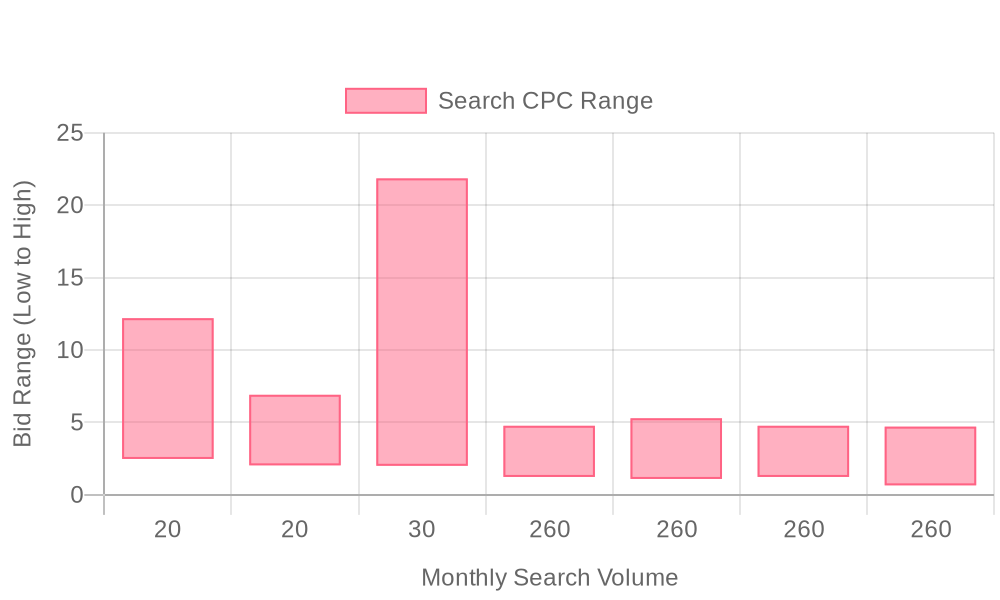
| Industry | Keyword | Monthly Search Volume | Competition Level | Low Bid | High Bid |
| Heavy Equipment Cleaning Services | heavy equipment cleaning services | 20 | LOW | 2.48 | 12.2 |
| Heavy Equipment Cleaning Services | heavy equipment pressure washing near me | 20 | MEDIUM | 2.04 | 6.91 |
| Heavy Equipment Cleaning Services | heavy equipment cleaning services near me | 30 | MEDIUM | 2.01 | 21.85 |
| Heavy Equipment Cleaning Services | heavy equipment pressure washing | 260 | LOW | 1.24 | 4.77 |
| Heavy Equipment Cleaning Services | heavy equipment washing | 260 | MEDIUM | 1.1 | 5.29 |
| Heavy Equipment Cleaning Services | power washing heavy equipment | 260 | LOW | 1.24 | 4.77 |
| Heavy Equipment Cleaning Services | cleaning heavy equipment | 260 | MEDIUM | 0.66 | 4.71 |
Effective Google Ads strategies for heavy equipment cleaning services depend on precision and relevance at every level of targeting. High-intent prospects in this industry often search with urgent needs, making it essential to intercept them with terms that align directly with their pain points, such as "industrial equipment cleaning," "heavy machinery washing," or "construction fleet cleaning near me." Using industry-specific modifiers like "EPA-compliant," "mobile," or "commercial" further qualifies traffic, ensuring budgets are spent on leads that match your ideal client profile.
A comprehensive keyword plan should incorporate both broad and long-tail variations to maximize reach and conversion efficiency. For example, pairing service terms ("heavy equipment cleaning") with location-based modifiers ("in Houston," "near Atlanta") can drive cost-effective local campaigns. Including negative keywords like "DIY" or "consumer" prevents wasted spend on irrelevant searches. This approach not only increases qualified lead volume but also improves campaign ROI by focusing on searches with genuine purchase intent.
B2B marketers can benefit from real-time audience integration that identifies which companies are clicking on ads and how those visits relate to downstream pipeline. When keyword lists are dynamically updated based on in-market behavior, campaigns can shift budget to the highest-converting terms and audiences. Integrating CRM and ad platforms allows marketing and sales teams to sync enriched audiences, track offline conversions, and attribute revenue to specific keyword groups, supporting a fully unified demand generation approach. To maximize the impact of your campaigns, get started for free with Sona and see how advanced tools can power your heavy equipment cleaning advertising strategy.
Step-by-Step Campaign Execution Framework
Precision in campaign structure drives results for heavy equipment cleaning services. Marketers leveraging unified data and intent signals consistently outperform generic digital marketing for cleaning services. Optimizing every touchpoint, keywords, creative, landing pages, and feedback loops, ensures each dollar spent on Google Ads for Heavy Equipment Cleaning Services accelerates qualified pipeline growth. Explore more actionable best practices in our marketing and analytics blog.
Step 1: Build Targeted Keyword Lists
Segmenting keyword lists by specific cleaning services and localizing terms with city or neighborhood modifiers enables granular targeting. This approach ensures your ads reach organizations actively searching for heavy equipment cleaning in their vicinity, maximizing relevancy and click-through rates. Marketers using advanced visitor identification can pinpoint high-value prospects by identifying which companies land on campaign pages, allowing for immediate audience enrichment and more precise retargeting.
Dynamic audience updates further refine targeting as buyer intent shifts. As leads interact with your campaigns, updating audience lists in real time ensures your ads are always shown to those most likely to convert, significantly improving ROI for PPC for heavy equipment cleaning. For additional tips on ad creation and optimization, see this guide on ads for cleaning services.
The upgrade most heavy equipment cleaning services advertisers miss is going beyond raw keyword volume to layer in intent and identity signals. By connecting website-visitor data and CRM records with Sona Marketing Measurement, you can see which specific search terms bring in the accounts and customers that actually convert, and weight your keyword and bidding strategy toward those rather than the terms with the highest search volume alone.
Step 2: Develop Compelling Ad Copy
Effective ad copy for heavy equipment cleaning services should directly address industry pain points, such as minimizing downtime, regulatory compliance, or safety hazards. Use trust markers like industry certifications, years in business, or client testimonials to foster credibility. Instilling urgency, such as limited-time offers for new contracts or emergency cleaning services, can drive immediate action.
With real-time intent data, marketers can adapt messaging based on in-market behavior, ensuring ad copy aligns with the prospect's readiness to buy. This adaptability drives higher engagement, especially when paired with CRM-synced audience segments that reflect the current stage of each account.
Step 3: Design Effective Landing Pages
Landing pages must tightly align with ad messaging and targeted keywords, providing a seamless experience that reassures visitors they have found the right solution. Clear calls-to-action (CTAs), such as booking a site assessment or requesting a quote, streamline the conversion path for decision-makers in need of heavy machinery cleaning. Incorporate trust signals, case studies, before-and-after galleries, and safety credentials, to further reduce friction.
To capitalize on high demo interest, integrate remarketing strategies that trigger tailored follow-ups for visitors who engage but do not convert. Marketers benefit from automated audience sync, ensuring that those who interact with landing pages but exit prematurely are served relevant reminder ads or nurtured via email, increasing the likelihood of re-engagement.
Step 4: Implement Data-Driven Optimizations
Tracking conversions at every stage, online forms, phone calls, and even offline sales meetings, provides a complete view of campaign effectiveness. Importing offline conversions into Google Ads closes the feedback loop, allowing teams to attribute revenue directly to specific keywords or campaigns and optimize spend accordingly.
Integrating campaign data with CRM systems ensures audiences are enriched with real-time sales insights, enabling more accurate targeting and retargeting. This unified approach drives actionable insights, revealing which touchpoints and audience segments generate the highest Google Ads ROI for cleaning businesses and empowering ongoing optimization cycles. For continuous improvement, get expert answers to your campaign challenges in the Q&A portal.
Sona Marketing Measurement closes the gap between clicks and revenue. It captures every ad click with first-party measurement, ties that click through UTM capture and ad-platform APIs to the actual record in your CRM, and reports ROAS by keyword and campaign instead of by last-click form fill. Feeding that revenue signal back into Smart Bidding and Performance Max compounds over time: the algorithms optimize toward booked heavy equipment cleaning services revenue, not cheap leads.
Tips on Expanding Your Heavy Equipment Cleaning Services Presence
Modern heavy equipment cleaning providers drive growth by ensuring every digital touchpoint reinforces their brand and delivers measurable value. With expanding competition and fluctuating demand, precise channel coordination and data-driven outreach become vital for consistently capturing and retaining the right accounts.
- Unified Campaign Messaging: Align campaign messaging across search, display, and social channels to eliminate siloed outreach and minimize wasted ad spend. Consistency in tone and offer presentation increases recognition among decision-makers in industries like construction, mining, and logistics, leading to higher engagement and conversion rates.
- Cross-Channel Retargeting with Value: Retargeting segments built from CRM and ad engagement data can be used to cross-promote educational resources such as maintenance checklists or compliance guides. By leveraging real-time behavioral insights, marketers can serve relevant content that nurtures leads and up-sells additional services, such as fleet sanitization or mobile on-site cleaning.
- Upsell via Segmented Audiences: Use CRM-driven audience lists to upsell complementary services at key moments in the customer journey. Dynamic audience updates, based on client interactions and purchase history, ensure offers stay relevant and timely, boosting retention and lifetime value.
- Industry Partnerships and Referrals: Collaborate with associations and equipment dealerships to tap into referral traffic and enhance local credibility. These partnerships generate both inbound leads and co-marketing opportunities, expanding reach within targeted regions and verticals.
- Localize and Optimize Share-of-Voice: Localize campaigns to dominate high-value service areas and adapt messaging to regional industry trends or compliance requirements. Increase visibility with Google Ads to drive more qualified, conversion-ready traffic.
- Content Development from Search Data: Leverage search query data from ad platforms to identify emerging pain points and frequently asked questions. Integrate these themes into blog posts and FAQs, and landing pages to address prospect concerns and improve organic and paid campaign performance.
- Synchronized Messaging with Data Integration: Synchronize messaging across CRM, website, and ad platforms to ensure every interaction, whether from a cold ad click or a returning client, is personalized and informed by up-to-date data. When enriched audience segments and lead statuses sync seamlessly with campaign platforms, marketers can deliver the right offer to the right account at the right time, driving more efficient acquisition and retention.
Incorporating these strategies strengthens your digital marketing for cleaning services while improving campaign efficiency, brand authority, and measurable ROI in a specialized sector like heavy equipment cleaning.
Beyond Google Ads: Winning the AI Answers Heavy Equipment Cleaning Services Buyers Now Trust
Paid search captures demand at the moment someone types a query. But a fast-growing share of heavy equipment cleaning services buyers no longer start at Google at all, they ask ChatGPT, Gemini, or Perplexity before they ever run a search, and Google's own AI Overviews increasingly summarize an answer above the traditional results. If your business isn't referenced in those AI answers, you're invisible at the exact moment buyers build their shortlist.
Sona AI Visibility shows where your business shows up across ChatGPT, Gemini, Perplexity, Google AI Overviews, and 10+ engines, and, much like a keyword report, which prompts actually send you buyers, so you can prioritize the ones that convert. Run the two together and you cover the entire buyer path: get cited where buyers research (AI Visibility), then prove which of that demand turns into booked revenue (Marketing Measurement).
Helpful resources
Conclusion
Google Ads works for heavy equipment cleaning services because it meets buyers at the one moment that matters most: when a fleet manager or facilities director is actively searching for a vendor who can solve a problem now, not next quarter. Get the keyword targeting, audience segmentation, and offline attribution right, and the channel stops being a cost center and starts functioning as a measurable pipeline source.
The operators who win this channel long-term are the ones treating AI-driven search discovery as seriously as they treat Search campaigns today. As more buyers ask ChatGPT or Gemini before they ever open Google, showing up in those answers, and proving which of them convert, will separate the businesses that get the call from the ones that don't.
To put these strategies to work, start for free and see how Sona's platform can sharpen your targeting and prove out your ad spend.
FAQ
How can I set up a successful Google Ads campaign for heavy equipment cleaning services?
To set up a successful Google Ads campaign, focus on industry-specific keyword and intent targeting, integrate with CRM systems for audience segmentation, and employ precise geo-targeting and remarketing strategies.
What are the best practices for targeting the right audience with Google Ads for heavy equipment cleaning?
Best practices include using audience intelligence to target decision-makers, layering audience targeting by company size, location, and in-market signals, and regularly updating audience segments as leads progress through the funnel.
How can I track and measure the effectiveness of my Google Ads for heavy equipment cleaning services?
Effectiveness can be measured through real-time campaign analytics, online and offline conversion tracking, and integrating offline sales data to attribute revenue back to specific keywords, audiences, and creatives.
What is the average cost per click for Google Ads in the heavy equipment cleaning industry?
The article does not provide a specific average cost per click for the heavy equipment cleaning industry.
How can I integrate Google Ads with my existing CRM system to improve lead generation for heavy equipment cleaning services?
Integrate Google Ads with CRM systems by syncing enriched contact data with ad platforms, enabling seamless follow-up and precise retargeting, which improves lead generation and pipeline acceleration.
What are some creative ad copy examples for Google Ads targeting heavy equipment cleaning services?
Effective ad copy should address industry pain points like compliance, downtime, and safety, using trust markers such as certifications and client testimonials to foster credibility and drive immediate action.
How can I optimize my Google Ads for better conversion rates in the heavy equipment cleaning niche?
Optimize by aligning ad copy and landing pages with industry pain points, using clear calls-to-action, and implementing remarketing strategies to re-engage visitors who do not convert initially.
What are the most effective keywords for Google Ads in the heavy equipment cleaning services sector?
Effective keywords include terms like 'heavy equipment degreasing,' 'industrial machinery cleaning services,' and 'fleet pressure washing,' combined with industry-specific modifiers like 'EPA-compliant' or 'commercial.'
How can I use Google Ads to compete with larger cleaning service providers in the heavy equipment industry?
Compete by leveraging precise audience targeting, enriched data for segmentation, and integrating cross-channel strategies that ensure all interactions are informed by up-to-date data, maximizing efficiency and impact.
What is the role of geo-targeting in Google Ads for heavy equipment cleaning services?
Geo-targeting plays a crucial role by allowing campaigns to reach organizations actively searching for services in specific locations, thereby maximizing relevancy and improving click-through rates.







