


Fire insurance claims spike after a wildfire, a lightning strike, or a neighborhood house fire, and that's exactly when homeowners and property managers start searching for coverage. Most of them research quietly, comparing quotes and reading about claims processes long before they fill out a form, so the challenge is real: how do you find them before a competitor does? Google Ads solves this by putting your offer in front of people at the moment they're actually looking. Succeeding in fire insurance means intercepting prospects when urgency is highest, tailoring messages to distinct buyer segments, and using tools that track and respond to intent as it happens.
How to Generate Fire Insurance Leads with Google Ads: A Step-by-Step Guide

Fire insurance buyers frequently research coverage anonymously; a homeowner in a wildfire zone or a property manager renewing a commercial policy will compare options for days before ever submitting a quote request. That gap between research and contact makes intent hard to capture. Modern digital marketing for insurance closes it, surfacing intent-rich audiences so campaigns spend against real demand instead of guesswork.
This guide details a pragmatic, data-driven approach to insurance lead generation using Google Ads for Fire Insurance. By focusing on advanced targeting, precise audience segmentation, and real-time attribution, B2B teams can continuously refine their acquisition strategies and outperform static, generic fire insurance campaigns.
By integrating real-time visitor identification and intent signals, marketers can go beyond static targeting and dynamically adjust budgets toward accounts demonstrating genuine buying signals. When enriched audience segments are synced directly into Google Ads and connected CRM systems, teams ensure no high-potential lead slips through the cracks. Advanced attribution, including both online and offline conversions, provides a clear view of which fire insurance Google Ads strategies deliver the highest ROI, enabling continuous optimization and campaign scaling.
The following framework breaks down each step in building, launching, and refining a high-performance fire insurance lead generation campaign, from keyword selection to cross-channel attribution, so B2B revenue teams can unlock new levels of digital marketing efficiency. Ready to transform your lead generation? Get started for free with Sona.
Why Does Google Ads Matter for Fire Insurance

Fire insurance providers operate in a high-stakes environment where timing and precision are vital. Potential policyholders often search for coverage after a triggering event or when prompted by local risk, and the window to capture their attention is brief. The ability to immediately identify and engage prospects, even before they fill out a form, gives marketers a crucial advantage in a crowded marketplace.
Modern data-driven digital marketing for insurance enables companies to move beyond generic targeting. By leveraging advanced visitor recognition and in-market behavioral signals, teams can distinguish between casual browsers and those truly in need of fire insurance. For a comprehensive overview of how insurance agents can leverage Google Ads for increased visibility and lead generation, see this guide for insurance agents.
In practical terms, insurance PPC best practices now include integrating real-time audience insights directly into campaign workflows. Marketers can build dynamic audience segments that update as leads progress through the buying journey, ensuring ad dollars are always directed at the accounts most likely to convert. For more actionable tips, explore our insurance marketing playbooks.
Furthermore, by syncing enriched audiences and lead data from CRM systems into Google Ads, insurance marketers can orchestrate seamless, personalized follow-up across channels. This closes the loop between online engagement and offline sales, giving B2B teams unprecedented visibility into which tactics actually drive ROI. The result is a measurable, responsive, and highly effective approach to fire insurance advertising that meets both the urgency of consumer demand and the complexity of B2B sales cycles. To experience these capabilities, get started for free with Sona.
- Search Campaigns: Fire insurance providers see the highest urgency from users searching for coverage after a local incident, property purchase, or renewal prompt. Search campaigns capture these high-intent queries in real time, ensuring your offering appears at the precise moment prospective clients are actively comparing options. By analyzing real-time search behavior and identifying exactly which companies and individuals are engaging, marketers can dynamically boost bids or allocate additional budget to segments showing the strongest signals of purchase readiness. For a comprehensive look at optimizing Google Ads for insurance, see this guide for insurance company PPC campaigns.
- Display Campaigns: Display ads keep your brand visible across news, finance, and real estate sites, reaching homeowners and property managers before they enter the buying cycle. This approach builds familiarity and trust, laying the groundwork for higher engagement when prospects later move to active research. Audience insights from unified data sources enable precise display targeting, ensuring ads are shown to users showing early interest in fire insurance or related risk management topics.
- Remarketing Campaigns: Not all prospects convert on their first visit, remarketing campaigns re-engage users who previously interacted with your site or landing pages. By updating audience lists automatically as prospects engage, request quotes, or drop off, remarketing efforts stay relevant and timely, pushing the most qualified leads back into the funnel when their purchase intent spikes. For more strategies, explore our marketing and analytics blog.
- Segment-Specific Campaigns: Fire insurance needs vary between segments like single-family homeowners, landlords, and commercial property owners. Creating separate campaigns for each segment allows you to tailor messaging, value propositions, and coverage details to resonate with each group’s unique risks and priorities. With continuously refreshed audience data, marketers can launch and refine segment-specific campaigns that react to changing business attributes, ensuring ongoing relevance and engagement.
- Asset-Enhanced Campaigns: Ad assets (formerly called extensions) give prospects additional information right in the ad, increasing trust and driving higher click-through rates. Showcasing certifications, emergency response times, and click-to-call options directly within your ads encourages immediate action and differentiates your offer from generic quote-comparison sites. As new certifications or service capabilities emerge, assets are easily updated to reflect the most current and compelling reasons for prospects to engage, supporting a dynamic and authoritative digital presence.
Where to Find Growth Opportunities in Fire Insurance Google Ads
Growth in fire insurance advertising depends on identifying which business audiences are engaging meaningfully with your digital assets. Marketers who move beyond surface-level traffic reports and focus on pinpointing high-intent organizations set themselves up to capture demand where it is already building.
Success starts by drilling into vertical keyword opportunities. Analyze search trends and segment-specific terms to find areas where competitors have limited presence or where demand is surging but not yet saturated. For example, niche phrases like "commercial fire insurance for warehouses" or "wildfire coverage for property managers" often reveal pockets of qualified search volume that broader competitors miss. A robust competitor analysis, such as insights from best practices for Google Ads in insurance, reveals gaps in coverage, letting your campaigns target underserved markets with tailored messaging.
Today’s platforms empower marketers to enrich their strategies by identifying which businesses are actually browsing their site, not just anonymous visitors. When you know which companies are researching fire insurance solutions, you can prioritize ad spend on accounts with the strongest purchase intent. This enables dynamic audience creation, your remarketing lists are no longer static but update in real-time as leads progress through your funnel or display new intent signals. As a result, you can launch content retargeting campaigns that nurture prospects, reinforce your expertise, and keep your brand top of mind until they’re ready to engage.
Growth-minded teams also leverage CRM and ad platform integrations to keep audience segments synchronized. This means that as soon as a qualified lead is identified or moves closer to a decision, they are automatically included in relevant Google Ads campaigns, ensuring timely and personalized messaging. With advanced conversion tracking, you can attribute results to both online actions and offline sales discussions, giving you a true picture of ROI across every stage of the buyer journey. This unified, data-driven approach helps fire insurance marketers act on growth opportunities with more precision and less wasted spend.
How to Apply Audience Segmentation for Fire Insurance

Effective audience segmentation for fire insurance marketing is critical for campaign performance. By identifying, segmenting, and engaging distinct groups based on their needs and intent, marketers create more relevant Google Ads experiences and maximize conversion potential in a highly competitive space. Customizing each ad group to align with various buyer personas leads to improved engagement, greater ad relevance, and lower costs per acquisition. For more tactical insights, explore this comprehensive guide for insurance company PPC campaigns.
Defining key market segments is the first step toward effective fire insurance advertising. This involves analyzing demographic, firmographic, and behavioral data to isolate high-value groups such as recent homebuyers in wildfire-prone regions, property managers overseeing multi-unit dwellings, or commercial property owners with specific coverage needs. By mapping these segments, marketers ensure each campaign targets a clearly defined audience with tailored messaging that resonates with their unique risk profiles and triggers. Learn more about data-driven segmentation in the Essential Guide to Account Identification.
Overlaying intent signals refines targeting further by identifying prospects who are actively researching or ready to purchase fire insurance, whether that's a homeowner rebuilding a quote after a wildfire warning or a property manager comparing renewal terms before a policy lapses. Real-time analysis of in-market behaviors, search queries, and site interactions enables dynamic audience updates and budget allocation toward accounts showing the strongest signals to convert. As leads progress through the funnel, segmentation shifts messaging from awareness content to urgency-driven calls to action for those closer to the decision.
Integrating segmentation with CRM and ad platforms unifies touchpoints across digital marketing for insurance and sales. When enriched audience data syncs seamlessly into Google Ads and CRM systems, revenue teams gain a holistic view of each account's journey. This unified approach empowers advanced conversion tracking, including both online engagements and offline touchpoints like agent calls or policy signings, providing accurate ROI measurement and enabling precise retargeting. As a result, fire insurance campaigns stay aligned with revenue objectives and adapt as buyer behavior shifts, driving higher-value leads and steadier growth.
This is also where measurement changes the economics. With Sona Marketing Measurement you can identify the companies and buyers behind your ad clicks, not just anonymous sessions, and segment audiences by who actually becomes a customer. That lets you build bid adjustments and audience signals around the segments that convert and de-prioritize the ones that don't, so you feed Google's algorithms "this click became a paying fire insurance customer" instead of just "someone filled out a form."
Keyword Strategy & Sample Target Terms for Fire Insurance
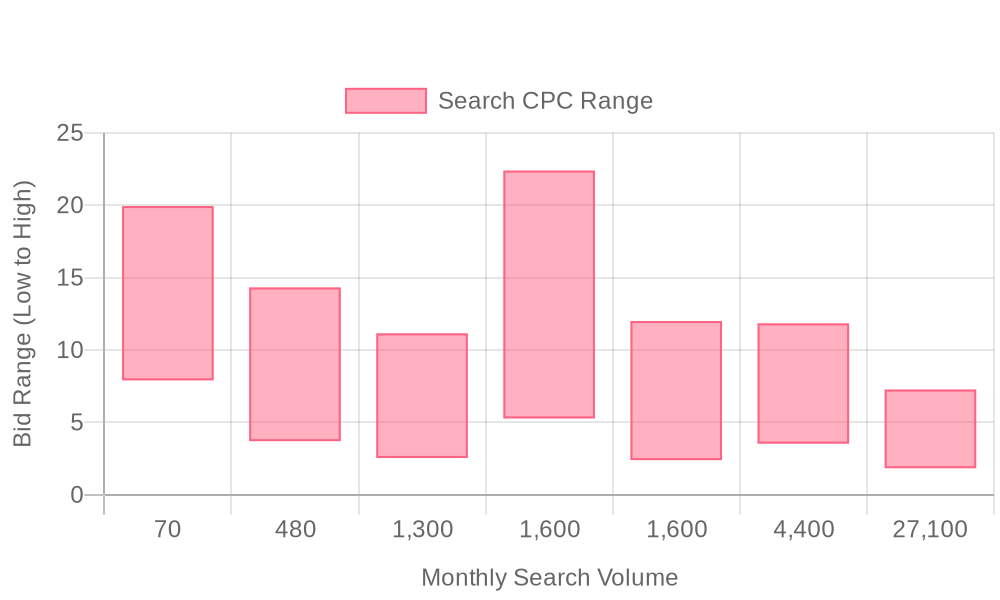
| Industry | Keyword | Monthly Search Volume | Competition Level | Low Bid | High Bid |
| Fire Insurance | fire and theft car insurance | 70 | LOW | 7.91 | 19.94 |
| Fire Insurance | fire insurance coverage | 480 | MEDIUM | 3.71 | 14.32 |
| Fire Insurance | allstate fire and casualty insurance company | 1300 | LOW | 2.55 | 11.15 |
| Fire Insurance | home fire insurance | 1600 | MEDIUM | 5.28 | 22.39 |
| Fire Insurance | state farm fire and casualty company | 1600 | LOW | 2.4 | 12 |
| Fire Insurance | fire insurance | 4400 | MEDIUM | 3.54 | 11.84 |
| Fire Insurance | bluefire insurance | 27100 | LOW | 1.84 | 7.27 |
An effective keyword strategy for fire insurance advertising drives higher-quality leads and improves budget efficiency. Successful campaigns rely on identifying user-centric search terms that reflect immediate needs, such as "fire insurance cost calculator," "fire insurance coverage for wildfire," or "apply for fire insurance online." These queries demonstrate strong purchase intent and signal a user's position in the buying cycle, allowing marketers to prioritize conversions over low-value clicks. Explore a list of popular marketing-related keywords to inform your next campaign.
By analyzing keyword traffic volumes and competition levels, revenue teams can isolate opportunities that align with specific service offerings. High-intent long-tail phrases, for example, often yield lower acquisition costs while capturing prospects further along the decision journey. Incorporating negative keywords, such as “firefighter careers,” “fire safety tips,” or “fireplace insurance”, prevents wasted spend on irrelevant audiences. This not only protects campaign ROI but also ensures messaging is consistently targeted to those most likely to convert. For actionable strategies, refer to our essential guide to account-based marketing.
Precision is amplified when marketers leverage intent data and behavioral signals to refine their keyword lists in real time. Rather than relying solely on static lists, real-time audience insights enable quick adaptation as trends shift or new search terms emerge. Platforms that identify both anonymous and known visitors at the company level empower teams to align ad spend with the highest-value segments. By syncing enriched audience data directly into ad platforms, marketers can deploy custom keyword lists to maximize visibility among in-market accounts and reallocate budget to the best opportunities as they arise.
A robust keyword strategy for Google Ads for Fire Insurance should always reflect the language of the buyer and the evolving risk landscape. Sample high-converting terms include “emergency fire insurance quote,” “wildfire insurance near me,” “home fire damage protection,” and “commercial fire policy application.” Prioritizing these terms, while continuously filtering out non-relevant traffic, forms the foundation of sustainable insurance lead generation and conversion-focused digital marketing for insurance. To take the next step, get started for free with Sona and unlock advanced targeting capabilities for your campaigns.
Step-by-Step Campaign Execution Framework

Modern insurance marketers who leverage Google Ads for Fire Insurance campaigns experience a measurable lift in policy leads when they tie keyword strategy, creative, and digital tracking seamlessly together. The ability to identify, nurture, and convert high-intent buyers hinges on building a data-driven execution process that aligns every interaction with the unique urgency and risk profile of fire insurance shoppers.
This framework provides a tactical roadmap for insurance PPC best practices, from keyword discovery to continuous optimization. Each step is designed to help revenue teams unlock deeper insights, unify Go-to-Market data, and drive higher-value conversions across the funnel. For additional actionable guides, explore the insurance marketing playbooks.
Step 1: Build Targeted Keyword Lists
Successful fire insurance campaigns begin with granular keyword research. High-performing marketers cluster keywords by service type, such as “wildfire insurance coverage,” “commercial fire insurance,” or “residential fire protection,” then layer on locality modifiers like city names or neighborhood identifiers. This approach increases relevance for searchers and lowers wasted ad spend, as detailed in this guide for insurance PPC strategy.
Integrating long-tail keywords is critical for insurance lead generation. Targeting phrases such as “emergency fire insurance for condos in Phoenix” or “best wildfire insurance quotes California” attracts buyers with specific needs and intent, improving click-through and conversion rates. Negative keyword filtration further sharpens targeting by excluding irrelevant traffic, terms like “fire pit insurance” or “firefighter jobs” are systematically filtered out to maximize budget efficiency.
With unified data from Sona's Identity Resolution, marketers can pinpoint not just keywords, but also the companies and individuals behind each search. This enables the creation of dynamic keyword lists that automatically evolve as new audiences engage, keeping targeting aligned with real-time market demand.
The upgrade most fire insurance advertisers miss is going beyond raw keyword volume to layer in intent and identity signals. By connecting website-visitor data and CRM records with Sona Marketing Measurement, you can see which specific search terms bring in the accounts and customers that actually convert, and weight your keyword and bidding strategy toward those rather than the terms with the highest search volume alone.
Step 2: Develop Compelling Ad Copy
Effective Google Ads strategies for insurance depend on ad copy that resonates with the concerns and motivations of today’s buyers. Addressing industry pain points, such as the risk of property loss, navigating claim processes, or recent changes in fire zone regulations, can immediately capture attention. Messaging that directly acknowledges local threats or recent fire events demonstrates understanding of the audience’s urgency.
Trust markers are essential in fire insurance advertising. Including references to years of expertise, regulatory compliance, and customer satisfaction scores reassures prospects evaluating providers in a crowded field. Time-sensitive offers, such as “Immediate wildfire coverage” or “Same-day policy activation,” create urgency and motivate quick action, especially when paired with high-visibility call extensions or local service highlights.
Through real-time intent monitoring, marketers can dynamically adjust ad copy based on changing audience behavior or risk events. For a deeper dive into 2024 strategies, see best practices for insurance Google Ads.
Step 3: Design Effective Landing Pages
Landing page experience is the linchpin of digital marketing for insurance. Alignment across keyword, ad, and landing page content is non-negotiable for driving conversions. Each page should reinforce the promise made in the ad, using clear headlines and direct pathways to quote forms or policy details.
Incorporating ROI calculators enables visitors to estimate savings or compare coverage options, increasing engagement and reducing friction. Credible badges, such as industry certifications, third-party ratings, or testimonials from fire-affected policyholders, bolster trust and further validate the offering. Pages optimized for speed and mobile usability retain high-intent leads who often seek immediate solutions after an incident.
Advanced analytics tools allow marketers to track buyer journeys from first click to quote request, mapping individual journeys and identifying drop-off points. By syncing enriched lead data into CRM and ad platforms, teams can retarget lost opportunities and nurture warm prospects with tailored follow-up.
Step 4: Implement Data-Driven Optimizations
Driving long-term success in fire insurance campaigns relies on continuous, data-driven improvement. Conversion tracking is established at every step, calls, form fills, and policy binds, enabling teams to attribute results accurately and measure true ROI. Smart bidding strategies, such as target CPA or maximize conversion value, are layered on to automatically allocate budget to the highest-performing keywords and audiences.
A/B testing becomes a core discipline: headlines, CTAs, and trust elements are rotated to isolate top performers. Results are reviewed in bi-weekly cycles, with underperforming assets replaced and winning creatives scaled. Dynamic audience building ensures remarketing pools remain fresh, automatically updating as leads progress through the funnel or as new account-level signals emerge.
Syncing CRM and ad data ensures that every conversion, whether online or offline, is captured and attributed. This closed-loop measurement empowers marketers to optimize spend with precision, eliminating wasted impressions and focusing resources on the highest-value segments for fire insurance online marketing.
Sona Marketing Measurement closes the gap between clicks and revenue. It captures ad clicks with first-party measurement, ties them through UTM capture and ad-platform APIs to the matching company record in your CRM, and reports ROAS by keyword and campaign instead of by last-click form fill. Feeding that revenue signal back into Smart Bidding and Performance Max compounds over time: the algorithms optimize toward booked fire insurance revenue, not cheap leads.
Tips on Expanding Your Fire Insurance Presence

Expanding your fire insurance reach requires a well-coordinated digital marketing approach that blends education, targeting, and ongoing optimization. By leveraging audience insights and campaign analytics, providers can attract, educate, and convert high-value prospects in even the most competitive markets.
Cross-promoting educational resources, such as wildfire prevention guides and claims preparedness checklists, positions your brand as a trusted authority while providing meaningful value to prospects and policyholders. Sharing these assets via blog posts and email campaigns not only amplifies reach but also nurtures credibility. When combined with ongoing search data analysis, this approach continuously surfaces new content topics that address emerging homeowner concerns, keeping your messaging current and highly relevant.
Utilizing CRM data for upselling and renewal opportunities creates a pipeline for incremental policy growth. By syncing enriched audience segments directly into your ad platforms, you can deliver timely, personalized offers to existing customers, such as increased coverage limits during wildfire season or bundled policy discounts for high-value homes. Leveraging Destinations ensures no warm lead goes unnoticed and that your campaigns adapt as prospects move through different stages of the buyer journey.
Establishing partnerships with local fire departments, real estate agencies, and homeowner associations can drive valuable referral traffic and foster trust within the community. These collaborations help localize your campaigns and connect your expertise to those most at risk, boosting both brand awareness and conversion rates. Enhanced targeting that recognizes unique regional fire risks enables marketers to craft hyperlocal messaging and allocate budgets precisely where urgent demand is greatest.
Continuous campaign tracking and audience enrichment are essential for maximizing the impact of your Google Ads for Fire Insurance initiatives. By identifying previously anonymous website visitors and linking their in-market behaviors to CRM records, you can prioritize outreach to accounts demonstrating the strongest purchase intent. Dynamic audience updates ensure your campaigns automatically adjust as leads progress from awareness to decision, while advanced conversion tracking accounts for both online and offline touchpoints, offering a complete view of performance and true ROI.
Fire insurance providers who adopt an agile, data-driven approach to digital marketing see more meaningful engagement, higher lead quality, and smarter budget allocation. Pairing sharply targeted ads with enriched audience data turns your online presence from a static billboard into a real-time engine for lead generation and revenue growth.
Beyond Google Ads: Winning the AI Answers Fire Insurance Buyers Now Trust
Paid search captures demand at the moment someone types a query. But a fast-growing share of fire insurance buyers no longer start at Google at all, they ask ChatGPT, Gemini, or Perplexity before they ever run a search, and Google's own AI Overviews increasingly summarize an answer above the traditional results. If your business isn't referenced in those AI answers, you're invisible at the exact moment buyers build their shortlist.
Sona AI Visibility shows where your business shows up across ChatGPT, Gemini, Perplexity, Google AI Overviews, and 10+ engines, and, much like a keyword report, which prompts actually send you buyers, so you can prioritize the ones that convert. Run the two together and you cover the entire buyer path: get cited where buyers research (AI Visibility), then prove which of that demand turns into booked revenue (Marketing Measurement).
Helpful resources
Conclusion
Winning fire insurance leads on Google Ads comes down to timing and precision: reaching homeowners and property managers at the moment risk becomes real, not after a competitor already has.
The providers who win this category treat every anonymous site visit as a lead worth identifying, every click as revenue to be traced, and every AI answer engine as a new front door. That combination, tight keyword and audience targeting matched to real buying signals, is what separates a fire insurance brand that merely runs ads from one that compounds market share.
To take your marketing efforts further, start for free and see how unifying your go-to-market data turns anonymous traffic into identified, revenue-tied pipeline.
FAQ
What are the best practices for Google Ads in fire insurance?
Best practices include using search, display, and remarketing campaigns, segmenting audiences, and leveraging advanced targeting tools to capture high-intent prospects.
How can I effectively target customers for fire insurance using Google Ads?
Effectively target customers by using precise audience segmentation, real-time intent signals, and remarketing strategies to engage prospects at different stages of the buying journey.
What budget should I allocate for Google Ads for fire insurance?
Allocate a budget that allows for dynamic adjustment based on real-time signals, ensuring funds are directed towards accounts with genuine buying intent.
What keywords should I use for fire insurance Google Ads?
Use high-intent keywords like 'fire insurance quotes,' 'wildfire coverage for homes,' and long-tail phrases specific to your service offerings and target locations.
How do I measure the success of my Google Ads for fire insurance?
Measure success through advanced attribution, tracking both online and offline conversions, and continuously optimizing campaigns based on performance data.







