


A contractor bidding on a public project cannot start work without a bond, and that urgency shapes how bond insurance is bought and sold. Effective B2B marketing for this trade blends online and offline channels: social media builds digital brand awareness, email nurtures relationships, and SEO extends organic visibility, while trade shows, direct mail, and industry publications build the offline case for trust. Google Ads sits at the center of that mix, capturing high-intent prospects at the moment they search for bond solutions and bridging awareness efforts with the sales process. For bond insurance businesses, Google Ads holds immense potential:
How to Generate Bond Insurance Leads with Google Ads: A Step-by-Step Guide

Insurance agencies and B2B marketers in the surety and bond insurance space operate in a market that demands precision targeting and rapid response to complex client needs. Leveraging Google Ads for insurance leads amplifies reach to decision-makers actively searching for bond products, delivering high-intent leads and accelerating customer acquisition.
A data-driven approach to paid search enables marketers to prioritize budget allocation based on real-time performance signals and intent signals. This framework outlines how to integrate Google Ads into a broader marketing mix, ensuring every campaign touchpoint is measurable, adaptive, and optimized for qualified lead flow and sustainable ROI.
- Integrate Paid Search with Multi-Channel Marketing: Unifying Google Ads with organic, referral, and outbound channels provides a holistic view of customer engagement. Marketing teams that synchronize paid search with CRM and sales data can trace the full buyer journey, identifying which touchpoints drive conversions and which audiences show the highest intent for bond insurance services. This approach transforms Google Ads from a standalone channel into a vital contributor to an orchestrated marketing ecosystem.
- Develop Keyword and Audience Targeting for Bond Buyers: Effective Google Ads strategies for insurance begin with hyper-specific keyword research mapped to the unique needs of bond insurance buyers. By leveraging advanced audience segmentation, marketers can build campaigns that focus on high-value segments, such as contractors seeking license bonds or business owners requiring performance bonds. Dynamic audiences, updated as leads progress through the funnel, ensure messaging remains relevant and personalized throughout the buyer cycle.
- Maximize Landing Page Conversion Through Creative Alignment: Landing pages tailored to each bond type and user persona increase conversion rates by addressing the exact questions and objections of each visitor. Integrating behavioral data from ad interactions enables real-time content adjustments, presenting the most compelling offers and trust signals to each prospect. Sona's Identity Resolution lets marketers recognize returning companies and adapt messaging based on their previous interactions, further increasing conversion likelihood.
- Implement Continuous Performance Optimization: Optimizing Google Ads for Bond Insurance is an ongoing process that relies on actionable data, including online and offline conversion events. Advanced conversion tracking connects ad spend to closed deals, not just clicks or form fills, revealing the true ROI of each campaign. Real-time intent signals allow marketers to shift budget toward high-converting accounts and reduce spend on low-performing audiences, ensuring every dollar is allocated for maximum impact.
- Strengthen Cross-Channel Integration for Scalable Growth: Integrating Google Ads data with email, social media, and direct sales outreach enables a cohesive lead nurturing experience. Syncing enriched lead and audience data directly into marketing automation and CRM platforms ensures that sales and marketing teams operate from a unified source of truth, accelerating follow-up and improving close rates. This seamless integration creates a self-improving feedback loop, where every campaign insight refines future targeting and messaging for the bond insurance market.
This step-by-step guide equips insurance agency advertising teams and B2B marketers to run high-performance PPC for bond insurance, driving measurable results and building leadership in a crowded market. If you're ready to accelerate your pipeline, get started for free with Sona.
Why Does Google Ads Matter for Bond Insurance?

Bond insurance marketers operate in a domain where urgency and specificity dictate outcomes. Google Ads delivers an immediate, intent-driven channel to connect with decision-makers actively researching bond solutions, outperforming broad-based awareness platforms that often miss these critical in-market moments. For a deeper look at how insurance agents can drive leads specifically on Google, see this lead generation guide for insurance. Marketers using Sona's Identity Resolution can go beyond anonymous traffic to identify the company evaluating their services, instantly tailoring follow-up or nurturing based on real business needs.
- Complex, Specialized Audience: Bond insurance prospects are rarely casual browsers; they are typically contract managers, legal teams, or business owners with unique requirements. While general digital marketing for insurance agents builds brand recognition, Google Ads targeting for insurance pinpoints these high-value personas right as they search for industry-specific coverage. Marketers can use precise audience intelligence to target the right personas as they search.
- Higher Margin Services: Insurance lead generation through Google Ads focuses on lucrative, high-premium products that rarely enter the pipeline through organic channels alone. By responding directly to transactional queries and nurturing high-intent users, agencies secure projects with margins that far exceed the average policy. As leads progress, dynamic audiences update in real time, ensuring marketing dollars are redirected toward accounts most likely to convert at higher values.
- Faster Demand Response: Google Ads enables insurance agents to capture urgent demand, such as last-minute surety requirements for project bidding or licensing. The agility of online advertising for bond insurance means your offer appears precisely when and where it’s needed, whether a contractor in a new metro area or a business facing a regulatory deadline. With real-time intent data, revenue teams can instantly shift spend toward emerging hot spots or capitalize on sudden industry trends.
- Visibility in Emerging Regions: Expansion into new metro areas or underserved markets becomes achievable through precise geo-targeting. Unlike static, broad campaigns, Google Ads allows hyperlocal outreach, so agencies can dominate search impressions in specific zip codes or states where demand for bond insurance is rising. When integrated with CRM and enriched lead data, audience segments adjust automatically as new opportunities are identified in growth corridors.
- Integrated Data Analysis: The complete ROI picture comes into focus with closed-loop measurement from first click to contract. By merging advanced conversion tracking and syncing lead data across Google Ads, CRM, and sales tools, insurance agency advertising teams can attribute every dollar spent to actual premium written. For more actionable strategies on optimizing your Google Ads investment, explore our marketing analytics blog.
Common Types of Google Ads Campaigns for Bond Insurance Services
The most common Google Ads campaign types for bond insurance are Search, Display, Video, Performance Max, and remarketing efforts layered across them, each suited to a different stage of the buyer's research.

- Search Campaigns: Search campaigns are the foundation of effective online advertising for bond insurance. These campaigns target high-intent prospects at the exact moment they search for solutions like "surety bond quote" or "contractor license bond near me," capturing demand as it surfaces. With enriched visitor identification, marketers can move beyond anonymous clicks to pinpoint which companies and buyers are engaging with these search ads, allowing for precise follow-up and prioritization. For agencies seeking proven strategies, this resource on insurance leads and Google Ads offers practical insights.
- Display Ads: Display ads keep your agency visible during the research phase, serving branded visuals across industry-relevant websites and news sources. This format is essential for maintaining top-of-mind awareness among contractors, legal professionals, and business owners who may not convert on their first visit. By syncing real-time intent signals, you can automatically adjust display placements to show ads only to accounts progressing toward purchase, maximizing impression value.
- Video Ads: Video advertising enables agencies to demystify the bond insurance process through engaging tutorials, explainer videos, and customer success stories. These assets are particularly effective for breaking down complex bond types or compliance steps, using platforms like YouTube to reach decision-makers in construction, logistics, and professional services. Dynamic audience management ensures that video campaigns retarget viewers as they advance through the marketing funnel, aligning messaging with their current level of interest.
- Remarketing: Remarketing campaigns re-engage website visitors and quote initiators who did not complete their applications. By leveraging advanced audience segmentation, you can serve tailored ads based on a prospect’s specific bond type, industry, or stage in the buying cycle, driving higher return visits and increased conversions. For more actionable ideas on re-engagement, explore our collection of marketing playbooks.
- Assets: Ad assets add vital trust signals and direct pathways for action, such as sitelinks to application pages, call buttons to licensed agents, and location details for local offices. These enhancements not only improve ad visibility but also reinforce your agency's credibility at the moment of decision. With unified tracking, every asset interaction can be attributed back to true revenue outcomes, allowing more accurate measurement of Google Ads ROI for insurance and continuous optimization of your bond insurance marketing strategy.
Where to Find Growth Opportunities?

Growth-focused insurance agencies recognize that expanding beyond established digital channels is essential for breaking through market plateaus. In the bond insurance sector, opportunity emerges by targeting segments underserved by generic search and display strategies, leveraging deeper audience insights and intent signals.
- Vertical keyword targeting: Specialty bond products, such as contractor or fidelity bonds, require precise keyword strategies aligned with your content pillars. By focusing on vertical-specific queries, marketers attract higher-intent buyers searching for nuanced solutions that generic insurance ads miss. To see how insurance agents can generate leads through Google Ads, review this guide to insurance leads on Google. This method directs spend to prospects with immediate needs, increasing qualified lead volume and improving cost per acquisition.
- Competitor gap analysis via auction insights: Using Google Ads auction insights, insurance marketers can identify gaps where competitors underperform or ignore certain bond types. This process highlights segments where your agency can establish authority and capture market share cost-effectively. When paired with real-time visitor identification, you can pinpoint which companies are actively searching for bond insurance but not engaging with your competitors, allowing for proactive outreach and targeted messaging.
- Industry-specific placements: Securing ad space on trade forums or directories relevant to construction, legal, or financial services increases visibility among decision-makers seeking bond insurance. These placements reach audiences not always active on mainstream channels, ensuring your brand stays top of mind during critical purchasing windows. Integrating audience data from these sources into your unified marketing stack allows for dynamic audience updates as prospects move from research to readiness, ensuring continued engagement without wasted impressions.
- Content retargeting with educational assets: Retargeting campaigns that leverage whitepapers, compliance checklists, or how-to videos nurture leads who have shown preliminary interest but are not yet ready to convert. Personalized retargeting sequences use intent data to serve the most relevant asset at the optimal stage, supporting a seamless handoff to sales when a lead's readiness signals peak. Advanced platforms automatically attribute both online and offline conversions back to these content interactions, clarifying which assets most effectively drive insurance customer acquisition and improve Google Ads ROI for insurance.
How to Apply Audience Segmentation for Bond Insurance

Precise audience segmentation drives measurable results in bond insurance marketing by matching each message to the right decision-maker. Revenue teams that tailor their Google Ads for bond insurance see higher conversion rates and more efficient spend by aligning campaign structure with the nuanced needs of their target segments. For deeper insights on campaign effectiveness, explore our marketing analytics blog.
- Define Segments: Market segmentation for bond insurance should reflect industry verticals, company size, and specific bond types required by prospects. For example, construction contractors seeking performance bonds represent a different audience than freight brokers needing surety bonds. By mapping out these distinct groups, marketers can build dedicated segments such as “contractor bonds,” “commercial license bonds,” or “court bonds,” ensuring each receives relevant messaging and offers. This specificity increases ad engagement and reduces wasted impressions from unqualified searchers.
- Overlay Intent Signals: Advanced segmentation leverages real-time intent data to distinguish between early-stage researchers and high-intent buyers. Monitoring signals like repeat site visits, time on bond application pages, and search queries related to urgent deadlines enables marketers to prioritize in-market accounts. Platforms that unify web, CRM, and ad data allow insurers to shift budget toward audiences actively comparing bond providers or submitting quotes, driving higher Google Ads ROI for insurance.
- Create Ad Groups by Segment: Structuring Google Ads campaigns with ad groups mapped to each audience segment ensures that ad copy, extensions, and landing pages speak directly to the prospect’s stage and needs. For example, messaging for commercial bond seekers should highlight easy application and quick approvals, while ad creative for complex contract bonds can focus on expert guidance and compliance support. Dynamically updating audience lists as leads move through the funnel enables teams to deliver timely retargeting and nurture campaigns, reducing drop-off and increasing close rates.
- Validate Conversion Paths: Integrating Google Ads conversion tracking with CRM systems verifies that qualified leads are attributed correctly, whether conversions happen online, over the phone, or through an agent follow-up. Sophisticated attribution models combine digital touchpoints with offline activities, providing a complete view of which segments and messages deliver the highest-value clients. Enriching ad audiences with CRM data ensures remarketing is both compliant and personalized, allowing teams to maximize insurance customer acquisition and prove the full impact of their online advertising for bond insurance.
This is also where measurement changes the economics. With Sona Marketing Measurement you can identify the companies and buyers behind your ad clicks, not just anonymous sessions, and segment audiences by who actually becomes a customer. That lets you build bid adjustments and audience signals around the segments that convert and de-prioritize the ones that don't, so you feed Google's algorithms "this click became a paying bond insurance customer" instead of just "someone filled out a form."
Keyword Strategy & Sample Target Terms
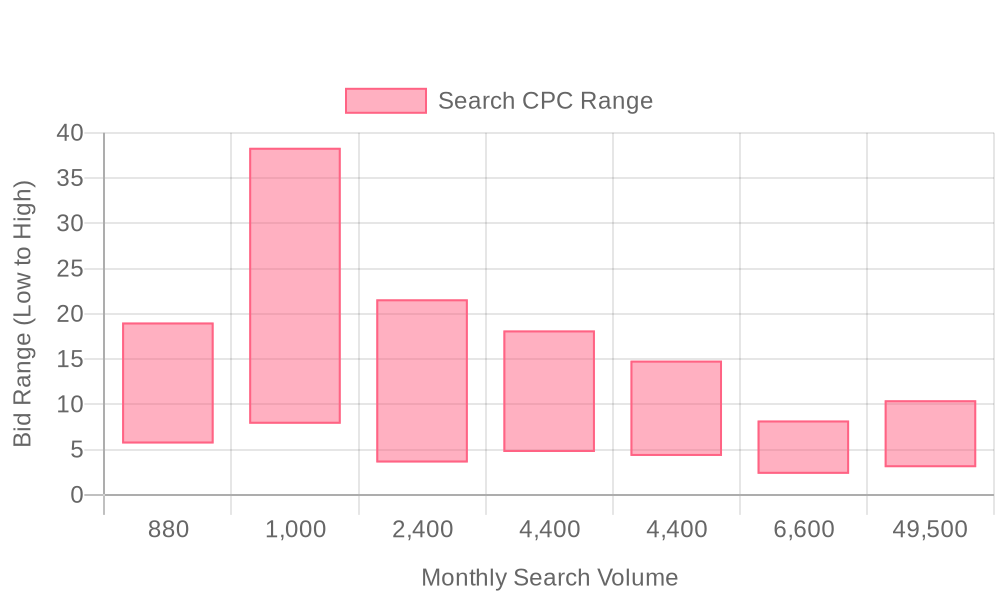
| Industry | Keyword | Monthly Search Volume | Competition Level | Low Bid | High Bid |
| Bond Insurance | bond insurance company | 880 | MEDIUM | 5.68 | 19.04 |
| Bond Insurance | notary errors and omissions insurance | 1000 | LOW | 7.86 | 38.34 |
| Bond Insurance | erisa bond | 2400 | MEDIUM | 3.58 | 21.6 |
| Bond Insurance | bond insurance | 4400 | MEDIUM | 4.74 | 18.16 |
| Bond Insurance | surety bond insurance | 4400 | MEDIUM | 4.3 | 14.83 |
| Bond Insurance | fidelity bond | 6600 | LOW | 2.33 | 8.21 |
| Bond Insurance | surety bonds | 49500 | MEDIUM | 3.06 | 10.45 |
Google Ads for Bond Insurance delivers a rare opportunity for insurance agencies to engage prospects at the exact moment they are actively seeking bonding solutions. By harnessing targeted keyword strategies, agencies can ensure their offers are visible to decision-makers who are ready to take action, maximizing both efficiency and impact for insurance lead generation. For more actionable insights on optimizing your campaign structure, explore our blog resources.
The most effective keyword approach for bond insurance blends transactional, comparison, and educational intent. High-converting terms such as "buy surety bond online," "performance bond quotes," and "contractor license bond fast" directly address prospects with immediate needs. Complementary research-based queries like "how do surety bonds work" or "cost of fidelity bond" capture early-stage researchers, allowing agencies to nurture these leads over time and build trust prior to purchase.
- Precision Targeting: Focusing on long-tail and geo-specific bond insurance keywords allows agencies to meet business owners, contractors, and legal professionals precisely when they need coverage. This results in higher click-through rates and a lower cost per acquisition, as ads are shown to those already primed for conversion. With the right platform integrations, marketers can go beyond anonymous clicks by identifying which organizations are engaging with their ads, enabling highly personalized follow-up and remarketing strategies.
- Measurable ROI: Bond insurance is a high-value, low-volume product, making every click and conversion critical. Advanced conversion tracking links ad engagement to both online form submissions and offline policy issuance, capturing the entire customer journey. By attributing revenue to specific keywords and campaigns, agencies gain a clear understanding of which investments drive the best results, allowing budgets to be adjusted in real time for maximum impact.
- Channel Synergy: Google Ads targeting for insurance works best when paired with coordinated remarketing across display, video, and social channels. Dynamic audience management enables marketers to update segments as leads progress through the funnel, ensuring that messaging remains relevant at every stage.
Step-by-Step Campaign Execution Framework
Step 1: Build Targeted Keyword Lists
Effective Google Ads for Bond Insurance campaigns begin with a meticulously crafted keyword list. Clustering keywords by bond type, such as contract, license, or court bonds, enables precise targeting for each core service. Localizing these clusters by adding city names, regions, or "near me" modifiers ensures visibility among high-intent prospects searching within your service area. Integrating long-tail phrases and question-based queries like "how do I get a surety bond in Texas" further aligns ads with actual search behavior, capturing prospects in both the research and transactional phases. For additional guidance on generating insurance leads through Google Ads, see how insurance agents use Google Ads.
Applying robust negative keyword filters is essential to eliminate irrelevant clicks from users seeking unrelated services or free resources. By aligning your keyword strategy with the language used in your content marketing and on-site resources, you create a seamless experience from search to conversion. Sona’s unified data layer allows marketers to map actual visitor search terms to high-performing content themes, identifying gaps and surfacing new keyword opportunities. This approach turns anonymous web traffic into actionable insights, letting you build audiences around real buyer intent and drive more efficient insurance lead generation.
The upgrade most bond insurance advertisers miss is going beyond raw keyword volume to layer in intent and identity signals. By connecting website-visitor data and CRM records with Sona Marketing Measurement, you can see which specific search terms bring in the accounts and customers that actually convert, and weight your keyword and bidding strategy toward those rather than the terms with the highest search volume alone.
Step 2: Develop Compelling Ad Copy
Creating high-converting ad copy for bond insurance requires a deep understanding of industry pain points and urgency factors. Headlines that address the most pressing needs, such as "Get Licensed Fast" or "Same-Day Surety Bonds", immediately draw in the right audience. Incorporating trust markers like "A+ Rated Carriers," "Certified Bond Specialists," or highlighting notable client wins builds credibility and reassures cautious buyers. Promoting incentives, such as free consultations or expedited application processing, encourages immediate action from prospects comparing multiple providers.
Assets play a vital role in maximizing visibility and engagement. Call assets, structured snippets detailing bond types, and highlight assets for unique benefits (same-day issuance, multi-state licensing, A+ rated carriers) increase click-through rates and speed up insurance customer acquisition. Consistency across messaging matters: syncing Google Ads copy with social and email campaigns ensures a contractor comparing bond providers sees the same claims and guarantees wherever they land. With Sona, marketers can synchronize enriched audiences and live lead data between CRM and ad platforms, so ad messaging adapts as prospects engage with your insurance agency advertising.
Step 3: Design Effective Landing Pages
Landing pages for Google Ads for Bond Insurance must deliver a 1:1 match between the search query, ad message, and on-page content. Segmenting landing pages by bond category or industry vertical allows you to tailor content and CTAs to the exact needs of each audience segment. Embedding ROI calculators, trust badges, and comprehensive FAQs addresses risk-aversion and common objections, essential for B2B prospects evaluating financial products. Clear, mobile-friendly calls to action, paired with concise forms, boost conversion rates while reducing drop-off.
Connecting landing page forms directly to your CRM and marketing automation stack is critical for maximizing lead quality and follow-up speed. Sona enables seamless syncing of form submissions, visitor identities, and behavioral data into your pipeline tools, so sales teams can prioritize and personalize outreach as soon as a lead is captured. This connection also powers more advanced Google Ads targeting for insurance, as real-time insights from landing page engagement inform dynamic audience building and retargeting strategies.
Step 4: Implement Data-Driven Optimizations
Continuous optimization distinguishes high-performing bond insurance campaigns from the rest. Monitoring both micro-conversions (such as quote requests) and macro-conversions (like completed bond purchases) provides a comprehensive view of funnel efficiency. Leveraging smart bidding strategies such as Target CPA or Max Conversions allows for automated adjustment of spend toward the highest-value prospects, reducing wasted budget and increasing Google Ads ROI for insurance.
A/B testing various elements, headlines, CTA placements, and page layouts, drives iterative improvements in campaign performance. Importing offline conversions, such as policies sold via phone or in-person consultations, creates a closed-loop attribution system. Sona makes it possible to connect online ad engagements with offline sales outcomes, offering a true measure of insurance customer acquisition and campaign profitability. By feeding this data back into content and campaign planning, marketers ensure that every dollar spent on online advertising for bond insurance is optimally allocated and continually refined. To experience these optimization tools firsthand, get started for free with Sona.
Sona Marketing Measurement closes the gap between clicks and revenue. It captures ad clicks with first-party measurement rather than third-party cookies, ties that click through UTM capture and ad-platform APIs to the matching company record in your CRM, and reports ROAS by keyword and campaign instead of by last-click form fill. Feeding that revenue signal back into Smart Bidding and Performance Max compounds over time: the algorithms optimize toward booked bond insurance revenue, not cheap leads.
Tips on Expanding Your Bond Insurance Presence
Bond insurance agencies can drive exponential growth by rethinking how they use digital channels to amplify educational resources throughout the buyer journey. Cross-promoting whitepapers, calculators, and state-specific guides in retargeting campaigns ensures prospects stay engaged and nurtured even after their initial site visit. For more actionable tactics, explore the collection of playbooks that detail how to maximize content distribution and nurture strategies.
Upselling related services becomes far more precise by leveraging segmented audiences based on real-time CRM insights. When audience data is unified and enriched, marketers can automatically trigger ads for ancillary products, such as license bonds or contractor insurance, only to those existing clients who display intent signals or reach specific stages in the sales funnel. This approach reduces wasted impressions and delivers relevant offers at the perfect moment.
Partnering with industry associations creates high-value referral streams and unlocks opportunities for co-branded ad campaigns. These partnerships help establish authority and credibility, especially when paired with digital strategies that track referral quality and conversions down to the individual association or event. Localizing creative and keyword targeting by state or metro area is critical for growing share-of-voice in regions with distinct bonding requirements. B2B marketers who dynamically adjust geotargeting based on shifting project pipelines and construction activity consistently outperform competitors who rely on static regional targeting. Discover more about expanding surety business through effective association strategies.
Search query data is a goldmine for uncovering new topics that fuel profitable content marketing. Regular analysis of search terms surfaces emerging bond types, compliance questions, and pain points unique to local markets. Teams using a unified platform to connect these insights to content planning close the loop between demand generation and organic discovery, ensuring marketing investments yield compounding returns. Dive deeper into content-driven growth strategies on our marketing analytics blog.
Effective Google Ads strategies for insurance, especially in the bond sector, depend on layering these tactics into every touchpoint. Strategic keyword targeting aligned to service lines and intent segments, audience management that matches the needs of decision-makers, and high-converting creative all depend on seamless, real-time optimization. By integrating advanced conversion tracking and syncing CRM audiences directly into campaign workflows, agencies create a feedback loop that connects ad spend to true revenue outcomes. For a comprehensive look at how insurance agencies can drive leads and results, see this insurance leads Google Ads guide.
Beyond Google Ads: Winning the AI Answers Bond Insurance Buyers Now Trust
Paid search captures demand at the moment someone types a query. But a fast-growing share of bond insurance buyers no longer start at Google at all, they ask ChatGPT, Gemini, or Perplexity before they ever run a search, and Google's own AI Overviews increasingly summarize an answer above the traditional results. If your business isn't referenced in those AI answers, you're invisible at the exact moment buyers build their shortlist.
Sona AI Visibility shows where your business shows up across ChatGPT, Gemini, Perplexity, Google AI Overviews, and 10+ engines, and, much like a keyword report, which prompts actually send you buyers, so you can prioritize the ones that convert. Run the two together and you cover the entire buyer path: get cited where buyers research (AI Visibility), then prove which of that demand turns into booked revenue (Marketing Measurement).
Helpful resources
Conclusion
Bond insurance is a compliance-driven purchase: someone needs a bond to satisfy a license requirement, win a bid, or meet a court order, usually on a deadline they didn't set. Google Ads works because it meets that urgency directly, putting your agency in front of the contractor, notary, or business owner at the moment the requirement becomes real. Sharpening keywords, ad copy, and bidding around that moment, rather than around generic insurance awareness, is what separates agencies that scale from those that stay flat.
The agencies pulling ahead are the ones treating Google Ads as one instrument in a measurement system, tying clicks to bound policies, feeding that signal back into bidding, and showing up in the AI answers buyers now consult before they ever search. Start there, and paid search stops being a cost center and becomes the clearest read you have on where new bond business is coming from.
Ready to see these strategies in action? Start for free to try Sona's platform and change how you run bond insurance advertising.
FAQ
How can I use Google Ads to promote bond insurance?
Google Ads can be leveraged by targeting high-intent prospects searching for bond products, using precise keyword strategies and audience segmentation to deliver personalized messages and offers, maximizing lead generation and conversions.
What are the best practices for Google Ads in the insurance industry?
Best practices include integrating Google Ads with a multi-channel marketing strategy, focusing on specific keyword and audience targeting, optimizing landing pages for conversions, and using continuous performance optimization.
How much should I budget for Google Ads for bond insurance?
The budget should be allocated based on real-time performance and intent signals, prioritizing spending towards high-converting accounts and reducing budget on low-performing audiences.
What keywords should I target for bond insurance ads?
Target keywords should include transactional terms like 'buy surety bond online' and 'performance bond quotes,' as well as research-based queries like 'how do surety bonds work' to capture both immediate and early-stage prospects.
What are the common mistakes to avoid in Google Ads for insurance?
Common mistakes include not using precise audience targeting, failing to integrate Google Ads with CRM and sales data for a complete buyer journey view, and neglecting continuous optimization based on actionable data.







