


School districts and universities buy educational supplies on cycles that don't forgive a late campaign: budget approvals in spring, back-to-school surges in summer, grant-funded purchases that appear and vanish within a fiscal quarter. Many educational suppliers still lose high-value prospects who browse a catalog or request a spec sheet and then go quiet, simply because no one recognized them as a live opportunity. Google Ads gives suppliers a way to reach these buyers at the moment of need, but only if the targeting reflects how institutions actually purchase. Tools that identify the companies behind anonymous site visits and sync them into Google Ads customer match lists let suppliers put budget behind real procurement activity instead of undifferentiated traffic.
How to Generate Leads for Educational Supply Companies with Google Ads: A Step-by-Step Guide

Educational supply companies face a unique challenge: reaching decision-makers in schools, districts, and parent organizations during key purchasing windows. Precise, data-driven Google Ads strategies empower these businesses to engage buyers at every stage, delivering the right message at the right time for maximum lead generation. Explore Google Ads best practices for education to refine your campaign approach and stay ahead of the competition.
This guide details a proven approach to integrating Google Ads into a multi-channel education sector marketing plan. The focus is on capturing high-intent leads before competitors do, using real-time audience insights to flag visitors and act quickly with personalized, targeted advertising for education buyers.
- Audience segmentation aligned with customer journey: Develop segmentation strategies that reflect the distinct needs and timelines of school administrators, teachers, and parent purchasers. Map every touchpoint, from first site visit to final purchase inquiry, ensuring no signals are missed or delayed. By leveraging advanced visitor identification, marketers can move beyond anonymous web traffic and pinpoint the companies and individuals most likely to convert, then trigger tailored Google Ads campaigns for each segment.
- Ad group creation and precise targeting: Structure ad groups according to buyer stage and product focus, such as “STEM kits for middle schools” or “bulk art supplies for districts.” Refine targeting to prevent wasted impressions by excluding low-value audiences and layering in demographic filters. Dynamic audience management ensures that as leads engage or progress in the funnel, they are automatically moved into new remarketing or upsell campaigns, keeping messaging relevant and conversion rates consistently high.
- Landing page and creative alignment for conversion: Connect each Google Ads campaign to a landing page designed specifically for that audience and buying cycle stage. Match ad messaging to landing content, echoing value propositions that resonate with institutional procurement teams or time-sensitive parent shoppers. Real-time intent signals allow marketers to prioritize high-value accounts and shift budget toward campaigns that are actively generating qualified leads, maximizing ROI on every dollar spent.
- Ongoing optimization and actionable analytics: Set up advanced conversion tracking that links both online form fills and offline activities, such as phone calls or PO requests, back to Google Ads engagement. With CRM and ad platform integration for demand generation, enriched lead data flows seamlessly, supporting accurate attribution and enabling rapid campaign tweaks based on actual pipeline impact. This holistic approach ensures education companies continually refine their PPC for educational supplies and school supply marketing efforts, driving sustained lead growth in a highly competitive landscape.
Why Does Google Ads Matter for Educational Supply Companies?

Google Ads delivers a direct line to high-intent buyers in the educational supply market, allowing companies to engage schools, administrators, and educators at the precise moment they are searching for solutions. With rising competition and increasingly niche procurement needs, educational suppliers must leverage digital channels that allow for granular targeting and real-time campaign adjustments.
Modern digital marketing for educational products demands more than generic outreach. Success hinges on segmenting audiences according to district size, product specialization, and purchasing authority, ensuring every ad dollar reaches decision-makers who are ready to act. Google Ads empowers suppliers to create highly relevant campaigns that align with academic cycles, institutional budgets, and emerging trends such as sustainability. See how Google Ads best practices can further optimize your campaigns for educational supply companies.
Precise targeting is particularly vital in education sector marketing, where purchasing cycles, compliance requirements, and buyer personas are unique. By focusing on intent signals, such as searches for bulk classroom kits or eco-friendly supplies, advertisers can allocate spend to campaigns proven to convert, rather than relying on broad, less effective placements. With advanced data integration and audience syncing, revenue teams now move beyond anonymous clicks, identifying high-value prospects and dynamically updating segments as buyers progress through the funnel.
Effective Google Ads strategies for educational supply companies also support robust attribution and measurement. By integrating CRM and offline sales data, marketers can connect ad interactions to actual purchase outcomes, optimizing for both immediate conversions and longer-term institutional relationships. This approach enables continuous improvement of PPC for educational supplies, ensuring that each campaign contributes directly to revenue and market share growth.
Common Types of Google Ads Campaigns for Educational Supply Companies
Search, Display, Video, and Performance Max are Google Ads campaign types, each suited to different points in an institutional buying cycle; Responsive Search Ads are a format used within Search campaigns, not a separate campaign type.

- Search Campaigns: Search campaigns capture urgent, high-intent queries from buyers actively seeking educational supplies. Educational supply companies are now using deeper account-level insights to align these ads with buying signals such as purchase cycles and institutional procurement periods, ensuring budget is directed to the highest-converting searchers. For an in-depth look at optimizing paid search in the industry, review this case study on building a paid search demand and supply model.
- Display Ads: Display ads build brand awareness by placing educational supply offers alongside relevant articles, classroom resources, and teaching content. By layering audience segments that consistently demonstrate interest in school supply marketing and education sector marketing, companies can maintain visibility with potential buyers throughout the research and decision processes. Explore more strategies for display and search in our playbooks for demand generation.
- Video Ads: Video ads offer an opportunity to visually demonstrate the value of educational products, from STEM kits to classroom furniture. Advanced audience identification allows marketers to target viewers who engage with high-value content, resulting in more emotionally impactful campaigns and stronger brand recall among educators, procurement teams, and parents.
- Remarketing: Remarketing campaigns re-engage site visitors or those who abandoned a quote or checkout, moving them back into the buying journey. By leveraging specific account triggers, such as viewing bulk pricing or downloading a product spec sheet, marketers can tailor offers and messaging, increasing conversion rates and recovering potentially lost sales.
- Assets: Assets (formerly called extensions) enhance Google Ads with additional information, such as sitelinks to request a quote or callouts highlighting partnerships with local school districts and educational nonprofits. These trust signals reinforce credibility, making it easier for buyers to recognize reputable suppliers and accelerating decision timelines for institutional purchases. To experience how these strategies can streamline your digital marketing, get started for free with Sona.
Where to Find Growth Opportunities?

Educational supply companies encounter unique growth barriers, including fragmented buyer intent and inconsistent follow-up, which limit campaign efficiency and revenue potential. Teams that identify new pockets of demand and connect intent signals across platforms consistently outperform those reliant on static advertising channels. Explore approaches to uncovering these opportunities in our marketing playbooks.
- Vertical Keyword Targeting: Growth often lies in refining keyword strategies beyond generic terms. Focusing on vertical-specific queries such as "custom educational kits" or "STEM classroom bundles" reflects the nuanced needs of institutional buyers and educators. Marketers can analyze search trends tied to curriculum shifts or government funding cycles to uncover high-converting, low-competition opportunities that competitors may overlook. For further insights on effective keyword selection in educational markets, visit SEO keywords for education.
- Competitor Gap Analysis: Successful educational supply marketers use advanced insights tools to systematically compare their reach and messaging against market leaders. By mapping coverage of underserved regions or product lines, teams can prioritize high-intent accounts that are overlooked by others. Linking real-time visitor identification to CRM and ad platforms ensures that follow-up is both relevant and immediate, closing the loop between discovery and conversion.
- Content Retargeting: Retargeting with contextually relevant educational resources, such as whitepapers or implementation guides, keeps brands top-of-mind as prospects advance through their evaluation process. Automated audience management ensures that ads evolve with each buyer’s journey, delivering the right message, whether it's a product demo, a bulk order incentive, or a curriculum-aligned case study, at the right stage. To see how Google Ads strategies can be tailored specifically for educational supply brands, review this guide on Google Ads for educational toys and kits.
How to Apply Audience Segmentation for Educational Supply Companies

Audience segmentation is essential for educational supply companies seeking to maximize the impact of their digital marketing investments. Precise segmentation lets teams align campaigns with distinct education sectors, ensuring that outreach is tailored, measurable, and relevant. By targeting K–12 schools, universities, and specialty programs separately, marketers achieve higher response rates and avoid the inefficiency of broad, disconnected messaging. For deeper insights and actionable strategies, visit the Sona blog.
- Define Segments: Educational supply companies should first break down their target audience by sector. For example, K–12 schools require messaging that emphasizes curriculum alignment, classroom bundles, and funding flexibility, while universities focus on research-grade equipment, lab supplies, and purchase order workflows. This level of granularity ensures each campaign’s creative, offer, and landing experience addresses real buyer needs. Marketers can also segment by account type, purchase volume, and geographic location to further refine audience pools. By leveraging Sona’s Audiences tool, teams gain a clear view of decision-makers versus influencers within each institution, eliminating common data silos that slow campaign performance.
- Overlay Intent Signals: Elevating segmentation with real-time intent signals enables marketers to prioritize and personalize outreach based on the buyer’s journey. For instance, identifying bulk purchasing behaviors or research for innovative STEM solutions allows teams to shift budget and creative to high-propensity accounts at the moment of need. Using dynamic audience technology, segments update as leads progress from research to quote requests or as institutional buyers shift focus during the procurement season. Marketers can also use in-market engagement data, such as recent catalog downloads or demo requests, to trigger tailored campaigns that nurture prospects toward conversion. For a case study on optimizing paid search demand models in education, see this example.
- Validate Conversion Paths: Robust audience segmentation only delivers full value when conversion data is tightly integrated across sales and marketing systems. Educational supply companies should sync CRM stages with ad platforms, ensuring that each account's buyer stage is reflected in campaign targeting and messaging. Advanced conversion tracking links online forms, phone inquiries, and offline sales back to their originating audience segments, providing a closed-loop view of ROI. This integration allows for more effective lead nurturing, as marketing can automatically adjust creative and budget based on real-time sales feedback, keeping campaigns aligned with actual buying cycles.
This is also where measurement changes the economics. With Sona Marketing Measurement you can identify the companies behind your ad clicks using first-party data, rather than relying on anonymous session counts, and segment audiences by which accounts actually become customers. That lets you build bid adjustments and audience signals around the segments that convert and de-prioritize the ones that don't, so you feed Google's algorithms "this click became a paying educational supply customer" instead of just "someone filled out a form."
Keyword Strategy & Sample Target Terms
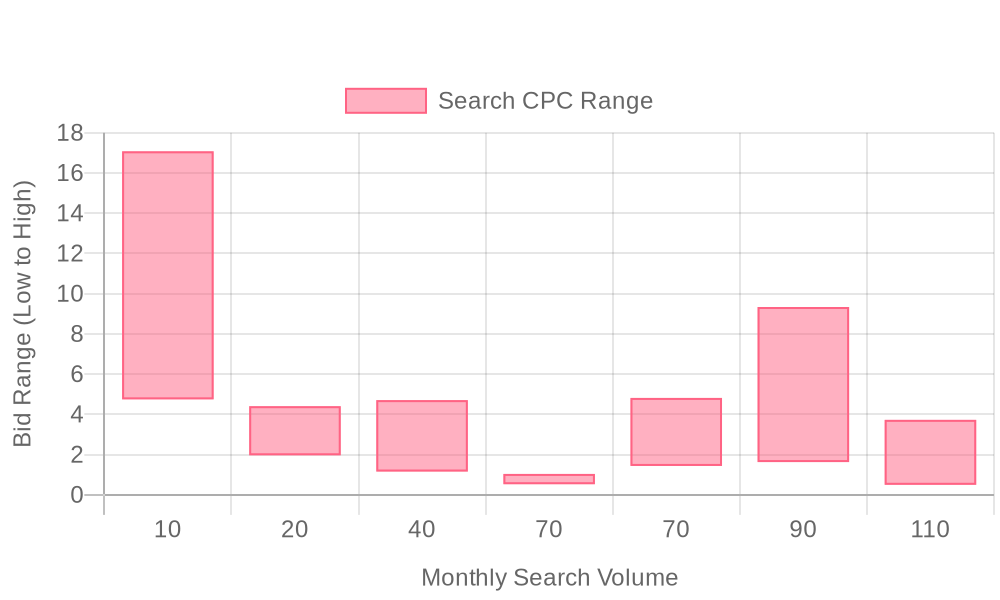
| Industry | Keyword | Monthly Search Volume | Competition Level | Low Bid | High Bid |
| Educational Supply Companies | kaplan educational materials | 10 | MEDIUM | 4.75 | 17.08 |
| Educational Supply Companies | montessori materials companies | 20 | LOW | 1.97 | 4.41 |
| Educational Supply Companies | educational supply companies | 40 | MEDIUM | 1.16 | 4.71 |
| Educational Supply Companies | lakeshore learning material | 70 | HIGH | 0.53 | 1.04 |
| Educational Supply Companies | educational materials companies | 70 | MEDIUM | 1.44 | 4.82 |
| Educational Supply Companies | educational furniture suppliers | 90 | HIGH | 1.63 | 9.34 |
| Educational Supply Companies | oriental trading teacher discount | 110 | LOW | 0.5 | 3.73 |
Building an effective keyword strategy is essential for any Google Ads for Educational Supply Companies campaign aiming for measurable growth. Start by mapping out keyword lists that align with distinct buying stages: prioritize high-intent queries during product launches or fiscal year-end budget clearances, ensuring your ads reach decision makers actively searching for solutions. Leverage real-time behavioral signals from your CRM to adjust these keyword priorities, so you can respond instantly to surges in institutional research or direct purchase interest.
Integrate negative keywords meticulously to exclude unqualified traffic, preventing wasted spend and keeping your cost-per-lead metrics competitive. For educational supply marketing, this means filtering out terms related to job searches, free resources, or unrelated educational services. By syncing keyword data with your CRM and advertising platforms, marketers can dynamically refine their lists as new trends and intent signals emerge across the academic calendar. For guidance on selecting effective SEO keywords tailored for educational institutions, review this SEO keywords for education guide.
Include a range of sample target terms tailored for the education sector:
- Educational advertising: Captures broad demand and brand awareness.
- Google Ads strategies: Attracts research-driven institutional buyers.
- School supply marketing: Focuses on high-volume procurement cycles.
- PPC for educational supplies: Targets buyers comparing ad-driven options.
- Online advertising for schools: Extends reach to administrators and parent committees.
- Custom educational kits for schools: Serves niche, high-value custom orders.
By continuously syncing these keyword lists and intent signals with your CRM, and harnessing platforms that update audiences in real time, you keep campaigns agile and relevant. This approach helps revenue teams capture high-converting opportunities before competitors, while maintaining cost efficiency and maximizing ROI throughout the education sector marketing cycle.
Step-by-Step Campaign Execution Framework
Step 1: Build Targeted Keyword Lists
Start by developing a keyword list that aligns with the unique buying cycles and decision makers in educational supply companies. Incorporate high-intent phrases such as "bulk classroom supplies," "discount educational kits," and "STEM learning tools," as well as long-tail variations that reflect real purchase motivations, including terms tied to grant funding windows and district RFPs. Leverage effective SEO keywords for education to refine your list, filtering out irrelevant terms and identifying patterns in how educators and procurement officers search during seasonal peaks. Sona's Identity Resolution matches search activity to specific organizations, not just anonymous sessions, allowing budget allocation to focus on districts or institutions with the greatest likelihood to convert. This approach results in lower wasted spend and a more precise pool of high-quality leads for digital marketing in the education sector.
The upgrade most educational supply advertisers miss is going beyond raw keyword volume to layer in intent and identity signals. By connecting website-visitor data and CRM records with Sona Marketing Measurement, you can see which specific search terms bring in the accounts and customers that actually convert, and weight your keyword and bidding strategy toward those rather than the terms with the highest search volume alone.
Step 2: Develop Compelling Ad Copy
Create ad messaging that speaks directly to urgent needs, such as back-to-school procurement or bulk orders for new curriculum rollouts. Highlight key benefits like volume discounts, same-day shipping, or educator-exclusive offers to differentiate from generic online retailers. Use dynamic copy that adapts to the user’s past engagement and in-market behavior, ensuring each prospect receives relevant, timely offers. As audiences update in real time based on engagement, marketers can quickly pivot creative strategies to address shifting priorities, such as promoting science kits during STEM grant periods or art supplies ahead of school year planning. For further inspiration, explore Google Ads best practices for education. This targeted advertising for education increases click-through rates and drives more qualified traffic to your site.
Step 3: Design Effective Landing Pages
Landing pages should be tailored to the needs of schools, teachers, and procurement staff, featuring clear, actionable calls-to-action like "Request a Quote" or "Download Bulk Pricing." Use content blocks that showcase trust signals, such as state compliance, bulk order testimonials, and integration with institutional payment workflows. Real-time engagement insights enable optimization of page layout and messaging for each segment, ensuring that educators see classroom-ready solutions while administrators access procurement tools. By syncing CRM data, marketers can personalize content for repeat visitors, increasing the likelihood of conversions across both new and returning buyers in online advertising for schools.
Step 4: Implement Data-Driven Optimizations
Ongoing campaign optimization relies on robust analytics that unify online and offline engagement, capturing the full journey from click to purchase order. Real-time intent signals help shift budgets to high-converting accounts, while advanced attribution models reveal which keywords, ads, and channels deliver the greatest ROI. Learn from a Google Ads case study in education to enhance your strategy. Integrating CRM and ad platforms allows for seamless retargeting as leads move through the funnel, updating audience segments dynamically based on new engagement data. This closed-loop feedback empowers B2B revenue teams to continuously refine Google Ads strategies, ensuring every dollar supports measurable growth in PPC for educational supplies and maximizes efficiency in digital marketing for educational products. To see how these strategies can work for your team, get started for free with Sona.
Sona Marketing Measurement closes the gap between clicks and revenue. It captures ad clicks using first-party data, ties them through UTM capture and ad-platform APIs to the actual record in your CRM, and reports ROAS by keyword and campaign instead of by last-click form fill. Feeding that revenue signal back into Smart Bidding and Performance Max compounds over time: the algorithms optimize toward booked educational supply revenue, not cheap leads.
Tips on Expanding Your Educational Supply Presence
Educational supply companies thrive when their marketing strategies directly enhance engagement with schools and educators while reflecting evolving educational needs. Achieving measurable growth means going beyond generic outreach and building campaigns that align with the realities of institutional buying cycles and the diverse priorities of administrators, teachers, and parent organizations. For additional strategies and insights, visit our marketing analytics blog.
- Cross-promote educational content: Leveraging high-quality educational assets across marketing channels reinforces your brand’s expertise and provides value to both new and existing audiences. Sharing resources such as lesson plans, product guides, or implementation tips through ads, email, and social channels helps unify messaging and increases the frequency of touchpoints with decision-makers. Consistency in content not only builds authority but also improves campaign performance by driving repeat engagement and higher conversion rates across platforms. Explore Google Ads best practices for education to further enhance your approach.
- Leverage CRM insights for upselling: Integrating CRM data into your advertising workflow allows for precise upselling of complementary products or services based on actual customer behavior and purchasing history. This approach enables companies to segment audiences by district size, purchase volume, or previous buying cycles, ensuring that offers land with relevance and timeliness. When CRM and Google Ads data are unified, revenue teams can dynamically adjust ad copy, promotional bundles, or incentives to address specific needs, leading to increased deal sizes and stronger customer retention. Effortlessly sync audience data and intent signals into your CRM and ad platforms with Sona Destinations to streamline this process.
- Geolocalize campaigns for metro targeting: Customizing campaigns to high-density educational regions maximizes ad spend efficiency and ensures your message reaches the most relevant schools and districts. By focusing on key metro areas, educational suppliers can deploy location-specific offers or highlight local compliance and delivery advantages, increasing the likelihood of engagement with procurement officers and school administrators. Real-time intent signals, such as increased search volume in a particular city or district, allow marketers to reallocate budgets dynamically to areas with the highest conversion potential.
Educational supply companies using Google Ads benefit from targeted advertising by addressing the unique challenges of fragmented buying committees and varied procurement timelines. A data-driven approach, where campaign management, keyword targeting, and audience segmentation are continuously refined, leads to more effective lead generation and customer acquisition. Adapting campaign strategies to align with educational trends, such as the rise of sustainable classroom products or the adoption of technology kits, keeps suppliers relevant and differentiated in a crowded market. For maximum impact, teams should use their own precise audience intelligence to identify high-intent segments and adjust messaging and offers accordingly, creating a seamless journey from initial interest to purchase.
Beyond Google Ads: Winning the AI Answers Educational Supply Buyers Now Trust
Paid search captures demand at the moment someone types a query. But a fast-growing share of educational supply buyers no longer start at Google at all, they ask ChatGPT, Gemini, or Perplexity before they ever run a search, and Google's own AI Overviews increasingly summarize an answer above the traditional results. If your business isn't referenced in those AI answers, you're invisible at the exact moment buyers build their shortlist.
Sona AI Visibility shows where your business shows up across ChatGPT, Gemini, Perplexity, Google AI Overviews, and 10+ engines, and, much like a keyword report, which prompts actually send you buyers, so you can prioritize the ones that convert. Run the two together and you cover the entire buyer path: get cited where buyers research (AI Visibility), then prove which of that demand turns into booked revenue (Marketing Measurement).
Helpful resources
Conclusion
The educational supply companies that win the next few procurement cycles won't be the ones that spend the most on Google Ads, but the ones that can prove which keywords, campaigns, and accounts turned into booked revenue, and adjust accordingly.
Pair that measurement discipline with visibility into how AI tools answer buyer questions, and Google Ads stops being a guessing game and starts being a system you can account for. Start for free to see how Sona unifies that data for your team.
FAQ
What are the best practices for using Google Ads in the educational supply sector?
Best practices include precise audience segmentation, creating tailored ad groups, aligning landing pages with ad content, and using data-driven optimizations to ensure ads reach decision-makers at the right time.
How can educational supply companies effectively target their audience with Google Ads?
Educational supply companies can target their audience by developing segmentation strategies based on the customer journey, using demographic filters, and leveraging advanced tools to identify and engage high-value prospects.
What budget should educational supply companies allocate for Google Ads?
The budget should focus on targeting high-converting accounts, using real-time intent signals to adjust spend dynamically, ensuring that each dollar supports measurable growth and maximizes ROI.
What keywords should be targeted for Google Ads campaigns in the education sector?
Target high-intent keywords such as 'bulk classroom supplies,' 'STEM learning tools,' and 'custom educational kits,' while using negative keywords to filter out unqualified traffic.
How can I measure the success of my Google Ads campaigns for educational supplies?
Success can be measured through advanced conversion tracking, integrating CRM data, and using analytics to unify online and offline engagement, capturing the full journey from click to purchase.







