


Laundry supply buyers, the procurement managers and facility directors who keep hospitals, hotels, and commercial laundries stocked, don't browse. They search when a machine breaks down or a chemical order runs low, and they expect a vendor to answer fast. Google Ads is built for that moment: it catches a buyer mid-search and can route that intent into a CRM long before a sales rep ever picks up the phone. Companies that ignore this pairing, ads that surface at the right second and a system that tracks where the resulting lead goes, tend to lose deals to competitors who never let a high-intent click go untracked.
How to Generate Laundry Supply Leads with Google Ads: A Step-by-Step Guide

Winning qualified B2B leads in the laundry supply industry requires precision targeting and a marketing engine that responds to real-time buyer intent. Modern digital campaigns now combine granular data segmentation with advanced audience enrichment, making it possible to capture high-value decision-makers before competitors enter the conversation.
A data-driven approach means your paid advertising isn't reaching just any audience, but the facilities managers, procurement leads, and commercial buyers already searching for laundry chemicals, equipment, or service solutions. By leveraging Sona's Identity Resolution, marketers can move beyond anonymous web traffic and identify which companies are engaging with their ads and landing pages.
Effective keyword and audience strategies are vital for laundry supply companies aiming to stand out in a competitive landscape. Focusing on industry-specific phrases and search queries ensures your ads reach buyers with immediate commercial intent. Dynamic audience creation allows your segments to evolve as prospects progress through the buying funnel, keeping your campaigns aligned with active decision-makers rather than static lists.
Aligning creative and landing page content with the expectations of B2B buyers increases the likelihood of conversion. Messaging should center on operational efficiency, compliance, bulk pricing, and quick delivery, while landing pages must provide technical documentation and clear calls to action. The ability to sync enriched audiences and intent data into platforms like Google Ads and CRM systems ensures follow-up is prioritized for accounts most likely to close.
Continuous optimization is critical for maximizing return on investment. Monitoring campaign performance in real time, adjusting bids, and refining audience criteria based on actual engagement leads to higher-quality conversions and lower acquisition costs. Advanced conversion tracking, including both online actions and offline sales interactions, provides a complete picture of true campaign ROI.
An integrated, cross-channel strategy increases reach and effectiveness. Pairing paid Google Ads campaigns with organic search, email nurture, and account-based marketing multiplies touchpoints across the buyer journey. Tools that reveal which companies engage with your digital assets let sales and marketing teams orchestrate targeted outreach, improving both the speed and quality of lead generation for laundry supply companies. For more on driving local leads, see how Google Display Ads help laundry businesses attract local customers.
Why Does Google Ads Matter for Laundry Supply Companies

Google Ads has become a cornerstone for laundry supply companies aiming to accelerate revenue by reaching the right buyers exactly when they need critical products and services. Procurement managers and facility directors frequently use search engines for urgent or recurring supply needs, making paid search the fastest digital channel for high-intent customer acquisition. To see how tailored ad campaigns can attract more local laundry clients, review this Google Display Ads for laundry businesses overview.
- Target Specialized Audiences: Google Ads allows you to engage directly with procurement leaders and facility managers as they search for specific laundry chemicals, equipment, or bulk supplies. This focused approach overcomes the limitations of broad outreach, ensuring marketing efforts are timely and relevant for every account. Enhance your targeting by leveraging real-time audience segments that auto-sync with your ad platforms for maximum efficiency.
- Win Margins with Higher-Value Services: While email and relationship-driven channels nurture existing contacts, Google Ads is uniquely positioned to unlock new, high-value deals. By capturing intent signals at the decision stage, laundry supply firms can win contracts that may otherwise go to competitors, improving both deal volume and average order value.
- Respond to Demand Fluctuations Quickly: Traditional and social advertising often lag behind real-world purchase triggers. Google Ads delivers immediate visibility during spikes in demand, such as emergency restocking or seasonal upticks, helping laundry suppliers act before prospects move to another vendor. Dynamic intent data ensures budgets can be shifted in real time to the highest-converting accounts. Track and prioritize your most engaged prospects using custom behavioral triggers.
- Expand into Emerging Markets: Entering new territories or local markets is streamlined with Google Ads' precise geographic and demographic targeting. Laundry supply companies can identify underserved regions, test messaging, and measure response instantly, supporting rapid market entry and competitive positioning. Learn more about effective strategies by exploring our laundry marketing Google Ads guide.
- Integrate Data for Comprehensive Analysis: Closed-loop measurement is now expected in B2B marketing. With the right integration, companies can attribute every lead and contract back to its original click, linking ad spend to pipeline and revenue. This unified data approach empowers revenue teams to optimize campaigns, sync enriched audiences across CRM and ad platforms, and build a continuous cycle of insight-driven growth using automatic CRM data sync for seamless follow-up.
Ready to streamline your paid acquisition and audience targeting? Get started for free with Sona.
Common Types of Google Ads Campaigns for Laundry Supply Companies
- Search Campaigns: Search campaigns capture high-intent, urgent queries from facility managers, procurement teams, and business owners actively seeking laundry chemicals, equipment, or bulk supplies. By bidding on precise, solution-oriented keywords, these campaigns ensure your brand appears when decision-makers are ready to act. Using Sona's Identity Resolution and intent insights, marketers can identify which companies are engaging and shift budget toward the highest-converting accounts.
- Display Ads: Display ads keep your company visible to potential buyers as they browse industry news, supplier directories, and technical forums. This persistent presence reinforces brand recall and supports nurturing by reminding prospects of your solutions even after they leave your site. With advanced audience segmentation, you can ensure display outreach aligns with high-value segments, while CRM-ad sync ensures updated contact lists feed directly into relevant ad groups for ongoing pipeline activation. For a practical perspective on using Google Display Ads to attract local customers, see this guide for laundry businesses.
- Video Ads: Video ads allow you to break down complex supply solutions and demonstrate product efficacy in a format that resonates with B2B audiences. Educational videos, explainer demonstrations, and compliance walkthroughs can expand your reach while building trust. Video placements can be targeted to users who have shown prior intent or visited key product pages, optimizing spend by focusing on mid-funnel prospects most likely to engage further.
- Remarketing: Remarketing campaigns engage previous site visitors, RFQ submitters, or partial form completions, maximizing every initial touchpoint. By identifying past visitors and dynamically updating audience membership as leads move through the pipeline, remarketing ensures persistent and relevant follow-up. Integration with sales and marketing systems allows for exclusion of converted accounts and prioritization of those progressing toward a decision, keeping your messaging timely and context-aware. Learn more about intent-driven retargeting for high-impact campaigns.
- Assets: Ad assets amplify campaign impact by highlighting trust signals such as industry certifications, service area coverage, and expedited delivery options. Sitelink assets direct prospects to technical datasheets or client testimonials, while call assets facilitate immediate connection for urgent inquiries. Location assets showcase regional distribution hubs, driving local engagement and in-person appointments, supporting the comprehensive digital marketing for laundromats and laundry supply company marketing strategies. To see how you can get started optimizing your digital campaigns, get started for free with Sona.
Where to Find Growth Opportunities

Expanding your market reach as a laundry supply company requires precision in identifying and acting on the most lucrative opportunities. Modern B2B marketers who lean on intent signals and unified data routinely outperform their peers by capturing high-value accounts and reducing wasted spend.
- Target vertical keywords: Focus on specialized terms that intersect with related services, such as "hospital laundry chemical supplier" or "commercial linen cleaning solutions." These keywords capture intent from buyers seeking complementary solutions, supporting a segmented Google Ads for Laundry Supply Companies strategy. Marketers can use real-time audience data to recognize in-market activity and quickly adjust messaging and bids, ensuring ads reach those most likely to convert. When campaigns are powered by unified account and behavioral data, teams can dynamically route high-intent leads to the appropriate sales or nurture tracks.
- Conduct competitor analysis: Assess which audiences are overlooked by other laundry supply businesses. Study ad placements, keyword gaps, and messaging weaknesses to identify opportunities for differentiated engagement. By combining digital signals with offline CRM insights, you can develop audience segments that reflect both active interest and long-term value. When these segments are kept current, updating as contacts change roles or accounts move through the pipeline, your spend stays focused where it matters. Explore strategies to measure marketing’s influence on sales pipeline for better results.
- Use industry placements: Place your offers on niche directories and forums where facility managers, procurement professionals, and operations leads source solutions. These placements, supplemented by retargeting, extend reach to audiences who may not engage with traditional search ads but influence purchasing decisions. Integrating visitor identification technology allows marketers to match anonymous traffic from these sources to known companies, creating new opportunities for outreach and nurturing.
- Retarget content assets: Position whitepapers, ROI calculators, and product demos as retargeting touchpoints throughout the buyer journey. Synchronize these assets with your broader content calendar, ensuring prospects see relevant resources at each decision stage. By connecting online engagement with CRM activity, such as syncing a whitepaper download into both Google Ads and Salesforce, teams can attribute not just ad clicks, but true pipeline impact. This approach closes the loop on digital marketing for laundromats and ensures your investment supports both awareness and bottom-funnel conversions.
Ready to uncover new opportunities and optimize your campaigns? Get started for free with Sona.
How to Apply Audience Segmentation for Laundry Supply Companies
Audience segmentation is the foundation for outperforming in digital marketing for laundromats and laundry supply company marketing. Segments allow revenue teams to match campaigns with decision-makers’ actual needs, resulting in higher lead quality and more efficient spend. Explore actionable playbooks if you want deeper strategies for segmenting and targeting in B2B environments.
- Define Segments: Start by distinguishing your primary audiences, such as commercial laundries, hospitality operators, and independent laundromats. Each group varies in purchasing cycles, order volume, and operational requirements, making it essential to customize messaging and offers. Commercial laundries may prioritize bulk chemical shipments and equipment upgrades, while smaller-scale operations often seek reliability, speed, and price transparency from their suppliers. Layering these distinctions into your campaign structure prevents wasted impressions and sets the stage for tailored outreach.
- Overlay Intent Signals: Go beyond static company profiles by monitoring real-time intent signals, such as searches for eco-friendly detergents or requests for specific product certifications. When your marketing stack can dynamically capture and act on these indicators, you can direct budget toward accounts most likely to convert. This not only improves your Google Ads budget for laundry but also supports growth by aligning spend with high-value, in-market prospects. For a practical checklist, see this laundromat Google Ads guide.
- Create Customized Ad Groups: Custom ad groups ensure each segment receives messaging, creatives, and offers that speak directly to their pain points. For example, segmenting campaigns for hotel laundry buyers versus healthcare facilities enables copy that highlights infection control or sustainability as needed. With dynamic audience management, these groups can update automatically as new leads move through the funnel, ensuring promotions remain relevant.
- Validate Conversion Paths: All audience interactions, from ad click to offline sales call, should connect back to your CRM and analytics platforms. Advanced conversion tracking provides true attribution across both digital and offline touchpoints, closing gaps in ROI measurement. When enriched audiences and lead data sync seamlessly with tools like Google Ads and Salesforce, you can validate which segments are driving sales pipeline and refine budget allocation to maximize returns. This precise feedback loop enables continuous optimization of laundry advertising and PPC for laundry services, eliminating guesswork from your growth strategy.
This is also where measurement changes the economics. With Sona Marketing Measurement you can identify the companies behind your ad clicks, not just anonymous sessions, and segment audiences by who actually becomes a customer. That lets you build bid adjustments and audience signals around the segments that convert and de-prioritize the ones that don't, so you feed Google's algorithms "this click became a paying laundry supply customer" instead of just "someone filled out a form."
Keyword Strategy & Sample Target Terms
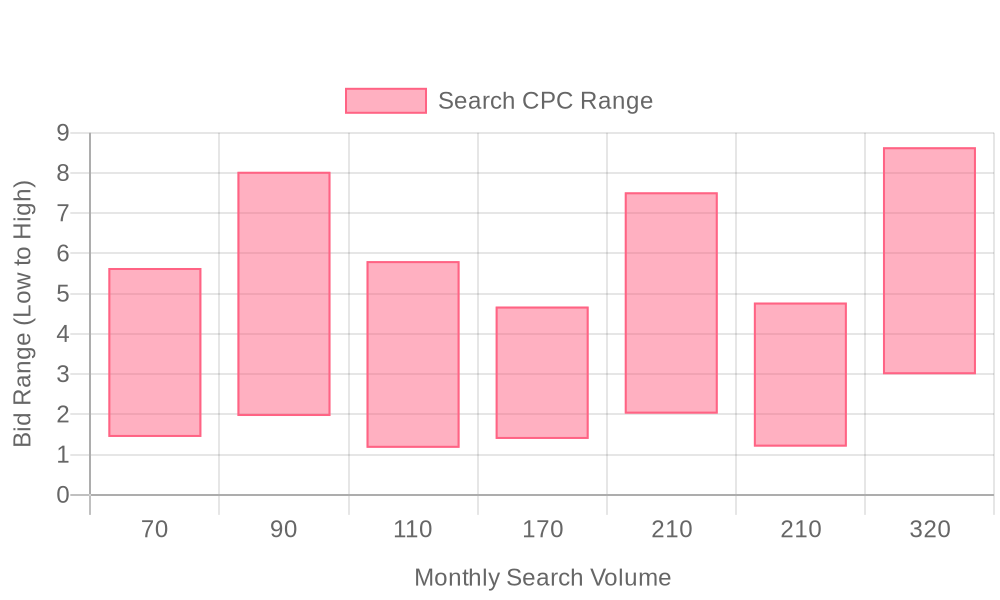
| Industry | Keyword | Monthly Search Volume | Competition Level | Low Bid | High Bid |
| Laundry Supply Companies | laundry supply companies | 70 | MEDIUM | 1.44 | 5.64 |
| Laundry Supply Companies | laundromat equipment suppliers | 90 | HIGH | 1.96 | 8.03 |
| Laundry Supply Companies | laundry machine supplier | 110 | MEDIUM | 1.17 | 5.81 |
| Laundry Supply Companies | laundry detergent wholesale suppliers | 170 | HIGH | 1.39 | 4.68 |
| Laundry Supply Companies | laundry equipment suppliers | 210 | LOW | 2.02 | 7.52 |
| Laundry Supply Companies | commercial laundry supplies | 210 | HIGH | 1.2 | 4.78 |
| Laundry Supply Companies | commercial laundry equipment suppliers | 320 | LOW | 3 | 8.64 |
Top-performing laundry supply companies rely on an advanced keyword strategy to capture high-intent B2B buyers. The right terms intercept decision-makers at critical junctures, ensuring ad spend is used on prospects with immediate or near-term purchasing needs. This approach not only elevates conversion rates but also reduces wasted impressions and unqualified leads. For more insights on optimizing your ad targeting, explore our blog on demand generation best practices.
A strong keyword strategy for Google Ads in the laundry supply industry goes beyond generic product names. It includes granular phrases like "commercial laundry detergent supplier," "bulk fabric softener for hotels," and "industrial washer chemical distributor Midwest." These terms reflect specific purchase intent, often tied to procurement cycles or compliance requirements in healthcare, hospitality, or industrial laundry operations. By layering branded keywords, geo-modifiers, and industry-specific jargon, laundry supply marketers can outmaneuver broad-spectrum advertisers and ensure their ads surface for the most valuable queries. Discover how Google Ads strategies for laundry businesses can further improve your campaign results.
Precision targeting is fundamental. This means excluding low-intent, consumer-facing searches such as "DIY laundry hacks" or "home stain remover," and focusing budget on transactional and solution-driven phrases. Negative keyword lists are continuously refined, filtering out irrelevant clicks and preserving budget for enterprise leads. Dynamic keyword insertion and close variant matching allow campaigns to adapt in real time, capturing both core and emerging search trends. To streamline this process, consider using Sona Audiences for building and syncing signal-based segments automatically with your ad platforms.
When marketers combine keyword strategy with modern data platforms, they gain the ability to identify not just anonymous traffic but specific visitors and companies searching for solutions. Real-time intent data highlights which accounts are actively researching, enabling budget shifts to the highest-converting audiences. As leads progress through the funnel, audience lists update automatically, ensuring retargeting and cross-channel messaging reach the right stakeholders at the right stage. With advanced attribution, teams can connect every click and quote request to actual closed deals, measuring campaign ROI with unprecedented accuracy. Ready to see how this works in action? Get started for free with Sona.
Step-by-Step Campaign Execution Framework
Step 1: Build Targeted Keyword Lists
Laundry supply companies gain meaningful traction when they segment keywords by service category and local relevance. Clustering terms like "bulk commercial laundry detergent," "industrial washer repairs," and "wholesale stain remover Chicago" ensures the campaign reaches relevant buyers in targeted neighborhoods. Including niche variations such as "phosphate-free laundry chemicals," alongside a robust negative keyword list, prevents wasted spend on non-commercial or residential queries.
Aligning keyword strategy with content marketing efforts elevates campaign engagement with hard-to-reach B2B decision makers. By syncing keyword lists with website content and thought leadership assets, marketers boost Quality Scores and capture searchers who are actively evaluating suppliers. Sona enhances this process by identifying which companies are behind high-value search clicks, allowing teams to double down on the most promising segments and shift budget toward those showing in-market intent. For more ideas on using Google Ads to attract local buyers, see this guide to Google Display Ads for laundry businesses.
The upgrade most laundry supply advertisers miss is going beyond raw keyword volume to layer in intent and identity signals. By connecting website-visitor data and CRM records with Sona Marketing Measurement, you can see which specific search terms bring in the accounts and customers that actually convert, and weight your keyword and bidding strategy toward those rather than the terms with the highest search volume alone.
Step 2: Develop Compelling Ad Copy
Ad copy that addresses business pain points, like compliance challenges, operational cost reductions, or supply chain reliability, resonates immediately with procurement professionals and facility managers. Within Search campaigns, responsive search ads let you test multiple headlines and descriptions, such as "Hospital-Grade Laundry Chemicals" or "NSF-Certified Bulk Detergent," while reinforcing trust through visible certifications and client logos. Urgency incentives, such as "exclusive Q3 pricing" or "first shipment discounts," drive action from high-intent prospects.
Maintaining accurate and timely ad extensions is critical for conveying service efficiency and availability. Sitelinks pointing to client testimonials, SDS documentation, or live chat support increase ad relevance and click-through rates. Using platforms like Sona, marketers can dynamically update ad creative based on real-time audience behavior, automatically adjusting messaging as leads progress through the funnel. For more on Google Ads best practices in the laundry sector, explore our latest B2B marketing playbooks.
Step 3: Design Effective Landing Pages
Effective landing pages for laundry supply companies reflect the keywords and ad groups that drive each visit, seamlessly segmenting content by product type or industry vertical. Each page should include ROI calculators, downloadable compliance documents, and visible trust badges to reassure commercial buyers of product quality and regulatory alignment. Prominent calls-to-action, like "Request a Bulk Quote" or "Download SDS", must remain accessible across desktop and mobile devices.
Ensuring keyword-to-page mapping supports both search engine relevance and user intent, resulting in higher conversion rates and stronger lead quality. Integrating visitor identification tools from Sona into landing environments reveals which organizations are engaging most deeply, enabling revenue teams to prioritize high-fit accounts and personalize follow-up outreach. For a case study on how PPC strategies deliver new leads for laundry businesses, view this targeted PPC success story.
Step 4: Implement Data-Driven Optimizations
Continuous monitoring of core metrics, such as conversion rate, cost per lead, and engagement by region, allows marketers to identify inefficiencies and double down on winning tactics. Measuring marketing effectiveness requires tracking core metrics, especially when underpinned by accurate, multi-touch attribution.
A/B testing headlines, imagery, and calls-to-action ensures that campaigns adapt to shifting buyer preferences, while integrating offline sales data enables teams to track the full impact of digital marketing on pipeline creation. Sona unifies online and offline conversion insights, refining bid strategies and audience targeting to maximize revenue from both digital and traditional channels. Real-time CRM and ad audience sync ensures that enriched lead lists, including high-value accounts from Salesforce or HubSpot, are continuously activated in Google Ads, driving consistent growth for laundry supply companies. Ready to optimize your campaigns? Get started for free with Sona.
Sona Marketing Measurement closes the gap between clicks and revenue. It captures ad clicks with first-party measurement, then ties that click through UTM capture and ad-platform APIs to the actual record in your CRM, and reports ROAS by keyword and campaign instead of by last-click form fill. Feeding that revenue signal back into Smart Bidding and Performance Max compounds over time: the algorithms optimize toward booked laundry supply revenue, not cheap leads.
Tips on Expanding Your Laundry Supply Presence
Laundry supply companies can accelerate market growth by blending value-driven content with smart retargeting across digital channels. By consistently delivering educational resources that address operational pain points, you not only demonstrate expertise but also strengthen brand recall among decision-makers who cycle through lengthy vendor evaluation processes. For actionable strategies, explore this comprehensive resource on laundry marketing with Google Ads, and review our B2B marketing playbooks for more demand generation tactics.
Promoting adaptable educational content through retargeting ensures your audience receives timely, relevant insights that address their unique challenges. For instance, retargeted campaigns can serve facility managers with buying guides or regulatory updates based on their recent website activity, increasing the chance of re-engagement and conversion. Using intent data, marketers can dynamically adjust messaging and creative assets for each segment, addressing evolving needs and nudging prospects further down the funnel.
Upselling bundled services becomes far more effective when driven by CRM data and behavioral analytics. Instead of generic promotions, leverage insights from previous purchases and engagement history to recommend logical add-ons, such as pairing chemical supply contracts with preventative maintenance packages. Syncing enriched audience data from CRM platforms directly into your ad platforms allows for hyper-personalized offers, which improve cross-sell rates and reduce churn.
Strategic partnerships with industry associations or regional boards open up visibility and credibility in new markets. By collaborating on webinars, co-branded content, or event sponsorships, you can reach influential procurement stakeholders who might otherwise be inaccessible through traditional channels. These alliances help overcome barriers to entry, accelerate trust, and embed your brand in industry conversations.
Localizing marketing efforts provides clarity and resonance for each target region. Tailor ad creative, offers, and landing pages to reflect local regulations, delivery capabilities, and sector-specific needs. Hyperlocal PPC for laundry services can drive more qualified traffic while lowering costs, especially when campaigns are adjusted in real time to reflect shifts in local demand or competitor activity.
Continually drawing insights from live search data ensures that every content piece and promotion reflects current market realities. Analyze trends in search queries, competitor ad language, and conversion rates to inform new blog content. This keeps your digital marketing for laundromats nimble, predictable, and directly tied to measurable business outcomes, supporting ongoing laundry business growth while staying in sync with the evolving needs of B2B buyers. Ready to transform your data-driven marketing? Get started for free with Sona.
Beyond Google Ads: Winning the AI Answers Laundry Supply Buyers Now Trust
Paid search captures demand at the moment someone types a query. But a fast-growing share of laundry supply buyers no longer start at Google at all, they ask ChatGPT, Gemini, or Perplexity before they ever run a search, and Google's own AI Overviews increasingly summarize an answer above the traditional results. If your business isn't referenced in those AI answers, you're invisible at the exact moment buyers build their shortlist.
Sona AI Visibility shows where your business shows up across ChatGPT, Gemini, Perplexity, Google AI Overviews, and 10+ engines, and, much like a keyword report, which prompts actually send you buyers, so you can prioritize the ones that convert. Run the two together and you cover the entire buyer path: get cited where buyers research (AI Visibility), then prove which of that demand turns into booked revenue (Marketing Measurement).
Helpful resources
Conclusion
The laundry supply companies pulling ahead right now are the ones treating Google Ads as one piece of a larger measurement problem, not a standalone tactic. As buyers increasingly research through AI tools before they ever type a search query, the advantage shifts to suppliers who can prove which clicks turn into booked revenue and who show up in the answers those buyers see first.
Explore how these strategies fit together and see the platform in action.
FAQ
What are the best practices for Google Ads in the laundry industry?
Best practices include precision targeting with industry-specific keywords, aligning creative and landing page content with B2B buyers' expectations, and integrating with CRM systems for tracking high-value prospects.
How can I optimize my Google Ads for a laundry supply company?
Optimize Google Ads by focusing on industry-specific keywords, using dynamic audience creation, aligning ad content with buyer needs, and continuously monitoring and adjusting campaigns based on performance.
What budget should I allocate for Google Ads in the laundry sector?
Allocate your Google Ads budget strategically by shifting funds towards high-converting accounts and using real-time intent data to ensure spending aligns with accounts most likely to convert.
What keywords should I target for laundry services in Google Ads?
Target keywords such as 'commercial laundry detergent supplier,' 'bulk fabric softener for hotels,' and 'industrial washer chemical distributor Midwest' to capture high-intent B2B buyers.
How do I measure the success of my Google Ads campaigns for laundry?
Measure success by tracking conversion rates, cost per lead, and using advanced conversion tracking to attribute leads back to ad clicks, ensuring a comprehensive view of campaign ROI.







