


Drainage contractors win jobs when they show up the moment a pipe backs up or a storm drain floods a parking lot, and that means pairing paid search with the rest of the marketing mix rather than treating it as a separate line item. Social media builds awareness over time, email nurtures existing accounts, and trade shows and industry publications establish credibility offline. Google Ads sits in the middle of that mix: it catches property managers, facilities directors, and homeowners at the exact moment they're searching for a fix, and it can close the gap between broad awareness efforts and a signed job order, provided offline conversions get tracked instead of lost. For Google Ads for Drainage Contractors, that means using paid search to bridge online and offline marketing efforts by:
How to Generate Google Ads for Drainage Contractors Leads with Google Ads: A Step-by-Step Guide
Drainage contractors operate in a market where speed, relevance, and accurate targeting translate directly to higher lead volumes and better job profitability. Modern revenue teams that unify their data and act on real-time buyer intent consistently outperform those relying on disconnected, outdated marketing approaches.
This playbook delivers a data-driven strategy for integrating Google Ads for Drainage Contractors into your broader digital marketing mix. By combining granular keyword targeting, audience segmentation, and conversion-focused creative, it empowers B2B marketers and local service providers to drive qualified leads and maximize spend efficiency.
- A data-driven approach to paid search within your broader marketing mix: Effective drainage marketing leverages data from every customer interaction. By unifying online and offline data sources, marketers can pinpoint which keywords, ad groups, and channels deliver the most valuable leads. This allows instant budget reallocation toward high-converting campaigns and more accurate revenue attribution, resulting in stronger ROI visibility across the entire demand funnel.
- Keyword and audience targeting strategies specific to drainage buyers: High-performing Google Ads for Drainage Contractors depend on understanding where intent signals appear, both in search queries and in audience behavior. Using real-time intent data, marketers can quickly identify which prospects are actively researching emergency drain cleaning, routine maintenance, or large-scale commercial services. For actionable advice on campaign setup, see this guide to Google Ads for drainage contractors. Dynamic keyword lists and audience segments ensure campaigns are always aligned with the most relevant, in-market buyers. As leads move through the funnel, audiences refresh automatically for precision retargeting and reduced wasted spend.
- Landing page and creative alignment techniques for maximum conversion: The best landing pages for drainage contractors match ad copy to user intent, streamline mobile and desktop experiences, and reinforce credibility with trust signals like local service ads, Google Guaranteed badges, and rapid response CTAs. High-converting creative not only attracts clicks but also guides visitors to take immediate action, reducing drop-off and increasing qualified form submissions or calls. For more tips on improving your conversion rates, explore our marketing playbooks.
- Performance optimization tactics to continuously improve ROI: Ongoing campaign optimization is critical in PPC for drainage contractors. Weekly analysis of click, conversion, and revenue data uncovers patterns in time-of-day performance, geographic hotspots, and keyword effectiveness. Advanced conversion tracking, including offline attribution, measures true business impact so marketers can double down on what works and quickly cut underperforming tactics.
- Cross-channel integration methods to strengthen your entire marketing ecosystem: Integrating Google Ads with CRM and sales platforms ensures that enriched lead data and audience updates are synced in real time. Features like Sona Destinations enable drainage contractors to nurture leads across email, social, and SMS, while also retargeting lost opportunities with tailored Google Ads messaging. Unified data streams build a holistic view of the buyer journey, allowing for smarter budget allocation and sustained revenue growth.
This framework is designed for B2B marketers, service providers, and local drainage operators committed to efficient, scalable, and measurable lead generation. Follow these steps and you'll capture more qualified demand, spend more efficiently, and grow steadily in a competitive trade.
Why Does Google Ads Matter for Drainage Contractors?

For drainage contractors, Google Ads provides a direct path to the decision-makers who control budgets for maintenance, repairs, and large-scale projects. Unlike broad digital campaigns, Google Ads pinpoints prospects such as plant managers and facilities directors the moment they search for drainage solutions, ensuring your message reaches those most likely to convert. For additional insight on tailoring your approach, see this guide to Google Ads for drainage contractors, which covers campaign optimization strategies specific to the industry.
Google Ads empowers drainage contractors to tap into higher-margin projects that might not already be in the sales pipeline. While email and social media nurture long-term relationships, Google Ads excels at intercepting commercial property owners, general contractors, and property managers who are actively searching for installs, retrofits, or emergency repairs, often before they engage with any competitors. Explore our library of actionable playbooks for best practices on expanding your reach and diversifying your revenue streams.
When unexpected events or seasonal surges occur, Google Ads equips drainage contractors with the agility to rapidly scale demand response. Campaigns can be deployed or optimized in hours, targeting urgent repair queries or time-bound service needs, which is difficult to achieve with slower-moving traditional channels. This real-time activation ensures you capture high-value jobs during peak moments, maximizing both revenue and resource utilization.
Expanding into new service areas or growing metros presents unique challenges for drainage contractors. Google Ads addresses these by enabling granular geo-targeting, allowing you to pursue untapped markets without diluting brand consistency. This ensures your messaging remains aligned across regions and avoids confusion, even as you test new territories or respond to shifting demand. By leveraging dynamic, signal-based audience segments, you can further tailor campaigns to reach the right prospects in every market.
Finally, Google Ads offers detailed analytics that unify lead touchpoints across digital and offline channels. With advanced attribution and closed-loop reporting, drainage contractors gain a transparent view from click to closed contract, making it possible to measure which campaigns drive true business outcomes. By integrating enriched audience and lead data directly into your CRM and sales platforms, outreach becomes more timely and relevant, reducing the risk of missed opportunities and accelerating follow-up.
Common Types of Google Ads Campaigns for Drainage Contractors Services
- Search Campaigns: Search ads are the primary engine for lead generation in drainage contracting, matching the urgent, high-intent nature of emergency service queries. These campaigns convert demand generated elsewhere, whether that's local SEO or organic search presence. By layering in Sona's Identity Resolution, marketers can shift budget toward keywords and audiences showing real in-market behavior, so spend consistently targets high-conversion accounts. Real-time audience updates further sharpen these campaigns by surfacing both new and returning prospects with the highest purchase intent.
- Display Ads: Display campaigns extend your reach across relevant industry websites, keeping your brand top-of-mind for property managers, facilities teams, and commercial clients. This format supports your broader digital marketing for drainage efforts, reinforcing the credibility and value of your services between urgent needs. Dynamic audience capabilities enable these ads to automatically update as contacts progress through the funnel, ensuring only the most engaged companies and decision-makers see your creative. Marketers also benefit from unified reporting, which connects display impressions to conversions in a single dashboard, revealing the true impact of top-funnel advertising.
- Video Ads: Video advertising empowers drainage contractors to visually communicate complex services, such as trenchless repairs or large-scale water mitigation, that may be difficult to convey through text alone. These campaigns build trust and authority while serving as a natural extension of your content marketing and branding efforts. Advanced conversion tracking allows you to attribute video engagement to both online inquiries and offline calls, clarifying which creative assets drive qualified leads and new business. Integration with CRM platforms means that high-engagement viewers can be routed into nurture streams or follow-up campaigns for personalized outreach.
- Remarketing: Remarketing campaigns re-engage visitors who explored your site but did not convert, targeting those who abandoned quote forms or left during service selection. By leveraging full-funnel audience insights, these ads can adjust messaging based on each lead’s previous interactions, such as highlighting emergency response for those who viewed urgent services. Synchronized audience lists across Google Ads and your CRM ensure that prospects who convert or become disqualified are automatically removed, optimizing ad spend and increasing campaign efficiency. This creates multiple, highly relevant touchpoints that move contacts closer to booking and improves overall lead generation for contractors.
- Assets: Ad assets (formerly extensions) play a critical role in differentiating drainage contractors, offering instant trust signals that back up your claims. Location assets show proximity and service coverage, while callout assets emphasize certifications, insurance, or 24/7 availability. Structured snippet assets can highlight core offerings, such as hydro-jetting or camera inspections, so prospects can quickly assess your capabilities. Paired with real-time intent data, only the most relevant assets display for each searcher, increasing the odds of high-quality clicks and conversions. To streamline campaign management and start optimizing your own strategies, get started for free with Sona.
Where to Find Growth Opportunities?
Expanding growth for drainage contractors begins by moving beyond traditional channels and exploring new digital frontiers. Identifying high-value leads early and consistently is a cornerstone of sustainable lead generation for contractors and enables a sharper focus on profitable market segments.
- Vertical keyword targeting for specialty services: Pinpointing unique search terms such as "emergency storm drain repair" or "commercial drain cleaning solutions" allows drainage contractors to tap into specialized customer needs. This targeted approach enhances campaign efficiency, elevates ad relevance, and supports a broader content strategy by aligning paid efforts with organic SEO themes like local service ads.
- Competitor gap analysis for underserved segments: Using auction insights or other analytics tools, revenue teams can recognize areas where competitors underperform or ignore niche audiences. Identifying these whitespace opportunities not only reveals new sources of high-intent demand but also informs budget reallocation to maximize ROI. Enhanced platforms make it possible to dynamically surface segments with untapped potential, empowering marketers to shift spend in real time based on in-market behavior and lead quality.
- Industry-specific placements for extended reach: Placing ads and content on trade forums, business directories, and local contractor networks ensures visibility in digital spaces where organic content may not reach. These placements can be coordinated with PPC for drainage contractors to capture attention at critical touchpoints in the buyer journey.
- Content retargeting for sustained engagement: Leveraging assets like whitepapers, checklists, or explainer videos within a retargeting framework keeps your brand top-of-mind and nurtures prospects further down the funnel. By integrating CRM and ad platforms, enriched lead and account audiences can be synced automatically, ensuring that high-value prospects receive personalized follow-up as they progress from awareness to consideration and decision.
Growth-minded drainage contractors that unify their marketing and sales data can pinpoint which companies are visiting their site, align content strategies with real-time intent signals, and activate dynamic audiences that update as leads move from initial research to purchase readiness. This turns every interaction into a measurable opportunity, sharpening local SEO and improving both lead volume and customer lifetime value.
How to Apply Audience Segmentation for Google Ads for Drainage Contractors

Effective audience segmentation is the difference between wasted ad spend and high-quality lead generation for drainage contractors. By mapping segments to each phase of the customer journey, you can prioritize prospects most likely to convert while reducing inefficiencies in your Google Ads campaigns. Marketing teams looking to optimize every touchpoint can find additional strategies in the Sona blog.
- Define Segments: Start by distinguishing core audiences based on their property type and service urgency. Residential and commercial drainage clients have distinct needs, timelines, and budgets; a homeowner with a flooded basement expects immediate attention, while a property manager may prioritize preventative maintenance. Splitting your audience into urgent versus routine service seekers further refines your focus, allowing you to tailor messaging and offers that match each segment’s expectations and pain points.
- Overlay Intent Signals: Next, incorporate behavioral and contextual clues to pinpoint in-market buyers. A search for "emergency drain repair near me" signals urgent need and high conversion potential, while "annual drain maintenance plans" points to longer-term research. Real-time data lets you dynamically adjust bids and creative, so high-intent segments always get priority attention. Sona surfaces intent signals so marketers can track digital footprints and rapidly reallocate budgets toward the most valuable accounts as their behavior changes.
- Create Ad Groups by Segment: Organize campaigns into tightly themed ad groups mapped to each audience. Ad copy, images, and calls-to-action should be customized for each segment, such as emphasizing 24/7 response for emergency calls or highlighting compliance for commercial property owners. Budget allocation becomes more strategic when you can instantly see which segments are converting at the highest rate, and when platforms enable dynamic audience updates as leads move through the funnel.
- Validate Conversion Paths: Comprehensive conversion tracking is essential for drainage contractors who rely on accurate attribution to measure ROI. Every quote request, phone call, and form completion should be tracked and properly attributed, whether the interaction begins online or moves offline. Integrating CRM data with ad platforms creates a closed-loop system, syncing enriched audience segments and lead outcomes for better targeting and continuous optimization.
This is also where measurement changes the economics. With Sona Marketing Measurement you can identify the companies behind your ad clicks, not just anonymous sessions, and segment audiences by which accounts actually become customers. That lets you build bid adjustments and audience signals around the segments that convert and de-prioritize the ones that don't, so you feed Google's algorithms "this click became a paying drainage contractors customer" instead of just "someone filled out a form."
Keyword Strategy & Sample Target Terms
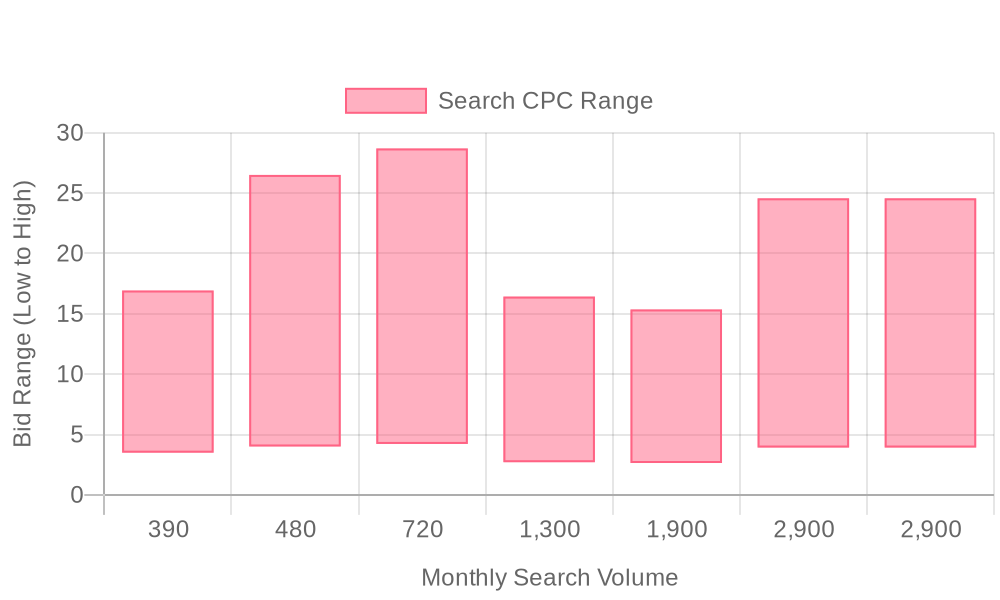
| Industry | Keyword | Monthly Search Volume | Competition Level | Low Bid | High Bid |
| Drainage Contractors | drainage contractors | 390 | LOW | 3.5 | 16.93 |
| Drainage Contractors | drainage experts near me | 480 | MEDIUM | 4.01 | 26.51 |
| Drainage Contractors | drainage specialist near me | 720 | MEDIUM | 4.22 | 28.7 |
| Drainage Contractors | yard drainage specialist near me | 1300 | MEDIUM | 2.71 | 16.43 |
| Drainage Contractors | yard drainage contractors near me | 1900 | MEDIUM | 2.64 | 15.36 |
| Drainage Contractors | drainage companies near me | 2900 | MEDIUM | 3.92 | 24.57 |
| Drainage Contractors | drainage contractors near me | 2900 | MEDIUM | 3.92 | 24.57 |
A robust keyword strategy for drainage contractors centers on identifying and targeting the exact phrases commercial and residential buyers use when searching for urgent drainage solutions. High-performing campaigns intercept decision-makers at the peak of their intent, capturing search demand for terms like “emergency drain cleaning,” “storm drain repair near me,” and “24/7 drainage contractor.” By aligning keyword lists with precise service offerings and geographic coverage, marketing teams position their brand at the critical moment when prospects are ready to engage. For an in-depth overview of Google Ads strategies tailored for contractors, review this Google Ads for contractors guide.
Precision targeting enables marketers to move beyond broad match keywords and focus on high-converting search terms specific to the drainage industry. For example, segmentation by intent, such as separating “blocked sewer emergency” from routine “annual drain inspection”, maximizes budget efficiency and lead quality. Modern platforms empower teams to pinpoint not only the keywords but also the companies and decision-makers behind each search, allowing for actionable outreach and retargeting.
Measurable ROI is a direct outcome of connecting keyword strategy to closed-loop attribution. By linking every click, call, and form submission to eventual quotes and closed jobs, marketing leaders can isolate which keyword clusters generate the most revenue. This granular visibility extends across online and offline channels, ensuring that spend is consistently aligned with real business outcomes. To maximize ROI from offline channels, explore offline attribution strategies.
Channel synergy is critical for drainage contractors seeking to maximize campaign impact. After initial engagement through search, visitors can be retargeted with tailored display, video, or social ads that reinforce urgency and solution credibility. Dynamic audience updates ensure that as prospects move through the funnel, from anonymous web visitors to qualified leads, ad messaging and offers evolve in lockstep. This keeps brand messaging consistent, improves conversion rates, and supports a seamless buyer journey across every digital touchpoint.
Step-by-Step Campaign Execution Framework
Step 1: Build Targeted Keyword Lists
Success in Google Ads for Drainage Contractors begins with a keyword strategy engineered for precision and relevance. Clustering keywords by service type, such as installs, repairs, or compliance work, ensures that every ad group aligns directly with what buyers are searching for at each stage of their journey. For a deeper dive into how effective keyword strategies can drive growth for contractors, review this Google Ads strategies for contractors resource. Localization amplifies impact by weaving city names, neighborhoods, and “near me” modifiers into both short-tail and long-tail keyword variations, capturing high-intent local searches for emergency and routine drainage services.
Incorporating question-based queries surfaces new opportunities to engage users seeking specific solutions, while robust negative keyword filters protect budgets from irrelevant clicks. Advanced platforms can analyze your website’s content and suggest keyword clusters that mirror your organic messaging, ensuring paid and owned channels reinforce each other. With enriched visitor identification, marketers can move beyond anonymous search traffic to pinpoint companies and buying committees showing in-market intent, allowing keyword lists to continuously evolve alongside real buyer behavior.
The upgrade most drainage contractors advertisers miss is going beyond raw keyword volume to layer in intent and identity signals. By connecting website-visitor data and CRM records with Sona Marketing Measurement, you can see which specific search terms bring in the accounts and customers that actually convert, and weight your keyword and bidding strategy toward those rather than the terms with the highest search volume alone.
Step 2: Develop Compelling Ad Copy
Effective Google Ads for Drainage Contractors hinge on ad copy that addresses urgent business pain points while signaling trust at every touchpoint. Headlines should speak directly to the decision-maker’s need for immediate, reliable solutions, phrases like “Rapid Flood Response” or “Certified Drainage Experts, 24/7” resonate far more than generic service descriptors. Explore additional Google Ads tips and tricks to boost your advertising ROI. Integrating trust markers such as industry certifications, high star ratings, and quantified case study wins establishes credibility and reduces friction in the decision process.
Urgency-driven incentives, including free quotes or same-day service guarantees, further motivate action, while ad extensions maximize visibility and relevance. Call extensions, structured snippets, and service highlights expand ad real estate and facilitate instant engagement from high-intent prospects. When messaging integrates seamlessly with social and email campaigns, it reinforces brand consistency and multiplies the touchpoints that drive conversion, especially as dynamic audiences update in real time based on user engagement across all channels.
Step 3: Design Effective Landing Pages
Landing pages for drainage services must create a frictionless path from ad click to conversion. A 1:1 alignment between keyword, ad, and landing page content reduces bounce rates and elevates Quality Scores, directly lowering cost per acquisition. Segmenting landing pages by service or client vertical, such as residential versus commercial drainage, ensures that every visitor sees content tailored to their unique needs and urgency.
Integrating ROI calculators, trust badges, and comprehensive FAQs provides immediate answers and validation, building trust and shortening the sales cycle. Persistent, mobile-optimized CTAs are vital, given the high mobile search volume in emergency services. By connecting landing page forms directly to CRM and marketing automation platforms, marketers can eliminate manual follow-up delays, instantly route qualified leads to sales, and maintain a unified view of campaign performance from click to closed deal.
Step 4: Implement Data-Driven Optimizations
Ongoing optimization transforms drainage contractor campaigns from good to exceptional. Tracking both micro-conversions (form fills, calls, chat initiations) and macro-conversions (booked appointments, closed jobs) reveals which tactics drive true pipeline impact. For a comprehensive overview of optimizing Google Ads campaigns for drainage contractors, refer to this Google Ads for drainage contractors guide. Leveraging Target CPA or Max Conversions smart bidding algorithms allows for budget allocation to the highest-converting audiences and regions, adapting in real time as market conditions shift.
Continuous A/B testing of ad headlines, CTA placements, and landing page layouts refines every user interaction, while importing offline conversions enables campaign optimization based on real deal data rather than just digital signals. By syncing enriched, sales-ready audiences and leads between Google Ads and CRM platforms, teams can ensure that high-intent accounts receive personalized engagement throughout the funnel. Unified data from Google Ads also informs content strategy for SEO, email, and outbound programs, compounding the impact of every insight through cross-channel alignment.
Sona Marketing Measurement closes the gap between clicks and revenue. It captures every ad click with first-party measurement, ties that click through UTM capture and ad-platform APIs to the actual record in your CRM, and reports ROAS by keyword and campaign instead of by last-click form fill. Feeding that revenue signal back into Smart Bidding and Performance Max compounds over time: the algorithms optimize toward booked drainage contractors revenue, not cheap leads.
Tips on Expanding Your Google Ads for Drainage Contractors Presence
Drainage contractors who expand their Google Ads presence see accelerated growth by activating cross-channel touchpoints and leveraging industry-specific insights. Proactive strategies like retargeting with educational assets and aligning segmented audiences with CRM data consistently outperform generic campaign setups, leading to increased lead quality and higher return on investment. For drainage contractors seeking more clients, this guide on Google Ads optimization for drainage contractors offers actionable campaign tips.
Cross-promoting educational resources, such as guides on emergency drain repair or compliance updates, within retargeting campaigns ensures prospects remain engaged beyond their initial interaction. By delivering these assets to visitors who previously interacted with your site or ads, contractors build credibility and provide timely value, supporting content marketing goals and nurturing leads through the buying cycle. When enriched audience data from platforms like Sona identifies which companies or decision-makers revisit your landing pages, follow-up messaging can be tailored for maximum relevance, driving a higher conversion rate and reducing wasted ad spend.
Upselling related services using segmented audiences transforms single-service inquiries into larger contract opportunities. For example, CRM data can surface residential customers who may also require commercial maintenance, enabling targeted messaging and special offers. Syncing enriched audience segments from your CRM into Google Ads ensures that ads for drain cleaning, stormwater management, or preventative maintenance reach the right buyers at the right moment. This audience sync capability helps unify fragmented campaign efforts and ensures no lead falls through the cracks due to manual delays.
Partnering with industry associations for referral traffic or co-branded local service ads fosters interconnected digital campaigns and increases exposure in trusted environments. Joint webinars, shared resource libraries, and association-endorsed ads can drive significant referral volume from high-intent audiences. When these partnerships are tracked using advanced attribution and conversion data, you can quantify which associations or referral programs drive the most valuable leads and double down on those relationships.
Localizing campaigns by state or metro area is essential for drainage contractors aiming to grow share-of-voice in competitive markets. Granular geo-targeting paired with localized ad copy and landing pages increases relevance, click-through rates, and conversion. Analyzing search query data by location not only uncovers new high-intent keywords for drain cleaning ads but also reveals regional pain points that can inform broader marketing content.
Effective Google Ads execution for drainage contractors hinges on resolving segmentation challenges, optimizing for intent, and automating follow-up. Smart keyword targeting ensures ads surface for both emergency and routine service queries. Segmented audiences matched to each service line allow for precise messaging and upsell opportunities. High-converting creative paired with a seamless user experience maximizes engagement and drives more qualified leads. Real-time optimization using conversion data from platforms like Sona enables fast budget reallocation and campaign refinement based on true ROI.
Beyond Google Ads: Winning the AI Answers Drainage Contractors Buyers Now Trust
Paid search captures demand at the moment someone types a query. But a fast-growing share of drainage contractors buyers no longer start at Google at all, they ask ChatGPT, Gemini, or Perplexity before they ever run a search, and Google's own AI Overviews increasingly summarize an answer above the traditional results. If your business isn't referenced in those AI answers, you're invisible at the exact moment buyers build their shortlist.
Sona AI Visibility shows where your business shows up across ChatGPT, Gemini, Perplexity, Google AI Overviews, and 10+ engines, and, much like a keyword report, which prompts actually send you buyers, so you can prioritize the ones that convert. Run the two together and you cover the entire buyer path: get cited where buyers research (AI Visibility), then prove which of that demand turns into booked revenue (Marketing Measurement).
Helpful resources
Conclusion
Google Ads works for drainage contractors because it matches paid search to the moment a customer needs help, whether that's a flooded basement at 2 a.m. or a commercial property manager scheduling next quarter's maintenance. Getting there takes precise keyword and audience targeting, ad copy and landing pages built for urgency, and measurement that ties every click back to a booked job.
The next shift is already underway: buyers researching drainage contractors increasingly ask AI tools before they ever open Google, and the contractors who get cited in those answers, and who can prove which campaigns turn clicks into booked jobs, will pull ahead of competitors still measuring success by form fills alone.
To put these strategies to work, start for free with Sona.
FAQ
What types of Google Ads are most effective for drainage contractors?
The most effective Google Ads for drainage contractors include search campaigns for urgent, high-intent queries, display ads for brand reinforcement, video ads for complex services, remarketing to re-engage site visitors, and ad extensions to provide trust signals and service details.
How can drainage contractors optimize their Google Ads campaigns?
Drainage contractors can optimize their Google Ads campaigns by targeting specific keywords and audience segments, aligning landing pages with ad content, continuously analyzing performance data, and integrating Google Ads with CRM platforms for real-time updates and audience targeting.
What is the cost of Google Ads for drainage services?
The cost of Google Ads for drainage services depends on various factors such as keyword competition, geographic targeting, and campaign strategy, but precise costs can be controlled by focusing on high-intent keywords and optimizing ad spend for the best-performing campaigns.
How do Local Service Ads work for drainage contractors?
Local Service Ads help drainage contractors by displaying their services to potential customers in specific geographic areas, often including trust signals like Google Guaranteed badges, which can enhance credibility and increase conversion rates.
What are the best practices for creating Google Ads for plumbing services?
Best practices for creating Google Ads for plumbing services include using relevant and high-intent keywords, crafting compelling ad copy that addresses urgent needs, employing ad extensions for additional information, and ensuring landing pages are optimized for conversions.







