


Credit card protection services sell reassurance against fraud, unauthorized charges, and identity theft, a category where compliance scrutiny is heavy and prospects often convert only after comparing several providers. Google Ads works well here, but the same features that make the category valuable, financial regulation, high-value B2B buyers, cautious consumers, make it easy to waste spend on unqualified clicks or anonymous traffic that never resurfaces. This guide covers the strategies for building compliant, high-converting Google Ads campaigns in the credit card protection space, from keyword selection through measurement.
How to Generate Credit Card Protection Services Leads with Google Ads: A Step-by-Step Guide

Reaching high-value prospects for credit card protection services requires more than standard digital advertising. Today's revenue teams need to identify decision-makers in real time, segment intent-rich audiences, and deliver meaningful messaging that accelerates pipeline growth.
Success in this sector depends on clear alignment between ad targeting, landing page experience, and ongoing performance optimization. Marketing leaders must ensure every click, impression, and conversion is fully attributed across channels, allowing for agile budget allocation and sustained lead quality. To understand how to measure and optimize these touchpoints, review our guide to attribution models.
- Keyword and Audience Targeting: Pinpointing the right keywords and audience segments is fundamental for credit card protection services. Many firms lose opportunities by relying on basic demographic targeting, overlooking the potential of advanced visitor identification techniques. By leveraging platforms that bridge anonymous visitor data with CRM records, marketers can build high-conversion audience pools and synchronize them with Google Ads and sales platforms. This approach ensures campaigns focus on engaged, in-market accounts, increasing the efficiency of every dollar spent. For Google Ads policies on data collection and use, see Google's advertiser guidance.
- Landing Page Alignment: Landing pages play a pivotal role in converting paid traffic into actionable leads. For credit card protection advertising, seamless alignment between ad copy and landing page content reduces drop-off rates and builds trust. Optimized, intent-focused landing pages reinforce the unique value proposition of the service, delivering a frictionless user journey from click to conversion. Incorporating dynamic content and clear calls to action tailored to audience segments further amplifies results.
- Performance Optimization: Continuous performance management is essential for credit card services marketing campaigns. Data-driven insights enable teams to refine messaging, adjust bids, and test creative variations based on real ROI signals. When advanced tracking is integrated, capturing both online and offline interactions, marketers gain a holistic view of lead progression and can attribute pipeline impact accurately. For more on maximizing ROI through offline channels, check our offline attribution strategies.
- Cross-Channel Integration: Integrating Google Ads with broader marketing and sales efforts unlocks full-funnel visibility. Revenue teams benefit from unified data, enabling personalized retargeting and nurturing strategies that convert leads at higher rates. Systems that sync enriched audiences and engagement data across platforms like HubSpot and Salesforce eliminate silos and maximize the impact of every campaign, driving measurable growth in qualified credit card protection leads.
Modernizing lead generation in credit card protection advertising starts with connecting your ad data to the accounts and buyers actually converting. Get started for free with Sona and put that connection to work.
Why Google Ads Matter for Credit Card Protection Services Businesses
Credit card protection services operate in a high-stakes environment where compliance, market competition, and rapid lead response are daily challenges. Precision in digital marketing is crucial, as financial services advertising regulations demand transparency, accuracy, and a robust verification process to avoid disapproval or penalties. For a clear overview of advertiser obligations and compliance details, review Google Ads product terms.
- Compliance Adherence: In financial services, navigating evolving frameworks like Google Ads policy for credit card services is non-negotiable. Automated tools now provide pre-flight compliance checks, monitor disclosures, and streamline certification, reducing risk and ensuring campaigns launch without regulatory delays. Companies can automate the collection of required business information and accreditations, then display them directly in ads to meet Google's strict standards and build trust with potential customers. For more on compliance and digital marketing best practices, check out our blog on B2B marketing.
- Real-Time Demand Capture: Anonymous site traffic is a major pain point in credit card protection advertising. Advanced platforms use company-level identity resolution to reveal which businesses are visiting, enabling immediate, relevant outreach without relying on individual-level tracking. With real-time intent signals, marketers shift budget to target accounts actively searching for credit card security solutions, maximizing conversion rates and reducing wasted spend.
- Strategic Visibility: Achieving visibility in a crowded, compliance-heavy market requires more than simple keyword targeting. Sophisticated audience segmentation and dynamic audience building ensure that ads appear only to users demonstrating in-market behavior for financial products. As leads move through the funnel, audience segments update automatically, so spend is concentrated where it matters most and messaging evolves to match the prospect's stage and needs.
- Integrated Data Insights: Effective credit card protection marketing strategies depend on actionable analytics. Integrating online and offline conversion tracking with unified CRM and ad platforms allows for accurate attribution, revealing which channels, keywords, and creative drive actual revenue. This level of insight empowers B2B revenue teams to continuously optimize campaigns, double down on what works, and eliminate inefficiencies in credit card protection service PPC.
Common Types of Google Ads Campaigns for Credit Card Protection Services

- Search Campaigns: Search campaigns capture prospects with high intent who are actively seeking credit card protection services, often after a fraud scare or a compliance deadline prompts the search. These campaigns address a persistent industry problem: people research security solutions and disappear without converting because follow-up is too slow. Targeting specific keywords reaches users signaling readiness to purchase, concentrating budget on leads with clear buying signals. When campaign data connects to company-level identity resolution, teams see which businesses are behind previously anonymous searches, enabling faster, more precise follow-up.
- Display Ads: Display ads serve to increase brand visibility across a wide range of web platforms, reaching prospects earlier in the decision process. For credit card protection providers, this format ensures visibility among high-fit companies that may not convert after a single touchpoint. Advanced solutions now provide seamless enrichment of Google Ads audiences, syncing company and contact data so display ads reach not just broad segments, but decision-makers with demonstrated interest. This precision reduces wasted impressions and helps streamline spend toward accounts with genuine potential.
- Video Ads: Video ads offer an opportunity to explain sophisticated credit card protection services through engaging, visual storytelling. This format is particularly effective at demystifying complex offerings and educating prospects who may not fully grasp the urgency or benefits of security solutions. Marketers leveraging real-time intent data from multi-touch interactions can further refine video ad targeting, ensuring high-value prospects receive relevant education at the right stage of their journey, which increases both engagement and qualified pipeline.
- Remarketing: Remarketing campaigns are essential for reconnecting with users who have previously engaged but not yet converted. In the credit card protection sector, timely and personalized remarketing ensures that leads do not slip through the cracks due to slow or unsynchronized follow-up. By dynamically updating audiences as prospects move through the funnel, and seamlessly syncing enriched lead profiles from CRM and web analytics into Google Ads, marketers maintain persistent, contextually relevant outreach. This approach ensures that every engaged visitor receives messaging tailored to their latest activity, significantly improving conversion rates while respecting financial services advertising regulations and privacy standards. For a deeper dive into optimizing these strategies, review retargeting strategies for financial services.
Where to Find Growth Opportunities?

Navigating the credit card protection services market requires rigorous focus on channels and tactics that drive real business outcomes. Growth stems from identifying overlooked touchpoints and activating data-driven approaches that increase relevance, conversion rates, and retention.
- Vertical Keyword Targeting: Prioritize niche, high-intent search terms related to credit card protection services. By targeting keywords that reflect specific needs, such as "business credit card fraud prevention" or "PCI compliance services", marketers can minimize wasted spend and capture audiences underserved by generic campaigns. This approach not only lowers acquisition costs but also elevates engagement, as ads resonate with users actively seeking specialized solutions. Using platforms that unify keyword and intent data allows revenue teams to quickly spot shifts in demand and pivot campaigns accordingly, reducing churn and amplifying customer lifetime value.
- Competitor Gap Analysis: Leveraging competitive intelligence tools uncovers keyword and content gaps left by other financial services providers. For example, a SEMrush-powered gap analysis can highlight missed opportunities in long-tail searches or industry-specific pain points. Marketers can then build campaigns that fill these gaps, positioning their credit card security offerings where competitors are absent. When paired with advanced visitor identification, teams can pinpoint which companies are exploring competitor solutions and focus outreach on those high-value accounts.
- Industry-Specific Placements: Securing ad placements on trade association websites, compliance resource hubs, and professional forums ensures visibility among decision-makers with real purchase intent. These environments limit wasted impressions and foster trust, as audiences are already primed for financial security topics. Real-time intent data can dynamically prioritize spend on the placements driving the most qualified engagement, ensuring budget efficiency.
- Content Retargeting: Educational assets, compliance guides, security checklists, or whitepapers, become powerful retargeting tools. Marketers can re-engage visitors who interacted with this content by serving tailored ads across display, search, and social channels. Integrating dynamic audience updates ensures that as leads progress from content engagement to demo requests, messaging evolves to reflect their stage in the buyer journey. Campaigns that sync CRM insights with ad platforms further streamline this process, delivering seamless, relevant experiences that accelerate conversions in the credit card protection space.
How to Apply Audience Segmentation for Credit Card Protection Services

Effective audience segmentation is central to elevating the performance of credit card protection marketing strategies. Precise segmentation ensures marketing teams deliver relevant messaging to each audience type, minimizing wasted spend and increasing engagement. Strategic audience targeting, when combined with real-time behavioral signals, enables marketers to reach prospects at the moments they are most likely to convert.
Define Segments: Distinction between retail customers and corporate clients ensures precise engagement. For credit card protection services, separating audiences into retail customers and corporate clients is foundational. Retail customers often seek individual security solutions, while corporate clients require scalable, compliance-driven protection for multiple users or accounts. By mapping these distinctions, marketers can build campaigns with messaging, offers, and value propositions tailored to the unique pain points and priorities of each segment. Explore more segmentation strategies in our B2B marketing blog.
Overlay Intent Signals: Layering intent data onto your segments lets you target ads toward prospects showing real buying signals, not just demographic fit. Modern platforms identify high-intent prospects actively searching for credit card security or protection services. Sona surfaces intent signals so marketing teams can prioritize spend on audiences already showing strong purchase intent. Integrating platforms that unify Google Ads with first-party data shifts budget toward segments with the highest likelihood of conversion, so high-value leads are identified and nurtured quickly. Review Google's requirements for customer data use to ensure compliance when using these targeting strategies.
Create Ad Groups by Segment: Personalized messaging enhances engagement and conversion likelihood. Building distinct ad groups within Google Ads for each audience segment allows for highly personalized messaging. For example, ad copy for corporate buyers can highlight regulatory compliance and multi-user management, while retail-focused ads might emphasize ease of use and personal data security. Automated systems can dynamically update these audiences as leads progress through the funnel, ensuring that messaging remains relevant at every stage of the buyer journey.
Validate Conversion Paths: Thorough validation of conversion paths is essential for credit card protection advertising. Marketers must link ad conversions directly to CRM data to confirm that leads are properly attributed and routed for follow-up. Advanced solutions can synchronize enriched audience and conversion data between CRM and ad platforms, enabling real-time attribution and seamless sales outreach. This approach ensures that every conversion, whether generated online or offline, is tracked and measured for true ROI, meeting financial services advertising regulations and internal compliance standards. For more on how advanced tracking enhances campaign performance, visit conversion tracking.
This is also where measurement changes the economics. With Sona Marketing Measurement you can identify the companies behind your ad clicks, not just anonymous sessions, and segment audiences by who actually becomes a customer. That lets you build bid adjustments and audience signals around the segments that convert and de-prioritize the ones that don't, so you feed Google's algorithms "this click became a paying credit card protection services customer" instead of just "someone filled out a form."
Keyword Strategy & Sample Target Terms
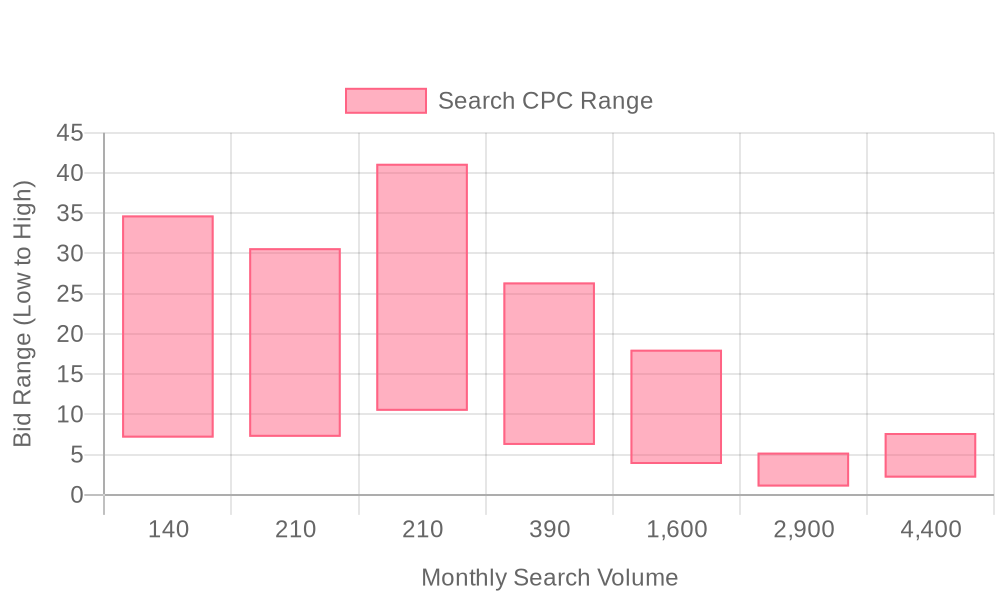
| Industry | Keyword | Monthly Search Volume | Competition Level | Low Bid | High Bid |
| Credit Card Protection Services | credit card protection services | 140 | MEDIUM | 7.12 | 34.73 |
| Credit Card Protection Services | protect your credit | 210 | LOW | 7.22 | 30.66 |
| Credit Card Protection Services | protect my credit | 210 | MEDIUM | 10.45 | 41.15 |
| Credit Card Protection Services | credit protection program | 390 | MEDIUM | 6.21 | 26.4 |
| Credit Card Protection Services | discover identity theft protection | 1600 | LOW | 3.84 | 18.04 |
| Credit Card Protection Services | credit card protection | 2900 | HIGH | 1.04 | 5.25 |
| Credit Card Protection Services | credit cards with travel insurance | 4400 | LOW | 2.15 | 7.69 |
B2B revenue teams in the credit card protection space require a keyword strategy that captures high-intent buyers while controlling for cost and compliance risk. Prioritizing high-quality, conversion-ready traffic leads to greater marketing efficiency and more reliable pipeline generation.
- High Volume/Low Competition: Targeting keywords such as "credit card protection services for businesses," "PCI compliance solutions," or "corporate credit card fraud prevention" often reveals untapped search intent. These terms typically face less competition from large consumer brands, enabling advertisers to secure premium ad placements without inflated cost-per-click rates. By focusing budget on these queries and aligning campaigns with in-market behaviors, marketers can identify which visitors represent viable decision-makers at target companies. Unifying visitor identification data with campaign analytics surfaces which keywords actually drive high-value engagement, not just clicks.
- Negative Keywords: Filtering out generic or low-intent terms like "free credit monitoring," "how to protect my credit card," or "student credit card tips" is essential. Excluding these phrases saves ad spend and prevents unqualified traffic from entering the funnel. As campaign data accumulates, dynamic negative keyword lists continually refine audience quality by excluding searchers unlikely to convert, such as individual consumers or those seeking unrelated financial products. This approach bolsters lead quality and sharpens retargeting pools for future campaigns, review additional B2B marketing best practices for optimization strategies.
- Local Modifiers: Integrating geographic terms such as "credit card fraud protection services New York," "business credit protection California," or "PCI solutions London" elevates ad relevance for regionally regulated industries. This tactic addresses the complexities of financial services advertising regulations that vary by market. For an overview of Google Ads policies on data use, consult official documentation to ensure compliance. Local modifiers not only improve click-through and conversion rates but also align with compliance requirements, ensuring visibility only in approved jurisdictions. Real-time intent signals can further optimize spend by reallocating budget toward high-performing locations or verticals as new data emerges.
A strategic, data-driven keyword approach lays the groundwork for compliant, efficient, and ROI-focused campaigns that scale with changing buyer behaviors and regulatory demands. To explore how your team can take the next step, get started for free with Sona.
Step-by-Step Campaign Execution Framework
Step 1: Build Targeted Keyword Lists
A methodical keyword strategy is fundamental for credit card protection services. Effective campaigns begin by categorizing keywords based on service offerings, user intent, and geographic relevance. This approach prevents wasted spend on irrelevant clicks and ensures that your ads appear for high-value queries, such as "credit card fraud protection," "business credit card security," and location-specific intent like "credit card protection services in New York." Leveraging keyword matching options allows marketers to control which search queries trigger ads and optimize for relevance.
Leveraging unified go-to-market data, marketers can refine these lists by identifying which keywords attract the most qualified leads. Integrating visitor identification technology enables teams to see not just anonymous searchers but the actual companies and high-intent prospects visiting your site. This actionable intelligence transforms keyword selection, supporting ongoing optimization and helping teams align spend with accounts most likely to convert. To dive deeper into building effective keyword strategies for B2B, explore our essential guide to account identification.
The upgrade most credit card protection services advertisers miss is going beyond raw keyword volume to layer in intent and identity signals. By connecting website-visitor data and CRM records with Sona Marketing Measurement, you can see which specific search terms bring in the accounts and customers that actually convert, and weight your keyword and bidding strategy toward those rather than the terms with the highest search volume alone.
Step 2: Develop Compelling Ad Copy
For financial services advertising, relevant and compliant ad copy is essential. Each message should address core pain points, such as unauthorized transactions or data breaches, that target customers face. Highlighting unique selling points and reassuring users of regulatory compliance increases trust and click-through rates. For instance, referencing secure protocols or clear financial disclosures directly in the ad copy can satisfy both compliance requirements and user expectations, as outlined in Google Ads product terms.
Dynamic audience data enables tailored messaging that evolves as prospects move through the funnel. As a lead demonstrates greater intent, ad copy can shift focus from general education to specific benefits or offers, ensuring relevance at every touchpoint. This approach drives higher engagement and supports better conversion outcomes for credit card protection service PPC campaigns.
Step 3: Design Effective Landing Pages
Landing pages must maintain message alignment with the originating ad and address the regulatory landscape for credit card protection services. Clearly displayed trust signals, fee transparency, and accreditations are not optional, they are crucial for compliance and user retention. Incorporate concise forms, straightforward value propositions, and compelling calls to action to minimize friction and boost conversion rates.
Real-time behavioral insights can inform page adjustments, such as surfacing testimonials or case studies for visitors from high-value segments. By tying website activity back to specific campaigns, marketers can rapidly test and iterate on landing page elements, ensuring that each visitor experiences a personalized, conversion-focused journey. If you're ready to put these insights into action, get started for free with Sona.
Step 4: Implement Data-Driven Optimizations
Continuous optimization is the backbone of successful financial services advertising. Real-time performance tracking enables teams to identify which keywords, ads, and landing pages are driving qualified leads and revenue. With advanced attribution models, marketers can pinpoint the channels and touchpoints contributing most to ROI, including both online and offline conversions. For additional guidance on Google's requirements for using customer data in ad targeting and measurement, see Google Ads data requirements.
Integrating CRM and ad platforms provides a closed-loop system for audience enrichment and campaign refinement. As new high-intent leads are identified, dynamic audiences update automatically, ensuring retargeting efforts remain focused on the most promising prospects. This feedback loop maximizes budget efficiency, helps avoid compliance pitfalls, and keeps campaigns aligned with both regulatory requirements and evolving customer behavior.
Sona Marketing Measurement closes the gap between clicks and revenue. It captures ad clicks with first-party measurement, then ties that click through UTM capture and ad-platform APIs to the actual record in your CRM, and reports ROAS by keyword and campaign instead of by last-click form fill. Feeding that revenue signal back into Smart Bidding and Performance Max compounds over time: the algorithms optimize toward booked credit card protection services revenue, not cheap leads.
Tips on Expanding Your Credit Card Protection Presence
Expanding your reach in the credit card protection industry requires a blend of precision, compliance, and adaptability. Teams that unify data across channels and stay agile in their marketing execution consistently outperform peers in both market share and customer engagement.
- Cross-Promote Educational Assets: Incorporate retargeting strategies to deliver educational content, bridging common knowledge gaps and reinforcing trust with prospects. By leveraging visitor intent identification, marketers can refine who receives each asset, ensuring that education matches every prospect's stage in the journey.
- Localize Marketing Efforts: Pinpoint high-potential regions where competition is low, honing in on local nuances and regulatory considerations. Localized campaigns, informed by enriched CRM and ad data, enable teams to allocate budget and messaging for maximum visibility and compliance in targeted markets. For more detailed requirements on handling customer data in ads, review Google Ads customer data policies.
- Identify Content Opportunities: Analyze search query and engagement data to generate content that addresses real audience interests, eliminating wasted effort on irrelevant topics. Continuous optimization, powered by real-time intent signals, allows marketing teams to adapt quickly and ensure every campaign remains aligned with evolving search trends and compliance standards.
A strategic approach to Google Ads for credit card protection services means more than running compliant ads: it demands keyword precision, audience segmentation, and always-on optimization. Navigating financial services advertising regulations, timing outreach to moments of urgency, such as a reported breach or a renewal deadline, and securing high-intent leads are what separates campaigns that scale from campaigns that stall. Staying vigilant with compliance and uncovering new market opportunities builds a durable competitive edge.
Beyond Google Ads: Winning the AI Answers Credit Card Protection Services Buyers Now Trust
Paid search captures demand at the moment someone types a query. But a fast-growing share of credit card protection services buyers no longer start at Google at all, they ask ChatGPT, Gemini, or Perplexity before they ever run a search, and Google's own AI Overviews increasingly summarize an answer above the traditional results. If your business isn't referenced in those AI answers, you're invisible at the exact moment buyers build their shortlist.
Sona AI Visibility shows where your business shows up across ChatGPT, Gemini, Perplexity, Google AI Overviews, and 10+ engines, and, much like a keyword report, which prompts actually send you buyers, so you can prioritize the ones that convert. Run the two together and you cover the entire buyer path: get cited where buyers research (AI Visibility), then prove which of that demand turns into booked revenue (Marketing Measurement).
Helpful resources
Conclusion
Google Ads success in credit card protection services comes from treating compliance and precision targeting as the same discipline, not competing priorities. Advertisers who track leads all the way to revenue, rather than stopping at the form fill, consistently outspend and outlast competitors who optimize for cheap clicks alone.
The next competitive edge in this category won't come from better ad copy alone. It will come from connecting AI-driven research behavior, company-level identification, and revenue attribution into one feedback loop, so every dollar spent teaches Google's algorithms what a real credit card protection services customer looks like, not just what a click looks like.
Ready to see which of your ad clicks are actually turning into customers? Start for free with Sona.
FAQ
What are the Google Ads policies for advertising credit card protection services?
Google Ads policies require financial services to adhere to strict transparency, accuracy, and verification processes to avoid disapproval or penalties.
How can I advertise credit card protection services on Google Ads?
To advertise credit card protection services, businesses must align ad targeting with landing page experience, optimize performance, and ensure compliance with Google Ads policies.
Are there any restrictions on advertising credit card protection services on Google Ads?
Yes, there are restrictions, including the need for transparency, accuracy in advertising, and adherence to financial services regulations.
What kind of financial services can be advertised on Google Ads?
Google Ads allows the advertising of financial services that comply with their regulations, which require transparency, accuracy, and robust verification processes.
How do I comply with Google Ads policies for credit card protection services?
Compliance involves ensuring transparency, meeting regulatory requirements, and using automated tools for pre-flight compliance checks and monitoring disclosures.
What are the requirements for advertising credit card protection services on Google Ads?
Requirements include clear alignment between ad targeting and landing page content, compliance with financial services regulations, and performance optimization.
Can I use my credit card to pay for Google Ads for credit card protection services?
Yes, you can use a credit card to pay for Google Ads campaigns for credit card protection services.
How does Google Ads handle sensitive financial data for credit card protection services?
Google Ads requires advertisers to adhere to strict privacy and data protection standards, ensuring sensitive financial data is collected and used in compliance with their policies.
What are the best practices for marketing credit card protection services on Google Ads?
Best practices include precise audience segmentation, keyword targeting, ensuring landing page alignment, and continuous performance optimization.
Are there any alternatives to credit card payments for Google Ads in the financial services sector?
While credit card payments are common, other payment methods may be available depending on the region and specific Google Ads account settings.







