


Contractor referral platforms live or die on speed: a homeowner with a burst pipe or a property manager facing a failed inspection wants a vetted contractor within the hour, not a callback next week. That urgency, paired with heavy seasonality (storm season, HVAC breakdowns in July, roofing after hail) and the trust question every buyer has about licensing and insurance, makes Google Ads a different game here than in most B2B categories. Done well, precision targeting turns that urgency into measurable ROI. Done poorly, it means paying for clicks from homeowners who just want free advice and were never going to convert, while high-value commercial leads slip through untracked in the CRM.
How to Generate Contractor Referral Services Leads with Google Ads: A Step-by-Step Guide

Contractor referral services operate in a market where buyers move fast, often mid-emergency, and expect an immediate, trustworthy match. Capturing that moment means knowing who is on your site, whether it's a homeowner comparing three services or a property manager sourcing for a portfolio of buildings, and connecting that visit to an actual booked job. That requires more than a standard campaign build; it means applying the kind of data-driven tactics suited to a high-intent, high-competition vertical where trust and licensing questions decide the click. Sona's Identity Resolution reveals which companies and people are visiting your website, so revenue teams can act on high-intent signals instead of waiting for a form fill.
By tuning Google Ads strategies for contractor referral services, revenue teams can gain a crucial edge in visibility and conversion. Monitoring prospect engagement, well before a form fill, helps refine targeting, messaging, and follow-up, ensuring marketing budgets deliver measurable ROI and actionable leads. For tactical guidance on refining these approaches, explore the Sona blog library for best practices in marketing analytics and attribution.
A Google Ads framework for contractor referral services starts with clear keyword definition and audience segmentation. Keyword research should center on phrases that signal real intent, "licensed contractor referral," "find certified contractors near me," "vetted contractor matchmaking," rather than broad terms that pull in DIY researchers. Dynamic keyword lists, refreshed with real-time audience data and CRM insight, keep ads pointed at decision-makers as they compare options, not just browse.
Precision in audience targeting is essential for contractor lead generation. Marketers can leverage platform integrations to identify not only anonymous site visitors but also surface the companies and contacts behind each visit. This granular data syncs directly into ad platforms and CRMs, allowing revenue teams to retarget high-fit accounts in real time and adjust creative or offers based on recent engagement, accelerating the buyer journey.
Landing pages should match each ad group's intent exactly. A campaign built around emergency plumbing needs a page built for speed and trust, not a general services brochure. The strongest referral-service campaigns pair tailored ad copy with pages optimized for clarity, licensing and insurance signals, and a short path to conversion. Sona's Intent Signals keep those landing experiences relevant as buyer behavior shifts, which shows up directly in form fills and inbound calls.
Optimizing Google Ads performance for contractor referral services demands continuous monitoring. Advanced conversion tracking allows teams to attribute both online and offline actions, painting a complete picture of campaign ROI. For an overview of Google's Local Service Ads platform, businesses can explore how local leads are generated and trust is built with nearby customers. When audience and conversion data are unified across Google Ads, Salesforce, HubSpot, and similar systems, teams can see exactly which tactics move leads through the funnel and make swift adjustments to bidding, targeting, and creative.
Following this approach, B2B marketing and sales teams sidestep the common traps, wasted spend on untargeted impressions, ad messaging disconnected from what the landing page promises. Instead, they consistently engage high-value prospects, capture more qualified referrals, and can show the business impact of every Google Ads dollar spent.
Why Does Google Ads Matter for Contractor Referral Services?
Contractor referral services operate in a highly competitive digital landscape where immediate visibility and targeted reach define success. Google's Local Service Ads platform enables contractor referral businesses to connect with prospects actively searching for specific services, eliminating wasted ad spend and maximizing every marketing dollar.
Traditional digital marketing often leaves a gap: anonymous website visitors represent missed opportunities for engagement and follow-up. Today's platforms empower contractor referral services to identify these visitors, enrich their profiles, and create actionable audience segments. This capability leads to more informed retargeting, personalized outreach, and ultimately, higher conversion rates, especially in regions where demand and competition fluctuate. By leveraging intent signals from real-time user behaviors, contractor referral companies can reallocate budget toward high-converting accounts and unlock new opportunities for growth.
Common Types of Google Ads Campaigns for Contractor Referral Services

- Search Campaigns: Search campaigns are the backbone of Google Ads for contractor referral services. They put your business at the top of results the moment someone searches for a contractor or referral platform, often mid-emergency, when speed matters more than price comparison. Refined keyword targeting connects you directly to buyers with urgent needs, and layering in real-time intent data lets you prioritize spend on the search terms that actually convert rather than just the ones with the most volume.
- Display Ads: Display campaigns keep your brand visible across the web, nurturing awareness among prospects who are still researching. Visual banners and creatives reinforce brand recognition and help maintain top-of-mind status throughout the buyer journey. By syncing enriched account and audience data, display ads can be dynamically tailored, ensuring your messaging tracks with each lead's stage in the funnel.
- Remarketing Campaigns: Remarketing targets users who have previously interacted with your site but have not converted. This approach surfaces your referral service to high-interest accounts, encouraging them to return and take action. With advanced visitor identification, marketers can pinpoint which companies and roles are returning, enabling more precise messaging and higher conversion rates.
- Video Ads: Video ads offer a compelling way to showcase contractor referral platforms and explain service benefits. These campaigns are especially effective for demonstrating value propositions and building trust in a crowded market. Leveraging dynamic audience updates, video ads can be used to nurture leads as they move closer to a decision point, aligning creative assets with real-time buying signals. For a detailed walkthrough on setup and optimization, see this video on Google Local Service Ads.
- Ad Assets: Ad assets (formerly called extensions) boost the visibility and credibility of your search ads by adding site links, phone numbers, and trust signals directly in the ad. For contractor referral services, that can mean surfacing certifications, service areas, or a current promotion right in the ad unit. Real-time CRM and ad sync keeps those assets current, reflecting the latest offers, locations, and contact details, which drives higher click-through and more qualified inquiries.
This multi-format approach lets contractor referral services engage prospects at every stage, from a first search to the moment they book, while unified data sharpens targeting and attribution across formats.
Where to Find Growth Opportunities?

Growth for contractor referral services rarely comes from broader keywords; it comes from going narrower. Precision in vertical targeting, licensed electrician leads versus general handyman searches, for instance, uncovers segments that are less competitive and convert at a higher rate because the intent is already specific. Google's Local Service Ads adds reach by connecting your service with local customers who are ready to hire now, not just researching.
Conducting a gap analysis is crucial for identifying underserved audiences within the contractor referral space. By analyzing search trends and competitor visibility, you can pinpoint valuable niches your competitors overlook. This process not only boosts efficiency but also ensures spend is allocated to audiences with genuine purchase potential; explore more in our tactical B2B marketing playbooks to refine your approach.
Advanced platforms allow you to enrich Google Ads custom affinity audiences by layering in firmographic and intent data. This enables your ads to prioritize visibility among companies actively researching contractor services, turning anonymous site visits into actionable prospect data. Marketers benefit from real-time insight into which businesses are showing intent, letting you shift budgets dynamically toward high-converting accounts.
Content retargeting further amplifies growth by engaging high-fit companies with tailored educational assets. Distributing whitepapers or instructional videos to recent site visitors helps reinforce your brand's authority and keeps your contractor referral service top-of-mind as prospects progress through their buying journey. With dynamic audience updates, leads can be nurtured at optimal moments, ensuring outreach aligns with their readiness to convert.
Unified data platforms make campaign shifts faster. Syncing enriched audience segments and lead data into Google Ads and CRM systems keeps targeting current as accounts move through the funnel, so the budget keeps chasing the highest-value opportunities rather than yesterday's assumptions.
How to Apply Audience Segmentation for Contractor Referral Services

Effective audience segmentation transforms contractor referral campaigns from generalized outreach into precision-guided lead generation. Aligning segments with mapped customer journeys ensures messaging is relevant at every touchpoint, optimizing engagement across commercial, residential, and specialized service lines.
Start by defining clear, actionable segments: commercial versus residential clients, emergency versus planned repairs, or new construction versus renovation. Overlay intent signals such as recent search activity, website engagement, or urgency indicators to tailor outreach. This multi-layered segmentation prevents wasted budget and enables more relevant, compelling ad copy that resonates with each unique audience.
Disconnected campaigns often suffer from inconsistent messaging and budget inefficiencies. By structuring ad groups around well-defined segments, marketers can allocate budgets for the highest-return audiences and craft messaging that addresses specific pain points. For example, commercial clients with immediate facility needs should see different offers than homeowners seeking routine maintenance.
Integrating segmentation with advanced tools unlocks further performance gains. Marketers can use Sona's Identity Resolution to distinguish anonymous website traffic from high-value decision-makers, speeding up lead qualification and nurturing. Dynamic audience updates keep ads and messaging aligned with a lead's latest intent and lifecycle stage as they move through the funnel.
Audience data should remain in sync across platforms. When segments are enriched and seamlessly pushed into Google Ads or CRM systems, revenue teams can execute timely, data-driven follow-ups. This unified approach drives measurable improvements in campaign efficiency and ultimately, conversion rates for contractor referral services. To see how segmentation and automation can accelerate your results, get started for free with Sona.
This is also where measurement changes the economics. With Sona Marketing Measurement you can identify the companies behind your ad clicks, not just anonymous sessions, and segment audiences by who actually becomes a customer. That lets you build bid adjustments and audience signals around the segments that convert and de-prioritize the ones that don't, so you feed Google's algorithms "this click became a paying contractor referral services customer" instead of just "someone filled out a form."
Keyword Strategy & Sample Target Terms
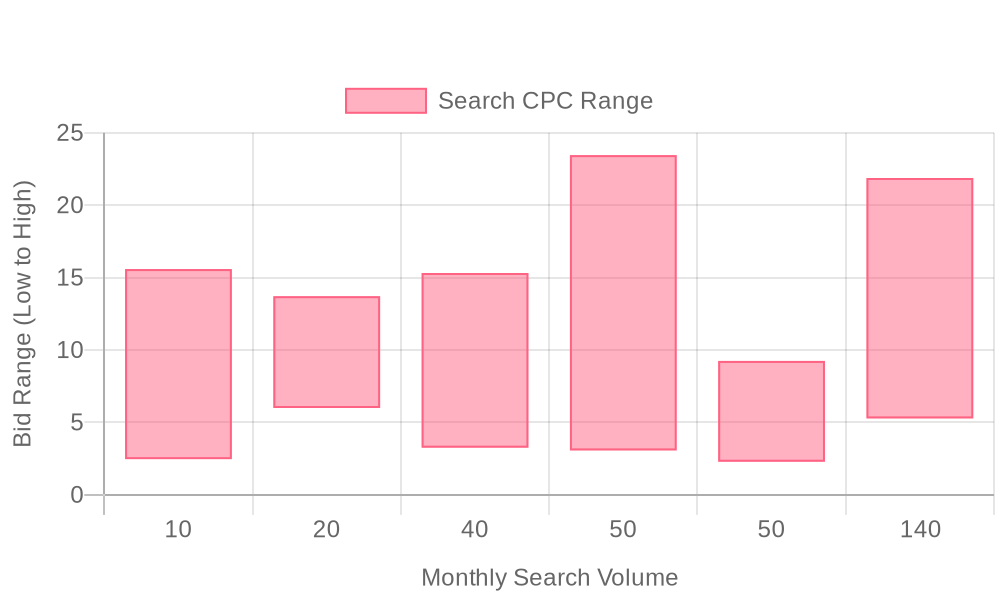
| Industry | Keyword | Monthly Search Volume | Competition Level | Low Bid | High Bid |
| Contractor Referral Services | home depot contractor referral service | 10 | HIGH | 2.47 | 15.59 |
| Contractor Referral Services | contractor referral sites | 20 | LOW | 6 | 13.72 |
| Contractor Referral Services | contractor referrals | 40 | LOW | 3.26 | 15.32 |
| Contractor Referral Services | best contractor referral service | 50 | LOW | 3.07 | 23.46 |
| Contractor Referral Services | home depot contractor referrals | 50 | MEDIUM | 2.29 | 9.25 |
| Contractor Referral Services | contractor referral services | 140 | LOW | 5.28 | 21.88 |
A strong keyword strategy is the foundation of effective Google Ads campaigns for contractor referral services. Precision in keyword targeting drives qualified traffic, minimizes wasted spend, and ensures ads reach decision-makers actively seeking contractor connections. Identifying high-intent search terms, such as "contractor referral services near me" or "best contractor lead generation," enables marketing teams to capitalize on moments of active buyer interest.
Manual audience creation and keyword management are common bottlenecks for contractor referral platforms. By leveraging real-time audience synchronization, marketers can automate the enrichment and updating of audience segments based on live engagement and in-market signals. This approach not only accelerates campaign setup but also ensures that ad groups are always aligned with the highest-converting segments.
For a scalable keyword plan, start with a quadrant analysis to map keyword opportunities:
- High-Intent Commercial: Terms like "commercial contractor referral service" and "contractor leads for business projects" capture ready-to-convert B2B buyers.
- Local Service Demand: Phrases such as "local contractor referral" or "home contractor matching service" match users looking for immediate, nearby solutions.
- Industry-Specific Niches: Target distinct verticals, for example, "plumbing contractor referrals" or "licensed electrical contractor leads," to increase relevance and lower cost-per-click.
- Negative Keywords: Filter out low-value or irrelevant searches, such as "DIY contractor tips" or "free contractor directory," to avoid wasting budget.
Automated keyword syncing and intent scoring allow revenue teams to prioritize spend on audiences with the highest propensity to convert. As new search patterns emerge, enriched data sources provide ongoing optimization, helping teams maintain visibility across evolving Google Ads strategies for construction businesses. This level of precision is essential for contractor referral platforms aiming to maximize ROI and lead quality in competitive digital marketplaces.
Step-by-Step Campaign Execution Framework
Step 1: Build Targeted Keyword Lists
Start by categorizing keywords based on each contractor service offered, such as plumbing, roofing, or remodeling. Leveraging geographic modifiers like city names or neighborhoods ensures ads reach high-intent prospects searching for local solutions. This granular approach increases relevance and boosts quality scores, driving more qualified clicks.
Revenue teams can amplify this step by dynamically updating keyword lists as market demand shifts, using real-time insights from unified go-to-market data. When audience signals reveal a spike in specific service interest or geographic demand, teams can pivot budgets and bids efficiently, ensuring top-of-funnel efforts align with current buyer intent. This data-driven targeting is especially valuable for generating local leads, where precision directly impacts lead quality and campaign ROI. For a platform overview on generating local leads, review Google's guidance on measuring geographic performance.
The upgrade most contractor referral services advertisers miss is going beyond raw keyword volume to layer in intent and identity signals. By connecting website-visitor data and CRM records with Sona Marketing Measurement, you can see which specific search terms bring in the accounts and customers that actually convert, and weight your keyword and bidding strategy toward those rather than the terms with the highest search volume alone.
Step 2: Develop Compelling Ad Copy
Ad copy for contractor referral services has to speak to urgency and trust at once. Headlines should name the problem plainly and back it with a credibility signal, "Licensed General Contractors Available 24/7" or "Background-Checked Plumbers Near You" work because they answer both "can you come now" and "can I trust you." Local references and specific guarantees push click-through rates higher still.
Marketers refine messaging by watching engagement and conversion data across campaigns, then optimizing headlines and descriptions for the segments showing real intent. With unified data, teams see which pain points and offers resonate and adjust creative automatically for each audience. Good copy doesn't just attract a click, it filters for the right one. Sona's Audiences tool helps build real-time, signal-based segments for more personalized targeting.
Step 3: Design Effective Landing Pages
Landing pages should align tightly with ad messaging, reinforcing the value proposition and guiding visitors toward conversion. Every page must feature trust markers such as industry certifications, third-party reviews, and clear service guarantees. Prominent, action-oriented CTAs like "Request a Quote" or "Schedule a Free Assessment" reduce friction and encourage form submissions or calls.
Teams improve landing page performance by combining behavioral data with attribution insight to see which elements actually drive conversions. Syncing form fills and calls with CRM and ad platforms means no interested lead slips through the cracks between click and qualified opportunity. Sona's Identity Resolution reveals which companies and people are visiting your landing pages, even the ones who never fill out a form.
Step 4: Implement Data-Driven Optimizations
Continuously optimize campaigns by leveraging Google's smart bidding strategies, which adjust bids in real time based on likelihood to convert. Regularly A/B test ad copy, landing page layouts, and CTAs to uncover what resonates best with each audience segment. This iterative testing process uncovers incremental gains in conversion rates and lowers cost-per-acquisition.
Integrating audience, conversion, and CRM data enables marketers to identify high-value prospects, retarget those who engaged but did not convert, and track outcomes both online and offline. Dynamic audience updates ensure remarketing lists reflect current funnel status, while enriched data syncs directly into ad platforms for precision targeting. Get started for free with Sona.
Sona Marketing Measurement closes the gap between clicks and revenue. It captures every ad click with first-party measurement, then ties that click through UTM capture and ad-platform APIs to the actual record in your CRM, and reports ROAS by keyword and campaign instead of by last-click form fill. Feeding that revenue signal back into Smart Bidding and Performance Max compounds over time: the algorithms optimize toward booked contractor referral services revenue, not cheap leads.
Tips on Expanding Your Contractor Referral Services Presence

Expanding a contractor referral services brand requires a blend of targeted digital marketing, strategic partnerships, and unified data to reach high-intent prospects. By integrating granular audience segmentation and omnichannel consistency, businesses can position themselves as trusted resources for both contractors and end clients.
- Cross-promote educational content: Retargeting campaigns featuring guides, checklists, or how-to webinars keep your brand in front of decision-makers as they move through the research phase. When leveraging advanced real-time intent data, marketers can shift budgets to audiences showing signs of immediate interest, increasing conversion rates and reducing wasted spend.
- Consistency across channels: Ensuring your messaging aligns across Google Ads, email, social, and website content prevents prospect confusion. Dynamic audience updates, powered by behavioral data, ensure prospects always receive the most relevant offers and information, regardless of their entry point. Explore omnichannel best practices to optimize every touchpoint.
- Collaborate for shared traffic: Partnering with industry associations, local trade organizations, or educational platforms can drive qualified referral traffic and boost credibility. These collaborations often enable expanded reach into untapped contractor segments, especially when campaign data is unified to identify shared interests and opportunities.
- Tailor local marketing efforts: Adapting campaigns based on regional search queries and local trends helps contractor referral services stand out in competitive markets. By syncing CRM data with ad platforms, marketers can push hyper-localized offers to contacts in specific geographies, ensuring optimal relevance and engagement. For additional strategies, review Google's Local Service Ads platform to maximize local lead generation.
- Utilize search query data for content creation: Analyzing top-performing search queries from Google Ads for contractor lead generation uncovers gaps in current educational resources and identifies new topics that resonate with your audience. This data-driven approach informs the development of webinars, ebooks, or local guides that attract inbound traffic and enhance authority.
- Map campaigns to buyer stages: Clearly align each campaign, top-of-funnel educational content, mid-funnel solution comparisons, and bottom-funnel demo offers, to specific buyer stages. Advanced attribution and conversion tracking, including both online and offline touchpoints, reveal which interactions drive revenue so spend can be optimized across the funnel.
Maintaining synergy across every marketing touchpoint ensures prospects receive a seamless, trust-building experience with your contractor referral services. Unified data, real-time intent signals, and advanced retargeting capabilities allow marketers to engage high-value leads at the right moment, ultimately accelerating growth and maximizing marketing ROI. If you're ready to unify your contractor referral marketing and reach more high-intent prospects, get started for free with Sona.
Beyond Google Ads: Winning the AI Answers Contractor Referral Services Buyers Now Trust
Paid search captures demand at the moment someone types a query. But a fast-growing share of contractor referral services buyers no longer start at Google at all, they ask ChatGPT, Gemini, or Perplexity before they ever run a search, and Google's own AI Overviews increasingly summarize an answer above the traditional results. If your business isn't referenced in those AI answers, you're invisible at the exact moment buyers build their shortlist.
Sona AI Visibility shows where your business shows up across ChatGPT, Gemini, Perplexity, Google AI Overviews, and 10+ engines, and, much like a keyword report, which prompts actually send you buyers, so you can prioritize the ones that convert. Run the two together and you cover the entire buyer path: get cited where buyers research (AI Visibility), then prove which of that demand turns into booked revenue (Marketing Measurement).
Helpful resources
Conclusion
The contractor referral services that win with Google Ads are the ones that treat every click as a signal, not just a cost. Search campaigns catch buyers at the moment of urgent need, layered targeting and landing pages built for trust turn that urgency into a booked job, and measurement that reaches past the form fill into the CRM tells you which of it actually paid off.
The next shift is already underway: buyers increasingly ask AI tools to shortlist a contractor before they ever type a search query. Referral services that show up in those AI answers, and that can prove which keywords and prompts turn into booked revenue rather than just leads, will be the ones setting the pace over the next few years.
To put data-driven marketing to work for your contractor referral business, start for free with Sona.
FAQ
How can I set up a successful Google Ads campaign for my contracting business?
To set up a successful Google Ads campaign for your contracting business, start with targeted keyword research, develop compelling ad copy, align landing page content with ad messaging, and continuously optimize using data-driven insights.
What are the best keywords for Google Ads in the contractor industry?
Effective keywords include phrases that signal strong intent such as 'licensed contractor referral,' 'find certified contractors near me,' and 'vetted contractor matchmaking.'
How can I track the ROI of my Google Ads for my contractor business?
Track ROI by leveraging advanced conversion tracking to attribute both online and offline actions, ensuring a complete picture of campaign performance.
What are some examples of successful Google Ads campaigns for contractors?
Successful campaigns include search ads targeting high-intent leads, display ads for brand awareness, remarketing to previous site visitors, and video ads for showcasing services.
How do I target local customers with Google Ads for my contracting business?
Target local customers by using geographic modifiers in keywords and leveraging Google's Local Service Ads platform to connect with nearby prospects.
What is the average cost per click for Google Ads in the contractor industry?
The article does not specify an average cost per click for Google Ads in the contractor industry.
How can I improve my Google Ads quality score as a contractor?
Improve your quality score by ensuring ad relevance, optimizing landing pages for user experience, and aligning keywords with ad group intent.
Are there any specific Google Ads features that are particularly useful for contractors?
Useful features include ad extensions for enhanced visibility, remarketing for engaging past visitors, and local service ads for targeting nearby customers.
What are some common mistakes contractors make with Google Ads and how can I avoid them?
Common mistakes include untargeted impressions and disconnected ad messaging. Avoid these by refining targeting, aligning ad copy with audience segments, and ensuring consistency.
How can I integrate Google Ads with my existing contractor referral services?
Integrate Google Ads with referral services by syncing audience and conversion data across platforms like CRMs and ad platforms to maintain consistent targeting and follow-ups.







