


Commercial general contractors lose bids in the gap between an anonymous website visit and a signed contract. A facilities director researches renovation firms, compares three sites, and leaves without filling out a form, and that near-miss is where most Google Ads budgets quietly evaporate. Identity resolution tools now let contractors identify those anonymous visitors and import them directly into Google Ads customer match lists, so ad spend targets real decision-makers with real intent. Run well, Google Ads lets contractors intercept decision-makers at pivotal moments, target precise audiences, and measure ROI from click to signed contract. This guide walks through how commercial general contractors can put Google Ads to work for lead generation and pipeline growth.
How to Generate Google Ads for Commercial General Contractors Leads: A Step-by-Step Guide
Commercial general contractors face a dynamic and competitive sales environment where every qualified lead can shape the project pipeline. Integrating Google Ads into your marketing stack empowers your team to reach decision-makers at the precise moment they are searching for commercial construction partners. Google Ads delivers measurable results by targeting high-intent prospects actively seeking services, not just browsing, see this beginner-friendly guide to Google Ads for contractors for foundational strategies.
A data-driven approach to paid search ensures your campaigns align with business development goals and maximize every dollar spent. By utilizing real-time audience segmentation and intent signals, you can prioritize the most valuable accounts and accelerate lead velocity. The right strategy transforms Google Ads from a basic channel into a core engine for pipeline acceleration and revenue growth. Explore more strategies in our marketing, analytics, and attribution insights.
- Data-driven paid search: Modern paid search is not just about keywords but about harnessing real-time data from all buyer touchpoints. By integrating account-level insights and in-market behavior, you can adjust spend and creative to align with where commercial project opportunities are most likely to convert. This precision allows for smarter budget allocation and a higher return on investment. Sona's Identity Resolution can help you reveal which companies are visiting your website, even if no one fills out a form.
- Targeting strategies for commercial contractors: A facilities director who requests a bid after hours or over a weekend expects a fast response, and a delayed follow-up often means she's already called a competitor. Leveraging intent-based audience segments within Google Ads lets you surface timely, relevant messaging to prospects showing active interest, whether they're comparing general contractors for a ground-up build or searching for a firm that can mobilize quickly after storm damage. Dynamic audience sync updates your campaigns automatically as new leads emerge or move deeper into the bid cycle, so the most promising accounts stay engaged through a long procurement process.
- Landing page alignment for conversions: High-performing campaigns require seamless alignment between ad creative and landing page experience. For commercial general contractors, landing pages should be tailored to the unique needs of facilities managers, property owners, or project engineers, featuring relevant case studies, service specialties, and clear calls to action. Real-time visitor identification tools can transform anonymous traffic into actionable company profiles, making follow-up and nurturing more effective.
- Cross-channel marketing integration: Success is not limited to Google Ads alone. When you understand how prospects engage across your web properties, you can enrich ad audiences and prioritize follow-up based on actual buyer behavior. Sophisticated platforms enable syncing enriched audience and lead data directly into your CRM and Google Ads, enabling unified reporting, advanced attribution, and automated lead routing. This integration shortens response times, reduces manual errors, and ensures that high-value opportunities are never missed.
Why Does Google Ads Matter for Commercial General Contractors?
Commercial general contractors face complex challenges in attracting high-value clients and driving consistent project pipelines. With longer sales cycles and specialized project requirements, traditional marketing efforts often fall short in delivering measurable, timely results. For actionable strategies to overcome these hurdles, explore this PPC advertising strategy and ideas resource tailored for general contractors.
Google Ads provides a direct line to prospects already searching for commercial construction solutions, allowing contractors to intercept demand at precisely the right moment. This immediacy is critical during project bids, urgent facility upgrades, or rapid expansions, where reaching decision-makers first can be the difference between winning and losing a contract. Learn more about optimizing your outreach through intent-driven retargeting campaigns.
- Capturing high-value prospects: Google Ads empowers commercial general contractors to appear before procurement managers, facility directors, and project owners actively seeking specialized services. Unlike passive channels, paid search captures intent-driven traffic, ensuring that every click represents a potential project in the pipeline.
- Delivering immediate results: Project-driven industries cannot afford to wait months for organic rankings to take effect. With Google Ads, contractors achieve instant visibility for targeted keywords, generating qualified leads when demand spikes or rapid mobilization is critical.
- Providing visibility in untapped markets: Advanced targeting features allow contractors to expand into new geographic regions, industry verticals, or facility types without diluting spend. Location and audience targeting ensures ad budgets are focused exclusively on high-opportunity segments, minimizing wasted impressions. Enhance your targeting precision by leveraging real-time audience insights to build segments that sync automatically with ad platforms.
- Enhancing analytics and attribution: The true impact of PPC for general contractors is unlocked when data is unified across digital and offline touchpoints. Integrated platforms enable contractors to capture every interaction, from web form fills to direct calls and on-site consultations. With accurate attribution, teams can optimize spend, measure Google Ads ROI for contractors, and refine marketing strategies based on which campaigns drive actual project wins. For deeper insights on measuring marketing's influence, review our pipeline attribution guide.
Revenue teams leveraging unified data platforms can identify which visitors are true commercial prospects, not just anonymous web traffic. By enriching Google Ads audiences with CRM insights and tracking both online and offline conversions, commercial contractors build a feedback loop that continuously sharpens targeting and keeps every dollar tied to measurable growth.
Common Types of Google Ads Campaigns for Commercial General Contractors

- Search Campaigns: Search campaigns are the foundation for commercial general contractors seeking high-intent leads at the precise moment of need. By targeting urgent queries such as "commercial building contractor near me" or "facility renovation bid," these campaigns surface your business to decision-makers actively searching for solutions. Leveraging real-time intent signals, marketers can shift budgets toward the highest converting keywords and accounts, ensuring that every click is both relevant and likely to convert. For a deeper dive into search campaign strategies tailored for contractors, see this guide on PPC advertising strategy and ideas.
- Display Ads: Display campaigns keep your brand visible to facility managers, architects, and corporate decision-makers as they research construction solutions across industry publications and business networks. Strategic placements on relevant sites help maintain top-of-mind presence during longer sales cycles typical in commercial construction. By connecting audience insights from multiple channels, marketers can dynamically adjust creative and placements to target those progressing through the consideration phase, increasing engagement with the most valuable prospects.
- Video Ads: Video campaigns enable contractors to visually communicate project expertise, safety protocols, and unique market capabilities. These ads are particularly effective for demonstrating large-scale project outcomes and differentiating complex service offerings. Marketers can use intent-based audience segments to ensure videos reach specific roles such as facilities directors or procurement teams researching commercial contractors. As audience data updates in real time, video content can be tailored to reflect evolving buyer journeys, keeping messaging relevant and persuasive.
- Remarketing: Remarketing campaigns re-engage past website visitors who have already shown interest in your services, nurturing leads through multiple touchpoints. By leveraging account-level behavior and historical engagement data, ads can be customized to address the specific needs or hesitations of previous visitors, increasing the likelihood of conversion. To explore actionable ways general contractors can improve their remarketing and PPC efforts, review these tips for optimizing PPC campaigns.
- Assets: Ad assets enhance the credibility and performance of search and display campaigns by providing additional business details and trust signals. Location, call, and structured snippet assets showcase service areas, licenses, and project specialties, reinforcing authority in the commercial construction space. With unified, enriched account data, marketers can avoid outdated or incomplete information, ensuring every asset contributes to a trustworthy, compelling ad experience that drives higher engagement and conversion rates. To start optimizing your ad campaigns with smarter data and insights, get started for free with Sona.
Where to Find Growth Opportunities?

Growth for commercial general contractors hinges on deploying digital marketing strategies that align with evolving demand signals and nuanced buying cycles. The most effective contractors consistently identify and act on gaps in the market, leveraging data-driven tactics to outmaneuver less agile competitors. For insights on PPC advertising strategies and campaign ideas tailored for general contractors, explore this PPC advertising strategy guide.
- Vertical keyword targeting: After conducting a thorough analysis of your service portfolio and reviewing search trends, focus on highly specific commercial construction terms that competitors overlook. For example, targeting keywords like "industrial warehouse build-outs" or "LEED-certified facility upgrades" can attract decision-makers looking for niche expertise. Using Sona’s Audiences tool, marketers can go beyond generic traffic and pinpoint which visitors are actively researching these terms, refining spend toward high-value segments.
- Competitor gap analysis: Regularly assess where rival firms are underperforming or absent, whether in specific geographies, service lines, or emerging project types. This approach reveals untapped audiences and informs both keyword bidding and ad creative. Integrating Sona’s Intent Signals feature into this analysis enables teams to shift budgets quickly as new opportunities surface, ensuring resources target the most promising accounts.
- Industry-specific placement: Expanding beyond search, place ads on construction-focused forums, digital trade magazines, and commercial building directories. These channels are frequented by facilities managers, architects, and procurement teams seeking contractor recommendations. By syncing enriched audience insights from CRM and web analytics into these placements, campaigns stay relevant and visible to companies with confirmed project plans.
- Content retargeting for buying signals: Not all prospects convert on their first visit. Retargeting content such as whitepapers on compliance standards or how-to videos for commercial renovations keeps your brand top-of-mind with buyers showing sustained interest. With Sona’s Buyer Journeys tool, engagement signals, like repeated visits or asset downloads, automatically trigger tailored ad sequences as leads progress through the funnel. This ensures personalized follow-up and increases the likelihood of capturing projects when intent peaks.
How to Apply Audience Segmentation for Commercial General Contractors

Audience segmentation is the foundation for commercial general contractors aiming to maximize digital advertising ROI. By tailoring messaging and offers to the unique needs of each segment, contractors can reach high-value decision-makers while reducing wasted ad spend. For a deeper dive into segmentation and campaign strategy, explore this guide to Google Ads for contractors, which breaks down key steps and considerations for success.
- Define key segments such as industry or project type: Start by mapping your core customer profiles. For commercial general contractors, this often means segmenting by verticals like healthcare, education, hospitality, or industrial, as well as project scope, such as tenant improvements, ground-up construction, or retrofits. This initial segmentation enables precise targeting, ensuring your Google Ads investments are directed toward accounts with the highest potential value. Leveraging enriched data, teams can identify which companies frequently engage with relevant content, such as specification sheets or RFPs, signaling real project interest. Use company identification technology to connect anonymous website visits to specific accounts and prioritize valuable opportunities.
- Overlay intent signals like renovation phases using real-time audience updates: Commercial construction demand is cyclical and influenced by triggers like budget cycles, compliance deadlines, or facility emergencies. Integrating real-time audience data reveals when a property manager or facilities director transitions from research to active procurement. Dynamic audience updates allow you to adjust campaign budgets immediately, shifting focus to those segments entering critical purchase phases. With platforms that unify website, CRM, and ad engagement data, you can pinpoint high-converting accounts and activate messaging just as their buying intent peaks.
- Create ad groups tailored to each segment: High-performing campaigns use separate ad groups for each defined segment, allowing for customized copy, extensions, and landing pages. For example, a segment targeting industrial clients might emphasize rapid response and compliance, while hospitality-focused ads highlight guest experience upgrades and minimal downtime. This granular approach enhances relevance and Quality Score, which improves Google Ads ROI for contractors by lowering cost-per-click and boosting conversion rates. Review best practices in our marketing playbooks to further refine your targeting and creative strategy.
- Ensure conversion paths align with targeted CRM tracking and account data, which help identify which companies require prompt engagement: By integrating CRM and ad platform data, commercial general contractors can connect each inquiry, form fill, or phone call to specific companies and their current project stage. This enables rapid follow-up with key accounts and ensures marketing and sales teams focus on the most valuable opportunities. Advanced conversion tracking, including offline and multi-touch attribution, provides full visibility into which campaign segments drive actual project wins, not just leads, allowing for smarter budget reallocation and continuous optimization.
Ready to put segmentation into action? Get started for free with Sona.
This is also where measurement changes the economics. With Sona Marketing Measurement you can identify the companies and buyers behind your ad clicks, using first-party data rather than relying on anonymous sessions, and segment audiences by who actually becomes a customer. That lets you build bid adjustments and audience signals around the segments that convert and de-prioritize the ones that don't, so you feed Google's algorithms "this click became a paying commercial general contractors customer" instead of just "someone filled out a form."
Keyword Strategy & Sample Target Terms
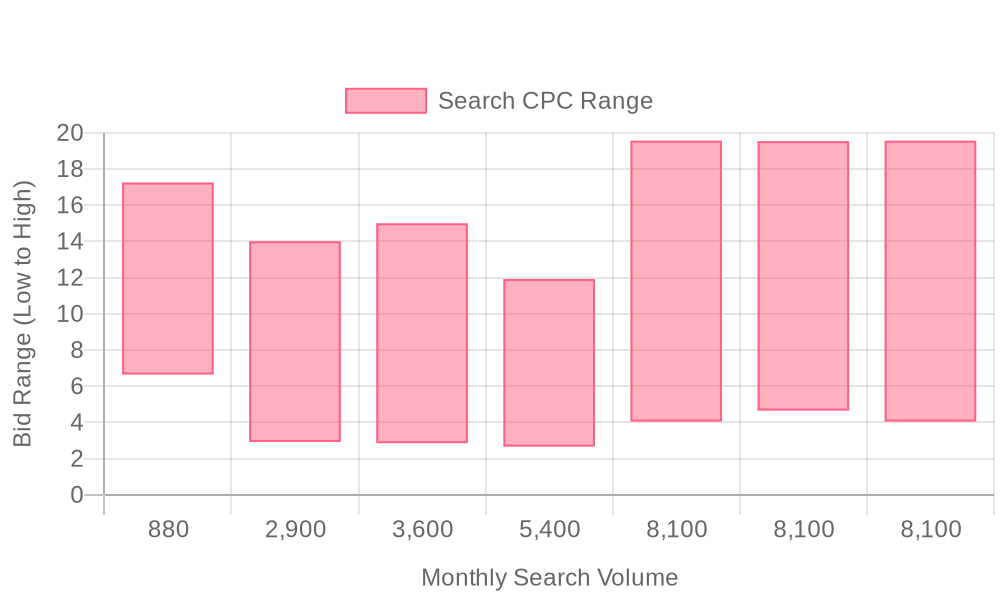
| Industry | Keyword | Monthly Search Volume | Competition Level | Low Bid | High Bid |
| Commercial General Contractors | commercial remodeling contractors | 880 | LOW | 6.65 | 17.25 |
| Commercial General Contractors | commercial general contractors | 2900 | LOW | 2.92 | 14.01 |
| Commercial General Contractors | commercial construction companies near me | 3600 | LOW | 2.86 | 15 |
| Commercial General Contractors | commercial construction companies | 5400 | LOW | 2.67 | 11.92 |
| Commercial General Contractors | commercial contractors near me | 8100 | LOW | 4.05 | 19.56 |
| Commercial General Contractors | commercial contractors | 8100 | LOW | 4.66 | 19.54 |
| Commercial General Contractors | commercial general contractors near me | 8100 | LOW | 4.05 | 19.56 |
A well-crafted keyword strategy underpins every profitable Google Ads campaign for commercial general contractors. Success in this space depends on aligning your search terms with the decision-making behaviors of facilities managers, project executives, and procurement teams who drive commercial projects. By focusing on high-performing Google Ads keywords for contractors, your budget supports genuine project opportunities rather than wasted clicks.
- Prioritize high-volume, high-competition keywords: Identify core commercial construction keywords that are both frequently searched and tied to lucrative projects. Examples include "commercial general contractor," "industrial construction companies," and "office build-out specialists." These terms place your ads in front of in-market prospects with urgent project needs and significant budgets. Analyzing search volume and competitive density helps allocate spend where the potential return is greatest, use resources like our B2B marketing reports for CMO dashboards to inform your approach.
- Identify long-tail and niche keywords: Go beyond broad terms to capture specialized intent. Phrases like "LEED-certified hospital contractor," "warehouse retrofit experts," or "tenant improvement services near me" attract decision-makers looking for specific expertise. Long-tail keywords typically have lower cost-per-click and higher conversion rates since they reflect researched, late-stage buying intent. For more guidance, explore our curated playbooks for optimizing marketing strategies.
- Use location-based modifiers: Incorporate geo-specific phrases such as "commercial contractor Dallas," "industrial builder Chicago," or "commercial renovation company near me." These modifiers connect your offering to local demand, ensuring you show up for high-intent searches in your service area. Geo-targeted keywords are essential for contractors whose projects are regionally constrained; leverage real-time audience segmentation to further refine your targeting.
- Apply negative keywords for budget accuracy: Filter out irrelevant traffic by excluding residential, DIY, or unrelated queries. Negative keywords like "home improvement," "kitchen remodel," or "free plans" help focus your spend exclusively on commercial opportunities, maximizing lead quality and campaign efficiency. For step-by-step best practices, see how to structure effective Google Ads campaigns.
- Craft a strategy for completeness and accuracy: Combine core, long-tail, and negative keywords to build a robust campaign structure. This approach prevents wasted spend and ensures your ads reach only the most relevant B2B buyers. Discover more about intent-driven retargeting with first-party data.
By leveraging intent signals and historical performance, platforms can now dynamically update your keyword lists based on real-time behavior. As leads transition from research to purchase, your ads adapt, ensuring ongoing alignment with the most valuable opportunities. Advanced systems can even reveal which companies and people are visiting your website, linking search behavior with company profiles and project potential. This shifts your keyword strategy from reactive to proactive, enabling budget reallocation toward the highest-converting segments as soon as buying signals emerge.
Step-by-Step Campaign Execution Framework
Step 1: Build Targeted Keyword Lists
Success in Google Ads for commercial general contractors hinges on precise keyword selection. Segmenting keywords by service type and location modifiers ensures campaigns reach facility managers and business owners searching for commercial solutions in their region. Long-tail keywords such as "industrial building renovation contractors in Dallas" or "office fit-out specialists for healthcare facilities" capture high-intent prospects and reduce wasted spend on irrelevant clicks. Question-based queries, like "who builds medical office expansions near me," tap into early-stage researchers and drive qualified top-of-funnel engagement. For a curated list of high-performing keywords, explore Google Ads keywords for contractors to improve ad targeting and lead generation.
Leveraging enriched keyword insights allows marketers to identify not just anonymous search trends, but also the companies and buyer profiles engaging with these queries. By integrating real-time audience data, teams can prioritize high-intent, account-based segments and continuously refine keyword lists as new project needs emerge. For further campaign optimization strategies, browse our marketing insights.
The upgrade most commercial general contractors advertisers miss is going beyond raw keyword volume to layer in intent and identity signals. By connecting website-visitor data and CRM records with Sona Marketing Measurement, you can see which specific search terms bring in the accounts and customers that actually convert, and weight your keyword and bidding strategy toward those rather than the terms with the highest search volume alone.
Step 2: Develop Compelling Ad Copy
Effective ads for commercial general contractors address pain points unique to property stakeholders: project timelines, compliance, and minimizing disruption. Headlines should directly address these priorities, such as "Reduce Downtime with Fast Commercial Build-Outs" or "OSHA-Certified Renovations for Industrial Facilities." Incorporate trust markers in ad copy, including licensing credentials, project minimums, and safety certifications, to build credibility and pre-qualify leads. Strong calls to action, like "Request a Site Assessment" or "Secure Your Project Estimate", prompt decision-makers to take the next step. For examples of high-performing ad strategies, see this PPC advertising strategy and ideas resource tailored for general contractors.
When ad copy is informed by unified go-to-market data, marketers can tailor messaging to the most relevant audience segments. Syncing CRM insights and pipeline stages enables dynamic ad customization for returning visitors or high-value accounts, increasing click-through rates and accelerating lead velocity.
Step 3: Design Effective Landing Pages
Landing pages for contractor campaigns must align with each ad group’s intent. If the ad targets "warehouse construction," the landing page should immediately present past warehouse projects, industry-specific case studies, and a clear value proposition for industrial clients. Every page should feature a prominent call to action, such as "Book a Consultation", and trust-building elements like project portfolios, client logos, and third-party reviews. For an example of a real-world campaign structure, review this PPC case study for construction companies.
Integrating visitor identification technology elevates landing page performance by allowing revenue teams to recognize returning companies and personalize content dynamically. This boosts conversion rates and enables real-time lead enrichment, feeding actionable data directly into sales workflows for immediate follow-up.
Step 4: Implement Data-Driven Optimizations
Comprehensive conversion tracking is essential for measuring and improving Google Ads ROI for contractors. Set up tracking for every meaningful action, from form fills and calls to offline proposal submissions, to capture the full customer journey. Importing offline conversions, such as closed deals or bid awards, completes the ROI picture and surfaces which campaigns truly drive revenue, not just leads. For more on maximizing ROI through offline channels, read our guide to offline attribution.
Sona Marketing Measurement closes the gap between clicks and revenue. It captures every ad click with first-party tracking, then ties that click through UTM capture and ad-platform APIs to the actual record in your CRM, and reports ROAS by keyword and campaign instead of by last-click form fill. Feeding that revenue signal back into Smart Bidding and Performance Max compounds over time: the algorithms optimize toward booked commercial general contractors revenue, not cheap leads.
Tips on Expanding Your Commercial General Contractors Presence
Commercial general contractors can achieve market leadership by blending targeted content promotion with data-driven advertising. Smart campaign expansion strategies ensure visibility to decision-makers at the exact moment they are seeking services, keeping your brand top of mind for lucrative projects. For additional insights on maximizing your ad spend, see this guide on Google Ads PPC for construction.
- Cross-promote content to support marketing goals: Distribute project case studies, safety certifications, and industry insights across both owned and paid channels. This approach reinforces expertise, builds trust with facility managers, and keeps your project portfolio in circulation among high-value prospects. When you cross-promote via Google Ads, you can amplify the reach of your most compelling assets, ensuring that both local developers and national property managers see your best work. Explore how account identification techniques can turn anonymous website traffic into new sales opportunities as you expand your portfolio reach.
- Localize campaigns to grow presence in target areas: Tailor your Google Ads campaigns to the regions where you want to increase project bids. Use location targeting to serve ads only in cities or industrial zones where you have capacity or a strategic growth interest. With advanced audience segmentation, your campaigns can dynamically update to prioritize high-intent profiles, such as property owners recently searching for “commercial build-out contractors near me.” Automation platforms can further refine these audiences in real time, so your budget always follows the freshest, most conversion-ready demand.
- Use search query data to discover new content opportunities: Review your Google Ads search terms report to identify trending project types, compliance topics, or industry pain points that are driving clicks. By analyzing this data, commercial general contractors can rapidly launch new landing pages or resource guides tailored to emerging interests, capturing organic and paid traffic before competitors react. Integrating these insights with your CRM allows you to sync high-performing queries directly into both ad and sales outreach, ensuring unified messaging across the funnel.
Executing Google Ads well for commercial general contractors takes ongoing optimization and full-funnel visibility. Strategic keyword targeting combined with dynamic audience segmentation sharpens campaign relevance, while continuous analysis of campaign metrics uncovers new paths for growth. By capturing both online and offline interactions, form fills, phone calls, in-person consultations, contractors can accurately measure marketing's influence on the sales pipeline and attribute revenue to each touchpoint. Automated campaign management and analytics-driven insights let teams adapt in real time, so every advertising dollar lands on the highest-value opportunities.
Beyond Google Ads: Winning the AI Answers Commercial General Contractors Buyers Now Trust
Paid search captures demand at the moment someone types a query. But a fast-growing share of commercial general contractors buyers no longer start at Google at all, they ask ChatGPT, Gemini, or Perplexity before they ever run a search, and Google's own AI Overviews increasingly summarize an answer above the traditional results. If your business isn't referenced in those AI answers, you're invisible at the exact moment buyers build their shortlist.
Sona AI Visibility shows where your business shows up across ChatGPT, Gemini, Perplexity, Google AI Overviews, and 10+ engines, and, much like a keyword report, which prompts actually send you buyers, so you can prioritize the ones that convert. Run the two together and you cover the entire buyer path: get cited where buyers research (AI Visibility), then prove which of that demand turns into booked revenue (Marketing Measurement).
Helpful resources
Conclusion
The contractors who win the next decade of commercial bids won't just run more ads, they'll be the ones whose Google Ads spend is tied to actual booked revenue rather than form fills, and whose firm shows up when a facilities director asks an AI tool for a shortlist before she ever searches Google.
Pair intent-driven Google Ads campaigns with identity resolution and marketing measurement, and you stop guessing which clicks matter. Start for free and see how unified data can drive your contracting business forward.
FAQ
What are the best practices for Google Ads for contractors?
Best practices include using data-driven paid search to align campaigns with business goals, leveraging real-time audience segmentation and intent signals, and integrating Google Ads with other marketing channels for unified reporting and optimized lead routing.
How can I optimize my Google Ads campaign for my contracting business?
Optimize your campaign by targeting high-intent prospects, aligning ad creative with landing pages, using audience segmentation, and implementing data-driven optimizations to improve ROI and accelerate lead generation.
What budget should I allocate for Google Ads as a contractor?
The budget should be allocated based on targeting high-intent prospects, using real-time data insights to adjust spend according to where opportunities are most likely to convert, ensuring a higher return on investment.
What keywords should I target in Google Ads for commercial contracting?
Target keywords that align with commercial construction projects, such as 'commercial general contractor,' 'industrial construction companies,' and specific long-tail keywords relevant to your services and geographic location.
How do I measure the success of my Google Ads campaigns for contracting?
Measure success by tracking conversions from clicks to contracts, using advanced attribution to capture online and offline interactions, and continuously optimizing campaigns based on unified data insights to drive actual project wins.







