


Carpet manufacturers sell into a business where the buyer is a procurement director or a facility manager, not a homeowner browsing samples, and the sales cycle can run from a single search to a six-figure supply contract. Google Ads gives manufacturers a way to intercept that buyer at the exact moment they're specifying materials or requesting quotes, connecting a digital click to a process that ultimately closes offline.
How to Generate Google Ads for Carpet Manufacturers Leads: A Step-by-Step Guide

Google Ads for carpet manufacturers delivers direct access to procurement professionals and buyers searching for specialized flooring solutions. Precision targeting and data-driven lead capture empower teams to compete in a market where timing and relevance define success.
Integrating Google Ads into your marketing mix will bolster your ability to reach high-intent carpet buyers effectively. This involves:
- Identifying and targeting high-value keywords: Focus on search phrases directly tied to commercial carpet manufacturing, such as "bulk carpet supplier," "custom carpet backing," and "wholesale carpet rolls." These terms surface your ads for buyers with immediate project needs, distinct from the DIY or residential-cleaning searches that dominate broader carpet queries. Combining keyword research with buyer intent data helps prioritize the highest-converting opportunities: Sona surfaces intent signals so you can shift spend toward queries and accounts showing new purchase signals, ensuring your ads are always in front of the right prospects.
- Customizing audience segments: Segmenting by company size, industry vertical, and purchase stage ensures your ads reach decision-makers, not just casual browsers. Dynamic audience building tools update target lists automatically as visitors engage with your site and move through the funnel. Syncing enriched audiences with Google Ads eliminates manual exports and keeps targeting accurate as more data is captured, allowing for continuous refinement and exclusion of closed or disqualified accounts.
- Designing creative strategies for conversion: Ad copy should highlight certified materials, rapid fulfillment, and solutions tailored to verticals like hospitality or healthcare, where flooring specs are governed by durability codes and infection-control standards. Landing pages should back up these claims with technical documentation, case studies, and streamlined forms for quote or sample requests. Sona's Identity Resolution reveals the companies behind otherwise anonymous site visits, so you can personalize messaging and offers in real time and drive more conversions.
- Synchronizing online campaigns with offline sales: Accurate ROI measurement requires tracking both digital and real-world touchpoints. Advanced conversion tracking tracks leads from click to closed deal, importing offline sales data to reveal which keywords and campaigns produce true revenue. When CRM systems and ad platforms are interconnected, teams can nurture leads more effectively, automate follow-ups, and analyze pipeline impact with clarity.
Tools that flag anonymous traffic and surface it before a form is ever filled out help ensure a procurement manager researching bulk carpet doesn't slip away unengaged. This closes the gap between digital intent and the offline relationship-building that actually wins commercial flooring contracts, turning a qualified click into a measurable pipeline opportunity. For those ready to implement these strategies, get started for free with Sona.
Why Does Google Ads Matter for Carpet Manufacturers?

Carpet manufacturers compete in a market where visibility among decision-makers drives consistent growth. Google Ads positions your brand in front of commercial buyers, architects, and procurement leaders precisely when they search for flooring solutions. This captures high-intent traffic that often turns into large-scale, high-margin project leads, business that rarely surfaces through trade show networks or cold outreach alone.
Immediate engagement is a core advantage, especially when market trends or seasonal demands shift quickly. Google Ads allows manufacturers to pivot messaging and offers in real time, ensuring product lines align with evolving customer requirements. For additional strategies on adapting to changing market conditions, explore future marketing trends for flooring businesses.
Data-driven marketers benefit from Google Ads' robust tracking capabilities, gaining visibility from the initial search term to the final sale. Sona's Identity Resolution goes beyond anonymous traffic counts to reveal the companies behind every inquiry, at the account level, not by identifying individual browsing behavior. That insight lets sales teams prioritize outreach and tailor engagement to high-value accounts with more precision than form fills alone allow.
Comprehensive tracking also extends to offline conversions, allowing for accurate ROI measurement across every touchpoint. When campaign data is seamlessly integrated with CRM systems, enriched leads and segmented audiences automatically sync between platforms. This unified approach ensures marketing and sales teams operate from a single source of truth, optimizing follow-up strategies and consistently moving leads through the funnel toward purchase.
Common Types of Google Ads Campaigns for Carpet Manufacturers

- Search Campaigns: Carpet manufacturers benefit from search campaigns by capturing high-intent queries from buyers seeking wholesale carpet, custom manufacturing, or supply chain partnerships. These campaigns put manufacturers in front of procurement managers and facility directors at the moment they search for solutions. Sona's Identity Resolution identifies the companies behind each search at the account level, allowing personalized follow-up and more efficient budget allocation toward accounts showing genuine purchase intent.
- Display Ads: Display advertising extends brand visibility across industry-specific sites and business publications relevant to the carpet and flooring sector. These placements keep the manufacturer’s brand top-of-mind throughout a longer B2B decision-making process. With real-time data integration, marketers can ensure display budgets focus on accounts actively researching commercial carpet, automatically adjusting audience segments as new signals arise from ongoing web activity.
- Video Ads: Video campaigns offer an engaging way to demonstrate manufacturing expertise, showcase large-scale installations, and communicate the value of proprietary processes or eco-friendly materials. Facility tours, behind-the-scenes production, and customer testimonials help establish credibility with project managers and procurement teams. Advanced analytics enable teams to attribute video views and site engagement to downstream lead generation, supporting a clear ROI narrative for even complex, multi-touch sales cycles.
- Remarketing: Remarketing re-engages visitors who explored specific carpet types, technical spec sheets, or request-for-quote forms but didn't convert, common in a buying process where a facility manager might compare five suppliers over several weeks. Sona surfaces account-level intent signals to trigger targeted ads based on where a buyer sits in that journey, resurfacing relevant case studies or offers as interest builds. As leads move from research to negotiation, messaging and bids adapt automatically, prioritizing the highest-value opportunities and cutting spend on low-intent traffic.
- Assets: Ad assets (formerly called extensions) add supplemental details such as manufacturing certifications, business locations, and major client wins, building credibility in a crowded marketplace. This extra context builds trust with decision-makers evaluating suppliers for large commercial projects. By syncing CRM and online engagement data, marketers can dynamically update asset content, showing awards or partnership logos only to relevant industry segments or repeat visitors likely to convert.
Where to Find Growth Opportunities?

Growth opportunities for carpet manufacturers are increasingly tied to how well digital strategies adapt to shifting industry demands. A data-driven approach to Google Ads ensures visibility in high-value segments and connects marketing investment directly to revenue outcomes. For actionable marketing strategies tailored to carpet cleaning and manufacturing, explore this carpet cleaning marketing strategies guide.
- Niche keyword targeting: Focusing on eco-friendly and luxury carpet keywords uncovers untapped demand from specialized buyers. Manufacturers can reach architects, designers, and procurement teams searching for sustainable or premium flooring options, driving leads that align with evolving industry trends. With real-time visitor identification, marketers can see which companies are engaging with these segments, enabling personalized follow-up and stronger pipeline development.
- Competitor gap analysis: Regularly reviewing competitor ad activity reveals market gaps and underserved verticals. By isolating keywords competitors overlook or under-invest in, carpet suppliers can capture demand that would otherwise remain unaddressed. Integrating dynamic audience and intent data allows for quick budget shifts toward new opportunities, ensuring agile response to changing market conditions.
- Industry-specific placements: Advertising within flooring and construction forums, trade publications, and supplier marketplaces exposes your brand to decision-makers already in a buying mindset. These placements complement core search campaigns and help establish authority within the carpet industry. Advanced CRM and ad sync capabilities enable seamless retargeting and nurture, reinforcing your value proposition as prospects research across multiple platforms.
- Content retargeting: Engaging high-intent visitors who interact with technical guides, case studies, or product configurators prevents warm leads from falling through the cracks. By layering advanced conversion tracking and online/offline attribution, marketers measure true impact on pipeline and revenue, not just clicks. As leads progress, dynamic audience updates ensure messaging stays relevant and timely, increasing the likelihood of conversion and long-term customer retention.
Executed well, these tactics turn Google Ads from a basic lead-capture channel into a sustained growth engine for carpet manufacturers. Unifying data and personalizing engagement are what separate manufacturers who outpace competitors from those who just buy clicks.
How to Apply Audience Segmentation for Carpet Manufacturers
Audience segmentation in the carpet manufacturing industry enables revenue teams to distinguish between commercial and residential buyers with confidence and precision. This approach elevates campaign relevance, improves lead quality, and reduces wasted spend by ensuring tailored messages reach only the most valuable decision-makers at every stage of their journey. For more insights into segmenting and targeting audiences, explore our dynamic audience strategies.
- Segmenting commercial vs. residential clients: Carpet manufacturers benefit by categorizing audiences into clear groups such as procurement directors at building firms, facility managers in commercial real estate, and individual homeowners. Each group has unique expectations, procurement cycles, and budget considerations. By separating these audiences from the outset, marketers can craft dedicated ad groups and messaging that address sector-specific pain points, such as durability for high-traffic commercial spaces or design flexibility for residential projects. To see how this step drives effective campaigns, review this resource on Google Ads for carpet manufacturers.
- Behavioral data overlays: Behavioral data, such as past website activity, resource downloads, and engagement with specification sheets, allows manufacturers to pinpoint when a prospect moves from research to purchase consideration. For teams looking to identify and prioritize engaged prospects, leveraging custom intent signals can help surface accounts showing the highest in-market intent and enable personalized outreach.
- Customized ad groups for every journey stage: By structuring campaigns to mirror the buyer’s journey, carpet manufacturers ensure each ad group reflects the current needs and readiness of their segmented audiences. Early-stage ad groups focus on education and awareness, while mid-funnel campaigns highlight differentiators such as sustainability credentials or custom manufacturing capabilities. As prospects progress, remarketing and sequential messaging can nurture engagement, reducing delays in follow-up and increasing conversion probabilities. Consider using buyer journey tracking to optimize campaign sequencing and engagement.
- Conversion path verification and CRM integration: Incorporating robust conversion tracking and CRM integration provides complete visibility into every touchpoint along the sales journey. This transparency ensures that marketing and sales teams have access to a unified view of lead interactions, from the first ad click to offline quote requests and closed deals. By syncing audience data directly to your CRM, you can streamline enrichment and future segmentation for more effective outreach.
This is also where measurement changes the economics. With Sona Marketing Measurement you can identify the companies and buyers behind your ad clicks, not just anonymous sessions, and segment audiences by who actually becomes a customer. That lets you build bid adjustments and audience signals around the segments that convert and de-prioritize the ones that don't, so you feed Google's algorithms "this click became a paying carpet manufacturers customer" instead of just "someone filled out a form."
Keyword Strategy & Sample Target Terms
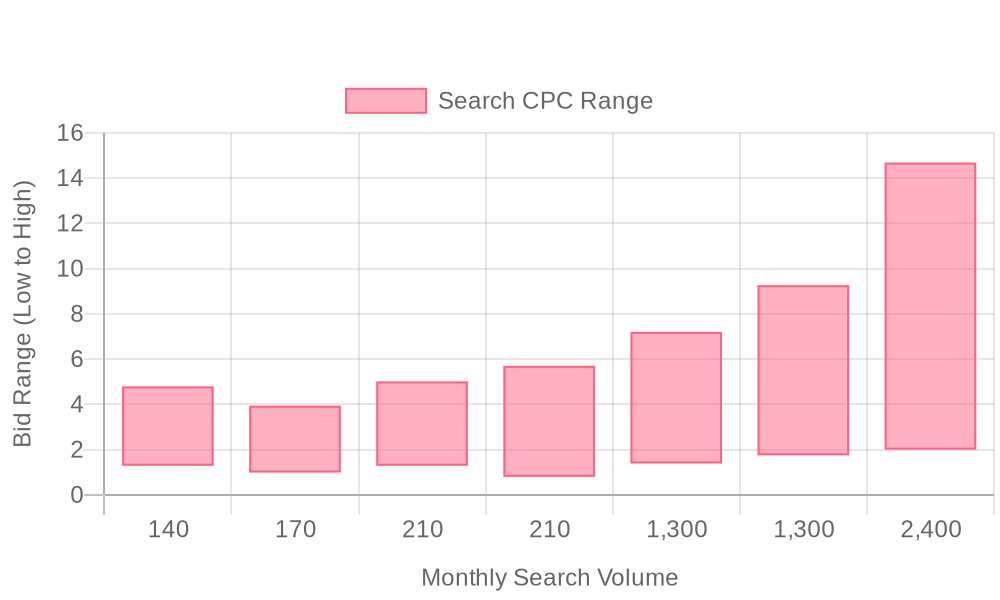
| Industry | Keyword | Monthly Search Volume | Competition Level | Low Bid | High Bid |
| Carpet Manufacturers | luxury carpet brands | 140 | HIGH | 1.29 | 4.79 |
| Carpet Manufacturers | best wool carpet brands | 170 | HIGH | 0.99 | 3.94 |
| Carpet Manufacturers | high end carpet brands | 210 | HIGH | 1.29 | 5.01 |
| Carpet Manufacturers | factory direct carpet | 210 | HIGH | 0.8 | 5.7 |
| Carpet Manufacturers | carpet manufacturers | 1300 | LOW | 1.39 | 7.2 |
| Carpet Manufacturers | best carpet brands | 1300 | HIGH | 1.75 | 9.26 |
| Carpet Manufacturers | carpet supplier near me | 2400 | HIGH | 2 | 14.68 |
Strategic keyword targeting is the foundation for high-performing Google Ads campaigns in the carpet manufacturing sector. Focusing on intent-rich phrases like "commercial carpet suppliers" or "luxury carpet brands" enables marketers to capture procurement professionals and facility managers actively searching for specialized carpet solutions. By analyzing search volume and competition data, B2B marketing teams can prioritize keywords aligned with purchasing cycles, such as "wholesale carpet rolls," "custom carpet manufacturing," and "carpet supply for hotels." For practical guidance on maximizing ROI with digital ads, explore this comprehensive guide to Google Ads for carpet cleaning businesses. This practice ensures that ad spend is concentrated on terms most likely to convert, resulting in improved lead quality and lower acquisition costs for carpet industry marketing.
Applying local modifiers to target specific geographic areas further drives campaign relevance and efficiency. Phrases like "carpet manufacturers in Georgia" or "UK commercial carpet supplier" let manufacturers align campaigns with their distribution networks and sales territories. This granularity becomes especially useful when paired with Sona's Identity Resolution, which can match inbound traffic to accounts by region or city, enabling real-time campaign adjustments and hyper-local messaging. Marketers can then refine bidding to increase visibility in regions where major projects or contracts are underway, getting more from every advertising dollar.
Negative keyword management filters out irrelevant traffic and protects budget. Systematically excluding terms like "carpet cleaning," "DIY carpet installation," or "cheap home carpet" prevents wasted spend on non-commercial queries and lifts quality scores. Pairing these exclusions with Sona's Intent Signals lets B2B teams sharpen keyword strategy further: as new, high-intent searches emerge, CRM data and analytics flag those opportunities, catching prospects at the moment they show buying intent. This keeps campaign focus aligned with real-time market demand, essential for sustained lead generation and measurable ROI in carpet manufacturing PPC.
Step-by-Step Campaign Execution Framework
Step 1: Build Targeted Keyword Lists
Success in Google Ads for carpet manufacturers begins with keyword lists that reflect both buyer intent and industry context. Precision targeting keeps budget on terms aligned with B2B procurement cycles, such as "commercial carpet manufacturer," "bulk carpet supply," and "custom carpet solutions." Adding geographic modifiers like city or region captures local demand from project managers and procurement leads searching for nearby production capacity. Intent-driven keywords filter out the low-value residential and DIY-cleaning queries that flood broader carpet search terms, keeping spend on high-margin commercial opportunities.
Modern marketers gain a significant advantage by tapping into real-time visitor data to enrich keyword selection. Platforms that surface company-level visitor identities and track emerging intent signals enable revenue teams to recognize shifting demand patterns. This intelligence lets marketers pivot keyword coverage to capture new verticals or respond to surges in project-based searches, ensuring that every term aligns with the commercial buying journey.
The upgrade most carpet manufacturers advertisers miss is going beyond raw keyword volume to layer in intent and identity signals. By connecting website-visitor data and CRM records with Sona Marketing Measurement, you can see which specific search terms bring in the accounts and customers that actually convert, and weight your keyword and bidding strategy toward those rather than the terms with the highest search volume alone.
Step 2: Develop Ad Copy
Effective ad copy delivers a clear message around unique selling points and tangible benefits. For the carpet manufacturing sector, headlines should spotlight certifications, custom production capabilities, and rapid order fulfillment. Description lines can emphasize sustainability credentials, specialized backing options, or dedicated account support, speaking directly to facility managers and enterprise buyers. Strong calls-to-action, like “Request a Bulk Quote” or “Download Technical Specs”, drive high-quality conversions by matching the intent of the searcher. For more inspiration on campaign messaging and best practices, see this comprehensive guide to Google Ads for carpet cleaners.
Data-driven platforms enable dynamic audience segmentation, ensuring ads are served to decision-makers at the right moment. As leads progress through the funnel, from initial research to specification and procurement, ad messaging can shift in real time to highlight the most relevant features. This results in higher engagement rates and a smoother path from impression to qualified lead.
Step 3: Design Landing Pages
Landing pages act as the conversion engine for digital marketing in the carpet industry. Design and content must mirror the search intent, immediately presenting technical details, compliance documentation, and visually compelling product galleries. By aligning messaging with ad copy, the experience feels seamless, instilling confidence in potential buyers. Prominent forms for quote requests or sample orders streamline lead capture, while trust signals like partner logos and certification badges reinforce credibility. For additional marketing strategies to boost client acquisition, check out carpet cleaning marketing strategies.
Integrating advanced conversion tracking and visitor identification tools allows marketers to personalize landing page content based on user profile or company. This level of customization increases engagement and conversion rates by addressing the specific needs of each visitor, whether they are sourcing for a hospitality renovation or a large-scale educational facility.
Step 4: Implement Optimizations
Consistent optimization is essential for maximizing ROI in Google Ads for Carpet Manufacturers. Real-time conversion tracking and analytics enable marketers to adjust bids, pause underperforming keywords, and refine messaging based on actual lead quality. Audience data sync with CRM systems ensures that high-intent leads are nurtured with relevant follow-ups, while also excluding closed or disqualified accounts from future campaigns. For a comprehensive overview of campaign management tips, refer to this guide on Google Ads for carpet cleaning.
The ability to unify online and offline conversion data empowers teams to understand the true impact of every campaign. By tracking the entire customer journey, from initial click to purchase order, revenue teams can attribute pipeline and revenue back to specific ads and keywords. This actionable insight informs smarter budget allocation and fosters a cycle of continuous improvement, driving long-term growth in the highly competitive carpet and flooring sector. If you're ready to put these optimization strategies into action, get started for free with Sona.
Sona Marketing Measurement closes the gap between clicks and revenue. It captures ad clicks with first-party, company-level measurement, ties that click through UTM capture and ad-platform APIs to the actual record in your CRM, and reports ROAS by keyword and campaign instead of by last-click form fill. Feeding that revenue signal back into Smart Bidding and Performance Max compounds over time: the algorithms optimize toward booked carpet manufacturers revenue, not cheap leads.
Tips on Expanding Your Carpet Industry Presence

Expanding your carpet industry presence requires a blend of targeted advertising and data-driven decision-making. Leading manufacturers and suppliers who leverage digital channels efficiently outperform competitors in market reach and lead quality. For a comprehensive look at how digital advertising can drive growth in this space, explore this guide to Google Ads for carpet cleaners, and check out the latest insights on B2B marketing strategies.
- Educational content in remarketing: Integrate authoritative educational material into your remarketing strategy to strengthen your brand narrative. By delivering case studies, product guides, and certification details to previous site visitors, you reinforce expertise and keep your brand front-of-mind for buyers in research mode. Real-time visitor identification allows you to tailor these educational touchpoints based on each prospect’s interests, moving them closer to a sales conversation.
- Segmented upsell opportunities: Use enriched CRM data to segment your audience and identify upsell opportunities that might otherwise be overlooked. When your CRM syncs seamlessly with your Google Ads campaigns, your teams can track where each account stands in the buying journey. Dynamic audience updates ensure your remarketing lists and lookalike audiences always include the most relevant leads, supporting consistent pipeline growth.
- Align with industry groups: Strengthen your authority and expand reach by aligning your messaging and campaigns with respected industry associations. Running targeted ads during key industry events or co-publishing content with trade groups amplifies trust and signals credibility to procurement professionals. Enhanced intent data identifies which industry segments are most engaged, enabling you to shift resources to high-performing verticals in real time.
- Geographically tailored campaigns: Customize campaigns to specific geographic markets to improve penetration and outpace local competitors. Use detailed insights from your demand data to prioritize regions with the highest purchasing activity or untapped demand. Advanced conversion tracking lets you attribute ROI by territory, so you can optimize budget allocation for maximum impact and scale your presence efficiently in both established and emerging markets.
Ready to accelerate your carpet industry growth? Get started for free with Sona.
Beyond Google Ads: Winning the AI Answers Carpet Manufacturers Buyers Now Trust
Paid search captures demand at the moment someone types a query. But a fast-growing share of carpet manufacturers buyers no longer start at Google at all, they ask ChatGPT, Gemini, or Perplexity before they ever run a search, and Google's own AI Overviews increasingly summarize an answer above the traditional results. If your business isn't referenced in those AI answers, you're invisible at the exact moment buyers build their shortlist.
Sona AI Visibility shows where your business shows up across ChatGPT, Gemini, Perplexity, Google AI Overviews, and 10+ engines, and, much like a keyword report, which prompts actually send you buyers, so you can prioritize the ones that convert. Run the two together and you cover the entire buyer path: get cited where buyers research (AI Visibility), then prove which of that demand turns into booked revenue (Marketing Measurement).
Helpful resources
Conclusion
The carpet manufacturers who win with Google Ads treat it as a system, not a lever: keyword lists sharpened around commercial intent, audiences segmented by buyer type, and campaigns wired to CRM data so spend follows revenue rather than clicks.
The bigger shift is where buyers now start their search. As AI answer engines take a growing share of early-stage research, the manufacturers who show up there, and who can prove which of that demand turns into booked revenue, will set the pace for the rest of the industry.
To explore how you can further enhance your marketing efforts with data-driven insights, start for free to experience our platform and its capabilities today.
FAQ
What are the best Google Ads strategies for carpet manufacturers?
The best Google Ads strategies for carpet manufacturers include targeting high-value keywords related to commercial carpet manufacturing, customizing audience segments by company size and purchase stage, designing creative ad copy that highlights unique value drivers, and synchronizing online campaigns with offline sales processes for accurate ROI measurement.
How can carpet manufacturers effectively target their audience with Google Ads?
Carpet manufacturers can effectively target their audience by identifying and using high-value keywords, segmenting audiences by company size and purchase stage, using dynamic audience building tools, and leveraging real-time data to adjust campaigns and messaging.
What budget should carpet manufacturers allocate for Google Ads campaigns?
The article does not specify an exact budget, but it emphasizes the importance of precision targeting and data-driven lead capture to ensure that budgets are effectively spent on high-intent searches and relevant audience segments.
What types of Google Ads work best for the carpet manufacturing industry?
The best types of Google Ads for the carpet manufacturing industry include search campaigns for capturing high-intent queries, Performance Max for unifying inventory and audience signals across channels, display ads for brand visibility, video ads for demonstrating expertise, remarketing campaigns to re-engage interested visitors, and responsive search ads with ad assets to provide supplemental details and build credibility.
How can carpet manufacturers measure the success of their Google Ads campaigns?
Carpet manufacturers can measure the success of their Google Ads campaigns by using advanced conversion tracking to follow leads from click to closed deal, integrating CRM systems for seamless data tracking, and analyzing both online and offline touchpoints to understand true ROI.







