


Carpet supply stores rarely win a commercial account on brand recognition alone. Procurement managers and facility directors search for solutions when a project is already moving, whether that's a school renovation, a hotel refresh, or a bid deadline, and Google Ads lets suppliers show up in that narrow window. Used well, it also bridges online and offline sales motions: a rep can follow up on a trade show conversation or a direct mail piece knowing which prospects have since searched for pricing or specs, and track that interest from click to quote to closed deal.
How to Generate Carpet Supply Leads with Google Ads: A Step-by-Step Guide

B2B carpet suppliers face unique challenges in reaching procurement managers and commercial buyers at the moment they are ready to make significant purchasing decisions. Integrating Google Ads for Carpet Supply Stores into your broader marketing mix offers a direct, data-driven path to engage these in-market leads and accelerate your sales pipeline.
By combining precise keyword targeting with advanced audience segmentation, carpet supply businesses can maximize their paid search investments and surface their offers to the buyers most likely to convert. When Google Ads strategies for carpet suppliers are integrated with modern data platforms, marketers gain the ability to identify the companies behind anonymous website visits and map that activity back to key accounts, ensuring every high-value interaction is captured and acted upon in real time.
- A Data-Driven Approach to Paid Search: Digital marketing for carpet stores demands a performance mindset. Campaigns should be rooted in robust analytics and attribution, allowing you to tie ad clicks directly to lead quality and sales pipeline impact. When Sona's Identity Resolution is layered in, teams can move beyond relying solely on form fills, capturing the full spectrum of high-intent activity by company and reallocating budget toward segments showing the strongest purchase signals.
- Keyword and Audience Targeting for Carpet Buyers: Effective Google Ads targeting for flooring and carpet supply hinges on understanding how B2B buyers search for products and solutions. Use intent-driven keywords such as “commercial carpet supplier,” “wholesale carpet padding,” or “carpet cleaning equipment for hotels.” Dynamic audience management ensures your list of target companies updates continuously as prospects engage with your brand, enabling personalized messaging and better alignment with their current buying stage.
- Landing Page and Creative Alignment: Alignment between ad copy and landing page experience is critical. Carpet supply lead generation is most successful when landing pages address the specific needs of commercial buyers: bulk pricing, technical documentation, and clear calls to action. By leveraging Intent Signals, marketers can tailor landing pages to showcase the most relevant products or promotions for each visitor segment, increasing conversion rates and shortening sales cycles.
- Performance Optimization for ROI: Continual A/B testing of ad creative, keyword bids, and landing page content is essential for improving Google Ads ROI for carpet businesses. Tactics such as retargeting past visitors and segmenting campaigns by product type or buyer persona drive incremental gains. Integrated conversion tracking, including both online and offline events, gives marketing and sales teams a holistic view of which campaigns are generating qualified leads and closed deals.
- Cross-Channel Integration for Marketing Impact: Carpet supply advertising is most effective when Google Ads efforts are synchronized with CRM and outbound channels. By syncing enriched lead and account data directly into Google Ads, HubSpot, or Salesforce, you ensure that nurture and retargeting campaigns are always reaching the right buyers with relevant offers. This unified approach eliminates gaps where high-value prospects might otherwise be missed, and helps drive measurable lift across your entire digital marketing program.
A commercial buyer who requests a quote but never appears as a form fill in the CRM is easy to lose track of, and that gap costs carpet suppliers real bids. Enriching audiences with account-level identity and aligning ads to buyers already showing purchase intent, like repeated visits to a spec sheet or bulk pricing page, keeps those prospects from falling through the cracks. Ready to capture more qualified leads? Get started for free with Sona.
Why Does Google Ads Matter for Carpet Supply Stores?

Carpet supply stores operate in a market where timing, precision, and data-driven decisions separate high-growth businesses from those that struggle to keep up. Google Ads empowers these suppliers to intercept plant managers and procurement leaders exactly when they research solutions, ensuring that every campaign dollar is spent on audiences with genuine purchasing power. For additional marketing analytics and revenue optimization insights, explore the Sona blog.
With Google Ads, stores gain the ability to quickly break into lucrative commercial install projects, even with prospects who have never interacted with their brand before. This immediacy matters during seasonal surges, such as spring renovation cycles or fiscal year-end facility budgets, where capturing high-intent buyers can make a real difference to quarterly revenue.
Precision targeting lets stores extend their reach into new and emerging regions, concentrating spend where the next wave of B2B buyers is most active. Integrated campaign analytics reveal not just which ads get clicks, but which companies and accounts are truly engaging, allowing sales teams to focus follow-up on the most promising opportunities.
Modern carpet supply advertising now leverages advanced engagement insights to shape campaign strategy: marketers can move beyond generic traffic metrics and pinpoint organizations showing real buying signals. These insights drive smarter retargeting, audience expansion, and budget allocation, making every campaign more effective and every marketing dollar accountable.
Common Types of Google Ads Campaigns for Carpet Supply Services

Carpet supply stores achieve measurable lead generation by aligning campaign formats with each stage of the customer journey. Marketers reach procurement managers, facility directors, and commercial buyers through coordinated search, display, video, and remarketing strategies tailored to the flooring sector. For further inspiration on campaign setup and targeting, review this step-by-step guide to Google Ads for cleaning services.
- Search Campaigns: These campaigns capture high-intent buyers searching for solutions like “commercial carpet supplier near me” or “bulk carpet tile distributor.” By focusing on urgent queries, search ads quickly convert interest generated from other marketing channels into qualified leads. Leveraging granular targeting, teams can direct spend towards in-market accounts, using real-time audience data to prioritize commercial buyers showing strong intent. Integrating enriched visitor insights enables precise keyword and ad copy adjustments, ensuring outreach resonates with decision-makers ready to purchase.
- Display Ads: Display campaigns extend reach by presenting visually engaging banners across industry publications, trade websites, and niche business portals. These ads reinforce brand credibility and nurture awareness among architects, contractors, and procurement professionals researching flooring solutions. Dynamic audience syncing allows display ads to follow prospects as they move through the funnel, keeping the carpet supplier top-of-mind until purchasing decisions are made.
- Video Ads: Video formats effectively demonstrate complex services such as installation techniques, durability testing, and cleaning equipment operation. Short, targeted videos highlight unique value propositions, certifications, and project outcomes, driving higher engagement from B2B buyers. Video campaigns benefit from behavioral intent data, enabling marketers to retarget viewers who interact with product showcases or educational content.
- Remarketing: Remarketing recaptures commercial prospects who previously visited the site but did not convert. By serving tailored ads to these audiences, suppliers can re-engage buyers evaluating multiple options or those with long procurement cycles. Advanced identification tools let marketers pinpoint not just anonymous visitors, but actual companies and purchasing teams, delivering personalized messaging that aligns with their stage in the buying process.
- Assets: Ad assets add credibility by highlighting location, response times, industry certifications, and client reviews directly in the search results. These trust signals improve click-through rates and help buyers quickly assess supplier reliability. Automated sync with CRM and inventory systems ensures that only relevant promotions and real-time offers are shown, maximizing the impact of every impression.
Tailoring messaging and creative assets to each segment, rather than relying on generic campaigns, drives stronger engagement and a higher return on ad spend for carpet supply stores. As audiences move from initial research to purchase-ready status, campaigns dynamically adapt, ensuring the right message reaches the right buyer at the optimal moment.
Where to Find Growth Opportunities?
Expanding reach in digital marketing for carpet stores requires a precise approach that goes beyond generic keyword bidding. Identifying growth opportunities hinges on uncovering demand pockets that competitors have overlooked, targeting specialty services, and deploying smart retargeting that addresses the unique needs of commercial buyers.
- Target vertical keywords for specialty services: Carpet supply advertising benefits from identifying industry-specific search intent, such as "modular carpet tile supplier for schools" or "anti-static carpet for server rooms." These vertical keywords attract buyers with urgent, specialized needs and significantly reduce wasted spend on irrelevant traffic. With real-time audience insights, marketers can dynamically update keyword portfolios as new services or product lines are launched, ensuring no segment is left untapped.
- Conduct competitor gap analysis to identify underserved segments: Reviewing the ad landscape reveals where rivals are missing key audience segments. By analyzing which keywords and placements drive conversions for other flooring or construction suppliers, B2B carpet marketing teams unlock new campaign ideas. For step-by-step strategies specific to cleaning and carpet services, see this Google Ads for cleaning business guide. Advanced attribution solutions help clarify which campaigns generate qualified leads rather than empty clicks, so budget can shift to high-potential segments as they emerge.
- Explore industry-specific placements on trade forums: Online advertising for carpet suppliers reaches its full potential when ads appear in the digital spaces where facility managers, contractors, and procurement teams actively seek solutions. Placing display or native ads within trade associations, flooring forums, and procurement networks consistently drives higher engagement and improved Google Ads ROI for carpet businesses, since messaging aligns with the buyer’s research phase. Visitor identification technology ensures that even anonymous browsers from target companies are recognized, empowering sales teams to act on new opportunities quickly.
- Employ content retargeting with educational assets: Once high-value accounts visit a landing page or download a whitepaper, content retargeting campaigns nurture them through the funnel with case studies, installation guides, or ROI calculators tailored to their sector. These dynamic audiences automatically refresh as leads progress, so remarketing remains relevant and timely. Integrated CRM and ad sync enables seamless delivery of personalized ads to decision-makers who are most likely to convert, even as they move from research to purchase.
Incomplete ROI pictures often obscure real performance. Capturing both online and offline conversions, and attributing them back to the original ad engagement, gives a true view of campaign value. This closed-loop measurement framework lets carpet supply lead generation teams double down on strategies that produce sales, not just impressions, and scale promotions that deliver measurable business growth.
How to Apply Audience Segmentation for Carpet Supply Stores
Carpet supply stores achieve stronger lead generation and higher campaign ROI when audience segmentation aligns with specific buyer journeys. Modern marketers can accurately map out every stage, from initial research to final purchase, by leveraging data-driven segmentation strategies that distinguish commercial procurement teams from residential customers. This approach enables teams to deliver precise, relevant messaging that resonates with each unique group and eliminates wasted ad spend on low-intent audiences.
- Define Segments: The foundation of effective segmentation lies in differentiating key customer types. For carpet supply businesses, this means distinguishing commercial buyers, such as facility managers, contractors, and property developers, from residential customers seeking home installations. Each segment has unique priorities: commercial clients often focus on bulk orders, durability, and compliance, while residential buyers are motivated by style, comfort, and ease of installation. By identifying these categories and building robust buyer personas, marketers can allocate budgets and craft messaging that speaks directly to each group’s needs.
- Overlay Intent Signals: High-impact Google Ads strategies for carpet supply stores incorporate Sona's Intent Signals, which surface real-time behavioral and intent data. For example, signals such as repeated visits to bulk pricing pages, downloads of technical specifications, or engagement with commercial installation case studies indicate readiness for a high-value purchase. Layering these signals onto defined segments lets revenue teams prioritize and personalize outreach, increasing the likelihood of conversion. As leads progress, ad messaging and offers update automatically, so a facility manager who shifts from browsing to requesting a quote sees offers that reflect that stage.
- Create Ad Groups by Segment: Structuring campaigns with dedicated ad groups for each segment ensures tailored communication and optimal performance. Ad copy, visuals, and landing pages should mirror the specific pain points and goals of the audience, commercial buyers might see messaging around volume discounts and logistics support, while residential segments could receive promotions on trending designs. For additional campaign inspiration, explore these carpet cleaning advertising ideas and strategies. Segment-specific ad groups also simplify performance measurement, allowing teams to quickly identify which messages and offers drive results for each market vertical.
- Validate Conversion Paths: Tracking and attributing conversions accurately is essential for maximizing Google Ads ROI for carpet businesses. Seamless integration between ad platforms and CRM systems captures every interaction, from initial ad click to quote request, phone call, or form submission, providing a full view of the customer journey. When audience segments sync directly with CRM records, marketers gain visibility into which campaigns triggered high-value actions and can adjust budgets accordingly. This unified data flow enables real-time follow-ups and ensures that hot leads are engaged before they lose interest, keeping sales cycles short and conversion rates high.
Delayed follow-ups on qualified leads quickly erode potential revenue for carpet supply stores. Streamlined workflows that react to real-time engagement signals ensure fast, relevant responses, sustain prospect interest, and improve the odds of converting high-intent buyers into lasting customers.
This is also where measurement changes the economics. With Sona Marketing Measurement you can identify the companies behind your ad clicks, not just anonymous sessions, and segment audiences by which accounts actually become customers. That lets you build bid adjustments and audience signals around the segments that convert and de-prioritize the ones that don't, so you feed Google's algorithms "this click became a paying carpet supply stores customer" instead of just "someone filled out a form."
Keyword Strategy & Sample Target Terms
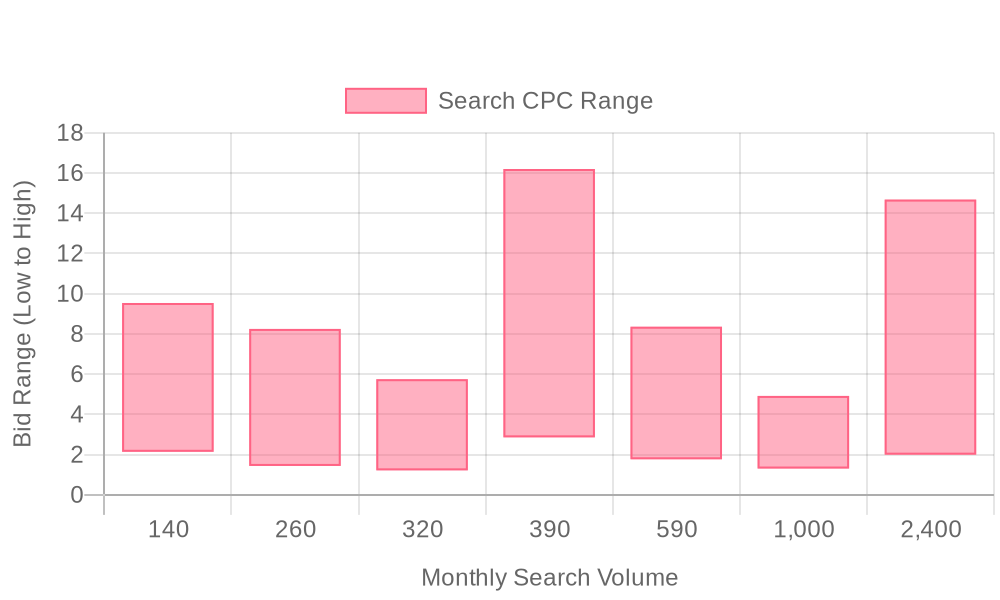
| Industry | Keyword | Monthly Search Volume | Competition Level | Low Bid | High Bid |
| Carpet Supply Stores | carpet supply stores | 140 | HIGH | 2.14 | 9.54 |
| Carpet Supply Stores | carpet tiles supplier | 260 | MEDIUM | 1.44 | 8.25 |
| Carpet Supply Stores | carpet cleaning supply store | 320 | MEDIUM | 1.22 | 5.75 |
| Carpet Supply Stores | tile and carpet stores near me | 390 | HIGH | 2.86 | 16.2 |
| Carpet Supply Stores | carpet supply store near me | 590 | HIGH | 1.77 | 8.36 |
| Carpet Supply Stores | carpet cleaning supplies near me | 1000 | MEDIUM | 1.31 | 4.92 |
| Carpet Supply Stores | carpet supplies near me | 2400 | HIGH | 2 | 14.68 |
Effective keyword strategy is the cornerstone of success in Google Ads for carpet supply stores. By targeting high-intent, industry-specific terms, marketers can intercept commercial buyers and procurement professionals at the exact moment they are seeking solutions. Precision targeting ensures campaigns reach decision-makers, such as facility managers or construction project leads, who are searching with clear purchase intent.
A balanced keyword portfolio blends broad, high-volume terms with niche, conversion-focused phrases. For example, "eco-friendly carpet supplier ads" and "custom carpet manufacturing" attract B2B buyers sourcing unique materials, while local modifiers like "carpet wholesaler Dallas" or "commercial carpet supplier near me" drive in-market leads ready for immediate engagement. Incorporating negative keywords, such as "DIY" or "home installation," filters out unqualified consumer traffic and preserves budget for enterprise accounts. For a step-by-step approach to optimizing your keyword sets and ad spend, see this guide on Google Ads for cleaning businesses.
Modern revenue teams benefit from dynamic keyword management, where search term lists evolve as buyer behavior shifts. Unifying Intent Signals across web and CRM data lets marketers detect new trending phrases quickly and reallocate budget to emerging high-converting queries. By identifying not just anonymous traffic but the companies behind high-value searches, teams can prioritize keywords that yield measurable pipeline growth and true B2B carpet supply lead generation. When audience data and search intent are linked, every keyword investment ties directly to closed deals and bottom-line ROI.
Step-by-Step Campaign Execution Framework
Step 1: Build Targeted Keyword Lists
Effective Google Ads for carpet supply stores start with a robust keyword strategy that aligns closely with B2B buyer intent. By clustering keywords according to service type and geographic region, marketers ensure campaigns reach facility managers, procurement specialists, and contractors actively searching within specific locales. Long-tail and question-based queries such as "bulk commercial carpet tile supplier in Dallas" or "what is the best stain-resistant carpet for hotels" capture high-intent prospects, while negative keyword filters eliminate wasteful clicks from DIY shoppers or unrelated searches. For additional guidance on keyword selection and campaign targeting, review these Google Ads strategies for cleaning businesses.
This process is elevated when marketers harness real-time visitor identification and dynamic audience building. By pinpointing which companies are engaging with product pages or quote forms, teams can refine keyword lists to match active in-market accounts. As audiences shift through the funnel, keyword priorities are updated to reflect the latest buyer activity, ensuring that targeting remains relevant as intent evolves.
The upgrade most carpet supply stores advertisers miss is going beyond raw keyword volume to layer in intent and identity signals. By connecting website-visitor data and CRM records with Sona Marketing Measurement, you can see which specific search terms bring in the accounts and customers that actually convert, and weight your keyword and bidding strategy toward those rather than the terms with the highest search volume alone.
Step 2: Develop Compelling Ad Copy
High-performing ad copy for carpet supply advertising must speak directly to the unique pain points of B2B buyers. Headlines referencing challenges such as "Seamless Facility Renovation Solutions" or "Bulk Carpet Supply with Next-Day Delivery" resonate with decision-makers seeking efficiency and reliability. Integrating certifications, trust markers, and industry memberships in ad descriptions builds instant credibility, critical for buyers tasked with vetting suppliers for large-scale projects.
Ad messaging is most effective when informed by real-time intent data. By understanding which product categories or services a prospect is researching, marketers can tailor ad content to address immediate needs or project timelines. This level of personalization improves engagement rates, driving more qualified leads to your landing pages and increasing the likelihood of conversion. For further inspiration on ad creative and value propositions, explore top advertising ideas for carpet cleaning services.
Step 3: Design Effective Landing Pages
Conversion-optimized landing pages are essential for translating ad clicks into tangible leads for carpet supply stores. Each page must align closely with the matched keyword and ad message, ensuring that visitors immediately recognize the relevance of the offer. Features such as trust badges, industry accreditations, and frequently asked questions reduce friction and address common objections from procurement teams.
Integrating advanced visitor identification further personalizes the landing experience. When a returning decision-maker from a targeted company visits, dynamic content modules can showcase relevant case studies or feature tailored calls to action based on previous engagement. This approach streamlines the journey from initial interest to quote request, supporting higher conversion rates and better-qualified leads. To see how similar strategies drive results, check out this digital marketing case study.
Step 4: Implement Data-Driven Optimizations
Ongoing optimization is crucial for maximizing Google Ads ROI for carpet businesses. Tracking both micro conversions, such as brochure downloads or contact form starts, and macro conversions like completed quote requests provides granular visibility into the buyer journey. Smart bidding strategies, powered by real-time conversion data, enable marketers to automatically allocate budget toward the highest-performing audiences and keywords.
Integrating online and offline attribution closes the loop on campaign performance, allowing revenue teams to connect ad clicks with downstream sales or purchase orders. Syncing enriched audience data and lead outcomes into platforms like Google Ads and CRM systems ensures that remarketing and lookalike campaigns always reflect the current pipeline. This unified approach enables continuous refinement, ultimately driving more efficient carpet supply lead generation and sustaining long-term growth. If you're ready to apply these optimizations to your own campaigns, get started for free with Sona.
Sona Marketing Measurement closes the gap between clicks and revenue. It captures every ad click with first-party measurement, then ties that click through UTM capture and ad-platform APIs to the actual record in your CRM, and reports ROAS by keyword and campaign instead of by last-click form fill. Feeding that revenue signal back into Smart Bidding and Performance Max compounds over time: the algorithms optimize toward booked carpet supply stores revenue, not cheap leads.
Tips on Expanding Your Carpet Supply Presence

Expanding the reach of a carpet supply business requires a combination of content, partnerships, and data-driven advertising. By synchronizing educational assets, targeted campaigns, and localized initiatives, suppliers can stand out in a competitive B2B landscape. For more insights on enhancing your digital strategy, explore our marketing and analytics blog.
- Cross-promote educational assets: Sharing product guides, installation tutorials, and specification sheets across web, email, and social channels establishes authority and drives organic discovery. Integrating these assets with Google Ads campaigns allows marketers to retarget visitors who engage with high-value content, increasing conversion rates for commercial carpet supply lead generation. For step-by-step guidance on optimizing your ad spend, this Google Ads for carpet cleaners resource can help elevate your campaigns.
- Upsell related services via segmented audience targeting: Audience segmentation is critical for effective B2B carpet marketing. Use real-time audience data and CRM integration to identify customers who purchase carpet tiles but have not explored adhesive solutions or maintenance equipment. Dynamic audience updates ensure ads for complementary products reach decision-makers as their needs evolve, increasing average order value without diluting budget on irrelevant prospects.
- Partner with industry associations for additional traffic: Collaborating with flooring and construction industry groups unlocks access to vetted, high-intent audiences. Paid sponsorships and co-branded webinars can funnel in-market buyers to your landing pages. By syncing these association leads into your digital advertising platforms, you can amplify your Google Ads targeting for flooring with enriched company-level insights, ensuring spend focuses on accounts most likely to close.
- Localize campaigns to enhance share-of-voice in key regions: Local targeting sharpens the impact of digital marketing for carpet stores. Structure campaigns with city- and region-specific keywords, adjust bids based on local demand trends, and highlight unique regional offerings. Visitor identification helps pinpoint which companies from target geographies are engaging, allowing sales teams to prioritize outreach and tailor promotions for maximum impact.
Consistency and precision matter across every channel. When campaigns integrate real-time Intent Signals with advanced attribution, businesses move from generic carpet supply advertising to measurable, high-ROI strategies.
Beyond Google Ads: Winning the AI Answers Carpet Supply Stores Buyers Now Trust
Paid search captures demand at the moment someone types a query. But a fast-growing share of carpet supply stores buyers no longer start at Google at all, they ask ChatGPT, Gemini, or Perplexity before they ever run a search, and Google's own AI Overviews increasingly summarize an answer above the traditional results. If your business isn't referenced in those AI answers, you're invisible at the exact moment buyers build their shortlist.
Sona AI Visibility shows where your business shows up across ChatGPT, Gemini, Perplexity, Google AI Overviews, and 10+ engines, and, much like a keyword report, which prompts actually send you buyers, so you can prioritize the ones that convert. Run the two together and you cover the entire buyer path: get cited where buyers research (AI Visibility), then prove which of that demand turns into booked revenue (Marketing Measurement).
Helpful resources
Conclusion
Carpet suppliers who treat Google Ads as a precision instrument, not a spend line, outcompete those still buying broad traffic. The advantage compounds as buyer research shifts: procurement teams now start their search in AI tools as often as in Google itself, and the suppliers who show up in both places will set the pace for the category over the next few years.
To put these strategies to work, and see which campaigns are actually driving revenue rather than just clicks, start for free with Sona.
FAQ
What are the best Google Ads strategies for carpet supply stores?
The best strategies include precise keyword targeting, advanced audience segmentation, integration with data platforms, and aligning ad copy with landing pages for better conversion rates.
How can carpet supply stores optimize their Google Ads campaigns?
Optimization can be achieved through continual A/B testing, tracking conversions, retargeting past visitors, and integrating campaigns with CRM and outbound channels.
What budget should carpet supply stores allocate for Google Ads?
The budget should be allocated towards segments showing the strongest purchase signals, and adjustments should be made based on performance insights from conversion tracking and analytics.
What keywords should carpet supply stores target in Google Ads?
Carpet supply stores should target intent-driven keywords like 'commercial carpet supplier' and 'wholesale carpet padding,' while using negative keywords to filter out irrelevant traffic.
How can carpet supply stores measure the success of their Google Ads campaigns?
Success can be measured by tracking conversions from clicks to closed deals, integrating online and offline attribution, and analyzing the impact on the sales pipeline.







