


Blasting contractors sell a service most buyers only need in a crisis: a failed inspection, a rust-bleeding tank, a bridge deck that has to be stripped before a paving crew shows up. That urgency is exactly what Google Ads is built to capture, putting your company in front of a procurement manager or facility owner at the moment they search for help. Done well, Google Ads gives blasting contractors precise targeting, measurable ROI, and a channel that works alongside referrals and word of mouth rather than competing with them. This guide walks through how blasting contractors can use Google Ads to generate leads, build visibility, and grow. The common failure point is missing high-value prospects because anonymous site traffic never gets attributed to a real company, a gap modern tracking tools can close.
How to Generate Leads for Blasting Contractors with Google Ads: A Step-by-Step Guide

Blasting contractors face a unique challenge in reaching specialized, high-value clients while minimizing wasted marketing spend. Precision targeting and data-centric campaign management are critical for consistently attracting qualified leads and driving conversions that impact revenue.
This playbook delivers a structured approach to integrating Google Ads for blasting contractors into your broader marketing strategy, with a focus on maximizing every advertising dollar. By leveraging granular data insights and audience segmentation, you can ensure your paid search efforts align with sales goals and nurture the right prospects through the funnel.
- Data-driven paid search strategies: Integrate paid search within a multi-channel marketing mix to create a seamless buyer journey. Use unified reporting and intent data to prioritize channels and audiences that deliver the highest engagement, so your team focuses on accounts with real purchase signals.
- Precise keyword and audience targeting: Use highly specific, intent-based keywords for blasting contractors, such as "industrial sandblasting services" or "abrasive blasting contractors near me." Incorporate real-time audience insights to refine targeting and shift budget toward accounts demonstrating active interest.
- Landing page and creative best practices: Align ad copy and landing page messaging with the technical needs of your target audience. Use dynamic content to address different service applications and industries, maximizing demo requests and contact form completions.
- Continuous optimization for higher ROI: Analyze campaign performance with advanced attribution models that track both online and offline conversions. Identify drop-off points in the funnel and implement retargeting strategies that recapture form abandoners or nurture slow-to-close leads.
- Cross-channel marketing integration: Synchronize lead and audience data across Google Ads, CRM, and sales engagement platforms. This prevents churn and missed upsell opportunities by ensuring every touchpoint, email, paid search, and outbound, is informed by real-time engagement and an enriched contact profile.
A disciplined, insight-driven approach to Google Ads for blasting contractors will help you outmaneuver competitors, capture high-value leads, and build a pipeline that holds up over time. If you're ready to take your lead generation further, get started for free with Sona.
Why Google Ads Matters for Blasting Contractors
Blasting contractors operate in a specialized market where winning new business depends on precision targeting and rapid response. Google Ads offers a direct channel to reach decision-makers who actively seek industrial cleaning, demolition, or surface preparation solutions. For a step-by-step walkthrough on maximizing campaign results, explore this video tutorial for Google Ads contractors.
- Complex Audiences: Marketing to construction managers, project engineers, and procurement leads demands more than broad targeting. Google Ads enables granular segmentation, so campaigns reach those with specific project needs and high purchase intent, maximizing visibility among stakeholders who control budgets for blasting services. For even greater precision, use real-time audience segmentation to tailor outreach to your most valuable prospects.
- High-Value Services: Every inquiry can represent substantial revenue, particularly for projects like infrastructure remediation or hazardous material removal. With Google Ads, contractors can identify and attract prospects outside their traditional network, tracking each high-value opportunity from initial click through to contract signature. Sona's Identity Resolution strengthens this by identifying the companies behind anonymous site visits that show strong buying signals.
- Immediate Response: Project delays and urgent jobsite needs often create last-minute demand for blasting services. Google Ads campaigns can be activated or adjusted in real time, ensuring your company appears first when urgency drives searches. To automate sales follow-up and ensure timely outreach, streamline your data activation workflows.
- Regional Visibility: Expanding into new urban developments or underserved markets requires targeted reach. Google Ads location targeting allows blasting contractors to zero in on high-growth regions, while excluding low-priority areas, so resources are allocated efficiently. For additional strategies, see our B2B marketing playbooks.
- Data Integration: The biggest challenge for B2B contractors is connecting marketing investments to tangible revenue outcomes. By integrating ad platforms with CRM and marketing automation tools, teams can achieve closed-loop attribution. This unified data environment ensures every ad click, form fill, and offline inquiry is tracked and measured, creating actionable insights that inform future strategy and optimize spend. To learn more about effective integration, check out how to integrate Sona with your CRM.
Common Types of Google Ads Campaigns for Blasting Contractors
- Search Campaigns: Search campaigns put your company in front of high-intent prospects who are actively searching for blasting services. These campaigns prioritize visibility in search results when decision-makers are comparing providers, maximizing exposure at the moment of need. With unified data from revenue platforms, marketers can use Identity Resolution to identify the companies behind anonymous traffic and prioritize outreach to those accounts already showing in-market signals.
- Display Ads: Display ads ensure your brand stays visible to relevant audiences as they browse industry news, equipment suppliers, and engineering forums. Consistent exposure on contextually aligned sites keeps your services top-of-mind for project managers and procurement teams. Dynamic audience syncing allows marketing teams to automatically update display targets, focusing spend on accounts moving deeper into the funnel or engaging with high-value content.
- Video Ads: Video campaigns are ideal for demonstrating project capabilities, safety protocols, and unique value propositions. Compelling visuals help differentiate your expertise, build trust, and educate prospects on the technical aspects of blasting work. Real-time intent data enables marketers to adjust video placements and messaging based on how viewers interact, ensuring the right content reaches the right stage in the buying journey. For a detailed walkthrough, check out this video tutorial for contractors.
- Remarketing: Remarketing brings back visitors who showed interest but left before taking action. By segmenting audiences based on their site behavior, such as viewing service pages or downloading technical datasheets, teams can deliver tailored ads that address lingering objections or nudge leads toward conversion. Seamless CRM integration ensures remarketing lists reflect the latest lead activity, allowing sales and marketing to coordinate follow-up for high-demo-interest accounts.
- Assets: Ad assets add credibility and convenience by highlighting certifications, safety records, geographic coverage, and direct contact options. These trust signals increase click-through rates and help prospects quickly assess your company's fit for their project requirements. Advanced conversion tracking across online forms and offline calls allows for accurate measurement of which assets drive the highest-quality leads, tying ad investment to real business outcomes.
To see how these campaign types can drive measurable results, get started for free with Sona.
Where to Find Growth Opportunities
Growth for blasting contractors requires moving beyond standard marketing approaches and tapping into channels where competition is lower and intent is higher. Vertical keyword targeting is an effective starting point: by aligning your campaigns with highly specific, service-based search terms (such as "industrial sandblasting for bridges" or "lead paint removal blasting"), you capture prospects who are actively seeking specialized solutions. This precision cuts through the noise, ensuring your budget supports leads with real project needs and higher contract values. Explore more strategies in our account-based marketing guide.
Competitor gap analysis uncovers untapped opportunities. By leveraging platforms like SEMrush, contractors can systematically identify markets and keyword segments where competitors are absent or under-represented. These gaps may reveal underserved geographies, niche applications, or emerging compliance-driven requirements. When you overlay this research with real-time intent data, you can quickly shift budget and creative to capitalize on these demand spikes, ensuring that ad spend always targets the highest-value segments. Visitor identification solutions further elevate this process by surfacing the companies behind anonymous site visits, enabling focused outreach and customized retargeting for decision-makers in your pipeline.
Industry forums and specialized directories offer placement potential where organic reach may be limited. For many blasting contractors, these platforms attract high-intent buyers, engineers, procurement managers, and facility owners actively researching solutions. Running targeted ads on directories or forums extends your visibility and positions your brand where competitors may not be present. Combining these placements with CRM and ad platform sync ensures that every interaction is captured, audiences update dynamically, and leads progress through the funnel efficiently.
Content-based retargeting keeps your brand present through a buying cycle that can stretch across permitting, budget approval, and site scheduling. Educational resources, case studies, compliance guides, and application walkthroughs give prospects a reason to stay engaged while they work through that timeline. For a walkthrough on campaign setup and optimization, watch this video tutorial for contractors. Conversion tracking that links online engagement to offline actions shows which content and campaigns actually drive booked jobs, so you can refine targeting, messaging, and budget with a clearer picture of what converts.
How to Apply Audience Segmentation for Blasting Contractors
Effective audience segmentation is central to maximizing the impact of any digital advertising campaign in the blasting contractor industry. By breaking down potential customers into tightly defined groups, marketers ensure every ad dollar is spent reaching the right prospects with messaging tailored to their current needs and buying stage. For additional strategies, explore our blog on marketing analytics.
- Define Project-Based Segments: Separate audiences by project type, such as large-scale infrastructure work versus residential remodeling. This lets campaigns match creative and offers to the procurement process and timeline of each segment. Infrastructure leads often need proof of safety certifications and large-capacity capability, while residential clients weigh cost, speed, and disruption to their site. Sona can build these segment-based audiences so they update as accounts move through the funnel.
- Overlay Intent and Readiness Signals: Enhance segmentation by incorporating buyer intent, such as signals indicating immediate project initiation or recurring maintenance requirements. This approach captures not only who the customer is, but also where they are in their decision-making journey. Marketers leveraging real-time behavioral triggers can dynamically adjust budgets toward segments most likely to convert, ensuring resources are allocated to the highest-opportunity accounts.
- Develop Tailored Ad Groups: Build separate ad groups for each segment, customizing ad copy and creative to address distinct pain points and motivators. Adjust bids and budgets in real time based on segment performance, allowing for granular optimization and more efficient lead generation. With platforms that unify CRM and website data, audiences can automatically refresh as accounts progress through the funnel, ensuring ongoing relevance of each ad group. For practical, step-by-step guidance, see our playbooks for B2B marketing.
- Validate Conversion Paths and Upsell Potential: Ensure all conversion paths are mapped and tracked across channels, capturing both online and offline interactions. This prevents lost leads and missed upsell opportunities, as enriched audience and lead data can be synced into your CRM and ad platforms. Advanced attribution models enable clear visibility into which segments and touchpoints deliver the strongest ROI, empowering blasting contractors to prioritize high-value opportunities and continuously refine their segmentation approach. Watch this video tutorial on Google Ads setup for contractors.
Detailed audience segmentation sharpens targeting accuracy, cuts wasted spend, and delivers the kind of personalized experience that drives higher conversion rates and lifetime value. It's the difference between a campaign that speaks to blasting contractors in general and one that speaks to the infrastructure engineer or the residential homeowner specifically. If you're ready to optimize your campaigns, get started for free with Sona.
This is also where measurement changes the economics. With Sona Marketing Measurement you can identify the companies and buyers behind your ad clicks, not just anonymous sessions, and segment audiences by who actually becomes a customer. That lets you build bid adjustments and audience signals around the segments that convert and de-prioritize the ones that don't, so you feed Google's algorithms "this click became a paying blasting contractors customer" instead of just "someone filled out a form."
Keyword Strategy & Sample Target Terms
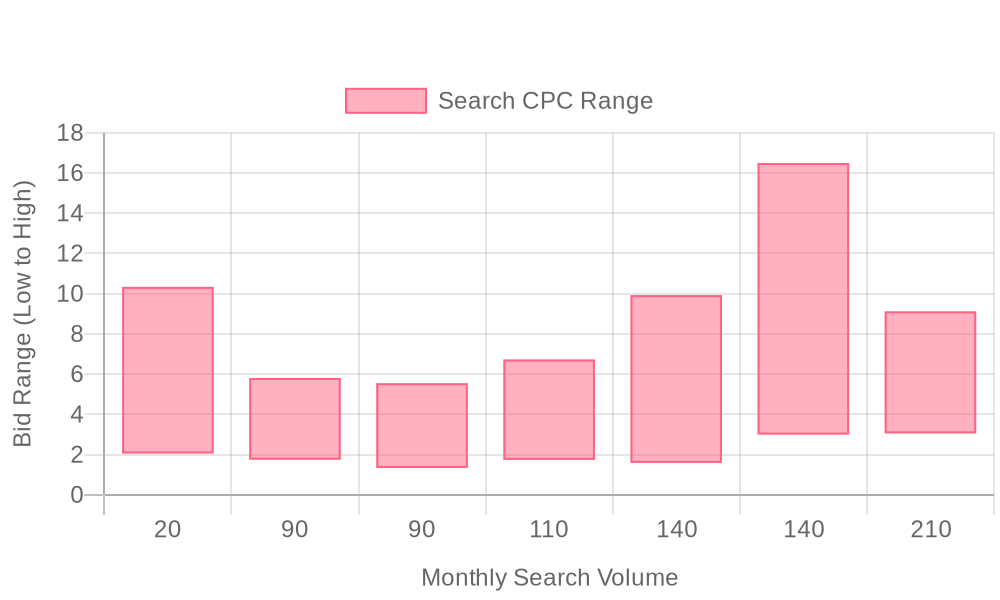
Precision in keyword strategy directly impacts lead quality and cost efficiency for blasting contractors navigating competitive markets. By focusing on high-intent, industry-specific terms, campaigns capture in-market buyers and minimize wasted spend on irrelevant queries. For actionable tips, explore this video tutorial on optimizing Google Ads for contractors.
For blasting contractors, top-performing keyword themes should align with core services, project types, and local intent. Effective campaigns leverage granular keyword research, identifying both broad and long-tail variations that reflect the way buyers actually search. Consistently high-value terms often include combinations of location, service type, and urgency, see more strategies in our marketing analytics blog.
- Service-based keywords: blasting services, abrasive blasting, dustless blasting, industrial blasting, sandblasting contractors, mobile blasting services
- Project-specific keywords: paint removal blasting, concrete surface preparation, graffiti removal blasting, metal restoration blasting, surface cleaning contractors
- Local intent keywords: blasting contractors near me, blasting services [city/state], local sandblasting company, mobile blasting [region]
- Commercial and industrial focus: commercial blasting contractors, industrial surface prep, heavy equipment blasting, construction site blasting
- Problem/solution queries: remove rust from metal, prepare concrete for coating, environmentally safe blasting, lead paint removal blasting
Refining keyword lists with negative terms ensures ads exclude unqualified traffic, such as hobbyists or DIY searchers. Continual analysis of search query data reveals new themes and intent signals, letting contractors adapt targeting as buyer behavior shifts. Sona's Identity Resolution further sharpens targeting by helping teams prioritize prospects likely to move forward quickly. To see how you can maximize results, get started for free with Sona.
Step-by-Step Campaign Execution Framework
Step 1: Build Targeted Keyword Lists
Blasting contractors benefit most from precision in keyword targeting. Segment keyword groups by service type, such as concrete blasting, industrial cleaning, or paint removal, to ensure ads surface directly in front of high-intent buyers. Localizing keywords with geographic nuances and "near me" modifiers increases relevance for project managers and facility owners searching within a specific region.
Long-tail keywords and detailed queries like "industrial sandblasting for bridge repair near Houston" capture the nuanced intent of buyers seeking specialized services. Negative keywords remain crucial, filtering out unrelated traffic and reducing wasted spend from unqualified clicks. With unified data platforms, marketers can go beyond basic keyword lists by identifying which companies are visiting, aligning spend with top-priority targets.
The upgrade most blasting contractors advertisers miss is going beyond raw keyword volume to layer in intent and identity signals. By connecting website-visitor data and CRM records with Sona Marketing Measurement, you can see which specific search terms bring in the accounts and customers that actually convert, and weight your keyword and bidding strategy toward those rather than the terms with the highest search volume alone.
Step 2: Craft Compelling Ad Copy
Industry-specific messaging is key in Google Ads for blasting contractors. Ad copy must directly address the core challenges faced by procurement leaders and site managers, such as regulatory compliance, safety, and project deadlines. Including markers of reliability, like industry certifications and notable case studies, signals credibility and builds trust with risk-averse buyers.
Promote valuable offers tailored for the construction sector: free estimates, rapid response times, or same-day site visits. Integrating real-time intent data allows for dynamic ad personalization, ensuring that ads reflect the prospect's stage in the buying journey and highlight relevant solutions or differentiators for each segment. For a detailed walkthrough, check out this video tutorial for contractor Google Ads campaigns.
Step 3: Design Conversion-Focused Landing Pages
Alignment across keyword, ad, and landing page is essential for conversion in Google Ads for blasting contractors. Each landing page should mirror the specific service, location, or client type featured in the ad, ensuring a seamless experience that increases conversion rates. For example, a landing page for civil engineering contractors should showcase sector-specific capabilities, testimonials from similar clients, and trust icons such as safety records and insurance coverage.
Clear calls-to-action, like "Request a Quote" or "Book a Free Site Assessment," should be prominently placed throughout the page. Using data-driven visitor identification, marketers can serve personalized content and CTAs to different accounts, increasing engagement and driving more high-quality sales opportunities. To explore proven strategies, review our step-by-step B2B marketing playbooks.
Step 4: Optimize Based on Data
Performance optimization in Google Ads for blasting contractors hinges on robust data collection and analysis. Tracking conversions and applying smart bidding strategies ensures budgets are allocated toward keywords and audiences that consistently produce revenue. A/B testing various creative elements, such as headlines, images, and CTA phrasing, helps reduce wasted spend and uncovers the highest-performing combinations.
True ROI measurement goes beyond online forms: importing offline revenue and CRM data provides a holistic view of which keywords and campaigns actually drive closed contracts. Platforms that automatically sync enriched audience data into Google Ads give revenue teams the ability to adjust bids in real time and reallocate budget to prospects with the highest conversion likelihood, ensuring every dollar is maximized for growth. For more specialized guidance, review this Google Ads best practices for contractors.
Sona Marketing Measurement closes the gap between clicks and revenue. It captures every ad click with first-party measurement, ties that click through UTM capture and ad-platform APIs to the actual record in your CRM, and reports ROAS by keyword and campaign instead of by last-click form fill. Feeding that revenue signal back into Smart Bidding and Performance Max compounds over time: the algorithms optimize toward booked blasting contractors revenue, not cheap leads.
Tips on Expanding Your Presence for Blasting Contractors

Blasting contractors who proactively expand their digital presence secure more project opportunities, increase brand authority, and consistently outpace competitors in high-value markets. Effective engagement and reach strategies ensure that every marketing dollar contributes directly to pipeline growth and client retention. For actionable strategies and the latest insights, explore our B2B marketing and sales playbooks.
- Cross-promote in remarketing campaigns: Leveraging remarketing enables blasting contractors to re-engage website visitors who showed initial interest but did not convert. By promoting informative guides, safety certifications, or case studies across remarketing banners, contractors keep their services top-of-mind for prospects navigating lengthy procurement cycles. Integrating dynamic audience data allows teams to update messaging based on the user's stage in the buying journey, ensuring relevance and maximizing conversion potential.
- Upsell with CRM-driven insights: Analyzing CRM data to identify which clients frequently consume content around advanced blasting techniques or environmental compliance helps contractors surface timely upsell opportunities. Syncing enriched audience segments from CRM directly into Google Ads enables personalized offers and solution bundles to be delivered at the moment of peak interest, increasing average deal size and improving client lifetime value. You can automate these workflows and data syncs with Sona Destinations for seamless activation across platforms.
- Collaborate for referral traffic: Partnering with industry associations or complementary service providers creates a steady flow of referral traffic while reinforcing brand credibility. When messaging is kept consistent across email, website, and paid ads, contractors ensure that prospects receive a unified experience, which builds trust and drives engagement. Learn how to amplify cold outreach with website visitor intelligence for better referral outcomes.
- Target underserved locations: Focusing Google Ads campaigns on geographies with limited blasting contractor presence allows firms to capture demand before competitors move in. Precise geo-targeting filters ensure ads are shown exclusively to decision-makers in high-potential regions, while real-time intent signals help teams allocate budget to markets demonstrating active interest. For step-by-step campaign optimization, check out this video tutorial for contractors on Google Ads.
Beyond Google Ads: Winning the AI Answers Blasting Contractors Buyers Now Trust
Paid search captures demand at the moment someone types a query. But a fast-growing share of blasting contractors buyers no longer start at Google at all, they ask ChatGPT, Gemini, or Perplexity before they ever run a search, and Google's own AI Overviews increasingly summarize an answer above the traditional results. If your business isn't referenced in those AI answers, you're invisible at the exact moment buyers build their shortlist.
Sona AI Visibility shows where your business shows up across ChatGPT, Gemini, Perplexity, Google AI Overviews, and 10+ engines, and, much like a keyword report, which prompts actually send you buyers, so you can prioritize the ones that convert. Run the two together and you cover the entire buyer path: get cited where buyers research (AI Visibility), then prove which of that demand turns into booked revenue (Marketing Measurement).
Helpful resources
Conclusion
Google Ads works for blasting contractors when it's built around how the buyer actually searches: urgent, specific, and often triggered by a compliance deadline or a failed inspection rather than routine browsing. The contractors who win are the ones who match keyword, ad copy, and landing page to that moment, then track results past the form fill to the signed contract.
The next shift is already underway: buyers increasingly ask AI tools before they ever open a search bar, which means visibility now has to extend past the search results page. Contractors who pair tight Google Ads execution with attention to how they show up in AI answers will be building pipeline from two directions instead of one.
To take the next step in optimizing your advertising efforts and experience a platform that unifies your go-to-market data, start for free and explore the capabilities we offer.
FAQ
How can Google Ads help my blasting contracting business?
Google Ads can help your blasting contracting business by enabling precise targeting, measurable ROI, and an optimized marketing strategy that integrates with other channels like content marketing and social media, capturing high-intent prospects at the exact moment they search for services.
What are the best keywords for Google Ads in the blasting contracting industry?
The best keywords for Google Ads in the blasting contracting industry include service-based terms like 'industrial blasting' and 'sandblasting contractors,' project-specific terms like 'paint removal blasting,' and local intent terms like 'blasting contractors near me.'
How much should I budget for Google Ads as a blasting contractor?
The article does not specify an exact budget, but it emphasizes the importance of precision targeting and data-centric campaign management to maximize every advertising dollar.
What are the most effective ad formats for Google Ads in the blasting contracting sector?
Effective ad formats for blasting contractors include search campaigns for high-intent prospects, display ads for brand visibility, video ads for demonstrating capabilities, and remarketing ads to re-engage interested visitors.
How can I track and measure the success of my Google Ads campaign for my blasting contracting business?
You can track and measure success by using advanced attribution models to analyze both online and offline conversions, applying smart bidding strategies, and integrating ad platforms with CRM tools for closed-loop attribution.







