


A biomedical supplies buyer rarely converts on the first visit. Procurement officers compare specs across browser tabs, loop in a compliance officer, then disappear for weeks before a purchase order materializes, and most of that research happens without ever filling out a form. Google Ads remains one of the few channels that catches this buyer mid-search, when a lab manager or hospital procurement lead is actively typing "FDA-approved" or "ISO 13485" into the query bar. Pair that intent with tools that identify the companies behind anonymous site visits, and ad spend can shift toward accounts showing genuine buying signals instead of scattering across the entire funnel.
How to Generate Biomedical Supplies Leads with Google Ads: A Step-by-Step Guide

B2B marketers in the biomedical supplies sector face intense competition and long purchase cycles. Success depends on accelerating lead engagement and converting every high-intent website visit into an actionable sales opportunity, which is where Sona's Identity Resolution comes in, identifying the companies behind anonymous visitors.
Integrating Google Ads into a broader digital marketing for biomedical strategy enables revenue teams to reach healthcare decision-makers at precise moments in their procurement journey. Data-driven workflows that unify campaign analytics and real-time audience segmentation allow teams to prioritize follow-up and personalize outreach for higher conversion rates.
A multi-channel Google Ads healthcare approach goes beyond basic keyword targeting or generic retargeting. Marketers can pinpoint individual companies and decision-makers behind anonymous web traffic, segment audiences based on in-market signals, and dynamically update targeting as prospects move through the funnel. This ensures campaigns stay relevant, delivering timely offers, product specifications, or compliance documentation to procurement stakeholders exactly when interest peaks. For a comprehensive overview of compliance, see this Google Ads healthcare compliance guide.
Seamless CRM and Google Ads audience sync further enhances medical supply marketing by pushing enriched lead profiles and engagement scores directly into campaign audiences using Sona Destinations. This tight alignment between sales and marketing arms revenue teams with actionable intelligence, enabling immediate outreach to high-value accounts while optimizing budget allocation for campaigns proven to deliver ROI. In the context of healthcare PPC, advanced conversion tracking and attribution models connect online ad spend to both digital and offline sales interactions, giving full visibility into the true impact of every campaign on pipeline and revenue.
Why Does Google Ads Matter for Biomedical Supplies?

Biomedical suppliers face significant hurdles when reaching decision-makers, as traditional channels often fail to capture attention within clinical, laboratory, or procurement environments. Google Ads enables suppliers to bypass these barriers, connecting directly with healthcare professionals and organizations searching for specific products or solutions. For an in-depth overview of compliance requirements specific to healthcare advertisers, review this Google Ads healthcare policy guide.
The platform excels at segmenting complex B2B audiences, allowing marketers to tailor messaging by specialty, facility size, or even research focus. With the right tools, marketers can go further, identifying anonymous website visitors, pinpointing healthcare institutions, and tracking high-value accounts as they progress through the consideration funnel. This level of granularity transforms generic campaigns into targeted, data-driven initiatives that align with the unique buying cycles and compliance needs of medical supply marketing.
Real-time analytics within Google Ads help biomedical suppliers capitalize on market shifts, such as sudden spikes in demand for diagnostic kits or PPE. By integrating audience data from CRM and sales platforms, teams can adjust budgets and creative assets instantly, ensuring campaigns remain relevant and competitive. This agility is essential for digital marketing for biomedical products, where regulatory changes and supply chain dynamics frequently impact buyer intent.
Google Ads also enhances visibility for biomedical brands that face stiff competition from established manufacturers and fast-moving startups. Through advanced conversion tracking and attribution, marketers gain a clear view of which campaigns drive meaningful engagement and sales, both online and through offline channels like distributor portals or field sales teams. This insight supports long-term growth strategies while maintaining strict adherence to Google Ads compliance and healthcare advertising standards.
Common Types of Google Ads Campaigns for Biomedical Supplies
- Search Campaigns: Search campaigns capture active demand by targeting keywords such as “buy biomedical supplies” or “FDA-approved lab equipment,” queries typed by someone with a purchase order pending, not a student writing a paper. This ensures visibility to buyers already seeking solutions, whether for hospitals, research labs, or procurement offices, and lets marketers weight bids around renewal cycles and grant-funding windows that drive seasonal demand spikes. When marketers unify CRM and web data, they can prioritize spending on high-intent accounts and avoid wasted impressions on unqualified traffic by using Sona's Identity Resolution to reveal anonymous website visitors and score intent. For strategies to integrate ad data with analytics, see this guide to importing ad platform cost data into Google Analytics.
- Display Campaigns: Display campaigns expand reach by placing banners across relevant healthcare, research, and procurement websites. Precise targeting options allow segmentation by audience interests, online behavior, and even site categories. Real-time audience segmentation allows marketers to dynamically update display audiences, delivering creative to decision-makers most likely to engage and move forward in the sales cycle. For creative ideas on healthcare supply marketing, visit this list of healthcare promotional strategies.
- Shopping Campaigns: Shopping ads drive product-level visibility for consumables, lab equipment, or medical devices, displaying rich images and specifications directly in search results. By syncing product feeds with up-to-date inventory and compliance documentation, marketers ensure that only available, certified products are showcased. Integration with enriched CRM data lets teams highlight products most relevant to target segments, increasing conversion rates and streamlining procurement processes.
- Video Campaigns: Video campaigns demonstrate complex biomedical products, procedures, or value propositions through short-form or in-depth content. These campaigns excel at educating both clinical and procurement stakeholders, showcasing product differentiation and compliance credentials. When audience engagement signals are tracked and funneled back into campaign segmentation, teams can retarget viewers exhibiting high purchase intent, aligning follow-ups with the most engaged prospects.
- Remarketing Campaigns: Remarketing re-engages healthcare buyers who previously interacted with product pages, whitepapers, or pricing calculators. Advanced audience building tools refresh remarketing lists in real time, ensuring that only active, in-market leads are targeted as they progress through the sales funnel. For a case study on boosting used lab equipment sales through Google Ads remarketing, see this example of Google Ads for lab equipment.
- Discovery Campaigns: Discovery campaigns place visually engaging ads across Google’s personalized feeds, connecting suppliers with healthcare professionals researching new products or solutions. Marketers can leverage unified data on website visits, CRM activity, and offline events to inform targeting, ensuring that ads appear only to those exhibiting relevant buying signals. This strategy rapidly scales prospecting while maintaining a focus on quality and compliance.
- Local Campaigns: Local campaigns drive foot traffic or in-person inquiries to physical showrooms, distribution centers, or demonstration events. By syncing geographic data from CRM and web analytics, marketers can tailor ads to regions with the highest density of healthcare organizations or upcoming procurement cycles using Sona Destinations. For tailored PPC solutions in healthcare, explore healthcare-focused PPC services.
Selecting the right mix of campaign types for biomedical supplies also means considering Performance Max, which pools search, display, video, and shopping inventory into a single goal-based campaign and can be useful once you have enough conversion data to guide its automation. Beyond format, the real lever is a unified view of buyer intent and engagement: with real-time data enrichment and dynamic audience segmentation, revenue teams can direct spend to the channels and moments most likely to yield qualified leads. If you want to experience these capabilities firsthand, get started for free with Sona.
Where to Find Growth Opportunities?
Revenue teams in biomedical advertising often face the challenge of fragmented or outdated account data that stalls campaign personalization and hinders lead progression. A more precise approach leverages vertical keyword targeting and competitor gap analysis to surface unaddressed market demand, revealing high-intent segments that generic targeting would miss. This strategy identifies not only where competitors are strong but also where their coverage lapses, allowing for nuanced positioning of biomedical supplies and related medical devices in untapped search and display environments such as those described in these healthcare Google Ads campaign examples.
Industry-centric placements amplify reach by situating ads within publications, forums, and digital channels frequented by healthcare professionals and procurement teams. These channels provide access to buyers with both immediate needs and future procurement cycles. Utilizing advanced visitor identification, marketers can go beyond anonymous web traffic to pinpoint which organizations are interacting with their biomedical inventory, enabling rapid lead enrichment, custom messaging, and more agile budget allocation directly within Google Ads for Biomedical Supplies campaigns.
Continuous engagement is key to staying top-of-mind with decision makers. Content retargeting strategies, built around educational assets such as whitepapers, technical briefs, or compliance checklists, ensure visibility throughout extended B2B sales cycles. By dynamically updating retargeting audiences as prospects consume new content or move down the funnel, marketers keep their products relevant and front-of-mind at each stage. Integration with unified data platforms allows enriched audiences and identified leads to flow seamlessly into Google Ads and connected CRM systems, enabling high-frequency, personalized follow-up that converts research-phase interest into qualified pipeline.
How to Apply Audience Segmentation for Biomedical Supplies
Precise audience segmentation is crucial in biomedical advertising to prevent wasted spend and drive measurable results. Aligning segmentation with detailed customer journey maps allows teams to move from generic outreach to highly tailored messaging for each segment, maximizing relevance and engagement.
Modern digital marketing for biomedical supplies demands a robust, data-driven approach. Enriching CRM records and dynamically syncing them with Google Ads ensures that campaigns adapt in real time to shifts in audience intent, enabling marketers to act on the most promising opportunities as they develop.
Defining clear audience segments is foundational. For example, hospitals and research facilities have different procurement cycles, product requirements, and approval workflows. Segmenting campaigns for these audiences ensures that messaging, offers, and creative assets are tailored to the context, routine supply purchasing for hospitals versus specialized equipment for research institutions. For actionable examples, review these healthcare Google Ads campaign examples.
Intent-based segmentation further refines this strategy. By using Sona's Identity Resolution, marketers can pinpoint which organizations are browsing specific biomedical products. This enables real-time adjustments, such as shifting budget toward accounts actively researching high-value devices or increasing bids for leads signaling immediate purchasing needs, a hospital system evaluating a bulk consumables contract, for instance, versus a single lab browsing spec sheets. As accounts interact with content and progress through the funnel, audiences update automatically, keeping outreach aligned with current buying intent.
Syncing CRM and ad platforms ensures that enriched audience data flows seamlessly between marketing and sales. When a new high-intent lead is identified, it is automatically qualified and routed into both Google Ads remarketing pools and sales engagement tools like HubSpot or Salesforce. This integration supports advanced conversion tracking, tying both online interactions and offline sales activity to specific campaigns, which gives revenue teams a comprehensive view of true ROI and enables rapid optimization.
By implementing audience segmentation strategies purpose-built for the biomedical sector, B2B marketers unlock higher conversion rates, reduce budget waste, and deliver personalized engagement throughout the customer journey. To experience these benefits firsthand, get started for free with Sona.
This is also where measurement changes the economics. With Sona Marketing Measurement you can identify the companies and buyers behind your ad clicks, using first-party data rather than anonymous session counts, and segment audiences by who actually becomes a customer. That lets you build bid adjustments and audience signals around the segments that convert and de-prioritize the ones that don't, so you feed Google's algorithms "this click became a paying biomedical supplies customer" instead of just "someone filled out a form."
Keyword Strategy & Sample Target Terms
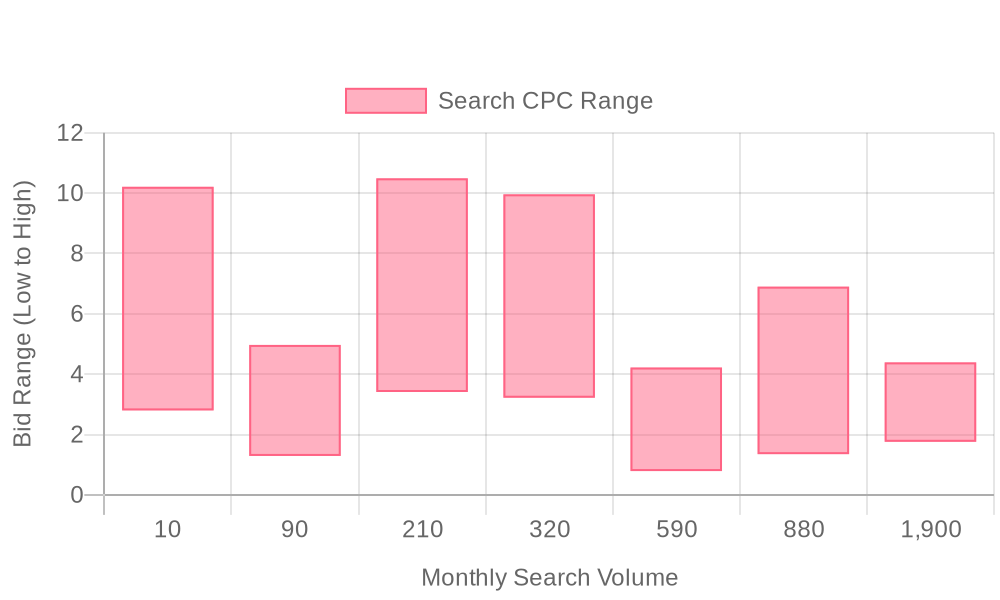
| Industry | Keyword | Monthly Search Volume | Competition Level | Low Bid | High Bid |
| Biomedical Supplies | medical equipment production companies | 10 | MEDIUM | 2.8 | 10.21 |
| Biomedical Supplies | biomedical supplies | 90 | MEDIUM | 1.29 | 4.97 |
| Biomedical Supplies | medical equipment manufacturing companies | 210 | LOW | 3.41 | 10.49 |
| Biomedical Supplies | medical device manufacturing companies | 320 | LOW | 3.22 | 9.96 |
| Biomedical Supplies | durable medical equipment company | 590 | LOW | 0.79 | 4.22 |
| Biomedical Supplies | medical device sales companies | 880 | LOW | 1.35 | 6.9 |
| Biomedical Supplies | medical device company near me | 1900 | LOW | 1.76 | 4.39 |
Effective keyword strategy is foundational to biomedical supply advertising, where high-intent buyers search for precise solutions. Targeting terms specific to product categories, compliance needs, and procurement cycles ensures campaigns reach institutional decision-makers and healthcare providers when purchase intent is strongest.
Core keyword groups include product-focused phrases such as “biomedical supplies distributor,” “medical device procurement,” “laboratory equipment supplier,” and “FDA-approved medical consumables.” Complementing these, transactional modifiers like “buy,” “quote,” and “bulk order” filter in-market buyers from general researchers or students. For advanced targeting, long-tail terms addressing certifications or specialties, such as “ISO 13485 certified blood analyzers” or “hospital-grade PPE supplier”, draw in procurement managers with defined needs. To see how leading brands structure successful Google Ads campaigns in the healthcare sector, review these healthcare Google Ads campaign examples.
Precision targeting in Google Ads for Biomedical Supplies is often hampered by incomplete or generic B2B profiles. Using Sona's Identity Resolution alongside intent data lets marketers move beyond anonymous clicks and instead pinpoint actual companies and healthcare institutions researching specific products. This sharpens keyword targeting and enables dynamic audience building, as enriched CRM data reveals which accounts are actively in-market. As leads progress through the funnel, audience segments update in real time, keeping campaign messaging relevant and maximizing the impact of each advertising dollar. If you’re ready to put these strategies into action, get started for free with Sona to unlock smarter biomedical supply advertising.
Step-by-Step Campaign Execution Framework

Step 1: Build Targeted Keyword Lists
Precision in keyword selection is crucial for Google Ads for Biomedical Supplies, as it directly impacts both lead quality and campaign efficiency. Start by segmenting your keyword lists based on product category, use case, and audience intent. For example, cluster by high-value equipment types or specialized consumables, and incorporate long-tail queries such as “sterile pipette tips for clinical labs” or “FDA-certified autoclaves near Chicago.” Adding location modifiers and usage-based phrases helps zero in on buyers who are ready to purchase in specific regions or verticals. For a practical guide on segmenting keywords and market sizing, see this step-by-step TAM, SAM, SOM guide.
Filtering out irrelevant traffic with negative keywords like “free samples” or “student research” protects your budget and ensures only high-potential prospects reach your ads. The process becomes far more effective when keyword selection is continuously synced with real-time audience data, integrating CRM insights so ad spend aligns with accounts showing true buying intent. For more on Google Ads compliance requirements specific to healthcare, review this overview of Google Ads healthcare policy compliance.
The upgrade most biomedical supplies advertisers miss is going beyond raw keyword volume to layer in intent and identity signals. By connecting website-visitor data and CRM records with Sona Marketing Measurement, you can see which specific search terms bring in the accounts and customers that actually convert, and weight your keyword and bidding strategy toward those rather than the terms with the highest search volume alone.
Step 2: Develop Compelling Ad Copy
Crafting ad copy for biomedical supply audiences requires a blend of technical credibility and commercial appeal. Headlines should address specific pain points, such as supply chain reliability, regulatory compliance, or product innovation. Including industry accolades, certifications, and trusted client endorsements in your ad text instantly boosts credibility and differentiates your offering in a crowded healthcare PPC landscape. For examples of effective ad campaigns, explore these healthcare Google Ads campaign examples.
Ads that feature urgency, like “Next-day delivery on ISO-certified consumables” or “Limited-time bulk pricing on diagnostic kits”, drive faster action from procurement teams. Effective ad copy is never created in isolation; it must stay in sync with broader brand messaging and engagement strategies. By connecting ad creative with real-time marketing data, you ensure every impression and click feels relevant, whether your leads interact with sales outreach or remarketing campaigns, strengthening brand trust and increasing the likelihood of high-quality conversions.
Step 3: Design Effective Landing Pages
Optimal landing pages for biomedical advertising are tightly mapped to both ad groups and keyword themes, ensuring a frictionless transition from ad click to conversion. Each landing page should address the unique priorities of its target segment, whether it’s hospital procurement officers, research labs, or specialized clinics. Sector-specific landing experiences, such as pages dedicated to laboratory automation solutions or PPE compliance, outperform generic templates by providing relevant technical content and tailored value propositions. For tactical landing page inspiration, see this case study on boosting lab equipment sales with Google Ads.
Trust signals are essential: display compliance badges, FDA or CE certifications, and real-world customer testimonials prominently. To further increase conversion rates, include clear CTAs such as “Request Pricing” or “Download Clinical Validation Data,” paired with incentives like consultation offers or volume discounts. Proactive engagement is elevated by automating CRM and marketing integrations, enabling real-time alerts when high-value leads interact with critical assets and bridging the gap between digital marketing and timely sales follow-up.
Step 4: Implement Data-Driven Optimizations
Effective optimization in healthcare advertising strategies involves rigorous tracking and agile adjustment. Monitor both micro-conversions (like specification downloads or sample requests) and macro-conversions (such as completed purchases or demo bookings) to build a granular understanding of what drives value at each funnel stage. For a comprehensive approach to tracking conversions and attribution, consult this framework for measuring marketing's influence on the sales pipeline.
Incorporating offline conversions, such as sales closed via distributor networks or phone consultations, provides a holistic view of campaign performance and supports more accurate attribution. When your ad, CRM, and analytics systems are fully synchronized, you can rapidly identify which keywords, creatives, and audiences generate revenue, not just leads. This enables sustained growth, as budgets are continuously shifted toward the highest-yielding segments and campaigns, supported by a unified data foundation that removes guesswork from every optimization decision. If you're ready to put these strategies into practice, get started for free with Sona to unlock advanced analytics and campaign insights.
Sona Marketing Measurement closes the gap between clicks and revenue. It captures ad clicks with first-party tracking that doesn't rely on third-party cookies, ties that click through UTM capture and ad-platform APIs to the matching record in your CRM, and reports ROAS by keyword and campaign instead of by last-click form fill. Feeding that revenue signal back into Smart Bidding and Performance Max compounds over time: the algorithms optimize toward booked biomedical supplies revenue, not cheap leads.
Tips on Expanding Your Biomedical Supplies Presence
B2B marketers in the biomedical supplies sector face constant pressure to reach decision-makers at the right moment, with timing, segmentation, and messaging playing critical roles in campaign success. By pairing educational retargeting with advanced data insights, teams can nurture leads consistently, even when long sales cycles or complex buying committees delay action.
Retargeting for educational content allows marketers to maintain visibility and trust throughout the lead nurturing process. Using dynamic visitor identification and real-time intent signals, campaigns can continuously adjust messaging as prospects progress from initial research to readiness, ensuring resources are focused on the highest-value accounts. This approach not only increases conversion rates but also helps prevent wasted spend on disengaged or misaligned audiences. For real-world examples of successful biomedical Google Ads campaigns, see this healthcare Google Ads campaign case study.
Cross-promotion of ancillary services, powered by CRM data insights, mitigates segmentation blind spots and unlocks new upsell opportunities. Audience lists can be kept current as contacts engage with various products or services, with CRM and ad platform syncing ensuring marketing efforts adapt instantly to changes in account status or lead scoring. This integration supports a holistic marketing ecosystem that avoids the stagnation caused by incomplete audience or engagement data.
Partnerships with professional associations can dramatically expand referral traffic, tapping into networks of credentialed practitioners and institutional buyers who trust their industry organizations. By collaborating on thought leadership, webinars, or co-branded campaigns, biomedical suppliers can access pre-qualified audiences with high purchase intent. Regional strategies further strengthen local brand presence, leveraging geo-targeted campaigns and localized landing pages to align with healthcare providers’ procurement habits in specific markets.
Achieving consistent growth in biomedical advertising requires a commitment to ongoing optimization, data-driven learning, and multi-layered targeting. Integrating CRM data, leveraging real-time behavioral insights, and synchronizing campaigns across search, display, and retargeting platforms ensures that marketing teams capture pivotal moments in buyers’ journeys and turn them into meaningful revenue opportunities. If you’re ready to elevate your biomedical supplies marketing, get started for free with Sona to unlock deeper insights and smarter campaign execution.
Beyond Google Ads: Winning the AI Answers Biomedical Supplies Buyers Now Trust
Paid search captures demand at the moment someone types a query. But a growing share of biomedical supplies buyers no longer start at Google at all: they ask ChatGPT, Gemini, or Perplexity before running a search, and Google's own AI Overviews increasingly summarize an answer above the traditional results. If your business isn't referenced in those AI answers, you're invisible at the exact moment buyers build their shortlist.
Sona AI Visibility shows where your business shows up across ChatGPT, Gemini, Perplexity, Google AI Overviews, and 10+ engines, and, much like a keyword report, which prompts actually send you buyers, so you can prioritize the ones that convert. Run the two together and you cover the entire buyer path: get cited where buyers research (AI Visibility), then prove which of that demand turns into booked revenue (Marketing Measurement).
Helpful resources
Conclusion
The biomedical supplies buyers researching your products today are also asking AI assistants for recommendations before they ever open Google. The suppliers who win the next few years will be the ones who show up in both places: cited in AI answers when buyers are still forming their shortlist, and precisely targeted in search when intent turns into a query. Pairing Google Ads with identity resolution, measurement tied to actual revenue, and AI visibility turns that combination into a compounding advantage rather than three separate tools.
To see what identity resolution, measurement, and AI visibility look like applied to your own biomedical supplies campaigns, start for free with Sona.
FAQ
What are the Google Ads policies for biomedical supplies?
Google Ads policies for biomedical supplies require advertisers to adhere to healthcare advertising standards, ensuring compliance with regulations and providing accurate documentation when targeting healthcare decision-makers.
How can I set up a Google Ads campaign for biomedical products?
To set up a Google Ads campaign for biomedical products, start by building targeted keyword lists based on product categories and audience intent, develop compelling ad copy, design effective landing pages, and implement data-driven optimizations.
What targeting options are available for advertising medical supplies on Google Ads?
Google Ads offers targeting options such as keyword targeting, audience segmentation based on in-market signals, and the ability to target specific companies and decision-makers behind anonymous web traffic.
What are the best practices for optimizing Google Ads for biomedical supplies?
Best practices include integrating CRM and Google Ads for audience sync, using advanced conversion tracking, applying precise audience segmentation, and continuously optimizing campaigns based on real-time data and analytics.
How do I ensure compliance with Google Ads healthcare regulations?
Ensure compliance by reviewing and adhering to Google Ads healthcare policy guides, providing necessary documentation, and aligning all advertising efforts with healthcare advertising standards to avoid policy violations.







