


Aircraft owners and fleet operators rarely search for coverage on a whim, they're renewing a policy before a deadline, adding a new aircraft, or responding to a broker's recommendation. Google Ads gives aviation insurance providers a way to reach these buyers at that exact moment, then follow the ones who show real intent well past the first click. Businesses that only watch form fills often miss the prospects who visited, compared coverage, and left without submitting anything. Account-level analytics close that gap, showing which companies are actually in-market rather than just counting anonymous traffic. For aviation insurance services, Google Ads works best as a strategic channel tied to the rest of your marketing, not a standalone bidding exercise, so that offline conversations and digital research feed the same picture of a buyer's progress.
How to Generate Leads with Google Ads for Aviation Insurance Services

Aviation insurance providers face complex buying cycles and a highly specialized client base, making digital lead generation both a challenge and an opportunity. Modern Google Ads strategies, when executed with precision, can rapidly connect insurers with high-intent prospects at critical decision points, ensuring that every marketing dollar moves the needle for customer acquisition. For marketers seeking a tailored approach, digital marketing solutions for aviation businesses can offer valuable guidance on specialized campaigns.
To maximize lead generation, aviation insurance marketers must orchestrate a series of tightly integrated tactics across audience targeting, keyword alignment, ad creative, and conversion optimization. By combining industry insight with advanced campaign technology, teams can capture in-market buyers and accelerate revenue impact throughout the sales funnel. Leveraging real-time audience segmentation empowers marketing teams to reach the right people at the right moment with tailored outreach.
- Define Your Objectives: Map the stages of the aviation insurance buyer's journey, from initial research after a claim or renewal notice to a formal quote request, and prioritize leads by where they sit in that cycle. Capturing lead information early matters, since brokers and underwriters who respond first often win the account. Sona's Identity Resolution helps sales teams see which companies are researching coverage before they fill out a form, so outreach can start while interest is still high.
- Align Keywords: Focus on high-intent phrases such as “aviation insurance,” “private jet liability insurance,” or niche-specific terms like “drone fleet insurance.” Segmenting keywords by aircraft type, operator size, or regulatory need ensures ads resonate with the distinct needs of each audience segment. Regular keyword analysis, coupled with real-time insights into search trends, allows marketers to adapt messaging and bidding strategies, driving efficiency and higher lead quality. For further keyword insights, consider this Google Ads PPC keyword research service.
- Design Ads: Within your Search campaigns, use responsive search ads to test aviation insurance benefit statements, such as rapid claims support or bespoke risk coverage, aimed at mid-funnel buyers whose behavior signals they're ready to act. Dynamic creative lets you match messaging to where a prospect sits in the buying cycle. For guidance on ad messaging aligned to intent signals, explore intent-driven retargeting strategies.
- Optimize Landing Pages: Ensure landing pages mirror the promise and specificity of the ad copy, providing a seamless bridge from click to conversion. Prominent calls to action, such as “Request an Aviation Insurance Quote” or “Schedule a Consultation”, guide prospects toward the next step, while trust signals and concise forms streamline the conversion process. Incorporating real-time visitor identification and behavioral tracking enables continuous refinement of landing page content, improving conversion rates and minimizing drop-off.
- Utilize Automation: Automated bidding strategies and campaign scripts empower marketers to adapt to shifting demand, optimizing spend for high-converting audience segments. Dynamic audience lists, updated based on real-time engagement data, ensure that ads target only the most relevant prospects as they move through the funnel. Integrating CRM and ad platforms further enhances campaign performance, enabling seamless syncing of enriched lead data for smarter retargeting, attribution, and personalized follow-up across every stage of the customer journey.
Why Google Ads is Crucial for Aviation Insurance Services

Aviation insurance providers face a landscape where timing, precision, and data-driven execution dictate growth. Google Ads unlocks direct access to decision-makers in aviation by allowing marketers to deploy specialized, intent-rich keywords that reach buyers as they research or renew coverage. For aviation industry marketers seeking tailored campaign solutions, digital marketing for aviation businesses can provide frameworks that complement Google Ads strategies.
Effective use of Google Ads means insurance teams can identify and attract new policyholders who haven't interacted with the brand before. Sona's Identity Resolution flags high-value companies early in their research, letting targeted ad placements guide prospects toward conversion. This approach relies on Sona's intent signals, ensuring campaigns reach those actively considering aviation insurance solutions.
The cyclical nature of aviation insurance renewals makes immediate demand capture critical. With current engagement data, teams can deploy campaigns that target prospects during peak intent windows such as renewal periods. By monitoring in-market activity, marketers dynamically allocate budget to accounts most likely to convert, maximizing efficiency and reducing wasted spend. For more tactics on reaching in-market buyers, explore intent-driven retargeting strategies.
Expanding into new regions requires precision that traditional advertising cannot match. Google Ads enables cross-region targeting based on live performance insights, allowing aviation insurance marketers to prioritize emerging markets. These optimizations, powered by unified campaign analytics, ensure budget is invested where the highest return is achievable, regardless of geographic boundaries.
Comprehensive analytics provide visibility from ad click to policy signup, capturing both digital and offline conversions such as phone calls. With advanced conversion tracking, teams can unify audience and campaign data, ensuring every touchpoint is attributed and measured accurately.
Common Google Ads Campaigns for Aviation Insurance Services

Aviation insurance providers operate in a complex, high-value sector that demands precision in digital outreach. Success hinges on tailored Google Ads campaigns that capture intent, foster trust, and convert sophisticated buyers with unique risk management needs. For marketers seeking an overview of digital marketing solutions tailored specifically for the aviation industry, this guide to aviation digital marketing offers valuable insights. Unifying prospect data and intent signals ensures ads are dynamically served to decision-makers, increasing the probability of meaningful engagement.
Search Campaigns: These campaigns target professionals actively seeking aviation insurance policies, from a fleet manager renewing a commercial policy to a private jet owner comparing quotes after a lapse. Detailed keyword lists let marketers match ads to searchers with specific intent. When prospect and intent data are unified, ads reach a named contact instead of an anonymous visitor, improving engagement.
Display Campaigns: Display ads keep your brand visible to prospects reading aviation trade news or browsing industry forums. Prioritizing visitors who spend time on key informational pages, coverage comparisons, regulatory explainers, keeps your message in front of those most likely to convert. Using real-time audience enrichment, display campaigns can update creative automatically for users showing escalating interest in complex coverages or regulatory topics.
Video Campaigns: Aviation insurance is inherently complex, making video useful for demystifying policy options and demonstrating expertise. Campaigns can walk through coverage scenarios, client testimonials, or the claims process itself. Optimizing for high-engagement actions, such as form fills or quote requests after viewing, lets marketers prioritize budget for viewers showing readiness to connect.
Remarketing: Most aviation insurance prospects don't convert on their first visit, the sales cycle is long and the requirements are intricate. Remarketing keeps those who visit your site, download a coverage guide, or request information re-engaged across web and mobile. When audience segments update in real time, remarketing can reflect recent behavior, such as revisiting a specific coverage page or starting a quote without submitting it.
Assets: Ad assets (formerly called extensions) add depth and credibility to your Google Ads, letting you showcase office locations, accreditations, or specialty services like drone insurance or international coverage. Tailoring assets to a prospect's segment, commercial operator versus private pilot, reinforces expertise and drives higher-quality leads. Enriched CRM data lets these assets adapt dynamically, surfacing the most relevant information for each potential client.
Each campaign type plays a distinct role in aviation insurance advertising, from generating first contact to nurturing a long consideration cycle to closing the policy. Live behavioral data and unified prospect profiles ensure each dollar spent drives measurable ROI. Ready to optimize your campaigns? Get started for free with Sona.
Finding Growth Opportunities in Aviation Insurance Services

The aviation insurance sector is defined by niche coverage requirements and a sophisticated buyer journey. Growth-minded teams can unlock new revenue streams by using data-driven strategies that surface unmet needs and reach decision-makers with precision. For example, focusing on niche keyword targeting such as "drone liability coverage" or "MRO facility insurance" allows marketers to intercept prospects looking for specialized solutions. With visitor identification, marketing teams can pinpoint which companies are searching for these terms, turning anonymous search traffic into actionable leads.
Monitoring aviation forums and professional communities reveals content gaps and rising industry concerns that may not yet be addressed by competitors. Producing resources that answer pressing questions or clarify regulatory shifts helps insurance providers become trusted advisors. Retargeting users who engage with this content through Google Ads ensures consistent brand exposure while dynamic audience segmentation moves prospects further along the decision journey.
Analyzing which keywords competitors dominate, and where they lose traction, uncovers valuable audience capture opportunities. For example, if analysis reveals that "aircraft fleet renewal insurance" queries yield poor competitor coverage, reallocating ad spend to these terms can increase qualified inbound leads. Access to real-time intent data empowers marketers to quickly shift budgets to high-converting opportunities as buying signals emerge.
Delivering eBooks, coverage checklists, and compliance guides via retargeting campaigns maximizes touchpoints during the lengthy aviation insurance sales cycle. Seamless CRM and ad platform integration ensures enriched audience data flows into Google Ads, allowing hyper-personalized remarketing that reflects each account’s buying stage and interests.
Combining these strategies helps aviation insurance providers build a scalable pipeline that keeps delivering value to high-potential prospects long after the first click.
Audience Segmentation for Effective Targeting

Segmenting audiences is critical for driving high-value results in aviation insurance marketing. By structuring segments around factors like aircraft size or the distinction between commercial and private operations, marketers can surface the unique risk profiles and coverage requirements that drive purchase decisions. For a deeper dive into tailoring campaigns for aviation businesses, explore this overview of digital marketing solutions for aviation. This granular approach ensures each campaign addresses the pain points and priorities of buyers, such as fleet liability limits for charter operators or hull coverage specifics for private jet owners.
Intent signals provide actionable insights into where prospects are in their buying journey. Monitoring behaviors like repeated visits to renewal pages or downloads of aviation policy guides allows marketers to identify those entering the procurement phase. By leveraging real-time audience data, revenue teams can dynamically shift ad budgets toward accounts demonstrating the highest likelihood to convert, ensuring resources are allocated to the most valuable opportunities.
Custom ad groups further refine messaging to match distinct audience needs. For example, campaigns targeting MRO providers might emphasize hangar keeper’s coverage, while those addressing drone operators highlight rapid claims processing for emerging risks. Dynamic audience updates, powered by integrated platforms, ensure segments remain current as leads progress from research to engagement. For actionable tactics on segmenting and nurturing leads, check out this playbook on buying stage segmentation. This enables seamless retargeting and nurtures prospects with content and offers tailored to their latest interactions.
Integrated conversion paths are essential for capturing the complete customer journey, bridging online engagement with offline sales activity. When CRM and ad data sync in real time, every touchpoint, whether a form fill, phone inquiry, or signed contract, feeds back into audience definitions and campaign optimization. This closed-loop attribution model not only clarifies true ROI but also supports continuous refinement of both marketing and sales strategies for aviation insurance customer acquisition.
This is also where measurement changes the economics. With Sona Marketing Measurement you can identify the companies and buyers behind your ad clicks, not just anonymous sessions, and segment audiences by who actually becomes a customer. That lets you build bid adjustments and audience signals around the segments that convert and de-prioritize the ones that don't, so you feed Google's algorithms "this click became a paying aviation insurance services customer" instead of just "someone filled out a form."
Keyword Strategy & Sample Target Terms
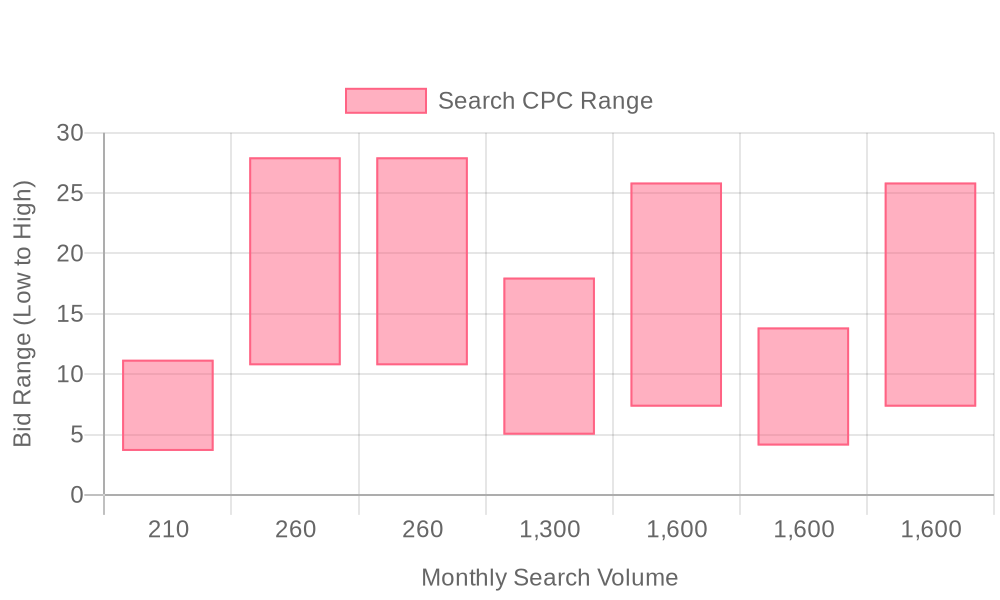
| Industry | Keyword | Monthly Search Volume | Competition Level | Low Bid | High Bid |
| Aviation Insurance Services | non owned aircraft insurance | 210 | MEDIUM | 3.64 | 11.2 |
| Aviation Insurance Services | airplane insurance quote | 260 | MEDIUM | 10.74 | 27.97 |
| Aviation Insurance Services | aircraft insurance quote | 260 | MEDIUM | 10.74 | 27.97 |
| Aviation Insurance Services | aviation insurance | 1300 | MEDIUM | 4.99 | 18 |
| Aviation Insurance Services | aircraft insurance | 1600 | MEDIUM | 7.31 | 25.88 |
| Aviation Insurance Services | aircraft renters insurance | 1600 | HIGH | 4.09 | 13.87 |
| Aviation Insurance Services | airplane insurance | 1600 | MEDIUM | 7.31 | 25.88 |
Effective keyword strategy is the catalyst for driving qualified leads in aviation insurance online advertising. The right terms capture buyers during critical research and decision cycles, positioning your offering before high-intent audiences and increasing the likelihood of meaningful engagement. Leveraging a structured approach ensures every ad dollar is focused on prospects most likely to convert, reducing wasted spend and elevating campaign ROI. For practical frameworks on optimizing your keyword approach, explore the ultimate guide to B2B marketing reports.
- Strategic Keywords: Focus on high-intent, high-volume terms such as 'best aviation insurance for small aircraft' or 'online aviation insurance quotes.' These keywords align with the language used by decision-makers actively seeking coverage, ensuring your ads appear for those closest to purchase. Precision in keyword selection delivers more relevant impressions and attracts leads with immediate commercial intent. For industry-specific campaign planning, review digital marketing solutions for aviation businesses.
- Long-tail Keywords: Incorporate detailed queries like 'commercial drone liability insurance for contractors' or 'aircraft hangar insurance policy options.' Long-tail keywords mirror the specific scenarios and needs of aviation businesses and owners, often converting at higher rates due to their alignment with nuanced buyer requirements. Targeting these terms narrows your focus to prospects who are further along the buying journey and looking for specialized solutions. Learn how to use real-time audience segmentation to increase relevance and conversion rates.
- Local Modifiers: Enhance geographic relevance by adding city names or terms such as 'near me.' For example, 'aviation insurance brokers in Dallas' or 'private jet insurance near me' can capture leads in regions with dense aviation activity or regulatory requirements. Optimizing for local intent addresses urgent needs and reflects the areas where conversion rates and customer acquisition priorities are highest. Discover more actionable strategies in our collection of marketing playbooks.
- Negative Keywords: Refine your targeting and protect your budget by excluding terms unrelated to immediate purchase intent, such as 'aviation insurance career' or 'free flight training.' This ensures ads are shown only to those with clear buying signals, maintaining efficiency and improving lead quality. For a deeper dive into optimizing ad spend, see our insights on importing ad platform cost data into Google Analytics.
Sona's Identity Resolution moves marketers beyond anonymous clicks by identifying both visitors and their companies, so keyword and budget decisions can reflect real-time in-market behavior. As prospects move through research, quote requests, and purchase, campaign targeting evolves in parallel, keeping messaging relevant at every touchpoint. Integration between enriched audience lists, CRM systems, and ad platforms puts high-value segments instantly in reach, cutting manual work out of aviation insurance lead generation.
Step-by-Step Campaign Execution Framework
Modern aviation insurance providers achieve better ROI when campaigns are executed with meticulous segmentation and responsive data strategies. By unifying digital touchpoints and offline engagements into a single workflow, teams gain the ability to act quickly on high-intent signals, resulting in more efficient customer acquisition and stronger market positioning.
Step 1: Build Targeted Keyword Lists
Aviation insurance marketing demands nuanced keyword strategies tailored to both service type and aircraft category. Start by segmenting keywords into groups such as "corporate jet insurance," "helicopter liability coverage," and "drone fleet policies," based on the most common inquiries and offline sales conversations. Dynamic keyword lists should be updated as insights from recent prospect interactions and CRM data reveal new search patterns, ensuring your Google Ads for Aviation Insurance Services campaign consistently addresses the needs of high-value leads.
Integrating visitor identification tools allows marketers to pinpoint the companies behind each search, enabling even more relevant keyword targeting. As new types of aircraft or regulations enter the market, these evolving lists help teams capture emerging demand before competitors.
The upgrade most aviation insurance services advertisers miss is going beyond raw keyword volume to layer in intent and identity signals. By connecting website-visitor data and CRM records with Sona Marketing Measurement, you can see which specific search terms bring in the accounts and customers that actually convert, and weight your keyword and bidding strategy toward those rather than the terms with the highest search volume alone.
Step 2: Write Compelling Ad Copy
Effective ad copy for aviation insurance services must combine urgency with credibility. Use headlines that speak directly to the buyer’s context, such as "Get a Quick Aviation Insurance Quote" or "Protect Your Fleet with Tailored Coverage," reflecting urgency observed in recent industry trends. Infuse each ad with clear calls to action and language that resonates with decision-makers, fleet managers, CFOs, or aviation business owners, backed by your team’s specialized expertise.
Real-time intent signals derived from both website activity and CRM enrich ad personalization, making each message more relevant to those actively in-market. As a result, your ads not only drive more clicks but also pre-qualify leads, improving sales efficiency.
Step 3: Align Landing Pages with Ad Messaging
A seamless transition from ad to landing page is critical for insurance lead generation. Each landing page should be a direct extension of your ad copy, featuring personalized content and clear, actionable CTAs such as "Request a Custom Policy Review" or "Schedule a Free Risk Assessment." Use insights from both digital and offline sales interactions to highlight the most relevant policy benefits and address common hesitations.
Dynamic audience segmentation ensures that each visitor sees messaging and forms aligned with their stage in the buying journey, whether they are researching options or ready to request a quote. This tailored approach boosts engagement and drives higher conversion rates for aviation insurance customer acquisition.
Step 4: Optimize Data and Bidding for Maximum Results
Effective PPC for aviation insurance relies on data-driven optimization throughout the campaign lifecycle. Implement Target CPA or Max Conversion bidding to prioritize budget toward channels and keywords that consistently deliver qualified leads. Importing offline conversions, like closed deals tracked in your CRM, enables precise attribution and smarter budget allocation.
Syncing enriched leads and audience segments between your CRM and Google Ads lets campaigns react in real time as prospects move through the funnel. This integration lets teams move budget to high-converting accounts as soon as intent spikes, supporting sustainable growth in aviation insurance advertising.
Sona Marketing Measurement closes the gap between clicks and revenue. It captures ad clicks with first-party measurement, ties them through UTM capture and ad-platform APIs to the matching record in your CRM, and reports ROAS by keyword and campaign instead of by last-click form fill. Feeding that revenue signal back into Smart Bidding and Performance Max compounds over time: the algorithms optimize toward booked aviation insurance services revenue, not cheap leads.
Enhancing Aviation Insurance Reach
Aviation insurance marketers face a dynamic environment where audience expectations shift quickly and decision cycles involve multiple stakeholders. Expanding digital reach goes beyond basic ad placement, it requires a sophisticated blend of educational content, audience intelligence, and timely engagement to ensure every high-potential lead is nurtured from initial search through final policy binding.
Developing educational retargeting ads is a foundational tactic for aviation insurance lead generation. By addressing knowledge gaps surfaced during early client conversations, these ads reinforce your value proposition and clarify complex policy details, ensuring prospects remain engaged throughout lengthy buying cycles. As insights accumulate, marketers can further refine messaging to address emerging questions and industry-specific concerns, boosting both lead quality and conversion rates.
Supplementary services and cross-sell opportunities become easier to identify when audience segmentation leverages behavioral data from digital touchpoints. By mapping untracked interest areas, such as specific aircraft types, risk management topics, or regulatory updates, insurance providers can introduce tailored offerings at the right moment. This proactive approach positions your brand as a consultative partner, not just a policy vendor, deepening trust and increasing client value.
Engagement with aviation forums, membership groups, and industry associations offers another vector for building visibility and authority. Strategic referral partnerships in these communities amplify your brand’s presence among vetted, high-intent audiences, and often yield referral traffic that converts at a higher rate than cold outreach. For those looking to explore digital marketing solutions tailored for aviation businesses, this overview of aviation marketing solutions provides a useful starting point.
Geo-targeting is essential as aviation insurance providers expand into new territories. By analyzing service delivery capabilities and studying competitor engagement, marketers can deploy Google Ads campaigns with precision, reaching prospects in underserved regions or those aligned with unique coverage offerings. To ensure budget is allocated where the opportunity is greatest, consider leveraging intent signals for more efficient targeting.
Finally, leveraging search query data uncovers new avenues for content and campaign innovation. By identifying trending queries and common customer concerns, marketers can quickly respond with relevant digital marketing for aviation content, updated landing pages, or targeted PPC for aviation insurance initiatives. To see how you can apply these strategies right away, get started for free with Sona.
Beyond Google Ads: Winning the AI Answers Aviation Insurance Services Buyers Now Trust
Paid search captures demand at the moment someone types a query. But a fast-growing share of aviation insurance services buyers no longer start at Google at all, they ask ChatGPT, Gemini, or Perplexity before they ever run a search, and Google's own AI Overviews increasingly summarize an answer above the traditional results. If your business isn't referenced in those AI answers, you're invisible at the exact moment buyers build their shortlist.
Sona AI Visibility shows where your business shows up across ChatGPT, Gemini, Perplexity, Google AI Overviews, and 10+ engines, and, much like a keyword report, which prompts actually send you buyers, so you can prioritize the ones that convert. Run the two together and you cover the entire buyer path: get cited where buyers research (AI Visibility), then prove which of that demand turns into booked revenue (Marketing Measurement).
Helpful resources
Conclusion
Google Ads works for aviation insurance services when the campaign reflects how this buyer actually shops, renewal deadlines, fleet changes, and narrow coverage niches, rather than treating every click as generic insurance traffic.
The providers who pull ahead won't be the ones bidding highest on generic terms, they'll be the ones who can tie a search for 'drone fleet insurance' or 'aircraft hangar policy' all the way through to a bound policy, and let that revenue signal steer where the next dollar of ad spend goes.
A platform that unifies go-to-market data turns that kind of attribution from a quarterly report into a daily input for campaign decisions.
FAQ
What are the best practices for using Google Ads in aviation insurance?
Best practices include using Google's robust advertising tools to capture high-intent leads, aligning campaigns with broader marketing efforts, and tracking prospects beyond initial engagement to ensure ad spend targets decision-makers with real intent.
How can aviation insurance companies optimize their Google Ads campaigns?
Optimization can be achieved through precise audience targeting, keyword alignment, dynamic ad creative, conversion optimization, and leveraging real-time audience segmentation to reach high-intent prospects at critical decision points.
What budget is recommended for Google Ads in the aviation insurance sector?
While the article does not specify a budget, it suggests dynamically allocating budgets based on real-time engagement data and concentrating spend on accounts most likely to convert.
What keywords should be targeted for aviation insurance Google Ads?
Target high-intent phrases such as 'aviation insurance,' 'private jet liability insurance,' and niche-specific terms like 'drone fleet insurance,' while incorporating long-tail keywords and local modifiers for more precise targeting.
How do Google Ads compare to other advertising methods for aviation insurance?
Google Ads offer precision and data-driven targeting that traditional advertising methods cannot match, enabling direct access to decision-makers and enhancing ROI through strategic keyword deployment and real-time audience insights.







