


Commercial insurance buyers rarely search on impulse. A prospect looking for fleet coverage or a cyber liability quote usually arrives after a renewal notice, an acquisition, or a new regulatory requirement forces the question, and they're often comparing brokers within days, not months. Google Ads matters here because it catches that moment of active intent, but most commercial insurance advertisers lose the thread right after the click: a visitor researches a policy, leaves without filling out a form, and never appears in the CRM at all. Closing that gap, so ad spend maps to real decision-makers rather than anonymous sessions, is what separates campaigns that generate pipeline from campaigns that generate traffic. This guide walks through how to structure, target, and measure Google Ads for commercial insurance services so that spend tracks to signed contracts, not just clicks.
How to Generate Commercial Insurance Services Leads with Google Ads: A Step-by-Step Guide

Commercial insurance providers face intense competition in digital channels, making data-driven lead generation crucial for sustainable growth. High-value B2B buyers expect seamless, relevant journeys from their first search to final conversion, demanding a more strategic approach to Google Ads for Commercial Insurance Services. To stay ahead, marketers can leverage detailed guides and insights that pinpoint evolving best practices in the industry.
A data-centric strategy enables marketers to unify Google Ads insights with broader marketing activity, ensuring every dollar targets the right prospects. Identifying which companies are browsing your site, rather than settling for anonymous clicks, empowers teams to prioritize engagement with high-fit accounts and avoid wasted spend on low-converting audiences.
Keyword and audience targeting must be tailored for the commercial insurance sector, where intent signals are often subtle and competition on high-value terms is fierce. Leveraging real-time audience and intent data, marketers can shift budget toward in-market buyers and quickly adapt to changes in prospect behavior. This dynamic approach is especially powerful when audiences are automatically updated as companies progress through the sales funnel.
Ensuring perfect alignment between landing pages and ad creatives is essential for maximizing conversions. Inconsistent messaging or disjointed experiences often lead to missed opportunities, particularly when prospects expect clarity and relevance at every touchpoint. By integrating engagement data, marketers can personalize landing experiences and nurture leads more effectively.
Performance optimization in Google Ads for insurance lead generation requires advanced attribution models that connect both online and offline activities. Measuring true ROI means capturing the full customer journey, including calls, form submissions, and CRM updates. When platforms sync enriched audience segments and conversion data directly into Google Ads and CRM tools, teams achieve a unified view that drives smarter budget allocation and higher conversion rates.
Integrating Google Ads efforts with other marketing channels unlocks holistic campaign performance. Coordinated retargeting, consistent messaging, and unified reporting allow commercial insurance providers to capture, qualify, and convert leads more efficiently. This guide is built for B2B marketers, service providers, and local operators determined to boost qualified lead volume and enhance overall marketing outcomes.
Why does Google Ads matter for Commercial Insurance Services?

Modern B2B teams in commercial insurance services face unique challenges: reaching niche decision-makers, demonstrating value in a saturated market, and converting intent-rich traffic before competitors do. Google Ads stands out by offering precision targeting and measurable performance, making it indispensable for organizations needing both immediate results and long-term growth.
- Target Niche Audiences: Google Ads offers targeting capabilities that allow insurance marketers to reach specialized roles such as procurement heads, CFOs, and operations leaders at the exact moment they search for commercial insurance solutions. This accuracy means budgets go toward high-fit buyers instead of broad, low-intent traffic. Sona's Identity Resolution helps marketers move beyond anonymous clicks and pinpoint the companies and individuals most likely to convert, using visitor identification.
- Capture High-Value Services: Commercial insurance deals often move fast once a trigger event hits, a new lease, a fleet expansion, a compliance deadline, and email nurture alone can't keep pace. Google Ads lets insurance providers show up the moment someone searches for coverage, even before that person exists in the CRM. Platforms that sync enriched lead and company data directly into CRM and Google Ads mean underwriters and sales teams see the click the same day it happens, not after a lead form finally gets submitted.
- Immediate Response for Urgent Needs: Commercial insurance is often purchased during critical events, such as acquisitions, expansions, or regulatory changes. Google Ads allows marketers to capture demand in real time, serving relevant offers to prospects who need coverage now. Real-time intent signals help shift budget dynamically to the highest converting accounts, ensuring urgent opportunities are never missed.
- Strategic Targeting in Emerging Markets: For commercial insurance agencies seeking growth, Google Ads provides tools to target emerging regions and new industry segments with precision. This approach expands reach beyond historic territories, tapping into untapped markets efficiently. Dynamic audience capabilities ensure campaigns remain relevant as market conditions evolve, automatically updating targeting as accounts move through the funnel.
- Integrated Performance Analysis: A unified measurement approach tracks every stage of the buyer journey, from first click through to signed contract. By consolidating online and offline conversion data, teams gain a comprehensive view into what drives revenue, not just leads. This data-driven feedback loop enables continuous Google Ads optimization for insurance, helping marketers refine messaging, reduce churn from disconnected strategies, and improve overall campaign ROI.
Looking to transform your commercial insurance marketing? Get started for free with Sona.
Common Types of Google Ads Campaigns for Commercial Insurance Services

- Search Campaigns: Capture high-intent business queries at the bottom of the funnel, converting attention into qualified leads. Responsive search ads, the standard ad format within Search campaigns, let marketers test multiple headlines and descriptions to match the mix of buyer language common in commercial insurance, from specific coverage names to compliance-driven phrasing. By integrating advanced audience identification, commercial insurance marketers move beyond anonymous clicks, pinpointing which companies are actively researching specific policies. This insight allows for continuous budget reallocation toward search terms proven to drive high-value conversions, while real-time deanonymization ensures ad spend is always aligned with the most promising accounts.
- Display Ads: Maintain brand visibility across targeted industry websites and relevant placements, reinforcing awareness built in other channels like email and social media. Display campaigns benefit from dynamic audience updates: as leads move through the pipeline, marketers can automatically adjust creative and messaging to match their current stage. For practical strategies on maximizing display ad ROI for insurance, review insurance Google Ads best practices.
- Video Ads: Explain complex commercial insurance offerings in a visually engaging format, expanding the reach of your content strategy. Video ads allow teams to educate and build trust with prospects early in the research phase, demonstrating expertise in a format that is both accessible and memorable. When combined with real-time intent data, video campaigns can be targeted to accounts showing active interest, maximizing the impact of every impression.
- Remarketing: Re-engage visitors and prospects who exited the buying journey before converting, using tailored messaging based on their last interaction. Effective remarketing relies on continuously enriched audience data, ensuring that ads reflect a prospect’s latest needs or objections. With integrated CRM and ad platform sync, insurance marketers can immediately activate lists of lapsed demo requests or stalled quotes, driving higher return rates and funnel velocity. For more remarketing tips and demand generation tactics, explore our actionable playbooks.
- Assets: Enhance ad credibility and boost conversion rates by showcasing key trust factors like office location, verified credentials, and fast response times directly within the ad unit. Assets such as call, location, and structured snippet extensions are especially powerful for commercial insurance, where decision-makers value transparency and immediate access to expertise. Seamless data integration makes it possible to keep these assets current with the latest business information, certifications, and service updates, further strengthening trust at the point of engagement.
Where to Find Growth Opportunities in Commercial Insurance Services

Precise growth in commercial insurance services starts with optimizing for intent-rich search behaviors. Modern revenue teams can capture high-value leads by aligning digital campaigns to industry-specific needs and leveraging actionable data signals.
- Target Specific Keywords: Use terminology unique to commercial insurance, such as "business liability coverage," "commercial property policies," or "fleet insurance quotes." This approach filters out low-intent clicks and ensures ad spend is focused on prospects actively searching for specialized coverage. By integrating real-time intent data, teams can adjust keyword lists dynamically as emerging trends or regulatory changes impact search behavior.
- Conduct Competitor Analysis: Applying auction insights from Google Ads enables marketers to benchmark their visibility against peers and spot under-served segments. For example, if competitors are attracting traffic from a niche like cyber liability, but engagement metrics remain low, this signals an opportunity to refine messaging or introduce targeted offers. With advanced audience analytics, it becomes possible to identify which accounts are expressing intent, allowing for agile budget reallocation toward high-potential market gaps.
- Leverage Industry Placements: Many qualified buyers frequent industry-specific forums, directories, or financial advisory sites that standard search campaigns may overlook. Placing ads on these industry platforms increases brand exposure to decision-makers in moments of active research. Using visitor identification, marketers can convert anonymous forum visitors into known leads, fueling remarketing efforts and enriching CRM databases for future campaigns.
- Implement Retargeting Content: Retargeting remains a cornerstone of insurance agency digital marketing, especially for long sales cycles. Mapping retargeting ads to the content calendar means seminar invitations, whitepapers, or regulatory updates reach previously engaged visitors at the right time, such as right before a compliance deadline or renewal window. Dynamic audience segmentation lets these campaigns evolve as prospects move from consideration to purchase, supporting lead nurturing without wasted spend.
How to Apply Audience Segmentation for Commercial Insurance

Audience segmentation is essential in commercial insurance marketing, serving as the foundation for targeted, high-ROI outreach. By distinguishing among prospects based on business size, coverage needs, and purchasing intent, marketers can allocate budgets more efficiently and personalize messaging for tangible engagement lift. For deeper insights and actionable strategies, visit our marketing insights blog.
- Define Target Segments: Begin by categorizing your audiences into actionable segments. Corporate clients may prioritize multi-line policies and risk management services, while small businesses often focus on essential liability or property coverage. Further refinement, such as by industry (manufacturing, healthcare, professional services) or company revenue, enables more nuanced offers and higher conversion rates. Effective segmentation at this level sets the stage for precise Google Ads management services, ensuring every impression aligns with a real, relevant need.
- Overlay Intent Indicators: Within these segments, overlay behavioral and contextual intent signals. For example, prospects actively requesting quotes or researching claims management indicate higher purchase readiness than those downloading general whitepapers. Leveraging real-time digital footprints, such as recent site visits to coverage comparison pages or engagement with insurance calculators, lets marketers prioritize high-intent accounts. When platforms unify audience data and intent signals, teams can shift spend toward segments most likely to convert, optimizing PPC marketing for insurance services.
- Segment Ad Groups: With clear segments and intent layers, structure your ad groups to match. Tailor creative assets, calls-to-action, and offers for each audience, preventing the wasted spend that results from generic messaging. For example, ad copy for a manufacturing risk policy should differ from that targeting tech startups seeking cyber liability coverage. Dynamic audience updates ensure prospects receive messaging that reflects their stage in the buyer’s journey, reducing friction and improving engagement rates for Commercial insurance PPC campaigns.
- Monitor Conversion Paths: Track every step from ad click to quote request, integrating digital and offline engagements into your CRM. This granular attribution reveals which segments and creative combinations yield the highest pipeline impact, addressing the frequent challenge of missing or fragmented engagement data. Advanced campaign measurement, capturing both online form fills and offline sales calls, enables marketers to close the loop on true ROI. Syncing these insights back into Google Ads and CRM platforms refines audience models, allowing for ongoing Google Ads optimization for insurance and more accurate targeting in future cycles.
By applying structured audience segmentation, commercial insurance marketers can drive qualified lead generation, improve budget efficiency, and deliver the personalized experiences that modern B2B buyers expect. This approach transforms how insurance agency digital marketing teams leverage their data, ensuring every campaign is measurable, relevant, and built for scale. If you’re ready to improve your segmentation and lead generation, get started for free with Sona.
This is also where measurement changes the economics. With Sona Marketing Measurement you can identify the companies behind your ad clicks, not just anonymous sessions, and segment audiences by which accounts actually become customers. That lets you build bid adjustments and audience signals around the segments that convert and de-prioritize the ones that don't, so you feed Google's algorithms "this click became a paying commercial insurance services customer" instead of just "someone filled out a form."
Keyword Strategy & Sample Target Terms
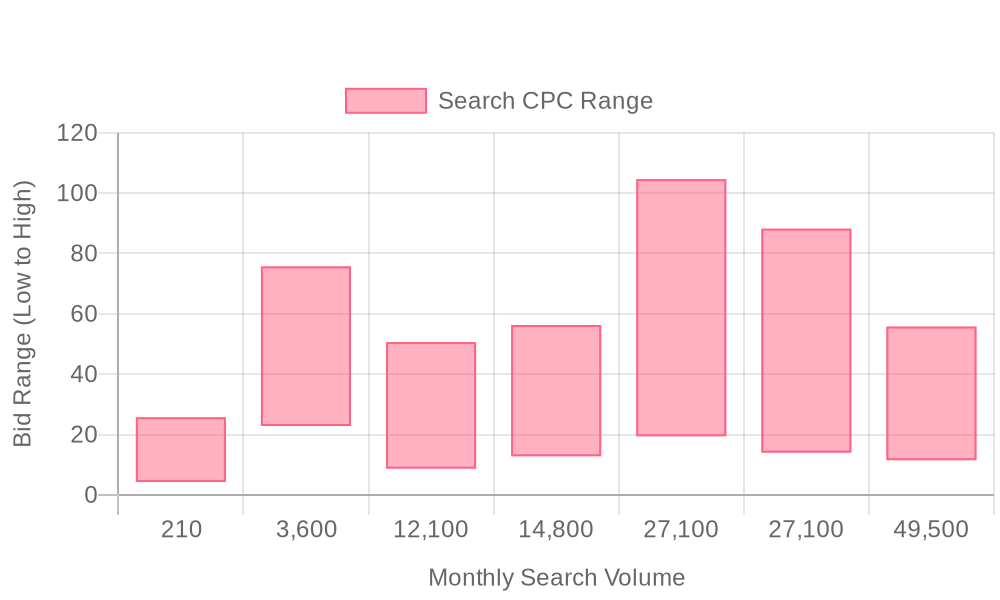
| Industry | Keyword | Monthly Search Volume | Competition Level | Low Bid | High Bid |
| Commercial Insurance Services | commercial insurance services | 210 | LOW | 4.28 | 25.73 |
| Commercial Insurance Services | commercial insurance quotes | 3600 | LOW | 22.82 | 75.73 |
| Commercial Insurance Services | truck insurance | 12100 | MEDIUM | 8.7 | 50.63 |
| Commercial Insurance Services | commercial truck insurance | 14800 | MEDIUM | 12.8 | 56.3 |
| Commercial Insurance Services | commercial auto insurance | 27100 | HIGH | 19.42 | 104.64 |
| Commercial Insurance Services | commercial vehicle insurance | 27100 | LOW | 14 | 88.22 |
| Commercial Insurance Services | commercial insurance | 49500 | MEDIUM | 11.5 | 55.79 |
A robust keyword strategy for commercial insurance services demands a data-driven approach to capture high-intent prospects and convert interest into qualified leads. By focusing on exact-match and phrase-match keywords specific to insurance products, business types, and buyer pain points, marketing teams improve ad relevance and attract decision-makers who are actively seeking solutions. For additional tips, explore the best practices for insurance Google Ads campaigns or visit our blog for more marketing insights.
- Strategic Value: Google Ads for Commercial Insurance Services allows revenue teams to intercept prospects as they search for specialized coverages, risk management solutions, and policy comparisons. This level of precision ensures marketing resources are deployed where they drive the most impact, increasing the likelihood of capturing premium leads rather than losing them to competitors.
- Precision Targeting: Pinpointing decision-makers at the moment they indicate purchase readiness transforms passive interest into immediate engagement. Leveraging advanced visitor identification, marketers can move beyond anonymous clicks to recognize which companies are engaging with specific ad groups or landing pages, enabling timely follow-up and tailored messaging.
- Measurable ROI: Commercial insurance PPC campaigns thrive on clear attribution and granular tracking. By implementing advanced conversion tracking, including online form fills, offline sales calls, and CRM updates, teams gain full visibility from first touch to closed deal. Integrating CRM and ad data ensures that decision entities are not only tracked but continuously enriched and imported into optimized ad lists for ongoing nurture.
- Channel Synergy: Successful insurance agency digital marketing does not operate in silos. Retargeting strategies extend campaign reach across display networks and social platforms, reinforcing brand presence and reminding prospects of relevant solutions as they progress through the decision cycle. Dynamic audience management ensures that as leads move down the funnel or shift intent, ad frequency, creative, and targeting rules update in real time, maximizing the efficiency and impact of every impression.
Step-by-Step Campaign Execution Framework
Efficient, data-driven Google Ads execution is essential for commercial insurance service providers seeking to outperform competitors and drive qualified lead acquisition. Executing each phase with precision ensures every dollar spent brings measurable ROI and supports ongoing revenue growth. This framework addresses high-intent targeting, message alignment, frictionless conversion, and relentless optimization, each tailored for the unique complexity of commercial insurance sales cycles.
Step 1: Build Targeted Keyword Lists
- Service-based keyword clusters: Organize keywords by specific insurance offerings, compliance coverage, audits, liability, and specialty areas, to align campaigns with product-level intent.
- Local intent modifiers: Add city names, regional identifiers, or "near me" terms to surface your ads when decision-makers are searching for providers within their jurisdiction, capturing high-value, local commercial leads.
- Extended and query-based targeting: Use long-tail phrases and organizational qualifiers, such as “business insurance for tech companies” or “commercial risk audits for manufacturers,” to attract prospects with nuanced, actionable needs.
- Negative keyword integration: Exclude irrelevant traffic, such as consumer-focused or unrelated insurance queries, keeping spend focused on high-quality prospects.
- Content-marketing synergy: Align keyword lists with top-performing content themes and nurture sequences, ensuring all touchpoints reinforce your expertise.
With advanced identification tools, marketers can reveal which anonymous site visitors are part of in-market companies, fine-tuning keyword targeting based on actual account activity, not just search volume. This approach helps commercial insurance providers shift budget toward search terms proven to convert, informed by real-time audience intent data.
The upgrade most commercial insurance services advertisers miss is going beyond raw keyword volume to layer in intent and identity signals. By connecting website-visitor data and CRM records with Sona Marketing Measurement, you can see which specific search terms bring in the accounts and customers that actually convert, and weight your keyword and bidding strategy toward those rather than the terms with the highest search volume alone.
Step 2: Develop Compelling Ad Copy
- Industry problem headlines: Speak directly to decision-makers’ pain points, such as regulatory compliance, risk mitigation, and audit preparedness, embedding real commercial challenges into ad headlines for immediate relevance.
- Trust reinforcement: Incorporate recognizable certifications, third-party reviews, and high-impact case studies to strengthen credibility and reduce perceived risk for enterprise buyers.
- Urgency and unique offers: Use conversion hooks like complimentary risk assessments or limited-time consulting sessions to drive timely engagement from prospects who are actively comparing providers.
- Ad extension utilization: Leverage call, location, and structured snippet extensions to provide one-click access to key information and differentiate your offering in dense search results.
- Brand narrative consistency: Mirror messaging used in social media and nurture emails, ensuring that commercial prospects experience a unified journey through every channel.
Integrating ad copy performance data with CRM touchpoints allows teams to see which narratives drive deeper engagement and opportunity creation, informing the continuous refinement of both Google Ads for insurance lead generation and broader digital marketing strategies.
Step 3: Design Effective Landing Pages
- 1:1 keyword-ad-page relevance: Every click should reach a landing page specifically tailored to the originating keyword and ad copy, minimizing disconnect and boosting conversion rates for commercial insurance PPC campaigns.
- Service and category segmentation: Segment landing experiences by insurance type or target vertical, such as professional liability versus workers’ comp, so prospects immediately recognize solution fit.
- Conversion accelerators: Embed ROI calculators, live chat, trust badges, and comprehensive FAQs to address objections and demonstrate value in the context of high-stakes commercial decisions.
- Clear mobile-optimized CTAs: Prominently display concise calls to action and ensure seamless mobile experience, meeting busy decision-makers on their device of choice and reducing friction at the point of conversion.
- CRM and marketing automation integration: Link form submissions directly to CRM and marketing platforms, providing instant visibility to sales and preventing lead leakage.
Using unified destinations platforms, marketers can track not only form fills but also micro-conversions and offline sales activity, attributing revenue back to specific landing page variants and optimizing for the highest-value actions.
Step 4: Implement Data-Driven Optimizations
- Comprehensive conversion tracking: Monitor both major and minor conversion events, using granular insights to understand which touchpoints consistently advance prospects through the funnel.
- Smart bidding strategies: Leverage Target CPA or Max Conversions bidding, adjusting spend based on real-time performance indicators and shifting budget toward top-performing campaign segments.
- Iterative A/B testing: Continuously test ad headlines, CTA placements, and landing page layouts, prioritizing combinations that produce the highest engagement and conversion rates among commercial insurance buyers.
- Offline data enrichment: Import data from sales calls, policy bind events, and CRM activity, ensuring that optimization efforts reflect the true business impact beyond digital-only metrics.
- Content and campaign integration: Use Google Ads insights to inform broader content and campaign strategies, enabling a unified marketing approach that consistently delivers actionable, account-level intelligence.
Sophisticated buyer journeys tools unify this feedback loop, ensuring that audience segments update dynamically as prospects move through the buying journey.
Sona Marketing Measurement closes the gap between clicks and revenue. It captures every ad click with first-party tracking, then ties that click through UTM capture and ad-platform APIs to the actual record in your CRM, and reports ROAS by keyword and campaign instead of by last-click form fill. Feeding that revenue signal back into Smart Bidding and Performance Max compounds over time: the algorithms optimize toward booked commercial insurance services revenue, not cheap leads.
Tips on Expanding Your Commercial Insurance Presence
Expanding a commercial insurance presence requires carefully orchestrated digital tactics and a deep understanding of B2B buyer behavior. Leading revenue teams prioritize value-driven outreach that aligns with client intent and delivers insight at every stage of the decision journey.
- Promote educational resources through retargeting: Retargeting initiatives that showcase webinars, whitepapers, and calculators keep your brand top-of-mind among prospects who have shown preliminary research interest without converting. By leveraging advanced visitor identification, platforms can pinpoint which companies are engaging with your learning resources, enabling revenue teams to personalize follow-up and increase the likelihood of conversion.
- Segment audiences using CRM data for upselling: Integrating CRM data into your campaign strategy allows for dynamic segmentation based on client lifecycle or policy maturity. This ensures timely delivery of cross-sell or upsell offers for related services, as enriched audience lists can be synced directly into Google Ads, enabling precision targeting and higher value per client.
- Collaborate with industry associations: Partnerships with recognized industry associations enable referral traffic and co-branded marketing efforts, expanding reach and increasing engagement possibilities. Digital attribution tools help quantify the value of such collaborations, allowing teams to measure which channels and partnerships drive the most qualified leads.
- Localize campaigns to specific regions: Tailoring marketing campaigns to target specific geographies increases brand voice share in priority markets. Detailed campaign tracking surfaces emerging regional demands and helps optimize spend allocation, while real-time intent data reveals shifts in local buyer priorities for fast, effective campaign pivots.
- Utilize search data for content strategy: Mining search query data uncovers trending topics and service gaps, inspiring new educational content that addresses active market needs. Feeding these insights into your content production keeps your messaging relevant and ensures each campaign touchpoint offers tangible value to prospective clients seeking commercial insurance solutions.
Beyond Google Ads: Winning the AI Answers Commercial Insurance Services Buyers Now Trust
Paid search captures demand at the moment someone types a query. But a fast-growing share of commercial insurance services buyers no longer start at Google at all, they ask ChatGPT, Gemini, or Perplexity before they ever run a search, and Google's own AI Overviews increasingly summarize an answer above the traditional results. If your business isn't referenced in those AI answers, you're invisible at the exact moment buyers build their shortlist.
Sona AI Visibility shows where your business shows up across ChatGPT, Gemini, Perplexity, Google AI Overviews, and 10+ engines, and, much like a keyword report, which prompts actually send you buyers, so you can prioritize the ones that convert. Run the two together and you cover the entire buyer path: get cited where buyers research (AI Visibility), then prove which of that demand turns into booked revenue (Marketing Measurement).
Helpful resources
Conclusion
The next competitive edge in commercial insurance advertising won't come from better keywords alone. It will come from connecting every click to what happens after it, the quote requested, the policy bound, the account renewed, so that Google's bidding systems learn to chase revenue instead of form fills. Insurers that close that loop now will spend less to win the same buyers their competitors are still chasing blind.
Ready to take your advertising efforts to the next level? Start for free to experience our platform and its capabilities today.
FAQ
How can I set up Google Ads for my commercial insurance services?
To set up Google Ads for commercial insurance services, focus on data-driven lead generation by targeting high-intent B2B buyers, integrating keyword and audience targeting specific to the industry, and ensuring alignment between landing pages and ad creatives.
What are the best keywords for Google Ads in commercial insurance?
The best keywords for Google Ads in commercial insurance include terms specific to insurance products, business types, and buyer pain points, such as 'business liability coverage' and 'commercial property policies,' to attract decision-makers seeking solutions.
How do I track and measure the success of my Google Ads for commercial insurance?
Track and measure Google Ads success by using advanced attribution models that capture the full customer journey, integrating online and offline conversion data, and syncing enriched audience segments and conversion data into Google Ads and CRM tools.
What is the average cost per click for Google Ads in the commercial insurance sector?
The article does not specify the average cost per click for Google Ads in the commercial insurance sector, but emphasizes the importance of precision targeting to ensure marketing budgets are used efficiently.
How can I retarget potential clients with Google Ads for my commercial insurance services?
You can retarget potential clients by creating remarketing campaigns that use tailored messaging based on their last interaction, leveraging continuously enriched audience data to reflect prospects' latest needs or objections.







