


A car owner who searches "maintenance plan near me" at 7 a.m. before a commute is not the same buyer as one comparing warranty coverage after a dealership quote, but both vanish into anonymous traffic unless you're watching for them. That gap between initial research and a booked service is where automotive maintenance marketers lose the most value. Email and social media build awareness and keep existing customers engaged, but Google Ads is what catches drivers at the moment they're ready to act, with targeting precise enough to reach decision-makers and tracking detailed enough to prove which clicks turned into paying accounts. This guide walks through setting up Google Ads for automotive maintenance plans, from campaign structure to keyword strategy to the measurement layer that connects ad spend to service revenue.
How to Generate Automotive Maintenance Leads with Google Ads: A Step-by-Step Guide

Automotive service providers seeking to maximize lead generation must adopt a data-driven, multi-channel approach. By leveraging high-precision targeting, budgets are allocated to prospects most likely to convert, improving both efficiency and return on investment.
Layering predictive analytics into your Google Ads strategy for automotive maintenance plans lets marketers concentrate spend on high-intent leads, such as searchers using urgent language ("same-day," "check engine light," "before road trip") or seasonal triggers like pre-winter inspections. This approach minimizes wasted budget on cold traffic and gives teams real-time intent signals to inform campaign decisions.
- Data-Driven Paid Search: Within a well-rounded marketing mix, paid search thrives when driven by accurate, unified data. Predictive models help identify in-market buyers, allowing more granular audience segmentation and budget optimization. Marketers can further boost outcomes by using Identity Resolution to reveal the companies and buyers behind anonymous traffic, making every click accountable and actionable.
- Targeted Keywords and Audiences: Selecting the right keywords and building segmented audiences is foundational. Campaigns informed by real-time intent data allow for agile budget shifts, capturing high-converting accounts at the exact moment of interest. Learn how dynamic audience syncing supports personalized outreach in the Google Ads strategies for auto repair shops.
- Landing Page Alignment: Engaging ad copy must match the landing page experience for seamless user journeys. Visual consistency and message clarity reduce friction, while dynamic content ensures each visitor sees information tailored to their needs. For actionable playbooks on improving conversion rates, visit the Sona playbook collection.
- Performance Optimization: Real-time analytics enable immediate adjustments to bids, budgets, and creative. Advanced conversion tracking unifies online and offline actions, providing a true measure of campaign ROI. Marketers can attribute appointments and revenue back to specific ad interactions, ensuring continuous improvement.
- Omnichannel Integration: Connecting Google Ads with CRM, email, and offline channels creates a holistic marketing engine. Seamless sync of enriched audiences and leads between platforms like Google Ads, HubSpot, and Salesforce ensures every touchpoint is informed by unified, up-to-date data. For a video walkthrough on setting up effective Google Ads campaigns, watch this step-by-step guide for auto repair shops.
Why Google Ads Matters for Automotive Maintenance Plans
Success in automotive maintenance marketing hinges on identifying and converting customers at critical decision points. Google Ads provides direct access to individuals actively searching for automotive maintenance plans, enabling marketers to intercept high-value prospects at the peak of their intent. For a visual walkthrough on launching effective campaigns, see this video on setting up Google Ads for auto repair shops.
- Complicated Audience Needs: Sophisticated tools now empower marketers to move beyond anonymous site visits. Sona's Identity Resolution helps teams reveal which companies, such as fleet operators or service contract resellers, are viewing key maintenance plan pages, driving the creation of enriched customer match lists for more effective targeting. For additional tactics, review this playbook on amplifying cold outreach with visitor intelligence.
- Higher Margin Offers: Routine service seekers can be nurtured into premium maintenance plan customers with segmented campaigns. Dynamic audience updates ensure messaging remains relevant as leads progress through the funnel, presenting tailored offers that move prospects up the value chain while optimizing marketing spend.
- Immediate Demand Capture: Google Ads precisely targets users demonstrating in-market behavior, making it ideal for capturing demand from customers ready to act. Real-time intent signals enable automated budget shifts toward high-converting accounts, ensuring timely outreach that maximizes conversion rates before interest wanes.
- Emerging Market Reach: Advanced geo-targeting allows for efficient expansion into new or underserved regions. Marketers can identify pockets of demand and allocate resources strategically, increasing visibility for maintenance plans where competition is lower and potential growth is higher. For insights on evaluating new opportunities, explore our guide on calculating TAM, SAM, and SOM.
- Cross-Channel Data Integration: Unified analytics tie together every user interaction, from search click to service booking. With robust conversion tracking and CRM sync, teams gain a complete view of both online and offline performance, enabling accurate ROI measurement and informed decisions about future budget allocation.
Common Types of Google Ads Campaigns for Automotive Maintenance Services

Automotive maintenance providers rely on a spectrum of Google Ads campaign types, Search, Display, Video, Remarketing, and Performance Max, to capture, nurture, and convert in-market prospects. Leveraging these tactics builds a presence across the full sales funnel and ensures every relevant search or digital interaction is an opportunity for conversion. For more insights on campaign strategy and measurement, explore our marketing analytics blog.
- Search Campaigns: Search campaigns intercept urgent, high-intent queries from vehicle owners actively seeking maintenance services, from "brake repair near me" to "extended warranty vs maintenance plan." By pairing keyword targeting with predictive scoring, marketing teams can prioritize spend on accounts demonstrating true buying intent. When unified visitor identification tools pinpoint which company or customer is searching, budget shifts seamlessly toward prospects most likely to book service. This approach not only maximizes efficiency in Google Ads for Automotive Maintenance Plans but also provides a foundation for robust attribution, linking ad clicks directly to CRM activity and revenue.
- Display Ads: Display campaigns keep brands visible across automotive-related forums, blogs, and content sites. Retargeting site visitors or lookalike audiences ensures ongoing engagement, especially for users lingering in the research phase. Dynamic audience segmentation, where lists auto-update as prospects interact with your website, enables precise ad placements that reinforce brand recall just when prospects are weighing service options. Integration with advanced platforms allows seamless syncing between audience segments and ad platforms, maintaining up-to-date targeting as prospects move through the funnel.
- Video Ads: Video ads deliver rich, educational content, think maintenance tutorials or plan benefit overviews, directly to YouTube and premium video networks. This format excels in demonstrating service quality, transparency, and unique selling points. Segment-specific messaging, dynamically adjusted based on user behavior or funnel stage, drives relevance and engagement. Real-time intent signals allow marketers to showcase the right video to the right audience, amplifying impact and keeping automotive maintenance plans top of mind. For visual learners or those new to digital advertising, this video walkthrough on Google Ads setup offers step-by-step guidance.
- Remarketing: Remarketing campaigns reconnect with site visitors who explored service options but did not convert. Aligning remarketing triggers with CRM milestones ensures that ads reflect the visitor’s actual journey, promoting plan details, reminders, or exclusive offers based on previous interactions. By syncing CRM data with ad platforms, marketers can tailor ad creative and frequency, minimizing wasted spend and guiding prospects toward booking.
- Performance Max: Performance Max campaigns combine Search, Display, YouTube, and Discover inventory into a single goal-driven campaign, useful for automotive maintenance providers who want Google's bidding algorithms to find converting customers across channels without managing each format separately. Feeding this campaign type with strong conversion data, such as booked appointments rather than form fills, keeps its automated bidding focused on customers who actually pay for service.
- Assets: Ad assets, such as location, service details, and call buttons, significantly enhance ad real estate and drive higher engagement. Including structured snippets about maintenance packages or direct links to booking tools improves ad credibility and convenience. Offline conversion tracking, tied back to service bookings or phone inquiries, closes the loop between online advertising for mechanics and in-shop revenue, delivering a true measure of campaign ROI.
Where to Find Growth Opportunities

Growth in the automotive maintenance industry requires a strategic approach that extends far beyond standard digital marketing playbooks. Professionals who unlock new customer segments and maximize ROI rely on precise tactics tailored to evolving search and buying behaviors.
- Targeting niche automotive keywords: Identifying and bidding on highly specific automotive maintenance terms allows shops and service providers to capture prospects not tracked by generic campaigns. These keywords, such as "fleet maintenance scheduling software" or "hybrid vehicle tune-up specials," attract buyers with immediate needs and higher lifetime value. Sona's Identity Resolution can reveal which companies are landing on your pages via these keywords, turning previously anonymous traffic into actionable leads for automotive maintenance plan sales.
- Conducting competitor gap analysis: By systematically reviewing competitor ad placements, keyword targeting, and landing page strategies, marketers reveal audience segments that are underserved or ignored. This intelligence guides strategic budget reallocation, ensuring your campaigns reach untapped prospects in local or specialty markets. For a comprehensive overview of Google Ads strategies and best practices for auto repair shops, visit this Google Ads guide.
- Utilizing industry-specific placements: Placing ads on vertical websites, forums, or video channels frequented by car owners and fleet managers increases relevance and visibility. These contextual environments improve click-through rates and brand recall, especially when campaign data feeds directly into your CRM and analytics for real-time performance tracking.
- Employing content retargeting: Drawing on engagement with educational assets like maintenance guides or how-to videos, marketers can build high-intent retargeting pools. As leads interact with content, dynamic audiences update automatically, enabling precise follow-up with tailored offers and reminders for automotive maintenance plan renewals or upgrades. With unified data, both online and offline conversions are tracked, providing a clear picture of true campaign ROI and informing future creative and channel strategies.
Combining these approaches with advanced data unification and intent monitoring allows automotive service providers to identify, engage, and convert the prospects most likely to drive long-term business value. For a deeper look at optimizing these tactics, explore retargeting strategies tailored for auto services.
How to Apply Audience Segmentation for Automotive Maintenance
Audience segmentation is central to effective automotive maintenance marketing. By dividing your audience into actionable segments, you can deliver highly relevant messaging that improves engagement and conversion rates. For step-by-step tactics on segmenting and targeting, review this playbook on buying stage segmentation.
- Define audience segments: Separate personal vehicle owners from business fleet managers to tailor messaging, offers, and value propositions. Use firmographic data, such as company size, industry, or vehicle fleet size, to further personalize campaigns, ensuring your advertising resonates with each group’s unique needs. For more ideas on segmenting and attracting auto customers, see this comprehensive guide to Google Ads for auto repair shops.
- Overlay intent signals: Analyze digital behaviors, such as recent searches for maintenance plans or service bookings, to distinguish between prospects showing new interest and those nearing renewal. This helps prioritize follow-ups and shift ad budget toward segments most likely to convert, capturing high-intent leads at the right moment. Enhance your segmentation by leveraging intent signals to identify and prioritize prospects in real time.
- Create segment-specific ad groups: Develop ad groups aligned with each audience segment and their position in the customer journey. Customize ad creatives, calls to action, and landing pages for each group, increasing relevance and improving click-through and conversion rates in PPC for automotive. Learn how dynamic audiences can auto-sync with ad platforms for hyper-personalized targeting.
- Leverage CRM integration: Ensure your CRM and ad platforms are tightly connected for precise conversion tracking and comprehensive ROI measurement. When segmentation data flows seamlessly between CRM and online advertising platforms, it enables real-time updates to audience lists and attribution for both online and offline conversions. Streamline this process with Destinations to keep your audience data and workflows in sync across all systems.
By systematically applying these segmentation tactics, marketers can pinpoint high-value prospects, dynamically update audiences as leads move through the funnel, and ensure automotive service promotions reach the most relevant potential customers. For B2B revenue teams, this unified approach to audience management provides a full-funnel view, allowing for more personalized engagement and measurable growth in digital marketing for auto services. If you want to put these strategies into practice, get started for free with Sona.
This is also where measurement changes the economics. With Sona Marketing Measurement you can identify the companies behind your ad clicks, not just anonymous sessions, and segment audiences by who actually becomes a customer. That lets you build bid adjustments and audience signals around the segments that convert and de-prioritize the ones that don't, so you feed Google's algorithms "this click became a paying automotive maintenance plans customer" instead of just "someone filled out a form."
Keyword Strategy & Sample Target Terms
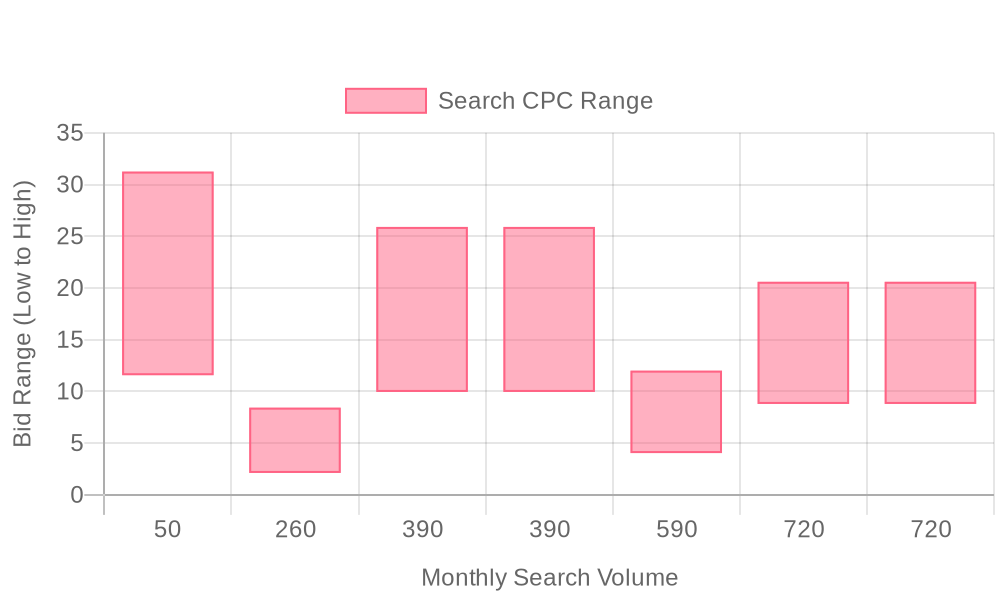
| Industry | Keyword | Monthly Search Volume | Competition Level | Low Bid | High Bid |
| Automotive Maintenance Plans | car repair warranty plans | 50 | HIGH | 11.57 | 31.25 |
| Automotive Maintenance Plans | car repair shops with payment plans | 260 | MEDIUM | 2.12 | 8.43 |
| Automotive Maintenance Plans | car repair plans | 390 | MEDIUM | 9.95 | 25.9 |
| Automotive Maintenance Plans | auto repair plans | 390 | MEDIUM | 9.95 | 25.9 |
| Automotive Maintenance Plans | car maintenance packages | 590 | LOW | 4.04 | 12.01 |
| Automotive Maintenance Plans | automotive maintenance plans | 720 | LOW | 8.79 | 20.6 |
| Automotive Maintenance Plans | car maintenance plan | 720 | LOW | 8.79 | 20.6 |
Automotive maintenance providers achieve superior results with a keyword strategy built around audience intent and urgent needs. By focusing on terms that signal immediate service requirements, such as "brake pads replacement cost" or "30,000 mile service checklist," marketers consistently intercept prospects at the critical moment of decision. For deeper insights into building high-performance campaigns, explore this comprehensive guide on using Google Ads to generate leads. Teams looking to identify the companies behind website visits can use Sona's Identity Resolution for real-time, actionable data that improves targeting precision.
- Precision Targeting: Successful campaigns rely on high-intent, geo-targeted keywords such as "auto maintenance plan near me," "scheduled vehicle service," and "car maintenance packages." Advanced predictive models can analyze historical conversion data, allowing bid adjustments to favor terms with proven ROI and to prioritize users showing strong in-market signals. When marketers deploy systems that identify both the company and individual visitor, budgets can shift in real time to the highest-value accounts, ensuring ads reach decision-makers ready to act.
- Measurable ROI: Integrating conversion tracking with CRM and offline sales data offers a full view of campaign effectiveness. Beyond simple click-throughs, connecting web leads to booked appointments and completed services refines the attribution model. As a result, revenue teams gain clarity on which keyword themes and ad groups actually drive revenue, not just traffic. By syncing enriched audience data and closed-loop reporting into platforms like Google Ads, marketers can optimize spend and prove true return on investment.
- Synergistic Channel Use: A comprehensive approach leverages search, display, and video formats to reinforce brand presence throughout the buying journey. Retargeting strategies keep maintenance plans top-of-mind for visitors who need more touchpoints before booking. Dynamic audience segments, updated automatically as prospects engage or move through the sales funnel, ensure that creative and offers remain relevant at every stage. Consistent messaging across digital channels maximizes recall and increases conversion rates for auto maintenance marketing initiatives. For practical tips on leveraging multi-channel strategies, review our collection of actionable playbooks.
This level of detail in keyword and audience segmentation is essential for building effective Google Ads for Automotive Maintenance Plans: it transforms ad spend into measurable business growth, while providing a scalable framework for ongoing optimization.
Step-by-Step Campaign Execution Framework
A successful Google Ads strategy for automotive maintenance plans starts with precise segmentation and data-driven execution. Each stage in this framework is designed to capture high-intent local demand, boost conversion rates, and maximize advertising ROI by leveraging unified go-to-market data and actionable insights.
Step 1: Build Targeted Keyword Lists
Effective campaigns rely on granular keyword targeting that maps directly to user intent. Segment keywords by specific services such as oil changes, brake inspections, or scheduled maintenance, and integrate local modifiers (e.g., "near me," city names) to capture searches from nearby customers seeking immediate solutions. Long-tail queries provide an additional layer of intent, helping marketers intercept nuanced maintenance-related searches and compete for less saturated, higher-converting traffic. For a visual walkthrough on setting up effective campaigns, explore this Google Ads setup video for auto repair shops.
Advanced platforms enable marketers to identify not just anonymous search queries but the actual companies engaging with their ads. By unifying CRM and web analytics, teams can refine keyword lists based on company firmographics, ensuring budget is allocated to the most valuable audience segments.
The upgrade most automotive maintenance plans advertisers miss is going beyond raw keyword volume to layer in intent and identity signals. By connecting website-visitor data and CRM records with Sona Marketing Measurement, you can see which specific search terms bring in the accounts and customers that actually convert, and weight your keyword and bidding strategy toward those rather than the terms with the highest search volume alone.
Step 2: Develop Compelling Ad Copy
Ad copy serves as the first impression and must resonate with automotive customers' needs while establishing trust. Use industry-specific terminology and highlight unique value propositions such as certified technicians, warranty-backed services, or specialized expertise. Trust signals like local awards, customer testimonials, and transparent pricing further enhance credibility, differentiating your maintenance plans from generic offers. For a detailed guide on boosting your automotive ad strategy, see these Google Ads strategies for auto repair shops.
Modern advertising tools allow marketers to test and iterate headlines and descriptions in real time, based on actual engagement data. By dynamically adapting ad copy to reflect in-market behavior and shifting intent, campaigns can maintain relevance and drive higher click-through rates from both new and returning prospects.
Step 3: Design Effective Landing Pages
Align every ad group to a purpose-built landing page that reinforces the offer and streamlines the path to conversion. Effective landing pages for automotive maintenance plans feature clear calls to action (such as "Book a Service" or "Request a Quote"), mobile-optimized layouts, and interactive elements like appointment scheduling or live chat. Content should be tailored to each service segment, reflecting both the ad promise and the expectations of high-intent visitors. For additional inspiration on paid advertising options and tips, visit this auto repair advertising blog post.
Continuous feedback loops, powered by audience and conversion data, support rapid adjustments to page copy, visual hierarchy, and CTA placement. As digital journeys become more complex, real-time insights allow marketers to update landing experiences for each audience cohort, improving engagement and minimizing drop-off.
Step 4: Implement Data-Driven Optimizations
Measurable outcomes are essential for ongoing campaign success. Use advanced bidding strategies that factor in conversion likelihood, customer value, and real-time market conditions. Platforms that unify online and offline data, such as web forms, phone calls, and booked appointments, give marketers a complete picture of campaign ROI, supporting smarter budget allocation and higher efficiency.
Sophisticated integrations sync enriched audiences and conversion events between Google Ads and core business systems, such as CRM and sales automation tools. This ensures that high-value leads are nurtured across touchpoints, while dynamic audience updates keep retargeting efforts focused on prospects who are most likely to convert. By leveraging unified insights, revenue teams can optimize every aspect of their Google Ads for Automotive Maintenance Plans initiative, from audience targeting to final attribution.
Sona Marketing Measurement closes the gap between clicks and revenue. It captures ad clicks with first-party measurement, then ties that click through UTM capture and ad-platform APIs to the actual record in your CRM, and reports ROAS by keyword and campaign instead of by last-click form fill. Feeding that revenue signal back into Smart Bidding and Performance Max compounds over time: the algorithms optimize toward booked automotive maintenance plans revenue, not cheap leads.
Tips on Expanding Your Automotive Maintenance Presence

Expanding your automotive maintenance brand requires a multi-channel approach that integrates educational content, advanced data strategies, and local market focus. Modern automotive businesses succeed by leveraging digital and offline touchpoints to cultivate lasting relationships and drive recurring service revenue.
- Cross-promote educational content: Share technical guides, maintenance checklists, or explainer videos across your website, social platforms, and email campaigns. To boost engagement with visual learners, consider this video walkthrough on setting up Google Ads for auto repair shops, and expand your knowledge base by exploring actionable marketing and attribution playbooks.
- Upsell through segmented audience strategies: Use real-time audience segmentation to identify customers ready for additional services, such as seasonal inspections or premium warranty plans. Adapting your messaging as leads progress through the funnel maximizes upsell opportunities and increases customer lifetime value.
- Partner with automotive associations: Collaborate with local and national industry groups to access new audiences and drive referral traffic. These partnerships expand your credibility and market reach, especially when supported by targeted digital campaigns and data-driven marketing insights.
- Localize ads for regional impact: Tailor campaigns to address the specific needs of local customers by analyzing ongoing audience behavior. Refine ad copy, offers, and scheduling for each market to boost engagement and achieve a higher return on ad spend using solutions that sync high-quality audience data into your CRM and ad platforms.
Mastering digital marketing for auto services means unifying data from every channel and touchpoint. With tools that identify the companies behind anonymous website visits and sync enriched leads directly into your sales systems, every interaction becomes measurable and actionable. Real-time insights let your team focus budget on in-market accounts, improve regional campaigns, and drive measurable growth across your automotive maintenance portfolio. For more on maximizing impact, review best practices for retargeting strategies.
Beyond Google Ads: Winning the AI Answers Automotive Maintenance Plans Buyers Now Trust
Paid search captures demand at the moment someone types a query. But a fast-growing share of automotive maintenance plans buyers no longer start at Google at all, they ask ChatGPT, Gemini, or Perplexity before they ever run a search, and Google's own AI Overviews increasingly summarize an answer above the traditional results. If your business isn't referenced in those AI answers, you're invisible at the exact moment buyers build their shortlist.
Sona AI Visibility shows where your business shows up across ChatGPT, Gemini, Perplexity, Google AI Overviews, and 10+ engines, and, much like a keyword report, which prompts actually send you buyers, so you can prioritize the ones that convert. Run the two together and you cover the entire buyer path: get cited where buyers research (AI Visibility), then prove which of that demand turns into booked revenue (Marketing Measurement).
Helpful resources
Conclusion
The shift already underway is from tracking clicks to tracking revenue: automotive maintenance marketers who connect ad spend to booked service, not just form fills, are the ones whose Google Ads budgets keep getting more efficient over time. Add AI Visibility to that measurement layer and the same discipline extends to the growing share of buyers who ask an AI assistant before they ever search.
Ready to see which of your ad clicks turn into paying automotive maintenance customers? Start for free to unify your go-to-market data and turn ad spend into measurable service revenue.
FAQ
What are the best practices for Google Ads in the automotive industry?
Best practices include precise targeting, leveraging real-time intent data, integrating predictive analytics, and aligning ad copy with landing pages to ensure seamless user journeys and maximize ROI.
How can I create effective Google Ads for my auto maintenance plan?
To create effective Google Ads, focus on data-driven targeting, use high-intent keywords, align ad copy with landing pages, and employ real-time analytics for performance optimization.
What budget should I allocate for Google Ads in automotive services?
Allocate your budget to target prospects most likely to convert by leveraging predictive analytics and high-precision targeting, which improves efficiency and return on investment.
How do I measure the success of my Google Ads campaigns for auto services?
Measure success by using advanced conversion tracking to unify online and offline actions, providing a true measure of ROI, and attributing conversions back to specific ad interactions.
What keywords should I target for automotive maintenance plans in Google Ads?
Target high-intent, geo-targeted keywords such as 'auto maintenance plan near me' and 'scheduled vehicle service,' and use predictive models to prioritize terms with proven ROI.







