


A car's engine doesn't check the calendar before it fails, and that unpredictability is exactly why auto warranty plans sell. On Google, the moment someone searches "extended car warranty" or "powertrain protection plan," they've usually already decided to buy something, they're deciding whose ad to click. For auto warranty providers, Google Ads offers precise targeting and measurable results in a market where trust and timing decide the sale. By targeting terms like 'auto warranty advertising' and 'vehicle warranty marketing' with discipline, you can lift lead quality and campaign efficiency without simply spending more.
How to Generate Auto Warranty Leads with Google Ads: A Step-by-Step Guide

A data-driven approach is essential for auto warranty providers aiming to capture high-value prospects and convert engagement into measurable sales. Valuable opportunities slip through the cracks when digital touchpoints aren't tracked back to the specific accounts expressing intent. By leveraging advanced visitor identification, marketers can move beyond anonymous website traffic and pinpoint which companies are exploring warranty plans. This sharpens focus on prospects that align with revenue goals and directs campaign spend at those most likely to convert.
Targeted keyword and audience strategies elevate every Google Ads campaign for warranties by aligning ad spend with genuine buyer intent. A shopper who requests a quote rarely buys on the spot: warranty terms run for years, the price tag is real money, and most people compare two or three providers before signing anything, so timing the follow-up matters as much as winning the first click. Integrating real-time audience insights means marketers can retarget visitors who research extended protection but don't convert immediately, keeping the brand visible as they compare coverage terms and prices. Layer in CRM account enrichment and the list adapts as behavior shifts, keeping spend pointed at accounts nearing a decision rather than ones still just browsing.
Synergy between Google Ads and landing page experience is another cornerstone of conversion rate optimization in auto warranty advertising. When ad engagement and on-site behavior aren't connected, it's hard to tell which businesses are actually working through key coverage pages versus bouncing off a vague quote form. With account-level insights, marketers can build sharper audience segments, personalize landing page content, and serve offers that answer the specific objections of each segment, price sensitivity for one, coverage depth for another. For more on the campaign formats that work best for auto services, see this overview of Google Ads formats for auto service businesses. That alignment smooths the path from click to qualified lead, supporting both immediate conversions and longer nurture cycles.
Unifying marketing efforts across channels prevents the loss of intent signals as buyers move between researching coverage online and calling in with questions before they commit. When online and offline activity connects through advanced conversion tracking, marketers can attribute not just form fills but downstream phone calls and policy purchases to specific ad campaigns. That visibility supports smarter budget allocation: double down on audiences that close, and pull back from ones that only generate clicks.
Finally, CRM account enrichment paired with ad platform integration gives auto warranty providers an audience list that evolves as leads move through the buying journey. As new signals arrive, a visitor returning to compare coverage tiers, a prospect requesting a quote, audiences update automatically to reflect it. That keeps every Google Ads campaign for warranties fueled by current, relevant data, driving stronger lead generation and better marketing ROI.
Why Does Google Ads Matter for Auto Warranty Plans?
Auto warranty businesses operate in a market where timing and intent dictate success. Google Ads delivers a direct pipeline to decision-makers who are actively searching for vehicle warranty coverage, far surpassing traditional outreach methods in both speed and precision. This approach empowers revenue teams to efficiently intercept high-value leads at crucial stages of the buying journey, reducing the risk of losing prospects who fall through the cracks.
Targeting high-margin, comprehensive coverage plans is essential for profitability in vehicle warranty marketing. Google Ads lets budgets follow prospects who show genuine purchase intent, improving ROI and lead quality. By leveraging intent data, marketers can shift spend toward audiences engaging with terms like "extended vehicle warranty" or "powertrain protection," producing more qualified pipeline and less wasted spend.
Speed matters in warranty marketing because intent is often tied to a specific event: a car just passed its manufacturer warranty, a used vehicle purchase closed, a repair estimate came back higher than expected. Google Ads lets warranty providers launch offers instantly and reach people while that urgency is fresh, rather than days later when they've already bought coverage elsewhere. That responsiveness helps teams managing uneven demo conversion rates or seasonal swings in used-car sales keep campaigns agile.
Regional visibility is also a key differentiator in digital marketing for warranties. With granular geographic targeting, businesses can penetrate emerging markets or underserved areas where traditional sales channels underperform. This strategy not only expands reach but also aligns marketing investments to regions with the highest density of in-market vehicle owners, enhancing both efficiency and conversion rates. To optimize these efforts, businesses can leverage precise audience intelligence for hyper-targeted outreach.
Comprehensive analytics close the loop on campaign performance, letting marketers track the customer journey from first click to policy activation. Unified data removes guesswork around follow-up and prioritization. Real-time visitor identification and CRM synchronization attribute leads and sales back to specific campaigns, showing clearly which Google Ads strategies drive measurable business growth.
Common Types of Google Ads Campaigns for Auto Warranty Services

- Search Campaigns: Search campaigns are the backbone of digital marketing for warranties, driving high-intent vehicle owners directly to tailored landing pages. Within Search, Responsive Search Ads let marketers test multiple headlines and descriptions against different query types, from broad "car warranty" searches to specific "extended warranty for high-mileage vehicles" queries. By aligning keyword targeting with in-market signals, marketers capture demand from consumers actively seeking new protection plans. Platforms that reveal which companies and people are visiting your website help teams prioritize budget toward queries with verifiable purchasing intent, closing the gap left by static keyword lists. For an overview of Google Ads formats effective for auto service businesses, review this breakdown of three Google Ads formats.
- Display Ads: Display ads keep brands visible on automotive content sites and forums, ensuring relevant audiences encounter reminders of your warranty offerings as they research repair costs or vehicle reliability. These placements are crucial for maintaining mindshare, especially as buyers move between awareness and decision phases. By using real-time audience segments that auto-sync with ad platforms, marketers serve ads only to those matching high-value criteria, reducing wasted impressions and improving return on ad spend.
- Video Ads: Video campaigns provide a compelling format to explain the benefits of extended vehicle protection, whether through customer testimonials, animated explainers, or feature walk-throughs. Sequenced video ads can nurture silent browsers into active leads by telling a cohesive brand story across YouTube and partner sites. When CRM and ad platforms are synchronized, marketers can dynamically update video audiences as prospects engage or move further down the funnel, personalizing follow-up content to maximize engagement.
- Remarketing: Remarketing ensures that visitors who explored but did not convert remain within reach through custom audience lists. By leveraging dynamic audience syncing, marketers can re-engage users who have shown specific intent, such as requesting a quote or comparing warranty tiers, with tailored offers or educational content. Automated segmentation updates these lists in real time as prospects interact with both website and offline channels, significantly increasing the likelihood of conversion on subsequent visits.
- Assets: Ad assets (formerly called extensions) provide immediate access to unique selling points, trust signals, and actionable details directly in search and display ads. Sitelinks, callouts, and structured snippets can highlight 24/7 claims support, certified coverage, or satisfaction guarantees, building confidence at the first touchpoint. Advanced conversion tracking and CRM sync ensure that only the most relevant assets appear for each audience segment, reinforcing brand credibility and driving higher engagement rates.
Exploring Growth Opportunities in Auto Warranty Marketing
Auto warranty marketers face unique growth challenges, including shifting consumer expectations and an increasingly crowded digital landscape. Unlocking new opportunity areas requires a granular, data-driven approach that adapts to evolving buyer behaviors and emerging industry trends. Tools that reveal which companies are visiting your website and score visitor intent provide a foundation for identifying untapped pipeline opportunities.
Vertical keyword targeting remains underused in auto warranty advertising. By identifying niche services, extended warranties for electric vehicles, high-mileage plans, coverage for commercial fleets, marketers can reach segments overlooked by generic campaigns. Research-driven keyword expansion captures search intent from owners seeking specialized solutions like EV battery protection or powertrain-specific warranties. For a comprehensive overview of effective Google Ads formats for auto service businesses, review this breakdown of Google Ads types for auto services. These targeted terms often convert better, offering a scalable path to cost-efficient lead generation in otherwise saturated markets.
Competitor analysis is essential for uncovering underserved market segments. Rather than replicating static keyword sets used by competitors, revenue teams benefit from monitoring shifts in bidding patterns, ad copy trends, and landing page messaging. These insights can be amplified by leveraging dynamic audience insights, allowing marketers to pivot campaigns to fill market voids and attract high-intent prospects neglected by broader campaigns. Synchronizing these insights across channels ensures your marketing strategy remains agile and responsive to fluctuations in consumer demand.
Strategic retargeting plays a critical role in converting high-value prospects that do not convert on the first touch. Instead of relying solely on generic display ads, advanced teams deploy educational assets like whitepapers and warranty comparison guides to re-engage visitors who demonstrated strong consideration signals. Platforms that track engagement across content assets enable marketers to build retargeting pools with precision, ensuring messaging evolves as prospects move through the funnel. Dynamic audience updates reflect new interactions, maximizing win rates among previously hesitant buyers.
Industry-specific placements are another growth lever, letting marketers capture attention in forums, review sites, and directories where vehicle owners actively research protection options, a resource on auto warranty lead generation can outline approaches for reaching motivated buyers in these spaces. Integrating real-time intent data further sharpens targeting, ensuring ads reach decision-makers and fleet managers at the moment they evaluate new warranty solutions. This unlocks incremental revenue while building a defensible position in a competitive market.
Audience Segmentation Strategies for Auto Warranty Plans
Modern vehicle warranty marketing requires precise segmentation to ensure every campaign message resonates with the right audience. The primary divide exists between end consumers, individual car owners seeking direct coverage, and dealership clients looking for scalable warranty packages for their inventory or customer base. Distinguishing these segments is foundational: consumer-focused campaigns demand personalized offers and direct calls to action, while dealership outreach benefits from volume-based incentives and partnership messaging. For more on identifying high-value segments in your web traffic, explore account identification strategies.
For advanced auto warranty advertising, intent overlays add a vital layer to segmentation. By focusing on signals like an approaching warranty expiration, a recent vehicle purchase, or engagement with high-value coverage topics, marketers keep their audience lists relevant and primed for conversion. Real-time insights from intent signals and user behavior allow immediate audience updates, moving budget toward accounts actively researching warranty renewals or premium protection options, insurance and warranty marketers use similar signals to generate and qualify leads through Google Ads.
Ad customization becomes seamless when unified intent data and segmentation are in place. Creative assets should directly address the needs and language of each segment, such as highlighting peace-of-mind for individual owners or emphasizing administrative simplicity for dealership clients. Unifying visibility on buyer activity removes guesswork from creative iterations, allowing for rapid A/B testing and continuous improvement based on real engagement indicators.
Conversion path validation is critical for revenue teams relying on Google Ads for Auto Warranty Plans. Integration with platforms like CRM ensures every inbound lead carries full context, segment, intent signals, and historical engagement, eliminating data silos that stall follow-up. With advanced visitor identification and CRM sync, every touchpoint is attributed, and audience lists are enriched in real time. This closed-loop approach guarantees that marketing and sales teams work from a single source of truth, maximizing lead generation for auto warranties and sustaining high conversion rates through personalized engagement and accountability. Ready to unify your segmentation and conversion tracking? Get started for free with Sona.
This is also where measurement changes the economics. With Sona Marketing Measurement you can identify the companies and buyers behind your ad clicks, not just anonymous sessions, and segment audiences by who actually becomes a customer. That lets you build bid adjustments and audience signals around the segments that convert and de-prioritize the ones that don't, so you feed Google's algorithms "this click became a paying auto warranty plans customer" instead of just "someone filled out a form."
Keyword Strategy & Sample Target Terms
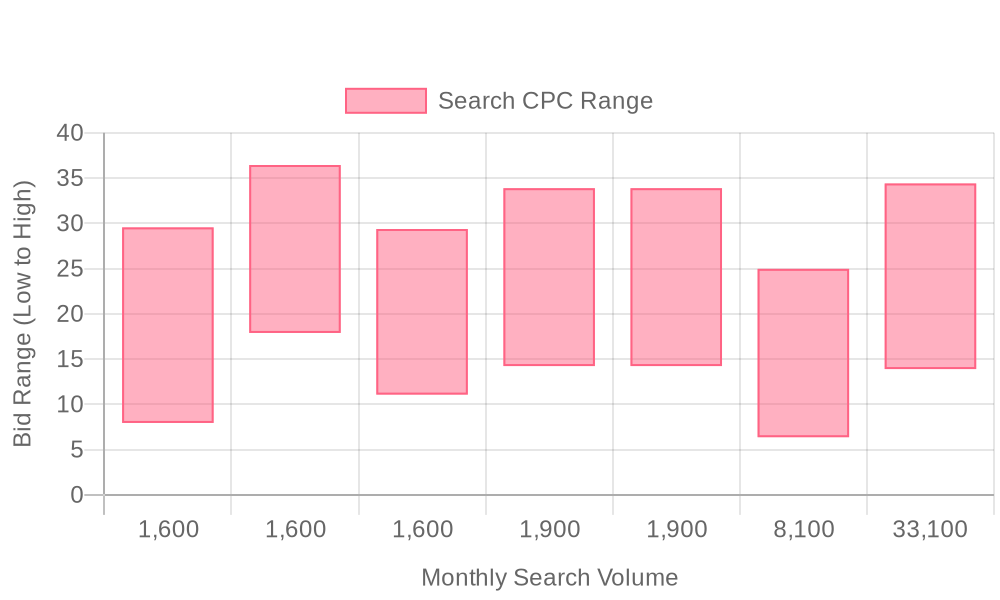
| Industry | Keyword | Monthly Search Volume | Competition Level | Low Bid | High Bid |
| Auto Warranty Plans | best extended warranty for used cars | 1600 | HIGH | 7.95 | 29.55 |
| Auto Warranty Plans | extended warranty for my car | 1600 | HIGH | 17.89 | 36.44 |
| Auto Warranty Plans | car protection plans | 1600 | MEDIUM | 11.08 | 29.37 |
| Auto Warranty Plans | auto warranty plans | 1900 | HIGH | 14.23 | 33.88 |
| Auto Warranty Plans | car warranty plans | 1900 | HIGH | 14.23 | 33.88 |
| Auto Warranty Plans | best auto warranty companies | 8100 | HIGH | 6.37 | 24.97 |
| Auto Warranty Plans | extended car warranty | 33100 | MEDIUM | 13.9 | 34.4 |
A robust keyword strategy is the cornerstone of successful digital marketing for warranties, especially in the competitive landscape of Google Ads for Auto Warranty Plans. Effective programs start by identifying and prioritizing high-value keywords such as "Google Ads for vehicle protection plans," "bidding strategies for auto warranty ads," and "lead generation for auto warranties." For a deeper look at effective ad formats, see this overview of Google Ads types for auto service. Layering in long-tail variations like "best extended car warranty for used cars" or "affordable powertrain warranty quotes" not only improves relevance but also reduces wasted spend on less qualified traffic—a principle core to keyword matching options.
Sophisticated marketers segment keywords by user intent and funnel stage to optimize campaign reach. Early-stage prospects searching "what does an auto warranty cover" or "is car warranty worth it" are placed into educational campaigns that build trust and awareness. Mid-funnel queries such as "compare auto warranty providers" or "extended warranty costs for SUVs" trigger more detailed product messaging, while bottom-funnel terms like "buy vehicle protection plan online" or "warranty plan promotions near me" are routed to direct conversion paths. For a comprehensive content playbook on funnel segmentation, explore Sona’s actionable playbooks to optimize messaging at each stage.
To maximize efficiency, negative keyword filtering is implemented throughout all campaigns. Filtering out searches related to "warranty scam," "free warranty lookup," or irrelevant terms like "warranty robocalls" significantly enhances traffic quality and lowers cost per acquisition. Marketers who leverage advanced visitor identification and real-time intent signals are able to further refine audience segments, shifting budget to high-converting accounts as soon as buyer behavior changes. As leads interact with ads and move through the funnel, dynamic audience updates ensure ongoing precision, making the keyword strategy both adaptive and performance-driven. Ready to put these strategies into action? Get started for free with Sona.
Step-by-Step Campaign Execution Framework
Step 1: Build Targeted Keyword Lists
Precision in keyword targeting is the foundation of every successful Google Ads campaign for auto warranty plans. High-performing teams prioritize long-tail and location-based search phrases that mirror real buyer intent, such as “extended warranty for Toyota Camry in Chicago” or “best vehicle protection plan Los Angeles.” This deliberate specificity reduces budget waste and attracts leads already primed to convert. By consistently refining keyword lists using audience insights and performance data, marketers ensure their campaigns stay aligned with shifting market demand and evolving consumer behavior.
Advanced platforms let marketers move beyond guessing which keywords drive qualified traffic. With visitor identification tools, anonymous clicks become actionable intelligence, revealing not just the searcher's intent but the organization behind the visit, useful for fleet and dealership inquiries as much as individual car owners. For a deeper dive into Google Ads campaign types that perform well in the automotive space, review this overview of three effective Google Ads formats for auto service businesses. Revenue teams can then double down on the queries and geographies where real buyers engage, rather than chasing raw keyword volume.
The upgrade most auto warranty plans advertisers miss is going beyond keyword volume to layer in intent and identity signals. By connecting website-visitor data and CRM records with Sona Marketing Measurement, you can see which search terms bring in the accounts and customers that actually convert, and weight your keyword and bidding strategy toward those instead of the terms with the highest search volume alone.
Step 2: Develop High-Impact Ad Creative
Auto warranty decision cycles are often driven by urgency and the looming threat of unexpected repair costs. Effective ad creative meets prospects at these pain points, using direct language like “Avoid $2,000 Repair Bills” or “Get Coverage Before Your Warranty Expires.” Dynamic ad capabilities let marketers tailor headlines and descriptions to match real-time audience signals, ensuring each impression feels timely and relevant. This approach reduces unqualified clicks and increases the odds that only in-market prospects engage with the brand.
Modern marketers benefit from platforms that update audience segments as leads advance through the funnel. With dynamic audience syncing, creative assets can automatically shift from general awareness messaging to offer-driven retargeting, aligning every touchpoint with the prospect’s current stage. For additional ideas on optimizing ad formats for your funnel, explore this breakdown of Google Ad campaign types for automotive dealerships. This fluidity not only improves engagement rates but also helps revenue teams allocate spend to creative variants proven to resonate with their highest-intent segments.
Step 3: Ensure Landing Page Alignment
Conversion rates for auto warranty advertising hinge on seamless continuity between ad promise and landing page experience. Every click from Google Ads should land visitors on a page that delivers exactly what the ad previewed, be it an instant quote, plan comparison, or coverage calculator. Consistency in messaging, design, and call-to-action removes friction and maintains trust, especially for buyers already wary of warranty offers. This alignment is critical for retargeting campaigns, as it re-engages users who previously expressed interest but stopped short of completing a form.
Data-driven marketers enhance landing page performance by analyzing behavioral signals and intent data from recent website sessions. With advanced identification and tracking, teams can personalize landing elements based on the visitor’s prior actions, showing returning users their previously viewed coverage options or highlighting relevant testimonials. For proven ways auto repair shops leverage Google Local Service Ads to attract customers, see this guide to Google Local Service Ads for auto repair shops. This increases the likelihood of moving prospects from consideration to conversion.
Step 4: Optimize with Predictive Tactics
Optimization in the auto warranty sector is not just about lowering cost-per-lead, it’s about maximizing lifetime value and true ROI. Predictive bidding strategies leverage conversion and engagement data to automatically shift budget toward the highest-converting keywords, device types, and geographic regions. As market conditions fluctuate, these adaptive tactics ensure spend remains focused on segments delivering measurable revenue, not just clicks or form fills.
Revenue teams who connect their Google Ads efforts to a unified CRM or attribution platform achieve a holistic view of campaign effectiveness, from initial search to closed deal. By syncing enriched lead data into both Google Ads and sales platforms, marketers unlock closed-loop reporting that quantifies the real business impact of every ad dollar. For step-by-step guidance on building PPC strategies for insurance and warranty lead generation, check out this playbook for insurance company Google Ads strategy. This enables continuous improvement, as insights from both online and offline conversions feed back into ongoing campaign adjustments, driving ever-higher performance in lead generation for auto warranties.
Sona Marketing Measurement closes the gap between clicks and revenue. It captures ad clicks with first-party tracking, ties that click through UTM capture and ad-platform APIs to the actual record in your CRM, and reports ROAS by keyword and campaign instead of by last-click form fill. Feeding that revenue signal back into Smart Bidding and Performance Max compounds over time: the algorithms optimize toward booked auto warranty plans revenue, not cheap leads.
Tips on Expanding Your Auto Warranty Marketing Presence
Leaders in auto warranty advertising grow by combining deep audience insights with a cohesive content strategy. Modern marketing teams speed up lead generation for auto warranties by pairing educational content, personalized campaigns, and localized messaging to guide prospects through a high-stakes, trust-dependent buying journey.
- Leverage Educational Assets: Content marketing is essential in vehicle warranty marketing, providing clarity on complex topics such as coverage options, claim processes, and cost-benefit analysis. Well-crafted guides, infographics, and video explainers not only support paid ads but also nurture prospects who are early in their research phase. By developing a robust library of resources, marketers can demonstrate authority and earn trust, leading to higher engagement on Google Ads campaigns for warranties and improved conversion rates. This approach allows for seamless retargeting: visitors engaging with educational material can be dynamically added to high-intent retargeting audiences, ensuring follow-up ads are contextually relevant as they progress toward making a purchase decision. For additional strategies, see this overview of three Google Ads formats for auto services.
- Upsell Opportunities: Sophisticated segmentation transforms digital marketing for warranties from generic outreach to highly personalized upsell campaigns. By analyzing which products or coverage tiers resonate with specific audience segments, marketers can create dynamic lists that surface upsell opportunities at the precise moment intent increases. For example, customers who interact with powertrain warranty content may receive timely offers for full-vehicle coverage, while those who abandon checkout can be recaptured with targeted promotions. Using real-time behavioral data, platforms like Sona help marketers sync these enriched segments directly into Google Ads and CRM workflows, updating as users move through the funnel and activating relevant warranty plan promotions to maximize revenue per lead.
- Partnerships: Collaboration with automotive industry associations, dealerships, or service networks enhances credibility and multiplies touchpoints beyond the initial online ad. Co-branded webinars, certifications, or joint educational events can elevate trust and drive higher-quality inbound traffic. These partnerships position your brand as an industry authority and allow you to tap into new prospect pools, amplifying the effectiveness of both organic and paid outreach. When integrated with advanced visitor identification, marketers can attribute inbound leads from partner campaigns, segment them appropriately, and optimize ongoing advertising investments for increased ROI.
- Localization: Hyper-local campaigns are critical in targeting auto warranty customers where demand is strongest, such as regions with high concentrations of used vehicle sales or specific dealership networks. Tailoring ad copy and landing pages to local events, state regulations, or regional service needs ensures relevance and boosts conversion rates. Marketers who use tools to dynamically update local segments in Google Ads for warranties can shift budget quickly to outperforming markets. Real-time intent data and CRM sync enable marketers to identify and target prospects at the right moment, adapting messaging as local market signals shift and ensuring every dollar drives measurable business impact. For a deeper look at how dealerships can structure their ad campaigns, explore this breakdown of Google Ad campaign types for automotive dealerships.
Beyond Google Ads: Winning the AI Answers Auto Warranty Plans Buyers Now Trust
Paid search captures demand at the moment someone types a query. But a fast-growing share of auto warranty plans buyers no longer start at Google at all, they ask ChatGPT, Gemini, or Perplexity before they ever run a search, and Google's own AI Overviews increasingly summarize an answer above the traditional results. If your business isn't referenced in those AI answers, you're invisible at the exact moment buyers build their shortlist.
Sona AI Visibility shows where your business shows up across ChatGPT, Gemini, Perplexity, Google AI Overviews, and 10+ engines, and, much like a keyword report, which prompts actually send you buyers, so you can prioritize the ones that convert. Run the two together and you cover the entire buyer path: get cited where buyers research (AI Visibility), then prove which of that demand turns into booked revenue (Marketing Measurement).
Helpful resources
Conclusion
Google Ads works for auto warranty plans because it meets buyers at the exact moment they're deciding whose coverage to trust, not before, not after. Getting the targeting, keywords, and ad copy right turns that moment into a qualified lead rather than a wasted click.
The providers pulling ahead right now are the ones connecting Google Ads spend to actual policy sales, not just form fills, and increasingly, to whether AI tools mention them at all when a buyer asks for a recommendation. Start for free to see how that connection works for your campaigns.
FAQ
What are the best practices for Google Ads in auto warranty marketing?
The best practices include using precise targeting, aligning ad spend with buyer intent, integrating landing page experiences, leveraging advanced conversion tracking, and utilizing CRM account enrichment to adapt audience lists in real time.
How can I optimize my Google Ads for auto warranty plans?
Optimization involves building targeted keyword lists, developing high-impact ad creative, ensuring landing page alignment, and using predictive tactics to maximize ROI by focusing on high-converting segments.
What budget should I allocate for Google Ads in the auto warranty sector?
Budget allocation should focus on high-margin, comprehensive coverage plans and be directed towards prospects demonstrating genuine purchase intent, ensuring maximum ROI and improved lead quality.
What keywords should I target for auto warranty Google Ads?
Target high-value keywords such as 'extended vehicle warranty' and 'powertrain protection,' along with long-tail variations like 'best extended car warranty for used cars,' to capture qualified traffic and improve relevance.
How do I measure the success of my Google Ads campaigns for auto warranties?
Success can be measured through comprehensive analytics that track the entire customer journey, using advanced conversion tracking to attribute leads and sales back to specific campaigns, and monitoring shifts in buyer behavior for ongoing optimization.







