


Promotional product buyers rarely wait around. A procurement manager who needs branded giveaways for a trade show next month searches, compares, and often orders within days, which makes Google Ads one of the few channels that can intercept that urgency in real time. This guide walks through how advertising specialties distributors and suppliers can use Google Ads to reach decision-makers as they search, prove ROI against closed deals rather than clicks, and connect paid search to the rest of the marketing stack.
How to Generate Advertising Specialties Leads with Google Ads: A Step-by-Step Guide

In competitive B2B markets, missing even a handful of high-value prospects can impact your pipeline and revenue targets. Modern digital marketing solutions now enable precise identification and nurturing of qualified visitors, helping turn anonymous website traffic into actionable leads through targeted Google Ads for Advertising Specialties. If you want to know which companies are visiting your site, Sona's Identity Resolution helps your team turn website traffic into qualified leads.
Adopting a data-driven strategy with Google Ads unlocks scalable lead generation for advertising specialties distributors and suppliers. Integrating first-party data across channels empowers marketers to reach decision-makers at the right time, maximizing conversion rates and campaign ROI.
- Keyword and audience research: Effective campaigns start with research into how promotional product buyers actually search, from urgent, event-driven queries like "same-day custom lanyards" to planning-stage terms like "branded merchandise for holiday gifts." Seasonality matters here: budgets, trade shows, and end-of-year gift programs create predictable demand spikes worth building campaigns around in advance. Leveraging real-time audience data allows for the rapid identification of in-market accounts, shifting budget to those with the highest likelihood to convert.
- Segmentation with firmographic data: As broad campaigns become less effective, advanced segmentation based on firmographics, such as company size, industry, or geographic location, ensures your messaging resonates with each segment. Automated enrichment of visitor profiles provides marketers with granular insights, making it possible to dynamically update audience lists in Google Ads as leads progress through the funnel.
- Landing page and creative alignment: Conversion rates improve when ad copy, visuals, and landing pages are tailored to each audience segment. Dynamic content personalization, powered by unified data, ensures that every visitor receives messaging relevant to their specific role, industry, or stage in the buying cycle. Explore actionable playbooks for demand generation and revenue operations to enhance your creative strategy.
- Continuous performance optimization: Employing analytics and real-time feedback loops, marketers can refine targeting, creative, and bidding strategies to maximize ROI. Advanced attribution capabilities give full visibility into both online and offline conversions, closing the loop on ad spend and actual revenue. For practical guidance, review this video walkthrough.
- Cross-channel synergy: The most effective advertising solutions combine Google Ads with other digital marketing channels, including email, social, and direct sales outreach. Synchronizing enriched audiences and lead data across platforms ensures consistent, high-quality engagement throughout the customer journey.
This comprehensive approach to Google Ads for Advertising Specialties ensures that every potential customer is identified, nurtured, and converted with precision, driving measurable growth for B2B revenue teams. To accelerate your advertising specialties lead generation, get started for free with Sona.
Why Does Google Ads Matter for Advertising Specialties?

In the advertising specialties sector, capturing demand at the moment it peaks is critical for revenue growth. The ability to identify previously anonymous website visitors transforms missed opportunities into actionable sales leads, giving businesses an edge in environments where procurement cycles are short and competition is fierce.
Precision targeting allows brands to engage procurement professionals and marketing managers at precisely the right phase of their decision-making journey. By focusing on real-time audience behavior, companies can allocate budget to high-value accounts actively seeking specialized promotional products, ensuring resources drive maximum impact.
Google Ads is essential for driving high-margin projects, especially when prospects search for unique or custom promotional items. Well-timed campaigns let teams respond immediately during high-demand periods, such as product launches or trade shows, helping secure orders before competitors even engage. For a hands-on demonstration of campaign setup, this video walkthrough offers practical guidance.
Advanced location targeting optimizes market penetration, ensuring visibility in regions or verticals where brand awareness is low but intent is high. This strategic approach means efforts are concentrated where they deliver the greatest ROI, rather than wasted on broad, undifferentiated reach. Discover more strategies on our B2B marketing blog.
Comprehensive analytics and conversion tracking further empower marketers to understand the full customer journey, from initial click through to closed deal. Integrating these insights with CRM and marketing automation systems provides a unified view of ad performance, enabling continuous optimization of every campaign and channel.
Common Types of Google Ads Campaigns for Advertising Specialties

- Search Campaigns: Search campaigns drive highly qualified leads by targeting specific, bottom-funnel queries, including the responsive search ad format, which tests multiple headlines and descriptions to find the best-performing combination. Advertising specialties businesses use these campaigns to reach prospects searching for terms like "bulk custom mugs" or "corporate branded gifts," capturing intent when buyers are ready to act. By integrating real-time visitor identification and intent signals, marketers can shift spend toward high-converting queries and prioritize the audiences that matter most. When enriched CRM and website data flows into these campaigns, remarketing lists and audience exclusions become more precise, ensuring budgets focus on accounts showing true purchase readiness.
- Display Ads: Display campaigns keep your brand top-of-mind across the digital ecosystem, reaching potential buyers as they browse industry-relevant content. For advertising specialties, visual placements on trade association sites, event platforms, and B2B publications reinforce messaging delivered through other channels. With unified data, marketers can segment audiences based on real-time engagement and automatically update creative or placements as leads progress through the funnel. This dynamic approach ensures that impressions are delivered to the right contacts at the right times, maximizing awareness and nurturing consideration until purchase.
- Video Ads: Video ads tell the story behind your promotional products, building emotional resonance and differentiating your offerings in a crowded marketplace. Advertising specialties brands use video to showcase use cases, highlight client success, and explain the value behind custom solutions. For practical guidance on campaign setup, see this Google Ads video walkthrough. When video campaigns are integrated with a single view of audience behavior, marketers can retarget viewers who demonstrate high engagement or share content with their teams, driving deeper interactions and accelerating the path from interest to inquiry.
- Remarketing: Remarketing campaigns re-engage visitors who have shown interest but have not yet converted. In the advertising specialties sector, timely and relevant remarketing can mean the difference between a lost lead and a closed deal, especially given the complex, multi-touch purchase cycles common in B2B. Dynamic audiences update automatically as new data is captured, ensuring that ads reflect current buyer status, recent interactions, or new product lines of interest. By syncing CRM and web activity, every touchpoint is measured, and remarketing efforts are tracked to true ROI, helping teams refine messaging and increase conversion rates with every iteration.
Where to Find Growth Opportunities?

Growth in the advertising specialties sector demands more than broad, untargeted outreach. Results come from precisely engineered campaigns that leverage vertical strategies, enabling teams to focus resources on high-yield segments.
Targeted, lean Google Ads setups outperform generic approaches by isolating specialty keywords that match specific product categories or industry needs. Instead of casting a wide net, marketers can build campaigns around search terms unique to promotional products, such as "custom eco-friendly trade show giveaways" or "bulk branded water bottles for conferences," a guide to overcoming common Google Search Ad challenges can provide additional tactical execution ideas for campaign refinement.
Competitive analysis using auction insights is essential for pinpointing underserved market areas. By monitoring which competitors consistently win impressions for high-value specialty keywords, B2B revenue teams can identify gaps where their brand can gain share. When Sona is integrated, marketers can move beyond anonymous auction data, identifying not only which companies are engaging but how their intent shifts in real time. This empowers teams to reallocate budget toward accounts actively in-market, capturing opportunities competitors miss.
Industry-specific placements also create pathways to growth often overlooked in broader campaigns. Forums, trade association directories, and niche business platforms attract qualified buyers seeking promotional solutions but may not appear in standard SERP results. By strategically placing ads on these channels, marketers ensure their offerings are visible where high-intent decision makers gather, moving beyond the noise of mainstream channels.
Content retargeting further fuels engagement by serving educational assets, such as case studies, ROI calculators, or trend reports, to visitors who previously explored core product pages. As these users revisit or interact with related content, dynamic audience segments update automatically, keeping messaging aligned with each buyer's current stage, while advanced attribution links online research and offline sales outcomes for true performance measurement. Revenue teams gain a holistic view of what drives conversions, enabling ongoing optimization as market dynamics evolve.
How to Apply Audience Segmentation for Advertising Specialties

With increased privacy regulations and a surge in anonymous online traffic, audience segmentation has become critical to ensure promotional product campaigns reach buyers who are most likely to convert. Modern marketers in advertising specialties can achieve higher relevance and engagement by leveraging granular segmentation strategies that reflect actual buying intent and organizational needs.
- Define Segments: Effective segmentation starts by distinguishing between major buyer groups such as corporate clients, retail resellers, and event planners. Each sector brings unique purchasing patterns: corporate buyers often seek bulk orders for employee incentives or trade shows, while retail resellers prioritize branded merchandise that aligns with their consumer base. B2B teams can use behavioral and firmographic data to align messaging and offers with each segment’s priorities, ensuring that creative and budget allocations are tailored for maximum resonance. For more strategies on segment definition and targeting, explore this comprehensive guide to implementing account-based marketing.
- Overlay Intent Signals: Identifying in-market behaviors, such as browsing collections of custom swag or repeatedly visiting product configurators, helps isolate prospects with strong purchase intent. Sona surfaces intent signals from real-time website behavior, such as bulk order inquiries or high-value product views, so marketers can redirect budget toward accounts showing the highest likelihood to convert. Pairing this with visitor identification lets advertisers move beyond anonymous web traffic to pinpoint the actual companies and decision-makers worth targeting.
- Create Ad Groups by Segment: Structuring ad groups around these defined segments and intent signals allows for more personalized copy, relevant offers, and optimized bidding strategies. With enriched audience insights, marketers can automate updates as leads progress from awareness to purchase, ensuring each ad group remains aligned with the current funnel stage. Budgets can be dynamically adjusted, prioritizing top-performing segments without manual intervention. Marketers looking to scale segmentation and personalize outreach can follow this playbook for automating personalization at scale.
- Validate Conversion Paths: Tracking diverse qualified actions, such as quote requests, sample kit downloads, or direct purchase forms, enables comprehensive ROI analysis across your segments. Integrating CRM systems with digital campaigns ensures every lead and conversion is attributed to the right source, capturing both online and offline touchpoints. This unified data approach empowers revenue teams to refine follow-up strategies, nurture high-value accounts, and close attribution gaps, ultimately driving more efficient, scalable demand generation for advertising specialties.
This is also where measurement changes the economics. With Sona Marketing Measurement you can identify the companies and buyers behind your ad clicks, not just anonymous sessions, and segment audiences by who actually becomes a customer. That lets you build bid adjustments and audience signals around the segments that convert and de-prioritize the ones that don't, so you feed Google's algorithms "this click became a paying advertising specialties customer" instead of just "someone filled out a form."
Keyword Strategy & Sample Target Terms
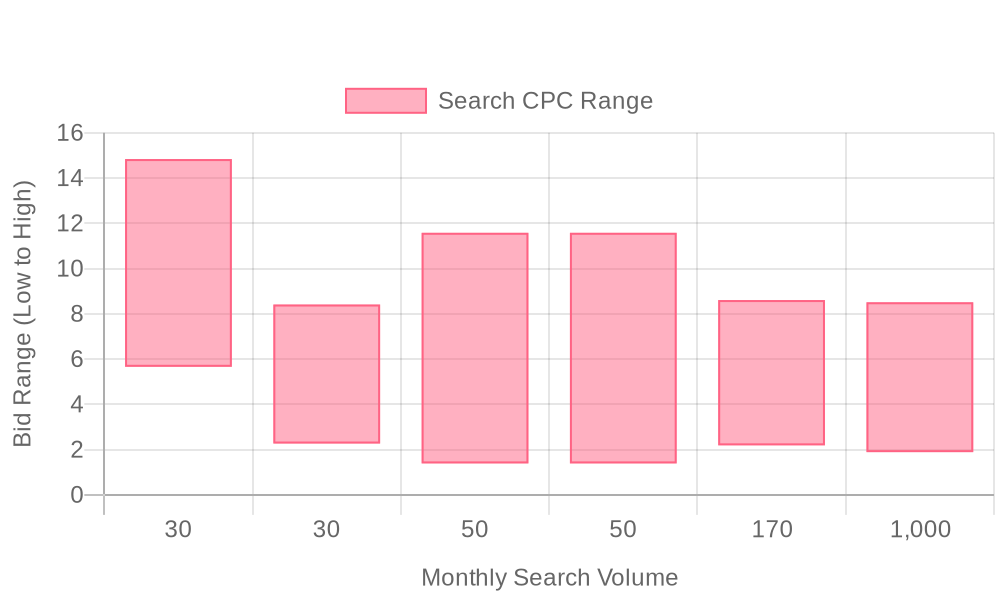
| Industry | Keyword | Monthly Search Volume | Competition Level | Low Bid | High Bid |
| Advertising Specialties | advertising specialties near me | 30 | LOW | 5.66 | 14.84 |
| Advertising Specialties | advertising specialties co | 30 | MEDIUM | 2.27 | 8.41 |
| Advertising Specialties | advertising specialities | 50 | LOW | 1.39 | 11.58 |
| Advertising Specialties | ad specialities | 50 | LOW | 1.39 | 11.58 |
| Advertising Specialties | ad specialties | 170 | LOW | 2.19 | 8.61 |
| Advertising Specialties | advertising specialties | 1000 | LOW | 1.89 | 8.51 |
Effective Google Ads strategies for advertising specialties are built on rigorous keyword research and nuanced audience segmentation. Marketers who master intent-driven keyword selection consistently capture high-value B2B buyers seeking custom promotional products, branded merchandise, and bulk order advertising specialties.
Strategic keyword planning starts by mapping the full purchase journey. High-intent terms like "bulk promotional products," "custom logo giveaways," and "order branded mugs online" signal buyers ready to convert. Pairing these with broader discovery queries such as "creative swag ideas" or "best tradeshow gifts" reaches both decision-makers with urgent needs and early-stage researchers evaluating options, a mix that helps ad budgets prioritize segments closest to purchase while still supporting upper-funnel awareness.
Analyzing top-performing and emerging keywords uncovers shifts in demand and industry trends. For example, rising interest in "eco-friendly promotional items" or "fast turnaround branded apparel" offers opportunities to pivot messaging and product focus. Ongoing keyword refinement, informed by real-time search data, helps teams adapt spend and content to what buyers are searching for right now.
Audience segmentation further amplifies keyword performance. B2B marketers can layer company size, industry, and past purchase behavior onto search campaigns, enabling tailored messaging for enterprise procurement teams versus small business owners. Solutions that unify Identity Resolution with Intent Signals let marketers update audience lists and sync enriched segments directly into Google Ads. This turns keyword strategy from guesswork into a measurable, results-driven engine for advertising specialties brands.
Step-by-Step Campaign Execution Framework
Step 1: Build Targeted Keyword Lists
Success in Google Ads for Advertising Specialties begins with a refined keyword strategy. Organize your keyword list by specific product types such as branded drinkware, apparel, office accessories, and regional variations that reflect buyer location. Buyers expect relevant, tailored results, and this approach ensures your ads match the precise needs of each segment.
Prioritize long-tail phrases that capture strong purchase intent, like “bulk custom logo notebooks Los Angeles” or “eco-friendly trade show giveaways Toronto.” Add negative keywords to screen out unrelated queries, such as “free promotional items” or “DIY swag,” reducing wasted spend and increasing relevance. With visitor identification and precise audience segmentation, marketers can move from anonymous impressions to pinpointing high-potential companies and individuals within each keyword group, making every click an opportunity for qualified engagement.
The upgrade most advertising specialties advertisers miss is going beyond raw keyword volume to layer in intent and identity signals. By connecting website-visitor data and CRM records with Sona Marketing Measurement, you can see which specific search terms bring in the accounts and customers that actually convert, and weight your keyword and bidding strategy toward those rather than the terms with the highest search volume alone.
Step 2: Craft Persuasive Ad Copy
Effective ad copy for advertising specialties should clearly articulate value and build trust. Use headlines that promise outcomes buyers care about, such as “Boost Brand Recall with Custom Gifts” or “Fast Turnaround on Branded Apparel.” Support these claims with trust signals, client testimonials, case studies, industry certifications, or satisfaction guarantees, to demonstrate proven results and reliability in B2B promotional campaigns. For inspiration, review this collection of Google Ads examples and strategies.
Enhance your ads with well-structured extensions. Sitelink extensions can direct users to featured products or case studies, while callout and structured snippet extensions provide quick access to special offers, product categories, or shipping policies. These enhancements create a richer, more informative ad experience, increasing both click-through rates and user confidence. Dynamic audience updates further tailor messaging as leads move through the funnel, ensuring your ads always align with buyer context and readiness.
Step 3: Optimize Landing Pages
Landing pages must reflect the intent and promises set by your ad groups. Align page content, visual elements, and calls to action with the specific product and offer highlighted in the ad to create a seamless journey. For example, an ad for “custom logo water bottles” should land users on a dedicated page that features those products, showcases client logos, and reinforces delivery guarantees. For optimization tips, reference the official Google Shopping campaign resource.
Implement strong calls to action and additional trust builders, such as real-time inventory, client endorsements, or industry association badges, to reduce friction and improve conversion rates. With robust data integration, marketers can attribute both online and offline conversions to specific campaigns and keywords, gaining a complete view of ROI and informing future creative iterations.
Step 4: Use Data-Driven Optimization
High-performing campaigns in the advertising specialties industry depend on real-time data for continuous optimization. Monitor campaign performance closely to shift budget toward high-converting keywords or audiences, particularly during peak seasons or event-driven demand spikes, such as conference season or year-end gifting. Smart bidding strategies adapt to changing market conditions, using conversion data signals to allocate spend where it matters most.
Import offline sales data and leverage advanced attribution to measure the true impact of your digital efforts, not just clicks, but closed deals and order value. Sync enriched leads and audience segments directly from your CRM into your ad platform with Sona Destinations, ensuring your targeting always reflects the most current and valuable prospects. Test new ad variants, landing page layouts, and audience combinations regularly, using insights from unified go-to-market data to refine strategy and maintain a profitable edge in a fast-evolving space.
Sona Marketing Measurement closes the gap between clicks and revenue. It captures ad clicks with first-party tracking, ties that activity through UTM capture and ad-platform APIs to the matching company record in your CRM, and reports ROAS by keyword and campaign instead of by last-click form fill. Feeding that revenue signal back into Smart Bidding and Performance Max compounds over time: the algorithms optimize toward booked advertising specialties revenue, not cheap leads.
Tips on Expanding Your Advertising Specialties Presence
One-size-fits-all marketing seldom delivers meaningful results in advertising specialties. Precision comes from leveraging CRM insights to segment audiences and deploy messaging that speaks directly to each group’s unique needs and behaviors, especially when supported by real-time audience intelligence for hyper-personalized ad targeting.
Personalized outreach increases campaign lift and relevance, especially as you use cross-channel strategies. By analyzing engagement data, marketers can identify which prospects previously interacted with display or search ads but failed to convert, then revive their interest through retargeting that spotlights valuable content or special offers.
Offering complementary services tailored to segmented audiences ensures your campaigns address real business needs. CRM data, enriched and constantly refreshed, can reveal patterns such as industry-specific requirements or purchase cycles, allowing you to align your outreach and messaging for maximum impact. For step-by-step action, explore our playbook on automating account research.
Localization enhances engagement by ensuring campaigns resonate within specific regions and communities. Applying location data to your ad groups and creative assets boosts share-of-voice in high-value territories, which is essential for distributors and agencies aiming to dominate their local markets.
Insights from your Google Ads performance should inspire your broader content marketing efforts. High-performing keyword themes and audience signals can guide blog topics, email campaigns, or webinar subjects, allowing you to create a unified narrative that keeps your brand top-of-mind throughout the buying journey. For more strategies, visit our main blog.
Integrating these approaches with a data-driven mindset creates a virtuous cycle of learning and improvement. When your CRM, ad platform, and content engine work in concert, you unlock deeper audience understanding, optimize lead generation, and continually refine your digital marketing strategies for advertising specialties.
Beyond Google Ads: Winning the AI Answers Advertising Specialties Buyers Now Trust
Paid search captures demand at the moment someone types a query. But a fast-growing share of advertising specialties buyers no longer start at Google at all, they ask ChatGPT, Gemini, or Perplexity before they ever run a search, and Google's own AI Overviews increasingly summarize an answer above the traditional results. If your business isn't referenced in those AI answers, you're invisible at the exact moment buyers build their shortlist.
Sona AI Visibility shows where your business shows up across ChatGPT, Gemini, Perplexity, Google AI Overviews, and 10+ engines, and, much like a keyword report, which prompts actually send you buyers, so you can prioritize the ones that convert. Run the two together and you cover the entire buyer path: get cited where buyers research (AI Visibility), then prove which of that demand turns into booked revenue (Marketing Measurement).
Helpful resources
Conclusion
Google Ads works for advertising specialties when campaigns are built around the specifics of the trade: seasonal buying cycles, urgent event deadlines, and buyers who search with precise product and quantity terms already in mind. Targeted campaigns and clear attribution let distributors and suppliers reach those buyers without wasting spend on browsers who were never going to order.
The advertising specialties sellers who pull ahead won't just run more campaigns, they'll connect ad spend to which accounts actually placed orders, and let that signal, not raw click volume, steer where the next dollar goes. As buyer research increasingly starts inside AI tools rather than a search box, that same discipline, knowing what converts and showing up where buyers actually look, will decide who wins the account before a competitor even gets a click.
To put these strategies to work, start for free with Sona.
FAQ
What are the best practices for using Google Ads in advertising specialties?
Best practices include conducting thorough keyword and audience research, segmenting audiences with firmographic data, aligning ad copy and landing pages, continuously optimizing performance with analytics, and integrating Google Ads with other marketing channels for cross-channel synergy.
How can I optimize my Google Ads for specific advertising specialties?
You can optimize Google Ads by using precise keyword targeting, segmenting audiences based on their behaviors and firmographics, personalizing ad content, and leveraging real-time data for continuous performance refinement.
What budget should I allocate for Google Ads in advertising specialties?
Allocate your budget towards high-value accounts and high-converting keywords, while ensuring resources are not wasted on broad campaigns. Use data-driven insights to adjust budget allocations based on performance.
What metrics should I track for Google Ads campaigns in advertising specialties?
Track conversion rates, ROI, audience engagement, and the effectiveness of cross-channel integrations. Use advanced attribution capabilities to link online ads to offline sales for a complete view of campaign success.
How do I identify my target audience for Google Ads in advertising specialties?
Identify your target audience by researching promotional product buyers' behaviors, using firmographic segmentation, and leveraging real-time audience data to target in-market accounts and decision-makers.







