AI visibility platforms for agencies track where every client brand is cited or recommended in responses from ChatGPT, Gemini, Perplexity, Google AI Overviews, and other answer engines, then report across multiple client accounts under the agency’s branding. Evaluate them by cost per client brand, available prompt runs, engine coverage and white-label capabilities, rather than headline prompt totals. Sona AI Visibility ties prompts and citations to pipeline and revenue, not merely mention counts. Tracking identifies correlation, not causation, so report patterns across repeated prompts.
What do AI visibility tracking tools do for an agency, and why do agencies need them now?
AI visibility tracking tools show where a client brand appears, receives citations, and changes across AI-generated answers. They solve cross-engine brand, citation, and client-reporting visibility problems for agencies managing multiple accounts across ChatGPT, Perplexity, Gemini, Claude, Google AI Overviews, and other answer engines.
Agencies need AI visibility tracking tools because clients ask where their brand appears in AI-generated answers, which sources receive citations, and whether that exposure supports commercial outcomes. A client portfolio creates a more complex operating model than a single in-house program. Each account needs separate prompts, competitors, markets, reporting permissions, and renewal evidence.
AI visibility platforms track brand appearances across ChatGPT, Perplexity, Gemini, Claude, Google AI Overviews, and other answer engines. They can record mentions, citation sources, answer position, sentiment, and prompt-level changes. For an SEO agency, this creates a repeatable reporting layer alongside conventional rank tracking rather than a collection of screenshots.
The useful output is a daily record. Teams running the same prompt list each day can identify movements that a weekly snapshot would obscure. The same prompt can shift after a retrieval-index update, model change, or competitor publication. Treat movement sustained across repeated observations as a trend, and assess isolated changes cautiously.
Sona AI Visibility connects citations and AI-referred visits to pipeline and revenue on one account timeline, while tracking AI crawler activity reaching client pages. That evidence helps an agency explain whether AI search work created commercial attention rather than simply increasing mention counts.
How should an agency compare AI visibility tracking tools before buying?
An agency should compare AI visibility platforms by client-workspace design, daily prompt capacity, engine coverage, reporting controls, and the evidence available for client reviews. Start with the agency operating model, not the dashboard. A tool that works for one brand can become expensive or administratively heavy across ten client accounts.
- Define a prompt inventory for each client, separating informational, comparison, category, competitor, and purchase-intent prompts.
- Confirm whether tracking is individual-prompt level or topic level, because agencies need to explain the query behind each reported movement.
- Check client workspaces, user permissions, exports, report branding, API access, and ownership of historical data.
- Match engine coverage to the client’s buyer behavior, country footprint, and contract requirements.
- Test whether the platform produces actions for content, technical SEO, digital PR, or source acquisition.
A brand-level visibility score is a dated snapshot, not a work item. Agencies need the prompts and cited sources behind that score, then must assign a page, source gap, or content brief to an owner. Sona AI Visibility provides this prompt-level view through AI Search Insights, which shows buyer prompts and the sources AI engines cite.
Pricing needs normalization. Compare daily prompt runs rather than headline plan prices, and compare the number of client brands included before calculating a per-client cost. A quarterly positioning review and competitive benchmark report can remain periodic deliverables, but the prompt list should run daily.
Which AI visibility tracking tools are built for agencies managing many clients, and what do they cost?
Agency-ready tools separate client workspaces, support recurring prompt tracking, and provide reports an account manager can use in a client meeting. The table compares published entry offers and agency availability as of October 2026. Prices, engine coverage, prompt allowances, and refresh information reflect October 2026 pricing listings.
| Tool | Starting price | Agency Plans? (Yes/No) | # of Answer Engines Tracked | Answer Engines | # of Daily Tracked Prompts (entry plan) | Cost per Daily Tracked Prompt | Differentiation |
|---|---|---|---|---|---|---|---|
| Sona AI Visibility | From $75/month billed annually, agencies from $199/month | Yes | Up to 11 (3 on Starter) | Not published | 5,000 credits/month, about 166 daily tracked prompts on one model or 56 across three | $0.45 per daily tracked prompt | Connects AI citations and prompts to pipeline and revenue on one account timeline; agency plans include one workspace per client and white-label reports. |
| Peec AI | From $95/month | Yes | Up to 13 (3 of 6 on Starter, plus add-ons) | Not published | 50 prompts daily | $0.63 per daily tracked prompt | Prompt tracking for client projects, with agency plans from $245/month. |
| Otterly.ai | From $29/month | Yes | Up to 7 (4 on Lite, 3 as paid add-ons) | ChatGPT, Google AI Overviews, Perplexity, Microsoft Copilot | 15 prompts daily | $0.48 per daily tracked prompt | AI search monitoring with agency-oriented Standard and Premium offers. |
| PromptWatch | From $95/month | Yes | Not published | Not published | 50 prompts daily | $0.48 per daily tracked prompt | Prompt and response monitoring, with agency plans from $199/month. |
| Goodie | From $295/month | Yes | Up to 14 (5 on Core) | Not published | 110 prompts daily | $0.67 per daily tracked prompt | AI visibility tracking with agency plans from $275/month. |
| Scrunch AI | From $250/month | Yes | Up to 9 (4 on Core) | ChatGPT, Perplexity, Google AI Overviews, Microsoft Copilot | 125 prompts, refresh frequency not published | No refresh cadence published | Prompt and citation tracking alongside an AI-friendly website version generator. |
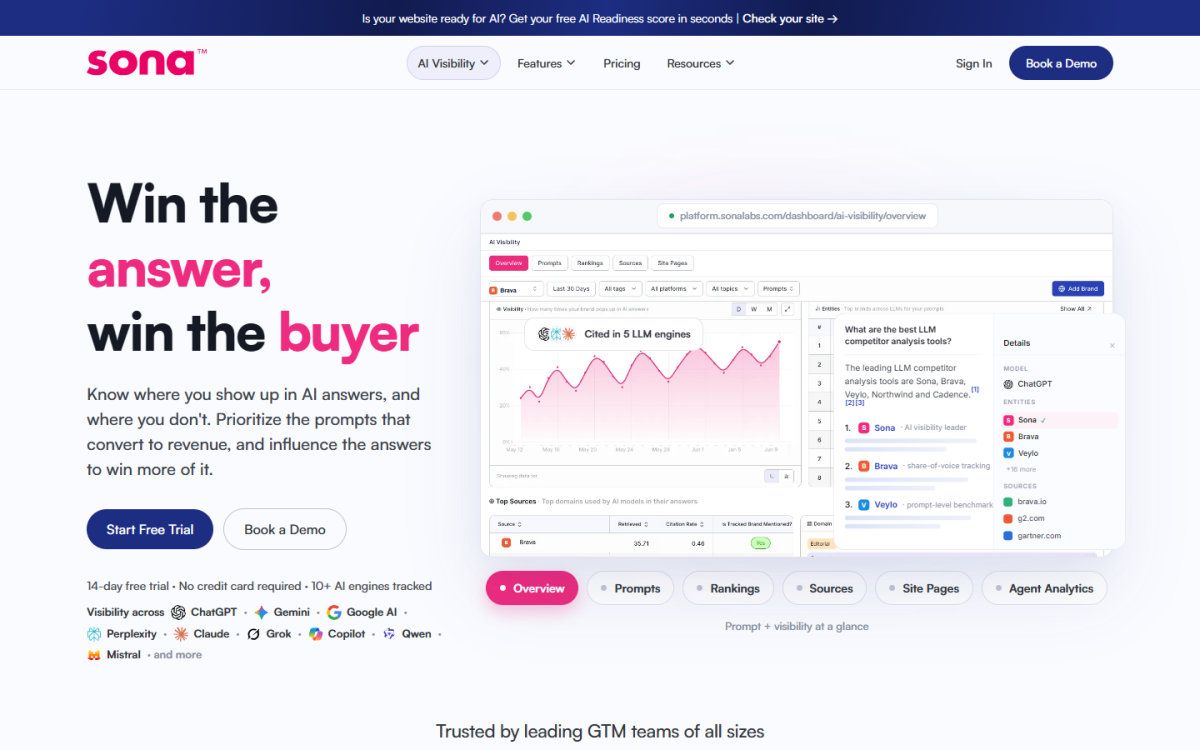
1. Sona AI Visibility, best for agencies that need commercial attribution. From $75/month billed annually for brands and from $199/month billed annually for agencies, Sona AI Visibility tracks 11 answer engines and includes about 56 daily tracked prompts across three engines on Starter. It connects AI citations and prompts to pipeline and revenue on one account timeline, while agency plans provide one workspace per client and white-label reports. Starter includes one project, three countries, and six months of history, as of October 2026.
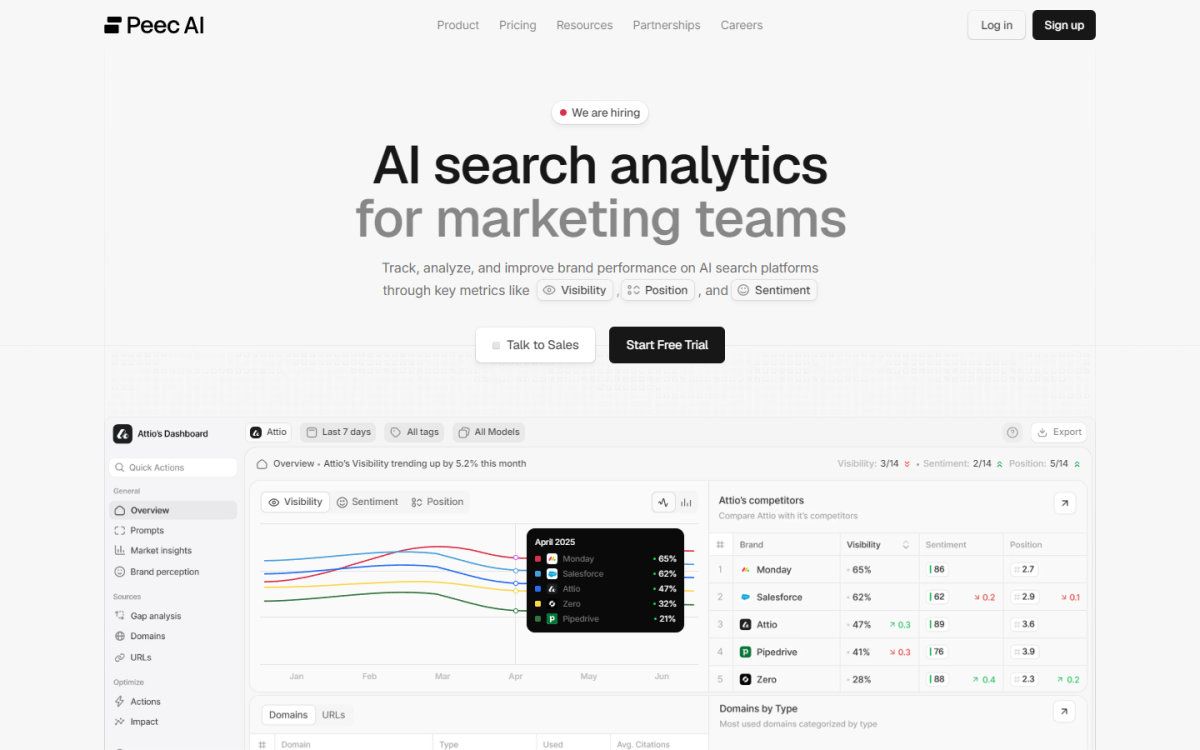
2. Peec AI, best for agencies managing prompt-led client projects. Peec AI starts at $95/month, with agency plans from $245/month. Starter tracks 50 prompts daily across three active engines. Its agency offer is structured around client projects. The entry plan activates three engines, while the self-serve platform lists six engines overall, as of October 2026.
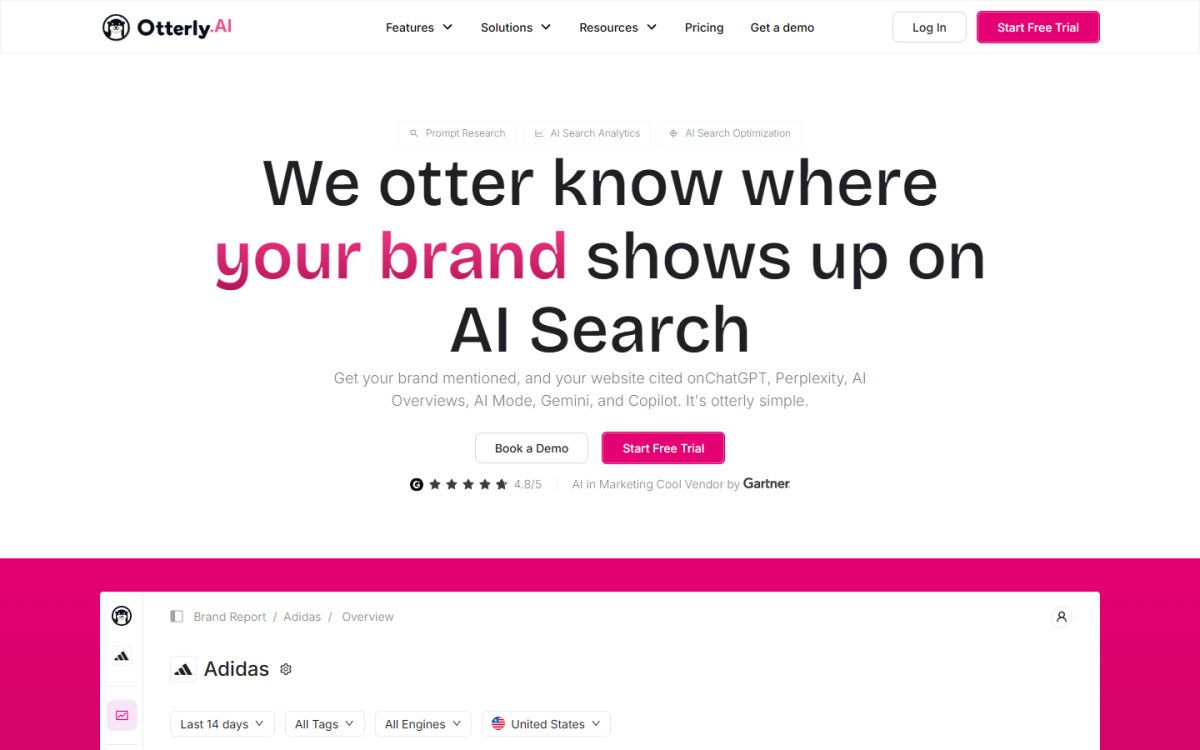
3. Otterly.ai, best for agencies starting with a lower entry price. Otterly.ai starts at $29/month, with agency-oriented plans from $189/month. Lite supports 15 prompts daily across ChatGPT, Google AI Overviews, Perplexity, and Microsoft Copilot. The Standard and Premium offers support larger prompt volumes, while engine counts for those tiers are not published, as of October 2026.
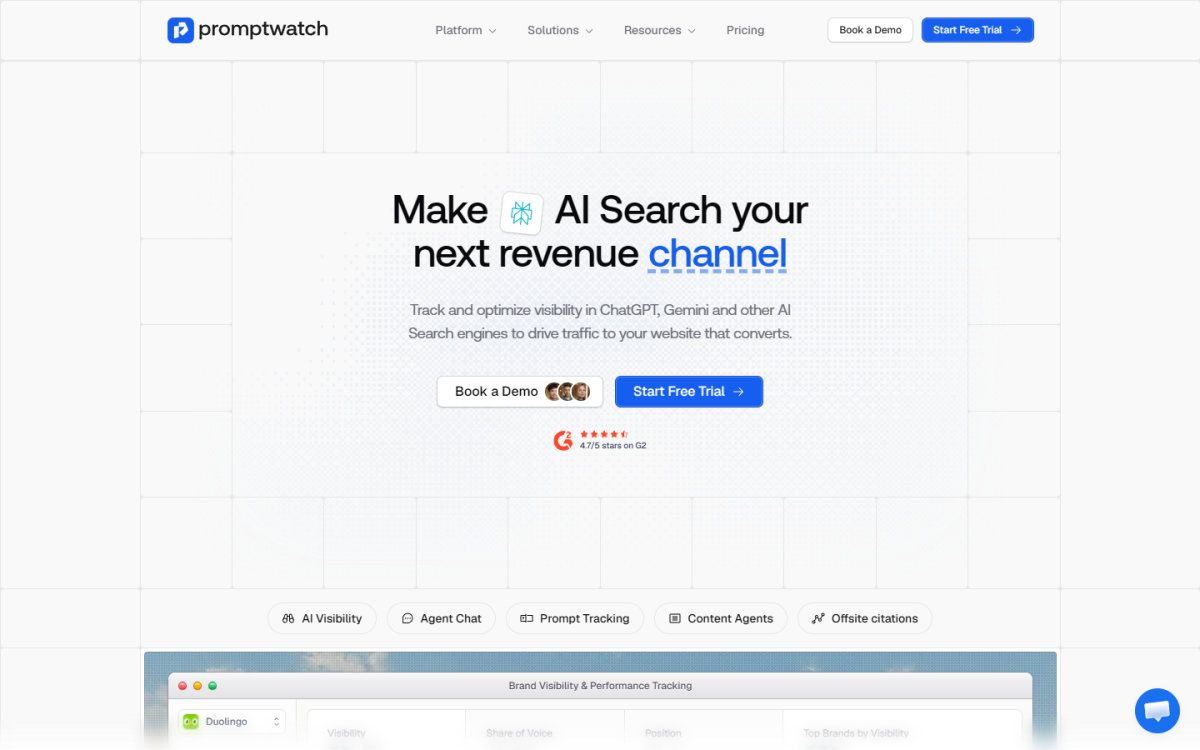
4. PromptWatch, best for agencies focused on prompt and response monitoring. PromptWatch starts at $95/month, with agency plans from $199/month. Essential includes 50 prompts and 6,000 responses monthly, while Professional and Business increase both allowances. All supported models are available on every plan, though the published entry-plan engine count and engine names are not available, as of October 2026.
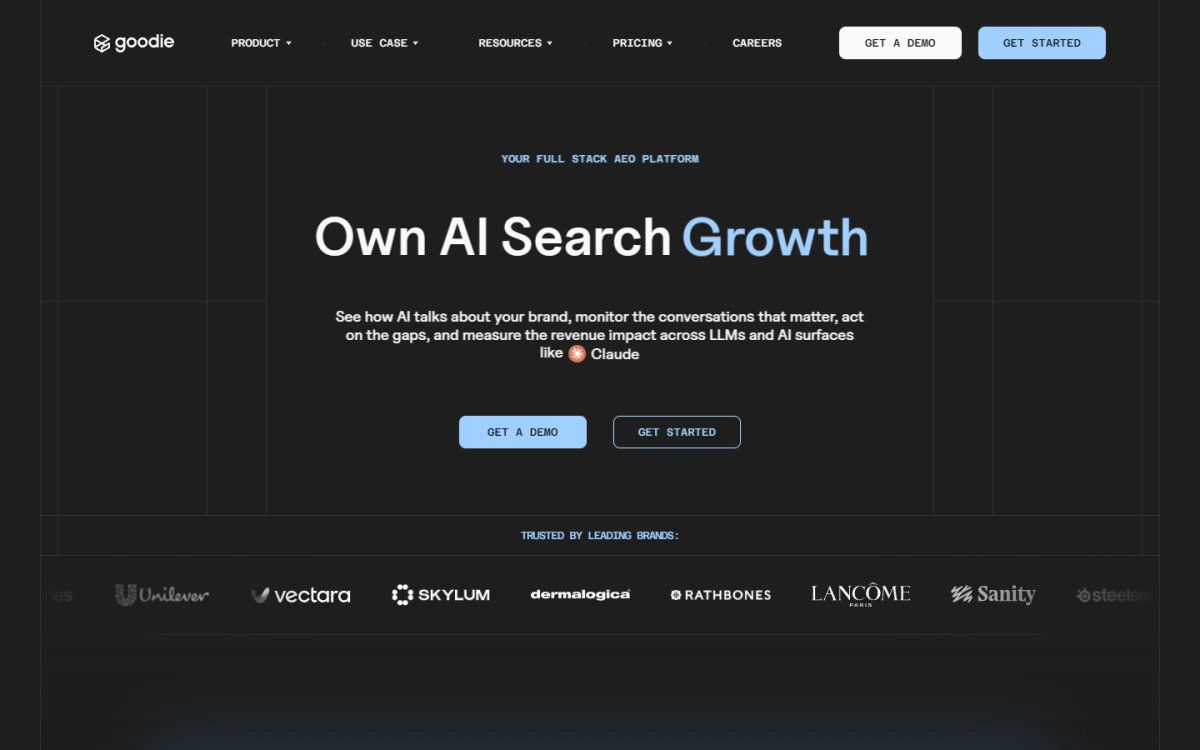
5. Goodie, best for agencies needing a higher-volume Core plan. Goodie starts at $295/month, with agency plans from $275/month. Core tracks 110 prompts daily across five models. Goodie positions its agency offer around AI visibility tracking, while its Core price is materially higher than several other entry plans in this shortlist, as of October 2026.
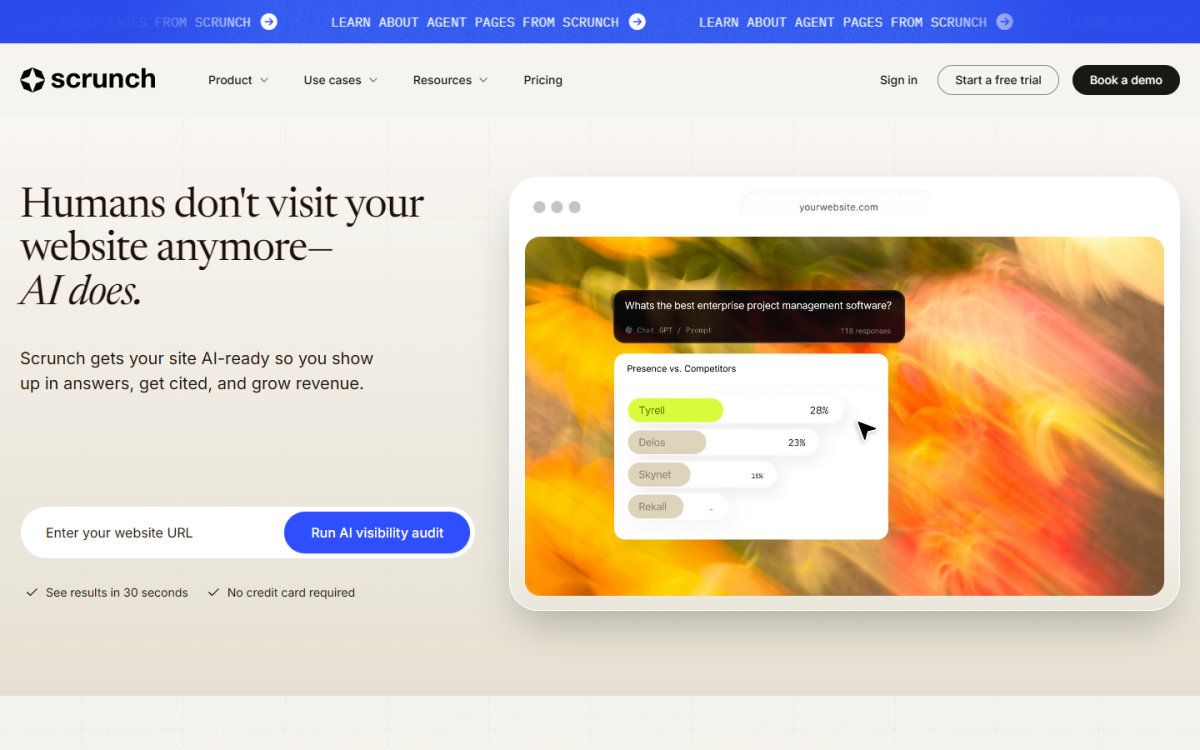
6. Scrunch AI, best for agencies that also need an AI-friendly website version generator. Scrunch AI starts at $250/month, with Agency Core from $500/month. Core covers four answer engines and 125 prompts, alongside prompt and citation tracking and its AI-friendly website version generator. Its published Core plan does not state a prompt refresh frequency, as of October 2026.
For agencies, the decision is less about the lowest entry price than the unit of management. A client workspace, pitch workspace, or shared project affects onboarding, billing, and reporting. Confirm whether a quoted agency plan includes client brands, user seats, exports, and historical data before treating offers as comparable.
How do agency prices compare once you normalize for client brands and prompt runs?
Agency pricing becomes comparable only after dividing each package into client brands, daily prompt runs, answer engines, and reporting access. A low monthly price can cover a small prompt list, while a higher plan can include multiple client workspaces or a broader reporting workflow. Published agency-focused prices range from roughly $49 to $295 per month per client brand among vendors that publish prices, as of September 26, 2026.
Use a four-part procurement worksheet:
- Client-brand capacity: count active client workspaces, not prospects or internal tests.
- Prompt resolution: count daily tracked prompts after every required engine is included.
- Delivery capacity: include account-manager seats, report exports, client access, and white-label controls.
- Commercial evidence: identify whether reporting remains at mention counts or connects activity to pipeline and revenue.
Sona AI Visibility publishes agency plans from $199 per month billed annually, with one workspace per client and white-label reports, as of October 2026 pricing listings. Its Starter brand plan is from $75 per month billed annually and includes about 56 prompts tracked daily across three engines, with unlimited seats and API and MCP access on every plan.
Three of eight reviewed agency-oriented vendors publish no agency price, as of September 26, 2026. Treat custom pricing as a valid commercial model, but require a written schedule covering client additions, overage rules, engine add-ons, implementation, and renewal pricing.
What does a white-label AI visibility platform have to include for agency use?
A white-label AI visibility platform for agencies needs more than a logo on a PDF. The minimum standard is separate client workspaces, branded reports, role-based permissions, export controls, and clear data ownership. Without those controls, an agency can report findings but cannot deliver a governed client service.
Assess white-label depth with a practical checklist:
- Can each client access only its own prompts, competitors, and reports?
- Can the agency export raw data for its own dashboard or data warehouse?
- Can reports carry agency branding without exposing the underlying platform?
- Can client teams receive permissions without gaining access to other accounts?
- Does the agreement state who retains prompt history after the contract ends?
White-label reporting differs from full white-label delivery. A branded report helps an agency present results, while full delivery also requires client permissions, exports, reusable reporting templates, and a reliable process for onboarding and offboarding.
Sona AI Visibility agency plans provide one workspace per client and white-label reports, with unlimited seats and API and MCP access on every plan. Those controls support an agency model where strategists, analysts, and clients need different access levels.
Which answer engines should an agency track, and how are AI visibility scores calculated?
Agencies should track ChatGPT, Gemini, Perplexity, and Google AI Overviews at minimum, then add Claude where client buyers use it. Engine coverage should follow audience behavior and client geography, not a vendor’s largest published engine count. Some platforms place additional engines in premium or enterprise tiers.
An AI visibility score summarizes appearance across a defined prompt set. The calculation can incorporate mentions, answer position, citation presence, sentiment, or share of voice. The agency must document the prompt list, engines, locations, language, date range, and competitor set behind every score.
Prompt wording affects results. A category query, comparison query, and implementation query can return different cited brands even when they concern the same product. Agencies should build prompt clusters around buyer intent, then retain the exact wording so clients can audit changes.
Treat the output as a comparable series rather than a fixed ranking. Teams can report a trend after repeated daily observations, then use cited-source records to determine whether the next task belongs to content strategy, technical SEO, entity optimization, structured data, or digital PR.
Should an agency choose a standalone GEO platform or an SEO suite add-on for AEO recommendations?
An agency should choose a standalone GEO platform when AI answer tracking is a defined client service, and an SEO suite add-on when the work extends an existing search program. The right choice depends on reporting depth, client workflow, and whether the agency needs prompt-level evidence rather than a broad visibility summary.
A standalone platform suits agencies selling AI search monitoring, citation analysis, prompt research, and recurring AI visibility reporting. An SEO suite add-on suits teams that need conventional keyword, technical SEO, and AI-search work in one procurement relationship. Neither model removes the need for a documented prompt strategy.
Sona AI Visibility measures citations, AI-referred visits, pipeline, and revenue, while its page-level analysis identifies prompts a page should appear in but does not. That measurement model helps agencies connect AEO and GEO recommendations to client commercial reporting.
Run a pilot using the same client prompt list across shortlisted tools for a defined period. Compare answer capture, source records, country controls, exports, client permissions, and the actions each result supports. Do not evaluate platforms solely on a single visibility score.
What can an agency honestly promise clients about AI visibility results?
An agency can promise a disciplined measurement process, documented recommendations, and transparent reporting. An agency cannot honestly promise a fixed placement in an AI answer or claim that its work alone caused every visibility increase. AI-generated answers change for reasons outside the agency’s control.
Changes can follow model updates, retrieval-index shifts, prompt wording, location, news coverage, brand demand, third-party citations, or changes to the answer product. Agencies should label observed movements as correlation unless they have a controlled method that isolates a specific intervention.
A credible client statement has three parts: the prompt set tracked daily, the work completed during the reporting period, and the observed result across repeated checks. Keep technical re-audits monthly or quarterly, but preserve daily prompt history so reports distinguish sustained movement from short-lived answer variation.
Clients should receive recommendation language tied to evidence. A cited-source pattern can justify a content brief, while a page-level technical finding can justify remediation. The data supports prioritization. It does not guarantee a ranking improvement.
How do you compare agencies that specialize in AI search optimization?
The best agencies specializing in AI search optimization combine traditional search expertise with content strategy, technical SEO, entity optimization, structured data, digital PR, prompt research, and AI visibility measurement. Evaluate an agency by its operating method and evidence standards, not a generic claim to improve AI answers.
Ask each agency to show how it moves from discovery to execution. A credible scope identifies priority prompts, the buyer stage behind each prompt, relevant client pages, cited third-party sources, technical constraints, content work, and reporting cadence. A proposal offering only a visibility score leaves too much work undefined.
- Request a sample prompt taxonomy and explain how the agency prioritizes commercial prompts.
- Ask how the agency separates technical remediation, content strategy, entity work, and digital PR.
- Confirm the reporting model, including client access, source documentation, and change history.
- Require clear language about attribution, correlation, and factors outside agency control.
- Review pricing against defined deliverables, client markets, prompt volume, and reporting obligations.
Sona done-for-you services place a Sona team on top of an AI Visibility Growth plan or above for content, AI search optimization, technical fixes, strategy, and reporting. Service plans start at $5,500 monthly as of October 2026. Agencies comparing service partners should separate software costs from ongoing execution costs.
What are the frequently asked questions about AI visibility tracking for agencies?
What is the best AI visibility tracking tool for an agency?
The best tool depends on client count, budget, usable prompt runs, engine coverage, white-label depth, and actionability. Agencies that must prove results beyond mention counts should assess whether the platform links prompts and citations to commercial outcomes. Sona AI Visibility ties AI citations and AI-referred visits to pipeline and revenue, which matters when clients ask for evidence beyond visibility.
How much do AI visibility tracking tools cost for agencies?
Among vendors that publish prices, agency-focused tools run roughly $49 to $295 per month per client brand, based on September 26, 2026 listings. Three of eight reviewed vendors publish no agency price. Enterprise pricing is custom and changes with engine coverage, regions, client-workspace requirements, and prompt volume.
Is there a white-label AI visibility platform for agencies?
Yes. White-label AI visibility platforms let agencies offer tracking under their own branding. Branded reports are not the same as full white-label delivery, so agencies should check API access, client permissions, export controls, workspace isolation, and ownership of historical data before signing.
Why do AI visibility scores change from one check to the next?
AI answers vary by model, location, personalization, prompt wording, retrieval source, and date. Agencies should report trends across repeated prompts rather than treating one response as a fixed ranking. Daily tracking provides the resolution needed to separate a lasting change from a temporary response variation.
Can an agency prove its work caused a rise in AI visibility?
Not from tracking alone. A rise can follow brand demand, news coverage, model updates, third-party citations, or changes in the search product. Agencies should present tracking as correlation, document the work completed, and disclose those limits to clients.
Which AI engines should an agency track for clients?
Track ChatGPT, Gemini, Perplexity, and Google AI Overviews at minimum, then add Claude where client buyers use it. Coverage differs by platform and plan, and some tools reserve additional engines for enterprise tiers. The final engine set should reflect the client’s audience, geography, and commercial priorities.
Summarize this article with AI: ChatGPT · Claude · Perplexity · Google AI Mode
Last updated: October 2026