The strongest Peec AI alternatives in 2026 split by what a team actually needs: wider engine coverage, deeper prompt history, or a path from citation tracking to pipeline. Sona AI Visibility connects the prompts and citations behind AI answers to pipeline and revenue, with AI crawler tracking built in, while most of the category, including Peec AI itself, stops at mention and ranking counts. Monthly prices across the field range from roughly $20 to $495 depending on prompt volume, model coverage, and project limits, so the right pick depends on which of those three a team is actually short on.
Why do teams start looking for a Peec AI alternative?
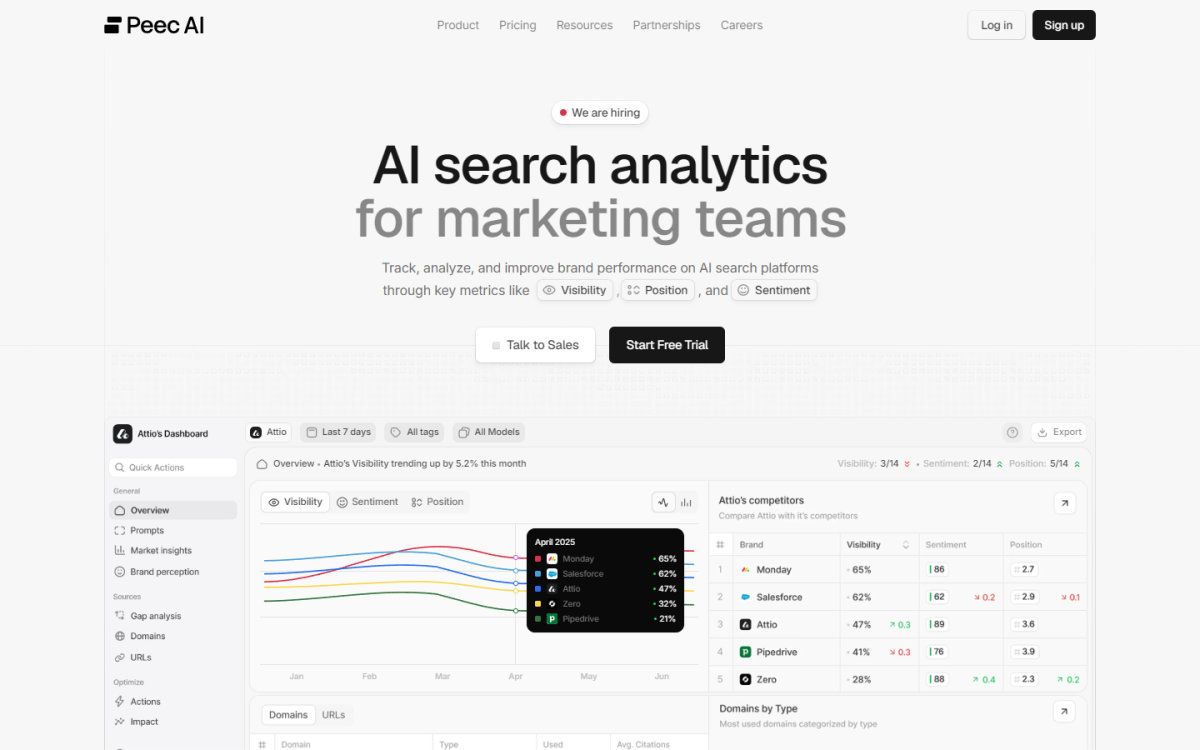
Teams start evaluating Peec AI alternatives when the tool's prompt and model limits start to cost more than the subscription itself. Peec AI's entry Starter plan tracks a limited number of prompts across a small set of selected models, and growing past that tier means paying more to track more questions and more coverage.
The trigger is rarely a single failure. A marketing team adds a product line, wants to track prompts in a second language, or needs a fourth AI engine that sits behind an add-on fee. Peec AI prices additional engines separately by tier, so expanding coverage compounds the monthly bill.
Peec AI alternatives get evaluated for three reasons: broader engine coverage at the entry tier, prompt volume that scales without a per-engine surcharge, and a path from monitoring into action rather than a dashboard alone.
What specifically pushes teams to leave Peec AI?
Three things push teams off Peec AI: engine coverage that is thinner than it looks, prices that are hard to compare against competitors selling in different units, and a model-selection cap that restricts broader coverage to Enterprise.
Peec AI's self-serve plans let a team pick from a limited set of models, with full model coverage reserved for Enterprise tiers. That cap means two Peec AI customers on the same plan tier can be tracking visibility across different sets of engines, which makes any comparison across accounts, let alone across vendors, unreliable without knowing the model selection each one made.
Price comparisons compound the problem. Peec AI publishes separate dollar and euro plan ladders, with different terms for monthly versus annual billing. Converting between currencies and between monthly and annual billing before comparing against a rival's own price ladder is work most buyers skip, which is how a true cost difference gets missed. The specific figures for each tier and currency are set out in the comparison table in the following section.
The deeper issue is that AI visibility scores are not standardized across the category. One vendor's "visibility score" draws from a different model mix, a different prompt count, and a different refresh cadence than another's, so a number that looks comparable on a pricing page often is not.
How do the leading Peec AI alternatives compare on price and engine coverage?
The clearest way to compare Peec AI alternatives is price against engine count and prompt volume on the entry plan, since a low sticker price paired with thin coverage is a common trap in this category. The table below uses each vendor's own published entry-plan figures, read from each vendor's pricing page between September and October 2026, with PromptWatch's figures read in September 2026 and the rest in October 2026.
| Tool | Starting price | Agency Plans? | # of Answer Engines Tracked | Answer Engines | # of Daily Tracked Prompts (entry plan) | Cost per Daily Tracked Prompt | Differentiation |
|---|---|---|---|---|---|---|---|
| Sona AI Visibility | Brands from $75/month (Starter) and $249 (Growth), agencies from $199/month, all billed annually. 14-day free trial, no credit card. Unlimited seats and API/MCP access on every plan | Yes | 11 | ChatGPT, Gemini, Google AI Mode, Google AI Overviews and Perplexity on standard, plus Claude, DeepSeek, Grok, Copilot, Qwen and Mistral on premium | 5,000 credits/month on Starter 5K, which is about 166 prompts tracked daily on one model, or 56 across three. 1 credit = 1 AI answer | $0.45 per daily tracked prompt | Connects citations and prompts to pipeline and revenue on one account timeline, and tracks AI crawler activity from server logs or a lightweight edge worker with no JavaScript tag, so ad blockers do not hide it |
| Peec AI | From $95/month (Starter), $245 (Pro), $495 (Advanced) billed monthly, 15% off annually; Enterprise custom. Free trial. Unlimited users on every plan; 50, 150 and 350 prompts by tier; extra models are a paid add-on | Yes | 3 of 6, plus add-ons | ChatGPT, Google AI Mode, Google AI Overviews, Microsoft Copilot, Gemini, Naver AI | 50 prompts on Starter, 150 on Pro, 350 on Advanced, tracked daily on every plan | $0.63 per daily tracked prompt | Prompt-based tracking with per-tier project limits (1, 2 or 5 projects) and paid model add-ons |
| Profound | Quote-only, no public pricing. 7-day free trial: 50 prompts, run daily. No self-serve price is published: a 7-day trial and custom Enterprise pricing only | Not published | 3 | ChatGPT, Gemini and Google AI Overviews | 50 prompts run daily on the 7-day trial; Enterprise allowances are custom | No refresh cadence published | Enterprise-oriented, no self-serve pricing tier; onboarding is sales-led rather than instant signup |
| Otterly.ai | From $29/month (Lite), $189 (Standard), $489 (Premium) billed monthly, or $25, $160 and $422 a month billed annually; Enterprise custom. Free trial, no commitment. 15% off annual; unlimited team members on every plan; Enterprise starts from 1,000 prompts | Yes | 4 | ChatGPT, Google AI Overviews, Perplexity and Microsoft Copilot | 15 prompts on Lite, 100 on Standard, 400 on Premium, checked daily on every plan | $0.48 per daily tracked prompt | Unlimited team members on every plan, where Peec AI's project limits apply per tier |
| Scrunch AI | From $250/month (Core); Enterprise custom. 7-day free trial of Core. Core: 125 prompts, 5,000 responses/month, 5 user licenses, 1 brand workspace | Yes | 4 | ChatGPT, Perplexity, Google AI Overviews and Copilot | 125 unique prompts and 5,000 responses/month on Core | $1.51 per daily tracked prompt | Positioned for enterprise-wide AI monitoring, with broader engine coverage than Peec AI's self-serve tiers |
| AthenaHQ | From $295/month (Starter) billed monthly, 17% off annually; Enterprise custom. Free Essential tier with 300 credits. 17% off annual; 1 credit = 1 AI response; API access and extra credits are paid add-ons | Not published | 11 | ChatGPT, Perplexity, Google AI Overviews, Google AI Mode, Gemini, Claude, Copilot, Grok, DeepSeek, Meta AI and Mistral | 3,600 credits on Starter, where 1 credit is 1 AI response. 300 credits on the free Essential tier | $2.46 per daily tracked prompt | Free entry tier with no card required, unlike Peec AI's paid-only ladder |
| PromptWatch | Essential $95/month, Professional $245, Business $579. 7-day free trial on Essential and Professional | Yes | 4 of 11 | Not published | 50 prompts and 6,000 responses/month on Essential | $0.48 per daily tracked prompt | Bundles agent credits with prompt tracking at a published agency entry price, where Peec AI's agency terms are custom |
| Goodie | From $295/month (Core) and $999 (Pro) billed annually, or $354 and $1,198.80 billed monthly; Enterprise custom. 7-day free trial on Core. Annual billing gives 2 months free; unlimited seats and AEO strategist support on Core and Pro | Not published | 5 | ChatGPT, Google AI Overviews, Perplexity, Google AI Mode and Copilot | 110 prompts on Core, 250 on Pro | No refresh cadence published | Highest entry price in this set, paired with a published agency plan that Peec AI does not offer |
Reading the cost-per-prompt column against the engine-count column changes the picture the sticker price alone gives. AthenaHQ's figure of $2.46 per daily tracked prompt is the highest in the set, well above Peec AI's $0.63, even though AthenaHQ's name appears frequently in vendor-published comparison lists. Sona's AI visibility archive, which covers 8 answer surfaces, ChatGPT, Google AI Overviews, Perplexity, Google AI Mode, Gemini, Mistral, Qwen and Claude, as of its own measurement in September 2026, illustrates the same point: a count of surfaces an archive covered on a given date is not the same thing as a plan's current engine allowance.
What are the best Peec AI alternatives available right now?
The best Peec AI alternative depends on whether a team needs broader engine coverage, tighter revenue attribution, or a lower entry price, so the right pick differs by buyer profile. The nine tools below cover the range a team comparing options in 2026 is likely to shortlist.
Sona AI Visibility: best for tying AI visibility to revenue
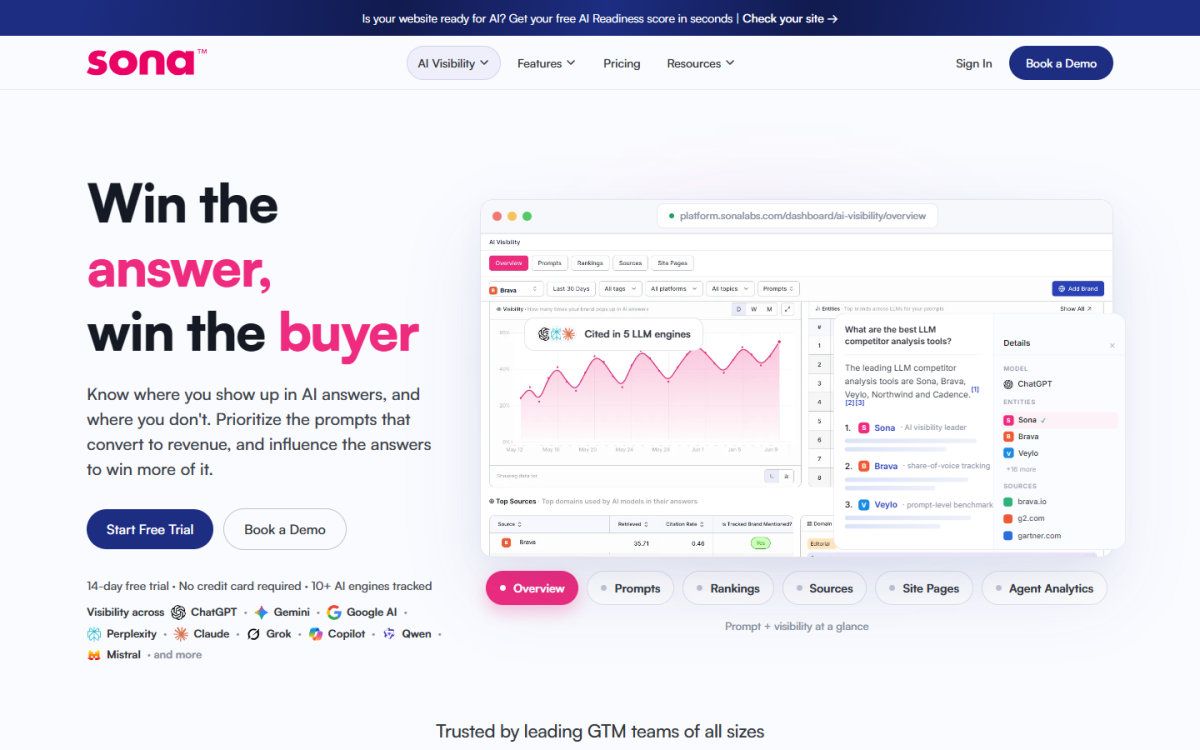
Sona AI Visibility tracks brand mentions, sentiment and citations across 11 AI engines, more than double Peec AI's entry-level coverage of 3 selected models, and connects those citations to pipeline and revenue on one account timeline rather than stopping at a mention count. AI Search Insights is the feature behind the visibility and citation tracking, showing which prompts surface a brand and which websites get cited when they do. Pricing starts at $75 per month billed annually for the Brands Starter plan, with a 14-day free trial and no credit card required. It suits marketing and revenue teams that need to justify AI search spend with a business case. Moving to it from Peec AI takes a trial period to establish a prompt baseline, since prompt sets are not imported between tools.
PromptRush: best for the lowest entry price
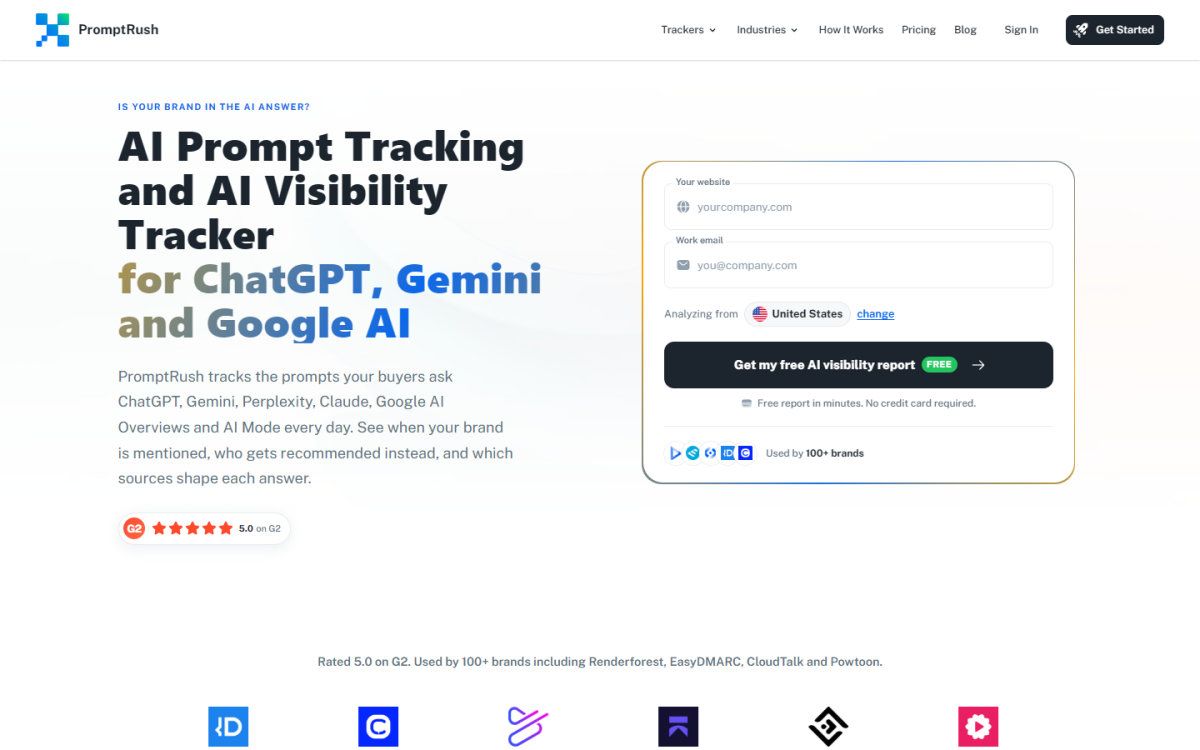
PromptRush tracks visibility across ChatGPT, Gemini, Perplexity, Google AI Overviews and Google AI Mode, scanned daily on every plan starting at $19 per month for 25 prompts on Lite, well under Peec AI's $95 Starter price. It suits small teams or solo marketers testing AI visibility tracking before committing budget. Claude tracking is a $39 to $129 monthly add-on, similar in structure to Peec AI's own paid engine add-ons, and a free one-off visibility report is available with no signup. Switching from Peec AI means re-entering the prompt list and running both tools in parallel for a short baseline period before cutting over.
Otterly.ai: best for small teams wanting unlimited seats
Otterly.ai checks ChatGPT, Google AI Overviews, Perplexity and Microsoft Copilot daily, starting at $29 per month for 15 prompts on Lite, with unlimited team members on every tier, a contrast with Peec AI's project-based tier structure. It suits teams where multiple people need dashboard access without per-seat billing. Annual billing drops the price to $25, $160 and $422 across its three tiers. Migration from Peec AI follows the same pattern as any switch in this category: no direct data import, so a parallel tracking period establishes a new baseline before the old tool is dropped.
Profound: best for enterprise teams needing custom engine coverage

Profound tracks ChatGPT, Gemini and Google AI Overviews with no public self-serve pricing, offering only a 7-day free trial of 50 prompts run daily before Enterprise terms are quoted, a sharp contrast with Peec AI's published self-serve ladder. It suits larger organizations that expect custom contract terms and are comparing Enterprise tiers directly. Teams moving from Peec AI's Advanced plan toward Profound should expect a similar sales-led onboarding process rather than an instant switch.
Scrunch AI: best for enterprise-wide AI monitoring
Scrunch AI is positioned as a best-fit alternative for enterprise-wide AI monitoring, tracking ChatGPT, Claude, Gemini, Perplexity, Google AI Mode and AI Overviews, and Meta, double the engine count available on Peec AI's entry tiers. Pricing starts at $250 per month for Starter, or $300 billed monthly, including 350 custom prompts plus 1,000 industry prompts, with a 7-day trial and no credit card. It suits organizations tracking visibility across many brands or business units at once. Migrating means exporting any existing Peec AI prompt list and rebuilding it inside Scrunch AI's custom and industry prompt structure, since the two tools categorize prompts differently.
AthenaHQ: best for a genuinely free entry tier

AthenaHQ offers a free Essential tier with 300 credits, where 1 credit equals 1 AI response, alongside a paid Starter plan at $295 per month for 3,600 credits, a no-cost entry point Peec AI does not publish. It suits teams wanting to test AI visibility tracking with zero spend before upgrading. The free tier limits volume sharply compared to paid plans, so it works as a trial run rather than ongoing coverage at scale. Moving from Peec AI to AthenaHQ's free tier requires rebuilding the prompt list inside AthenaHQ's credit-based system, which counts differently than Peec AI's flat prompt-per-tier model.
PromptWatch: best for bundling prompt tracking with agent credits
PromptWatch tracks ChatGPT, Claude, Gemini and Perplexity, with an Essential plan at $95 per month covering 50 prompts and 6,000 responses monthly, plus 500 agent credits, the same entry price as Peec AI's Starter plan but with a published agency tier Peec AI does not list. It suits teams that want prompt tracking and a workflow-style credit allowance in one subscription, and it publishes agency plans starting at $199 per month. Professional and Business tiers scale to $245 and $579 per month. Switching from Peec AI involves mapping the existing prompt list onto PromptWatch's response-based metering, since the two tools count usage differently.
Semrush: best for teams already inside the Semrush ecosystem
Semrush's AI Visibility Toolkit is priced at $99 per month per domain, billed annually, sold separately from Semrush's main subscription and from Peec AI's bundled per-tier model. Semrush One, a separate offering, starts at $199 per month with a 14-day free trial, per 01net.com, October 2026. The AI Visibility Toolkit includes its own 14-day free trial and a separate free AI Search Visibility Checker. It suits teams that already run Semrush for organic search and want AI visibility tracking without adopting a new vendor relationship, unlike Peec AI, which is a standalone platform with no adjacent SEO suite. Setup means adding the toolkit to an existing Semrush account rather than onboarding a new platform from scratch.
Birdeye: best for multi-location brands already using Birdeye for reviews
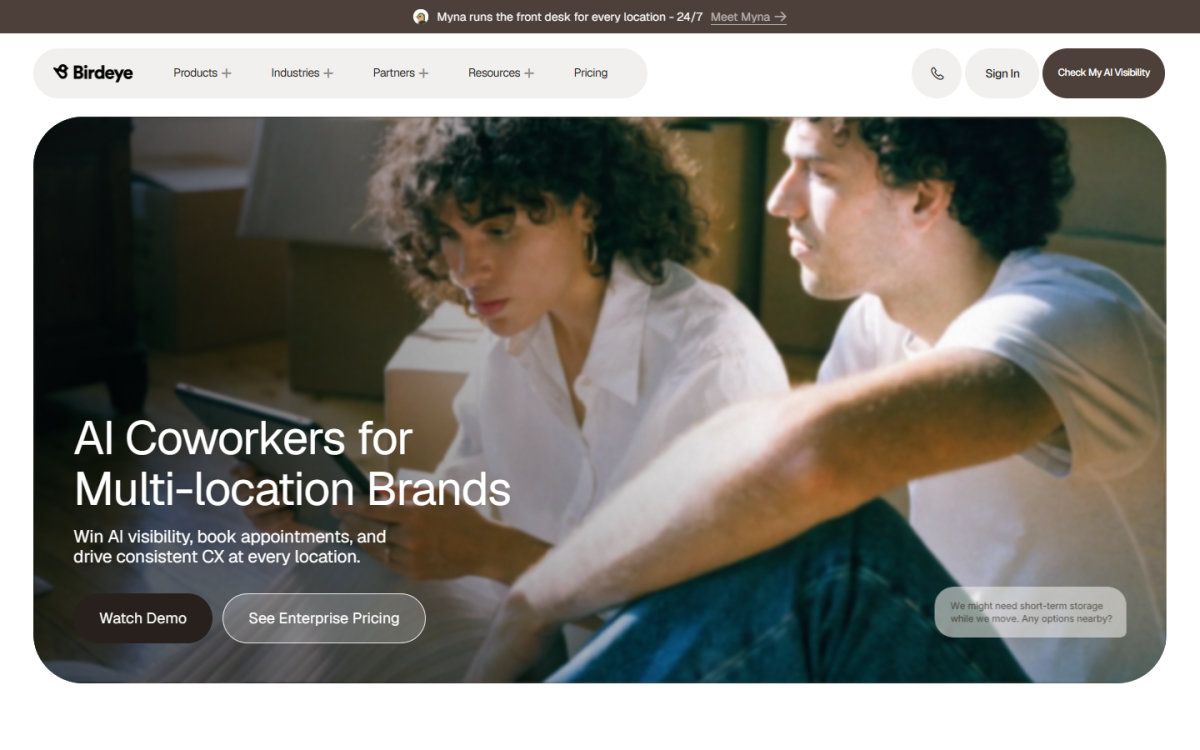
Birdeye is quote-only with no public pricing, priced by number of locations and quoted by sales, a structural difference from Peec AI's published per-tier ladder. Birdeye describes its Search AI coverage as "Google, ChatGPT, Perplexity, and more" without publishing a specific engine count or prompt allowance, where Peec AI publishes exact prompt counts by tier. It suits multi-location businesses, retail chains, franchises, that already use Birdeye for review management and want AI visibility folded into the same contract. A free AI visibility checker is available before any sales conversation. Migration means a sales-led onboarding rather than a self-serve setup, closer to an enterprise sales cycle than a software trial.
What does Peec AI still do better than the alternatives?
Peec AI publishes unlimited users on every plan, a detail several of the alternatives compared here simply do not disclose; nondisclosure is not the same as a seat limit, but it does mean a buyer cannot verify the same benefit elsewhere without asking directly. That removes seat-count friction for larger marketing or agency teams who want every stakeholder logged in without a per-seat surcharge.
Peec AI also bundles a straightforward tier structure: Starter supports 1 project, Pro 2 projects, and Advanced 5 projects, with prompt counts of 50, 150 and 350 attached directly to each tier. That is easier to reason about at a glance than vendors whose project or prompt limits are not published at all, which several of the tools in this comparison simply do not state on their pricing pages.
Vendor comparisons in this category carry a structural bias: every tool mentioned in this article, Peec AI included, publishes its own pricing and feature claims, and most third-party roundups draw directly from those pages rather than independent testing. A reader should treat every vendor's stated engine count and prompt allowance, Peec AI's included, as a starting point for verification rather than a settled fact.
Does tracking more AI engines actually mean better data?
Tracking more AI engines does not automatically mean better data, because coverage breadth only matters if the engines being tracked are the ones a brand's actual buyers use. A tool tracking 11 engines where a buyer's market only uses 3 is paying for coverage that never gets read.
The deeper issue is that AI visibility scores are not standardized across vendors. One platform's visibility percentage might be calculated from a 3-model average, another's from a single flagship model, and a third's from a weighted blend across more engines. None of those numbers convert cleanly into one another, so a "72% visibility" score from one vendor and a "72% visibility" score from another can represent entirely different measurement methods.
Sona's own AI visibility data, from September 2026, shows the archive behind its platform covered 8 answer surfaces at that date: ChatGPT, Google AI Overviews, Perplexity, Google AI Mode, Gemini, Mistral, Qwen and Claude. That figure counts surfaces the archive covered on that specific date, not the current plan coverage described elsewhere in this article, which illustrates why a single snapshot and a live plan allowance should never be read as the same kind of number.
Results are also not perfectly comparable across engines, because each AI engine updates its retrieval index and underlying model on its own schedule, independent of any tracking tool. That is a reason to prefer a daily tracking cadence over a weekly one: a team that runs the same prompt list every day starts to see a pattern that a weekly snapshot would average away. A one-day spike and a four-day trend look identical in a weekly sample; they do not in a daily one.
This is also where a single brand-level visibility score stops being useful on its own. A score tells a team whether it is mentioned somewhere; it does not say which prompts produce the mention, which sources AI engines cite when they answer, or which pages on the brand's own site are missing from those answers entirely. AI Search Insights addresses that by working at the page and prompt level: it shows gap prompts, the specific questions where a brand should appear but does not, rather than a single aggregate number a team has no next action for.
How do you switch from Peec AI without losing your tracking history?
Switching from Peec AI without losing tracking continuity means running both tools in parallel for a baseline period, since no AI visibility platform imports a competitor's historical scores directly. The practical migration follows a consistent sequence regardless of which alternative a team picks.
- Export whatever prompt list and historical data Peec AI allows, even if it cannot be imported elsewhere, to preserve a record of what was tracked and when.
- Rebuild the same prompt set inside the new tool, matching wording as closely as possible so early comparisons are not skewed by phrasing differences.
- Run both tools simultaneously for a baseline period, typically several weeks, so the new platform's numbers can be checked against the old tool's final readings before anyone trusts them.
- Check for collection-matching issues: a prompt tracked across 3 models in Peec AI will not produce the same percentage as the same prompt tracked across 11 engines elsewhere, so raw numbers are not directly comparable even during the overlap window.
- Confirm data continuity before cutting over fully, meaning the new tool's daily tracking has run long enough to show a stable pattern, not just a first-week reading.
The baseline period matters more than the export step. A visibility percentage measured across a different model mix, a different prompt count, and a different refresh cadence will not land on the same number as the old tool, even for an identical brand. Treating the first week of new data as directly comparable to the last week of old data is the most common migration mistake.
How should you weigh price against prompt and project limits when comparing plans?
Weighing price against prompt and project limits means dividing the monthly cost by what a plan actually tracks, since headline prices alone are not like-for-like across vendors that sell in different units. Peec AI sells prompt slots; Sona sells credits; Scrunch AI splits custom prompts from industry prompts. None of those units convert automatically.
Cost normalization fixes this by reducing every plan to a shared denominator: cost per prompt tracked daily, on one model. That calculation is what produces the cost-per-daily-tracked-prompt figures in the comparison table in this article: Sona's Starter 5K plan works out to $0.45 per daily tracked prompt, Peec AI's Starter plan to $0.63, and AthenaHQ's credit-based Starter plan to $2.46, the highest figure among the tools with a published refresh cadence.
Published prices also shift. Peec AI's figures have been updated across multiple vendor-tracked snapshots over 2026, and currency conversions between its dollar and euro plans add another layer that makes a cached price comparison unreliable months later. Anyone comparing Peec AI alternatives should treat every price in a table, the one in this article included, as a reading taken on a specific date, and verify current pricing directly before signing a contract.
Project limits deserve the same scrutiny as prompt counts. Peec AI's Starter plan supports 1 project, which is tight for an agency or a company running separate brands. A buyer who needs multiple projects should weigh the jump from Starter to Pro, or the equivalent tier in any alternative, against what that jump actually buys in prompts and engines, not just against the sticker price difference.
Frequently Asked Questions
What is the closest direct alternative to Peec AI?
Otterly.ai and PromptWatch sit closest to Peec AI in scope: both track prompts across several AI engines on a daily cadence, similar to Peec AI's model. Sona AI Visibility covers the same prompt and citation tracking ground but extends further into attribution. The closest fit for a given team depends on whether the priority is more engines, more prompts at the entry tier, or execution features beyond monitoring.
Are there any free Peec AI alternatives?
AthenaHQ offers a free Essential tier with 300 credits, where 1 credit equals 1 AI response, making it the clearest free option among the tools compared in this article. A free tier like this limits engines tracked, total prompt volume, and number of projects compared to paid plans, so it works for testing the category rather than ongoing production tracking at scale.
Which Peec AI alternative tracks the most AI engines?
Among the tools compared in this article, Sona AI Visibility has the highest published engine count at 11, covering ChatGPT, Gemini, Google AI Mode, Google AI Overviews and Perplexity on its standard tier, plus Claude, DeepSeek, Grok, Copilot, Qwen and Mistral on its premium tier. Scrunch AI tracks 6 engines on its entry plan, the next-highest published count among the compared tools, ahead of Otterly.ai and PromptWatch at 4 each and Peec AI at 3. Entry-level plans often restrict which specific engines count toward that total, so the standard-versus-premium distinction is worth checking before comparing tools on coverage alone.
Can you migrate historical Peec AI data into a new tool?
No AI visibility platform in this comparison imports a competitor's historical scores directly. The practical approach is running both Peec AI and the new tool in parallel for a baseline period, typically several weeks, so the new platform builds its own comparable history before the old subscription is cancelled.
Is Sona a direct replacement for Peec AI?
Sona AI Visibility covers the same ground as Peec AI through AI Search Insights: prompt tracking, citations, and engine coverage. It also extends past monitoring into AI Attribution, which connects those citations to pipeline and revenue, and Agent Analytics, which tracks AI crawler activity on a brand's own site. That is a broader scope than a pure tracking tool, so teams evaluating it should expect more than a like-for-like swap.
How much should a team budget for an AI visibility tool in 2026?
Among the tools compared in this article, published entry-plan prices range from PromptRush's $19 per month up to Goodie's $399 per month, with Profound and Birdeye quote-only rather than publishing an entry figure at all. A team tracking a handful of prompts across 3 to 5 engines can budget toward the lower end of that range; one needing 11 engines and daily tracking across hundreds of prompts should expect the upper tiers or a quote-based Enterprise plan. The right budget follows prompt volume and engine count needed, not the lowest headline price on a pricing page.
Summarize this article with AI: ChatGPT · Claude · Perplexity · Google AI Mode
Last updated: October 2026