


Leading AthenaHQ alternatives include Sona AI Visibility, Otterly.ai at $29 monthly, Peec AI at $95 and Profound at $99, with the best option depending on budget and pipeline reporting needs. Sona AI Visibility links prompts and citations to pipeline and revenue while monitoring AI crawler and agent activity. Low-cost plans may be deceptive: Rankscale's $17 Essentials plan reportedly provides only 120 credits per month. Review prompt caps and refresh rates before switching.
The strongest AthenaHQ alternatives depend on the measurement need: Sona AI Visibility for pipeline and revenue attribution, Otterly.ai for low-cost monitoring, Peec AI for daily self-serve tracking, and Semrush for established SEO workflows. Transparent-price options under $200 include Sona AI Visibility, Otterly.ai, Peec AI, Rankscale, and Semrush, as of October 2026.
Why do teams look for AthenaHQ alternatives?
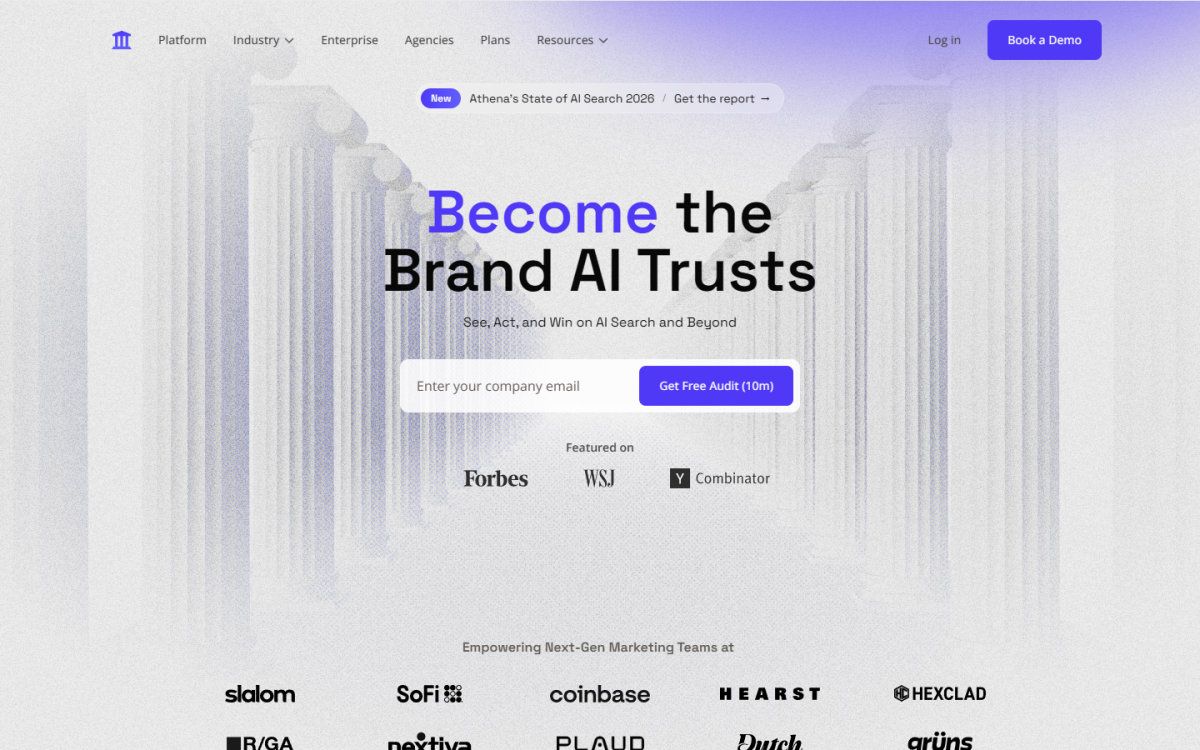
Teams look for AthenaHQ alternatives when they need different prompt capacity, answer-engine coverage, reporting depth, or budget. AthenaHQ tracks AI visibility through prompt, source, and response analytics alongside brand monitoring, making it relevant for teams monitoring GEO and content performance.
- Entry cost. Listed entry plans across the shortlist range from $17 per month billed yearly for Rankscale Essentials to $295 per month for Goodie Core, as of October 2026.
- Prompt output. Scrunch AI Core lists 125 prompts at $250 per month, while Profound’s reported free trial allows 50 prompts per day for 7 days, based on July 2026 listings.
- Engine coverage. Confirm which engines operate on the selected tier. Peec AI lists 3 active engines on Starter, while its self-serve range lists 6 engines, as of October 2026.
- Reporting depth. Teams reporting pipeline from AI search need attribution rather than citation and visibility reporting alone. Sona AI Visibility connects AI citations and AI-referred visits to pipeline and revenue.
Price is not a proxy for coverage. Rankscale Essentials is listed at $17 per month billed yearly with 120 credits, as of October 2026. A low headline price matters only when the plan returns enough answers, prompts, and history for the team’s operating rhythm.
Daily tracking reveals movements that a weekly snapshot can average away. AI answers change with retrieval indexes, model updates, and newly published competitor content. Compare repeated observations over time and investigate whether a movement persists before treating it as meaningful.
How do the AthenaHQ alternatives compare on price, focus and audience?
The strongest AthenaHQ alternatives differ more by measurement model than headline price. Sona AI Visibility connects AI citations to commercial outcomes, while other tools in this comparison focus on prompt monitoring, response analysis, AI search reporting, or agency workflows.
| Tool | Starting price | Agency Plans? | # of Answer Engines Tracked | Answer Engines | # of Daily Tracked Prompts (entry plan) | Cost per Daily Tracked Prompt | Differentiation |
|---|---|---|---|---|---|---|---|
| Sona AI Visibility | From $75/month billed annually, as of October 2026 | Yes | 3 | Not published | 5,000 credits/month, about 166 daily tracked prompts on one model or 56 across three | About $0.45 per daily tracked prompt | Connects AI citations and prompts to pipeline and revenue, and tracks AI crawler activity from server logs or an edge worker without a JavaScript tag |
| Profound | Free Trial; custom Enterprise pricing, as of October 2026 | Yes | 3 | ChatGPT, Gemini, Google AI Overviews | 50 prompts daily for 7 days | Not published | Prompt tracking with a free trial and enterprise route |
| Peec AI | From $95/month, as of October 2026 | Yes | 3 | Not published | 50 prompts daily | About $0.63 per daily tracked prompt | AI search visibility tracking for self-serve and agency plans |
| Otterly.ai | From $29/month, as of October 2026 | Yes | 4 | ChatGPT, Google AI Overviews, Perplexity, Microsoft Copilot | 15 prompts daily | About $0.48 per daily tracked prompt | Lower-cost AI search monitoring with tiered prompt allowances |
| Scrunch AI | From $250/month, as of October 2026 | Yes | 4 | ChatGPT, Perplexity, Google AI Overviews, Copilot | 125 prompts | No refresh cadence published | AI visibility monitoring for mid-market and enterprise teams |
| AthenaHQ | From $295/month billed annually, as of October 2026 | Yes | 11 | Not published | Unlimited prompts and 3,600 credits/month | No refresh cadence published | Prompt, source, and response analytics alongside brand monitoring |
| Goodie | From $295/month, as of October 2026 | Yes | 5 | Not published | 110 prompts daily | About $0.67 per daily tracked prompt | Multi-model AI search monitoring for larger marketing teams |
Engine counts help with initial filtering, but they are not a controlled accuracy test. Sona’s own AI visibility data, September 2026, covers 8 answer surfaces: ChatGPT, Google AI Overviews, Perplexity, Google AI Mode, Gemini, Mistral, Qwen and Claude. Before selecting a platform, inspect the prompt set, collection cadence, response format, and reporting model.
What are the 9 best AthenaHQ alternatives?
The best AthenaHQ alternative depends on what a team must measure after a brand appears in an AI answer. The nine options below cover revenue attribution, lower-cost tracking, agency workspaces, prompt volume, enterprise procurement, and established SEO workflows.
Sona AI Visibility: best for tying AI visibility to pipeline and revenue
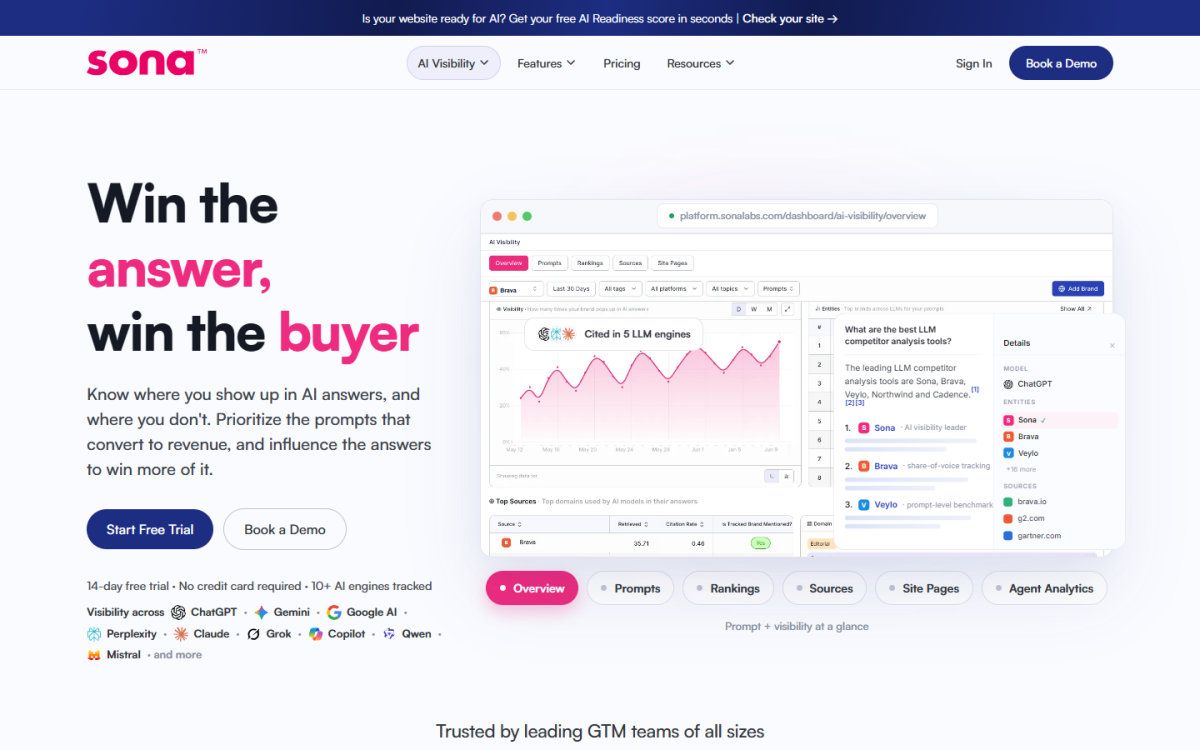
Sona AI Visibility connects prompts and citations in AI answers to accounts, pipeline, and closed-won revenue on one account timeline. It also tracks AI crawler and agent activity from server logs or a lightweight edge worker. Mention tracking across answer engines remains the baseline measurement. AI Search Insights shows the prompts buyers ask and the pages AI engines cite.
Starter pricing begins from $75 per month billed annually, as of October 2026, with about 56 prompts tracked daily across 3 engines. It suits B2B teams that need to justify AI search investment through pipeline and revenue reporting. Setup involves selecting prompt topics, connecting measurement inputs, and configuring pages and accounts for ongoing analysis.
Otterly.ai: best for the lowest-cost entry
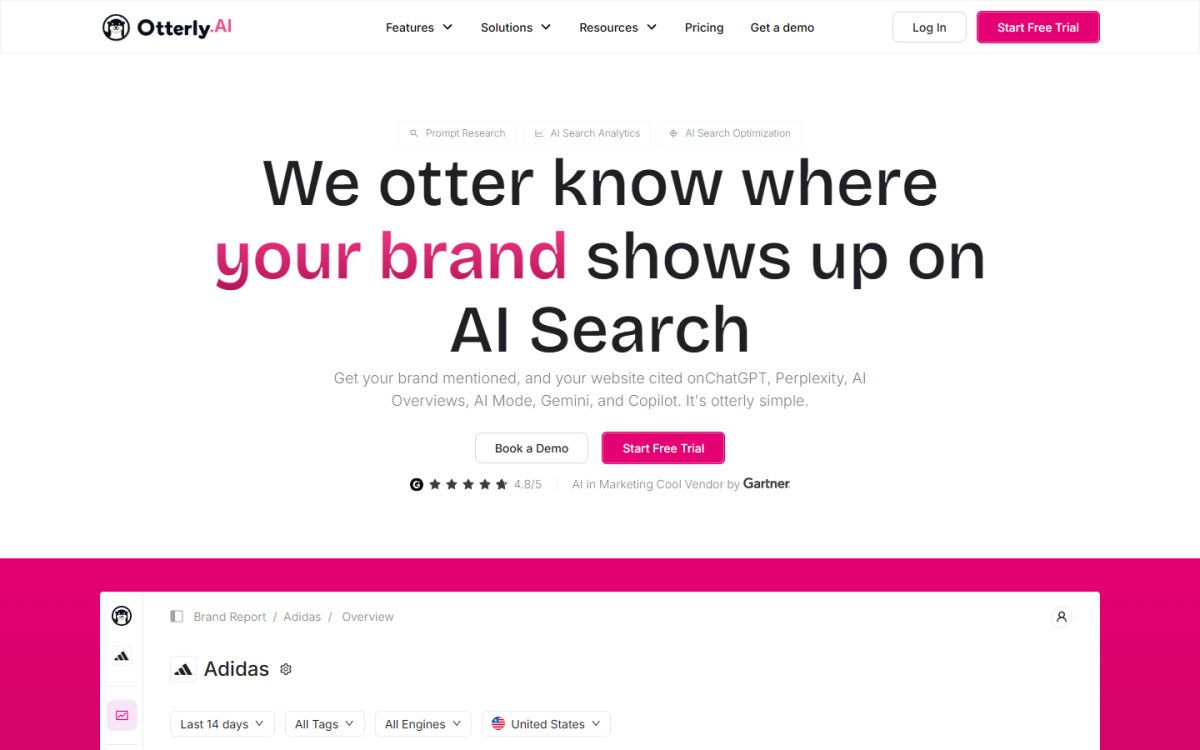
Otterly.ai provides AI search visibility monitoring across ChatGPT, Google AI Overviews, Perplexity, and Microsoft Copilot on its Lite plan. The product targets teams that need an accessible entry point for prompt and brand monitoring rather than a broad measurement deployment.
Otterly.ai Lite was listed from $29 per month, with Standard at $189 and Premium at $489 per month, based on July 2026 pricing. The Lite tier includes 15 prompts daily. It suits startups and small teams testing a recurring AI search tracking workflow. Moving requires a defined prompt list, a decision on relevant engines, and a review of paid engine add-ons for Claude, Google AI Mode, and Gemini.
Rankscale: best for a minimal-spend trial of tracking
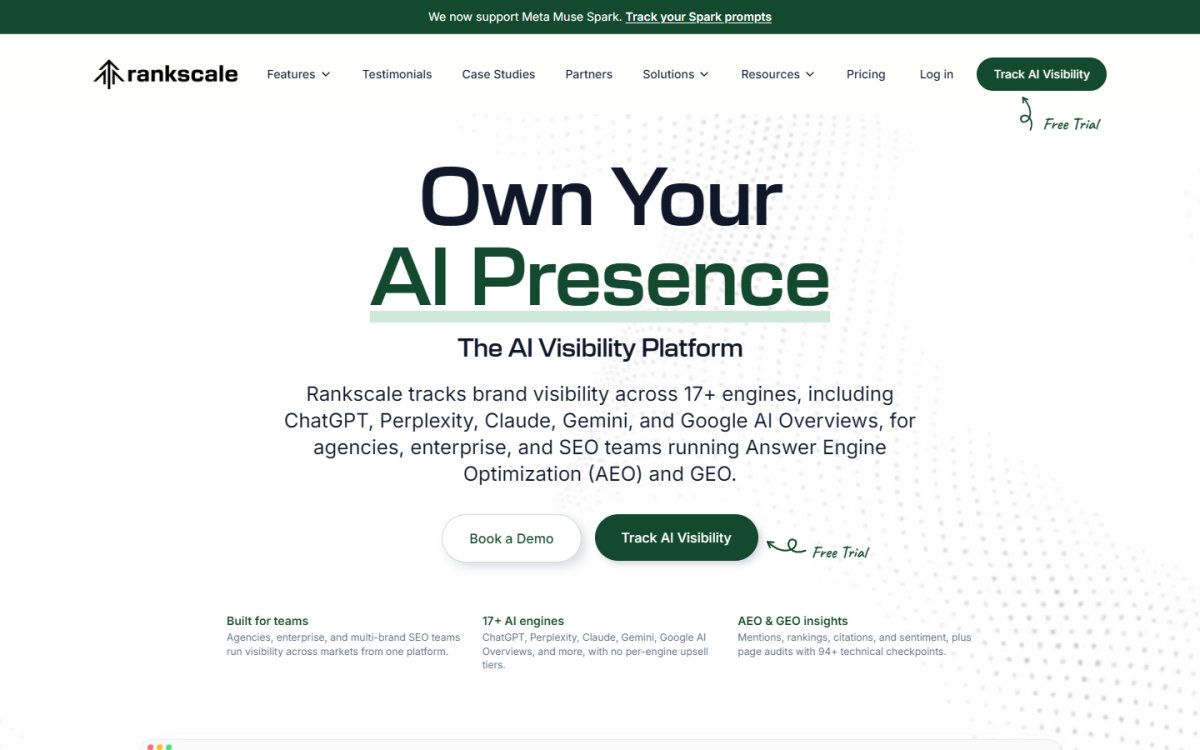
Rankscale offers scheduled AI visibility tracking across 17+ engines, with search terms described as unlimited and schedules ranging from hourly to monthly. Its Essentials plan offers a low-cost way to inspect the product interface and reporting model before committing to a higher plan.
Rankscale Essentials is listed at $17 per month billed yearly with 120 credits, as of October 2026. Buyers should confirm completed responses, credits, and scheduled runs for the selected tier. Rankscale suits teams validating the mechanics of AI monitoring before allocating a larger budget.
Peec AI: best for small teams and agencies wanting a mid-priced tracker
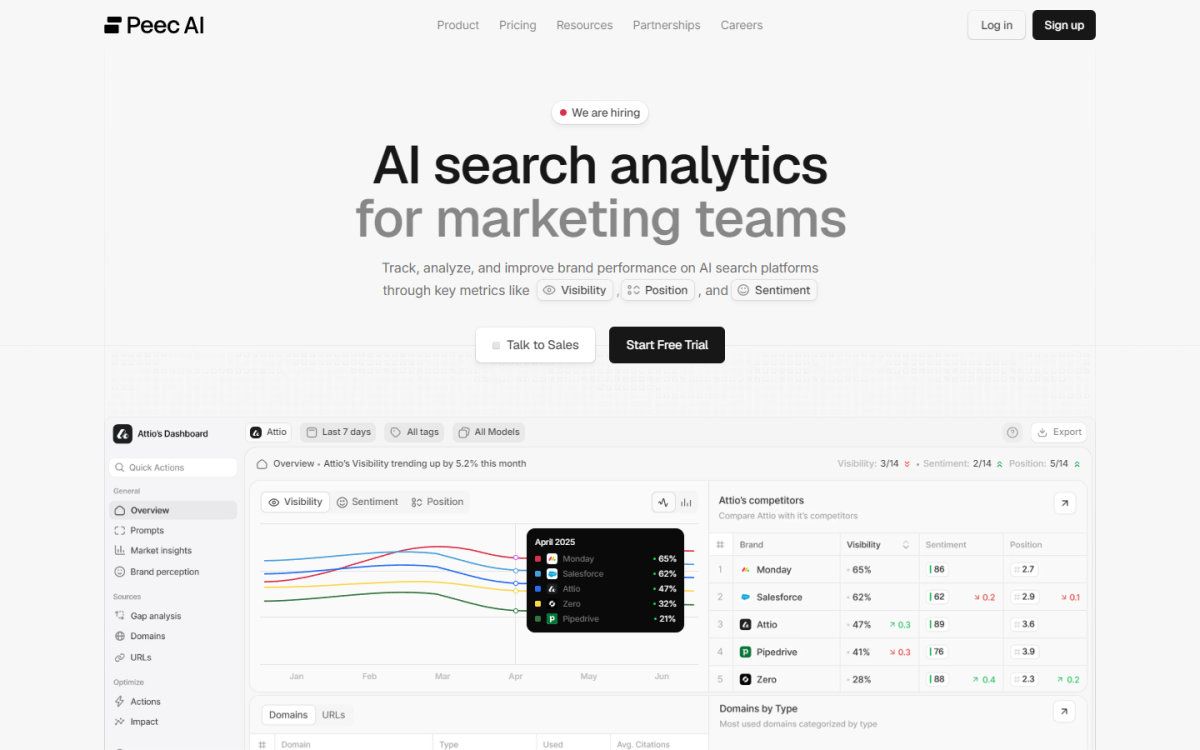
Peec AI provides AI search visibility tracking with self-serve plans, daily prompt tracking, and agency pricing. Its Starter tier uses a defined number of prompts, giving smaller teams a clear initial capacity figure.
Peec AI starts from $95 per month, as of October 2026. Starter includes 50 prompts tracked daily and 3 active engines, while the self-serve range lists 6 engines. Agency plans begin from $245 per month. Peec AI suits small marketing teams and agencies that need a mid-priced tracker with tiered prompt allowances. Moving requires prompt selection, engine verification for the chosen tier, and a decision about client workspace requirements.
Profound: best for teams that want a trial and enterprise route
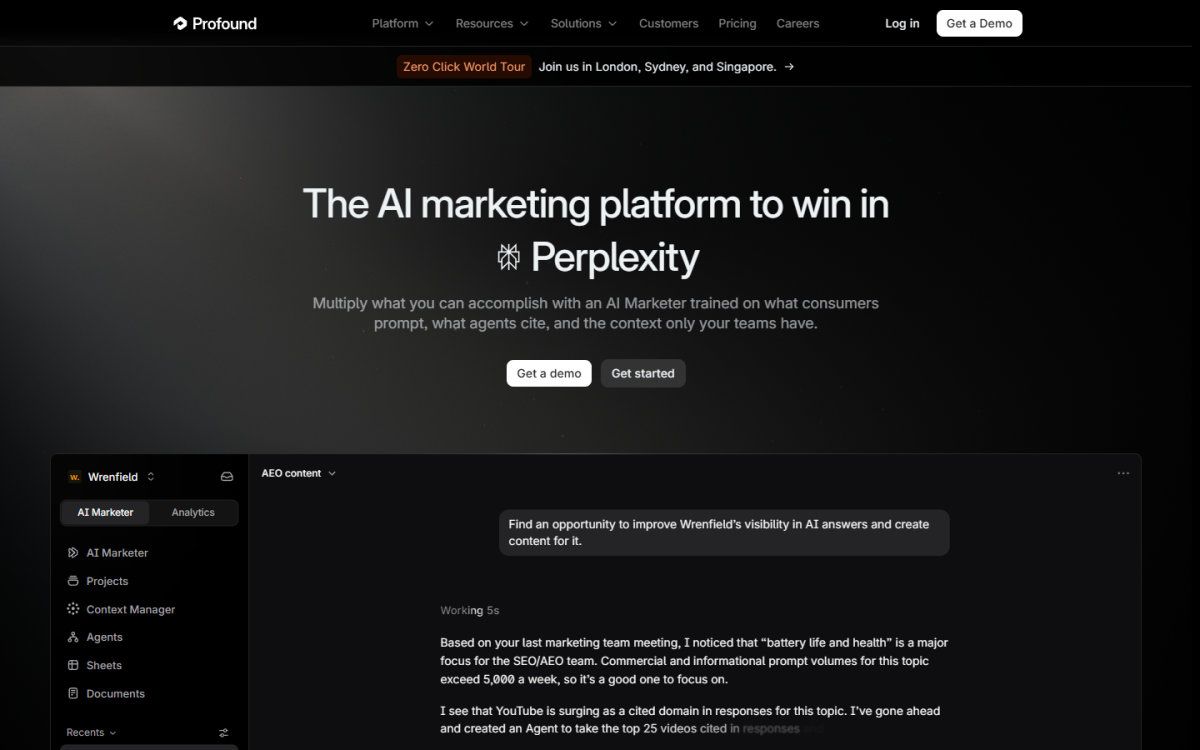
Profound offers a free trial, custom Enterprise pricing, and agency plans that begin from $99 per month. The reported trial tracks 50 prompts daily for 7 days across ChatGPT, Gemini, and Google AI Overviews, giving teams a defined evaluation window.
Profound’s agency plan starts from $99 per month, while Enterprise uses custom pricing, as of October 2026. Profound held a 4.5/5 G2 rating from 961 reviews in October 2026. It suits teams that want to evaluate AI visibility tracking before entering a sales-led enterprise process. Setup requires a prompt list and agreement on enterprise scope, engines, and reporting needs.
Rankability: best for agencies
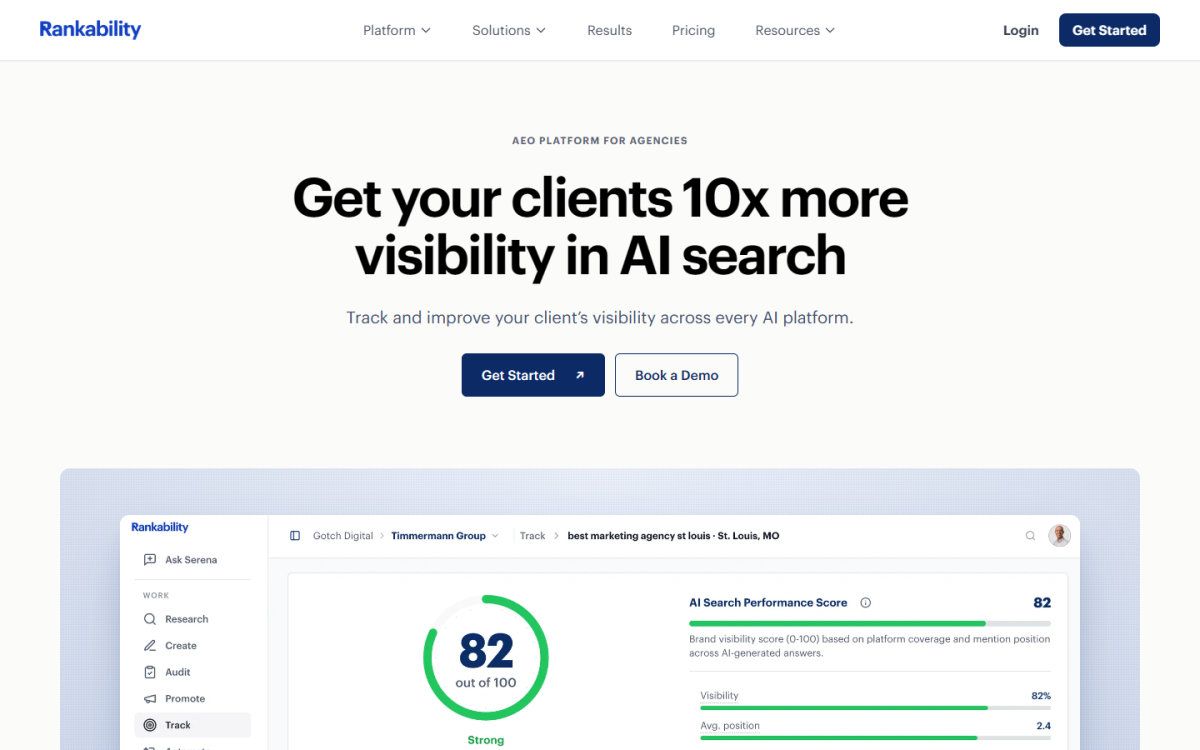
Rankability publishes agency-focused plans with daily prompt allowances and 11 AI platforms on its Starter, Agency, and Agency Pro tiers. The platform is structured for agency use rather than a separately published brand plan.
Agency pricing starts from $97 per month, as of October 2026. The Starter tier supports 100 prompts daily, Agency supports 300, and Agency Pro supports 500. Rankability suits agencies managing AI search visibility across multiple client accounts. Moving involves defining client prompt portfolios, confirming workspace and reporting arrangements, and selecting a tier that matches the agency’s daily monitoring volume. The 7-day trial requires a card and has limited usage, according to the October 2026 pricing record.
Scrunch AI: best for mid-market teams needing higher prompt volume
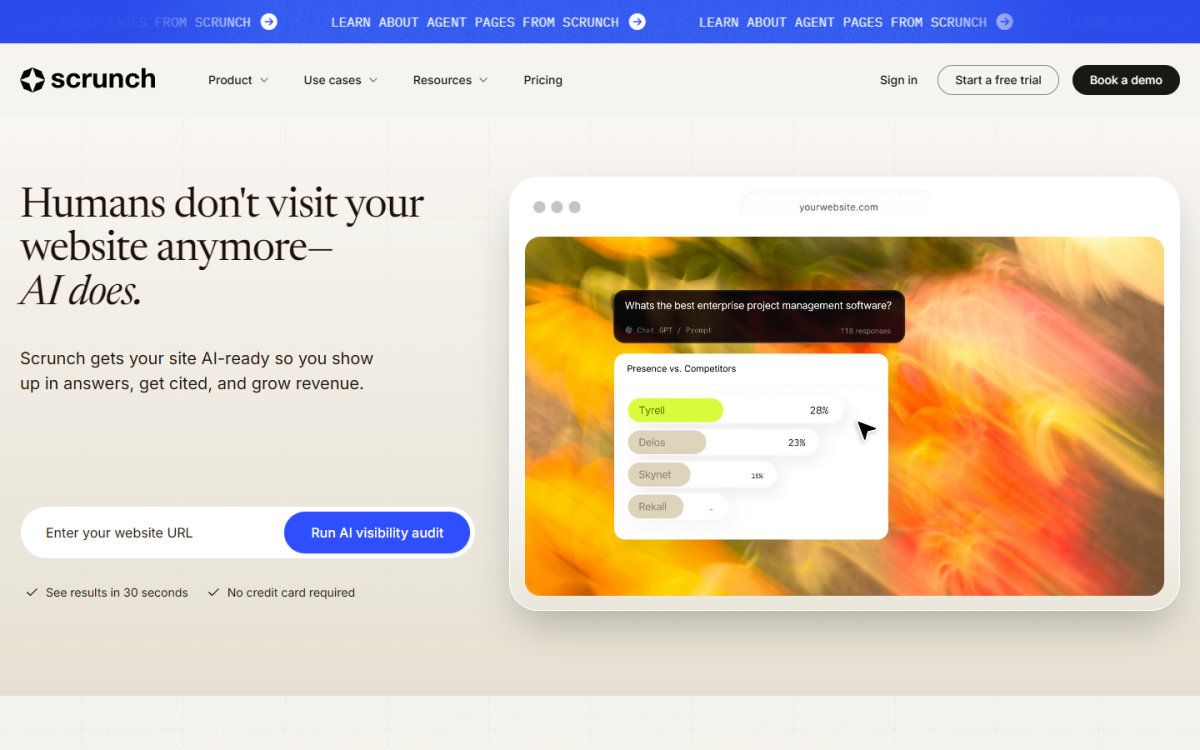
Scrunch AI provides AI visibility monitoring across ChatGPT, Perplexity, Google AI Overviews, and Copilot on its Core plan. Enterprise expands the named engine set to 9, including Claude, Gemini, Meta AI, Google AI Mode, and Grok.
Scrunch AI Core costs $250 per month and includes 125 prompts, according to the July 2026 listing. Published material does not state a Core refresh cadence, so buyers should verify whether scheduled collection matches reporting requirements. Scrunch AI suits mid-market teams that want a higher listed prompt allowance than entry-level trackers. Moving requires importing priority prompts, identifying commercially relevant answer engines, and confirming whether the reporting period requires enterprise coverage.
Goodie: best for larger marketing teams with budget
Goodie provides multi-model AI search monitoring with 5 models on Core, 8 on Pro, and up to 14 on Enterprise. The product targets teams with larger prompt portfolios and a need to monitor AI search performance across several models.
Goodie Core starts from $295 per month, as of October 2026, and includes 110 prompts daily. Pro is listed at $999 per month, while Enterprise uses custom pricing. Goodie suits larger marketing teams with budget for a broader monitoring program and higher-volume prompt list. Moving requires choosing model coverage, allocating prompts across priority topics, and deciding whether agency access or enterprise capacity is necessary. Core includes a 7-day free trial under the October 2026 pricing record.
Semrush: best for teams already running traditional SEO workflows
Semrush AI Visibility adds AI search monitoring to a broader SEO workflow. Its Base plan tracks custom prompts daily across ChatGPT, Google AI, Gemini, and Perplexity, while supporting daily, weekly, and monthly data updates.
Semrush AI Visibility starts from $99 per month per domain, as of October 2026, with 25 custom prompts tracked daily. SEO + AI Search plans begin at $199 per month with 50 prompts. Semrush held a 4.4/5 G2 rating from 3,951 reviews in October 2026. It suits teams already using conventional keyword, rank, and site workflows that want AI visibility in the same operating environment. Moving requires defining AI prompt coverage separately from traditional keyword tracking and confirming domain-level plan needs.
Which AthenaHQ alternatives cost under $200 a month for small teams?
The following shortlist covers evaluated entry plans under $200 per month, ordered by listed starting price. Brand plans and agency offers serve different buying models, so prompt capacity and collection cadence remain necessary comparison points.
- Rankscale Essentials, brand plan. $17 per month billed yearly, as of October 2026, with 120 credits. Scheduling ranges from hourly to monthly, while prompt allowance and engine names for Essentials are not published.
- Otterly.ai Lite, brand plan. $29 per month, as of October 2026, with 15 prompts daily across ChatGPT, Google AI Overviews, Perplexity, and Microsoft Copilot. Claude, Google AI Mode, and Gemini are paid add-ons.
- Sona AI Visibility Starter, brand plan. From $75 per month billed annually, as of October 2026, with 5,000 credits monthly and about 56 prompts tracked daily across 3 engines.
- Peec AI Starter, brand plan. From $95 per month, as of October 2026, with 50 prompts tracked daily and 3 active engines. The self-serve range lists 6 engines.
- Rankability Starter, agency plan. From $97 per month, as of October 2026, with 100 prompts daily across 11 unnamed AI platforms. No brand plan is published.
- Profound Agency Growth, agency plan. From $99 per month, as of October 2026, with 10 pitch workspaces monthly. Client workspaces carry additional charges, and Enterprise uses custom pricing.
- Semrush AI Visibility Base, brand plan. From $99 per month per domain, as of October 2026, with 25 custom prompts tracked daily across 4 engines. Agency plans are not published.
The budget question is not only price. It is how many prompts run daily, which engines answer them, and whether the returned data supports recurring decisions.
Which AthenaHQ alternative suits enterprise teams, agencies or startups?
Startups should prioritize transparent prompt limits and low initial spend. Agencies should prioritize client capacity and reporting structure. Enterprise teams should prioritize governance, answer-engine coverage, and measurement depth. The right AthenaHQ alternative depends on the buyer’s operating model.
For startups and SMBs, Otterly.ai at $29 per month, Peec AI at $95 per month, and Rankability agency pricing at $97 per month provide clear starting points, as of October 2026. Confirm daily prompt limits, engine add-ons, and trial terms before treating entry tiers as comparable.
For agencies, Rankability’s $97 per month agency entry and Peec AI’s agency plans from $245 per month are structured around multi-client work. Confirm workspace rules, white-label reporting requirements, prompt allocations by client, and whether each client needs separate engine coverage.
For enterprise teams, Profound provides a sales-led Enterprise route with custom pricing. Most trackers focus on visibility reports; Sona AI Visibility connects citations and AI-referred activity to accounts, pipeline, and revenue for teams whose reporting standard extends beyond brand monitoring.
Do G2 ratings and engine counts show which tool measures AI visibility best?
G2 ratings and engine counts are useful screening signals, but neither proves that one AI visibility tool measures answers more accurately. Profound had a 4.5/5 G2 rating from 961 reviews, while Semrush had 4.4/5 from 3,951 reviews, based on G2 figures read in October 2026.
Reviews reflect user experience, implementation expectations, feature breadth, and support perceptions. They do not disclose a common prompt set, shared collection dates, response sampling rules, or controlled scoring methodology. A high review count shows more feedback, not a verified measurement benchmark.
A long engine list has the same limitation. Prompt coverage, refresh frequency, regional behavior, response capture, source extraction, and reporting depth can differ by engine. Request the prompt set, sample size, scoring rules, and collection dates behind any measurement claim. Vendor-led and affiliate-led comparison pages rarely standardize those inputs.
What should you check before switching from AthenaHQ?
Before switching from AthenaHQ, verify the measurement model, prompt capacity, refresh cadence, engine coverage, and commercial terms for the exact plan under consideration. Compare published plan limits rather than headline product claims.
- Prompt limits. Confirm daily prompt allowances, credits, response limits, and whether prompt counts apply per model or across all models.
- Refresh frequency. Run priority prompts daily, because daily history separates sustained movement from a one-day answer change.
- Engine coverage. Confirm coverage for ChatGPT, Perplexity, Claude, Gemini, Google AI Overviews, Google AI Mode, and other answer engines.
- Commercial terms. Check API access, data residency, seat rules, reporting add-ons, engine add-ons, and whether pricing is self-serve or quote-based.
- Attribution. Confirm whether the platform can connect citations to pipeline, rather than reporting mentions alone.
A score is a dated snapshot. The useful output is a comparable series that shows whether prompt movement holds over time. Teams should also ask whether the platform attaches severity-ranked fixes to pages that changed, because monitoring without a defined next action becomes a reporting exercise.
What does AthenaHQ still do better than its alternatives?
AthenaHQ remains a sensible choice for teams whose main need is actionable AI visibility insight and content optimization. Users consistently praise AthenaHQ for actionable insights and ease of use in tracking AI visibility and optimizing content, based on feedback available in October 2026.
AthenaHQ brings prompt, source, and response analytics together with brand monitoring. That combination can suit content and SEO teams that need to understand how AI systems reshape search journeys. Reddit discussions describe AthenaHQ as supporting the transition from traditional SEO to GEO by identifying changing journeys.
Monitoring which AI answers mention a brand is only half the job. The other half is connecting those mentions to accounts, pipeline, and revenue. Sona AI Visibility closes that loop by connecting citations and AI-referred visits to commercial outcomes on an account timeline.
Frequently Asked Questions
What is the cheapest AthenaHQ alternative?
Rankscale has the lowest listed entry point in this comparison at $17 per month billed yearly, as of October 2026, with 120 credits. Otterly.ai starts at $29 per month. Check what each plan returns before treating either price as like-for-like.
Which AthenaHQ alternatives work for agencies?
Rankability offers agency-focused pricing from $97 per month, while Peec AI starts at $95 per month and publishes agency plans from $245 per month, as of October 2026. Agencies should confirm client seats, workspace structure, daily prompt limits, reporting controls, and whether each client needs separate answer-engine coverage.
Is there an AthenaHQ alternative that connects AI visibility to revenue?
Sona AI Visibility connects prompts and citations to pipeline and revenue, while also tracking AI crawler and agent activity. Most AI visibility trackers focus on mention and citation counts. Revenue reporting requires the additional connection between AI-referred activity, account identity, pipeline stages, and closed-won outcomes.
Which AthenaHQ alternatives can I try for free?
Profound has a free trial allowing 50 prompts per day for 7 days, as of July 2026. Confirm trial availability, card requirements, engine coverage, and cancellation terms before beginning an evaluation, because trial conditions can change.
Do higher G2 ratings mean an AI visibility tool is more accurate?
No. G2 scores reflect user experience and product breadth, not a controlled test of measurement accuracy. Profound’s 4.5/5 rating from 961 reviews, recorded in October 2026, is useful context but not proof of response accuracy. Ask for prompt sets, scoring rules, sample sizes, and collection dates.
What should I compare before leaving AthenaHQ for another tool?
Compare prompt limits, refresh frequency, API access, data residency, add-on costs, engine coverage, reporting structure, and whether the platform can report pipeline rather than only mentions. Review the exact plan, because self-serve tiers and sales-led enterprise quotes often use different units, limits, and reporting terms.
Summarize this article with AI: ChatGPT · Claude · Perplexity · Google AI Mode
Last updated: October 2026







