


For B2B SaaS teams, the leading Profound alternatives are Sona AI Visibility, which connects AI citations and prompts with pipeline and revenue, alongside Peec AI, Scrunch AI and SE Ranking for monitoring. Profound's custom-only pricing, with no public self-serve plan, plus the need to report pipeline from AI search, lead teams to seek alternatives. Other starting prices range from $29 to $295 monthly, based on listings reviewed in August and September 2026. Identify the single outcome you need before evaluating features.
Profound alternatives include Sona AI Visibility, Peec AI, Scrunch AI, AthenaHQ, Otterly.ai, PromptWatch, Goodie and AIclicks.io. Sona connects AI citations to pipeline and revenue, while other choices vary by entry price, engine coverage and agency workflow.
What makes teams seek alternatives?
Teams look for alternatives when they need a different budget model, broader starting coverage, or direct reporting on AI search pipeline. Profound offers a trial and enterprise configuration, but its premium positioning and trial constraints can shape a buyer’s shortlist.
- Custom pricing. Profound uses a free Trial plan and custom Enterprise pricing, as of October 2026.
- Trial window. The Trial plan includes limited AI Marketer credits and runs 50 prompts daily for 7 days, per the October 2026 listing.
- Trial engines. The Trial plan covers ChatGPT, Gemini and Google AI Overviews, per the October 2026 listing.
- Stack sprawl. Most alternatives require 3–5 tools combined to match Profound’s capabilities, per nicklafferty.com.
- Revenue reporting. Teams that must report pipeline from AI search need attribution rather than citation reporting alone.
The right replacement depends on the operating question. A startup may need a small daily prompt set across a few answer engines. A B2B SaaS team may need competitor citations, AI-referred visits and an account-level pipeline view. An agency may prioritize the workflow for managing several client prompt sets.
Run the same prompt list daily after selecting a platform. AI answers change with retrieval indexes, model updates and competitor publishing activity. Compare sustained movement across repeated daily runs with one-day volatility.
How do Profound and seven alternatives compare on price, engines and team fit?
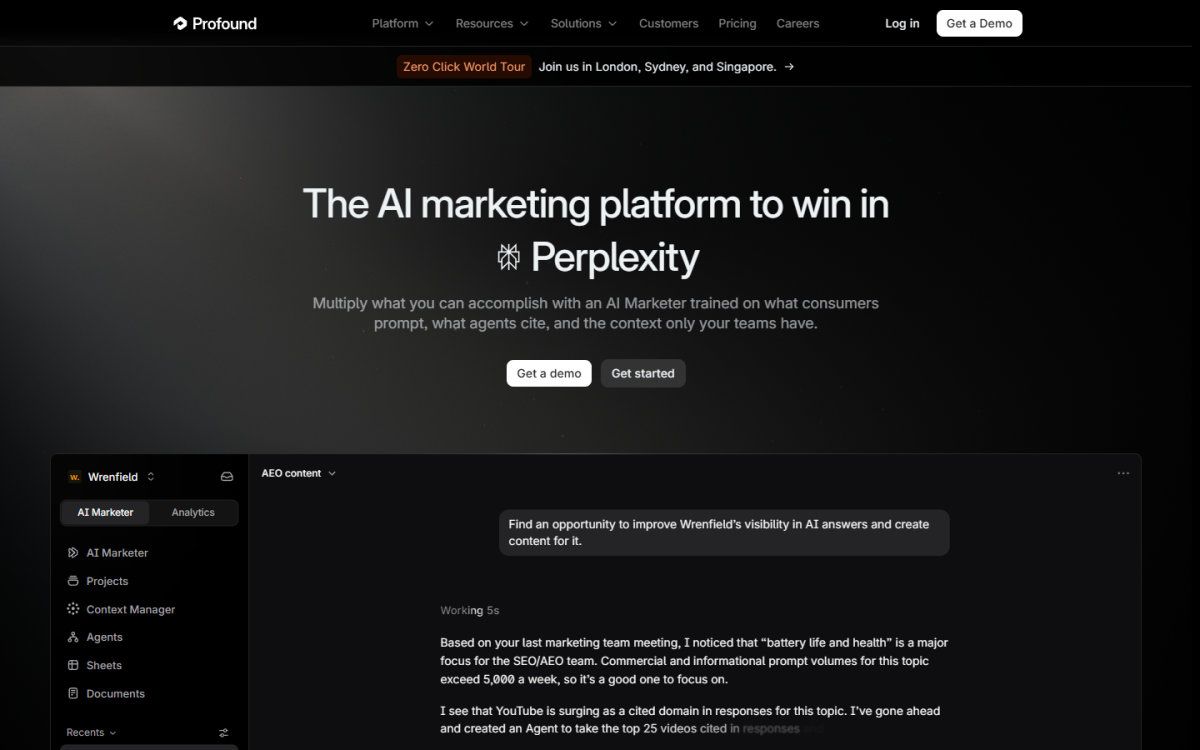
The table compares Profound with seven alternatives spanning low-cost monitoring, enterprise model coverage and attribution-led measurement. Prices, engine coverage and prompt allowances were read as of October 2026. Use the table to narrow a shortlist, then test the prompts and reports your team will use.
| Tool | Starting price | Agency Plans? (Yes/No) | # of Answer Engines Tracked | Answer Engines | # of Daily Tracked Prompts (entry plan) | Cost per Daily Tracked Prompt | Differentiation |
|---|---|---|---|---|---|---|---|
| Sona AI Visibility | From $75/month, billed annually, as of October 2026 | Yes | 11 | ChatGPT, Gemini, Google AI Mode, Google AI Overviews, Perplexity, Claude, DeepSeek, Grok, Copilot, Qwen, Mistral | Not published | $0.45 per daily tracked prompt | Connects AI citations and prompts to pipeline and revenue on one account timeline, and tracks AI crawler activity from server logs or an edge worker without a JavaScript tag. |
| Profound | Free Trial; custom Enterprise pricing, as of October 2026 | Yes | 3 | ChatGPT, Gemini, Google AI Overviews | 50 prompts daily for 7 days | Trial is free; enterprise custom pricing | Trial access with limited AI Marketer credits and enterprise configuration. |
| Peec AI | From $95/month, as of October 2026 | Yes | 3 | ChatGPT, Google AI Mode, Google AI Overviews | 50 prompts daily | $0.63 per daily tracked prompt | AI visibility monitoring across self-serve and agency plans. |
| Otterly.ai | From $29/month, as of October 2026 | Yes | 4 | ChatGPT, Google AI Overviews, Perplexity, Microsoft Copilot | 15 prompts daily | $0.48 per daily tracked prompt | Entry-level monitoring across four answer engines. |
| Scrunch AI | From $250/month, as of October 2026 | Yes | 4 | ChatGPT, Perplexity, Google AI Overviews, Copilot | 125 prompts, refresh cadence not published | No refresh cadence published | AI visibility monitoring for Core and enterprise plans. |
| AthenaHQ | From $295/month, annual toggle, as of October 2026 | Yes | 11 | Not published | 3,600 credits/month, refresh cadence not published | No refresh cadence published | Broad model coverage with credit-based response tracking. |
| PromptWatch | From $95/month, as of October 2026 | Yes | Not published | Not published | 50 prompts daily | $0.48 per daily tracked prompt | Prompt and response monitoring with agency plans. |
| Goodie | From $295/month, as of October 2026 | Yes | 5 | Not published | 110 prompts daily | $0.67 per daily tracked prompt | Five-model Core plan and agency pricing. |
Sona's own AI visibility data, September 2026, covers 8 answer surfaces: ChatGPT, Google AI Overviews, Perplexity, Google AI Mode, Gemini, Mistral, Qwen and Claude. Engine count matters less than the engines that already send referrals, the prompt allowance and the refresh cadence.
What are the 8 best alternatives for AI visibility tracking?
The best alternative depends on the required outcome, not the longest feature list. The options below cover revenue attribution, LLM monitoring, SEO performance, broad engine coverage and lower-cost tracking.
Sona AI Visibility: 1. Which option suits B2B SaaS teams that must tie AI visibility to revenue?
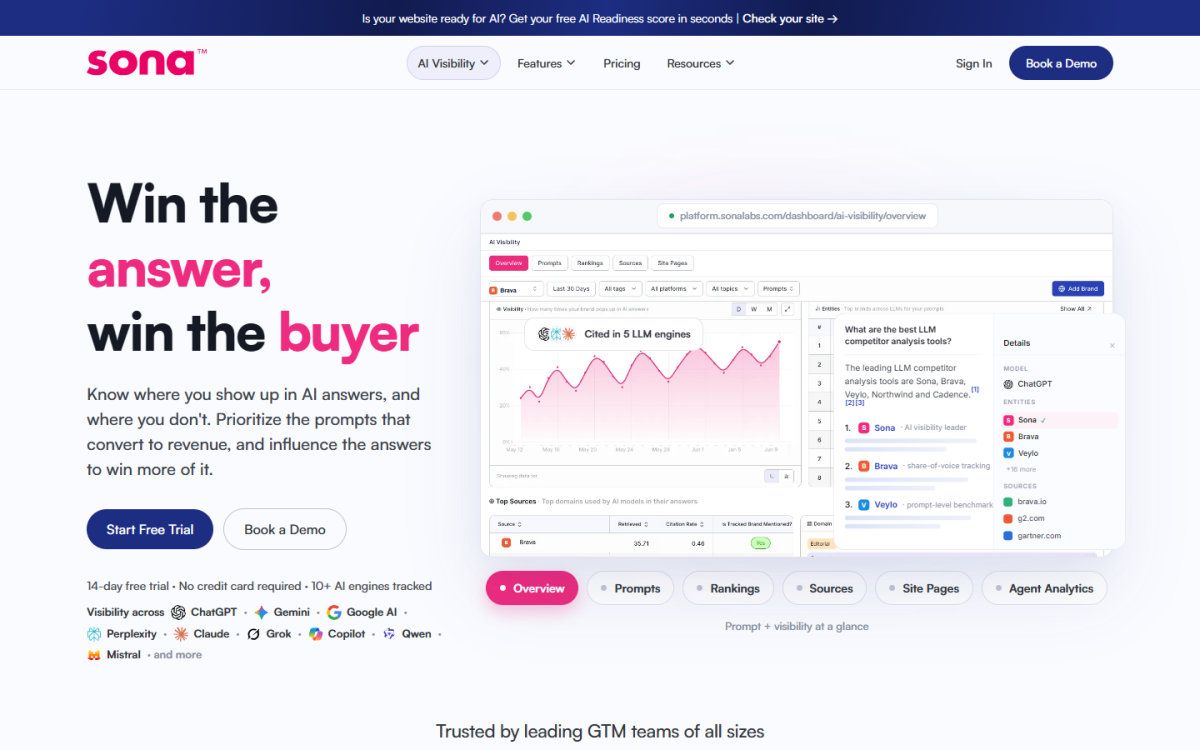
Sona AI Visibility connects prompts and citations to pipeline and revenue, then tracks AI crawler and agent activity at the front of that path. Mention tracking across answer engines is table stakes, but revenue teams need to know whether a citation influenced an account and deal. Pricing starts at $75/month, billed annually, as of October 2026, with agency plans from $199, as of October 2026. It suits B2B SaaS demand generation, marketing operations and revenue teams that need AI search in the same measurement conversation as other channels. Moving requires a defined prompt set, access to reporting destinations and agreement on the account outcomes that matter. AI Attribution connects AI-referred activity to pipeline and revenue reporting.
Peec AI: 2. Which option is a close monitoring match?
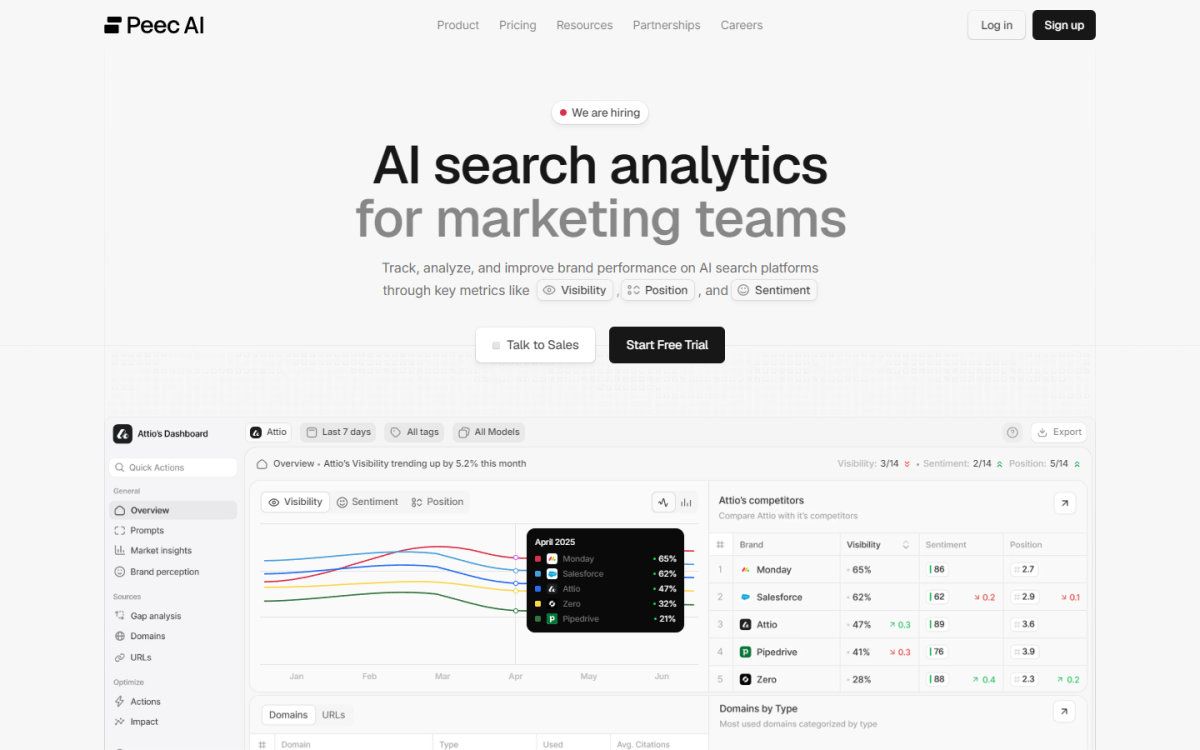
Peec AI is identified among the closest LLM visibility tools to Profound in the October 2026 listing. Its self-serve plans cover AI visibility monitoring, with 50 daily prompts on Starter, 150 on Pro and 350 on Advanced, as of October 2026. Starter begins at $95/month, and agency plans start at $245/month, as of October 2026. Peec AI suits teams whose primary job is monitoring brand presence and competitor coverage across a managed prompt list. Moving requires rebuilding the prompt library, choosing the engines active on the plan and defining the reporting format stakeholders need. Run the same prompts daily during the overlap period, because daily resolution separates sustained answer changes from one-day volatility.
Scrunch AI: 3. Which option suits mid-market and enterprise teams?
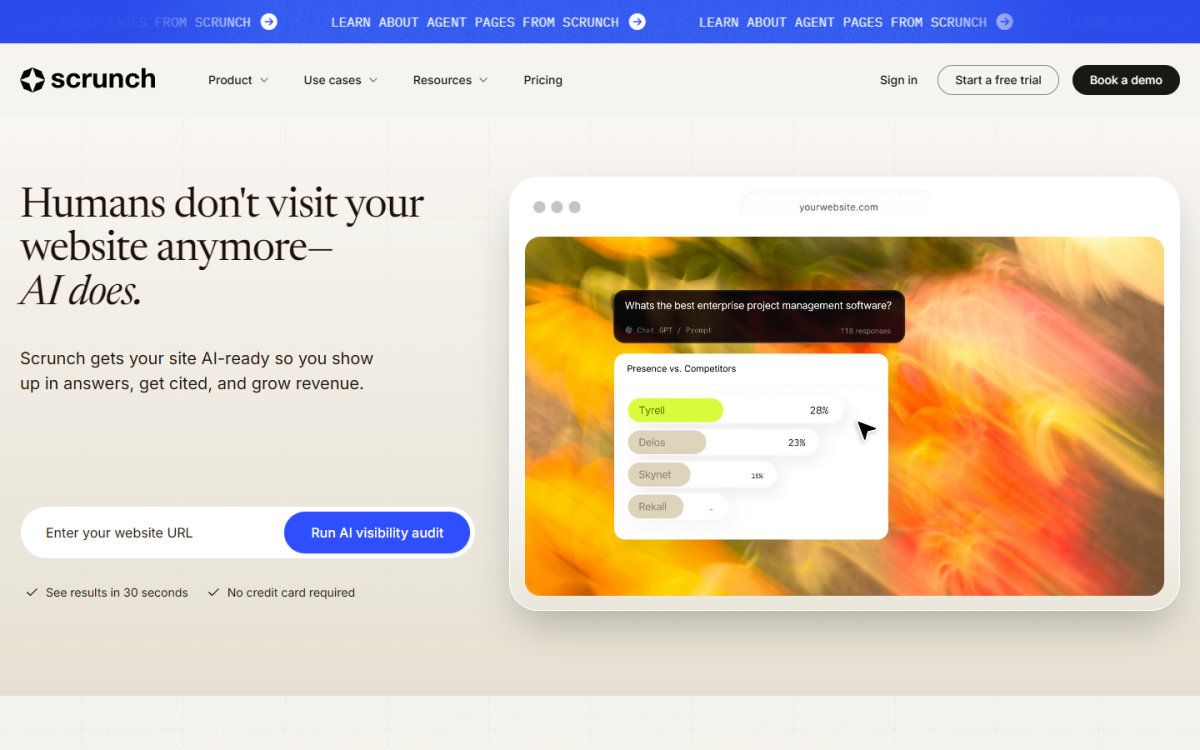
Scrunch AI is also identified among the closest LLM visibility tools to Profound in the October 2026 listing. Core covers ChatGPT, Perplexity, Google AI Overviews and Copilot, while enterprise coverage expands to nine engines, as of October 2026. Core starts at $250/month, as of October 2026. Scrunch AI suits mid-market and enterprise teams that want a focused AI visibility program and accept a higher entry price. Moving requires importing or recreating category prompts, assigning owners for citation reviews and aligning reports to internal planning cycles. Ask how tracked prompts are configured and refreshed, because Core prompt frequency is not published in the October 2026 plan details.
AthenaHQ: 4. Which option has broad model coverage?
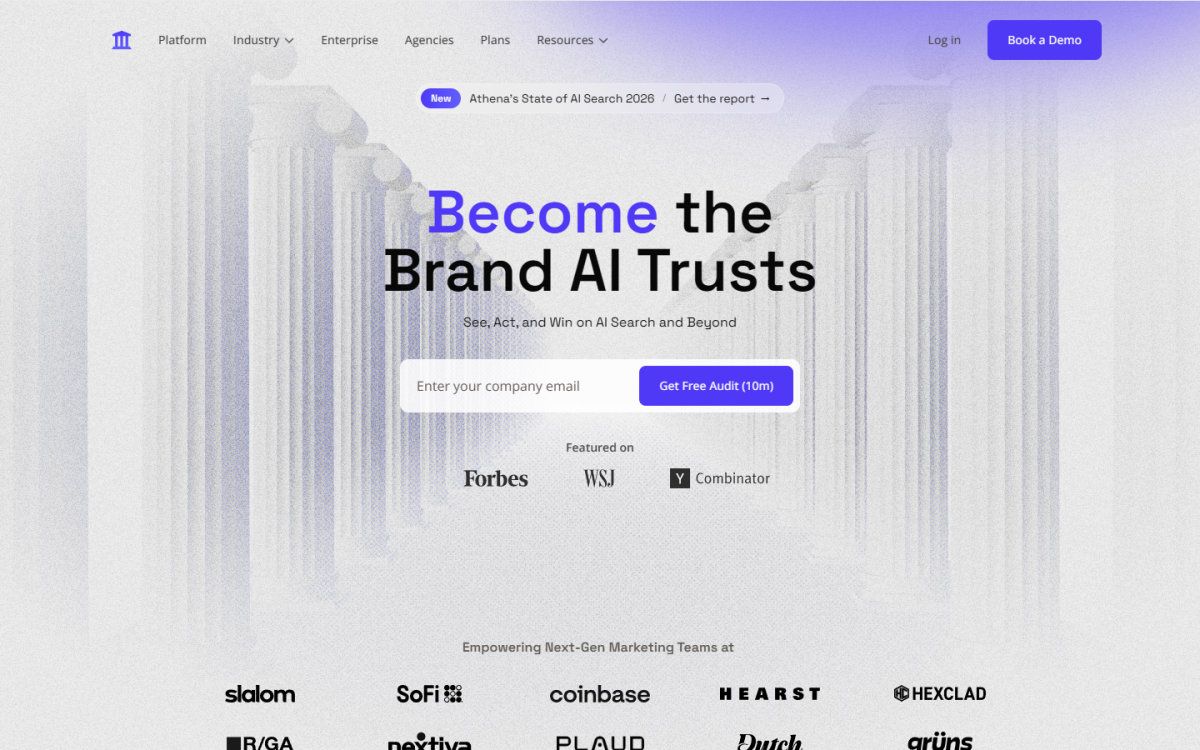
AthenaHQ's October 2026 Starter plan details list 11 models, with additional models available on request. Pricing starts at $295/month under the annual toggle, while Starter includes 3,600 monthly credits, as of October 2026. AthenaHQ suits enterprise teams whose evaluation starts with coverage across many models and credit-based response volume. Moving requires mapping prompt volume to the credit allocation, selecting priority models and determining which reports must be shared internally. Model selection becomes part of governance.
Otterly.ai: 5. Which option suits startups and solo marketers?
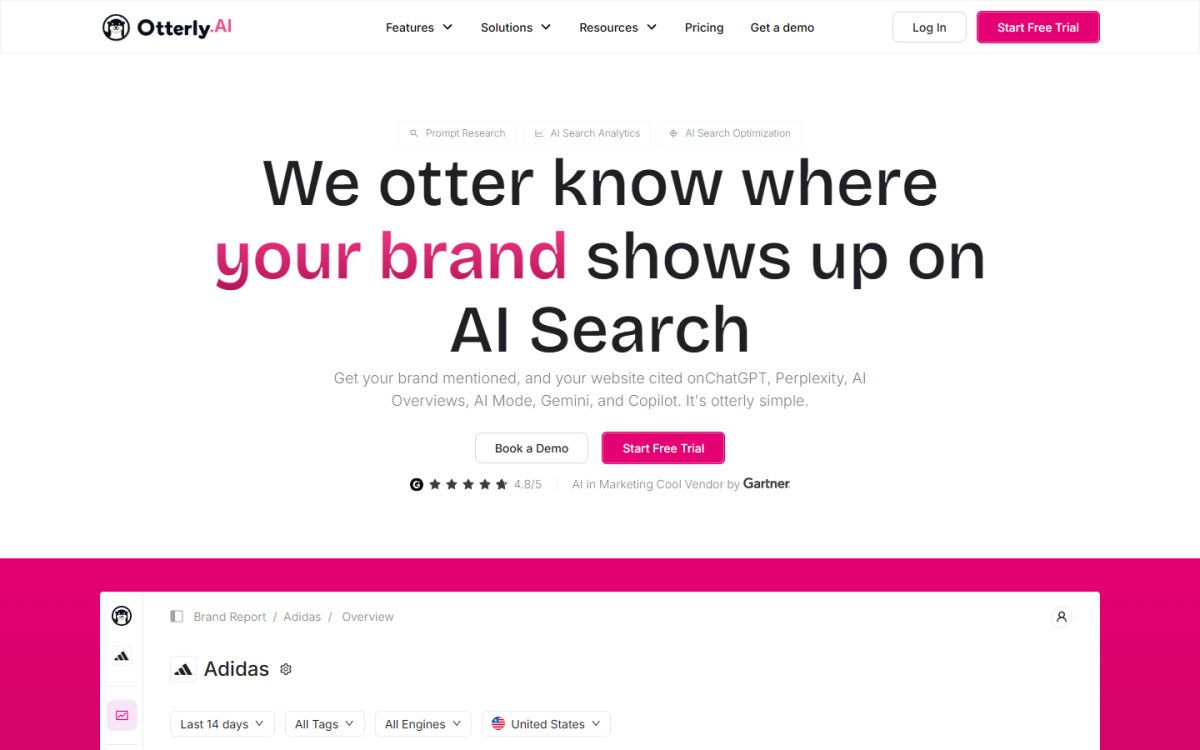
Otterly.ai provides a low-cost entry point for teams that need routine brand monitoring. Its Lite plan starts at $29/month, with a 15% annual discount listed as of October 2026, and includes 15 prompts daily across ChatGPT, Google AI Overviews, Perplexity and Microsoft Copilot. Otterly.ai suits startups and solo marketers that need a contained prompt list before investing in a larger program. Moving takes a small prompt inventory, a list of competitors and a reporting owner. Keep the first tracked list narrow, then add prompts after daily results establish a stable baseline.
PromptWatch: 6. Which option suits teams that need prompt and response volume?
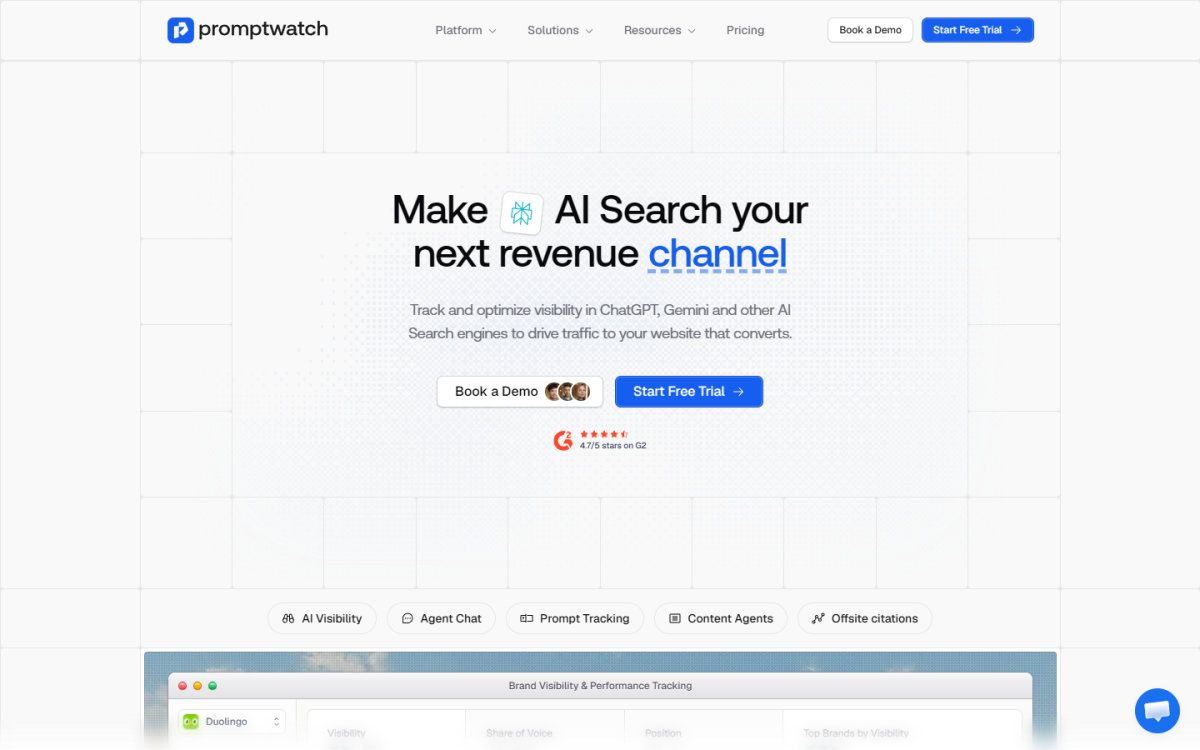
PromptWatch tracks prompts and responses across all supported models on every plan, without engine add-ons in the October 2026 plan details. Essential starts at $95/month and includes 50 prompts daily plus 6,000 monthly responses, as of October 2026. Agency plans start at $199/month, as of October 2026. PromptWatch suits teams that organize recurring prompt monitoring around response volume and agency-oriented tiers. Moving requires defining the prompt list, identifying the response volume required for each reporting cycle and setting a consistent naming convention for monitored topics. Daily tracking reveals patterns that a weekly snapshot can obscure.
Goodie: 7. Which option has a higher-volume Core plan?
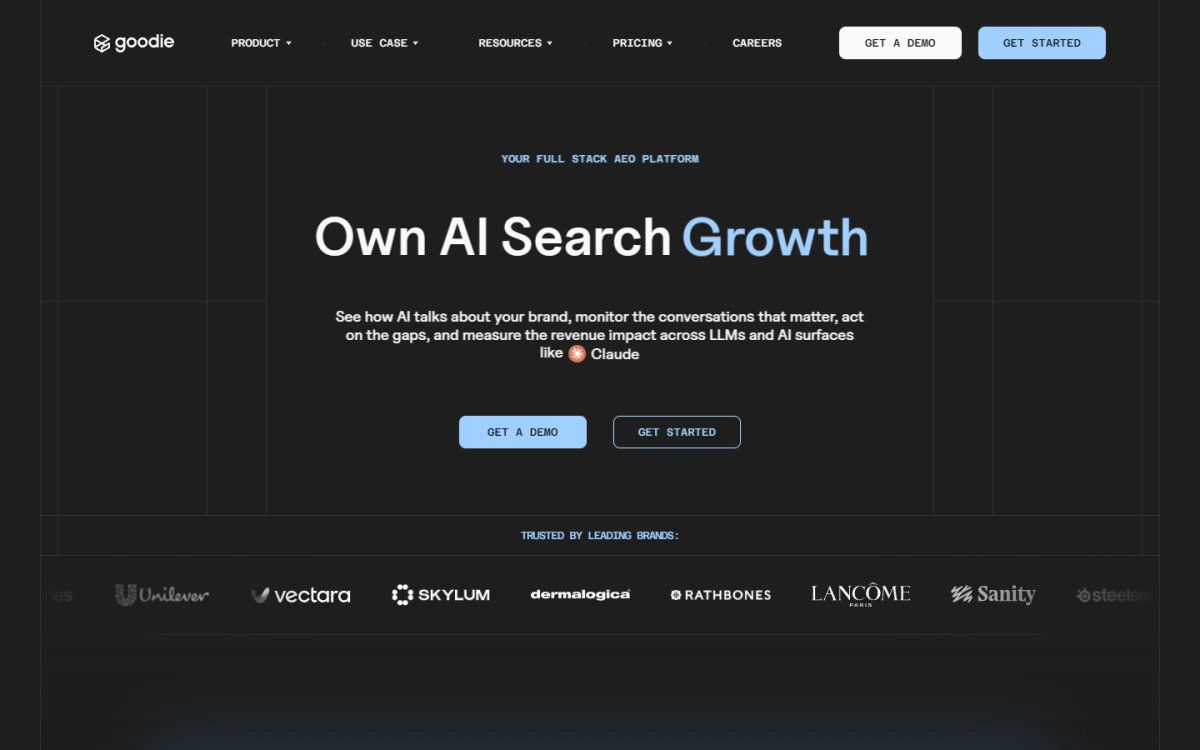
Goodie starts at $295/month for Core, as of October 2026, and includes five models and 110 prompts daily. Its Pro tier lists eight models, while Enterprise lists up to 14, although the plan FAQ references 12. Agency plans start at $275/month, as of October 2026. Goodie suits teams that have moved beyond a small test program and need substantial daily monitoring volume from the start. Moving requires a structured taxonomy for prompts, competitors and categories so that 110 daily prompts produce useful reporting rather than duplicate checks. Confirm the billing period during procurement, because the published Core plan details do not state one. Use the trial to test the reporting workflow before committing.
AIclicks.io: 8. Which option has a low fixed price for small teams?
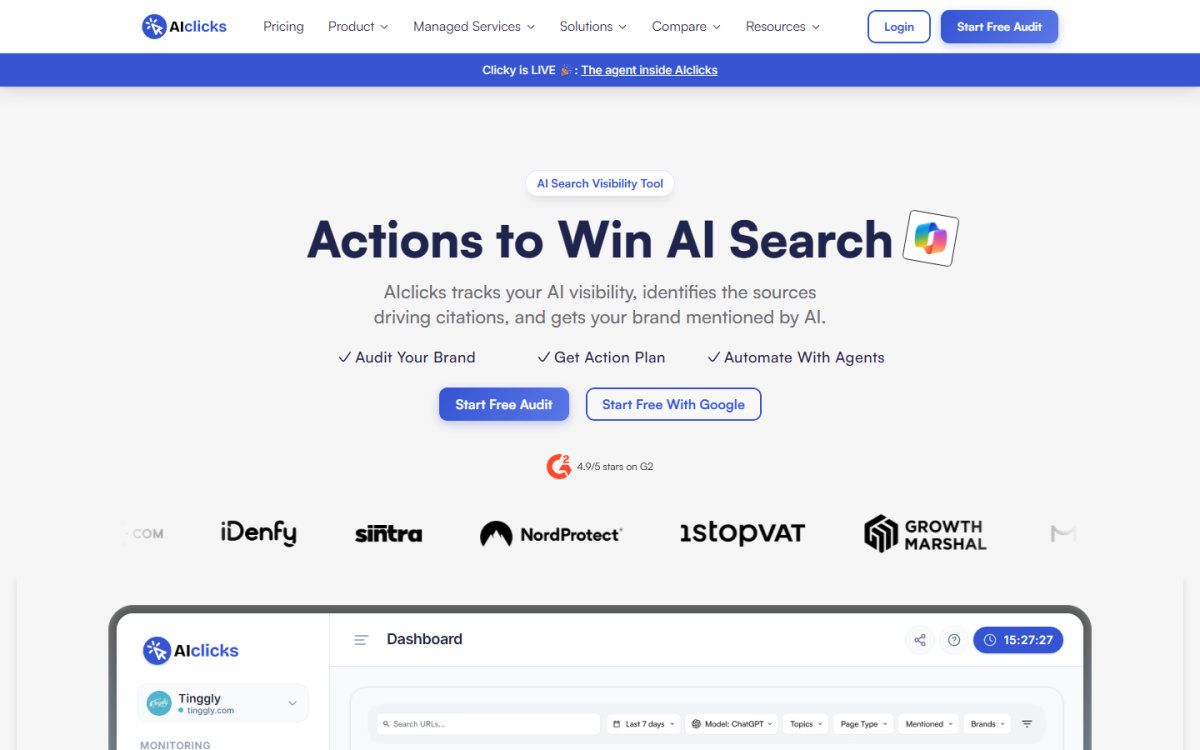
AIclicks.io starts at $59/month for 30 prompts daily across three engines, as of October 2026. Its Starter plan lets buyers choose three engines, while Pro supports four and Business supports six, as of October 2026. AIclicks.io suits small teams with a controlled prompt set that want a fixed monthly monitoring commitment. Moving requires selecting the three engines that matter to the buyer journey, rebuilding priority prompts and assigning daily review ownership. Treat the entry plan as a validation program rather than a full market map. Compare monitored engines against referral data before deciding whether broader coverage belongs in the next plan cycle.
Which alternative fits your team size, workflow and budget?
Start with one written outcome before comparing features. The October 2026 selection guidance recommends defining the required result, then judging tools against that result rather than adding up features. This creates a shorter, more defensible shortlist.
- Startup or solo marketer. Choose Otterly.ai or AIclicks.io when a low entry price, a small prompt set and three to four engines cover the immediate monitoring requirement.
- B2B SaaS scale-up. Choose Sona AI Visibility when competitor visibility, citations and a path to pipeline reporting must operate together. The attribution question should decide the shortlist.
- Agency. Choose Peec AI, PromptWatch or Goodie when published agency plans and multi-client workflow requirements shape the decision. Agency selection should narrow by workflow requirements, not feature counts, per the October 2026 guidance.
- Enterprise. Choose AthenaHQ or Scrunch AI when broader model coverage and custom pricing discussions are part of procurement.
Quoted prices are not automatically comparable. One plan may be monthly, another annual, and a third may use credits or a custom agreement. Compare billing terms, tracked prompt volume and engine sets on the same evaluation sheet.
Which alternative connects AI visibility to pipeline and revenue?
Sona AI Visibility suits B2B SaaS teams that need to connect AI visibility to pipeline and revenue rather than treating mentions as the final output. Mentions, citations and sentiment are leading indicators. They do not prove commercial impact on their own.
Sona AI Visibility resolves anonymous accounts and contacts behind AI-referred visits, infers the likely prompt behind a visit and scores account intent. It also treats AI search as a measurable channel with spend, deals and ROAS alongside other channels.
Before signing with any provider, request the attribution chain in writing. The demonstration should show how an AI-referred visit becomes an account, how that account is associated with a buying journey, and how pipeline and revenue are reported. Ask which data sources feed that chain and which fields remain unknown.
A citation dashboard can support content prioritization. The revenue question is whether the marketing team can identify the account, connect activity to a deal and explain the result in the same reporting model used for paid and organic channels.
What does the incumbent platform still do well?
Profound remains compelling for teams that want broad capability in one premium product and have the budget for that model. Most alternatives require 3–5 tools combined to match Profound’s capabilities, per nicklafferty.com. Consolidation can reduce operational complexity for teams with mature AI search programs.
Profound uses custom Enterprise pricing, as of October 2026. The Trial plan provides a defined evaluation period: 50 prompts run daily for 7 days across ChatGPT, Gemini and Google AI Overviews, per the October 2026 listing.
Staying with Profound makes sense when the existing prompt library, reporting workflow and stakeholder process work, and the team does not need a different attribution model or lower entry price. A switch should solve a specific operational problem rather than restart a working measurement program.
How long does it take to switch to another platform?
No universal switching duration can be established from the available published data. The timeline depends on prompt inventory size, reporting dependencies, integrations and governance. The work includes rebuilding tracked prompts, matching prompt allowances and preserving a baseline for meaningful trend comparisons.
- Export the prompt inventory. Classify prompts by category, buying stage, competitor and priority before loading them into the replacement platform.
- Run both systems in parallel. Track the same list daily during the transition, because a weekly sample cannot distinguish a lasting change from answer volatility.
- Reconnect the workflow. Rebuild alerts, reporting destinations, client reports and any CRM or analytics integrations required by the operating team.
Entry-level setups with small prompt sets are quickest to rebuild. Broader enterprise deployments need more configuration because prompt taxonomies, stakeholder reports and governance rules are more extensive. Keep the old reporting view available until the new baseline is stable.
Can you trust prices and rankings in alternative roundups?
Prices and rankings are starting points, not purchase evidence. AI visibility vendors mix monthly self-serve plans, annual commitments, credits, prompt pools, demo-only pricing and custom enterprise agreements. A $29 monthly plan and a $295 annual-billing figure do not answer the same procurement question.
More tracked engines do not guarantee better data. Compare engine count with prompt volume, refresh cadence, regional coverage, citation accuracy and reporting quality. Teams that need daily operational monitoring should verify that the same prompt list can run daily at the required volume.
Third-party rankings can be affiliate-driven and often omit testing protocols. Ask each vendor for a live demonstration using your own prompt set, the engine configuration you will buy and the reports your executives expect. Every figure in this comparison is tied to the dated listing read for that plan because AI visibility pricing and coverage change quickly.
How many AI engines should an alternative track for B2B buyers?
B2B buyers should track the engines that appear in their referral and buyer-research data, then expand coverage as evidence justifies it. Dated listings in this comparison range from 3 AI platforms on lower-cost plans to 11 models on an enterprise-oriented plan. Coverage is a prioritization decision, not a scorecard.
Start with ChatGPT, Perplexity, Gemini, Claude, and other answer engines that match observed audience behavior. Google AI Overviews deserves separate attention where Google search remains a material discovery path. Prompt volume and refresh cadence must keep pace with engine count, or reporting becomes shallow across too many surfaces.
AI crawler and agent activity adds another diagnostic layer. Server-log evidence can show which answer-engine crawlers already reach the site, helping teams distinguish between an engine that is relevant in theory and one already reading site pages.
Monitoring brand mentions in AI answers is only half the job. Sona AI Visibility connects AI citations and prompts to pipeline and revenue on an account timeline.
What questions should buyers ask before choosing an alternative?
What is the lowest-priced option?
Among the tools compared, Otterly.ai has the lowest entry price at $29/month, with a 15% annual discount listed as of October 2026. AIclicks.io starts at $59/month for 30 daily prompts, as of October 2026. Billing terms differ, so compare the contract term and included prompt volume.
Is a free option available?
AthenaHQ offers an Essential free tier with a $25 free credit, as of October 2026. Profound’s Trial plan runs 50 prompts daily for 7 days across ChatGPT, Gemini and Google AI Overviews, per the October 2026 listing. Ask each vendor whether its trial requires a card, limits engines or restricts exports before using it for an evaluation.
Which option suits B2B SaaS?
For B2B SaaS teams that must report pipeline from AI search, Sona AI Visibility connects prompts and citations to pipeline and revenue. Teams that mainly need AI visibility monitoring can shortlist Peec AI, Scrunch AI or PromptWatch based on prompt volume, engine coverage and agency workflow requirements.
Do buyers need more than one tool?
Often, yes. Most alternatives require 3–5 tools combined to match Profound’s capabilities, per nicklafferty.com. Define the required outcome first, such as citation monitoring, SEO performance reporting or pipeline attribution, then test whether one platform covers that operational need.
How many AI engines should buyers track?
Coverage in the dated listings runs from 3 platforms to 11 models. Weigh engine count against prompt allowance, daily refresh cadence, regional coverage and citation accuracy. A smaller engine set with a well-maintained daily prompt list can produce more useful operating data than broad coverage with insufficient volume.
Can an alternative show revenue from AI search?
Monitoring tools show mentions and citations, which are leading indicators. Sona AI Visibility goes further by tying citations and prompts to pipeline and revenue. Verify any attribution claim before buying by asking to see the path from AI-referred visit to account, opportunity and reported revenue.
What are the frequently asked questions about Profound alternatives?
What are the best Profound alternatives for B2B SaaS teams?
Sona AI Visibility fits teams that must report pipeline and revenue from AI search. Teams that mainly need AI visibility monitoring can shortlist Peec AI, Scrunch AI or PromptWatch based on prompt volume, engine coverage and agency workflow requirements.
How much do Profound alternatives cost?
Profound uses a free Trial plan and custom Enterprise pricing, as of October 2026. Otterly.ai has the lowest entry price at $29/month, with a 15% annual discount listed as of October 2026. Sona AI Visibility starts from $75/month, billed annually, with agency plans from $199. Scrunch AI starts at $250/month, while AthenaHQ and Goodie start at $295/month.
How many AI engines do Profound and its alternatives track?
Profound's Trial plan covers ChatGPT, Gemini and Google AI Overviews. Coverage in the dated listings runs from 3 platforms to 11 models. Sona AI Visibility lists 11 answer engines, and AthenaHQ lists 11 models. Weigh engine count against prompt allowance, daily refresh cadence, regional coverage and citation accuracy.
Which Profound alternative can show revenue from AI search?
Monitoring tools show mentions and citations, which are leading indicators. Sona AI Visibility extends past them to pipeline and revenue. It resolves anonymous accounts and contacts behind AI-referred visits, infers the likely prompt behind a visit and scores account intent. Before buying, ask to see the path from AI-referred visit to account, opportunity and reported revenue.
Summarize this article with AI: ChatGPT · Claude · Perplexity · Google AI Mode
Last updated: October 2026







