A GEO optimizer is software and a method for measuring and increasing how frequently AI engines including ChatGPT, Perplexity, Google AI Overviews, and other answer engines cite your site. While most platforms only track mentions, Sona AI Visibility links prompts and citations to pipeline and revenue, while revealing AI crawler and agent activity. Before purchasing, compare tracked prompts, engine coverage and sampling methods, since published prices are not directly comparable. Address technical fundamentals, including crawlability and schema, first.
What is a GEO optimizer, and is it software or a practice?
A GEO optimizer is software, a service, or a working practice that helps a website become easier for AI answer engines to discover, understand, and potentially cite. It measures how a brand appears in ChatGPT, Perplexity, Google AI Overviews, Gemini, Claude, and other answer engines.
Generative engine optimization, answer engine optimization, and artificial intelligence optimization describe the same broad discipline, according to en.wikipedia.org. The platform provides measurement. The practice includes the editorial, technical, and distribution work that follows.
A team might track the prompt “best customer data platform for B2B SaaS,” inspect the brands and pages appearing in answers, then improve a relevant comparison page with clearer evidence, current statistics, and direct answers. Research shared on reddit.com identifies expert quotes, clear statistics, and readability improvements as useful GEO tactics.
A GEO optimizer cannot control a model’s retrieval system or guarantee inclusion. It shows where a brand appears, where it is absent, and which pages or prompts merit investigation.
Why does a GEO optimizer matter to a team with a pipeline target?
Buyers can research vendors inside AI answers before visiting a website, completing a form, or entering a CRM. A team with a pipeline target needs to know whether that research creates qualified demand, not simply more brand mentions.
Developios reported that 50% of consumers use AI-powered search and that 44% identify it as their primary source for product discovery, compared with 31% for traditional search, per developios.com, October 19, 2026. AI-assisted research can be difficult to attribute.
Sona AI Visibility connects citations and AI-referred visits to pipeline and revenue on one account timeline, while tracking AI crawler activity through server logs. Demand generation teams can assess whether visibility appears around commercial research rather than only counting mentions.
- Visibility data identifies prompts where buyers encounter the brand.
- Page data identifies the content supporting those answers.
- Attribution data connects AI-referred activity with accounts, opportunities, and closed-won revenue.
How does a GEO optimizer work, from prompt set to visibility score?
A GEO optimizer starts with a defined prompt set, runs those prompts across selected answer engines, records brand mentions and citations, then produces a visibility view. The workflow must show what changed, where it changed, and what requires investigation.
- Collect buyer questions from sales calls, search demand, product categories, and competitor comparisons.
- Rewrite the highest-value topics as natural-language prompts.
- Run the same prompt list daily across the selected answer engines.
- Record brand presence, cited sources, competitor appearance, and the pages linked in answers.
- Assign page-level work based on missing prompts, source patterns, and technical findings.
Daily tracking reveals changes that a weekly snapshot can conceal. Answer engines shift with retrieval changes, model updates, and new competitor content. Sustained movement is more useful than a one-day spike.
A brand-level score is a dated snapshot, not a work item. Sona AI Visibility uses AI Search Insights to show tracked prompts, cited sources, and page performance, helping teams identify the prompts and sources behind the result rather than treating an aggregate number as a diagnosis.
Sona's own AI visibility data, September 2026, counts eight answer surfaces: ChatGPT, Google AI Overviews, Perplexity, Google AI Mode, Gemini, Mistral, Qwen, and Claude. Engine coverage matters because a brand can appear in one answer surface while remaining absent from another.
What is a GEO optimizer not, and what is it confused with?
A GEO optimizer does not replace SEO, generate content, or guarantee inclusion in AI answers. It is often confused with an SEO rank tracker because both monitor search visibility, but they measure different outputs and require different evidence.
SEO rank tracking focuses on positions in search results, links, and organic clicks. AI visibility tracking focuses on mentions, citations, answer composition, and AI-referred visits. An SEO suite can show whether a page ranks for a keyword. An AI visibility platform can show whether that page is cited in an answer to a fuller buyer question.
A GEO optimizer is also more than a schema markup tool. Schema can help an engine parse content structure, but it does not establish source credibility, crawl access, factual clarity, or recency. LLMs such as ChatGPT also use third-party signals beyond backlinks, including reviews and unlinked branded mentions, according to quora.com.
The distinction matters for budget decisions. A platform that reports mentions supports measurement. The operating work still includes technical remediation, content updates, source development, and revenue analysis.
Which GEO optimizer platforms track ChatGPT, Perplexity, Google AI Overviews and Gemini?
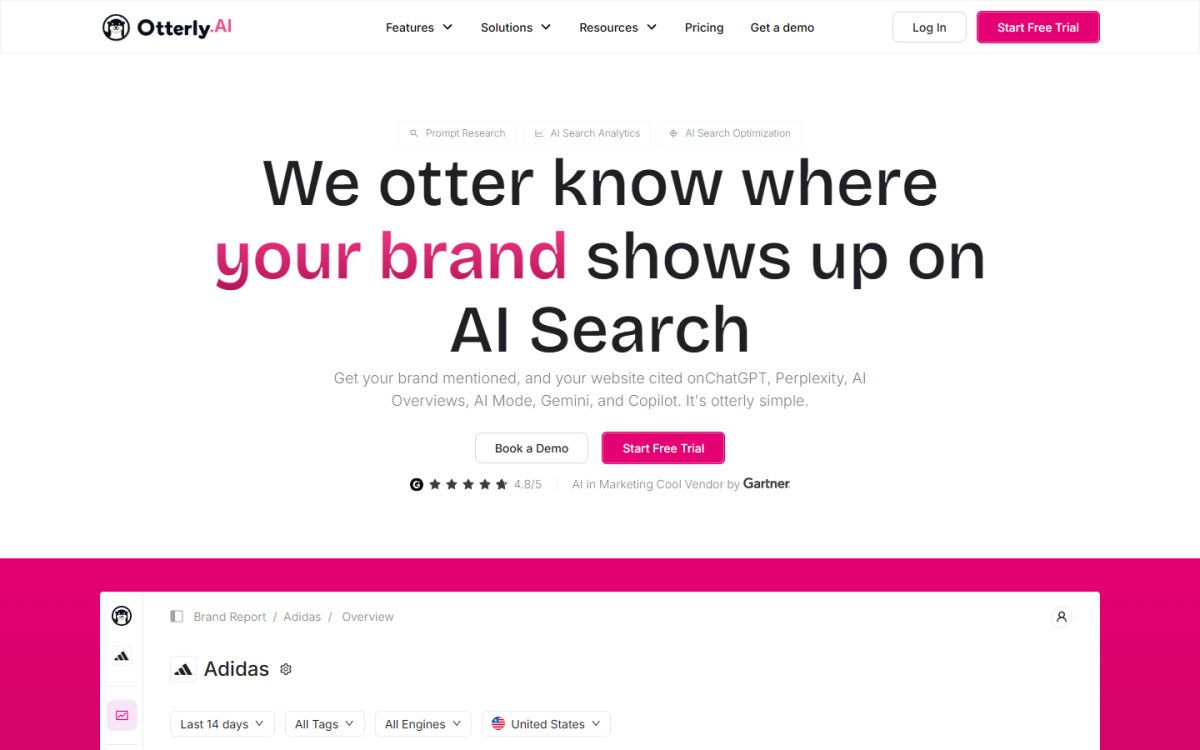
Among the compared entry plans, Sona AI Visibility and Scrunch AI demonstrably cover ChatGPT, Perplexity, Google AI Overviews, and Gemini. Otterly.ai requires a paid Gemini add-on on Lite. Peec AI, AthenaHQ, PromptWatch, and Goodie do not publish enough entry-plan engine detail to confirm coverage of all four.
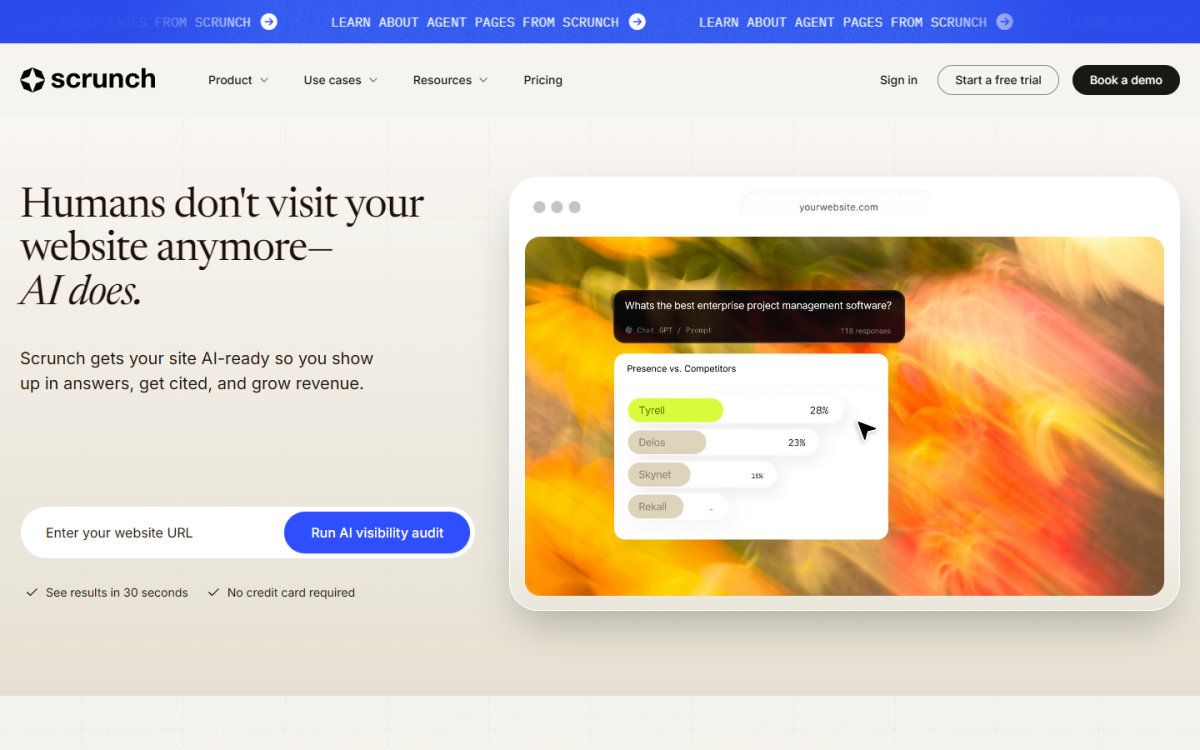
The following published plan information was read in October 2026. Prices, engine coverage, prompt allowances, and agency terms change, so procurement teams should verify current terms before signing an agreement.
| Tool | Starting price | Agency Plans? | # of Answer Engines Tracked | Answer Engines | # of Daily Tracked Prompts (entry plan) | Cost per Daily Tracked Prompt | Differentiation |
|---|---|---|---|---|---|---|---|
| Sona AI Visibility | From $75/month, billed annually | Yes | 11 | ChatGPT, Gemini, Google AI Mode, Google AI Overviews, Perplexity, Claude, DeepSeek, Grok, Copilot, Qwen, Mistral | 5,000 credits/month, about 166 daily tracked prompts on one model or 56 across three | $0.45 per daily tracked prompt | Connects AI citations and prompts to pipeline and revenue on one account timeline, with AI crawler activity from server logs. |
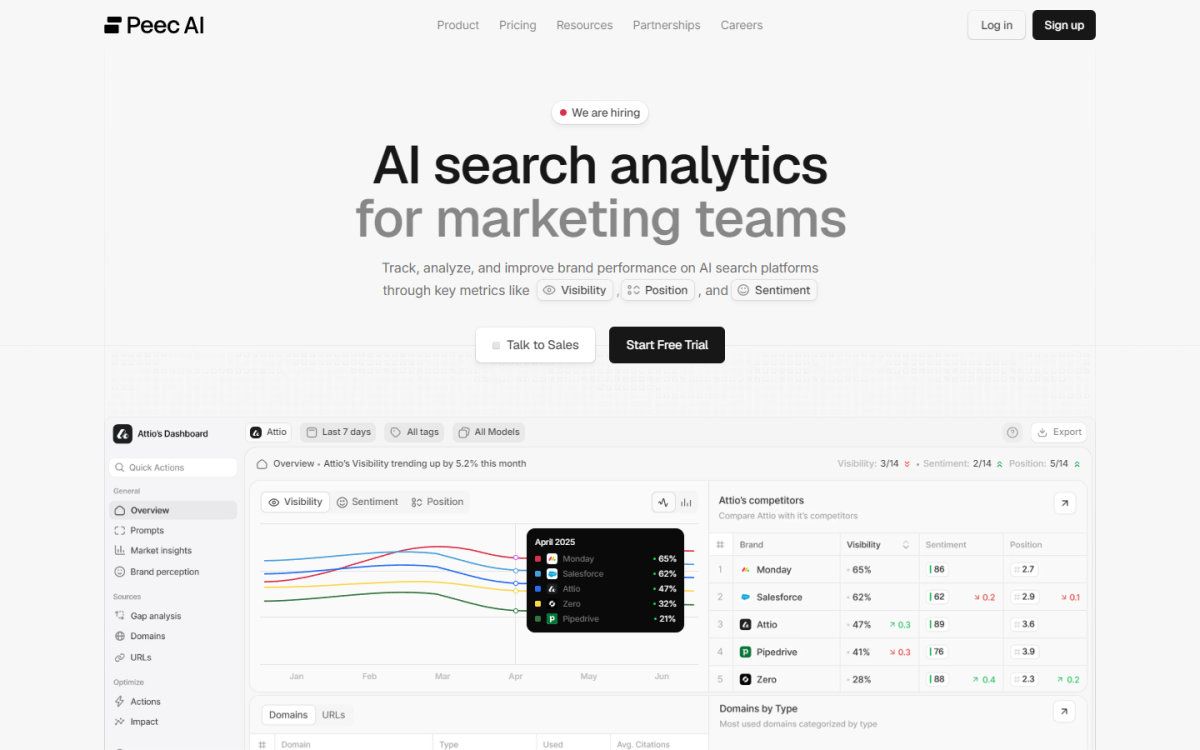
| Peec AI | From $95/month | Yes | 3 | Not published | 50 prompts | $0.63 per daily tracked prompt | AI visibility monitoring across selected answer engines. |
| Otterly.ai | From $29/month | Yes | 4 | ChatGPT, Google AI Overviews, Perplexity, Microsoft Copilot | 15 prompts | $0.48 per daily tracked prompt | Prompt and citation tracking across its entry-plan engine set. |
| Scrunch AI | From $250/month | Yes | 4 | ChatGPT, Perplexity, Google AI Overviews, Microsoft Copilot | 125 prompts, frequency not stated | No refresh cadence published | AI search visibility tracking for brand teams and agencies. |
| AthenaHQ | From $295/month | Not published | 11 | Not published | 3,600 credits/month, unlimited prompts, frequency not stated | No refresh cadence published | AI response monitoring through a credit-based plan. |
| PromptWatch | From $95/month | Yes | Not published | Not published | 50 prompts | $0.48 per daily tracked prompt | Prompt monitoring with monthly response allowances. |
| Goodie | From $295/month | Yes | 5 | Not published | 110 prompts | $0.67 per daily tracked prompt | AI visibility monitoring across five models on its Core plan. |
How do GEO optimizer prices and prompt limits compare?
GEO optimizer pricing ranges from low-cost prompt monitoring to custom enterprise measurement programs. DIY software commonly costs $10 to $1,000 per month, while specialized services run from $1,500 to $50,000 or more per month, according to teknicks.com. Billing terms, currencies, engine counts, and refresh cadences differ.
Published entry plans range from $29 per month for Otterly.ai to $295 per month for Goodie and AthenaHQ, as of October 2026. Sona AI Visibility starts from $75 per month when billed annually, with about 56 prompts tracked daily across three engines on Starter.
Prompt allowances are not interchangeable. A vendor may define a prompt as one question across several engines, one answer response, a credit, or a prompt slot. A plan with 50 tracked prompts can therefore represent a different volume of underlying AI answers than another plan with the same label.
Compare unit prices only when the plan cadence is clear. Sona’s published Starter figure is $0.45 per daily tracked prompt. Peec AI’s corresponding figure is $0.63 per daily tracked prompt, and PromptWatch and Otterly.ai each list $0.48 per daily tracked prompt, as of October 2026.
What should you verify before choosing an AEO optimizer?
Choose an AEO optimizer against the buyer questions, engines, operating cadence, and business outcome the team needs to measure. Start with the commercial workflow, then test whether the platform’s plan definitions and data model support that workflow.
- Prompt coverage: Confirm that the platform can track your highest-value buyer questions, not only branded queries.
- Engine coverage: Verify the exact engines included in the selected plan, including Google AI Overviews where relevant.
- Daily cadence: Confirm that the same prompt list can run daily and that historical results remain available.
- Source evidence: Check whether the platform records cited domains and the pages associated with each answer.
- Page workflow: Verify that the output points to pages, prompts, or technical findings a content team can act upon.
- Revenue measurement: Confirm whether AI-referred activity can be joined to accounts, pipeline, and closed-won revenue.
Sona AI Visibility is relevant when the buying decision requires attribution alongside visibility reporting. Its measurement model connects citations and AI-referred visits with account and revenue outcomes rather than treating answer presence as the final metric.
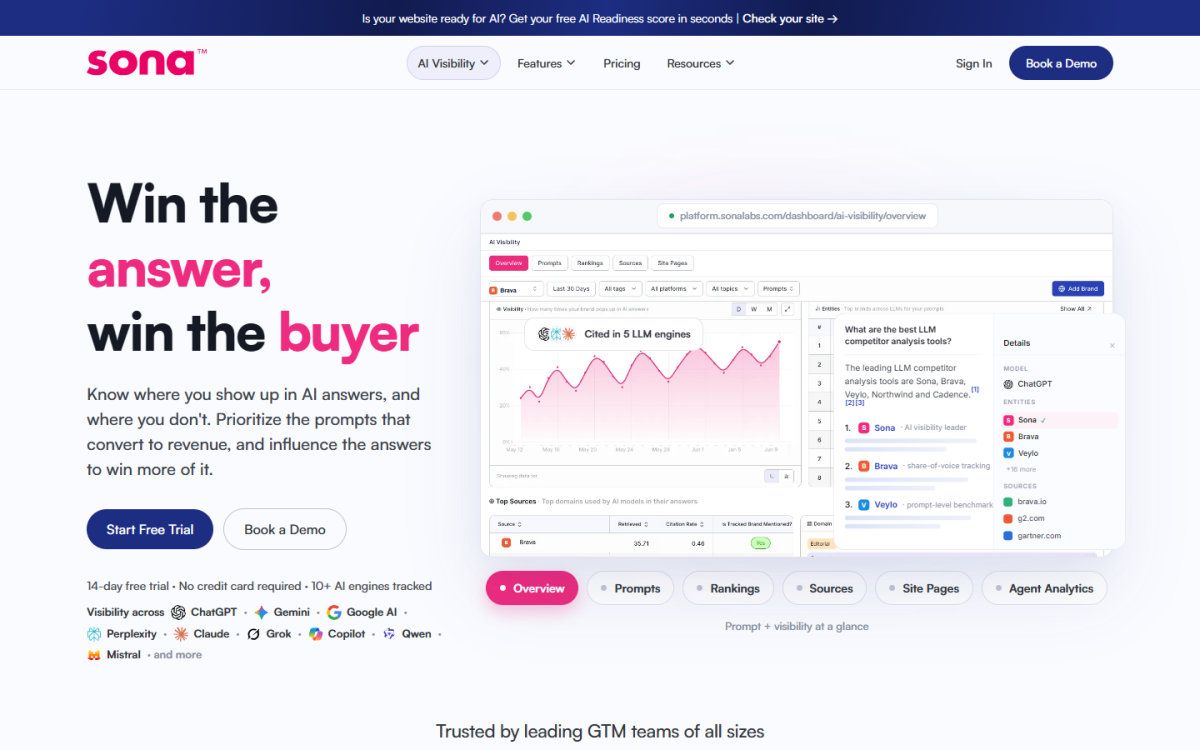
Run a controlled trial with category, comparison, integration, pricing, and alternative queries. Review the output with content, SEO, demand generation, and RevOps stakeholders before using the platform’s score as a procurement decision.
What technical setup does a site need before a GEO optimizer can help?
A GEO optimizer needs a site that answer engines can reach, parse, and interpret. The technical baseline includes crawl access, server-rendered HTML, clear page structure, current content, and stable canonicalization. Visibility software can identify issues, but blocked pages require remediation before crawlers can access them.
| Technical area | What to verify | Why it affects AI visibility | Useful operating cadence |
|---|---|---|---|
| Crawl access | robots.txt rules, WAF responses, rate limits, and bot access | Answer engines cannot retrieve pages they cannot access. | Check after infrastructure or security changes. |
| Rendering | Server-rendered HTML and JavaScript dependency | Accessible HTML gives crawlers content they can parse directly. | Review after major template releases. |
| Canonicalization | Canonical tag, indexability, and duplicate-page handling | Clear canonical signals reduce ambiguity about the preferred page. | Audit during technical SEO reviews. |
| Content structure | Select the appropriate Schema.org type, generate or template JSON-LD, and map required and recommended properties to visible page content. Pass when the script appears in rendered HTML, validates for syntax and schema eligibility in a testing tool, and the deployed source has a valid canonical tag and indexable status. Failures require correcting the JSON-LD, visible-content mapping, template placement, canonical signal, or indexability block, then revalidation after template releases. | Structured content helps an engine interpret the page subject and evidence. | Validate before publication and after every template release. |
Sona AI Visibility connects citations and AI-referred visits to pipeline and revenue while tracking AI crawler activity through server logs. Technical checks provide a starting snapshot, while ongoing prompt tracking shows whether pages appear in relevant answers.
Run prompt tracking daily, then schedule full technical re-audits monthly or quarterly. Prompt data captures answer volatility. Technical auditing identifies regressions in crawlability, rendering, and page quality.
How do you check that GEO changes are working and tied to revenue?
Check GEO changes by comparing a fixed daily prompt log, page-level evidence, AI-referred visits, and downstream account outcomes. A higher visibility score alone does not prove commercial impact because the changed prompts may be informational, low-intent, or unrelated to target accounts.
- Record a baseline for the selected prompt set before publishing or updating pages.
- Document the page changes, source additions, technical fixes, and publication dates.
- Track the same prompts daily and isolate movements that persist for several days.
- Review cited sources and page appearance to determine what changed in the answer composition.
- Connect AI-referred visits to accounts, opportunities, pipeline, and closed-won revenue.
Sona AI Visibility connects AI citations and AI-referred visits to pipeline and revenue on one account timeline. The practical question is whether commercial prompts and cited pages correlate with qualified accounts, rather than whether a dashboard score rose in isolation.
Use a monthly operating review for page fixes and a quarterly review for positioning and competitive patterns. Maintain a comparable log with severity-ranked fixes attached to pages that moved, rather than producing a static report without a next action.
What are the frequently asked questions about GEO optimizers?
Is a GEO optimizer the same thing as an AEO optimizer?
In practice, yes. GEO, AEO, and AIO are alternate names for making content easier for AI engines to find, understand, and cite. The labels differ more than the underlying work. Generative engine optimization is also known as answer engine optimization and artificial intelligence optimization, according to en.wikipedia.org.
How much does a GEO optimizer cost?
DIY tracking software runs from $10 to $1,000 per month, while specialized services run from $1,500 to $50,000 or more per month, according to teknicks.com. Entry plans from individual tools sit below the top of that range. Billing periods, annual discounts, plan currencies, engine coverage, and prompt definitions vary.
Can a GEO optimizer guarantee my brand appears in ChatGPT answers?
No. AI answers vary by model, prompt wording, location, date, retrieval results, and answer format. A platform can measure results and suggest investigation priorities, but it cannot promise a citation. A single visibility score can create false precision by concealing the prompts, sources, and answer surfaces behind the result.
Does schema markup make AI engines cite my site?
No. Schema markup helps engines parse what a page covers, supporting discovery and understanding, but it does not guarantee a citation. Pair schema with crawl access, clear copy, direct evidence, stable canonical tags, and current content.
How many prompts should I track?
Start with the questions buyers actually ask, then expand from observed demand and sales feedback. Entry allowances use incompatible units as of October 2026: Sona AI Visibility Starter includes 5,000 credits per month, about 56 prompts tracked daily across three engines; Otterly.ai includes 15 prompts; Peec AI and PromptWatch include 50 prompts; Goodie includes 110 prompts; Scrunch AI includes 125 prompts with frequency unstated; and AthenaHQ includes 3,600 credits per month with unlimited prompts and no published run frequency.
Do I still need an SEO suite if I add a GEO optimizer?
Usually, yes. An SEO suite tracks rankings, links, and search-result performance, while an AI visibility platform tracks mentions and citations inside AI answers. The disciplines overlap around content and technical quality, but they answer different measurement questions. Some SEO vendors now include AI visibility modules alongside traditional search reporting.
Summarize this article with AI: ChatGPT · Claude · Perplexity · Google AI Mode
Last updated: October 2026