


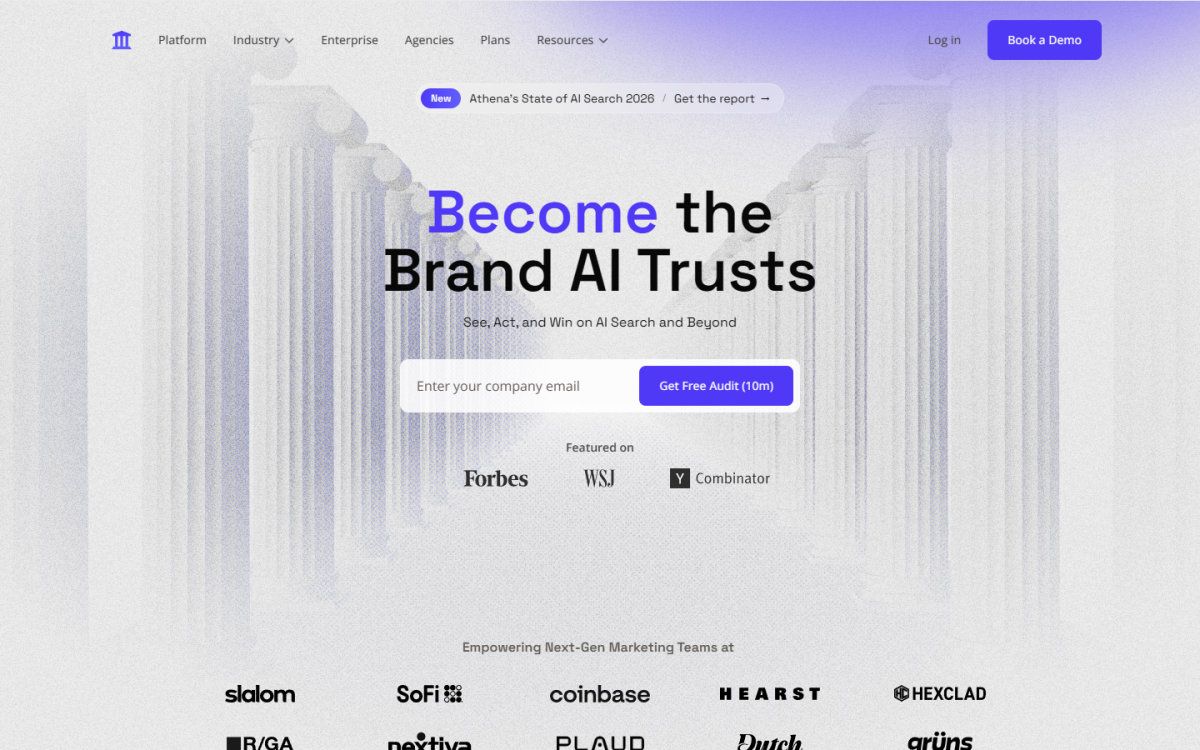
Profound vs AthenaHQ mainly differs in buying model: AthenaHQ offers a $295-per-month self-serve plan with 11 named models and unlimited seats, while Profound fits enterprise teams seeking agents, crawler analytics and regional depth. Both focus on visibility; Sona AI Visibility links prompts and citations to pipeline and revenue. Prices and limits come from September and October 2026 listings and change frequently.
Which AI visibility platform should a team choose: the one with published self-serve pricing or the one built for enterprise depth?
For a Profound vs AthenaHQ decision, choose AthenaHQ when published Starter pricing, unlimited seats, and a broad named model list matter most. Choose Profound when enterprise procurement, geographic monitoring, and a daily trial across three answer engines matter more than transparent self-serve brand pricing.
AthenaHQ Starter begins at $295 per month and includes 3,600 monthly credits and unlimited seats, as of October 2026. Profound’s brand offering centers on a free trial and custom Enterprise pricing, while its agency plans begin at $99 per month, as of October 2026.
AthenaHQ is the clearer default for smaller in-house marketing teams because its entry terms are easier to budget. Profound is the stronger fit for enterprises evaluating international AI search coverage, with monitoring across 150+ regions, as of October 2026.
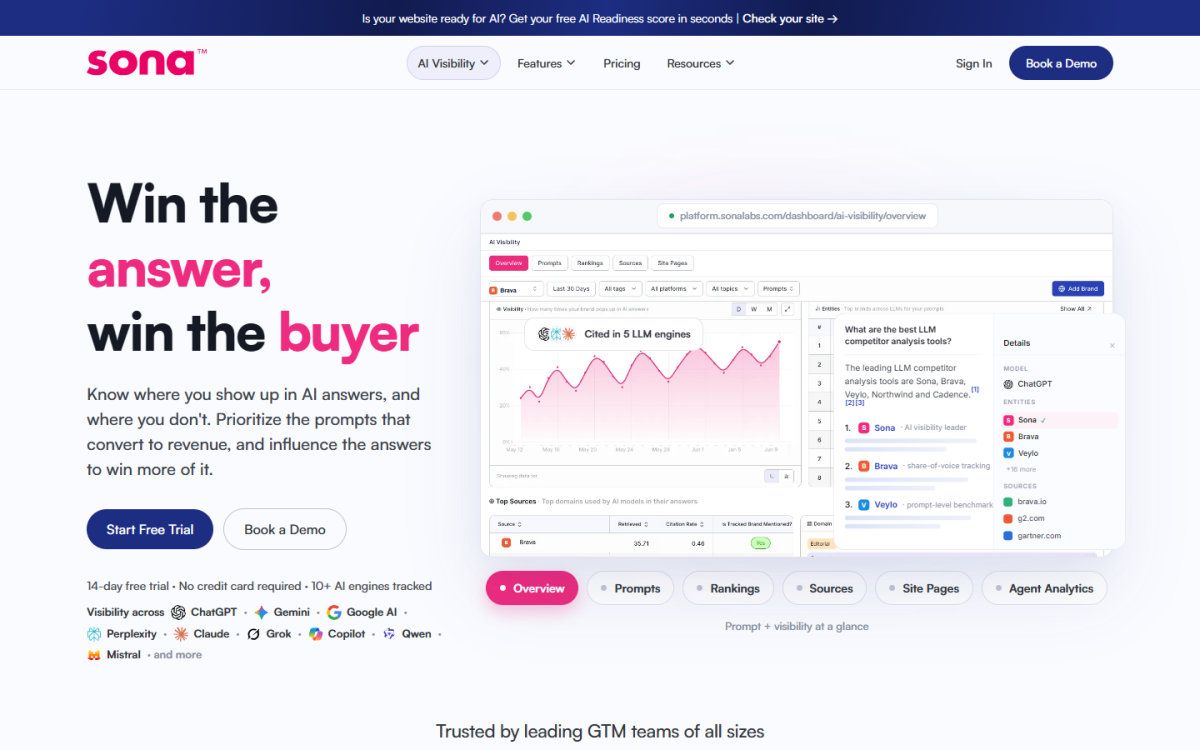
Sona AI Visibility is relevant when the buying decision extends beyond visibility reporting. Sona AI Visibility connects citations to pipeline and revenue on one account timeline, and tracks which AI crawlers reach pages, so brands can assess whether AI visibility produces commercial outcomes.
How do these two platforms compare side by side on engines, pricing, agents, seats and support?
AthenaHQ publishes a $295 Starter plan with 11 named models and unlimited seats. Profound offers a 7-day trial with 50 daily prompts across three engines and custom Enterprise pricing, as of October 2026. The products use different allowance models, so monthly prices do not represent equivalent monitoring volume.
nicklafferty.com reports that Profound offers unlimited prompts and a 5-minute SLA, while AthenaHQ uses credit limits and has slower response times. Profound’s seat limit is Not published, and AthenaHQ’s comparable regional-coverage figure is Not published. Review applicable contract terms, response definitions, and included support tiers before signing.
| Tool | Starting price | Agency Plans? (Yes/No) | # of Answer Engines Tracked | Answer Engines | # of Daily Tracked Prompts (entry plan) | Cost per Daily Tracked Prompt | Differentiation |
|---|---|---|---|---|---|---|---|
| Sona AI Visibility | From $75/month, billed annually, as of October 2026 | Yes | 11 | ChatGPT, Gemini, Google AI Mode, Google AI Overviews, Perplexity, Claude, DeepSeek, Grok, Copilot, Qwen, Mistral | 5,000 credits/month, about 56 prompts tracked daily across 3 engines | $0.45 per daily tracked prompt | Connects AI citations and prompts to pipeline and revenue on one account timeline |
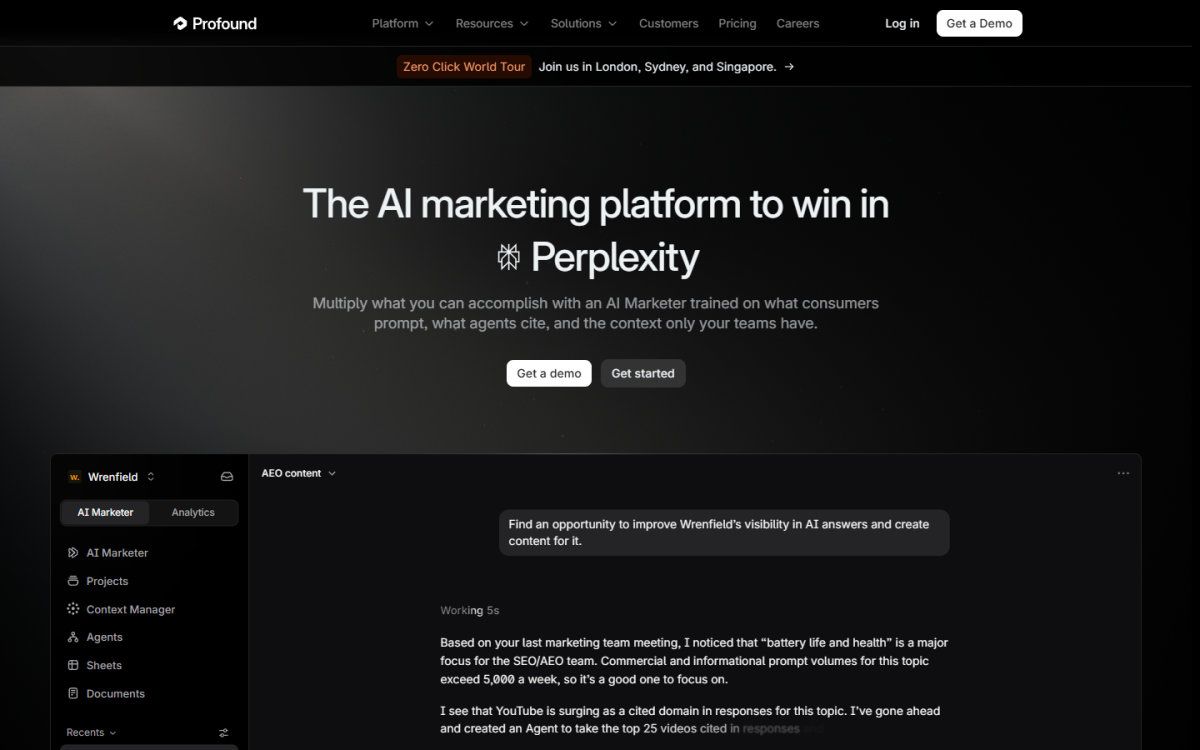
| Profound | Free Trial, custom Enterprise, as of October 2026 | Yes | 3 | ChatGPT, Gemini, Google AI Overviews | 50 prompts daily for 7 days | Cannot calculate from custom pricing | AI agents, traffic analytics, and enterprise geographic monitoring |
| AthenaHQ | From $295/month, as of October 2026 | Yes | 11 | ChatGPT, Gemini, Claude, Perplexity, Google AI Overviews, Google AI Mode, Copilot, Grok, DeepSeek, Meta AI, Mistral | 3,600 credits/month, unlimited prompts, refresh cadence not published | No refresh cadence published | Prompt, source, and response analytics with content production capabilities |
AthenaHQ offers discounted agency licenses, although the agency-license price is not published. Profound’s Agency Growth plan starts at $99 per month, with 10 pitch workspaces per month, while client workspaces cost an additional $399 per month. Verify the applicable contract terms, response definitions, and included support tiers before signing.
What does each platform cost, and why are the prices so hard to compare?
Profound and AthenaHQ cannot be compared on a shared cost-per-prompt unit. AthenaHQ meters AI responses in credits and does not publish a refresh cadence, while Profound’s published brand pricing is custom. AthenaHQ Starter is from $295 per month as of October 2026. That figure appeared under the annual-billing toggle, and a monthly-billed price was not captured.
AthenaHQ Starter includes 3,600 credits per month, but a credit represents an AI response rather than a daily tracked prompt. Buyers should ask how many credits each prompt, model, region, and rerun consumes before converting the allowance into an operating budget.
Profound’s public trial allowance is 50 prompts daily for 7 days across ChatGPT, Gemini, and Google AI Overviews, as of October 2026. Its Enterprise plan uses a custom prompt plan, making the sales proposal, rather than the trial, the relevant commercial comparison.
Review cost against a defined monitoring design: prompt count, engine count, countries, languages, refresh cadence, historical retention, and workspace needs. A low starting price can cover a narrow sample. A larger allowance can still be inefficient when the team cannot explain which prompts warrant continued monitoring.
Which AI engines, models and regions does each platform monitor?
AthenaHQ reports 11 named models on Starter. Profound offers up to 9 engines at Enterprise and 150+ regions for geographic monitoring, as of October 2026. AthenaHQ’s named Starter list supports broad model coverage, while Profound’s regional footprint matters more to multinational teams.
AthenaHQ Starter’s named list includes ChatGPT, Gemini, Claude, Perplexity, Google AI Overviews, Google AI Mode, Copilot, Grok, DeepSeek, Meta AI, and Mistral, per the October 18, 2026 listing. Profound’s trial covers ChatGPT, Gemini, and Google AI Overviews, while its Enterprise coverage extends to nine engines, as of October 2026.
Engine count is a screening criterion, not a verdict. Sona's own AI visibility data, September 2026, covers an archive of 8 answer surfaces: ChatGPT, Google AI Overviews, Perplexity, Google AI Mode, Gemini, Mistral, Qwen and Claude. An engine list must be read alongside the tracked surfaces, locations, and response collection rules.
Maintain the same high-intent prompt set daily across priority engines. Daily monitoring reveals changes that a weekly snapshot can average away. Model updates, retrieval-index changes, and new competitor content can change one answer without indicating sustained movement.
How does each platform measure AI visibility, and what should a buyer check before trusting the numbers?
AthenaHQ measures AI visibility through prompt, source, and response analytics. Profound combines visibility work with traffic analytics and AI agents. This article did not conduct hands-on testing of either product. Buyers should test response reproducibility, citation extraction, regional targeting, and historical exports against their own prompt set before relying on either dashboard.
A visibility score is a dated snapshot. The more useful operating asset is a comparable observation series showing whether a prompt, source, or cited page changed across several runs. A one-day jump can reflect retrieval noise. Movement sustained across four daily observations warrants investigation.
- Build a test set with branded, category, comparison, and implementation prompts.
- Run the same prompts daily in the same country, language, and answer engines.
- Record the full answer, cited sources, brand mention position, and answer timestamp.
- Check whether repeated runs return materially similar citations and sources.
- Review the prompt log monthly, then review positioning and competitor coverage quarterly.
Sona AI Visibility captures answers as users see them and through official APIs, then connects citations to pipeline and revenue. That distinction matters when visibility reporting must support budget decisions rather than document mention frequency.
How do agent workflows, crawler analytics and content optimization differ between the two?
Profound emphasizes AI agents, traffic analytics, and a background orchestrator called Aim that decides where content is deployed. AthenaHQ combines visibility analysis with content production capabilities and runs agents that optimize content directly. The distinction is orchestration and deployment decisions versus direct optimization workflow support.
Both approaches require operational controls. Marketing teams should define approval rights, brand voice constraints, required evidence, target pages, and rollback rules before allowing an agent to influence content production or deployment. Agent output can accelerate work, but it does not replace editorial review or technical ownership.
Crawler analytics answer a separate question: whether answer-engine bots reach the pages a brand expects them to retrieve. Sona AI Visibility tracks AI crawler activity from server logs or a lightweight edge worker, with no JavaScript tag, so ad blockers do not hide crawler activity. That information distinguishes a content problem from a crawl-access problem.
Content optimization also needs page-level accountability. A severity-ranked fix attached to a page that moved creates a concrete work item rather than another domain-level score. Technical re-audits belong on a periodic schedule, while prompt monitoring belongs on a daily schedule.
Which platform suits enterprise brands, agencies, ecommerce teams and smaller marketing teams?
Enterprise brands with international requirements should put Profound on the shortlist because it reports monitoring across 150+ regions, as of October 2026. Smaller marketing teams should start with AthenaHQ when transparent Starter pricing, unlimited seats, and content production workflow support matter more than an enterprise-led procurement model.
- Enterprise brands: Profound suits teams that need custom commercial terms, broader Enterprise engine coverage, geographic monitoring, and a formal vendor evaluation.
- Agencies: Profound publishes agency plans from $99 per month, as of October 2026, with 10 pitch workspaces per month and client workspaces available at $399 per month each. AthenaHQ offers discounted agency licenses, but the price is not published.
- Ecommerce teams: AthenaHQ suits teams planning high-volume prompt, source, response, and content-production work across multiple product categories. Sona AI Visibility suits ecommerce teams that need to connect AI citations and AI-referred visits to pipeline and revenue.
- Smaller in-house teams: AthenaHQ offers a $295 Starter plan with unlimited seats and 3,600 monthly credits, as of October 2026.
Do not choose either product from review averages alone. Profound has significantly higher review volume than AthenaHQ, which affects how representative average ratings are across platforms. A trial using the company’s own prompt library is more useful than a generic rating.
What does Sona AI Visibility add when the goal is pipeline and revenue rather than mention counts?
Sona AI Visibility adds attribution for teams that need to connect AI answer visibility with commercial outcomes. Most AI visibility platforms report whether a brand appears in responses. Sona AI Visibility connects citations and AI-referred visits to accounts, pipeline, and closed-won revenue on one account timeline.
AI Attribution connects AI citations to accounts, pipeline, and closed-won revenue, including research that produced no click through self-reported attribution. The evaluation question becomes whether the relevant buyer account progressed, rather than whether a brand appeared in an answer.
That measurement model changes prompt prioritization. A commercial decision-stage prompt associated with pipeline has greater budget relevance than an informational awareness prompt with higher apparent visibility. Marketing leaders can evaluate AI search alongside paid and organic channels instead of treating it as an isolated reporting category.
Sona AI Visibility does not make mention tracking irrelevant. It makes mention tracking an input to revenue measurement. The result is a more defensible basis for expanding prompt coverage, improving a cited page, or shifting spend toward a different acquisition channel.
How was this comparison built, how can you test both tools yourself, and when were the figures last verified?
This Profound vs AthenaHQ comparison uses plan details, engine lists, allowances, and pricing listings dated September and October 2026. No hands-on product test was conducted for this article, so it reports no test prompts, sample size, repeated runs, country or language settings, scoring rubric, inconsistent-response handling, or observed test results. Treat the figures as a procurement starting point because model coverage, credit rules, plan terms, and Enterprise support conditions change frequently.
For a reproducible buyer-led evaluation, use the same prompt inventory for several daily runs. Include brand prompts, non-branded category questions, competitor comparisons, implementation queries, and geographically specific prompts. Keep country, language, engine, and prompt wording fixed so result differences have a clear explanation.
Ask each vendor to demonstrate citations, response capture, historical data, exports, user permissions, regional controls, data retention, SSO, SOC 2 documentation, and support SLAs. Confirm how credits are consumed, what counts as a tracked prompt, and whether the displayed answer matches the answer a user sees.
Monitoring which AI answers mention a brand is only half the job. The other half is connecting those mentions to accounts, pipeline, and revenue. Sona AI Visibility closes that loop by linking citations and AI-referred visits to commercial outcomes on an account timeline.
Frequently Asked Questions
Do these two platforms offer a free plan or a free trial?
Terms conflict across third-party listings. Profound is listed with a free 7-day trial and custom Enterprise pricing, as of October 2026, and its trial is reported to allow 50 prompts daily. AthenaHQ offers a free Essential tier, as of October 2026. Confirm current trial conditions, credit allowances, and card requirements directly before starting an evaluation.
Which of the two platforms tracks more AI engines?
AthenaHQ Starter reports 11 named models, as of October 18, 2026. Profound lists three answer engines in its trial and up to nine engines at Enterprise, as of October 2026. Engine count does not establish sampling frequency, regional accuracy, citation extraction quality, or response reproducibility.
Can the two platforms be compared on cost per prompt?
Not cleanly. AthenaHQ Starter uses 3,600 monthly credits, as of October 2026, while Profound uses a daily trial allowance and custom Enterprise prompt plans. Neither platform has a published shared cost per daily tracked prompt, so buyers should compare monthly price against included usage, refresh cadence, engines, regions, and contract terms.
Which platform is the better fit for an agency?
AthenaHQ is positioned for higher usage volumes and automated content production at scale. Profound publishes agency plans from $99 per month, as of October 2026, and suits agencies seeking a lower published entry point. Agencies should verify client-workspace limits, reporting controls, and white-label requirements during a trial.
Is more engine coverage always better when choosing between these tools?
No. Broader coverage helps only when the underlying data is reliable for the buyer’s markets and prompts. Test sampling frequency, regional accuracy, response reproducibility, citation extraction, historical data, and export quality. An 11-engine dashboard is less useful than a smaller monitored set that supports repeatable decisions.
How often do these plans and limits change?
Often. Pricing, credit allowances, and model lists in this comparison were read from listings dated September and October 2026. Re-check written documentation or a live demo before purchase, particularly for Enterprise conditions such as SSO, SOC 2 documentation, data exports, client workspaces, and support SLAs.
Summarize this article with AI: ChatGPT · Claude · Perplexity · Google AI Mode
Last updated: October 2026







