Gemini brand monitoring involves sending a fixed set of prompts to Google’s Gemini on a schedule and recording whether, how and from which sources your brand appears. Measure mention rate, citation sources, sentiment and competitor presence, and repeat prompts because results vary. Listed 2026 entry prices range from $29 to $499 monthly, so compare prompt limits and refresh rates rather than headlines. Sona AI Visibility links the prompts and citations behind those responses to pipeline and revenue.
What is Gemini brand monitoring, and what does it measure beyond mentions?
Gemini brand monitoring queries Google Gemini with a defined prompt set and logs whether and how a brand appears in its answers. It measures visibility, descriptions, cited sources, and competitive context, not just mention counts.
A mention is the brand appearing in Gemini answer text. A citation is a source Gemini identifies or links in support of an answer. Visibility is the broader presence and treatment of the brand across the tracked prompt set. A brand is visible for a prompt when it appears in the answer or its cited-source context. Absence across the relevant tracked prompt set indicates invisibility for that monitored scope, not universal absence from Gemini.
For B2B marketing teams, Gemini visibility matters because buyers may encounter vendor recommendations before visiting a website, completing a form, or entering a CRM. A brand named in a comparison prompt but described inaccurately produces a different commercial outcome from a brand named positively with relevant cited sources.
Gemini tracking platforms commonly report share of voice, citation sources, sentiment, and competitor ranking, per a listing dated April 1, 2026 and updated October 26, 2026. Gemini visibility trackers also classify whether answers portray a brand positively, neutrally, or negatively, per an October 2026 listing.
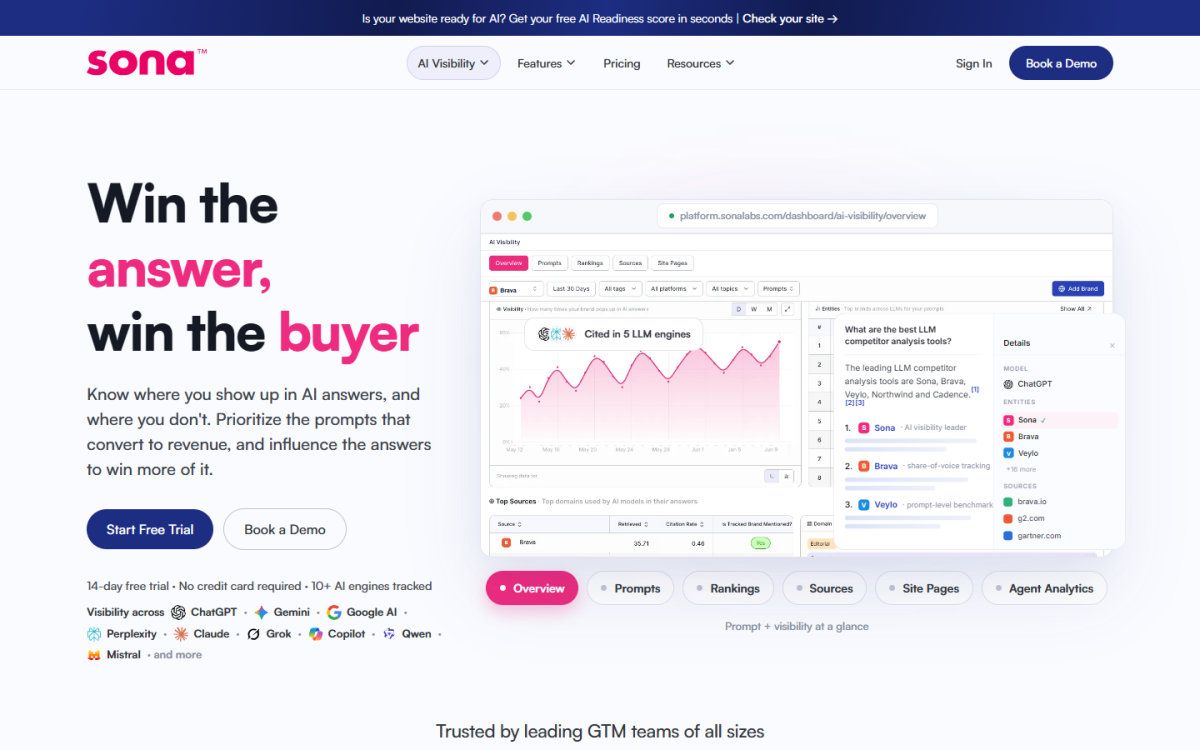
Sona AI Visibility connects citations to pipeline and revenue on one account timeline, and tracks which AI crawlers reach pages, so teams can assess Gemini mentions as measurable buyer activity rather than reporting numbers.
How does Gemini visibility differ from Google Search rankings and Google AI Overviews?
Gemini visibility tracking measures answers produced inside Google Gemini. Google Search rankings measure where a page appears in conventional search results, while Google AI Overviews are AI-generated answer panels within Google Search results. These surfaces require separate tracking.
Google Search ranks pages in an ordered results set. Gemini synthesizes a response from selected information and sources for a fuller prompt, and may select, synthesize, mention, or cite sources without reproducing their Google Search positions. A page’s Search position therefore does not directly determine whether a brand is mentioned or a page is cited in Gemini.
A page can rank well for a keyword and still be absent from a Gemini answer. Gemini responds to fuller prompts, such as “Which account-based marketing platform is best for a mid-market SaaS team?” Search rankings are normally measured against shorter queries and ordered result pages.
Google AI Overviews create another distinction. Google AI Overviews can cite a page in search results even when Google Gemini does not recommend the brand in a comparable assistant prompt. Treating all Google AI output as one channel hides these differences and can distort a Google Gemini visibility loss.
- Google Search ranking: position of a page in a conventional results page.
- Google AI Overviews: citations and summaries generated within Google Search.
- Google Gemini visibility: brand presence, wording, recommendations, and citations in Gemini responses.
How do you track brand mentions and citations in Gemini, step by step?
Gemini tracking begins with a stable prompt set, then records the exact answer, brand appearance, cited sources, and competitor context for each run. A standard workflow includes defining prompts, selecting a tracker, entering brand and prompt terms, and running scans, per topcited.ai.
- Define prompts that reflect category research, comparisons, problems, integrations, and buying-stage questions.
- Run each prompt in Google Gemini using the same geography, language, and brand spelling where those settings apply.
- Log whether the brand appears, how Gemini describes it, which competitors appear, and which sources support the answer.
- Tag each result by intent and buying stage, then compare the same prompt over time.
- Investigate changed answers by reviewing source pages, competitor citations, and prompt wording before changing content.
For example, a software company can track “best customer data platform for B2B SaaS” alongside “customer data platform with account-level attribution.” The first prompt measures broad category presence. The second tests whether Gemini associates the brand with a specific commercial requirement.
Sona AI Visibility uses AI Search Insights to show the prompts buyers ask and the sources AI cites. Sona AI Visibility also connects citations to pipeline and revenue, helping teams distinguish broad awareness mentions from prompts associated with commercial buyer activity.
Which prompts should a B2B brand put in its Gemini tracking set?
A B2B Gemini tracking set should cover questions buyers ask before, during, and near a purchase decision. Start with category prompts, competitor comparisons, use-case prompts, integration questions, and implementation concerns. A prompt list built only around branded searches overstates visibility.
Build prompt groups around buyer intent rather than a single keyword list. Search keywords remain useful demand evidence, but Gemini prompts are conversational and often include requirements absent from short search queries.
- Category discovery: “What are the leading tools for marketing attribution?”
- Use-case evaluation: “Which platform connects AI search activity to B2B pipeline?”
- Comparison: “Which tools support account-level marketing measurement?”
- Implementation: “How do teams measure AI-referred traffic?”
- Risk and proof: “What should a marketing leader evaluate before buying attribution software?”
Keep a small control group of prompts unchanged. The control group separates changes in Gemini answers from changes in the questions the team tracks. Add prompts when buyer language changes, but preserve the original set for trend analysis.
Which Gemini visibility metrics matter, and how do you read them?
The most useful Gemini visibility metrics are brand presence, share of voice, recommendation context, citation sources, sentiment, and competitor performance. Gemini visibility trackers monitor these dimensions because a mention alone does not show whether Gemini recommends the brand, merely lists it, or warns against it, per an October 2026 listing.
Read metrics at the prompt level. High share of voice on broad informational prompts can mask absence from commercial comparison prompts. Separate category education from vendor selection, then give greater weight to prompts that reflect the buying stage your team needs to influence.
A single brand-level visibility score is a snapshot, not a work item. The useful view identifies the prompts behind the score and the cited sources shaping each answer. Sona AI Visibility tracks prompt-level visibility and sources while connecting citations to pipeline and revenue on the same account timeline.
Use sentiment carefully. Positive, neutral, and negative descriptions show how Gemini frames a brand, but the underlying wording requires review. A neutral answer can be commercially useful when it accurately states a capability and cites a credible source.
How often should you refresh Gemini tracking when answers keep changing?
Run the same Gemini prompt list daily. Daily runs reveal patterns that a weekly snapshot averages away. Gemini answers can shift with retrieval-index changes, model updates, and competitor content published during the week.
Confirm that movement persists across repeated daily runs before treating it as a trend worth investigating. A one-day spike is an observation, not yet a visibility loss or gain. This rhythm prevents teams from rewriting pages in response to ordinary answer variability.
Daily prompt tracking and periodic review operate on different clocks. Run prompts daily, review the competitive story quarterly, and complete a full technical re-audit monthly or quarterly. The result should be a comparable log over time, not a dashboard score viewed once.
Several platforms support daily monitoring, including Sona AI Visibility and Otterly.ai, based on published plan details as of October 2026. The requirement is daily measurement resolution, not a claim that one vendor alone supports it.
How much does Gemini brand monitoring cost, tool by tool?
The lowest confirmed paid Gemini-inclusive entry price among the displayed rows is Sona AI Visibility at from $75/month, billed annually, as of October 2026. Otterly.ai’s $29/month Lite plan is a base platform price, with Gemini available as a paid add-on. Scrunch AI requires a custom Enterprise plan for Gemini.
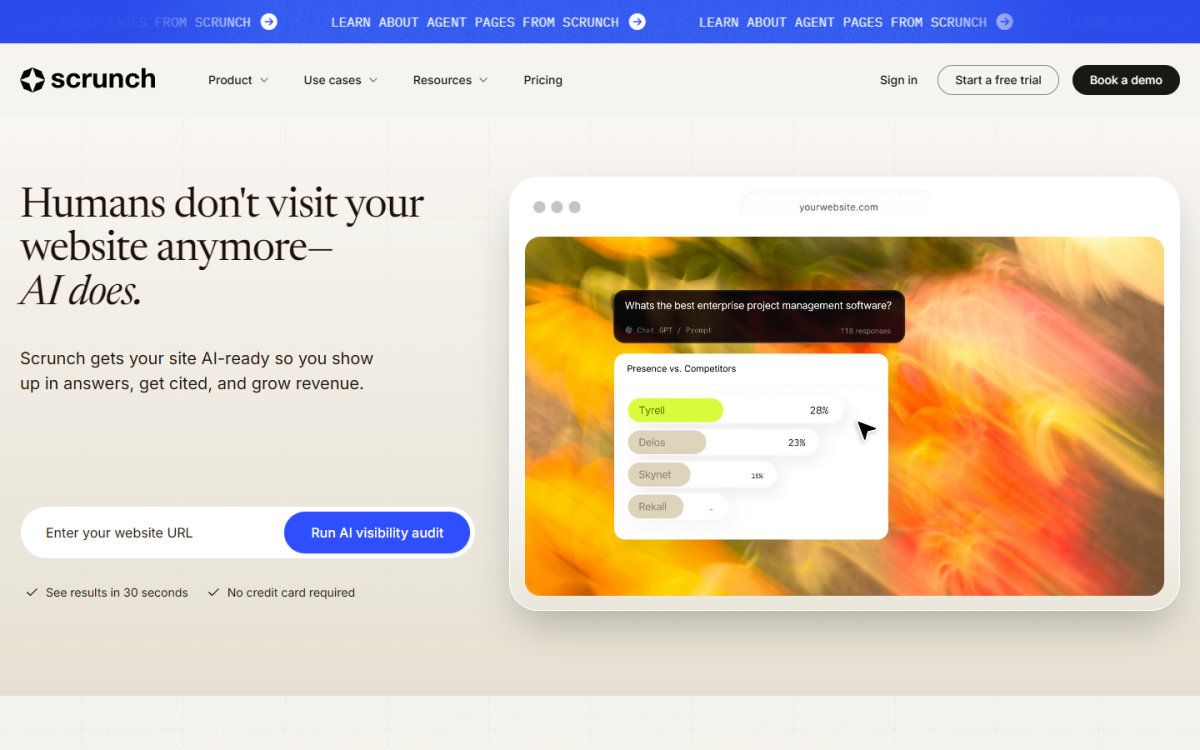
The table uses published plan details as of October 2026. Cost per Daily Tracked Prompt uses the common denominator supplied for each tool rather than recalculating vendor-specific credit or response units.
| Tool | Starting price | Agency Plans? (Yes/No) | # of Answer Engines Tracked | Answer Engines | # of Daily Tracked Prompts (entry plan) | Cost per Daily Tracked Prompt | Differentiation |
|---|---|---|---|---|---|---|---|
| Sona AI Visibility | From $75/month, billed annually | Yes | 11 | Not published | 5,000 credits/month, about 56 prompts tracked daily across three engines | $0.45 per daily tracked prompt | Connects AI citations and prompts to pipeline and revenue on one account timeline, and tracks AI crawler activity from server logs. |
| Profound | Free Trial, Enterprise custom pricing | Yes | 3 | ChatGPT, Gemini, Google AI Overviews | 50 prompts daily for 7 days | Not calculable from custom pricing | Daily Trial prompt runs across three answer engines. |
| Peec AI | From $95/month | Yes | 3 | ChatGPT, Google AI Mode, Google AI Overviews | 50 prompts daily | $0.63 per daily tracked prompt | Self-serve plans track prompts across listed AI engines. |
| Otterly.ai | From $29/month | Yes | 4 | ChatGPT, Google AI Overviews, Perplexity, Microsoft Copilot | 15 prompts daily | $0.48 per daily tracked prompt | Lite plan tracks four answer engines, with Gemini available as a paid add-on. |
| Scrunch AI | From $250/month | Yes | 4 | ChatGPT, Perplexity, Google AI Overviews, Copilot | 125 prompts | No refresh cadence published | Core plan tracks four answer engines. |
| AthenaHQ | From $295/month | Yes | 11 | Not published | 3,600 credits/month, unlimited prompts | No refresh cadence published | Starter plan includes 3,600 AI-response credits each month. |
| PromptWatch | From $95/month | Yes | Not published | Not published | 50 prompts daily | $0.48 per daily tracked prompt | Plans include monthly response allowances alongside daily prompt tracking. |
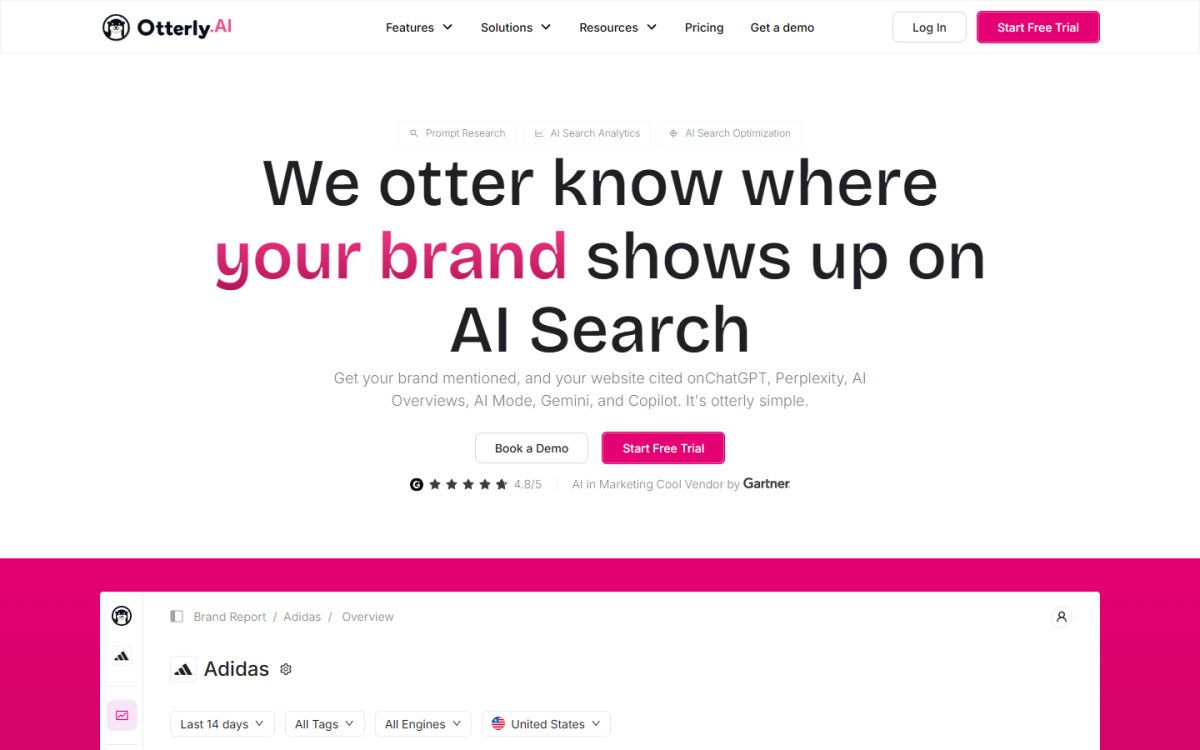
Published entry prices can conflict when comparisons use different billing terms or tiers. Otterly.ai lists Gemini as an add-on to its Lite engines, so a Gemini-only budget comparison needs the add-on cost before treating $29 per month as the operating price.
What should you compare when choosing a Gemini monitoring platform?
Choose a Gemini monitoring platform by comparing prompt coverage, answer capture, cited-source reporting, cadence, and the path from visibility data to commercial action. A lower entry price matters less if the plan cannot run the buyer questions, engines, or reporting workflow your team requires.
Verify that Gemini is included in the relevant plan. Plans often vary by engine, tier, add-on, credits, and billing term. Then compare whether the platform records the full answer, identifies cited sources, shows competitive context, and preserves historical results for the same prompt set.
- Prompt design: support for category, comparison, use-case, and buying-stage prompts.
- Answer evidence: saved answer text, citations, brand wording, and competitor appearance.
- Operational cadence: daily runs for prompts, plus periodic reviews for strategy and technical work.
- Commercial measurement: the ability to connect AI-referred activity with accounts, pipeline, and revenue.
Sona AI Visibility connects citations to pipeline and revenue, so marketing leaders can evaluate Gemini as a measurable acquisition channel rather than a separate brand-reporting exercise.
Why has your brand lost visibility in Gemini, and how do you diagnose it?
A Google Gemini visibility loss can result from answer variability, a changed prompt set, competitors gaining cited sources, or outdated source content. Diagnose the pattern with repeated daily runs before treating a single missing mention as a real loss.
- Re-run the unchanged prompt across repeated daily runs and save each answer.
- Compare the brand wording, cited sources, competitors, and recommendation context across runs.
- Check whether the tracked prompt, location, language, or product name changed.
- Review the pages Gemini cites for freshness, factual accuracy, structured content, and relevance to the prompt.
If the loss persists, separate technical access from answer selection. The Free AI Readiness Checker can test whether AI engines can crawl and parse a site. It does not measure brand mentions in Gemini.
Content action should follow evidence. Update or create the page that answers the affected prompt, correct inaccurate claims in cited material, and monitor the same prompt list daily after publication. Brands that pair active Gemini monitoring with immediate content action are winning visibility, per an October 2026 listing.
Frequently Asked Questions
What is Gemini brand monitoring?
Gemini brand monitoring systematically queries Google Gemini across a defined prompt set and logs whether and how a brand appears. The record should include brand presence, descriptions, cited sources, sentiment, competitor context, and changes across repeated runs.
Is tracking Gemini the same as tracking Google AI Overviews?
No. Gemini is a separate assistant, while Google AI Overviews appear inside Google Search results. Each surface needs its own prompt runs, saved answers, citation records, and reporting because a brand can appear in one Google AI experience without appearing in the other.
Can you monitor your brand in Gemini without a paid tool?
Yes. Run a fixed prompt list manually, save the Gemini responses, and log brand appearance, cited sources, and wording in a spreadsheet.
Why did my brand disappear from Gemini answers?
Common causes include answer variability, a changed prompt set, competitors gaining cited sources, or outdated source content. Re-run the unchanged prompt across repeated daily runs, then compare citations and answer wording before concluding that a sustained visibility loss occurred.
Is it enough to track Gemini alone?
No. Buyers also encounter Google AI Overviews, ChatGPT, Perplexity, Gemini, Claude, and other answer engines. Gemini data is one engine’s view of brand visibility and should sit beside monitoring for other answer surfaces relevant to the buying journey.
How much does Gemini visibility tracking cost?
Among the displayed plans, Sona AI Visibility starts at from $75/month, billed annually, for confirmed paid Gemini-inclusive tracking as of October 2026. Otterly.ai starts at $29/month before its Gemini add-on, while Scrunch AI requires a custom Enterprise plan for Gemini. Compare billing terms, engine access, credit allowances, and prompt cadence before comparing price.
Summarize this article with AI: ChatGPT · Claude · Perplexity · Google AI Mode
Last updated: October 2026