


Wholesale auto parts buyers rarely browse. A fleet manager searching for bulk brake pads or a repair shop hunting a specific OEM part number already knows what they need and how fast they need it, which means the wholesalers who show up first, with the right SKU and the right price, win the order. Traditional tracking misses most of this demand: prospects research pricing and availability for days before ever filling out a form, and by the time a lead comes in, a competitor may already have the account. Modern tools now surface the companies browsing a site even without a form fill, so ad spend can follow real buying intent rather than guesswork. Google Ads gives wholesale distributors a way to intercept that intent directly, tailor targeting to the industry's licensing, fitment, and bulk-order realities, and tie every click to a measurable sale. This guide walks through building that kind of campaign for the wholesale auto parts trade.
How to Generate Wholesale Auto Parts Leads with Google Ads: A Step-by-Step Guide
Wholesale auto parts distributors have a unique opportunity to capture high-intent buyers through Google Ads by leveraging precision targeting strategies for auto parts stores and performance-driven optimization. Success in this market depends on identifying in-market accounts, aligning messaging to buyer urgency, and turning every touchpoint into measurable demand with Sona's Identity Resolution, which reveals which companies and people are visiting your website, even if they don't fill out a form.
Integrating Google Ads within your multi-channel strategy ensures that no valuable lead slips through the cracks. Marketers can identify previously anonymous visitors and companies, then orchestrate timely engagement by syncing enriched audience data directly into Google Ads for targeted remarketing and nurture. For more actionable tactics, review our comprehensive playbooks for B2B marketing.
A data-driven approach is essential for maximizing every advertising dollar in the competitive automotive PPC landscape. By focusing on clear purchasing intent, campaigns avoid wasted spend on generic traffic and instead prioritize commercial buyers most likely to convert. Amplify this process with real-time intent signals, allowing you to shift budgets toward accounts displaying active buying signals and ensuring consistent pipeline growth.
Landing page and creative alignment plays a pivotal role in wholesale auto parts marketing. Buyers at varying stages of the purchase journey have different information needs: technical spec-seekers, urgent replenishment buyers, and those comparing bulk discounts. Tailoring ad copy and landing experiences to these stages increases engagement and conversion rates, with dynamic audiences updating in real time as leads progress through the funnel.
Continuous improvement is at the heart of high-performing Google Ads for wholesale auto parts. By unifying online and offline conversion tracking, revenue teams can attribute true ROI to each campaign, enabling precise budget reallocation and rapid iteration. Automated audience updates and CRM syncs with Sona Destinations keep prospect lists fresh, while insight-driven adjustments keep campaigns aligned with shifting demand and buyer intent. If you're ready to streamline your lead generation and ad targeting, get started for free with Sona.
Why Does Google Ads Matter for Wholesale Auto Parts?

Google Ads transforms how wholesale auto parts suppliers reach and engage commercial buyers. It provides immediate access to automotive procurement teams and B2B purchasing managers at the exact moment they express intent to source bulk parts, which significantly reduces wasted ad spend and increases win rates compared to broader, unfocused outreach. For foundational strategies on increasing online presence and attracting targeted buyers, explore how to improve Google Ads visibility for auto parts stores.
- Captures specialized audiences at decision points: With search signals as a core driver, Google Ads allows marketers to intercept buyers searching for specific SKUs, part numbers, or industry certifications. Sona's Identity Resolution goes beyond anonymous traffic to pinpoint which companies or accounts are expressing urgent demand, making it possible to prioritize high-value leads and personalize follow-up.
- Responds in real time to market shifts: Supply chain disruptions and urgent restock requests are routine in wholesale auto parts. Google Ads enables rapid budget shifts and targeted adjustments so ads appear the moment demand spikes. When Sona surfaces intent signals, budgets can be dynamically reallocated to the highest-converting accounts, increasing efficiency and minimizing missed revenue.
- Drives regional and niche market growth: Wholesale distributors often need to build visibility in new or underserved territories. Targeted local campaigns in Google Ads let you focus resources on emerging markets and adapt messaging to address regional needs or inventory. By syncing Sona’s Destinations feature, enriched audience data ensures every campaign reaches the right segment as leads progress through the sales pipeline, maximizing both reach and relevance.
Common Types of Google Ads Campaigns for Wholesale Auto Parts

- Search Campaigns: Search ads enable wholesale auto parts suppliers to intercept high-intent buyers actively seeking specific components or bulk orders. By targeting transactional keywords and recognizing in-market signals, these campaigns reach commercial purchasers at the moment of need. Leveraging unified intent data, marketers can dynamically allocate spend to the keywords and regions driving the highest-value lead conversions, ensuring efficient capture of urgent procurement requests. For step-by-step guidance on setup and strategic planning, see this Google Ads setup guide for auto parts industry.
- Display Campaigns: Display ads maintain brand visibility across industry publications, parts forums, and automotive news sites frequented by purchasing agents and repair shop owners. Consistent exposure supports brand recall and positions a supplier as a trusted source when buying decisions are made. With enriched audience insights, display campaigns can now focus impressions on organizations that have recently shown intent or visited key product pages, reducing wasted spend and improving campaign relevance.
- Remarketing Campaigns: Remarketing is essential for re-engaging users who previously browsed product SKUs, pricing tiers, or wholesale account pages but did not complete a transaction. By leveraging real-time CRM and website engagement data, remarketing lists can be updated dynamically as buyers progress through different funnel stages. This allows for highly tailored ad messaging, such as bulk discount offers or reminders about pending quotes, driving higher return visits and shorter sales cycles. For deeper insight into measuring campaign ROI and tracking both online and offline conversions, review offline attribution best practices.
Where to Find Growth Opportunities

Expanding market presence in wholesale auto parts means looking past the channels every distributor already uses. Growth comes from niche targeting, close competitive analysis, and placements that reach buyers standard search auctions miss. For a deeper look at boosting Google Ads visibility for auto parts, see this guide on improving Google Ads visibility for auto parts stores.
- Target niche keywords: Focusing on highly specific, low-competition terms such as OEM part numbers, vehicle-specific bulk orders, or region-based supply queries reduces wasted spend and improves campaign ROI. This method allows advertisers to reach commercial buyers with urgent procurement needs who are overlooked in broader, high-volume search auctions. With advanced audience capabilities, marketers can dynamically update targeting as new in-market signals emerge, ensuring budget is continuously allocated to the highest-return segments.
- Conduct competitor analysis: A thorough review of competitors' ad placements, keyword strategies, and campaign performance identifies overlooked market gaps. Using industry benchmarking, advertisers can pinpoint under-served product categories or regional opportunities. By integrating Sona's Identity Resolution for real-time visitor and account identification, marketing teams move beyond surface-level data to focus resources on accounts demonstrating purchase intent, maximizing efficiency.
- Utilize industry-specific placements: Forums, trade directories, and specialized automotive platforms often attract buyers who prefer to transact offline or through direct relationships. Running Google Ads on these placements captures conversions that are typically untracked in standard analytics. When CRM and ad platforms are fully synchronized, marketers can seamlessly attribute offline orders and inbound calls back to digital campaigns, providing a holistic view of true campaign ROI and enabling data-driven budget optimization.
How to Apply Audience Segmentation for Wholesale Auto Parts

Audience segmentation is fundamental for wholesale auto parts marketers seeking to move beyond generic outreach toward precision-targeted advertising. Segmenting by buyer type, purchasing intent, and channel preference drives stronger engagement and gets more out of every advertising dollar. Sona's Identity Resolution helps pinpoint which businesses are showing in-market signals so you can prioritize high-value accounts.
- Define Segments: Start by distinguishing between your core buyer types: auto repair shops, car manufacturers, regional dealerships, and online-only resellers. Use firmographic data, such as company size, fleet volume, and regional presence, to refine these segments and prioritize follow-up. Marketers using Sona's Identity Resolution can move past anonymous website traffic and pinpoint which businesses are showing in-market signals.
- Utilize Intent Signals: Wholesale auto parts buyers often signal their intent through actions like requesting quotes for bulk orders, searching urgent part numbers, or engaging repeatedly with product specifications. Segmenting based on these real-time behaviors allows marketers to deliver segment-specific ad creatives. By monitoring in-market activities, teams can dynamically shift budget toward accounts showing purchase readiness and ensure ad spend is focused on those most likely to convert.
- Tailor Ad Groups and Creative: Each defined audience segment deserves its own ad group, customized creative, and dedicated budget. For example, bulk discount messaging and logistics assurances appeal to manufacturers, while repair shops are more responsive to rapid shipping and technical support messaging. Budget allocation should reflect the relative value and purchase frequency of each segment, ensuring that high-potential accounts receive proportionally greater investment. When audience lists are synchronized with CRM and sales systems, ad groups can automatically update as leads progress through the funnel, allowing retargeting to adapt in real time and further improving ROI.
Audience segmentation in Google Ads for wholesale auto parts transforms generic campaigns into flexible, data-driven engines for growth. When every touchpoint is informed by real buyer context and every audience is continuously enriched, marketing teams achieve higher engagement, lower acquisition costs, and superior alignment with B2B sales cycles. To see how you can apply these strategies in your own campaigns, get started for free with Sona.
This is also where measurement changes the economics. With Sona Marketing Measurement you can identify the companies and buyers behind your ad clicks, not just anonymous sessions, and segment audiences by who actually becomes a customer. That lets you build bid adjustments and audience signals around the segments that convert and de-prioritize the ones that don't, feeding Google's algorithms "this click became a paying wholesale auto parts customer" instead of just "someone filled out a form."
Keyword Strategy & Sample Target Terms
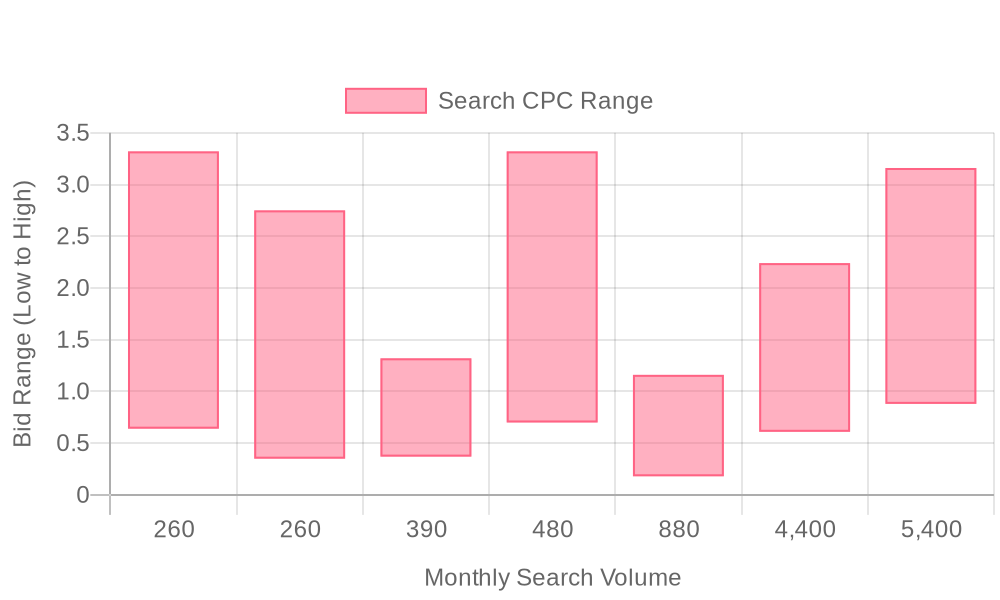
| Industry | Keyword | Monthly Search Volume | Competition Level | Low Bid | High Bid |
| Wholesale Auto Parts | wholesale auto parts warehouse | 260 | HIGH | 0.64 | 3.32 |
| Wholesale Auto Parts | aftermarket auto body parts wholesale | 260 | HIGH | 0.35 | 2.75 |
| Wholesale Auto Parts | nissan wholesale parts | 390 | HIGH | 0.37 | 1.32 |
| Wholesale Auto Parts | wholesale auto parts online | 480 | HIGH | 0.7 | 3.32 |
| Wholesale Auto Parts | ford wholesale parts | 880 | HIGH | 0.18 | 1.16 |
| Wholesale Auto Parts | wholesale auto parts | 4400 | HIGH | 0.61 | 2.24 |
| Wholesale Auto Parts | car parts wholesale | 5400 | MEDIUM | 0.88 | 3.16 |
Optimizing keyword targeting in Google Ads for wholesale auto parts requires precision and a deep understanding of B2B search intent. By focusing on long-tail phrases that combine product specifics with commercial buying signals, marketers can reduce wasted spend while increasing lead quality and conversion rates. Rather than casting a wide net with generic terms, a tailored keyword approach ensures campaigns reach the right distributors, repair shops, or fleet managers who are actively searching for bulk inventory and technical fitment. Explore how to conduct keyword research for auto part ads to refine your targeting strategy and maximize your campaign's impact.
- Long-tail targeting for higher ROI: Long-tail keywords such as "wholesale brake pads supplier," "bulk OEM alternators for fleet," or "commercial diesel engine parts distributor" carry lower competition and stronger intent than broad terms like "auto parts" or "car brakes." These granular queries signal buyers closer to a purchasing decision, often with larger order values. Structuring ad groups around these terms directs budget to high-opportunity segments. Sona surfaces intent signals to help marketers find emerging long-tail opportunities and shift spend to the highest-converting terms as buying patterns evolve.
- Local modifiers for market relevance: Integrating location-based modifiers, such as "bulk auto parts Dallas" or "wholesale transmission parts Chicago," aligns campaigns with regional demand and improves ad relevance. This works especially well for distributors with defined service areas or distribution centers. Marketers can use Sona's Identity Resolution to pinpoint high-value traffic from priority regions, then adjust keyword bids or activate targeted ad creative for those local markets.
- Negative keywords to protect budget: Applying negative keywords like "DIY," "retail," or "single part" prevents ads from showing to consumers or non-commercial buyers. This tactic ensures that spend is reserved for qualified B2B prospects and reduces the risk of irrelevant clicks. Sona’s audiences and CRM sync allow for continuous updates to negative keyword lists as new traffic patterns emerge, and as lead scoring data reveals which queries consistently underperform.
Step-by-Step Campaign Execution Framework
A precise campaign launch is essential for wholesale auto parts suppliers aiming to capture high-intent commercial buyers. Success depends on granular targeting, relevant messaging, and a continuous feedback loop between online and offline sales activities.
Step 1: Build Targeted Keyword Lists
Wholesale auto parts campaigns demand keyword segmentation by component type and regional specificity. Effective lists should capture top-selling categories such as engines, transmissions, and electrical systems while also integrating geographic identifiers like city names, distribution regions, or warehouse locations. This approach ensures ads surface for commercial buyers searching for "bulk diesel engines Atlanta" or "wholesale transmission supplier Midwest." Marketers using advanced attribution tools can pinpoint which keyword clusters attract high-value fleet or repair shop accounts, shifting spend toward those with proven offline conversion rates. Real-time audience enrichment enables teams to dynamically update keyword targets as new part numbers become popular or as demand shifts to specific regions.
For further guidance on keyword research tailored to auto parts advertising, review this how to conduct keyword research for auto part ads.
The upgrade most wholesale auto parts advertisers miss is going beyond raw keyword volume to layer in intent and identity signals. By connecting website-visitor data and CRM records with Sona Marketing Measurement, you can see which specific search terms bring in the accounts and customers that actually convert, and weight your keyword and bidding strategy toward those rather than the terms with the highest search volume alone.
Step 2: Develop Compelling Ad Copy
Ad messaging must address the urgency and operational pain points of B2B buyers. Content emphasizing immediate availability, expedited shipping, and bulk pricing resonates with commercial audiences facing downtime pressure. Urgency-driven promotions, such as "Order by 2PM for Same-Day Dispatch," can improve click-through and conversion rates. Using ad assets to spotlight certifications, product guarantees, or direct contact options builds trust with procurement teams evaluating new suppliers. With audience intelligence platforms, marketers identify which promotions drive engagement from target accounts and adjust copy to reflect seasonal demand or emerging pain points in the supply chain.
Explore strategies to improve Google Ads visibility for auto parts stores for actionable ideas on crafting compelling ad copy and boosting your online presence.
Step 3: Design Effective Landing Pages
Landing pages must align tightly with ad content, reinforcing product relevance and streamlining wholesale inquiry capture. Pages should highlight inventory breadth, technical specifications, and bulk pricing, all while optimizing for mobile performance. Integrating robust lead forms that feed directly into CRM platforms ensures every inquiry is tracked, scored, and routed to the correct sales team for prompt follow-up. When Sona's Identity Resolution is applied, teams can recognize return buyers or known fleet accounts, displaying personalized content and shortening the path from interest to contract.
Step 4: Implement Data-Driven Optimizations
Continuous improvement hinges on sophisticated tracking and bid management. Marketers should deploy conversion tracking that connects ad engagement to both online and offline sales events, including phone orders or negotiated contracts. Smart bidding strategies, informed by real-time intent data, reallocate budget to high-converting segments as market conditions evolve. Regular A/B testing of copy, landing page layouts, and promotions unearths incremental gains. With CRM and ad platform sync, enriched audiences update automatically as leads progress through the pipeline, ensuring retargeting and upsell campaigns remain tightly focused on accounts most likely to close or expand. This unified data approach delivers measurable lift in both pipeline velocity and marketing ROI for wholesale auto parts suppliers.
Sona Marketing Measurement closes the gap between clicks and revenue. It captures ad clicks with first-party measurement, matches that activity to company-level records in your CRM through UTM capture and ad-platform APIs, and reports ROAS by keyword and campaign instead of by last-click form fill. Feeding that revenue signal back into Smart Bidding and Performance Max compounds over time: the algorithms optimize toward booked wholesale auto parts revenue, not cheap leads.
Tips on Expanding Your Wholesale Auto Parts Presence
Expanding market share in the wholesale auto parts industry requires a precise, data-driven approach that aligns marketing execution with evolving buyer intent. Modern B2B teams gain a competitive edge by combining granular audience insights with agile, cross-channel strategies rooted in both digital and relationship-based tactics.
- Cross-promote with retargeting for account-level precision: Retargeting works best when it moves past generic audience buckets and uses account-level data to reach the right decision-makers. With Sona's Identity Resolution, marketers can pinpoint which organizations are engaging with high-value content and dynamically adjust retargeting to serve relevant offers or technical resources. This keeps every ad impression tied to broader content marketing goals and moves target accounts further down the funnel. Teams with unified data can trigger specific retargeting workflows in Google Ads from real-time signals across website visits, email clicks, and offline touchpoints. For more on improving Google Ads visibility in the auto parts sector, see this overview of strategies for auto parts stores on Google Ads.
- Leverage industry partnerships to boost qualified traffic: Forming partnerships with automotive associations and trade groups can amplify reach and credibility among wholesale buyers. When these relationships are activated for co-branded campaigns, referral traffic often carries stronger purchase intent and can be segmented for high-value lookalike and affinity audiences within Google Ads. By syncing CRM and web data, marketers can enrich these affinity segments, ensuring that tailored ad creative and landing pages are delivered to the right buyer personas. This strategy not only increases qualified site visits but also feeds more accurate data into ongoing audience optimization cycles, improving PPC for auto parts outcomes over time.
- Use analytics to uncover content and SEO opportunities: Web analytics platforms reveal which content themes, product pages, and search queries attract the most commercial visitors. By analyzing engagement patterns across the site, B2B teams can identify under-served topics, new vehicle models, or emerging repair trends that warrant dedicated content or landing pages. For a deeper dive into maximizing PPC efforts for auto parts eCommerce, reference this ultimate guide to automotive PPC. Furthermore, integrating analytics with intent data enables marketers to shift budget to in-market accounts and automatically update Google Ads audiences as users demonstrate new interests or move closer to a purchase decision. This loop of insight, activation, and measurement is crucial for dominating online auto parts sales in a competitive landscape.
To accelerate your wholesale auto parts growth with advanced targeting and seamless data integration, get started for free with Sona.
Beyond Google Ads: Winning the AI Answers Wholesale Auto Parts Buyers Now Trust
Paid search captures demand at the moment someone types a query. But a fast-growing share of wholesale auto parts buyers no longer start at Google at all, they ask ChatGPT, Gemini, or Perplexity before they ever run a search, and Google's own AI Overviews increasingly summarize an answer above the traditional results. If your business isn't referenced in those AI answers, you're invisible at the exact moment buyers build their shortlist.
Sona AI Visibility shows where your business shows up across ChatGPT, Gemini, Perplexity, Google AI Overviews, and 10+ engines, and, much like a keyword report, which prompts actually send you buyers, so you can prioritize the ones that convert. Run the two together and you cover the entire buyer path: get cited where buyers research (AI Visibility), then prove which of that demand turns into booked revenue (Marketing Measurement).
Helpful resources
Conclusion
Wholesale auto parts buyers convert on their own timeline, whether that's a same-day emergency order or a bulk contract negotiated over weeks, and Google Ads only pays off when campaigns are built around that reality: precise part-level keywords, messaging tuned to urgency and compliance, and landing pages that speak to fleet managers and repair shops differently.
The distributors who pull ahead won't be the ones spending the most, they'll be the ones who can see which clicks turned into shipped orders and feed that signal back into their bidding. As AI-driven search reshapes how buyers shortlist suppliers, that same discipline, knowing what converts and doubling down on it, will decide who gets found first.
FAQ
What are the best practices for Google Ads in the auto parts industry?
Best practices include leveraging precision targeting strategies, focusing on high-intent buyers, optimizing landing pages for different buyer needs, and using real-time data to adjust campaigns for maximum ROI.
How can I optimize my Google Ads campaigns for wholesale auto parts?
Optimize campaigns by using data-driven audience segmentation, focusing on long-tail keywords with commercial intent, aligning ad copy with buyer urgency, and continuously refining campaigns using conversion tracking.
What targeting options are available for advertising auto parts on Google?
Targeting options include using search, display, and remarketing campaigns to reach high-intent buyers, employing audience segmentation based on buyer types, and leveraging geographic targeting with local modifiers.
How do I measure the success of my Google Ads for auto parts?
Success can be measured by tracking both online and offline conversions, analyzing real-time intent signals, and attributing ROI using unified conversion tracking systems.
What budget should I allocate for Google Ads in the wholesale auto parts sector?
Budget allocation should focus on high-opportunity segments identified through data-driven insights, with flexibility to shift spend dynamically based on real-time buying signals and market demand.







