


A vinyl repair shop lives or dies on how fast it reaches someone whose car seat just split or whose pool liner is leaking before a weekend party. Many vinyl repair businesses miss these high-value prospects because they never show up in a CRM, and the opportunity disappears with them. Google Ads lets a shop intercept that searcher at the moment of need, whether it's a routine reupholstery job or an emergency siding patch, so ad spend goes toward real decision-makers instead of passive browsers. Done well, it aligns online bidding with the offline realities of the trade: seasonal spikes, same-day requests, and word-of-mouth referrals, and turns that alignment into measurable ROI. This guide walks through generating vinyl repair leads with Google Ads, with strategies built for how this specific trade is searched, bought, and booked.
How to Generate Vinyl Repair Services Leads with Google Ads: A Step-by-Step Guide
Vinyl repair professionals face intense competition for high-intent customers, making rapid lead recognition and personalized outreach essential for maximizing conversions. Real-time visibility into buyer behavior, paired with targeted online marketing for vinyl repair, enables businesses to connect with prospects before they lose interest.
A structured Google Ads strategy grows a vinyl repair business by aligning keyword targeting, audience segmentation, and landing page work with what in-market searchers actually need. Modern data platforms let revenue teams identify not just anonymous web traffic but the specific companies and individuals researching vinyl repair, enabling immediate, relevant engagement.
Why Google Ads Matters for Vinyl Repair Services

Vinyl repair advertising through Google Ads capitalizes on urgent, local search intent, connecting your service with homeowners, property managers, or auto owners actively seeking repairs. Unlike generic display marketing, PPC for vinyl repair targets only those searching for solutions, significantly increasing lead quality.
Timely follow-up is crucial in this space, as many customers request multiple quotes and choose the first to respond with authority and clear value. Integrating Google Ads targeting for vinyl repair with intelligent lead routing ensures sales receives real-time alerts when a high-value visitor engages, boosting close rates and preventing lead leakage.
Common Types of Google Ads Campaigns
- Search Campaigns: Appear directly in Google search results when users query terms like "vinyl repair near me" or "vinyl siding patch service." These campaigns reach the highest-intent audience and typically convert best.
- Display Campaigns: Use banner and image ads across the web to raise awareness among property managers and commercial accounts who may not be actively searching but need future repairs.
- Remarketing Campaigns: Re-engage site visitors who showed interest but did not convert, using dynamic audience lists that update as prospects move through the funnel. Responsive Search Ads, an ad format available within Search campaigns, let you test multiple headlines and descriptions so Google can serve the combination most likely to convert.
- Local Services Ads: Promote vinyl repair services in specific geographies, leveraging business reviews and proximity to drive lead volume from nearby customers.
- Performance Max: A single campaign type that uses Google's automation to place ads across Search, Display, YouTube, and Gmail from one budget, useful for vinyl repair businesses that want broad coverage without managing each channel separately.
With advanced data integration, marketers can sync CRM records and web activity to adjust audience segments and bid more aggressively on visitors showing real purchase intent. That sharpens targeting for vinyl repair promotions and makes lead generation more efficient.
Step-by-Step Campaign Execution Framework

Step 1: Build Targeted Keyword Lists
Successful vinyl repair lead generation begins with high-intent keywords reflecting material type, urgency, and location. Segment terms like "emergency vinyl floor repair," "auto vinyl seat restoration near me," and "same day vinyl siding fix" to capture transactional searchers. A list of targeted auto service keywords can help optimize your paid search campaigns.
Step 2: Segment and Prioritize Audiences
Audience segmentation drives vinyl repair services marketing by distinguishing residential, commercial, and automotive prospects. Use behavioral signals, such as multiple visits or repeat quote requests, to prioritize outreach. With audience lists auto-updating as leads advance, marketers can serve tailored ads and escalate follow-up for high-intent accounts.
Step 3: Design Conversion-Optimized Landing Pages
Landing pages must match ad messaging and service vertical, reinforcing urgency, expertise, and trust signals. Include visible service areas, certifications, and before/after galleries to reduce anxiety and increase form submissions. Integrate advanced tracking to capture both online and offline conversions, attributing every lead source for true ROI measurement.
Step 4: Integrate Real-Time Lead Routing
Modern platforms allow for seamless syncing of enriched audience data and conversions into popular CRMs. This ensures sales teams receive instant notifications when a hot lead visits or submits a form, closing the gap between marketing engagement and sales response.
Step 5: Analyze, Optimize, and Scale
Continuous performance analysis is critical for PPC for vinyl repair. Monitor metrics like cost per acquisition, conversion rate, and impression share. Test new keywords, refine negative lists, and adjust bids based on real-time buyer intent and historical outcomes. Syncing offline sales data back into ad platforms further sharpens targeting, maximizing the impact of every marketing dollar.
Accurate targeting in emerging service areas ensures marketing investments reach neighborhoods and businesses most likely to convert. Unified data from every campaign fuels smarter budget allocation and lets teams analyze channel performance, attribute revenue accurately, and prioritize future vinyl repair promotions. Integrating company-level visitor identification and conversion tracking gives revenue teams a complete view of the funnel, from initial search to booked repair.
Common Types of Google Ads Campaigns for Vinyl Repair Services

Vinyl repair services operate in a market where customer needs span from urgent repairs to routine maintenance. A well-structured Google Ads approach enables businesses to reach these varying intent levels with precision, capitalizing on both spontaneous and planned service requests. By combining campaign formats, marketers can craft a cohesive funnel that nurtures initial interest through to conversion, ensuring no viable lead slips through the cracks. For a comprehensive overview of digital marketing strategies, explore our blog hub.
- Search Campaigns: These form the backbone of Google Ads for vinyl repair services, targeting high-intent keywords like "vinyl repair near me," "emergency vinyl floor repair," or "auto vinyl seat restoration." Search campaigns work best paired with dynamic audience updates, using behavioral data to prioritize active searchers. Sona's Identity Resolution reveals company-level intent, letting teams shift spend toward prospects more likely to book, reducing wasted impressions and driving qualified leads to service pages.
- Display Campaigns: Display ads expand brand reach beyond search, keeping vinyl repair services top-of-mind as prospects browse related industry sites or DIY forums. For vinyl repair advertising, these campaigns reinforce brand authority and educate potential clients on specialty offerings such as marine vinyl restoration or luxury vinyl plank repairs. Tap into targeted Google Ads keywords for auto service to refine your audience and ensure your display campaigns reach those most likely to convert.
- Remarketing Campaigns: Remarketing is essential for nurturing leads who have visited your site but have not yet converted. By building dynamic audience segments that automatically update as leads take actions, like submitting a quote form or downloading a repair checklist, remarketing campaigns can deliver personalized offers or testimonials that directly address previous objections. Syncing CRM data with ad platforms ensures that messaging aligns with the lead’s current position in the decision cycle, increasing the likelihood of re-engagement and conversion.
- Local Campaigns: Local advertising for vinyl repair is critical for capturing customers who need immediate, geographically relevant solutions. These campaigns utilize location extensions and radius targeting to surface your services to users within a specific service area. By integrating CRM and ad data, marketers can identify repeat clients or high-value neighborhoods, optimizing bids for areas that historically generate more vinyl repair business.
- Video Campaigns: For services like vinyl repair, where visual trust and proof of skill are important, video ads demonstrate expertise and showcase before-and-after transformations. Short, instructional clips can be delivered to users searching for vinyl repair tips, subtly driving them to consider professional help. For step-by-step instructions on setting up successful Google Ads campaigns for related services, view this video tutorial for flooring companies.
- Discovery Campaigns: Discovery ads introduce vinyl repair services to new audiences by appearing in Google feeds, YouTube, and Gmail. These campaigns are effective for vinyl repair business growth, reaching users who may not be actively searching but fit the profile of a likely customer. Pairing discovery targeting with enriched audience data from CRM systems ensures that ad spend is directed toward the most promising prospective clients.
- Performance Max Campaigns: Performance Max campaigns utilize machine learning to optimize placements across all Google channels, ensuring vinyl repair service promotions reach users at multiple touchpoints. When enriched with real-time conversion data and offline attribution, these campaigns adapt budgets and creative elements to what is driving the most revenue for each vinyl repair offering.
By leveraging a mix of these Google Ads campaign types, vinyl repair marketing teams can orchestrate full-funnel strategies that identify high-intent prospects, nurture undecided leads, and convert new customers with measurable efficiency. The key is to unify campaign data, audience insights, and attribution models, enabling agile adjustments as market conditions shift. This approach delivers a clear path to scalable vinyl repair lead generation and measurable business growth. Ready to boost your vinyl repair business? Get started for free with Sona.
Where to Find Growth Opportunities

Expanding reach in the vinyl repair industry requires a deliberate approach to uncovering untapped demand and justifying ad investment with provable results. Growth hinges on isolating high-value touchpoints, mapping prospect journeys, and connecting those interactions to measurable revenue outcomes. To learn more about quantifying marketing impact, explore this guide to measuring marketing’s influence on the sales pipeline.
A practical first step involves targeting vertical keywords that reflect the real-world needs of your market: think "commercial vinyl floor repair," "marine vinyl upholstery restoration," or "emergency vinyl siding patch." These terms attract prospects with urgent, transaction-ready intent, helping to separate casual researchers from those ready to engage. By layering in specific geographic modifiers and application types, you ensure your campaigns intercept buyers at the critical decision stage, maximizing the relevance of each click. Reference this list of targeted Google Ads keywords for auto service for inspiration on building your own high-intent vinyl repair keyword list.
Competitor gap analysis further exposes underserved segments where your vinyl repair advertising can win share without overspending. Audit competing ads, landing pages, and keyword coverage to isolate search terms or placements where your unique services stand out. This insight allows you to prioritize campaign resources, direct spend toward high-margin niches, and avoid saturated, low-ROI auctions. For actionable strategies, check out our essential guide to account-based marketing.
Beyond search, content retargeting and industry-specific placements expand visibility to buyers who showed prior interest but haven't converted. Retargeting site visitors or CRM-matched contacts with tailored promotions, such as seasonal discounts or limited-time repair slots, keeps your brand top of mind while driving incremental conversions. Sona's Identity Resolution updates your retargeting lists dynamically as leads progress through the funnel, so outreach stays timely and relevant.
Integrated analytics close the loop, providing deep visibility into which campaigns, keywords, and placements are driving qualified leads and revenue. By syncing enriched audience and conversion data with your CRM and ad platforms, you can attribute bookings and inquiries to specific touchpoints, justify budget increases, and eliminate wasted spend. This unified measurement framework empowers vinyl repair businesses to act decisively, doubling down where campaigns deliver measurable growth and scaling back where returns lag. If you’re ready to streamline your growth strategy, get started for free with Sona.
How to Apply Audience Segmentation for Vinyl Repair
Strategic audience segmentation makes PPC for vinyl repair efficient, letting campaigns deliver relevant messaging at each stage of the customer journey. Vinyl repair searches split cleanly into distinct groups: someone with a torn car seat searching at 11pm wants same-day service and a phone number, a property manager sourcing a bid for a multi-unit flooring job wants proof of licensing and past commercial work, and a boat owner researching marine vinyl restoration ahead of season is comparing quality and cost over weeks, not hours. Grouping prospects this way, by urgency, project scale, and material, lets ad spend go toward the messaging and offer each group actually needs, improving both click-through and conversion for Google Ads for Vinyl Repair Services.
Customization of ad messaging starts with intent-based segmentation: for example, separating homeowners searching for “vinyl floor repair near me” from commercial facility managers seeking “bulk vinyl siding crack restoration.” By leveraging Sona Audiences, marketers can create specific ad groups for each segment and present service offers, testimonials, and value propositions that resonate directly with the needs of each buyer type. This alignment between audience intent and ad content is proven to reduce wasted impressions and increase qualified lead volume.
Validating and optimizing conversion paths is critical for vinyl repair lead generation. Integrating CRM data with Google Ads tracking enables marketers to follow every lead from ad click through to booked service, attributing revenue to the correct campaigns and audiences. When platforms dynamically sync enriched audience data, capturing real-time behavioral shifts such as repeat visitors or high-intent inquiries, marketers can automate re-targeting and nurture flows using Sona Destinations. This real-time feedback loop not only sharpens ongoing campaign optimization but also ensures that sales teams respond with greater speed and relevance, improving close rates and accelerating vinyl repair business growth. To see how seamless segmentation and activation can impact your results, get started for free with Sona.
This is also where measurement changes the economics. With Sona Marketing Measurement you can identify the companies and buyers behind your ad clicks, not just anonymous sessions, using first-party, company-level identification rather than individual tracking, and segment audiences by who actually becomes a customer. That lets you build bid adjustments and audience signals around the segments that convert and de-prioritize the ones that don't, so you feed Google's algorithms "this click became a paying vinyl repair customer" instead of just "someone filled out a form."
Keyword Strategy & Sample Target Terms
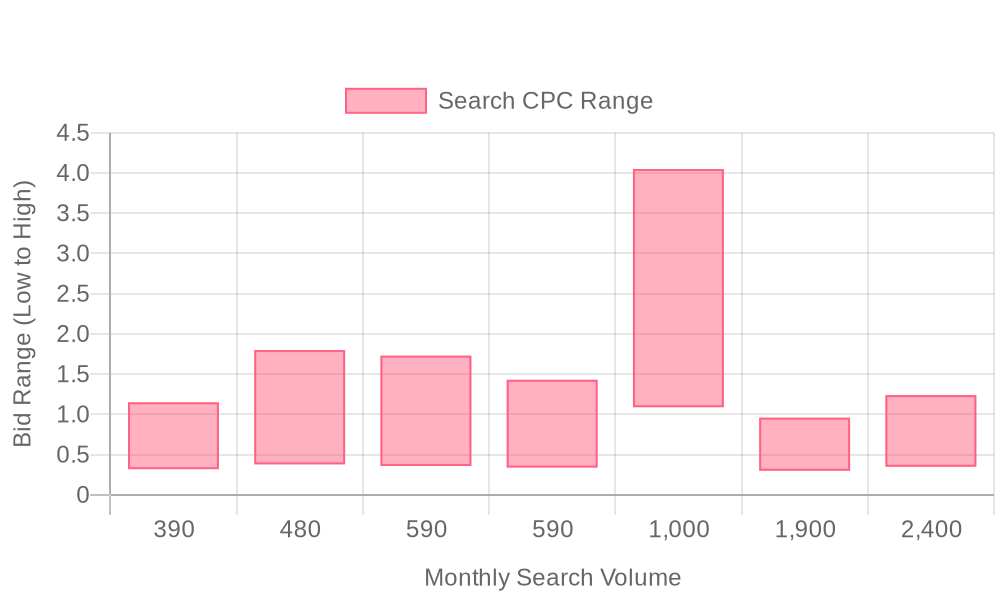
| Industry | Keyword | Monthly Search Volume | Competition Level | Low Bid | High Bid |
| Vinyl Repair Services | vinyl chair repair | 390 | HIGH | 0.32 | 1.15 |
| Vinyl Repair Services | boat vinyl repair | 480 | HIGH | 0.38 | 1.8 |
| Vinyl Repair Services | vinyl upholstery repair | 590 | HIGH | 0.36 | 1.73 |
| Vinyl Repair Services | vinyl boat seat repair | 590 | HIGH | 0.34 | 1.43 |
| Vinyl Repair Services | vinyl repair near me | 1000 | MEDIUM | 1.09 | 4.05 |
| Vinyl Repair Services | vinyl seat repair | 1900 | HIGH | 0.3 | 0.96 |
| Vinyl Repair Services | vinyl repair | 2400 | HIGH | 0.35 | 1.24 |
A robust keyword strategy is the backbone of effective vinyl repair services marketing. Without precision in keyword targeting, campaigns waste budget on low-intent clicks and miss high-value prospects actively searching for services like vinyl flooring patching or automotive vinyl seat repair. For a detailed list of targeted Google Ads keywords specific to the auto service industry, review this auto service keyword resource.
Focusing on high-impact, intent-driven keywords gives vinyl repair companies the ability to connect with motivated buyers. Phrases such as “mobile vinyl repair services,” “vinyl repair services near me,” “emergency vinyl flooring repair,” and “vinyl upholstery repair cost” attract users who are ready to book appointments or request quotes. By integrating highly specific long-tail terms, like “boat vinyl seat stitching [city]” or “24/7 vinyl top repair”, advertisers reduce competition, improve quality scores, and lower click costs while increasing lead quality. For additional ways to optimize campaigns, explore our marketing playbooks.
Successful Google Ads strategies for vinyl repair also rely on negative keyword management to exclude traffic from DIY tutorials or unrelated vinyl products. This keeps campaigns sharply focused and ensures that every click aligns with business objectives. Advanced platforms let marketers identify not just the search intent but also the company and visitor behind every click, allowing for more intelligent budget allocation and real-time audience updates as leads progress through the funnel.
Aligning keyword lists with campaign objectives is vital for vinyl repair business growth. For lead generation, local advertising for vinyl repair should use geo-modifiers such as “vinyl repair services in [suburb]” or “vinyl siding repair near [zip code]” to capture local intent. For retargeting or upsell campaigns, keywords tied to higher-order services, like “commercial vinyl flooring restoration” or “marine-grade vinyl repair”, can be layered into dynamic audiences and synced with CRM data, supporting personalized online marketing for vinyl repair and improving conversion tracking accuracy.
With this approach, PPC for vinyl repair evolves from simple keyword matching to a data-rich, intent-driven engine. Marketers can move beyond anonymous traffic and build campaigns that adapt as audience behaviors and business priorities shift, driving sustainable vinyl repair lead generation and higher return on ad spend. To see how this works in practice, get started for free with Sona.
Step-by-Step Campaign Execution Framework
Step 1: Build Targeted Keyword Lists
Effective vinyl repair advertising begins with carefully structured keyword lists that reflect the diversity of vinyl repair services. Segmenting keywords by service types, such as automotive vinyl repair, flooring patching, siding restoration, or furniture upholstery, ensures hyper-relevant targeting. Local modifiers like “near me,” city names, or ZIP codes elevate visibility among high-intent prospects who are actively searching for immediate solutions within their geographic area. For those looking to optimize paid search campaigns, this auto service keywords list provides a valuable starting point for identifying high-performing terms.
Going beyond basic keyword research, marketers can now leverage visitor identification to transform anonymous web traffic into detailed profiles. This approach enables the discovery of which companies or individuals are searching for vinyl repair solutions, allowing for keyword clusters to be dynamically updated as market demand shifts. As audience data becomes more granular, campaigns can adapt in real time, allocating budget to the highest-potential keywords and local segments for superior vinyl repair lead generation.
The upgrade most vinyl repair advertisers miss is going beyond raw keyword volume to layer in intent and identity signals. By connecting website-visitor data and CRM records with Sona Marketing Measurement, you can see which specific search terms bring in the accounts and customers that actually convert, and weight your keyword and bidding strategy toward those rather than the terms with the highest search volume alone.
Step 2: Develop Compelling Ad Copy
The most successful Google Ads strategies for vinyl repair prioritize ad copy that directly addresses customer pain points while establishing trust. Headlines should immediately signal urgency and expertise, such as “Emergency Vinyl Floor Repair” or “Certified Auto Upholstery Restoration.” Effective ad copy integrates trust markers, warranty offers, years of experience, or certified technicians, which help overcome skepticism and drive more qualified clicks. For inspiration, refer to this guide to writing Google Ads copy that increases click-through rates and conversions.
Ad performance improves further when marketers use Sona's intent signals to refine messaging for specific audiences. By tracking which searchers engage with certain services or respond to urgency cues, campaigns can serve tailored ads that fit each stage of the funnel. That lifts click-through rates and ensures vinyl repair promotions reach the right people at the right moment.
Step 3: Design Effective Landing Pages
Landing pages for vinyl repair services must deliver seamless continuity from search query to conversion. Each landing page should mirror the language and promises of the ad, presenting a clear call-to-action such as “Request a Free Quote” or “Book Same-Day Service.” Visual proof, before-and-after galleries, testimonials, and certifications, builds trust and reassures visitors of the service quality. For more on best practices, see this article on Google Ads in automotive service marketing.
Optimizing for conversion is not only about visual and copy alignment, but also about integrating data-driven feedback loops. Landing pages that track both online form fills and offline actions, like phone calls or showroom visits, give marketers a holistic view of which tactics are driving real business outcomes. Enhanced tracking ensures that PPC for vinyl repair is measured accurately, supporting smarter decisions for vinyl repair business growth and campaign scaling.
Step 4: Implement Data-Driven Optimizations
Maximizing the effectiveness of Google Ads targeting for vinyl repair depends on relentless optimization informed by robust analytics. Detailed conversion tracking identifies which keywords, ads, and landing pages yield the highest return, enabling smart reallocation of spend to top-performing areas. Automated bidding strategies can be adjusted based on real-time performance, focusing on cost-per-lead and quality of conversions rather than just clicks. For further reading, this PPC case study collection offers insights into campaign strategies and results across various industries.
Integrating CRM and ad platforms unlocks a unified view of the customer journey, allowing enriched audience data to sync seamlessly across systems. This dynamic audience updating keeps retargeting lists fresh as prospects move through the funnel, ensuring that vinyl repair services marketing stays relevant and personalized. The result is not only improved ROI but also a streamlined approach to online marketing for vinyl repair, driving consistent business growth and higher-value customer acquisition.
Ready to take your vinyl repair campaigns to the next level? Get started for free with Sona.
Sona Marketing Measurement closes the gap between clicks and revenue. It captures every ad click with first-party, company-level tracking, then ties that click through UTM capture and ad-platform APIs to the actual record in your CRM, and reports ROAS by keyword and campaign instead of by last-click form fill. Feeding that revenue signal back into Smart Bidding and Performance Max compounds over time: the algorithms optimize toward booked vinyl repair revenue, not cheap leads.
Tips on Expanding Your Vinyl Repair Services Presence
Vinyl repair businesses gain a distinct advantage by integrating advanced digital strategies that connect every marketing touchpoint to bottom-line outcomes. Leaders in this space consistently outperform by leveraging precise audience segmentation, dynamic content strategies, and real-time data-driven decision making.
Cross-promoting educational content is a foundational move for vinyl repair services marketing. Creating practical guides or how-to videos on topics like vinyl flooring maintenance or automotive vinyl seat care not only establishes authority but also drives organic traffic from high-intent prospects. Sharing these assets through multiple channels helps encourage repeat engagement, explore additional marketing best practices to further position your team as the go-to expert for complex repair needs.
Upselling related services based on audience segments further accelerates vinyl repair business growth. By analyzing visitor interactions and purchase histories, teams can surface personalized promotions and trigger relevant upsells using Sona's Identity Resolution, resulting in higher average order values and improved customer retention.
Partnerships with industry associations unlock enhanced trust and audience reach for vinyl repair service promotions. Running co-branded Google Ads campaigns with flooring manufacturers, auto dealerships, or home improvement groups can amplify credibility and attract new segments. For targeted keyword ideas to power your paid campaigns, review this comprehensive list of auto service keywords.
Geographic targeting is critical for local advertising for vinyl repair. By syncing CRM insights with Google Ads, marketers can allocate spend to ZIP codes or neighborhoods where conversion rates are highest, ensuring every dollar is directed toward the most impactful markets. This data-driven approach not only drives more qualified leads but also provides a clear attribution path from initial click to closed deal, enabling teams to refine and scale campaigns with confidence. To see how these tactics can work for your business, get started for free with Sona.
Final Thoughts
Consistent success with Google Ads for vinyl repair comes from precise keyword targeting and audience segmentation built around your actual service areas, not generic auto-industry terms. High-performing campaigns pair ads and landing pages that speak to specific jobs, an emergency siding patch, a marine restoration, a commercial flooring contract, each with its own proof points and urgency. For inspiration on paid search terms, review this list of targeted Google Ads keywords for the auto service industry.
Ongoing optimization, informed by reliable performance data, keeps campaigns efficient and competitive. Integrating paid efforts with broader marketing and sales activity creates a unified pipeline, letting your team use Sona's Identity Resolution to find high-value leads, track engagement across channels, and attribute results accurately.
Beyond Google Ads: Winning the AI Answers Vinyl Repair Services Buyers Now Trust
Paid search captures demand at the moment someone types a query. But a fast-growing share of vinyl repair services buyers no longer start at Google at all, they ask ChatGPT, Gemini, or Perplexity before they ever run a search, and Google's own AI Overviews increasingly summarize an answer above the traditional results. If your business isn't referenced in those AI answers, you're invisible at the exact moment buyers build their shortlist.
Sona AI Visibility shows where your business shows up across ChatGPT, Gemini, Perplexity, Google AI Overviews, and 10+ engines, and, much like a keyword report, which prompts actually send you buyers, so you can prioritize the ones that convert. Run the two together and you cover the entire buyer path: get cited where buyers research (AI Visibility), then prove which of that demand turns into booked revenue (Marketing Measurement).
Helpful resources
Conclusion
The vinyl repair shops that pull ahead over the next few years won't just bid well on "vinyl repair near me," they'll be the ones an AI assistant recommends before a customer even opens Google, and the ones whose CRM ties every booked job back to the search or ad that started it. Building that connection now, between paid search, identity data, and revenue, positions a shop to compete on more than price when the market gets crowded.
FAQ
What are the best practices for Google Ads in vinyl repair services?
The best practices include targeting high-intent keywords, segmenting audiences, optimizing landing pages for conversions, and integrating real-time lead routing with CRM systems to ensure timely follow-up and maximize conversions.
How can I effectively target customers for vinyl repair using Google Ads?
Effectively target customers by using segmented keyword lists, behavioral signals for audience segmentation, and real-time data to identify high-intent prospects, ensuring ads are shown to those most likely to convert.
What keywords should I use for Google Ads for vinyl repair services?
Use keywords that reflect urgency, material type, and location, such as 'emergency vinyl floor repair,' 'auto vinyl seat restoration near me,' and 'same day vinyl siding fix' to capture high-intent searchers.
How do I set up a Google Ads campaign for vinyl repair?
Set up your campaign by building targeted keyword lists, designing conversion-optimized landing pages, and integrating data-driven optimizations such as audience segmentation and real-time lead routing to improve conversion rates.
What budget should I allocate for Google Ads in vinyl repair services?
Allocate your budget based on the analysis of cost per acquisition, conversion rates, and impression share, adjusting bids according to real-time buyer intent and historical outcomes to maximize ROI.







