


Ventilation system cleaning is a business built on urgency and trust: a facility manager with a failed air quality test or a property owner facing a compliance deadline doesn't browse, they search, click, and expect a callback within the hour. Google Ads is where that moment of intent lives, and it works best alongside the offline relationships and referral networks that already drive much of this industry's business. Missing that high-intent search traffic means losing jobs to competitors who show up first. This guide covers how to set up and optimize Google Ads campaigns for the ventilation cleaning industry, with practical strategies for lead generation and marketing effectiveness.
How to Generate Leads in Ventilation System Cleaning with Google Ads

A data-driven approach lets ventilation system cleaning companies reach commercial and residential prospects at the exact moment they search, whether that's a hospital facility manager scheduling required compliance cleanings or a homeowner dealing with a musty smell after months of AC use. This focus puts spend behind the searches most likely to convert, building a stronger pipeline. For deeper insights on targeting the right prospects, explore real-time audience segmentation.
Precise keyword and audience targeting minimizes wasted ad spend by connecting with businesses and property managers actively seeking ventilation cleaning services. By leveraging advanced audience segmentation, marketers can deliver relevant offers and messaging, while seamlessly tracking engagement from search to conversion. Learn how to optimize your campaigns with a comprehensive guide to Google Ads for HVAC.
Landing pages and creative assets should be tightly aligned with ad messaging and tailored to the needs of commercial and residential buyers. Effective alignment boosts conversion rates by making it easy for prospects to understand your value proposition and take action. Dynamic personalization, driven by unified data, ensures that every touchpoint reflects the interests and urgency level of each visitor.
Ongoing optimization is what separates a profitable PPC account from one that quietly bleeds budget. Regular review of search terms, bid strategy, and creative performance lets marketers shift spend toward the keywords and formats that actually produce booked jobs, not just clicks. For actionable strategies, review our playbook on intent-driven retargeting.
Integrating Google Ads into a holistic, cross-channel marketing strategy amplifies lead generation efforts for ventilation system cleaning. Consistent messaging across search, display, social, and email reinforces brand credibility and keeps your service top-of-mind throughout the buying journey. By syncing enriched audiences and real-time lead activity across platforms, teams can drive cohesive engagement and accurately attribute pipeline growth to specific campaigns.
This resource supports B2B marketers, service providers, and local operators in the ventilation and air duct cleaning industry who are focused on building qualified pipelines and extracting maximum value from digital advertising investments. Get started for free with Sona.
Why Google Ads Matters for Ventilation System Cleaning

Modern facility managers and building owners expect fast, targeted solutions for complex building needs. Google Ads captures these decision-makers precisely when they're searching for ventilation system cleaning, ensuring qualified opportunities never slip by in a competitive environment. For a practical walkthrough, explore this video tutorial on HVAC Google Ads campaigns.
Higher-margin services such as industrial duct cleaning often require reaching beyond current contacts. While retention channels like email are valuable, purpose-built digital advertising surfaces new prospects with urgent needs, delivering higher-value projects that traditional marketing may miss. Marketers can use real-time audience segmentation to reach these valuable leads at the ideal moment.
Rapid shifts in demand, like seasonal peaks or compliance deadlines, require agile advertising approaches. Google Ads enables immediate campaign deployment with granular targeting, connecting services to the right buyers when urgency spikes, outperforming slower channels like organic social. For further campaign optimization tips, visit our blog for actionable strategies.
Emerging geographic markets present untapped revenue, but only if identified with precision. Location-based targeting in Google Ads lets marketers direct campaigns to underserved regions, ensuring vital cleaning services are visible in both established cities and growth corridors. With Sona's Identity Resolution, you can identify which companies are showing interest, even without a form fill.
Integrated data analysis in Google Ads allows revenue teams to trace every engagement from click to contract. Advanced tracking and attribution inform future budget allocation and campaign strategy, reducing the risk of lost leads and supporting continuous performance improvement. For organizations using platforms that unify CRM and ad data, the ability to follow prospects through the entire funnel, from an initial search for "duct cleaning cost" to a signed service contract, results in clearer ROI and more actionable insight for both sales and marketing teams.
Common Types of Google Ads Campaigns for Ventilation System Cleaning
- Search Campaigns: These capture urgent, high-intent queries from individuals or businesses actively seeking ventilation system cleaning, often tied to a compliance deadline, a bad odor complaint, or a pre-lease inspection. Addressing those specific triggers in ad copy turns organic search interest into qualified leads. When paired with a unified go-to-market data platform such as Sona's Identity Resolution, teams can identify which companies are searching and prioritize outreach, so high-value opportunities get timely attention.
- Display Ads: Display campaigns keep your brand visible across relevant websites and industry content hubs, reinforcing messages introduced via search. Persistent visibility builds trust and top-of-mind recall, especially when paired with real-time audience intent signals. For a comprehensive guide to optimizing Google Ads for HVAC businesses, review this resource on ServiceTitan.
- Video Ads: Video formats offer a powerful way to visually demonstrate the effectiveness of advanced cleaning techniques or showcase before-and-after results. These ads extend content marketing strategies with memorable, targeted engagement. By syncing CRM segments and enriched audience data, marketers can deliver hyper-personalized video messaging and track which viewers are progressing toward conversion.
- Remarketing: Remarketing campaigns re-engage previous site visitors and nurture leads who have interacted but not yet converted. This approach creates valuable repeat touchpoints, driving higher conversion rates and lower acquisition costs. When remarketing lists are dynamically refreshed through seamless CRM and web analytics integration, marketers ensure that messaging stays relevant as prospects move through the funnel.
- Assets: Ad assets add critical trust signals such as business location, certifications, emergency response times, and direct contact options. These enhancements make ads more actionable and credible, preventing messaging gaps that could deter potential clients. With advanced attribution and conversion tracking, teams can measure which assets drive the strongest engagement and optimize creative for maximum impact.
Where to Find Growth Opportunities for Ventilation System Cleaning

Ventilation system cleaning providers face a rapidly shifting landscape where small gaps in targeting and audience engagement can result in missed revenue. Growth depends on identifying overlooked segments and implementing strategies that put your services in front of high-intent buyers while your competitors focus on broader, less tailored campaigns.
- Vertical keyword targeting: Niche, service-specific keywords such as "commercial duct cleaning for hospitals," "industrial ventilation system sanitization," or "OSHA-compliant kitchen exhaust cleaning" let you capture demand where competition is lower but intent, and often licensing or compliance urgency, is high. Segmenting by these terms keeps spend on the queries most likely to convert. For revenue teams, layering in intent signals and enriched keyword data helps avoid wasted impressions on browsers who aren't ready to book service.
- Competitor gap analysis: Systematic analysis of competitors' keyword portfolios and ad placements uncovers opportunities to enter less saturated markets or regions. Identifying keywords your competitors overlook or under-bid can shift your budget toward untapped prospects. Using unified analytics, marketers can attribute pipeline growth to specific campaigns, adjusting spend in real time as new opportunities emerge and ensuring that promising leads never go unnoticed.
- Industry-specific placements: Forums, directories, and HVAC-focused platforms are often overlooked in broad campaigns, yet they host high-intent audiences actively seeking ventilation cleaning solutions. Engaging with these platforms through display campaigns, sponsored posts, or direct outreach yields higher-quality leads. Integrating visitor identification allows for more personalized follow-ups and nurtures relationships that might otherwise be lost in anonymous site traffic.
- Content retargeting with educational materials: Creating a content calendar featuring maintenance guides, cost calculators, and compliance checklists positions your business as a trusted resource. Retargeting visitors who engage with these assets ensures you remain top-of-mind as they move toward a purchase decision. With dynamic audience updates, contacts who signal increased buying intent can be routed into tailored retargeting workflows or synced directly into Google Ads for HVAC businesses, maintaining consistency across every touchpoint in the buyer journey. This holistic approach reduces churn risk and keeps prospects engaged until they are ready to convert. To see how you can activate these audiences in real time, get started for free with Sona.
How to Apply Audience Segmentation for Ventilation System Cleaning

Audience segmentation is the foundation of any effective digital marketing effort in ventilation system cleaning. With precise audience intelligence, revenue teams can serve relevant messaging, allocate budget efficiently, and avoid overlooking real opportunities. Segmentation clarifies both the market and buyer intent, sharpening how you connect with high-value prospects.
- Define Segments: Accurate segmentation begins by clearly separating commercial and residential customers, as each group has distinct needs and purchasing cycles. Further granularity can be achieved by distinguishing between clients seeking routine maintenance and those requiring deep cleaning. This approach guarantees that campaigns address the unique drivers for each segment, optimizing messaging, offers, and conversion paths. To explore more actionable segmentation frameworks, visit the Sona blog.
- Overlay Intent Signals: Advanced audience segmentation draws on real-time intent signals to identify prospects with urgent needs, such as facility managers facing compliance deadlines or property owners responding to seasonal triggers like the first heat wave or a musty smell at the start of heating season. Capturing these signals lets marketing teams dynamically shift budget and creative toward accounts showing immediate purchase behavior. Platforms with robust Identity Resolution and in-market tracking let marketers see beyond anonymous clicks, surfacing high-intent accounts that would otherwise stay hidden.
- Create Ad Groups by Segment: Structuring Google Ads campaigns with segment-specific ad groups ensures that each audience receives tailored messaging, relevant offers, and appropriately sized budgets. For actionable tips on building effective campaigns, watch this video tutorial for HVAC Google Ads campaigns. Dynamic audience updates ensure that as leads progress through the funnel, ad exposure and creative stays synchronized, increasing the likelihood of conversion and optimizing spend across all campaign stages.
- Validate Conversion Paths: Effective segmentation extends to post-click experience and lead capture. Ensuring that every inquiry, call, or form submission is tracked and attributed through CRM integration prevents valuable leads from slipping through the cracks. With cross-channel attribution, revenue teams can match offline calls, field appointments, and online conversions to the correct segment and campaign, delivering actionable insight into channel ROI and informing future budget allocation. Integrating enriched audience and lead data directly into ad platforms and CRMs ensures targeting is always based on the most current, actionable information.
By combining accurate audience segmentation with real-time behavioral insight and seamless CRM integration, marketers in ventilation system cleaning can drive higher engagement, reduce wasted spend, and achieve measurable growth across every segment they serve.
This is also where measurement changes the economics. With Sona Marketing Measurement you can identify the companies behind your ad clicks, not just anonymous sessions, and segment audiences by who actually becomes a customer. That lets you build bid adjustments and audience signals around the segments that convert and de-prioritize the ones that don't, feeding Google's algorithms "this click became a paying ventilation system cleaning customer" instead of just "someone filled out a form."
Keyword Strategy & Sample Target Terms
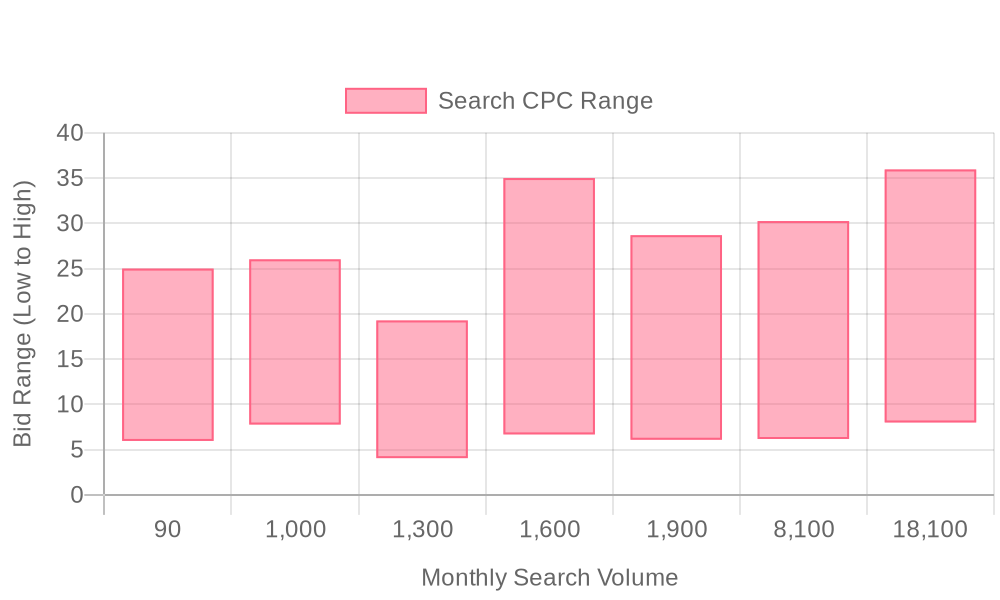
| Industry | Keyword | Monthly Search Volume | Competition Level | Low Bid | High Bid |
| Ventilation System Cleaning | ventilation system cleaning | 90 | HIGH | 5.96 | 25 |
| Ventilation System Cleaning | air duct and dryer vent cleaning | 1000 | MEDIUM | 7.77 | 26.02 |
| Ventilation System Cleaning | hvac cleaning cost | 1300 | HIGH | 4.06 | 19.27 |
| Ventilation System Cleaning | hvac duct cleaning near me | 1600 | MEDIUM | 6.68 | 35 |
| Ventilation System Cleaning | hvac vent cleaning | 1900 | HIGH | 6.09 | 28.69 |
| Ventilation System Cleaning | hvac duct cleaning | 8100 | LOW | 6.17 | 30.25 |
| Ventilation System Cleaning | hvac cleaning | 18100 | HIGH | 8 | 35.95 |
Selecting the right keywords is the cornerstone of an effective Google Ads strategy for ventilation system cleaning companies. High-intent, service-specific terms connect your business directly with decision-makers searching for immediate solutions, leading to more qualified inbound leads and measurable business growth. By focusing on keyword precision, every click is aligned with users who are actively seeking ventilation system cleaning, air duct maintenance, or HVAC sanitation, minimizing wasted spend and maximizing conversion potential. For a detailed look at the essentials, refer to this comprehensive guide to HVAC Google Ads.
- Precision Targeting: Deploying a refined keyword approach ensures your ads surface when prospects are ready to purchase. For example, using search terms like "ventilation system cleaning near me," "commercial air duct cleaning," and "HVAC cleaning services" captures buyers during high-intent, bottom-of-funnel moments. Strategic use of negative keywords, such as filtering out "DIY" or "free," further protects your budget from irrelevant traffic. Dive deeper into B2B campaign optimization with this account-based marketing guide.
- Measurable ROI: With advanced attribution, revenue teams can track every lead from initial click through to closed deal. When online and offline conversions are unified, marketers gain full visibility into which keywords drive real business outcomes, not just vanity metrics. Leveraging Sona's Destinations feature to integrate CRM and ad platforms in real time accelerates this feedback loop.
- Channel Synergy: Building keyword lists that work across search, display, and video ensures no valuable interaction slips through the cracks. For example, visitors who engage with educational content like "how to improve indoor air quality" can be segmented for nurturing, while those searching for "emergency air duct cleaning" are routed into high-priority retargeting sequences. This dynamic audience management allows marketers to adapt messaging as leads move through the funnel, enhancing engagement at every stage.
Strategic Recommendations:
- Top-performing keywords for immediate service needs: "ventilation system cleaning quote," "emergency air duct cleaning," "industrial HVAC cleaning company."
- Awareness and engagement keywords for educational content: "benefits of ventilation cleaning," "air quality improvement tips," "office duct cleaning best practices."
Prioritize high-impact terms that align with buyer intent and local demand. Continuously refine your account structure to eliminate unqualified traffic, using regular search term reports and exclusion lists. When keywords, negative keywords, and audience segments are managed with strategic bidding, your campaigns become more agile and responsive to market shifts. Syncing enriched audience data and conversion events across your CRM and ad platforms keeps every marketing initiative data-driven and outcome-focused.
Step-by-Step Campaign Execution Framework
A high-performing Google Ads strategy for ventilation system cleaning businesses begins with precision at every stage. Effective campaigns not only capture valuable leads but also reduce acquisition costs through targeted execution and continuous optimization.
Step 1: Build Targeted Keyword Lists
Start by constructing keyword lists anchored in both service type and geographic relevance. Include terms such as "ventilation system cleaning," "air duct cleaning near me," and commercial-specific modifiers to ensure alignment with your target market. Carefully curate negative keywords to block out non-converting search queries, which prevents wasted spend and maximizes relevance. Leveraging advanced visitor identification, you can move beyond basic keyword matching and pinpoint high-value prospects with a demonstrated interest in your services, bringing greater clarity to where budget should be allocated.
The upgrade most ventilation system cleaning advertisers miss is going beyond raw keyword volume to layer in intent and identity signals. By connecting website-visitor data and CRM records with Sona Marketing Measurement, you can see which specific search terms bring in the accounts and customers that actually convert, and weight your keyword and bidding strategy toward those rather than the terms with the highest search volume alone.
Step 2: Develop Compelling Ad Copy
Craft ad copy that directly addresses the pain points faced by property managers and facility decision-makers. Highlight critical issues like indoor air quality, regulatory compliance, and energy efficiency. Integrate trust markers such as certifications or safety standards, and feature urgency-driven incentives such as limited-time discounts or free consultations to drive immediate action. With insights into real-time intent signals, you can dynamically tailor messaging to resonate with prospects who are actively researching ventilation system cleaning, increasing the likelihood of engagement and conversion.
Step 3: Design Effective Landing Pages
Effective landing pages tightly align with both the campaign keywords and ad messaging. Incorporate clear calls to action and display trust badges, like industry credentials or customer testimonials, to reinforce credibility. Streamline the conversion path by minimizing form fields and offering multiple contact options. By capturing enriched visitor data, you can pre-populate forms for returning leads or adapt landing experiences to match the buyer's journey stage, ensuring higher conversion rates from both new and repeat prospects.
Step 4: Implement Data-Driven Optimizations
Continuous optimization is essential for sustainable results. Monitor conversion actions, adjust bidding strategies with smart automation, and import offline interactions, like phone call outcomes or in-person consultations, to build a unified view of campaign performance. For practical guidance on optimization, see this comprehensive guide to HVAC Google Ads for lead generation. Integrating CRM and ad platforms automatically syncs enriched audiences, so remarketing and lookalike campaigns target only qualified leads. This supports advanced attribution, revealing which touchpoints deliver true ROI and where budget should shift.
Sona Marketing Measurement closes the gap between clicks and revenue. It captures ad clicks with first-party measurement, then ties that click through UTM capture and ad-platform APIs to the actual record in your CRM, and reports ROAS by keyword and campaign instead of by last-click form fill. Feeding that revenue signal back into Smart Bidding and Performance Max compounds over time: the algorithms optimize toward booked ventilation system cleaning revenue, not cheap leads.
Beyond Google Ads: Winning the AI Answers Ventilation System Cleaning Buyers Now Trust
Paid search captures demand at the moment someone types a query. But a fast-growing share of ventilation system cleaning buyers no longer start at Google at all, they ask ChatGPT, Gemini, or Perplexity before they ever run a search, and Google's own AI Overviews increasingly summarize an answer above the traditional results. If your business isn't referenced in those AI answers, you're invisible at the exact moment buyers build their shortlist.
Sona AI Visibility shows where your business shows up across ChatGPT, Gemini, Perplexity, Google AI Overviews, and 10+ engines, and, much like a keyword report, which prompts actually send you buyers, so you can prioritize the ones that convert. Run the two together and you cover the entire buyer path: get cited where buyers research (AI Visibility), then prove which of that demand turns into booked revenue (Marketing Measurement).
Helpful resources
Conclusion
Google Ads works because it meets ventilation system cleaning buyers at the exact moment they're searching, whether that's a facility manager racing a compliance deadline or a homeowner googling a musty smell at 9pm. Targeted keywords, aligned landing pages, and disciplined optimization turn that moment into a booked job instead of a missed one.
The bigger shift is where buyer research now happens. As more facility managers and property owners ask AI tools for recommendations before they ever open Google, the businesses that show up in those answers, and that can prove which searches turn into signed contracts, will take share from competitors still measuring success by clicks alone.
FAQ
How can I set up Google Ads for my ventilation system cleaning business?
To set up Google Ads for your ventilation system cleaning business, start by building targeted keyword lists, developing compelling ad copy, designing effective landing pages, and implementing data-driven optimizations.
What are the best practices for Google Ads in the ventilation cleaning industry?
Best practices include precise keyword and audience targeting, creating aligned landing pages, continuous performance optimization, and integrating Google Ads into a holistic cross-channel marketing strategy.
How can I track and optimize my Google Ads spend for ventilation system cleaning?
Utilize advanced analytics and structured feedback loops to optimize spend, monitor conversion actions, adjust bidding strategies, and integrate CRM data for a unified view of campaign performance.
What is the cost-effectiveness of using Google Ads for ventilation system cleaning?
Google Ads can be cost-effective by capturing high-intent prospects with precise targeting, reducing wasted ad spend, and driving measurable results through strategic audience segmentation and optimization.
How do I target local customers with Google Ads for my ventilation system cleaning service?
Use location-based targeting to direct campaigns to underserved regions and incorporate geographic relevance in your keyword lists to ensure ads reach local customers.
What kind of ROI can I expect from Google Ads for my ventilation system cleaning business?
ROI from Google Ads can be maximized by precise keyword targeting, advanced audience segmentation, and continuous optimization, resulting in higher engagement and conversion rates.
How can I retarget potential customers with Google Ads for my ventilation system cleaning service?
Implement remarketing campaigns to re-engage previous site visitors, dynamically update remarketing lists, and tailor messaging to prospects showing increased buying intent.
What are some successful Google Ads campaigns for similar ventilation system cleaning businesses?
Successful campaigns often include search, display, video, and remarketing ads, tailored to specific audience segments and synchronized with CRM data for enhanced targeting.
How can I upsell my services using Google Ads for ventilation system cleaning?
Use dynamic personalization and audience segmentation to deliver relevant offers and messaging that highlight the benefits of higher-margin services like industrial duct cleaning.
What are the common mistakes to avoid when using Google Ads for ventilation system cleaning?
Avoid mistakes such as poor keyword targeting, lack of alignment between ads and landing pages, neglecting continuous optimization, and failing to integrate data across marketing channels.







