


Trash chute cleaning is an unglamorous, urgent business, most calls come in because a chute already smells or a building inspector already flagged a violation. Google Ads works for this trade precisely because it catches property managers and facility directors at that moment of need, before they've called a competitor or posted in a property management forum. Many of these buyers never enter a CRM until they're ready to sign, so paid search becomes the mechanism for surfacing them early, aiming spend at people with real, immediate purchasing intent rather than at a broad audience that may never need the service.
How to Generate Trash Chute Cleaning Service Leads with Google Ads: A Step-by-Step Guide

Trash chute cleaning service providers operate in a niche market where timing, local relevance, and trust drive new business. Effective lead generation depends on precise targeting and seamless coordination across every stage of the online journey, supported by real-time audience intelligence that ensures your outreach is always reaching the right decision makers.
By integrating Google Ads with a data-driven marketing strategy, cleaning companies can eliminate wasted budget, unify messaging, and reach ready-to-buy property managers or facility operators. This guide details how to connect campaign elements, optimize for engagement, and build sustainable demand for trash chute cleaning services. Modern B2B teams gain an agile framework that aligns paid media with real-time buyer intent, transforming every ad dollar into measurable pipeline impact.
This playbook integrates Google Ads into your marketing strategy by addressing a common problem: disconnected campaigns that cause inconsistent messaging. It leans on:
- Data-driven approaches: Integrate campaign data with your broader marketing mix to prevent wasted spend and ensure every impression reinforces your value proposition. Explore a marketing plan template for structured planning and growth.
- Audience targeting strategies: Use granular targeting to reach decision-makers responsible for building maintenance, narrowing in on high-value accounts within property management, facility services, or commercial real estate. Leverage precise audience intelligence for hyper-personalized targeting.
- Landing page and creative alignment: Synchronize your ad copy and landing pages with tailored messages for each audience segment, increasing relevance and conversion rates. See examples in our marketing playbooks.
- Performance optimization tactics: Regularly analyze engagement signals such as click-through rates, form fills, and call tracking to refine bidding, messaging, and audience criteria. Deepen your analysis with intent signal tracking.
- Cross-channel integration practices: Ensure your Google Ads campaigns sync with CRM, email, and sales outreach, creating a holistic ecosystem where ad engagement translates into qualified leads for your team. Automate data flow with seamless CRM integration.
With unified data and audience intelligence, trash chute cleaning marketers can target, convert, and nurture leads with more confidence, building a demand engine that scales as new buildings and management contracts come online. Get started for free with Sona.
Why Google Ads Matter for Trash Chute Cleaning Services Businesses

Facility management and operations leaders often need fast, specialized solutions when it comes to trash chute maintenance. Google Ads empowers these decision-makers to quickly identify and connect with providers who can address urgent or recurring cleaning needs, ensuring projects are delivered on time and compliant with building standards. For those building a growth strategy, a marketing plan template for trash chute cleaning businesses can provide structure for campaign planning and ROI goals.
High-value trash chute cleaning projects often originate from prospects outside traditional CRM reach. With Google Ads, cleaning companies can reach these untapped audiences, capturing demand from plant managers and facilities directors who may not yet exist in their pipeline. Real-time audience segmentation makes it possible to build dynamic lists and auto-sync with ad platforms, ensuring outreach to the right buyers.
Precise geographic and demographic targeting makes expansion into new regions more efficient, minimizing wasted ad spend while maximizing exposure to emerging markets. During seasonal surges, Google Ads enables agile campaign adjustments so cleaning services can respond immediately to spikes in demand. Enhanced attribution and conversion tracking, when integrated with advanced platforms, provide a clear picture of ROI and allow rapid, data-driven decisions from the first click through to contract signing.
Common Types of Google Ads Campaigns for Trash Chute Cleaning Services

A robust Google Ads strategy for trash chute cleaning services centers on matching campaign types to the customer journey, urgency of need, and intent signals. Effective execution helps minimize churn, capture high-value prospects, and maximize upsell opportunities while ensuring every marketing dollar is accountable. For a comprehensive marketing framework tailored to this niche, consider reviewing this marketing plan template for trash chute cleaning, which can help inform your campaign approach and budget allocation.
- Search Campaigns: Engage prospects who are actively searching for trash chute cleaning solutions in their area. Search campaigns excel when targeting high-intent keywords such as "emergency trash chute cleaning," "commercial chute sanitizing," or "apartment building chute cleaning services." These campaigns drive direct conversions by aligning ad copy, landing pages, and responses with urgent customer needs, while unified intent and visitor data allow revenue teams to immediately identify and prioritize qualified leads. Integrating real-time visitor identification gives marketers the ability to move beyond anonymous clicks and recognize which companies or property managers are actively seeking services, making follow-up more precise.
- Display Ads: Maintain visibility across relevant industry sites, local property management forums, or cleaning services directories. Display ads reinforce brand presence and nurture recognition among decision-makers who may not be ready to buy but are researching options. Dynamic audience updates, driven by unified data, ensure your ads only reach engaged prospects as they move through the funnel, reducing wasted impressions and improving campaign efficiency in digital marketing for trash chute cleaning.
- Remarketing: Re-engage prospects who previously visited your website or abandoned a quote request. Remarketing campaigns deliver tailored messaging to warm leads, increasing the likelihood of conversion and reducing lost opportunities. By syncing enriched audience and lead data directly into Google Ads campaigns, your team ensures remarketing lists stay current and reflect actual engagement, not just superficial web activity. This targeted approach boosts ROI and shortens the sales cycle for PPC in waste disposal services.
- Assets: Enhance ad copy with trust signals that matter to property managers and facilities directors. Use callout assets to highlight certifications, fast response times, or satisfaction guarantees. Structured snippet assets can showcase service areas or types of buildings served, while location and call assets make it simple for leads to reach out. Advanced conversion tracking and offline attribution provide proof of which assets drive results, allowing ongoing Google Ads optimization for cleaning businesses.
Where to Find Growth Opportunities?

Growth in the trash chute cleaning services industry hinges on moving beyond fragmented marketing and aligning outreach with real customer intent. Teams that leverage unified data can surface new opportunities, refine targeting, and maximize advertising spend by connecting the dots between intent signals, content engagement, and sales readiness.
- Vertical keyword targeting: Focusing on high-intent, service-specific keywords ensures your content appears directly in front of decision-makers searching for solutions. This approach results in more qualified leads and reduces wasted ad spend by prioritizing terms closely tied to purchase intent, such as "commercial trash chute cleaning" or "apartment chute sanitizing." For those launching new campaigns, a comprehensive marketing plan template can help structure your strategy for maximum impact.
- Competitor gap analysis: By analyzing competitor ad strategies and organic placements, you can identify underserved market segments or geographic pockets with less competition. This enables your team to tailor messaging and offers to fill these gaps, capturing latent demand and elevating your brand presence where others are absent.
- Content retargeting with educational assets: Integrating retargeting campaigns that leverage whitepapers, case studies, or explainer videos keeps your solution top-of-mind for prospects who have visited your site but not yet converted. Using a unified data platform, marketers can dynamically update audiences based on engagement with these assets, ensuring that remarketing efforts always reach the most relevant prospects.
- Industry-specific placements: Placing ads on niche trade forums, property management directories, or facility maintenance publications targets audiences actively seeking solutions for waste management challenges. When these placements are informed by real-time behavioral data, marketers can shift budget to channels and placements that consistently deliver high-converting leads and measurable ROI.
Connecting these strategies with a centralized platform allows marketers to move beyond generic campaigns and build an adaptive, data-driven approach to demand generation. Every touchpoint, from keyword selection to retargeting, is informed by actionable insights and real buyer intent, driving efficient growth in a crowded market. For additional strategies on optimizing ongoing campaigns, explore retargeting strategies.
How to Apply Audience Segmentation for Trash Chute Cleaning Services

Effective audience segmentation unlocks higher ROI and marketing clarity for trash chute cleaning service providers. By concentrating on precise personas and layering operational context, revenue teams can identify lucrative opportunities and personalize outreach for each commercial vertical. For actionable tips, explore our marketing and attribution blog.
Align strategies with problem-specific insights and customer journeys by:
- Defining key customer segments: Segment audiences by environment type, such as healthcare facilities, multifamily residential buildings, industrial complexes, or hospitality venues. Each segment faces unique challenges and compliance standards, requiring tailored messaging and offers that address pain points like infection control in hospitals or odor management in residential towers. To learn how to structure your approach, review this trash chute cleaning marketing plan template.
- Overlaying real-time intent signals: Use data on scheduled maintenance cycles, equipment age, or recent compliance regulation changes to prioritize prospects with urgent needs. Integrating real-time behavior and account-level activity enables marketers to shift spend toward high-intent accounts, ensuring campaigns engage those most likely to convert.
- Creating targeted ad groups: Build segmented ad groups with landing pages and creative aligned to each market's operational priorities. For example, ads for healthcare environments should highlight infection prevention and regulatory compliance, while ads for industrial sites can emphasize heavy-duty cleaning capabilities and safety. This playbook on intent-driven retargeting details how to increase relevance and conversion rates through advanced targeting strategies.
- Validating conversion paths through CRM integration: Sync CRM data to track downstream engagement and reveal hidden conversion signals, such as follow-up requests from property managers or procurement teams. Integrating audience data into your CRM and online/offline conversions into ad platforms supports full-funnel measurement and refined retargeting. This closed-loop feedback ensures marketing investment is focused on segments yielding the highest value, while enabling dynamic audience updates as prospects move through the sales funnel.
Audience segmentation for trash chute cleaning services, anchored in precise data and intent-driven targeting, turns digital marketing from generic outreach into a revenue-centered growth engine, supporting sustainable lead generation and campaign efficiency for B2B revenue teams. Get started for free with Sona.
This is also where measurement changes the economics. With Sona Marketing Measurement you can identify the companies behind your ad clicks, not just anonymous sessions, and segment audiences by which accounts actually become customers. That lets you build bid adjustments and audience signals around the segments that convert and de-prioritize the ones that don't, so you feed Google's algorithms "this click became a paying trash chute cleaning services customer" instead of just "someone filled out a form."
Keyword Strategy & Sample Target Terms
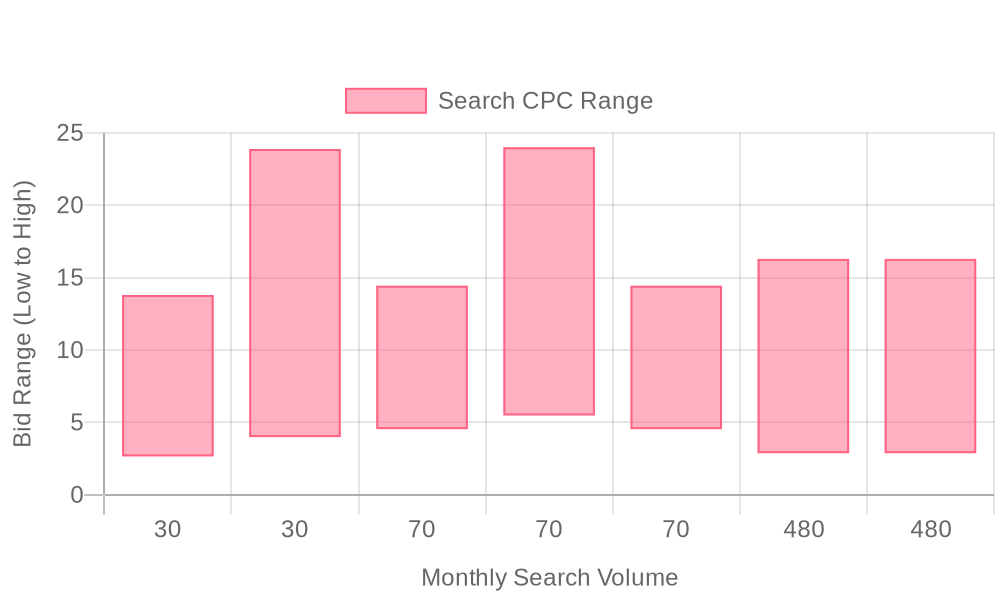
| Industry | Keyword | Monthly Search Volume | Competition Level | Low Bid | High Bid |
| Trash Chute Cleaning Services | trash chute cleaning services near me | 30 | LOW | 2.66 | 13.8 |
| Trash Chute Cleaning Services | chute cleaning services | 30 | LOW | 3.99 | 23.88 |
| Trash Chute Cleaning Services | trash chute cleaning services | 70 | LOW | 4.54 | 14.44 |
| Trash Chute Cleaning Services | chute cleaning | 70 | LOW | 5.49 | 24 |
| Trash Chute Cleaning Services | garbage chute cleaning companies | 70 | LOW | 4.54 | 14.44 |
| Trash Chute Cleaning Services | trash chute cleaning | 480 | LOW | 2.88 | 16.29 |
| Trash Chute Cleaning Services | garbage chute cleaning | 480 | LOW | 2.88 | 16.29 |
Precise keyword targeting forms the backbone of high-performing Google Ads campaigns in the trash chute cleaning services sector. By aligning terms with real customer intent, marketers can capture high-quality leads ready to book services, maximize ad spend efficiency, and avoid wasted impressions. For a deeper dive into building effective campaigns, visit the Sona blog or explore this comprehensive marketing plan template for trash chute cleaning.
- High-Intent Keywords: Target queries such as "trash chute cleaning service near me" or "commercial trash chute cleaning" to surface ads for prospects actively seeking a solution. These searchers are more likely to convert, delivering stronger ROI with minimal guesswork.
- Long-Tail Keywords: Incorporate detailed phrases like "apartment building trash chute cleaning specialists" or "eco-friendly trash chute cleaning service." Long-tail terms attract niche segments, reduce cost per click, and help win business from customers with specific requirements.
- Negative Keywords: Apply exclusions, such as "DIY," "supplies," or "cheap," to filter out unqualified traffic and focus budget on commercial property managers or facility teams who need professional services.
- Geographic Modifiers: Insert location-specific terms like city names, neighborhoods, or service areas. This ensures ads appear only to local prospects or within profitable territories, supporting both reach and operational efficiency.
For revenue teams, unifying keyword and audience data enables more granular targeting. Real-time insights from platforms that connect search activity with precise audience intelligence and company-level data allow for swift budget reallocation to high-value accounts. As users engage or move through the funnel, dynamic audience updates keep campaigns focused on real buyers, boosting conversion rates and reducing wasted spend. Integrating enriched lead data into ad platforms ensures that every click is attributable, measured, and actionable, supporting continuous keyword strategy refinement for optimal growth in the competitive cleaning services market. Ready to optimize your campaigns? Get started for free with Sona.
Step-by-Step Campaign Execution Framework
Executing Google Ads well for trash chute cleaning services means moving in order, from keywords to copy to landing pages to ongoing optimization, so each stage reinforces the last instead of working against it.
Step 1: Build Targeted Keyword Lists
- Service-based groupings: Structure keywords by core offerings such as "trash chute cleaning," "waste chute maintenance," and "odor removal." Incorporate geographic qualifiers to serve neighborhoods, cities, or regions where your service operates.
- Long-tail and negative keywords: Integrate specific phrases like "commercial trash chute cleaning in [city]" or "apartment chute deodorizing" to capture high-intent, niche searches. Use negative keywords to filter out unrelated or low-value clicks, ensuring budget efficiency.
- Content alignment: Align keyword selection with broader content marketing and local SEO for trash chute cleaning, ensuring all touchpoints reinforce your brand's unique promise and local expertise.
Leveraging precise audience intelligence, marketers can pinpoint high-converting accounts and identify visitors based on real-time search intent. This approach surpasses traditional keyword tools by allowing teams to dynamically shift budget toward audiences demonstrating immediate need, maximizing campaign ROI. For a deeper dive into launching a trash chute cleaning business, review this step-by-step guide.
The upgrade most trash chute cleaning services advertisers miss is going beyond raw keyword volume to layer in intent and identity signals. By connecting website-visitor data and CRM records with Sona Marketing Measurement, you can see which specific search terms bring in the accounts and customers that actually convert, and weight your keyword and bidding strategy toward those rather than the terms with the highest search volume alone.
Step 2: Develop Compelling Ad Copy
- Addressing pain points: Craft headlines and descriptions that directly speak to common concerns: sanitation, regulatory compliance, and pest control. Use proven trust markers such as years of experience, client testimonials, or safety certifications to establish confidence.
- Urgency and incentives: Drive immediate action with limited-time offers or booking slots, but ensure these incentives align with the overall campaign message for consistency across platforms.
With dynamic audience insights, ad copy can be further tailored based on in-market signals, enabling teams to deploy highly relevant messages to prospects most likely to convert. As audiences update dynamically, marketers maintain fresh, context-aware communications that resonate at every stage of the funnel. For inspiration on professional ad messaging, watch this trash chute cleaning video tutorial.
Step 3: Design Effective Landing Pages
- Keyword and message alignment: Maintain strict cohesion between keywords, ads, and landing page content. Visitors should encounter a seamless narrative from the first click to the call to action, reducing friction and increasing conversion rates.
- Trust and conversion features: Integrate ROI calculators, transparent pricing, and bold CTAs. Highlight case studies or before-and-after visuals to reinforce the value proposition and address objections upfront.
- CRM integration: Sync captured leads directly to CRM platforms, enabling rapid follow-up and nurturing workflows. This ensures no opportunity is lost and all engagement data feeds back into the campaign for improved attribution.
By syncing high-quality audience data into both ad and sales platforms, teams can close the loop between marketing and sales, ensuring every form fill or inquiry is automatically qualified and routed for follow-up. Explore paid media services tailored for waste and cleaning businesses to further amplify your campaigns.
Step 4: Implement Data-Driven Optimizations
- Continuous tracking and smart bidding: Monitor conversion actions across channels and leverage automated bidding to maximize returns on top-performing segments. Use both online and offline conversion tracking to measure the full customer journey.
- A/B testing: Regularly test ad copy variants, landing page layouts, and CTAs. Implement findings quickly to capitalize on what works and discard underperforming elements.
- Cross-channel insights: Apply performance insights from Google Ads, social, and direct channels to inform broader digital marketing for trash chute cleaning. This holistic view ensures each campaign evolves based on real, actionable results.
With unified campaign data, marketers can attribute conversions with greater accuracy and shift spend in real time, optimizing for cost-effective results. For more on optimizing digital campaigns, review the latest marketing analytics strategies.
Sona Marketing Measurement closes the gap between clicks and revenue. It captures every ad click with first-party measurement, ties that click through UTM capture and ad-platform APIs to the actual record in your CRM, and reports ROAS by keyword and campaign instead of by last-click form fill. Feeding that revenue signal back into Smart Bidding and Performance Max compounds over time: the algorithms optimize toward booked trash chute cleaning services revenue, not cheap leads.
Tips on Expanding Your Trash Chute Cleaning Service Presence
Establishing a robust presence in the trash chute cleaning industry requires a strategy built on data, tailored messaging, and strategic partnerships. Sustained growth results from leveraging technology to identify high-intent prospects and align touchpoints across channels for maximum impact.
- Deploying educational assets in retargeting campaigns: Use targeted retargeting to deliver value-driven content, such as hygiene best practices or compliance updates, to prospects who have already shown interest. This approach naturally reinforces your expertise while keeping your brand top-of-mind, nurturing audiences toward conversion through relevant, non-intrusive engagement. For inspiration on structuring your campaigns, this comprehensive marketing plan template for trash chute cleaning businesses is a helpful resource.
- Upselling services with CRM-driven segmentation: Integrate CRM data to segment audiences based on property type, prior engagement, or service history. This enables personalized upsell campaigns, such as compactor maintenance for multi-unit properties or scheduled cleanings for facilities management teams. When CRM and ad platforms are seamlessly synced, you dynamically update audiences as leads progress, ensuring messaging always matches their current needs.
- Partnering with relevant associations: Build mutually beneficial relationships with property management associations and local business groups. Co-branded advertising and referral programs not only expand reach but also enhance credibility, driving referral traffic from trusted sources that value specialized knowledge in waste management solutions. Explore additional tactics to align your sales and marketing teams in our actionable playbooks.
- Tailoring outreach to regional specifics: Analyze market demand and regulatory nuances at the state, city, or even neighborhood level. Customize messaging and offers to address local pain points, such as compliance with municipal sanitation codes or seasonal challenges, capturing greater share-of-voice and engagement in priority markets. Aligning your targeting with geographic and regulatory data allows for precision in online advertising for cleaning services and local SEO for trash chute cleaning.
Effective Google Ads for trash chute cleaning services rely on precise targeting and rich audience insight. By identifying both anonymous and known website visitors, marketers can move past standard targeting to pinpoint decision-makers at property management firms and commercial real estate companies. Real-time audience data helps shift budget toward high-converting accounts, and dynamically updated audiences ensure each ad dollar is spent on prospects most likely to engage. Advanced conversion tracking measures both online inquiries and offline contract signings, giving a complete view of ROI and informing where to focus future spend. Integrating CRM and ad platforms lets enriched audience segments and lead data flow directly into Google Ads, HubSpot, or Salesforce, creating a feedback loop that continually sharpens campaign performance.
Beyond Google Ads: Winning the AI Answers Trash Chute Cleaning Services Buyers Now Trust
Paid search captures demand at the moment someone types a query. But a fast-growing share of trash chute cleaning services buyers no longer start at Google at all, they ask ChatGPT, Gemini, or Perplexity before they ever run a search, and Google's own AI Overviews increasingly summarize an answer above the traditional results. If your business isn't referenced in those AI answers, you're invisible at the exact moment buyers build their shortlist.
Sona AI Visibility shows where your business shows up across ChatGPT, Gemini, Perplexity, Google AI Overviews, and 10+ engines, and, much like a keyword report, which prompts actually send you buyers, so you can prioritize the ones that convert. Run the two together and you cover the entire buyer path: get cited where buyers research (AI Visibility), then prove which of that demand turns into booked revenue (Marketing Measurement).
Helpful resources
Conclusion
Google Ads gives trash chute cleaning businesses a direct line to property managers and facility operators at the moment they're searching for a solution, not months later when a referral happens to come through. Getting there means choosing keywords that match real urgency, writing ad copy that speaks to compliance and sanitation concerns specifically, and spending budget where it converts.
The businesses that win this category treat Google Ads as one part of a larger system, alongside AI visibility and measurement that connects clicks to booked jobs, so budget keeps shifting toward what actually closes.
To act on these opportunities, start for free and see what the platform surfaces for your own campaigns.
FAQ
How can I set up Google Ads for my trash chute cleaning business?
To set up Google Ads for a trash chute cleaning business, integrate Google Ads with a data-driven marketing strategy to eliminate wasted budget, unify messaging, and reach ready-to-buy property managers or facility operators.
What are the best keywords for Google Ads in the trash chute cleaning industry?
High-intent keywords like 'trash chute cleaning service near me' and long-tail keywords such as 'apartment building trash chute cleaning specialists' are effective in capturing high-quality leads.
How can I track the success of my Google Ads campaign for trash chute cleaning services?
Track the success by monitoring conversion actions across channels and leveraging both online and offline conversion tracking to measure the full customer journey.
What is the average cost per click for Google Ads in the trash chute cleaning niche?
The article does not specify the average cost per click for Google Ads in the trash chute cleaning niche.
How can I improve the ROI of my Google Ads for trash chute cleaning services?
Improve ROI by using data-driven approaches, precise targeting, and aligning ad copy with landing pages for increased relevance and conversion rates.
What are some creative ad copy examples for Google Ads in the trash chute cleaning sector?
Craft ad copy that addresses pain points such as sanitation, regulatory compliance, and pest control, using trust markers like client testimonials or safety certifications.
How can I target local customers with Google Ads for my trash chute cleaning business?
Target local customers by using geographic modifiers in your keywords and ensuring ads appear only to local prospects or within profitable territories.
What are the best practices for Google Ads in the waste management industry?
Best practices include precise audience targeting, aligning ad copy with landing pages, performing regular performance optimization, and integrating cross-channel data.
How can I use Google Ads to compete with larger trash chute cleaning companies?
Compete by leveraging audience segmentation and precise targeting to reach decision-makers responsible for building maintenance, and by using high-intent keywords to capture qualified leads.
How can I integrate Google Ads with my existing marketing strategy for trash chute cleaning services?
Integrate Google Ads with your marketing strategy by syncing with CRM, email, and sales outreach to create a holistic ecosystem where ad engagement translates into qualified leads.







