


Termite damage rarely announces itself until the repair bill is already large, which is exactly why homeowners turn to Google the moment they spot frass, hollow-sounding wood, or a wing pile on the windowsill. Google Ads lets termite repair companies meet that search at the moment it happens, ahead of slower channels like direct mail or vehicle wraps. The harder problem is what happens after the click: prospects who call instead of filling out a form, or who research for days before booking an inspection, often never make it into a CRM as a tracked lead, and the ad spend that won them looks wasted. Tools that match those calls and inspections back to the original campaign let a termite repair business see which keywords and ads are actually producing signed jobs, not just form fills. This guide walks through building that kind of Google Ads program for termite repair services, from keyword research through attribution.
How to Generate Google Ads for Termite Repair Services Leads: A Step-by-Step Guide
Effective lead generation for termite repair services requires precision in targeting and a deep understanding of in-market signals. Leveraging digital advertising platforms like Google Ads allows revenue teams to reach homeowners and property managers at the critical moment when they are searching for urgent solutions. Teams can further enhance performance by integrating real-time marketing data for more effective segmentation and targeting.
Integrating real-time marketing data and advanced intent analytics helps modern B2B marketers and local pest control operators capture and convert high-quality leads. With the right approach, you can optimize every dollar spent and build a sustainable pipeline of repair inquiries that consistently outperform traditional outbound tactics. To see how high-performing pest control companies maximize Google Ads, review this Google Ads case study for pest control.
Step 1: Build Targeted Keyword Lists
Success with Google Ads for Termite Repair Services begins with granular keyword research. Start by identifying high-intent phrases such as "termite damage repair," "emergency termite treatment," and "termite repair near me." These keywords reflect urgent needs and signal conversion readiness. Layer in geo-modifiers to attract local searchers, such as "termite repair in [city]" or "licensed termite repair [region]." For further support, reference this list of top pest control PPC keywords.
Incorporating negative keywords is just as crucial. Exclude terms like “DIY termite removal” or “termite prevention tips” to ensure ad spend is directed only at those looking for professional remediation. Dynamic keyword lists, built from live visitor and CRM data, adapt as new high-converting queries emerge, ensuring your campaigns stay ahead of shifting demand.
The upgrade most termite repair services advertisers miss is going beyond raw keyword volume to layer in intent and identity signals. By connecting website-visitor data and CRM records with Sona Marketing Measurement, you can see which specific search terms bring in the accounts and customers that actually convert, and weight your keyword and bidding strategy toward those rather than the terms with the highest search volume alone.
Step 2: Define and Segment Audiences
Audience segmentation goes beyond age, gender, or location. Identify prospects based on their real-time browsing signals, such as repeated visits to termite repair pages or downloads of damage assessment checklists. Segment these users into intent-based cohorts: emergency repair seekers, property owners in high-risk zones, and commercial facility managers. Learn more about building real-time, intent-driven segments for campaign precision.
With unified data, marketers can pinpoint anonymous visitors and attribute company information, allowing for precise B2B retargeting and account-based marketing. For a structured approach to segmenting audiences, explore this pest control Google Ads guide.
Step 3: Structure Campaigns for Maximum Impact
Well-structured Google Ads campaigns for termite repair services separate ad groups by service type (e.g., foundation repair, wood restoration, urgent inspections) and location. This structure improves ad relevance and Quality Score, reducing cost per click for critical keywords. Use responsive search ads, an ad format within Search campaigns, to test variations in headlines and descriptions, matching user intent with service expertise.
Ad assets like callouts, sitelinks, and structured snippets add credibility by highlighting key differentiators, such as same-day response, free inspections, and transferable warranties. Real-time synchronization with CRM and lead systems ensures high-priority leads are routed instantly to sales, eliminating lag and increasing close rates.
Step 4: Optimize Landing Pages for Conversion
Landing pages should directly reflect the ad’s promise and provide clear next steps. For termite repair services, this means using urgency-driven headlines, concise service explanations, and visible trust signals like certifications and reviews. Embed click-to-call buttons and short forms to capture leads swiftly, especially for mobile users. For an overview of average repair costs that can inform landing page content, see this guide to termite damage repair costs.
Advanced tracking connects online actions to offline outcomes, mapping each inquiry to a closed job or contract. This closed-loop attribution clarifies campaign ROI, informing smarter budget allocation and continuous landing page improvements.
Sona Marketing Measurement closes the gap between clicks and revenue. It captures every ad click with first-party measurement, then ties that click through UTM capture and ad-platform APIs to the actual record in your CRM, and reports ROAS by keyword and campaign instead of by last-click form fill. Feeding that revenue signal back into Smart Bidding and Performance Max compounds over time: the algorithms optimize toward booked termite repair services revenue, not cheap leads.
Step 5: Activate Retargeting and Nurturing Sequences
Not every visitor converts on the first touch. Retargeting campaigns keep your termite repair brand top-of-mind for prospects who have shown intent but need more time or information. Serve them ads with testimonials, before-and-after repair images, or limited-time offers on inspections. For a step-by-step walkthrough of retargeting and campaign launches, visit this Google Ads for pest control guide.
As leads interact across channels, dynamic audience rules update in real time, ensuring only engaged and relevant contacts receive follow-up ads. Integrating ad platforms with your CRM lets you seamlessly nurture prospects with tailored messaging until they’re ready for direct sales engagement.
Follow this framework and pest control and repair companies generate more qualified leads, lower acquisition costs, and build a defensible edge in a competitive market.
Why does Google Ads matter for Termite Repair Services

Effective termite repair services depend on reaching property owners at the exact moment they recognize urgent needs. Google Ads provides a direct, measurable pathway to engage these high-intent customers, ensuring that repair specialists command attention precisely when structural concerns surface.
Termite infestations trigger time-sensitive searches, and every hour lost can mean escalating damage. Paid search campaigns allow termite repair providers to appear instantly in local and regional results, capturing demand in neighborhoods where awareness and urgency spike quickly. For insights on measuring these real-time spikes and campaign effectiveness, explore the latest marketing analytics strategies.
Data-driven targeting improves every dollar spent by focusing ad budgets on property owners actively searching for termite damage repair. By leveraging behavioral signals and first-party data, marketers can prioritize accounts showing real-time intent, shifting spend to the prospects most likely to convert.
Remarketing and CRM integrations now streamline the journey from first click to closed service call. Audiences update dynamically as leads move through the funnel, while enriched company data syncs directly with sales pipelines. This unified approach connects paid digital efforts with offline appointments, resulting in higher conversion rates and more accurate ROI measurements.
Modern termite repair advertising is no longer limited to generic keyword bidding or broad local targeting. With advanced analytics and automation, revenue teams can pinpoint key opportunities, trigger follow-up tasks instantly, and optimize spend for both immediate and long-term outcomes in their service areas.
Common Types of Google Ads Campaigns for Termite Repair Services

- Search Campaigns: Search campaigns are the most direct route for capturing high-intent leads looking for termite damage solutions. By targeting queries like “emergency termite repair near me” or “termite damage repair cost,” these ads appear exactly when a decision-maker is actively seeking help. When marketers enrich their records with accurate company and visitor data, search campaigns become far more precise, ensuring ads surface for verified property managers, real estate firms, and facilities directors, not just anonymous clicks. Syncing enriched audiences and intent signals into Google Ads allows teams to prioritize budget allocation for the highest-propensity leads, driving stronger ROI and reducing wasted spend.
- Display Campaigns: Display ads reinforce your brand in the minds of potential customers who may be researching termite repair but are not ready to convert immediately. These visual banners appear across thousands of relevant websites, keeping your brand top-of-mind during the research phase. When display audiences update dynamically based on real-time signals, such as site visits, price calculator usage, or content downloads, ad spend is continuously focused on decision-makers who have shown engagement but have yet to reach out. For marketers seeking more ways to optimize their display spend, this comprehensive guide to Google Ads for pest control companies offers practical tips on campaign setup and targeting.
- Video Campaigns: Video ads offer an opportunity to visually demonstrate expertise in termite damage assessment and comprehensive repair. Short, professionally produced videos explaining the remediation process, warranty coverage, or before-and-after case studies can quickly communicate credibility and value. By identifying company-level viewers and connecting their engagement to CRM records, marketers gain a clear view of which accounts are showing buying signals, enabling follow-up by sales teams at the optimal moment.
- Remarketing Campaigns: Remarketing is essential for recapturing interest from past website visitors who researched termite repair but did not convert. Sophisticated remarketing leverages data on which services were viewed, how long visitors engaged, and even offline signals, like prior inspection bookings, to personalize ads for each segment. By syncing CRM and website data into Google Ads, remarketing audiences refresh automatically as leads move through the funnel, ensuring the right message is delivered at each touchpoint without manual updates.
- Ad Extensions: Ad extensions add vital trust signals to all campaign types and increase click-through rates by presenting additional information such as site links, call buttons, and service highlights. For termite repair services, structured snippets like “licensed & insured,” callout extensions such as “25-year warranty,” and location extensions for rapid response can differentiate your offering. When ad extensions are informed by real-time intent signals, they can be customized to the audience’s location, industry, or urgency level, making each interaction more relevant and increasing the likelihood of conversion.
Where to Find Growth Opportunities
Identifying new growth opportunities in Google Ads for Termite Repair Services requires a nuanced approach that looks beyond surface-level keyword targeting. By focusing on vertical-specific terms, evaluating competitor weaknesses, and leveraging specialized directories, marketers can build a defensible pipeline and capture higher-intent leads that generic pest control campaigns often miss. For a step-by-step walkthrough tailored to this industry, see Google Ads for pest control.
- Vertical keyword targeting: Prioritize search terms tied directly to termite inspection, drywood or subterranean termite remediation, wood repair, and structural restoration. These vertical keywords deliver higher lead quality than broad pest control phrases, as they indicate urgent, solution-driven intent. Marketers equipped to segment campaigns by service type and region can dynamically adjust spend toward keywords that signal in-market homeowners or property managers. Enhance your segmentation and targeting by leveraging real-time audience insights.
- Competitor gap analysis: Audit competitor ad copy, landing pages, and keyword sets to uncover underutilized niches or service differentiators. For instance, if local providers focus on general termite treatment but neglect repair guarantees or financing, this represents a clear messaging gap. By combining search term mining with intent data signals, teams can prioritize ad spend on audiences that competitors are not actively nurturing, improving share-of-voice where it matters most.
- Niche directory placements: Secure listings and sponsored placements on industry-specific directories and local contractor platforms that rank well for termite repair queries. These sites often drive high-converting referral traffic that is already primed to engage. Marketers who integrate visitor identification solutions can pinpoint which companies or homeowners are arriving from these channels, enabling them to tailor follow-up ads and nurture flows for maximum impact.
Lead scoring matters more in termite repair than in most home services because the buying window is short and the stakes are high: a homeowner who just found mud tubes along the foundation is comparing quotes within days, not months. Behavioral signals like repeated visits to a cost calculator, a downloaded inspection checklist, or return visits to a warranty page tend to separate serious buyers from casual researchers. When those signals sync in real time to ad and CRM platforms, marketers can shift budget toward the accounts showing that urgency and pull back on inquiries that look like early-stage research.
Content retargeting rounds out a holistic growth strategy. By serving ads that promote educational resources, such as detailed repair process explainers or downloadable checklists for home inspections, marketers can stay top-of-mind with prospects who are early in the research phase. As leads progress through the funnel and indicate intent, dynamic audience updates ensure that messaging transitions seamlessly from education to conversion-focused offers, supporting a full-funnel approach that boosts both lead quality and close rates.
How to Apply Audience Segmentation for Termite Repair Services

Audience segmentation is essential for termite repair services to connect with buyers at critical decision points and maximize advertising efficiency. By dividing audiences based on property type, urgency, and intent, marketing teams can deliver highly relevant messages that accelerate lead qualification and conversion. Explore more actionable strategies in this collection of marketing playbooks.
Segmentation begins with identifying the core buyer groups: residential homeowners facing urgent termite damage, commercial property managers seeking long-term remediation, and real estate professionals looking to restore value before sales. Each group exhibits different search behaviors and price sensitivities, requiring tailored campaign structures. For example, residential leads often respond to emotional messaging about home safety and rapid response, while commercial decision-makers prioritize regulatory compliance and cost transparency.
Effective segmentation goes beyond simple demographics. Behavioral signals, such as visits to a damage cost calculator, repeated views of a warranty or licensing page, or downloads of an inspection checklist, reveal where a prospect sits in the decision: still researching subterranean versus drywood treatment options, or ready to book. Real-time audience updates let marketers shift budget toward accounts showing that urgency and pull back on early-stage researchers, particularly useful given how quickly a termite decision can move from "noticed damage" to "signed contract."
A persistent challenge in termite repair PPC for pest control is the incomplete measurement of true return on investment due to untracked offline conversions, such as scheduled inspections or service agreements finalized by phone. Advanced attribution frameworks solve this by capturing offline events and linking them back to the original digital touchpoint, creating a feedback loop for accurate segment performance analysis. Integrating CRM systems with ad platforms ensures that every lead, whether generated online or offline, is attributed correctly. For a step-by-step walkthrough on optimizing Google Ads for pest control, visit this guide to Google Ads for pest control companies.
Aligning creative assets to each audience segment further increases relevance and conversion rates. Ad copy for termite services can highlight emergency response for homeowners, technical expertise for commercial clients, and value restoration for real estate professionals. Landing pages for pest control campaigns should reinforce these messages with testimonials, guarantees, and tailored calls-to-action. When segmentation, tracking, and creative are unified, termite repair advertisers see stronger leads, lower acquisition costs, and higher ROI.
This is also where measurement changes the economics. With Sona Marketing Measurement you can identify the companies and buyers behind your ad clicks, not just anonymous sessions, and segment audiences by who actually becomes a customer. That lets you build bid adjustments and audience signals around the segments that convert and de-prioritize the ones that don't, so you feed Google's algorithms "this click became a paying termite repair services customer" instead of just "someone filled out a form."
Keyword Strategy & Sample Target Terms
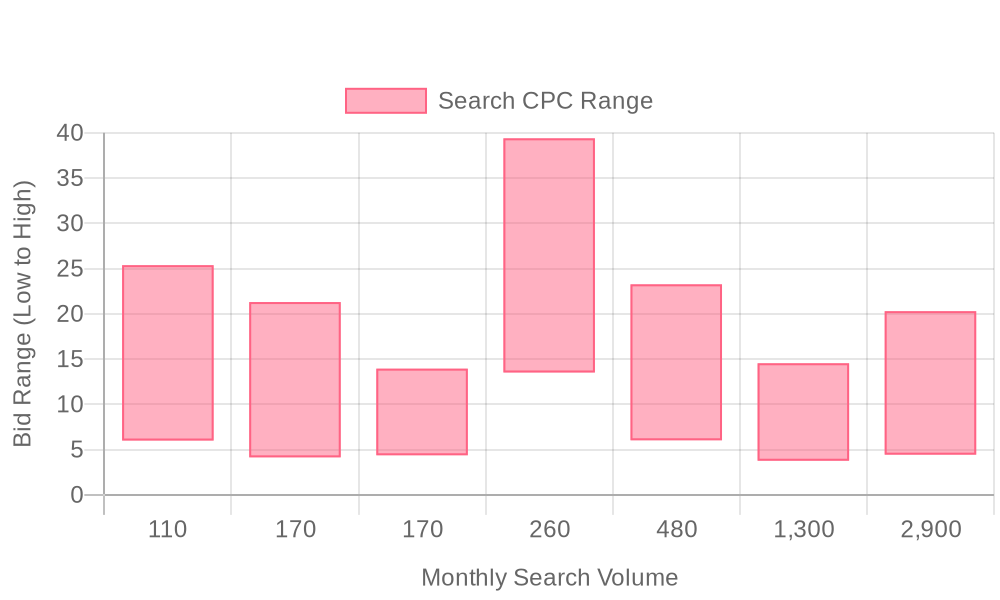
| Industry | Keyword | Monthly Search Volume | Competition Level | Low Bid | High Bid |
| Termite Repair Services | termite repair near me | 110 | MEDIUM | 6 | 25.37 |
| Termite Repair Services | termite damage repair near me | 170 | LOW | 4.15 | 21.3 |
| Termite Repair Services | termite repair cost | 170 | MEDIUM | 4.38 | 13.94 |
| Termite Repair Services | wdo inspection near me | 260 | MEDIUM | 13.52 | 39.39 |
| Termite Repair Services | termite repair | 480 | LOW | 6.03 | 23.26 |
| Termite Repair Services | termite damage repair cost | 1300 | LOW | 3.77 | 14.54 |
| Termite Repair Services | termite damage repair | 2900 | LOW | 4.44 | 20.29 |
Precision in keyword targeting shapes the success of every Google Ads for Termite Repair Services campaign. High-performing advertisers consistently prioritize high-volume, high-intent search terms such as "termite treatment services near me," "termite repair contractors," and "emergency termite damage repair." For a deeper dive into optimizing keyword selection and campaign setup, see this step-by-step guide for pest control Google Ads campaigns. By focusing on transactional queries and adding location modifiers, marketers convert more searches into booked consultations and service calls.
Keyword strategies for termite repair require ongoing refinement. Static keyword lists quickly become outdated as market conditions shift and customer behavior evolves. Leveraging real-time audience insights, revenue teams dynamically adjust their targeting to align with current in-market demand. This ensures campaigns remain relevant and competitive, as new high-intent search terms emerge or competitor bidding patterns shift. For marketers seeking best practices, our blog on marketing analytics and strategy offers additional guidance on data-driven campaign optimization.
Negative keywords play a critical role in maximizing return on ad spend for termite treatment advertising. Filtering out irrelevant traffic, such as users searching for DIY tips, unrelated pest species, or low-value research queries, protects your budget and sharpens audience quality. As leads move through the funnel, dynamic audience capabilities allow you to retarget those showing renewed interest and suppress those who have already converted or dropped off. This continuous feedback loop between keyword performance, audience engagement, and campaign optimization supports a full-funnel approach that unifies paid search with sales and CRM workflows.
With advanced tools, marketers can now sync enriched audience and lead data directly into Google Ads, ensuring the most up-to-date customer segments power each campaign. This integration enables granular targeting based on behavioral signals, purchase history, and company attributes, unlocking new levels of personalization and efficiency. Ultimately, a refined keyword and audience strategy delivers more qualified leads, reduces wasted spend, and produces measurable improvements in Google Ads ROI for contractors and pest control providers.
Step-by-Step Campaign Execution Framework
A methodical framework ensures Google Ads for Termite Repair Services delivers measurable results and sustainable growth. B2B teams benefit from a structured approach that allows for rapid iteration, precise targeting, and ongoing campaign optimization aligned with revenue goals. For strategic best practices on running profitable Google Ads in the pest control sector, check out this step-by-step guide for Google Ads for pest control. For more actionable tactics on data-driven growth, explore our marketing playbooks.
Step 1: Build Targeted Keyword Lists
- Local intent keywords: Prioritize precise, location-based terms such as "termite repair near me" or "emergency termite damage repair [city]" to capture high-converting, urgent leads. Incorporate long-tail phrases that reflect real homeowner concerns, like "repair termite damage to beams" or "cost to fix termite damage in basement", which signal strong purchase intent and reduce wasted spend from irrelevant clicks. For a deeper dive into top-performing PPC keywords, refer to this list of best keywords for pest control PPC.
- Refined negative filters: Exclude queries around DIY solutions or general pest control to ensure budgets focus on those ready to book professional termite repairs. Continually update negative keyword lists using analytics insights to maintain campaign efficiency as search trends and competitor tactics evolve. For tips on optimizing campaign structure and negative keywords, visit our blog on Google Ads best practices.
- Enriched audience building: Leverage real-time audience data to identify and segment high-value visitor profiles. By connecting CRM and ad platforms, marketers can synchronize enriched audiences directly into Google Ads, dynamically updating lists as leads progress through the pipeline for smarter retargeting and suppression.
Step 2: Craft Compelling Ad Copy
- Urgency and trust messaging: Write ad headlines and descriptions that directly address homeowner anxieties: "Act Now, Prevent Further Termite Damage" or "Certified Termite Repair Experts, 24/7 Response". Highlight unique selling points such as rapid emergency service, licensed technicians, and warranty-backed repairs to build confidence and drive immediate action. To see examples of high-converting ad copy and messaging, review this comprehensive pest control Google Ads guide.
- Dynamic personalization: Use behavioral insights to tailor ad messaging to each audience segment. For example, target repeat site visitors with ads emphasizing service guarantees or showcase financing options to price-sensitive prospects identified through previous engagement patterns. Maximize your targeting by leveraging intent signals to automatically identify and engage prospects based on their online behavior.
- Enhanced performance tracking: Integrate advanced conversion measurement to track every stage of engagement, including phone calls, form submissions, and offline consultations. This enables accurate attribution to the specific ad copy and keyword that initiated the conversion, revealing true ROI and guiding creative optimization. For more details on attribution, visit our guide to marketing attribution models.
Step 3: Design Landing Pages Aligned to Intent
- Intent-matched content: Create landing pages that mirror the language and urgency of ads, reinforcing the promise made in the headline and immediately presenting contact forms or phone numbers. Use clear visual cues like before-and-after images and concise explanations of the repair process to reassure visitors. For average costs and factors influencing termite repair, see cost of termite damage repair.
- Frictionless conversion paths: Streamline the user experience with mobile-optimized forms, click-to-call buttons, and minimal navigation distractions. Display trust badges, certifications, and real testimonials prominently to reduce hesitation and increase form submissions or call volume. For best practices on optimizing landing pages, explore our conversion optimization playbooks.
- Real-time visitor identification: Pinpoint which companies or individuals land on key pages, enabling rapid follow-up and tailored outreach with Sona's Identity Resolution. This real-time data syncs to the broader tech stack, ensuring sales teams prioritize the most valuable, high-intent prospects first.
Step 4: Optimize Campaigns Using Data-Driven Strategies
- Continuous performance refinement: Monitor keyword, ad, and audience performance at granular levels, reallocating budget to the highest-converting segments as new data emerges. Use account-level insights to pause underperforming terms and scale up successful ad groups rapidly. For a practical example of Google Ads delivering increased leads and revenue, see this pest control Google Ads case study.
- Import offline conversions: Attribute closed deals and revenue outcomes back to the original keyword and ad click, not just the initial lead. This unified view of online and offline performance enables B2B revenue teams to make smarter investment decisions and forecast campaign ROI with precision. Learn how to import ad platform cost data into Google Analytics for comprehensive reporting.
- Dynamic retargeting and intent signals: Update remarketing audiences in real time as leads move through the sales funnel. When a prospect books a consultation or requests a quote, instantly suppress them from awareness campaigns and nurture with personalized, educational content focused on next steps in the termite repair process. To track every touchpoint in the journey, utilize Sona buyer journeys.
Tips on Expanding Your Termite Repair Services Presence

Expanding your presence in the termite repair market requires a blend of precise targeting, advanced audience insights, and creative outreach. Companies that systematically leverage digital advertising and partnership strategies consistently achieve broader reach and higher conversion rates. For a step-by-step overview of Google Ads campaign setup and optimization specifically for pest control and termite services, see this detailed guide for pest control companies.
Integrating cross-promotion tactics into your retargeting campaigns accelerates awareness among audiences who have already interacted with your brand. By identifying high-value visitors and segmenting them based on in-market behaviors, you can deliver timely, relevant messaging that aligns with their current needs. Leveraging real-time audience insights allows marketers to pinpoint specific companies and individuals showing active interest in termite repairs, enabling you to prioritize ad spend on those most likely to convert.
Industry associations offer another channel for growth by expanding your reach to vetted, engaged audiences. Collaborative initiatives such as joint webinars, co-branded content, or referral programs with association partners foster credibility and deliver your value proposition to decision-makers. These partnerships also generate unique data signals, which, when unified and analyzed alongside your Google Ads campaign data, help uncover patterns in buyer intent and campaign performance. By syncing these enriched lists into your ad platforms, you ensure that every retargeting effort is based on the latest, most actionable intelligence.
Search query insights remain a powerful driver for content development and campaign refinement. Analyzing Google Ads search data for termite repair services reveals not only the keywords that are driving clicks but also the context and urgency behind each query. This information allows you to create targeted landing pages, educational resources, and ad copy that address real customer pain points and objections. As audiences engage and move through the funnel, dynamic audience updating ensures your campaigns automatically adjust, keeping messaging relevant and maximizing conversion potential.
Trust in solutions that unify these data streams, enabling you to identify high-intent leads and activate campaigns at the right moment. When CRM and ad platform integrations work seamlessly, enriched audience segments and conversion signals flow directly into your Google Ads and sales systems. This alignment powers proactive outreach, maximizes advertising ROI, and positions your termite repair services at the forefront of every serious buyer's consideration set.
Beyond Google Ads: Winning the AI Answers Termite Repair Services Buyers Now Trust
Paid search captures demand at the moment someone types a query. But a fast-growing share of termite repair services buyers no longer start at Google at all, they ask ChatGPT, Gemini, or Perplexity before they ever run a search, and Google's own AI Overviews increasingly summarize an answer above the traditional results. If your business isn't referenced in those AI answers, you're invisible at the exact moment buyers build their shortlist.
Sona AI Visibility shows where your business shows up across ChatGPT, Gemini, Perplexity, Google AI Overviews, and 10+ engines, and, much like a keyword report, which prompts actually send you buyers, so you can prioritize the ones that convert. Run the two together and you cover the entire buyer path: get cited where buyers research (AI Visibility), then prove which of that demand turns into booked revenue (Marketing Measurement).
Helpful resources
Conclusion
Google Ads works for termite repair services when the campaign structure, keyword strategy, and attribution setup all point at the same goal: booked jobs, not just clicks. Keyword research and ad copy get a prospect to click; landing pages and retargeting move them toward a call; closed-loop attribution tells you which of those clicks was worth the spend.
The advantage compounds: as more inspections and signed contracts feed back into your bidding data, Google's algorithms get sharper about which searches actually turn into termite repair revenue, not just which ones generate a form fill. The businesses that set this up now, while much of the pest control industry is still buying clicks blind, will have a meaningfully cheaper cost per booked job a year from now.
To fully experience the impact of a unified platform that integrates your go-to-market data for actionable insights, start for free and see how it changes your termite repair advertising.
FAQ
What are the best practices for Google Ads in pest control?
Best practices include building targeted keyword lists, defining and segmenting audiences, structuring campaigns for maximum impact, optimizing landing pages for conversion, and activating retargeting and nurturing sequences.
How can I optimize my Google Ads for termite services?
Optimize your Google Ads by using high-intent keywords, segmenting audiences based on real-time signals, structuring campaigns by service type and location, and continuously refining performance through data-driven strategies.
What budget should I allocate for Google Ads in pest control?
The budget should focus on high-intent property owners actively searching for termite damage repair, leveraging data-driven targeting to improve ROI by minimizing wasted spend.
What keywords should I use for termite repair services?
Use high-intent keywords such as 'termite damage repair,' 'emergency termite treatment,' and 'termite repair near me,' while incorporating geo-modifiers and excluding terms like 'DIY termite removal.'
How do I measure the success of my Google Ads campaigns for pest control?
Measure success by tracking conversions, integrating CRM data for offline outcome mapping, and using advanced attribution frameworks to link digital touchpoints to closed deals.







