


A rider standing outside a bar at midnight, a business traveler needing a 5 a.m. airport run, a family stranded when their car won't start: these are all searches happening right now, and whichever taxi service shows up first on Google usually gets the fare. Google Ads lets taxi operators intercept that intent, matching drivers to riders at the exact moment someone needs a car. This guide covers how to build campaigns that turn local search demand into booked rides, from keyword strategy and audience targeting to the measurement layer that shows which clicks actually became paying customers.
How to Generate Google Ads for Taxi Leads: A Step-by-Step Guide

Taxi businesses can accelerate lead generation by aligning their campaigns with the precise needs and behaviors of local riders. Modern marketers who integrate advanced data and audience insights achieve measurable gains in both conversion rates and cost efficiency. Google Ads for taxi services provides a deeper look at this trend.
A refined approach to Google Ads for taxi services puts spend behind the highest-intent prospects first. With real-time visibility into account-level activity and automated audience updates, teams can adapt campaigns as demand shifts and rider urgency changes. Platforms like Sona Audiences help advertisers reach high-intent local segments for more effective campaigns.
- Assess Customer Journey: Map out each stage your prospective riders pass through, from recognizing their need for transportation to making the booking. Understanding these pivotal moments enables advertisers to craft messaging that addresses real concerns, like speed, safety, and availability, at exactly the right time. For more insights, check out our guide on buyer journeys.
- Keyword Strategy: Focus on search terms that indicate immediate intent, such as "taxi service near me," "airport taxi now," or "book cab online." Using advanced keyword research and intent signals, marketers can identify which phrases attract leads most likely to convert. Taxi keyword ideas shares industry benchmarks for this approach. By dynamically adjusting keyword sets based on rider behavior and account progression, campaigns stay aligned with demand, reducing wasted spend and capturing high-value taxi service leads.
- Audience Targeting: Combine demographic and geotargeting to reach local riders exactly when they need a car. Location-based targeting keeps ads confined to your service radius, whether that's a single metro or a cluster of airport zones, while demographic layering narrows reach to higher-value segments like business travelers or late-night commuters. Layering enriched company data and intent signals into audience lists lets marketers prioritize in-market riders and suppress out-of-area or low-intent traffic, improving ROI on local taxi PPC.
- Campaign Setup: Structure your campaigns to reflect the full range of service types and geographic zones your business covers. Separate ad groups for airport transfers, city rides, and late-night bookings allow for granular control over budget, messaging, and bidding strategies. Syncing first-party CRM data and enriched lead profiles into Google Ads unlocks the ability to retarget previous customers, nurture high-potential accounts, and measure both online and offline conversions, all essential for effective taxi business marketing and taxi online ads.
Why Does Google Ads Matter for Taxi Services

Taxi businesses operate in a fast-paced environment where service demand can surge unpredictably. Digital advertising provides the precision and agility needed to reach high-intent local customers the moment they search for a ride.
- Immediate Customer Reach: Capturing local passengers at their exact moment of need is essential for taxi operators. When campaigns are structured to trigger during peak search times, taxi services position themselves directly in front of customers ready to book, which lifts conversion rates. Company-level identification now lets marketers see not just anonymous clicks but the actual businesses and travelers behind them, enabling more relevant ad delivery. Sona's Identity Resolution helps taxi businesses recognize and act on real customer intent as it happens.
- Localized Targeting: Location-based targeting lets taxi companies direct spend toward neighborhoods, transit hubs, and drop-off points where conversion is likeliest. Marketers can shift budget dynamically toward areas showing the strongest demand, so advertising dollars follow the riders. Learn about geotargeting for more on how this works in local advertising.
- Budget Optimization: Efficient spend management is a core challenge in local taxi advertising. Using demand forecasts and historical booking data, taxi businesses can adjust bids for specific neighborhoods and time slots, capturing premium traffic during lucrative periods like Friday night bar closings or holiday airport surges. With unified insights from CRM and ad platforms, revenue teams can sync enriched audience segments and prioritize outreach to accounts showing real booking intent. For more, see our Google Ads ROAS guide.
Common Types of Google Ads Campaigns for Taxi Services

- Search Campaigns: Search campaigns place your taxi service in front of customers actively searching for immediate rides, people typing "book a taxi now" or "taxi near me" into Google. This captures high-intent prospects at the exact moment they're ready to book. Sona's Identity Resolution helps marketers uncover which companies and decision-makers are engaging with their ads, enabling faster follow-up and more relevant outreach.
- Display Ads: Display campaigns expand visibility by showcasing your taxi brand across thousands of relevant websites and apps, keeping your service top-of-mind even when users are not directly searching. This consistent presence increases the likelihood of being chosen when the need arises. Taxi Display Ads provides a deeper look at how display advertising strategies can drive higher recall and bookings.
- Remarketing: Remarketing targets visitors who previously browsed your taxi booking site but did not complete a reservation, giving you another opportunity to convert missed prospects. By delivering tailored offers or time-limited promotions, you re-engage users who have already demonstrated interest. With dynamic audience segmentation, remarketing lists can update automatically as leads move through the funnel, letting you adjust your messaging and bidding to the prospect’s real-time status.
- Ad Assets: Ad assets (formerly called extensions) enhance taxi ads with extra information and direct actions, location details, click-to-call buttons, and fare transparency. These features make it easy for riders to connect instantly. For more on optimizing campaigns, see our Google Ads ROAS Tips. When assets pull from enriched CRM data and real-time lead syncing, ads can reflect current service areas, fleet availability, and offers tailored to each segment.
Where to Find Growth Opportunities for Taxi Services

Taxi businesses can uncover measurable growth by targeting specific, high-intent audiences and optimizing campaigns based on real market signals. Sophisticated data analysis now enables marketing teams to focus resources on prospects displaying immediate need for transportation, ensuring every advertising dollar works harder.
- Local Promotions: Local search ads and tailored promotions let taxi services connect with customers in their immediate vicinity. By analyzing granular location data, marketers can craft offers unique to neighborhoods, business districts, or event venues. Company-level identification helps pinpoint which users are actively searching for rides in specific zones, enabling hyper-localized messaging. Sona's Identity Resolution helps taxi companies recognize and segment local audiences for more targeted outreach.
- Seasonal Strategies: Seasonal campaigns put taxi services in front of riders during predictable demand spikes, New Year's Eve, concert and stadium nights, marathon road closures, or the first snowstorm that strands transit riders. Behavioral triggers let marketers shift budget and swap in creative that matches the moment, an airport-transfer push before a holiday weekend, a late-night safe-ride message around New Year's. Seasonal Demand Tips covers more ways to plan around these patterns.
- Competitor Analysis: Regular competitor evaluation allows taxi services to identify missed opportunities and refine their Google Ads strategies accordingly. By leveraging unified go-to-market data, revenue teams can spot gaps in competitor coverage, such as underserved zip codes or underserved customer segments, and quickly adjust campaigns to capitalize. This builds on the strategies outlined in the Retargeting Guide. Dynamic audience management ensures that as leads move through the funnel, retargeting lists stay updated, and messaging adapts in real time. This keeps taxi operators one step ahead, securing more bookings and outpacing rival services.
How to Apply Audience Segmentation for Taxi Services

Taxi businesses that segment their audiences achieve measurable improvements in campaign efficiency and lead quality. By tailoring outreach to the unique needs of each rider group, marketers allocate spend where it generates the highest return and boost conversion rates for both immediate and scheduled bookings.
- Define Rider Segments: Segmenting taxi audiences starts with distinguishing business travelers from casual riders. Business travelers often need premium, punctual service and may book recurring airport transfers or meeting pickups. Casual riders are more likely to request spontaneous trips for events or errands. Mapping these personas lets marketers speak directly to each group's priorities: reliability and account billing for business travelers, affordability and speed for casual riders. Dynamic segmentation keeps campaigns aligned with these shifts as audience lists update, minimizing wasted impressions. Our Segmentation advantage playbook offers strategies to refine this further.
- Utilize Intent Signals: Audience segmentation in taxi advertising excels when intent signals are layered into targeting. For example, ads can be differentiated for users searching for “taxi near me now” versus those scheduling future rides. Engagement data, such as recent website visits or repeated searches for airport transfers, signals in-market prospects ready to book. With unified go-to-market data, marketers can identify high-intent companies and individuals, boosting efficiency by directing budget to audiences most likely to convert. Real-time insights allow for rapid adjustments, shifting spend toward the channels and segments delivering the highest value rides. Intent retargeting provides a detailed look at leveraging these signals.
- Optimize Ad Groups: Optimized ad groups ensure that messaging and offers resonate with each audience segment. Ad copy for business travelers emphasizes executive service, account billing, and on-time guarantees. Campaigns aimed at casual users focus on price promotions, instant booking, and flexible payment options. Continuous data enrichment and CRM syncing maintain the relevance of each segment, with audiences automatically updated as users move through the funnel. This allows for seamless integration of new leads and ensures Google Ads campaigns always target the freshest, most engaged prospects. Google Ads tips outlines additional approaches to maximizing conversions.
Ready to refine your segmentation and drive higher ROI? Start now with tailored solutions for taxi marketers.
This is also where measurement changes the economics. With Sona Marketing Measurement you can identify the companies and buyers behind your ad clicks using first-party data, rather than working from anonymous sessions, and segment audiences by who actually becomes a customer. That lets you build bid adjustments and audience signals around the segments that convert, and de-prioritize the ones that don't, so you feed Google's algorithms "this click became a paying taxi customer" instead of just "someone filled out a form."
Keyword Strategy & Sample Target Terms
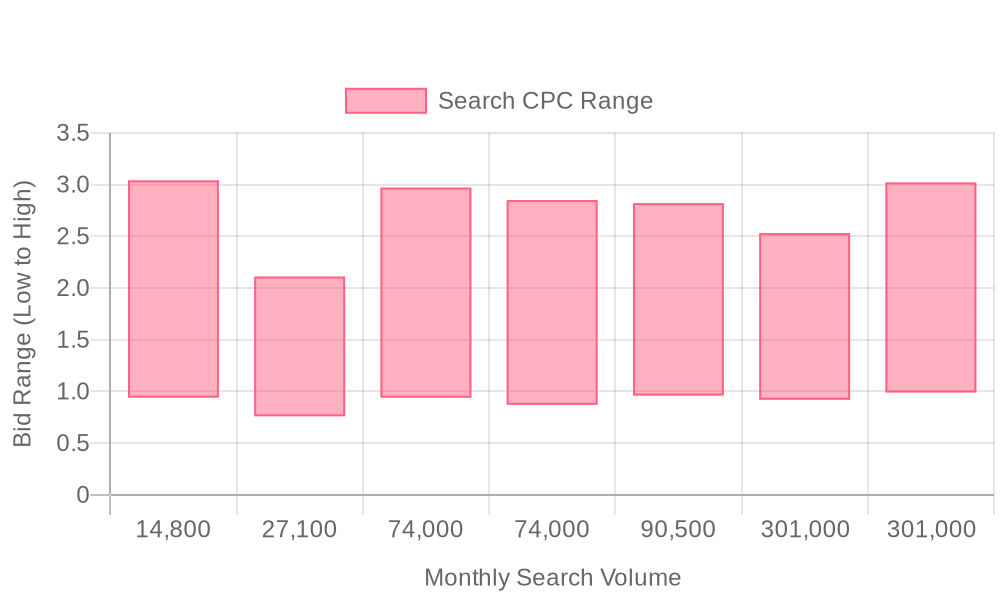
| Industry | Keyword | Monthly Search Volume | Competition Level | Low Bid | High Bid |
| Taxi | airport taxi | 14800 | LOW | 0.94 | 3.04 |
| Taxi | uber taxi | 27100 | MEDIUM | 0.76 | 2.11 |
| Taxi | cabs near me | 74000 | LOW | 0.94 | 2.97 |
| Taxi | cab service near me | 74000 | LOW | 0.87 | 2.85 |
| Taxi | taxi service near me | 90500 | LOW | 0.96 | 2.82 |
| Taxi | taxi | 301000 | LOW | 0.92 | 2.53 |
| Taxi | taxi near me | 301000 | LOW | 0.99 | 3.02 |
Taxi businesses can drive measurable results by focusing their keyword strategy on the most urgent and location-driven search behaviors. Prioritizing terms like "local taxi booking," "taxi to airport," and "quick cab service" ensures campaigns capture high-intent riders who are actively searching for immediate transportation solutions. These terms reflect diverse customer needs, from daily commutes to last-minute airport rides, maximizing the reach of your taxi advertising with minimal wasted impressions. For a deeper dive into industry-specific terms, see the taxi keywords list.
To further boost efficiency, integrating negative keywords such as "taxi driver jobs," "taxi license requirements," and "used taxi for sale" filters out irrelevant clicks that drain budget without adding value. This approach keeps your ads in front of the right audience: those with transactional intent, ready to book a ride. With advanced platforms, marketers can also identify which search terms are bringing in the highest quality leads, allowing for real-time optimization of the keyword list and bid adjustments to target the most lucrative rider profiles.
Integrating modern data platforms with your Google Ads for taxi campaigns unlocks deeper insight into visitor identity and search intent. Sona's Identity Resolution helps pinpoint specific companies or high-value accounts searching for transportation services, keeping audience lists current as users move through the funnel and powering more dynamic retargeting. This enriched data flow supports online and offline conversion tracking to measure true ROI from each taxi ad. The result is a keyword approach that adapts to demand while staying tied to performance.
Step-by-Step Campaign Execution Framework
Step 1: Build Targeted Keyword Lists
Success in google ads for taxi starts with precision. Building keyword lists that combine local intent, service-specific phrasing, and geographic modifiers ensures your ads reach riders at their moment of need. Phrases like “airport taxi near [city],” “24/7 cab service,” and “taxi booking downtown” directly address high-conversion scenarios. Integrating negative keywords such as “party bus,” “cheap rides,” or “[other city] taxi” keeps spend focused on real prospects, filtering out irrelevant traffic and improving overall click quality, as detailed in negative keywords.
To further sharpen targeting, unify CRM and web analytics data to see which searchers convert most often. Sona's Identity Resolution helps taxi marketers recognize not just anonymous site visitors but the specific companies and individuals showing high booking intent. This insight lets you continuously refine keyword lists, shifting resources toward terms that drive actual bookings and away from wasted impressions.
The upgrade most taxi advertisers miss is going beyond raw keyword volume to layer in intent and identity signals. By connecting website-visitor data and CRM records with Sona Marketing Measurement, you can see which specific search terms bring in the accounts and customers that actually convert, and weight your keyword and bidding strategy toward those rather than the terms with the highest search volume alone.
Step 2: Develop Compelling Ad Copy
Effective taxi advertising demands ad copy that stands out and compels immediate action. Use strong calls-to-action such as “Book Now,” “Get Your Ride in Minutes,” or “24/7 Pickup Available.” These signals tap directly into urgency, a key element for users needing transportation. Highlighting fare transparency, local expertise, and round-the-clock availability builds trust, addressing common pain points and differentiating your service from generic listings.
With behavioral intent data layered in, marketers can personalize ad messages based on real-time search trends and user movement through the funnel. This adaptive approach means ad copy can dynamically update to spotlight promotions or address seasonal needs, such as airport transfers during holidays. By continuously syncing enriched audience insights from platforms like Sona into your ad campaigns, every message is made more relevant, increasing both engagement and conversion rates. For more tips on maximizing ad effectiveness, see taxi ads guide.
Step 3: Craft Optimized Landing Pages
A seamless booking journey is critical for local taxi ads. Landing pages must be mobile-first, load quickly, and make it effortless for users to request a ride or contact dispatch. Key elements include a prominent “Book Now” button, visible phone number, and trust signals like customer reviews or local awards. Ensuring fare estimates, service area maps, and instant booking tools are front and center eliminates friction, encouraging more users to complete a booking.
Advanced campaign management solutions enable taxi businesses to tailor landing page content in real time, reflecting the specific keyword or ad campaign that drove the click. This granular personalization, informed by unified go-to-market data, ensures that a user searching for “late night taxi near me” lands on a page highlighting 24/7 service and after-hours safety. We’ve covered data-driven landing page strategies in detail in our personalization at scale guide.
Step 4: Implement Data-Driven Optimizations
Continuous optimization is the backbone of high-performing PPC for taxi services. Monitor campaign data closely to identify which keywords, ad groups, and time slots deliver the highest booking rates. Adjust bids strategically based on peak riding hours, such as weekend nights or airport rush periods, to maximize visibility when demand is highest. Use automated rules to pause underperforming ads and reallocate budget to high-converting segments. PPC conversion tips shares industry benchmarks for this approach.
Sophisticated platforms facilitate dynamic audience updates, automatically adjusting targeting as users progress from initial inquiry to repeat customer. This enables retargeting to be more effective, focusing on users most likely to book again or refer others. By syncing enriched leads and conversion data directly into Google Ads and CRM systems, marketers ensure that every optimization is backed by real-world outcomes, driving sustained growth and measurable ROI for taxi business marketing.
Sona Marketing Measurement closes the gap between clicks and revenue. It uses first-party data to connect ad clicks, through UTM capture and ad-platform APIs, to the actual record in your CRM, then reports ROAS by keyword and campaign instead of by last-click form fill. Feeding that revenue signal back into Smart Bidding and Performance Max compounds over time: the algorithms optimize toward booked taxi revenue, not cheap leads.
Tips on Expanding Your Taxi Service Presence
Expanding your taxi service presence requires a blend of operational optimization, forward-thinking digital strategies, and targeted community relationships. Modern taxi businesses that adopt a data-driven approach significantly improve their visibility, conversion rates, and local reputation.
- Integrate With Dispatch Software: Connecting your ad platforms to dispatch software closes the loop between customer demand and service delivery. When online leads flow automatically into your dispatch system, agents can respond instantly, cutting missed bookings and improving satisfaction. Sona Attribution connects marketing performance with service outcomes, helping teams see which campaigns directly drive high-value rides and optimize spend accordingly.
- Voice Search Optimization: With the rise of voice-enabled search, optimizing your ads and web content for natural language queries is essential for capturing modern, on-the-go customers. Implementing structured data and conversational keywords ensures your business surfaces in voice-driven inquiries such as “nearest taxi now” or “taxi to airport.” Google Ads Tips provide a deeper look at leveraging voice search and other digital tactics in local transportation markets.
- Collaborate With Local Businesses: Strategic partnerships with hotels, restaurants, and event venues can elevate your brand and deliver a direct pipeline of new customers. Joint promotions, such as co-branded discounts or bundled service offers, expand your marketing footprint and foster trust within the community. For more insights on maximizing the value of partnerships, check out our guide on affiliate revenue.
Beyond Google Ads: Winning the AI Answers Taxi Buyers Now Trust
Paid search captures demand at the moment someone types a query. But a growing share of taxi buyers no longer start at Google at all. They ask ChatGPT, Gemini, or Perplexity before running a search, and Google's own AI Overviews increasingly summarize an answer above the traditional results. If your business isn't referenced in those AI answers, you're invisible at the exact moment buyers build their shortlist.
Sona AI Visibility shows where your business shows up across ChatGPT, Gemini, Perplexity, Google AI Overviews, and 10+ engines, and, much like a keyword report, which prompts actually send you buyers, so you can prioritize the ones that convert. Run the two together and you cover the entire buyer path: get cited where buyers research (AI Visibility), then prove which of that demand turns into booked revenue (Marketing Measurement).
Helpful resources
Conclusion
Taxi advertising rewards operators who treat every search as a moment of real urgency: someone needs a ride, and they need it now. Google Ads is how you show up in that moment consistently, not just occasionally.
The operators who win going forward will be the ones who close the loop between ad spend and booked revenue, and who show up not just in Google's search results but in the AI answers travelers increasingly consult before they ever open a map app. That combination, precise targeting today plus visibility in tomorrow's AI-driven research, is what turns a taxi ad budget into a durable pipeline of riders.
Ready to see the difference data-driven advertising can make? Get started for free with Sona to experience the platform's capabilities.
FAQ
What are the best Google Ads strategies for taxi services?
The best strategies include targeting high-intent local segments, using search and display campaigns, implementing remarketing, and optimizing ad extensions to enhance engagement and conversion.
How much should I budget for Google Ads for my taxi business?
Budget should be based on demand forecasts and historical booking data, allowing adjustments for specific neighborhoods and peak times to capture premium traffic.
What type of Google Ads should I use for a taxi service?
Taxi services should use search campaigns for immediate ride requests, display ads for brand visibility, remarketing to convert missed prospects, and ad extensions to provide additional information.
How can I optimize my Google Ads for local taxi customers?
Optimize your ads by focusing on location-based targeting, using keywords that indicate immediate intent, and integrating real-time data to adjust campaigns according to local demand.
What are the common mistakes to avoid in Google Ads for taxi businesses?
Common mistakes include not using precise targeting, neglecting negative keywords, failing to adjust bids based on peak times, and not personalizing ad messages to real-time search trends.







