


Street cleaning contracts rarely close on the strength of a single ad click. Municipal buyers move through slow procurement cycles, while property managers and facility directors often need service the same week a storm hits or an event ends, and a sweeper company that can't tell which is which wastes budget chasing the wrong urgency. Google Ads gives street cleaning services a way to meet both kinds of buyer at the moment they're searching, and to fold that online activity together with offline sales conversations so spend can be judged on contracts won, not just clicks. Tools that identify the companies behind anonymous site visits and enrich what you know about them let street cleaning services catch high-intent searches early, without losing sight of the slower-moving accounts that convert months later.
How to Generate Street Cleaning Service Leads with Google Ads

Street cleaning companies face unique challenges when seeking qualified leads. Traditional advertising fails to reach the right mix of municipal buyers, property managers, and facility directors who drive commercial contracts and recurring service agreements. A data-centric paid search strategy in Google Ads ensures your marketing dollars focus on prospects actively searching for your specialized solutions.
Generic campaigns often waste budgets by misaligning messaging across public and private sectors. Instead, segmenting audiences and creative assets by intent, such as targeting government procurement officials for RFP cycles versus commercial property managers seeking rapid debris removal, delivers higher engagement and conversion rates. Intent-driven segmentation improves further when marketers use Sona's Identity Resolution and dynamically update target lists as leads progress through the buying cycle.
A structured, analytical approach starts with robust keyword research tailored to the nuances of street cleaning. Selecting search phrases like “municipal street sweeping contracts,” “parking lot cleaning services,” and “emergency post-storm debris removal” aligns your ad spend with high-value, commercial intent. Audience targeting then sharpens focus, enabling custom messaging for each segment and automatically excluding irrelevant residential or DIY queries.
Creative alignment is vital for conversions. Ad copy and landing pages must address sector-specific priorities: compliance documentation for government, after-hours scheduling for shopping centers, or sustainability features for eco-conscious campuses. By leveraging Sona's Intent Signals, marketers can quickly shift budget towards in-market accounts, ensuring resources are spent where likelihood to close is highest.
Continuous optimization is critical. Campaigns should be measured not only by clicks but by downstream outcomes, such as qualified RFP submissions, appointment bookings, or closed contracts tracked through CRM integrations. When advanced conversion tracking attributes both online and offline interactions, such as calls, form fills, and proposal downloads, revenue teams gain a complete view of ROI and can confidently reallocate spend to the highest-performing channels.
Creating a lead engine goes beyond ads alone. Integrate your Google Ads data with email nurturing, remarketing, and outbound sales efforts to maximize pipeline velocity. When enriched audience data flows smoothly between Google Ads and CRM systems, revenue teams can automate follow-ups and personalize outreach based on real-time stage and fit. This unified approach accelerates street cleaning business growth by surfacing actionable insights and ensuring each marketing dollar drives measurable impact. If you’re ready to streamline your pipeline, get started for free with Sona.
Why Does Google Ads Matter for Street Cleaning Services

Street cleaning services operate in a highly specialized market where timely engagement and precise targeting can define contract success. With urgent demands for post-event cleanups and routine municipal maintenance, responsiveness is critical to securing new business and fostering trust with city planners and property managers. To better understand how cleaning businesses can use Google Ads to attract more clients and increase bookings, explore this guide for cleaning businesses. For additional strategies, visit the Sona blog.
- Complex Audience Capture: Modern street cleaning businesses must reach decision-makers such as city infrastructure managers, facilities directors, and local government officials at the exact moments they are researching or sourcing vendors. Google Ads enables hyper-targeted campaigns that prioritize these high-value audiences, ensuring marketing spend is focused on those most likely to convert. Sona's Identity Resolution helps marketers move beyond anonymous web traffic, pinpointing which organizations are evaluating their services and adjusting outreach accordingly.
- Immediate Demand Fulfillment: Street cleaning contracts often arise from sudden needs, unexpected debris after storms, special events, or public works emergencies. Google Ads delivers instant visibility, allowing businesses to surface relevant offers to prospects searching at those urgent moments. Automated workflows can link ad engagement directly to CRM systems, ensuring leads from high-intent searches trigger immediate follow-ups and task assignments. This rapid response builds credibility and increases the likelihood of winning time-sensitive contracts. Learn how to integrate Sona with HubSpot CRM to streamline your lead management process.
- Visibility in New Areas: Expansion into under-served neighborhoods or newly developed districts requires more than broad targeting. Google Ads, combined with granular web analytics, guides campaigns to focus on geographic pockets where demand is rising but competitors are scarce. By analyzing Sona's Intent Signals, marketers can allocate budget dynamically, ensuring ads reach the right prospects as soon as new opportunities emerge.
- Data-Driven Analysis: Street cleaning companies must justify marketing investments with clear ROI. Google Ads supports closed-loop measurement from initial ad click through to offline service order, capturing each step in the customer journey. Integrating Sona’s ad conversions allows teams to attribute revenue not just to online form fills, but to calls, site visits, and signed contracts, providing a full view of campaign effectiveness. This holistic insight empowers leadership to fine-tune ad spend and continuously align campaigns with core business objectives, accelerating street cleaning business growth. If you're ready to optimize your ad strategy, get started for free with Sona.
Common Types of Google Ads Campaigns for Street Cleaning Services

Modern street cleaning businesses need to reach decision-makers and property managers at the exact moment service demand peaks. Distinct Google Ads campaign types allow marketers to engage these audiences at every stage, from urgent inquiries to long-term relationship building, maximizing both lead quality and conversion rates. To explore more digital advertising strategies for service industries, visit the Sona blog.
- Search Campaigns: Search campaigns are crucial for capturing high-intent prospects searching terms like "street cleaning service near me" or "parking lot sweeping company." These campaigns place your business at the top of relevant results when urgency is highest. Within Search, responsive search ads let you test multiple headlines and descriptions so Google can serve the combination most likely to convert a given query. By layering real-time intent data and firmographic filters, marketers can shift more budget to keywords and locations generating quality leads, ensuring spend directly fuels business growth.
- Display Ads: Display ads build continuous brand visibility among commercial property managers, city officials, and procurement teams browsing industry-related sites. When displayed on platforms frequented by urban planners or facilities managers, display ads reinforce awareness and position your brand as a trusted provider. Leveraging unified audience insights, marketers can refine targeting to focus only on accounts actively considering contracts, significantly increasing ad efficiency. For additional ideas on marketing strategies, see these nine effective tactics for cleaning businesses.
- Video Ads: Video campaigns offer a compelling way to demonstrate the impact of your services, highlighting before-and-after transformations and the professionalism of your fleet. Consistent video messaging across YouTube and industry news platforms fosters trust and communicates operational scale to large buyers. Integrating video engagement data into your marketing ecosystem enables dynamic retargeting and follow-up with viewers who show the strongest purchase intent.
- Remarketing: Remarketing campaigns re-engage visitors who previously explored your site or requested information but did not convert. By tracking user interactions and connecting them to enriched profiles, marketers can deliver hyper-relevant ads, such as special offers for annual contracts or reminders for seasonal cleanups, at precisely the right time in the buying cycle. This approach increases the likelihood of converting previously passive interest into active contracts.
- Assets: Call and location assets turn ads into actionable lead drivers, making it simple for prospects to contact your team or find your office. Data-driven optimization ensures assets display when and where they are most relevant, such as during peak business hours or in high-demand neighborhoods. Unified analytics allow you to attribute calls and form fills back to specific assets, informing future budget allocation and creative direction.
Where to Find Growth Opportunities

Modern street cleaning businesses can unlock substantial growth by expanding their reach beyond familiar channels and rethinking how they position their services. The most successful teams prioritize overlooked pain points, identifying unmet needs in sectors such as municipal contracting, commercial property management, and logistics. By shifting focus to specialized vertical keywords like “municipal debris removal,” “industrial street sweeping,” or “airport runway cleaning,” marketers can connect directly with decision-makers whose requirements are often missed by broad campaigns. For a comprehensive list of high-performing keywords tailored to cleaning services, explore cleaning service keywords.
A thorough competitor gap analysis, using platforms like SEMrush, reveals market segments underserved by rivals. This process uncovers which search terms, ad placements, and content topics are currently underused. As a result, teams can prioritize investment in emerging opportunities, such as newly approved industrial parks or evolving regulatory requirements, and reallocate budget toward channels showing signs of untapped demand. When coupled with real-time intent data and dynamic audience segmentation, marketers quickly identify high-converting accounts and ensure that spend is focused on prospects most likely to engage.
Expanding into industry-specific placements and directories offers a direct route to high-value leads. Listings in municipal procurement databases, facility management directories, and commercial property platforms expose street cleaning services to buyers seeking compliance and reliability. These environments attract stakeholders with urgent needs, allowing marketers to bypass generic ad clutter and present tailored solutions. By integrating CRM and ad platforms, enriched audience profiles are automatically synced, driving personalized campaign messaging and follow-up.
Content retargeting, especially with educational assets like videos that address regulatory changes or demonstrate advanced equipment, keeps brands top-of-mind for buyers experiencing recurring frustrations. These assets reinforce credibility and nurture prospects as they move through the buying journey. With advanced conversion tracking, every interaction, whether an online form submission or an offline project inquiry, feeds back into campaign optimization, helping teams measure ROI with precision and refine strategies for future outreach.
How to Apply Audience Segmentation for Street Cleaning
Modern street cleaning businesses thrive by replacing broad, generic outreach with audience-centric digital campaigns. This approach empowers revenue teams to connect with high-value prospects and maximize every marketing dollar through precisely targeted messaging and engagement.
- Define relevant segments such as government vs. private sectors, ensuring tailored communications: Street cleaning services must recognize the diverse requirements of city agencies, property management firms, and private-sector clients. By segmenting audiences at this foundational level, marketers can tailor ad copy, visuals, and landing pages to address the unique procurement processes, urgency, and compliance demands of each group. Government buyers respond to credentials and bid-readiness, while commercial clients focus on operational reliability and cost savings. For more inspiration on segmenting your offering, explore different types of cleaning services.
- Layer intent signals indicating urgent projects, identifying hot prospects for optimal engagement: Not all inquiries carry equal value. By monitoring engagement signals, such as RFP downloads, multiple site visits, or requests for emergency debris removal, advertisers can prioritize high-intent leads and shift budget accordingly. Platforms that unify real-time behavioral data with CRM records enable dynamic segmentation, ensuring outreach aligns with a prospect’s true project urgency.
- Create tailored ad groups with specific segment messaging, aligning with each audience's journey: Successful Google Ads for street cleaning services require ad groups reflecting audience segments and their stage in the sales cycle. For example, early-stage government buyers may see ads showcasing environmental compliance, while returning commercial leads receive promotions tied to seasonal maintenance offers. Automated audience updates ensure that as leads interact with your website or sales team, their ad experience evolves in lockstep with their buying journey.
- Ensure comprehensive conversion tracking from inquiry to service order to measure true ROI and adjust strategies dynamically: Full-funnel measurement is critical for street cleaning service ads, given the length and complexity of municipal and enterprise contracts. Advanced tracking links online actions, such as quote requests or service area map interactions, to offline milestones like site visits or contract signings. Integrating CRM and ad platforms keeps audience lists current, enabling remarketing to stalled opportunities and quantifying the return on every segment-specific campaign. For proven Google Ads tactics that support robust measurement and growth, review these three best Google Ads strategies.
This is also where measurement changes the economics. With Sona Marketing Measurement you can identify the companies behind your ad clicks using first-party data, not just anonymous sessions, and segment audiences by who actually becomes a customer. That lets you build bid adjustments and audience signals around the segments that convert and de-prioritize the ones that don't, so you feed Google's algorithms "this click became a paying street cleaning services customer" instead of just "someone filled out a form."
Keyword Strategy & Sample Target Terms
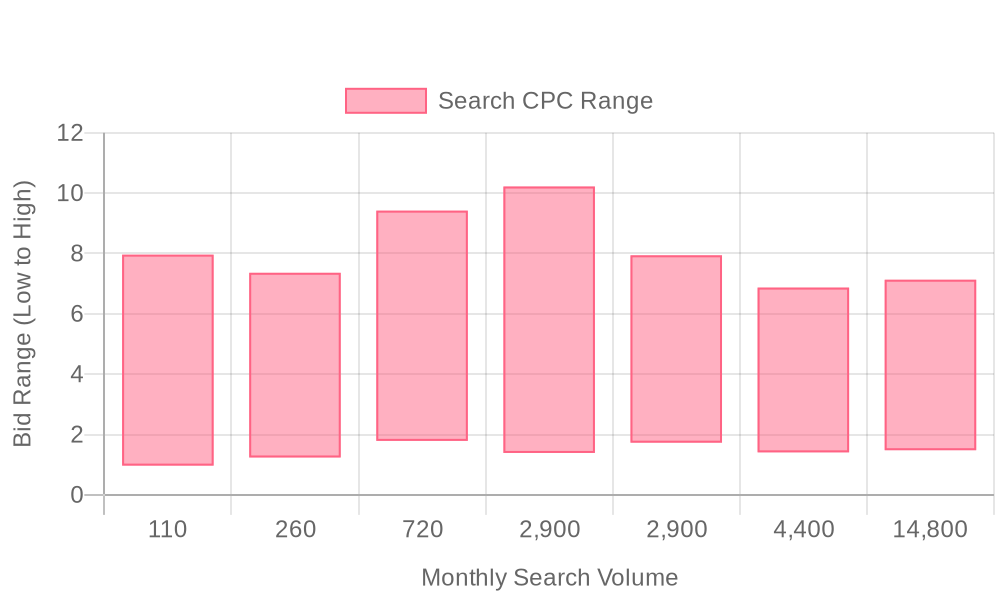
| Industry | Keyword | Monthly Search Volume | Competition Level | Low Bid | High Bid |
| Street Cleaning Services | street cleaning services | 110 | LOW | 0.97 | 7.96 |
| Street Cleaning Services | street sweeping services near me | 260 | LOW | 1.24 | 7.36 |
| Street Cleaning Services | street sweeping companies near me | 720 | LOW | 1.79 | 9.42 |
| Street Cleaning Services | parking lot sweeper | 2900 | HIGH | 1.39 | 10.22 |
| Street Cleaning Services | street sweeping | 2900 | LOW | 1.73 | 7.94 |
| Street Cleaning Services | street cleaning | 4400 | LOW | 1.41 | 6.87 |
| Street Cleaning Services | street sweeper | 14800 | LOW | 1.48 | 7.13 |
Crafting an effective keyword strategy for street cleaning services begins with prioritizing terms that signal strong commercial intent. Utilizing high-performing keywords such as "street cleaning services," "municipal cleaning," and "street debris removal" connects campaigns with organizations actively seeking providers, giving an immediate advantage in reaching decision-makers. To further refine your approach, you can explore top cleaning service keywords that drive results for similar businesses. These high-intent terms filter out casual browsers, allowing marketing budgets to focus exclusively on prospects most likely to convert into high-value contracts.
The next layer of precision comes from integrating local modifiers and long-tail keywords into your campaigns. Including city names, neighborhoods, or service-specific phrases like "street cleaning services in [location]" or "parking lot sweeping near me" ensures ads appear only to those within your operational footprint and with specific needs. This approach amplifies relevance for both municipal procurement teams and commercial facility managers while reducing wasted spend. For targeting and segmentation, leveraging Sona's Audiences tool can help ensure your ads reach the right buyers at the right moment.
Implementing a robust negative keyword strategy is essential for maintaining budget efficiency and optimizing return on investment. By excluding irrelevant traffic, such as queries about "DIY street cleaning," "street cleaner jobs," or "free local cleaning events", your campaigns avoid clicks from users outside your target buyer profile. Unified data platforms can dynamically update negative keyword lists based on real-time search trends and feedback from sales or service delivery teams, ensuring your ad spend is allocated only where it will drive measurable business outcomes.
Step-by-Step Campaign Execution Framework
Street cleaning businesses operate in a competitive, contract-driven landscape where efficient digital execution can determine contract wins and long-term client relationships. Direct access to high-intent buyers and decision-makers gives providers a substantial edge, especially when campaigns are crafted to align with the real-world triggers that drive procurement for street cleaning services. For more insights into marketing and demand generation, explore the Sona blog.
This execution framework focuses on precision, measurable ROI, and actionable insights tailored to the unique needs of B2B revenue teams in the street cleaning industry. Every step is designed to maximize relevance and conversion potential, reducing wasted spend and accelerating business growth with Google Ads for street cleaning services.
Step 1: Generate Targeted Keyword Lists
Effective Google Ads for street cleaning services begin with granular keyword segmentation. Successful marketers segment keyword lists by service type, such as municipal street sweeping, parking lot cleaning, or emergency debris removal, and by geographic location to capture both broad and hyperlocal demand. This approach ensures comprehensive coverage, allowing campaigns to target city procurement officers, commercial facility managers, and HOA boards with messaging optimized for each segment. To further refine your keyword targeting, review this list of cleaning service keywords.
Dynamic keyword management is critical as market demand shifts. With real-time audience data, it's possible to continuously refine and expand keyword lists based on real search behavior, service requests, and closed deals. Marketers can identify not just what prospects are searching, but also which accounts are actively evaluating street cleaning vendors. This alignment supports better budget allocation and ensures that PPC for street cleaning always targets the most qualified, in-market leads.
The upgrade most street cleaning services advertisers miss is going beyond raw keyword volume to layer in intent and identity signals. By connecting website-visitor data and CRM records with Sona Marketing Measurement, you can see which specific search terms bring in the accounts and customers that actually convert, and weight your keyword and bidding strategy toward those rather than the terms with the highest search volume alone.
Step 2: Develop Compelling Ad Copy
Ad copy for advertising street cleaning services must address industry-specific pain points and decision criteria. Messaging should highlight solutions to common challenges, such as compliance with municipal regulations, after-hours availability, and fleet capacity for large-scale projects. Incorporating strong calls to action, like instant quote requests, scheduled consultations, or limited-time seasonal offers, drives higher engagement from buyers with urgent needs. For actionable guidance on creating impactful ad messaging, check out tips for cleaning service ads.
With access to intent signals and visitor identification data, marketers can tailor copy to reflect an account’s specific pain points or project requirements. For example, ads can dynamically reference recent changes in local street cleaning ordinances or highlight specialized equipment for industrial zones. Personalizing the message in this way increases ad relevance and improves conversion rates, ensuring each impression works harder for street cleaning business growth.
Step 3: Craft Effective Landing Pages
Landing pages must align tightly with ad intent and provide a frictionless path to conversion. For street cleaning service ads, this means clear service descriptions, pricing transparency, and trust indicators such as certifications, client testimonials, or before-and-after case studies. Including success metrics, like average contract value secured, response times, or compliance rates, builds credibility and supports higher-value lead generation. For inspiration, explore this case study on Google Ads for cleaning businesses.
By syncing audience data and intent signals, landing pages can dynamically adapt their content and form fields based on the visitor’s prior engagement or company profile. A procurement officer from a city agency, for instance, might see a landing page emphasizing regulatory compliance and public sector experience, while a commercial property manager is presented with maintenance scheduling and reporting integrations. This data-driven personalization increases conversion rates and streamlines the qualification process, ensuring that every lead entering the funnel is sales-ready.
Step 4: Perform Data-Driven Optimizations
Ongoing campaign optimization for Google Ads targeting for cleaning services is essential for sustained results. Smart bidding strategies, such as automated bid adjustments based on conversion likelihood or account value, ensure budgets are allocated to the highest-impact opportunities. Monitoring conversion metrics, including both online submissions and offline contract wins, enables rapid iteration and budget reallocation in real time. Learn more about three Google Ads strategies for cleaning services.
Integrating online and offline attribution allows marketers to measure the true ROI of their ad spend, connecting digital engagement directly to signed agreements and recurring contracts. As audiences move through the funnel, dynamic audience updates enable retargeting and nurture strategies that reflect each account's current buying stage. This approach closes the loop between marketing and sales, empowering revenue teams to optimize every dollar spent on Google Ads for street cleaning services and drive scalable, predictable business growth.
Sona Marketing Measurement closes the gap between clicks and revenue. It captures ad clicks with first-party tracking, then ties that click through UTM capture and ad-platform APIs to the actual record in your CRM, and reports ROAS by keyword and campaign instead of by last-click form fill. Feeding that revenue signal back into Smart Bidding and Performance Max compounds over time: the algorithms optimize toward booked street cleaning services revenue, not cheap leads.
Tips on Expanding Your Street Cleaning Service Presence

Street cleaning businesses can drive measurable growth by leveraging untapped channels and optimizing every customer interaction. Sophisticated digital outreach combined with operational intelligence transforms passive interest into active revenue opportunities, discover more strategies for growth in our street cleaning marketing playbooks.
- Integrate educational content in remarketing efforts: Engage potential clients with value-driven resources, such as compliance guides or sustainability tips, in your remarketing campaigns. This approach transforms knowledge gaps into conversion opportunities by positioning your brand as a trusted expert and nurturing hesitant prospects through the funnel. Explore best practices for aligning content and ad sequencing in our remarketing insights blog.
- Upsell additional services using CRM data insights: Harness CRM intelligence to surface high-propensity clients for services like pressure washing, parking lot sweeping, or seasonal debris removal. Syncing this enriched audience data with your ad platforms allows for highly relevant upsell messaging, ensuring clients recognize the full spectrum of your street cleaning capabilities at the right stage in their buying cycle.
- Collaborate with industry bodies for expanded reach: Partner with municipal associations or commercial property management networks to amplify your authority. Joint webinars, educational content, and co-branded campaigns build trust, extend reach, and help your brand become synonymous with reliability and compliance in the street cleaning sector. Learn how leading teams use Identity Resolution to target partnership opportunities and maximize outreach.
- Use keyword and search data to inform broader marketing strategies: Analyze paid and organic search trends to refine not just your Google Ads for street cleaning services but the entire marketing mix. Audience insights from campaign data can inform content marketing, sales enablement, and even service innovation, allowing you to identify emerging needs and latent demand in your target markets, leverage high-performing cleaning service keywords.
Effective use of Google Ads for street cleaning relies on smart targeting, engaging creative, and iterative optimization rooted in real performance data. When marketers integrate ad platforms with offline activities and leverage advanced audience segmentation, they overcome common pain points like missed high-value prospects or irrelevant messaging. This unified approach builds a consistent pipeline of new opportunities and ensures that your business captures market interest precisely when decision-makers are most likely to act. For teams seeking advanced growth, consider deepening your local SEO for street cleaning and producing high-intent educational assets to support your paid and organic outreach, converting search intent into booked jobs while filtering out low-value inquiries.
Beyond Google Ads: Winning the AI Answers Street Cleaning Services Buyers Now Trust
Paid search captures demand at the moment someone types a query. But a fast-growing share of street cleaning services buyers no longer start at Google at all, they ask ChatGPT, Gemini, or Perplexity before they ever run a search, and Google's own AI Overviews increasingly summarize an answer above the traditional results. If your business isn't referenced in those AI answers, you're invisible at the exact moment buyers build their shortlist.
Sona AI Visibility shows where your business shows up across ChatGPT, Gemini, Perplexity, Google AI Overviews, and 10+ engines, and, much like a keyword report, which prompts actually send you buyers, so you can prioritize the ones that convert. Run the two together and you cover the entire buyer path: get cited where buyers research (AI Visibility), then prove which of that demand turns into booked revenue (Marketing Measurement).
Helpful resources
Conclusion
Street cleaning is a business built on timing: a storm hits, an event ends, a municipal contract comes up for renewal, and whoever shows up first in the search results has the advantage. Google Ads gives street cleaning services a way to be that first call, but only if the targeting, keywords, and measurement behind it are built for how this trade actually buys, not borrowed wholesale from a generic services playbook.
The businesses that pull ahead treat their ad spend as a feedback loop: keyword and audience data inform which accounts to chase, and closed-contract data informs which keywords and audiences to trust next. That loop only tightens if you're willing to measure past the click.
To see that loop working on your own campaigns, start for free with Sona and unify your go-to-market data.
FAQ
How can Google Ads benefit street cleaning services?
Google Ads helps street cleaning services reach high-value prospects by connecting them with decision-makers when they are actively searching for solutions, offering precise targeting and accurate ROI measurement.
What are the best practices for running Google Ads for street cleaning?
Best practices include segmenting audiences by intent, using robust keyword research, aligning ad copy and landing pages with sector-specific priorities, and continuously optimizing campaigns based on real-time data and conversion tracking.
How much should I budget for Google Ads in street cleaning?
The budget should focus on high-value prospects actively searching for street cleaning solutions, with adjustments based on campaign performance and real-time insights to ensure the highest ROI.
What keywords should I target for street cleaning services in Google Ads?
Target keywords such as 'municipal street sweeping contracts,' 'parking lot cleaning services,' and 'emergency post-storm debris removal' to align your ad spend with high-value, commercial intent.
How do I measure the success of my Google Ads for street cleaning?
Success is measured by tracking both online interactions, such as clicks and form fills, and offline outcomes, like RFP submissions and closed contracts, through CRM integrations and advanced conversion tracking.







