


A family searching for elder care at 11pm after a hospital discharge doesn't have time to compare five agencies at leisure, they need an answer now, and that urgency is exactly what Google Ads can capture. Senior home care providers face a specific problem: high-intent prospects appear in short, unpredictable windows, and campaigns built for slower-moving industries miss them. Google Ads lets providers reach caregivers, adult children, and families actively searching for support the moment that need surfaces. This guide covers how to align Google Ads strategy with the realities of senior home care, from urgent-need keywords to compliance-aware messaging to measurable ROI.
How to Generate Google Ads for Senior Home Care Leads: A Step-by-Step Guide
The path to sustainable lead generation for senior home care services relies on tailored, data-driven digital strategies that reach families and decision-makers precisely when their need is highest. By aligning advertising with real-time audience insights and intent signals, providers can maximize their reach, reduce wasted spend, and convert online interest into consultations and move-ins.
Generic campaigns often fall short in this sector, leading to high costs and low-quality leads. A focused approach, combining granular targeting, compelling creative, and continuous optimization, delivers results that traditional marketing cannot match. For a broader understanding of how Google Ads can help home care agencies generate leads and grow their business, review this overview of Google Ads for home care.
- Define Goals and KPIs: Establish clear objectives tailored to your business, such as increasing qualified tour bookings, reducing lead cost, or boosting occupancy rates. Select measurable KPIs, including cost per acquisition, conversion rate, and lead-to-tour ratio, to quantify campaign success. With advanced ad conversion tracking, marketers can attribute not only online form fills but also phone calls and offline move-ins, revealing the true ROI of every dollar spent.
- Target Audience and Keywords: Identify the core demographic, adult children of seniors, healthcare professionals, or local caregivers, by analyzing search intent and online behavior. Leverage industry-specific keywords like "in-home elder care near me" or "24-hour dementia assistance" to ensure ads are shown to users researching immediate solutions. Dynamic audience segmentation, informed by in-market signals and CRM data, helps campaigns adapt as prospects move from awareness to decision, reducing irrelevant impressions and focusing spend on likely buyers.
- Create Effective Ad Content: Craft ad copy that conveys empathy and expertise while highlighting unique service offerings, such as certified caregivers, flexible care plans, or rapid response times. Use strong calls-to-action like "Book a Free Assessment" or "Speak to a Care Advisor Today" to drive engagement. Add call, location, and sitelink assets to increase visibility and give high-intent users multiple ways to convert. For more tactical guidance, visit the Sona blog for proven strategies on improving ad performance in service industries.
- Optimize and Integrate: Monitor campaign performance frequently, analyzing metrics such as search term reports, demographic breakdowns, and conversion attribution to spot trends and remove underperforming keywords. Syncing CRM data with ad platforms allows for continuous audience enrichment and retargeting, ensuring messaging stays relevant as prospects progress through the funnel. Advanced integrations enable teams to unify data across touchpoints, revealing which sources and messages generate the most valuable opportunities in senior care.
Why does Google Ads Matter for Senior Home Care

Senior home care providers operate in a landscape where timing and relevance define success. Families searching for care solutions often need immediate answers, making responsive digital engagement essential for converting high-intent prospects. For a comprehensive overview of how Google Ads can help agencies generate leads and grow, see how Google Ads supports home care growth.
Leveraging Google Ads enables agencies to overcome the challenge of slow follow-up by driving instant visibility exactly when prospects are most likely to act. This approach ensures marketing budgets fuel real conversations, not just website visits, by targeting users actively seeking urgent care, post-hospital support, or specialized elder care services. To implement these strategies with unified data and reveal which companies are engaging, even before they fill out a form, explore Sona's Identity Resolution.
- Precision Targeting: Google Ads empowers senior care marketers to zero in on families and individuals searching for urgent solutions, such as "home care services for elderly" or "emergency respite care near me." By layering geo-targeting, device preferences, and intent signals, campaigns reach only those likely to convert, reducing wasted spend and maximizing lead quality. With real-time audience insights, marketers can identify which companies are repeatedly engaging, shifting efforts from anonymous traffic to prioritized outreach.
- Measurable Impact: Every campaign touchpoint is tracked, from the first click to final client acquisition. Marketers receive granular insights into which keywords, ads, and landing pages are driving qualified leads and revenue, enabling rapid budget adjustments and smarter decision-making. When Google Ads data is integrated with CRM and revenue analytics, companies gain a single source of truth for attribution and can learn more about measuring marketing’s influence.
- Real-time Engagement: The senior care journey is filled with critical moments, hospital discharges, sudden health changes, or caregiver burnout. Google Ads campaigns put your brand in front of families at these decisive points, offering immediate pathways to connect with intake teams or schedule assessments. Sona surfaces intent signals so marketers can dynamically shift budget toward audiences showing the strongest purchase intent, ensuring resources focus where the need, and the conversion potential, is highest.
- Data Integration: Connecting Google Ads with client relationship management systems elevates marketing analytics from basic reporting to predictive insights. Marketers can build dynamic audiences that update as leads move through stages, syncing enriched contact and engagement data directly into Google Ads and sales workflows. This unified approach empowers revenue teams to personalize follow-up, retarget high-value prospects, and measure true campaign ROI, both online and offline, across every touchpoint.
Common Types of Google Ads Campaign for Senior Home Care

Senior home care organizations benefit from a sophisticated mix of Google Ads campaign types designed to overcome outdated outreach and segmentation limitations. Strategic selection and integration of these formats, including Search, Display, Video, Remarketing, and Performance Max, allow marketers to capture demand at various stages of the buyer journey, maximize engagement, and reduce wasted spend. Leveraging unified data across the funnel, teams can orchestrate seamless transitions from awareness to decision, ensuring every touchpoint is both relevant and measurable.
- Search Campaigns: Search campaigns remain the backbone of senior care marketing, targeting high-intent queries such as "in-home elder care nearby" or "24/7 home care for seniors," along with urgent, need-driven searches after a fall, diagnosis, or hospital discharge. Responsive search ads let you test multiple headlines and descriptions to see which combinations of empathy, credentialing, and availability resonate with families making a fast decision. By integrating real-time visitor identification, marketers can shift budget toward accounts showing active in-market research, ensuring every ad dollar aligns with true purchase intent and not just passive search volume.
- Display Ads: Display campaigns extend your reach beyond search, placing visually-rich ads on websites and platforms frequented by adult children, family decision-makers, and healthcare professionals. This persistent visibility addresses the common problem of fragmented awareness and reinforces brand recall before prospects engage directly. Dynamic audience segmentation, updated as prospects interact with your digital assets, allows for continual refinement, ensuring that only those progressing in their journey receive tailored messaging across the web.
- Video Ads: Video formats deliver immersive storytelling, helping providers build trust and emotional resonance. Educational explainers, client testimonials, and service overviews can demystify care models and foster credibility with skeptical or uncertain families. Through advanced conversion tracking, you can measure not only views but also downstream actions such as lead form completions or booked consultations, connecting top-of-funnel engagement to bottom-line results.
- Remarketing: Remarketing campaigns re-engage visitors who explored your site or landing pages but didn’t convert, using personalized ads based on past behavior. This approach captures intent signals that might otherwise fade, nurturing prospects with reminders, new offers, or additional resources. As leads move through the funnel or express new interests, dynamic audience updates ensure every ad remains timely and relevant, minimizing wasted impressions and boosting conversion rates.
- Ad Assets: Ad assets provide critical trust signals and remove friction from the inquiry process by adding direct call buttons, location details, service highlights, and testimonials. These enhancements can increase click-through rates and accelerate contact, especially when assets are dynamically tailored to the service or location most relevant to each searcher. Integrated CRM and ad platform sync ensures that new leads captured via these assets are instantly routed to your sales or admissions teams, reducing response times and maximizing the ROI of every marketing touch.
For a comprehensive overview of how Google Ads can help home care agencies generate leads and grow their business, see this guide to Google Ads for home care.
Where to Find Growth Opportunities in Senior Home Care Marketing

Senior home care agencies operate in a market where sustained growth hinges on uncovering overlooked demand and engaging prospects at pivotal decision points. By combining data-driven insights with tailored outreach, marketing teams can achieve higher lead quality and more predictable occupancy gains.
- Keyword and Competitor Analysis: Systematic keyword and competitor analysis is the cornerstone of any effective senior home care marketing strategy. Tools like SEMrush identify not only the highest-value search terms but also spotlight gaps in your current keyword portfolio and show where competitors are capturing share. For a focused overview of how Google Ads can help home care agencies generate leads and grow their business, see this Google Ads for home care guide. Integrating visitor identification into this process allows you to see which companies and individuals are actually searching and clicking, moving beyond generic traffic numbers to actionable lead lists. This targeted approach ensures resources are focused on audiences most likely to convert and enables real-time adjustments as market conditions evolve.
- Trade Directories and Forums: Building presence in specialized industry directories and forums elevates visibility among both referral sources and families actively seeking care solutions. Listings in top home care directories and active engagement in relevant online forums amplify trust signals and create multiple inbound channels for qualified leads. When analytics platforms connect these referral sources to your CRM, it becomes possible to attribute new contacts and conversions directly to specific directory placements or forum interactions. This clarity enables ongoing optimization of profile content, enhances reputation management, and helps refine which partner platforms deliver the strongest ROI.
- Leverage Content Retargeting: Case studies on managing a specific condition at home, guides to paying for care, or webinars on recognizing when a parent needs help serve as a strong foundation for retargeting. By tracking which organizations engage with your content, you can build dynamic audiences that update as leads move from initial research to active decision-making. This lets you deliver tailored ads or nurture sequences to family decision-makers who've already engaged with your resources, reinforcing your expertise rather than starting the conversation cold. With advanced online and offline conversion tracking, every interaction, a webinar sign-up or a downloaded guide, feeds back into your campaign analytics, so you can attribute a downstream tour or placement to the content that started it.
How to Apply Audience Segmentation for Senior Home Care

Modern senior home care marketers see significant lift when they move beyond broad messaging and instead tailor their outreach by segmenting audiences with precision audience intelligence. Sharpening focus on the needs and behaviors of specific groups enables providers to deliver more relevant offers, driving greater engagement and higher conversion rates. Explore more tactics in our marketing analytics blog.
- Client Types: Segmenting by payment method is fundamental for targeted advertising for senior services. Self-funded clients typically respond to messaging around flexibility and premium care, while those relying on insurance are more likely to engage with information about covered services and streamlined claims support. By separating these groups, teams can allocate budget more efficiently and personalize creative to reflect the decision criteria of each segment. Advanced platforms can sync this segmentation into Google Ads, ensuring the right message reaches the right audience at the right stage of the buyer journey. For a practical overview of how Google Ads can help home care agencies, see this guide to Google Ads for home care.
- Behavioral Signals: Leveraging behavioral data provides insight into which prospects are closest to making a decision. Metrics such as time spent on service pages, repeat visits, or engagement with downloadable resources often indicate readiness to secure services. With real-time intent data, marketers can automatically prioritize spend and accelerate follow-up for those most likely to convert, shifting budget dynamically as leads move through the funnel. This approach boosts Google Ads ROI for home care by focusing resources where they have the highest impact.
- Create Custom Ad Groups: Developing unique ad groups for each client segment ensures that campaign messaging, calls to action, and offers are precisely aligned to distinct needs. For example, ads for adult children researching elder care can highlight family peace of mind, while messages for seniors themselves might emphasize independence and day-to-day support. Campaign managers benefit from advanced conversion tracking that connects ad engagement to both online and offline outcomes, providing true attribution and guiding future budget decisions. CRM integrations further streamline this process by syncing enriched audience data and lead status back into campaign management tools, supporting a closed-loop marketing system.
By structuring campaigns around audience segments, senior home care providers unlock better lead quality, higher occupancy, and a more measurable path to growth. To experience these segmentation tools in your own strategy, get started for free with Sona.
This is also where measurement changes the economics. With Sona Marketing Measurement you can identify the companies behind your ad clicks, not just anonymous sessions, and segment audiences by who actually becomes a customer. That lets you build bid adjustments and audience signals around the segments that convert and de-prioritize the ones that don't, so you feed Google's algorithms "this click became a paying senior home care customer" instead of just "someone filled out a form."
Keyword Strategy & Sample Target Terms
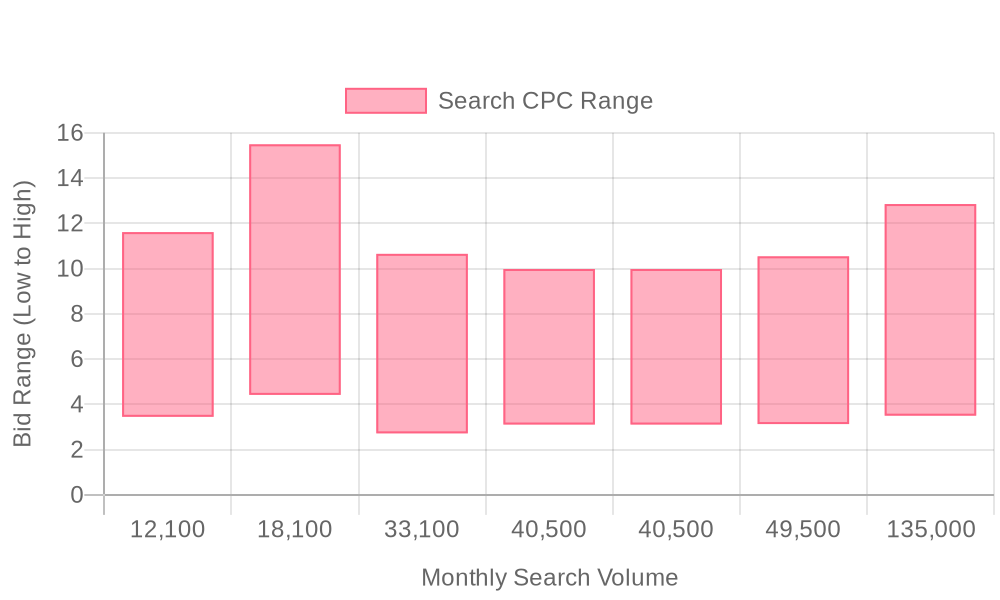
| Industry | Keyword | Monthly Search Volume | Competition Level | Low Bid | High Bid |
| Senior Home Care | senior home care | 12100 | LOW | 3.45 | 11.61 |
| Senior Home Care | senior care near me | 18100 | LOW | 4.42 | 15.49 |
| Senior Home Care | retirement home near me | 33100 | MEDIUM | 2.72 | 10.65 |
| Senior Home Care | elderly care | 40500 | LOW | 3.11 | 9.98 |
| Senior Home Care | elder care | 40500 | LOW | 3.11 | 9.98 |
| Senior Home Care | retirement homes | 49500 | LOW | 3.13 | 10.54 |
| Senior Home Care | senior assisted living near me | 135000 | MEDIUM | 3.5 | 12.85 |
A precise keyword strategy is foundational for senior home care providers seeking to connect with high-intent families and reduce wasted ad spend. Well-structured keyword targeting improves engagement, increases qualified inquiries, and accelerates the path from search to conversion. For a deeper dive into how Google Ads can help drive leads and growth in this sector, review this overview of Google Ads for home care agencies.
- Core Keywords: Focus on high-volume, service-aligned terms such as "in-home senior care," "elderly assistance services," and "home health care near me." These keywords capture broad market demand and ensure ads reach families searching for general care options. For more insights into building effective campaigns, explore our blog.
- Long-Tail Variations: Expand reach with specific, intent-driven phrases like "affordable home care for elderly," "24/7 dementia caregiver [city]," or "post-surgery recovery support at home." Long-tail keywords attract prospects with urgent or specialized needs, driving higher conversion rates and lowering cost per acquisition.
- Negative Keywords: Protect budget and improve lead quality by filtering out irrelevant queries. Exclude terms like "jobs," "training," "volunteer," "free," and unrelated medical services. Negative keyword management curtails non-converting clicks from job seekers or individuals not seeking care, preserving resources for genuine prospects.
Marketers can further optimize by integrating Sona's Identity Resolution to attribute leads beyond anonymous clicks, revealing which organizations are behind high-value searches. As audiences engage or convert, Sona Audiences updates keyword priorities and audience lists, ensuring campaigns stay focused on prospects most likely to book assessments or tours. This data-driven approach not only sharpens keyword targeting but also streamlines audience sync into CRM and ad platforms, closing the loop between search intent and client acquisition.
Step-by-Step Campaign Execution Framework for Senior Home Care
A strategic campaign execution framework accelerates lead generation and increases occupancy for senior home care providers. By aligning messaging, targeting, and performance optimization, revenue teams can reduce wasted spend and engage high-intent families at scale. For a comprehensive overview of how Google Ads can drive growth for home care agencies, see this Google Ads for home care guide. To explore more strategies, browse our marketing analytics blog.
Step 1: Build Targeted Keyword Lists
Targeted keyword strategy is fundamental in PPC for home care. Use intent-driven modifiers such as "emergency senior care," "certified elder caregivers," or "trusted dementia support" to reach audiences with urgent needs or specific requirements. Incorporating location or condition-based phrases narrows the audience to those most likely to convert, improving relevance and reducing spend on low-value clicks.
Audience enrichment platforms help marketers move beyond anonymous traffic by tying search queries to real organizations or decision-makers. This approach enables teams to identify which companies are showing intent for senior care services, allowing for precise segmentation and custom audience development within Google Ads. As high-intent accounts are identified, teams can sync enriched lists directly into Google Ads and CRM platforms using Sona's Identity Resolution, ensuring resources are focused on the prospects most likely to engage.
The upgrade most senior home care advertisers miss is going beyond raw keyword volume to layer in intent and identity signals. By connecting website-visitor data and CRM records with Sona Marketing Measurement, you can see which specific search terms bring in the accounts and customers that actually convert, and weight your keyword and bidding strategy toward those rather than the terms with the highest search volume alone.
Step 2: Develop Compelling Ad Copy
Effective ad copy speaks directly to the pain points of families searching for senior care solutions. Phrases such as "trusted caregivers available 24/7," "reliable senior support," or "personalized elder care plans" establish credibility and trust. Headlines should address urgency and highlight differentiators, while descriptions reinforce safety, experience, and immediate availability.
Real-time intent data allows marketers to adjust messaging dynamically based on where a lead is in the buying journey. For example, if a visitor has returned to review pricing or service details, ad copy can shift to emphasize limited-time assessments or priority consultations. This adaptive approach increases engagement rates, ensuring that ads remain relevant as leads progress from research to decision. Sona's Intent Signals help identify and prioritize your most engaged prospects.
Step 3: Design Effective Landing Pages
Landing pages should mirror the intent and promises of ad copy, ensuring a seamless user experience that drives conversions. Key elements include prominent calls-to-action ("Book a Free Consultation"), testimonials highlighting positive family experiences, clear explanations of licensing and caregiver credentialing, and service details tailored to each audience segment. Pages should load quickly and read well on a phone, since a family member searching from a hospital waiting room or at 2am after a fall is often on mobile, not a desktop.
Advanced attribution tools track both online and offline conversions, providing a complete picture of campaign ROI. By integrating lead data from landing pages into CRM systems, marketers can attribute move-ins or consultations back to specific campaigns and keywords. This unified data view enables continuous refinement, ensuring each landing page iteration drives measurable improvements in lead quality and conversion rate. Discover best practices for offline attribution to further maximize your results.
Step 4: Optimize Campaign Performance
Sustained success in digital marketing for elder care requires rigorous campaign optimization. Data-driven bid strategies, such as automated rules based on cost-per-lead or conversion rates, allocate budget toward the highest-performing keywords and audiences. Performance analysis at the ad, keyword, and audience level helps identify underperforming segments for exclusion or adjustment.
Dynamic audiences, refreshed in real time as leads engage with content or move through the sales funnel, ensure that retargeting and nurturing efforts remain focused on the most engaged prospects. Integration between Google Ads and CRM platforms allows teams to pause or accelerate campaigns automatically based on sales pipeline status, reducing wasted spend and maximizing the impact of every marketing dollar. Continuous analysis and refinement, grounded in unified data, drive sustainable growth and higher Google Ads ROI for home care. Get started for free with Sona to streamline your senior care marketing campaigns.
Sona Marketing Measurement closes the gap between clicks and revenue. It captures ad clicks with first-party measurement, ties them through UTM capture and ad-platform APIs to the actual record in your CRM, and reports ROAS by keyword and campaign instead of by last-click form fill. Feeding that revenue signal back into Smart Bidding and Performance Max compounds over time: the algorithms optimize toward booked senior home care revenue, not cheap leads.
Tips on Expanding Your Senior Home Care Presence
Expanding your senior home care presence requires a coordinated approach that leverages both digital and data-driven marketing. Providers achieve sustainable growth by delivering timely, relevant content and by unifying fragmented campaign efforts for better impact. To learn more about how Google Ads can help home care agencies generate leads and grow their business, you can review this overview of Google Ads for home care.
- Cross-Promote Content: Audiences searching for senior care solutions respond strongly to retargeted educational content that speaks directly to their needs. By integrating retargeting with content that educates and reassures, agencies can build trust and guide families through their decision journey. Marketers who identify site visitors and align them with segmented audiences can tailor messaging to each stage, ensuring that every ad or follow-up is contextually relevant and increases engagement. For more on identifying website visitors and activating targeted outreach, see how Sona's Identity Resolution can reveal high-potential accounts.
- CRM Data Utilization: Personalized marketing strategies become possible when customer insights from CRM systems inform campaign creation and optimization. Access to enriched data allows teams to segment audiences dynamically, responding to in-market behavior in real time. When CRM and ad platforms are seamlessly connected, revenue teams can sync high-intent leads directly into Google Ads and other channels, ensuring that remarketing lists and lookalike audiences always reflect the latest funnel movement. Explore how Sona Destinations can automate real-time data syncs across your marketing stack.
- Geo-Target Specific Areas: Focusing campaigns on high-demand regions or cities ensures that marketing budgets reach areas with the greatest potential for conversions. Advanced location targeting, combined with real-time intent signals, helps marketers prioritize spend on zip codes and neighborhoods with proven lead volume. With unified data, campaign managers can shift budget instantly to top-performing local markets, measure lift at the regional level, and attribute inquiries or tours back to specific ad spend with precision.
Effectively utilizing Google Ads for Senior Home Care means overcoming poor segmentation and untimely follow-ups by using granular targeting, insight-driven optimization, and adaptive strategies. When providers unify campaign data and measure ROI in real time, they create a more robust marketing ecosystem that consistently connects families to the right care at the right moment. If you’re ready to streamline your marketing operations, get started for free with Sona and see how unified data can transform your results.
Beyond Google Ads: Winning the AI Answers Senior Home Care Buyers Now Trust
Paid search captures demand at the moment someone types a query. But a fast-growing share of senior home care buyers no longer start at Google at all, they ask ChatGPT, Gemini, or Perplexity before they ever run a search, and Google's own AI Overviews increasingly summarize an answer above the traditional results. If your business isn't referenced in those AI answers, you're invisible at the exact moment buyers build their shortlist.
Sona AI Visibility shows where your business shows up across ChatGPT, Gemini, Perplexity, Google AI Overviews, and 10+ engines, and, much like a keyword report, which prompts actually send you buyers, so you can prioritize the ones that convert. Run the two together and you cover the entire buyer path: get cited where buyers research (AI Visibility), then prove which of that demand turns into booked revenue (Marketing Measurement).
Helpful resources
Conclusion
Google Ads works for senior home care because it meets families at the moment urgency turns into a search bar, not because it's a generic traffic channel. The providers who win aren't the ones spending the most, they're the ones who've connected ad spend to which searches actually turn into tours, assessments, and move-ins.
The agencies pulling ahead now are pairing that measurement discipline with visibility in AI-driven research, so they show up whether a family types a query into Google or asks an AI assistant where to start.
To take the next step, start for free and see how unifying your go-to-market data can sharpen every campaign decision from here on.
FAQ
What are the best practices for Google Ads in senior home care?
Best practices include defining clear goals and KPIs, targeting the right audience with industry-specific keywords, creating empathetic ad content, and continuously optimizing campaigns based on performance data.
How can I set up a Google Ads campaign for my home care agency?
Set up a campaign by building targeted keyword lists, developing compelling ad copy, designing effective landing pages, and optimizing campaign performance based on data-driven insights.
What budget should I allocate for Google Ads in senior care marketing?
The budget should be aligned with your specific goals and KPIs, such as cost per acquisition and conversion rate, and should focus on high-intent keywords and audiences to maximize ROI.
How do I measure the success of my Google Ads campaigns for home care?
Measure success by tracking KPIs such as cost per acquisition, conversion rate, and lead-to-tour ratio, and use advanced conversion tracking to attribute both online and offline actions to campaigns.
What keywords should I target for Google Ads in the senior care industry?
Target high-volume, service-aligned keywords like 'in-home senior care' and 'elderly assistance services,' as well as long-tail variations that capture urgent or specialized needs.







