


Property tax financing runs on deadlines. A commercial owner facing a delinquency notice or a looming installment due date doesn't browse, they search for a lender who can move fast, and that urgency is exactly what Google Ads is built to capture. Yet many property tax financing services still miss high-value prospects simply because they can't see who's visiting their site or which clicks turn into funded deals. Google Ads solves the visibility problem when it's paired with the right targeting and measurement, intercepting decision-makers at the moment they need financing and giving marketing teams a clear line from ad spend to closed loan.
How to Generate Property Tax Financing Services Leads with Google Ads: A Step-by-Step Guide

Revenue teams in property tax financing face intensifying competition and rising digital acquisition costs. Converting high-value prospects efficiently takes unified data and workflow automation, especially when every marketing dollar needs a clear, attributable return. With Sona's Identity Resolution, revenue teams can identify which companies are visiting their site, enabling smarter follow-up and more accurate pipeline forecasting.
A multi-channel approach, anchored by Google Ads, allows for precise targeting of in-market property tax financing leads. When campaign data from multiple touchpoints is unified, teams gain actionable insights to optimize every stage of the journey, from first click to closed deal. For in-depth strategies on integrating cost data, see how to import ad platform cost data into Google Analytics.
- Keyword and Audience Targeting: Property tax financing marketing starts with keyword and audience precision, since buyers typically search only after a delinquency notice or an approaching installment deadline. Identifying granular, high-intent terms, tied to specific deadlines, tax types, or property classes, lets teams capture prospects while urgency is highest. Advanced tools go beyond anonymous clicks, matching visitors to specific companies and prioritizing those showing real purchase intent. Real-time audience segments ensure only the most relevant leads receive follow-up spend and messaging, while Google's advertising policies for financial services help keep campaigns compliant.
- Landing Page and Creative Alignment: Disconnected messaging between ads and landing pages is a leading cause of lost conversions in property tax financing marketing. High-performing campaigns align ad creative, offer positioning, and landing page design around the borrower's most urgent pain point, an impending deadline, a penalty they want to avoid, a payment plan they need approved. Marketers can use behavioral intent signals to personalize landing experiences for each visitor, increasing form fills and qualified lead generation.
- Performance Optimization Tactics: Continuous campaign optimization is critical to maintaining strong ROI in Google Ads for financial services. With closed-loop reporting, teams can track both online and offline conversion events, attributing revenue back to specific campaigns or audience segments. Automated workflows that sync enriched data into CRM and ad platforms can be streamlined using Destinations for data activation, ensuring timely follow-up and better budget allocation.
This framework gives B2B revenue teams a clear, fast path to property tax financing lead generation with measurable impact. Get started for free with Sona.
Why Google Ads Matter for Property Tax Financing Services Businesses

Property tax financing providers operate in a high-stakes market where timing, precision, and credibility define success. Digital marketing for property tax financing thrives when every ad dollar is mapped directly to pipeline impact and decision-maker engagement, not wasted in broad, generic campaigns. For insights into optimizing digital spend, explore marketing analytics and attribution best practices.
- Complex, Specialized Audience: Property tax financing solutions are rarely impulse purchases. The audience consists of municipal finance officers, property developers, and commercial real estate managers who expect tailored, relevant offers. Google Ads for property tax services enables pinpoint targeting, capturing high-intent searches that manual outreach often misses. With precise audience intelligence, marketers can identify not just anonymous traffic but actual companies and individuals expressing in-market intent, allowing rapid shift of budgets to where conversion potential is highest.
- Higher Margin Opportunities: Many lucrative projects never reach your CRM because lead capture is delayed or incomplete. Advanced campaign setup for property tax financing ensures that high-value prospects, those searching for urgent funding or facing upcoming tax deadlines, are surfaced and nurtured before competitors can engage. By syncing CRM data with Google Ads, teams can dynamically update audiences as prospects move through the sales funnel, triggering personalized follow-ups and maximizing conversion rates.
- Immediate Demand Fulfillment: Tax deadlines and legislative changes drive bursts of demand that require quick response. Google Ads campaigns allow you to activate messaging instantly and direct qualified leads to your sales team while interest is at its peak. With real-time intent signals, marketers can prioritize outreach to the most engaged accounts, reducing response times and capturing business the moment it materializes. For campaign compliance and policy guidance, see Google's financial services advertising policies.
- Integration for Enhanced Measurements: Success in property tax financing marketing depends on tracking every touchpoint, from ad click to funded deal. Seamlessly integrated analytics and closed-loop measurement enable advanced attribution, mapping both online and offline actions to true ROI. Unified data from Google Ads, CRM, and financial platforms gives revenue teams a complete view of campaign performance, supporting ongoing optimization and more confident budget allocation.
Common Types of Google Ads Campaigns for Property Tax Financing Services

- Search Campaigns: Search campaigns are foundational for property tax financing services aiming to intercept high-intent prospects at the decision stage. Aligning ad copy and keywords to urgent queries such as "property tax financing solutions" or "help with overdue property taxes" captures leads ready to convert. With visitor identification and real-time intent tracking, campaign managers can see which companies and stakeholders are searching, enabling tailored outreach and better budget allocation to accounts most likely to close. For compliance considerations in financial advertising, review Google's advertising policies for financial services. This turns anonymous search traffic into actionable pipeline, cutting spend on low-fit clicks.
- Display Ads: Display campaigns are essential for reinforcing brand relevance and educating potential clients throughout the consideration phase. By placing visually compelling ads across finance-focused content sites, property tax financing providers can maintain consistent messaging and stay top-of-mind for decision-makers. Leveraging real-time audience data, these campaigns dynamically update in response to prospect engagement, ensuring that display impressions are delivered to key accounts as they move deeper into the funnel. For more on optimizing campaigns, explore our latest thought leadership. This reduces message fragmentation and allows for precise cohesion across every digital touchpoint.
- Remarketing: Remarketing campaigns re-engage past website visitors and high-value leads who previously interacted with property tax financing content but did not convert. These efforts use behavioral insights to tailor messaging based on specific actions, such as downloading a guide or requesting a rate quote. With online and offline conversion tracking, revenue teams can attribute closed deals back to remarketing touchpoints, validating ROI and refining future spend. When audience segments are automatically enriched and synced with CRM and ad platforms, remarketing becomes a powerful lever for nurturing warm leads and maximizing the impact of every engagement within the property tax financing buyer journey.
- Performance Max: Performance Max campaigns let property tax financing advertisers reach in-market borrowers across Search, Display, YouTube, and Gmail from a single campaign, which suits a category where buyer research often spikes suddenly around tax deadlines. Feeding Performance Max first-party conversion data, such as funded loans rather than form fills, helps Google's automation prioritize the audiences and placements most likely to close, instead of optimizing toward cheap but unqualified clicks.
Where to Find Growth Opportunities?

Growth-minded property tax financing teams elevate results by expanding beyond traditional markets and reaching untapped audiences. By actively identifying overlooked segments and leveraging advanced targeting, marketing leaders can outpace competitors and drive more qualified leads into the funnel. To unlock additional data-driven strategies, explore the latest insights on innovative marketing approaches.
- Target emerging markets with vertical keywords: Focusing on specialized keyword sets enables precision targeting. Vertical keyword research surfaces emerging geographies, underserved business types, and unique financing scenarios, allowing campaigns to reach high-intent prospects before they become saturated by competitors. When paired with advanced audience segmentation, marketers can align creative and messaging to match real-time buyer intent, ensuring that budgets are allocated to the most promising audiences.
- Perform competitor gap analysis to identify underserved segments: Analyzing competitor presence within Google Ads for property tax services highlights where others are underperforming or absent. This process uncovers missed opportunities such as niche sub-industries, demographic groups, or regions with lower ad density. Marketers can use these insights to craft hyper-focused campaigns and dynamically update audience lists as new gaps appear, ensuring a sustained competitive edge and preventing overlooked high-value prospects. Learn more about optimizing your media mix in marketing campaigns.
- Use content retargeting with industry-specific assets: Building retargeting strategies around whitepapers, case studies, and data-driven reports increases engagement and pipeline velocity. By tracking visitor behavior across digital touchpoints, marketers deliver tailored follow-ups that reflect each lead's current buying stage. Real-time visitor identification further enhances retargeting by linking anonymous web traffic to specific companies, enabling more precise outreach and improved lead qualification for property tax financing lead generation.
How to Apply Audience Segmentation for Property Tax Financing Services
Precise audience segmentation directly impacts lead quality and conversion rates in property tax financing. Modern B2B revenue teams can address critical segmentation gaps by integrating real-time behavioral data, ensuring that every marketing dollar is spent on prospects most likely to convert.
- Define Segments: Differentiating between residential taxpayers and commercial clients is foundational for building nuanced audience lists, ensuring that messaging and offers reflect the distinct needs of each group. This segmentation supports compliant Google Ads targeting for property tax services, streamlining the qualification process and reducing wasted spend on irrelevant clicks.
- Overlay Intent Signals: Layering in dynamic intent signals, such as approaching tax deadlines or recent property transactions, helps surface in-market leads ready for financing solutions. With integrated data platforms, marketers can shift budgets in real time toward high-converting accounts as intent spikes. This approach maximizes the ROI of digital marketing for property tax financing by prioritizing audiences that demonstrate clear purchase signals, enhancing both reach and efficiency.
- Validate and Track Conversions: Accurate, compliant lead capture and conversion tracking remain essential for property tax financing lead generation. By syncing CRM events and enriched lead data with Google Ads, teams can track both online and offline outcomes, enabling precise attribution across the full customer journey. Automated audience updates ensure that as leads progress from initial inquiry to funding, ad targeting and messaging remain relevant, fueling continuous optimization.
This is also where measurement changes the economics. With Sona Marketing Measurement you can identify the companies behind your ad clicks, not just anonymous sessions, and segment audiences by which accounts actually become customers. That lets you build bid adjustments and audience signals around the segments that convert and de-prioritize the ones that don't, so you feed Google's algorithms "this click became a paying property tax financing services customer" instead of just "someone filled out a form."
Keyword Strategy & Sample Target Terms
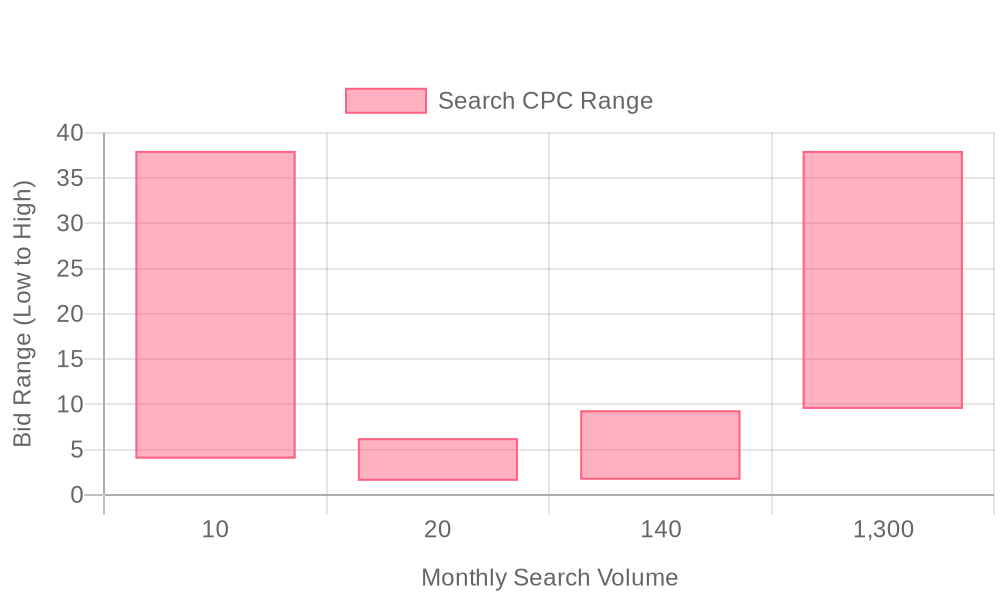
| Industry | Keyword | Monthly Search Volume | Competition Level | Low Bid | High Bid |
| Property Tax Financing Services | property tax financing | 10 | MEDIUM | 4.01 | 38 |
| Property Tax Financing Services | financial assistance for property taxes | 20 | MEDIUM | 1.56 | 6.26 |
| Property Tax Financing Services | get loan from taxes | 140 | MEDIUM | 1.68 | 9.34 |
| Property Tax Financing Services | loans for property taxes | 1300 | MEDIUM | 9.5 | 38 |
Revenue teams in the property tax financing sector achieve measurable growth by prioritizing high-intent, industry-specific keywords. Strategic keyword selection ensures that every advertising dollar drives engagement from qualified prospects, rather than diluted audiences. Explore best practices and advanced tactics in the Sona blog to refine your approach.
- High-Intent Keywords: Targeting phrases such as "property tax financing services," "property tax loan providers," and "property tax relief options" surfaces ads to users actively seeking solutions. These terms attract prospects further along in their decision process, improving lead quality and conversion rates. Integrating advanced intent data allows marketers to continually refine these keywords based on real-time market shifts and in-market behavior, identifying new high-converting queries as they emerge.
- Local Modifiers: Including location-based modifiers, such as "property tax financing near me," "Dallas property tax loans," or "California property tax relief", enables campaigns to engage local audiences with messaging tailored to specific jurisdictions, regulations, or community needs. Dynamic audience segmentation ensures that as leads interact with ads and move through the funnel, local relevance is preserved, maximizing engagement across regions.
- Negative Keywords: Deploying negative keywords is crucial for eliminating wasteful spend and avoiding irrelevant clicks, such as those searching for unrelated loan types or non-financial services. By continuously syncing CRM data and campaign performance insights, marketers can quickly update exclusion lists, reducing inefficiencies and ensuring ad visibility is focused exclusively on high-potential prospects. For compliance with advertising policies in the finance sector, refer to Google's advertising policies for financial services.
Step-by-Step Campaign Execution Framework

Modern property tax financing companies require precise digital strategies to reach high-intent business decision-makers. Leveraging advanced ad execution frameworks ensures every dollar invested in Google Ads for property tax services is accountable, targeted, and tied to measurable outcomes. For more expert insights on marketing analytics and revenue attribution, explore the latest thought leadership in marketing analytics.
The following execution blueprint addresses the unique hurdles of financial services marketing: fragmented data, compliance complexity, and a short purchase window driven by tax deadlines. Each step below is structured to minimize wasted spend, boost lead quality, and build a repeatable system for property tax financing lead generation.
Step 1: Build Targeted Keyword Lists
Effective keyword targeting is foundational for Google Ads for Property Tax Financing Services. The most successful campaigns use tax deadline triggers, state-specific queries, and urgent financing phrases to zero in on intent-rich audiences. Instead of broad, generic phrases, focus on keywords like "property tax loan near me," "business property tax financing," and "pay property tax installment plan" to capture buyers ready to act. Review Google's keyword matching options to ensure full compliance as you build your keyword lists.
Marketers can strengthen their targeting by leveraging real-time visitor identification. By moving beyond anonymous traffic, it's possible to pinpoint which companies are searching relevant terms and adjust bidding strategies to prioritize high-value accounts. Dynamic keyword management, synced with audience tools, ensures that audiences are updated as prospects engage or move through the funnel. Connecting these keyword insights directly to ad platforms and CRM systems streamlines the Google Ads campaign setup for property tax and maximizes the impact of each touchpoint.
The upgrade most property tax financing services advertisers miss is going beyond raw keyword volume to layer in intent and identity signals. By connecting website-visitor data and CRM records with Sona Marketing Measurement, you can see which specific search terms bring in the accounts and customers that actually convert, and weight your keyword and bidding strategy toward those rather than the terms with the highest search volume alone.
Step 2: Develop Compelling Ad Copy
Ad copy for digital marketing for property tax financing must address urgent business pain points, impending tax deadlines, cash flow crunches, and the risks of missed payments. Highlighting trust signals such as ratings, lender accreditations, and transparent fee disclosures directly in the headlines and descriptions reassures prospects and increases qualified click-throughs.
With real-time intent data, marketers can dynamically tailor messaging to reflect the current stage and needs of each prospect. For example, serving urgency-driven copy to first-time site visitors, while offering deeper value propositions or special rates to returning in-market leads. By syncing audience segments from enriched CRM data, ad copy remains highly relevant and ultimately boosts conversion rates.
Step 3: Design Effective Landing Pages
Landing pages aligned to Google Ads promises are critical for converting high-intent clicks into actionable leads. Each page should feature a direct headline matching the ad copy, concise benefit statements, and a visible call-to-action such as "Apply Now" or "Request a Consultation." Clear compliance disclosures and trust badges further reduce friction for cautious prospects in the financial sector.
Integrating advanced visitor identification and real-time behavioral tracking allows marketers to personalize landing experiences based on source, prior engagement, and account profile. When CRM and ad platform data are unified, landing pages can adapt to display custom content or forms for specific business segments. This approach minimizes drop-off and supports property tax financing lead generation at scale.
Step 4: Implement Data-Driven Optimizations
Continuous improvement is essential for Google Ads optimization for financial services. Campaigns must be monitored for incomplete data, wasted spend, and missed conversion opportunities. Using robust attribution strategies, marketers can connect online actions to offline conversions, ensuring true ROI measurement from click to closed deal.
Real-time feedback loops, powered by unified go-to-market data, identify which keywords, ads, and landing pages are producing the highest-value leads. Dynamic audience syncing ensures ads are only shown to accounts still in-market, while suppressing those who have moved beyond the funnel. Integrating CRM and ad data allows for granular optimizations, such as shifting budget to top-performing segments or automating creative swaps for underperforming units, streamlining online marketing for property tax financing and ensuring campaigns remain agile and effective.
Sona Marketing Measurement closes the gap between clicks and revenue. It captures every ad click with first-party, company-level tracking, then ties that click through UTM capture and ad-platform APIs to the actual record in your CRM, and reports ROAS by keyword and campaign instead of by last-click form fill. Feeding that revenue signal back into Smart Bidding and Performance Max compounds over time: the algorithms optimize toward booked property tax financing services revenue, not cheap leads.
Tips on Expanding Your Property Tax Financing Services Presence
Expanding your property tax financing presence means cutting through competitive noise to reach prospects who aren't yet searching but will be soon, adjacent regions, underserved property classes, or borrower segments a competitor has ignored. Revenue teams benefit most from tactics that unify their marketing data, personalize outreach, and deliver measurable results.
- Cross-Promote Assets: Integrate educational content, such as webinars or detailed guides, into retargeting campaigns to reinforce your expertise and stay top-of-mind. By identifying visitors at the account level and understanding their engagement history, marketers can tailor follow-up messaging to nurture leads more effectively and increase conversion rates. For compliance when advertising financial services, see Google's policies for financial services.
- Localize Campaigns: Adjust campaign messaging and offers to reflect state-specific tax deadlines, regulations, and funding cycles for maximum relevance. This approach not only improves click-through rates but also prevents wasted ad spend on prospects outside your primary service window. Leveraging real-time intent data and dynamic audience updates lets you shift budget toward in-market accounts as local timelines approach, ensuring your efforts stay efficient and timely across diverse regions. For more best practices on optimizing your campaigns, explore our marketing analytics and demand generation articles.
Beyond Google Ads: Winning the AI Answers Property Tax Financing Services Buyers Now Trust
Paid search captures demand at the moment someone types a query. But a growing share of property tax financing buyers no longer start at Google at all, they ask ChatGPT, Gemini, or Perplexity before running a search, and Google's own AI Overviews increasingly summarize an answer above the traditional results. If your business isn't referenced in those AI answers, you're invisible at the exact moment buyers build their shortlist.
Sona AI Visibility shows where your business shows up across ChatGPT, Gemini, Perplexity, Google AI Overviews, and 10+ engines, and, much like a keyword report, which prompts actually send you buyers, so you can prioritize the ones that convert. Run the two together and you cover the entire buyer path: get cited where buyers research (AI Visibility), then prove which of that demand turns into booked revenue (Marketing Measurement).
Helpful resources
Conclusion
Property tax financing is a business of moments, the week before a deadline, the day a penalty notice arrives, when the right ad in the right search can be the difference between a funded loan and a lost prospect. Winning those moments takes precise targeting, disciplined measurement, and campaigns built around the borrower's real timeline rather than generic finance messaging.
As AI tools increasingly shape how borrowers research financing options, the property tax financing services that win will be the ones measuring both the clicks they pay for and the AI answers they're cited in. Start for free to see both sides of that picture for your business.
FAQ
How can I set up a Google Ads campaign for property tax financing services?
To set up a Google Ads campaign for property tax financing services, focus on precise targeting through keyword and audience selection, align ad copy with landing page content, and use data-driven optimizations to maximize ROI.
What are the best keywords for Google Ads in property tax financing?
High-intent keywords such as 'property tax financing services,' 'property tax loan providers,' and 'property tax relief options' are recommended for attracting qualified prospects.
Are there any restrictions on advertising property tax financing services on Google?
Yes, advertisers must comply with Google's advertising policies for financial services, which include specific guidelines for targeting and messaging.
How can I track and measure the success of my Google Ads for property tax financing?
You can track and measure success by integrating Google Ads with CRM systems for closed-loop reporting and using real-time conversion tracking to attribute revenue to specific campaigns.
What are some effective strategies for targeting the right audience with Google Ads for property tax financing services?
Effective strategies include using real-time audience segmentation, targeting high-intent keywords, and incorporating behavioral intent signals to prioritize engaged leads.
How can I comply with Google's advertising policies for financial services?
To comply, review and adhere to Google's advertising policies for financial services, ensuring your campaigns meet all required guidelines and standards.
What is the cost-effectiveness of running Google Ads for property tax financing services?
Cost-effectiveness is achieved by optimizing campaigns through precise targeting, continuous performance monitoring, and aligning ad spend with high-value leads.
How can I integrate Google Ads with my CRM for property tax financing services?
Integrate Google Ads with your CRM to streamline data flow, enabling dynamic audience updates and more accurate conversion tracking for improved campaign performance.
What are some examples of successful Google Ads campaigns for property tax financing services?
Successful campaigns often include search ads targeting high-intent keywords and display ads reinforcing brand relevance, both optimized through real-time audience insights.
How can I use Google Ads to generate high-quality leads for my property tax financing business?
Use targeted keyword strategies, audience segmentation, and personalized landing pages to attract and convert high-quality leads through Google Ads.







