


Private health insurance shoppers rarely buy on the first visit. They compare deductibles, check whether a doctor is in-network, and price out family plans against employer coverage, often across several sessions before requesting a quote. Google Ads lets insurers meet that research process in the moment it happens, but tracking gaps mean many of those visits end up looking anonymous, so real buyers get missed and budget drifts toward the wrong audiences. This guide covers how to structure campaigns, manage compliance, and turn qualified search traffic into signed policies.
How to Generate Private Health Insurance Leads with Google Ads: A Step-by-Step Guide

B2B revenue teams in private health insurance face a rapidly evolving digital landscape where lead quality and campaign efficiency directly impact growth. Leveraging Google Ads for Private Health Insurance Plans enables precise audience targeting, real-time performance insights, and scalable strategies that convert high-intent prospects into qualified leads.
A methodical, data-driven approach ensures that each stage, from keyword research to post-click conversion tracking, delivers measurable value. By integrating advanced technologies, marketers can move beyond siloed data and anonymous traffic to build a unified, company-level view of their pipeline.
- Research Keywords and Compliance: Start with in-depth keyword discovery, focusing on phrases like "Google Ads for Medicare plans" and "Google Ads HIPAA compliance." Adhering to Google's health insurance ad requirements is critical, as regulatory compliance directly affects campaign eligibility and reach. Robust keyword alignment with specific user intent helps capture prospects at the moment they are searching for tailored solutions. Platforms that unify intent data with regulatory filters ensure every ad dollar targets compliant, in-market audiences, reducing wasted spend and increasing conversion rates. For more on aligning intent with compliant targeting, explore our intent data guide.
- Audience and Geo-Targeting: Pinpoint audiences by layering demographic data, geographic factors, and real-time behavioral signals. Health insurance ad targeting works best when marketers use intent signals to identify high-propensity buyers within key locations. Modern solutions enrich standard Google Ads targeting with Identity Resolution, revealing which companies are engaging with ads and landing pages, so anonymous clicks become actionable accounts for follow-up and retargeting.
- Optimize Ad Copy and Landing Pages: Conversion rates soar when ad messaging directly addresses audience pain points and landing pages deliver on the ad's promise. Consistency between ad copy and landing page content prevents friction, reducing bounce rates and maximizing lead capture. By integrating dynamic audience data, marketers can personalize landing page experiences for different segments, ensuring relevance at every interaction. Advanced platforms allow for rapid iterations based on granular performance data, helping teams test and refine messaging at scale.
- Data Integration: Connect your campaign ecosystem by syncing Google Ads data with CRM and marketing automation tools. This enables end-to-end visibility from initial ad click to closed deal, supporting both online and offline attribution. Integrating enriched lead data into platforms like HubSpot or Salesforce ensures no opportunity is missed, and enables dynamic audience updates as leads progress through the funnel. With unified data, revenue teams can optimize retargeting, nurture sequences, and pipeline forecasting, driving higher ROI from every campaign.
This structured approach empowers private health insurance marketers to deploy compliant, high-converting Google Ads campaigns. By combining granular targeting, compliance, and real-time data integration, teams maximize their return on ad spend and build a scalable lead generation engine. Get started for free with Sona.
Why Google Ads Matter for Private Health Insurance Plans?

Digital acquisition for private health insurance demands both accuracy and speed. Google Ads empowers providers to intercept high-intent prospects precisely when they are researching coverage, optimizing spend toward the most promising leads. By leveraging real-time audience insights, marketing teams can refine targeting strategies and maximize marketing ROI.
- Capture High-Intent Searches: With tailored keyword targeting, marketing teams can zero in on users searching for "private health insurance" in specific locations. This approach enables advertisers to intercept in-market prospects and prioritize regions or demographics where plan uptake is highest, streamlining acquisition cycles and lowering cost per qualified lead. For actionable tips on optimizing these campaigns, explore our marketing analytics blog.
- Ensure Compliance: The health insurance sector faces strict regulatory oversight, including Google Ads health insurance compliance and HIPAA considerations. Adhering to these standards is non-negotiable: it protects brand reputation, avoids costly policy violations, and ensures ads reach approval without friction. For a breakdown of current requirements, review Google's advertiser certification guidelines.
- Track Performance: End-to-end attribution allows teams to connect ad engagement directly to policy signups and claims. Closed-loop measurement is essential for understanding which campaigns drive real ROI and which audience segments convert at the highest rates. By seamlessly syncing CRM and offline event data into Google Ads, marketers gain visibility into the full customer journey, while Sona's Destinations ensures all high-quality audience data updates in real time for better sales and service follow-up.
Common Types of Google Ads Campaigns for Private Health Insurance
- Search Campaigns: Search campaigns capture high-intent prospects searching for terms such as "private health insurance quotes" or "best private health insurance plans." Targeting these queries, and testing Responsive Search Ads within them, ensures your ads reach people with immediate purchase intent. By leveraging unified data, marketers can identify which accounts are most likely to engage, allocate budget dynamically, and prioritize follow-up on the most promising leads.
- Display Ads: Display campaigns extend your reach to users browsing healthcare content, insurance review sites, and relevant interest categories. These visual placements are instrumental in building brand awareness and keeping your offerings top-of-mind for audiences not actively searching. With access to real-time visitor identification and intent signals, campaigns can be refined to display only to high-value segments, ensuring that impressions are both cost-effective and targeted. For a comprehensive overview of Google's advertising policies for healthcare, review healthcare and medicines ad policy.
- Remarketing: Remarketing campaigns allow you to reconnect with site visitors who showed interest but left without converting. By serving tailored ads that reflect previous engagement or specific plan features, you can recapture attention and nudge interested prospects back into the funnel. Dynamic audience management ensures that your remarketing efforts automatically update as leads progress, syncing enriched audience data directly from your CRM into Google Ads for precise, compliant retargeting.
- Performance Max: Performance Max campaigns pool inventory across Search, Display, YouTube, and Gmail into a single goal-driven campaign, useful for reaching plan shoppers who move between comparison articles, video reviews, and email before requesting a quote. Feeding it strong conversion signals, ideally tied to actual policy signups rather than form fills, helps Google's bidding models prioritize the segments most likely to enroll.
Ready to optimize your health insurance ad campaigns? Get started for free with Sona.
Where to Find Growth Opportunities?

Identifying untapped growth channels is essential for private health insurance providers aiming to outperform in a crowded digital landscape. Precision in lead generation not only expands reach but also increases efficiency across every stage of the marketing funnel. Sona's Identity Resolution can reveal which companies are visiting your website, even if they don't fill out a form, so you can prioritize and engage the highest-quality prospects for pipeline acceleration.
- Competitor Analysis: By leveraging platforms like SEMrush, teams can deconstruct competitor initiatives to pinpoint gaps in keyword targeting, ad copy, and landing pages. This intelligence is vital for avoiding churn risk: when campaign messaging and offers drift from evolving customer needs, acquisition costs rise, and retention falters. Comprehensive analysis uncovers underserved market segments and underutilized messaging, empowering marketers to pivot strategies in real time and capture missed opportunities that competitors overlook. Integrated solutions that identify visitor companies and intent signals allow revenue teams to shift budgets toward prospects most likely to convert, fueling both top-funnel growth and downstream pipeline velocity. For those in regulated industries, it's crucial to understand Google's advertising policies for healthcare and medicines to ensure compliant campaign execution.
- Vertical Keywords: Focusing on niche and industry-specific terms such as "Google Ads for dental insurance" or "Google Ads for Medicare plans" drives higher-quality traffic while minimizing wasted spend on broad, unqualified clicks. These verticalized strategies enable health insurance marketers to align campaigns with exact user intent, refine ad targeting, and achieve superior conversion rates. With real-time audience segmentation that updates as leads progress through the funnel, teams can continuously optimize keyword lists and messaging, ensuring that every ad dollar is invested in segments with the highest propensity to purchase.
- Local Partnerships: Collaborating with regional medical practices, hospitals, and clinics extends reach by tapping into trusted local networks and community-based referrals. These partnerships produce richer audience data, which in turn sharpens targeting precision for campaigns focused on private health insurance marketing. By syncing CRM and ad platforms, marketers can seamlessly activate enriched audiences in Google Ads and nurture high-potential leads both online and offline, ensuring that every interaction is tailored and measurable across all touchpoints.
How to Apply Audience Segmentation for Private Health Insurance

Effective audience segmentation is foundational to private health insurance marketing. By structuring campaigns around distinct customer profiles, marketers can ensure that ad spend is allocated to the audiences most likely to convert, supporting precise budget optimization and minimizing wasted impressions. For deeper insights and actionable strategies, explore our marketing analytics articles.
- Custom Segments: Audience segmentation for private health insurance requires more than broad demographic filters. Medicare supplement seekers, small business owners shopping group plans, and individuals comparing marketplace options during open enrollment all have different pain points, price sensitivities, and decision timelines. Building custom segments for each group lets campaigns deliver tailored messaging, relevant offers, and landing pages that match where each buyer is in their research, particularly around open enrollment deadlines when urgency spikes. This granularity prevents messaging drift and supports higher engagement, especially when platforms connect Identity Resolution with enriched firmographic and demographic data.
- Intent Signals: Leveraging in-market behavior and platform engagement enables marketers to refine their segmentation strategy. Analyzing how prospects interact with ad creatives, website pages, and downloadable resources reveals powerful intent signals. With unified intent data, marketers can adjust messaging dynamically, shifting budget toward audiences demonstrating higher purchase readiness. Utilizing solutions that sync audience segments with Google Ads and CRM platforms ensures that as prospects progress through the sales funnel, segmentation evolves in real time and messaging remains relevant. This dynamic approach is especially effective in highly regulated environments, helping maintain compliance with Google Ads health insurance policies and supporting health insurance ad targeting best practices.
This is also where measurement changes the economics. With Sona Marketing Measurement you can identify the companies and buyers behind your ad clicks, not just anonymous sessions, and segment audiences by who actually becomes a customer. That lets you build bid adjustments and audience signals around the segments that convert and de-prioritize the ones that don't, so you feed Google's algorithms "this click became a paying private health insurance plans customer" instead of just "someone filled out a form."
Keyword Strategy & Sample Target Terms
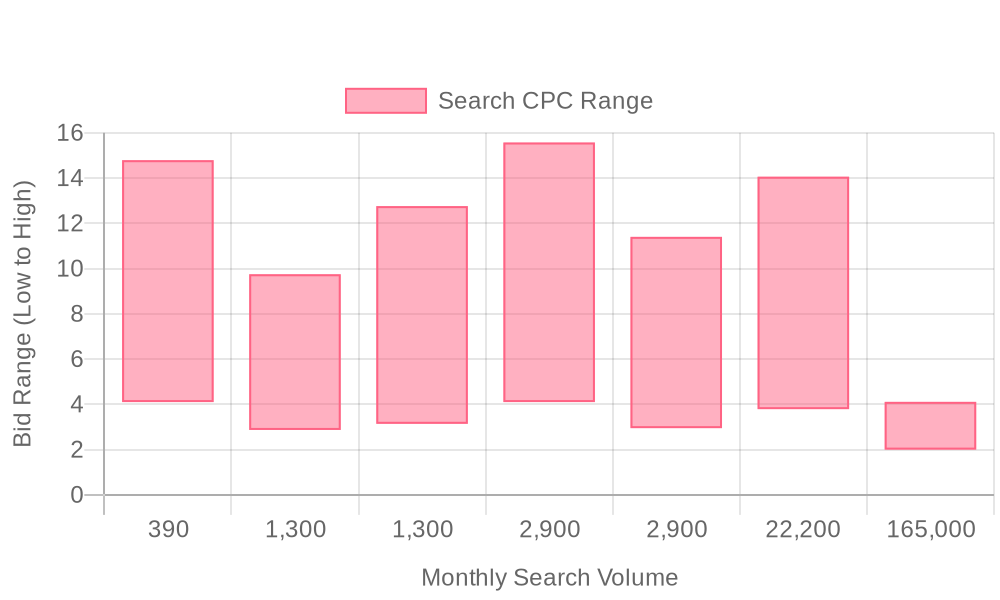
| Industry | Keyword | Monthly Search Volume | Competition Level | Low Bid | High Bid |
| Private Health Insurance Plans | private health | 390 | LOW | 4.1 | 14.79 |
| Private Health Insurance Plans | best private health insurance | 1300 | MEDIUM | 2.87 | 9.75 |
| Private Health Insurance Plans | private healthcare insurance | 1300 | MEDIUM | 3.14 | 12.76 |
| Private Health Insurance Plans | private health insurance plans | 2900 | MEDIUM | 4.1 | 15.57 |
| Private Health Insurance Plans | private healthcare | 2900 | MEDIUM | 2.95 | 11.4 |
| Private Health Insurance Plans | private health insurance | 22200 | MEDIUM | 3.79 | 14.06 |
| Private Health Insurance Plans | private medical insurance | 165000 | LOW | 2 | 4.11 |
Effective keyword targeting is foundational in private health insurance advertising. B2B revenue teams can drive more qualified leads by focusing on high-intent terms that capture active buyers, such as "health insurance comparison," "private health insurance quotes," and "best private health insurance plans." These keywords consistently attract prospects who are researching their options and are further along in their buying journey. To further boost campaign results, explore our guide to account-based marketing for advanced targeting frameworks.
Equally critical is the strategic application of negative keywords to filter out non-converting or irrelevant traffic. Terms like "free insurance jobs," "health insurance training," or "government plans" should be excluded to ensure the budget is reserved for high-value, actionable segments. This not only protects spend but also lifts campaign efficiency by narrowing focus to high-probability leads. For a comprehensive overview of policy compliance, Google's advertising policies for healthcare and medicines are essential for marketers targeting the medical and insurance sectors.
Integrating Sona's Identity Resolution with keyword data unlocks another layer of precision: marketing teams can go beyond anonymous clicks and see which companies and personas are consistently engaging with private health insurance terms. This closed-loop approach allows for dynamic audience updates as leads move through the funnel, making it possible to sync and retarget enriched audiences across Google Ads and CRM tools. Accelerate your pipeline with a smarter, highly adaptive keyword and audience mix that drives measurable results for B2B insurance providers.
Step-by-Step Campaign Execution Framework
A results-focused Google Ads campaign for private health insurance requires precision at every stage, from intent-driven targeting to seamless user experience. Each step in the process must be rooted in data and compliance, supporting both user trust and measurable ROI for revenue teams. For actionable guidance on optimizing marketing analytics and demand generation, visit the marketing analytics blog.
Step 1: Build Targeted Keyword Lists
Building an effective keyword list for private health insurance campaigns involves more than collecting high-volume search terms. Marketers benefit from filtering and prioritizing keywords with intent modifiers such as "local," "near me," or "best private health insurance," which align closely with how prospective buyers search for coverage. These qualifiers help identify users further along the decision journey, improving cost efficiency and lead quality.
By leveraging real-time intent signals, teams can go beyond traditional keyword research and tap into actionable behavioral data. This allows for dynamic adjustments to keyword strategy as lead behavior shifts, ensuring budgets are allocated to the highest-converting segments. Integrating CRM and website data further refines targeting, enabling marketers to pivot spend toward accounts showing genuine purchase readiness.
The upgrade most private health insurance plans advertisers miss is going beyond raw keyword volume to layer in intent and identity signals. By connecting website-visitor data and CRM records with Sona Marketing Measurement, you can see which specific search terms bring in the accounts and customers that actually convert, and weight your keyword and bidding strategy toward those rather than the terms with the highest search volume alone.
Step 2: Develop Compelling Ad Copy
Compelling ad creative is essential for establishing credibility and guiding prospects through the buyer journey. In private health insurance, ad copy should emphasize trust factors such as industry certifications, customer satisfaction ratings, and transparent coverage details. Tailoring messaging for various funnel stages ensures relevance: early-stage prospects may respond to educational content while bottom-funnel audiences need clear calls to action and proof of reliability.
For marketers targeting medical and insurance sectors, it's important to remain compliant with Google's healthcare ad policies. Advanced platforms make it possible to personalize ad messaging based on Identity Resolution and behavioral data. Revenue teams can segment audiences dynamically, updating creative as leads progress through the pipeline. This real-time segmentation supports higher engagement, as prospects receive messaging that directly addresses their needs and stage in the buying cycle.
Step 3: Design Effective Landing Pages
Landing pages for private health insurance ads must deliver a seamless transition from ad click to action. High-performing pages match the user's journey, presenting consistent messaging, clear value propositions, and straightforward conversion paths. Reducing friction, through concise forms, reassuring privacy language, and visible trust badges, results in lower abandonment rates and stronger conversion metrics.
To optimize outcomes, marketers should incorporate advanced tracking and attribution to measure both online and offline conversions. With enriched insights, teams can tie ad spend directly to policy sign-ups and revenue, closing the loop on campaign ROI. Syncing lead and conversion data across Google Ads, CRM systems, and sales platforms enables full-funnel attribution, supporting continuous optimization and compliance with Google Ads health insurance policies and HIPAA requirements.
Tips on Expanding Your Private Health Insurance Presence
Expanding your private health insurance presence requires a disciplined approach to digital marketing, fueled by actionable data and an agile mindset. Companies that consistently refine their digital strategies see measurable improvements in engagement, lead quality, and policyholder growth. Explore the latest marketing analytics insights to stay ahead of digital best practices.
- Cross-Promotion: Use cross-channel strategies to retarget prospects seen in videos or social campaigns, consolidating messaging across platforms. By identifying individual visitors and company accounts engaging with your brand, marketers can seamlessly coordinate follow-up ads on Google and social platforms, ensuring consistent messaging and improving recognition rates. Dynamic audience lists, which update in real time as leads engage or progress through the funnel, prevent wasted spend and elevate campaign relevance.
- CRM Data Utilization: Segment data to upsell policies to potential leads accurately, surfacing engagement signals that indicate upsell opportunities. When CRM and website data are unified, sales and marketing teams can spot which prospects are ready for cross-sell or upsell initiatives. Automated syncing of enriched audiences into ad platforms and CRMs like HubSpot or Salesforce accelerates campaign launches and ensures every ad dollar is aimed at in-market leads. To deepen your demand generation strategies, review this Sona and HubSpot integration guide.
- Geographic Expansion: Leverage local SEO to capture searchers in new markets, ensuring campaigns are targeted and budget-efficient. State-level insurance regulations and available carrier networks vary widely, so what converts in one market may be non-compliant or irrelevant in another. With precise geotargeting, advertisers can allocate spend only to regions with proven demand or competitive openings, and adjust messaging around state-specific enrollment windows. By integrating first-party intent signals, marketers can adapt bids and creative to match local trends, licensing requirements, and seasonal enrollment patterns, optimizing acquisition cost per policy in each territory. For guidance on compliance and advertising requirements, review Google Ads health insurance certification.
Winning Google Ads for private health insurance takes meticulous planning and continual optimization. Combining segmentation, intent data, and advanced attribution allows providers to achieve a strong return on ad spend while maintaining compliance. Identity Resolution ensures that every campaign element, audience, creative, and budget allocation, works together to surface engagement signals and reduce churn.
Beyond Google Ads: Winning the AI Answers Private Health Insurance Plans Buyers Now Trust
Paid search captures demand at the moment someone types a query. But a fast-growing share of private health insurance plans buyers no longer start at Google at all, they ask ChatGPT, Gemini, or Perplexity before they ever run a search, and Google's own AI Overviews increasingly summarize an answer above the traditional results. If your business isn't referenced in those AI answers, you're invisible at the exact moment buyers build their shortlist.
Sona AI Visibility shows where your business shows up across ChatGPT, Gemini, Perplexity, Google AI Overviews, and 10+ engines, and, much like a keyword report, which prompts actually send you buyers, so you can prioritize the ones that convert. Run the two together and you cover the entire buyer path: get cited where buyers research (AI Visibility), then prove which of that demand turns into booked revenue (Marketing Measurement).
Helpful resources
Conclusion
Private health insurance advertising rewards providers who treat compliance and targeting as one discipline rather than two. Certification requirements, HIPAA-conscious messaging, and precise audience segmentation aren't separate boxes to check, they shape which keywords you can bid on, what your ad copy can promise, and how quickly your campaigns get approved at all.
The providers pulling ahead now are the ones connecting ad spend to which companies and individuals actually enroll, not just who clicks. As AI-driven search summaries start answering coverage questions before a click ever happens, the insurers who show up in both the paid results and those AI answers will own the next stage of this market.
FAQ
How do I get certified to advertise private health insurance on Google Ads?
To advertise private health insurance on Google Ads, you must adhere to Google's advertising policies, which require certification and compliance with health insurance ad requirements. For detailed instructions, review Google's advertiser certification guidelines.
What are the specific Google Ads policies for private health insurance?
Google Ads policies for private health insurance include strict compliance with regulatory standards, such as HIPAA, and adherence to Google's healthcare and medicines advertising policies to protect brand reputation and ensure ad approval.
How can I optimize my Google Ads campaign for private health insurance?
To optimize Google Ads campaigns for private health insurance, focus on precise keyword targeting, audience segmentation, real-time data integration, and compliance with regulatory standards to capture high-intent searches and maximize ROI.
What are the best practices for geo-targeting in Google Ads for health insurance?
Best practices for geo-targeting in Google Ads for health insurance involve leveraging local SEO, focusing on regions with proven demand, using precise geotargeting to optimize spend, and adapting bids and creative to match local trends and seasonal patterns.
How can I ensure HIPAA compliance when running Google Ads for health insurance?
Ensure HIPAA compliance in Google Ads by adhering to Google's health insurance ad requirements, protecting patient information, and using compliant targeting and messaging strategies as outlined in Google's advertising policies.







