


Photography school admissions are won or lost in the weeks after someone types "photography classes near me" into Google. Google Ads lets a school meet that prospective student at the exact moment they're comparing programs, weighing tuition against a community college elective, or deciding whether a weekend workshop is worth the cost. Done well, it targets people searching for specific things, like "beginner photography courses" or portfolio-review workshops, tracks them from that first click through to registration, and reinforces the social and email nurture already in motion. Done poorly, high-value prospects slip through untracked and enroll somewhere that answered them faster. The tools now exist to catch those prospects before a competing program does.
How to Generate Photography School Leads with Google Ads: A Step-by-Step Guide

Photography schools face a unique challenge in capturing high-quality leads who are truly interested in pursuing creative education. The most effective digital marketing strategies for these institutions focus on immediate engagement with prospects, leveraging platforms like Google Ads to deliver messaging precisely when intent is highest. For a hands-on, step-by-step approach to building effective campaigns, see this comprehensive guide for photographers.
Delays in outreach or manual lead management often cause promising inquiries to go cold. Automation closes this gap, ensuring every high-intent prospect gets timely, personalized attention and improving the odds of enrollment. By integrating company-level visitor identification, photography schools can move beyond anonymous website traffic and identify the organizations and accounts behind repeat visits, alongside first-party signals from known leads.
Aligning objectives with enrollment goals is the first critical step in building a successful Google Ads program for photography schools. This process involves identifying the types of students you want to attract, such as hobbyists, aspiring professionals, or career switchers, and ensuring every ad campaign serves this target audience. With precise audience intelligence, marketers keep their lists automatically updated as leads engage with different programs or advance through the application process.
Paid search campaigns are central to online advertising for photography schools because they capture active intent from students researching courses, certifications, or workshops. Precise keyword strategies, targeting terms like “photography school enrollment” or “digital photography classes near me”, drive traffic that is more likely to convert. When paired with synchronized CRM and ad platforms, enriched lead data immediately flows into follow-up workflows, cutting manual work and boosting marketing efficiency. For additional best practices, explore this Sona blog collection on marketing performance and attribution.
Landing pages tailored to each program or audience segment further increase conversion rates. These pages should reflect the specific keywords and messaging from your ads, highlight unique aspects of your curriculum, and provide clear calls-to-action such as "Request Info," "Schedule a Tour," or "Apply Now." Advanced attribution tracking tools tie every inquiry, application, and enrollment back to its original ad interaction, giving revenue teams a comprehensive view of true ROI and informing future budget allocation.
To compete effectively, photography schools need to unify demand generation, lead management, and analytics across the marketing and sales funnel. This maximizes the impact of Google Ads budget for schools and ensures every dollar spent contributes directly to filling seats and building sustainable growth. To see how automation and intent data can transform your enrollment strategy, get started for free with Sona.
Why does Google Ads matter for Photography Schools

Photography schools operate in a market where prospective students search for programs at the exact moment they are ready to make a decision. Google Ads delivers targeted visibility, ensuring these institutions reach high-intent audiences actively researching options like "online photography certifications" or "local photography workshops." For a step-by-step approach to launching your own Google Ads campaigns, check out this guide for photographers to create and manage Google Ads, which can help schools understand the basics of targeted advertising.
Generic, broad-reach campaigns often result in wasted ad spend and low engagement, as they fail to address the unique interests and intentions of different student segments. By leveraging Sona’s Audiences tool, photography schools can tailor ad messaging based on variables such as location, program type, or learning format. This approach not only improves click-through and conversion rates but also maximizes ROI by aligning spend with the moments and audiences most likely to enroll.
With integrated audience data and real-time intent signals, marketing teams can move beyond guesswork and prioritize prospects showing the strongest enrollment signals, like repeat visits to tuition or curriculum pages. Audience lists update dynamically as leads progress through the funnel, keeping targeting aligned with the latest behavior. Tracking that attributes both online and offline conversions, campus tours, phone inquiries, in-person open houses, gives a fuller picture of what's actually driving applications.
Common Types of Google Ads Campaigns for Photography Schools

- Search Campaigns: Search campaigns are the foundational engine for student acquisition in photography school advertising. By targeting high-intent queries such as “photography classes near me” or “best photography school online,” schools position themselves in direct alignment with potential applicants’ immediate needs. With enriched data syncing, marketers can refine these campaigns to focus on visitors who have demonstrated real enrollment interest, ensuring budget efficiency and higher conversion rates.
- Display Ads: Display campaigns keep photography school offerings visible across arts and education networks, nurturing brand recognition long before a prospect is ready to enroll. These ads serve as subtle reminders, leveraging contextual placements that reach creative-minded individuals browsing related content. When display audiences are dynamically updated based on visitor engagement, schools can prioritize awareness-building among those who have interacted with site content, increasing the likelihood of driving qualified traffic to program pages.
- Video Ads: Video campaigns allow schools to vividly showcase facilities, hands-on workshops, and success stories, offering a compelling glimpse into the student experience. A well-crafted video demonstrates the creative energy and expertise within the program, resonating with visual learners and aspiring professionals. For deeper insights on leveraging video for lead generation, see this YouTube tutorial for photographers. By identifying and retargeting viewers who engage deeply with these videos, marketers can shift budget toward those most likely to convert, optimizing spend for maximum impact.
- Remarketing: Remarketing ensures continuity with visitors who showed initial interest but did not convert, guiding them back with tailored messaging about upcoming enrollment deadlines or exclusive workshops. By integrating real-time intent signals and CRM data, remarketing lists automatically adapt as leads progress through the funnel or engage with new content. This dynamic approach keeps prospects engaged and steadily moves them toward application completion.
- Ad Assets: Ad assets elevate search campaigns by providing additional context, such as tuition details, course start dates, and alumni testimonials directly in the ad unit. These enhancements improve click-through rates and speed up decisions for prospective students. When assets are informed by unified marketing and CRM data, schools can surface the most relevant information to each segment, reinforcing value propositions and shortening the path to enrollment.
Where to Find Growth Opportunities

Photography schools that maximize advanced audience targeting uncover new avenues for growth. By leveraging niche long-tail keywords such as "photography courses for beginners," programs can attract high-intent students who are actively seeking specialized learning experiences. These targeted phrases not only reduce wasted spend but also ensure campaigns are connecting with audiences most likely to convert, driving up enrollment rates and campaign ROI. For a deeper dive into building real-time, signal-based audiences that sync directly with ad platforms, explore how advanced targeting empowers marketing teams to reach the right students at the right moment.
Strategic competitor analysis offers another layer of insight. By thoroughly reviewing the ad placements, messaging, and keyword choices of other educational providers, photography schools can identify gaps and whitespace opportunities. For example, if competitors underutilize specific genres, like documentary photography or drone imagery, there is a clear path to capture untapped student segments. This approach is especially effective when coupled with predictive scoring models that rank prospects based on their likelihood to enroll, allowing marketing teams to focus resources on high-priority leads. Gain further inspiration by exploring this comprehensive guide for photographers using Google Ads to discover strategic growth opportunities.
Incorporating predictive intent data into your digital strategy elevates audience targeting from reactive to proactive. Real-time behavioral signals, such as repeated visits to course detail pages or engagement with application forms, help prioritize those most likely to enroll. Integrating these behavioral triggers directly into campaign management platforms enables dynamic audience updates, ensuring ad groups always reflect the latest funnel status. For step-by-step playbooks on intent-driven retargeting and segmentation, visit our library of actionable strategies.
How to Apply Audience Segmentation for Photography Schools

Audience segmentation transforms photography school advertising by enabling campaigns that speak directly to the needs, aspirations, and readiness of potential students. Instead of treating all prospects the same, segmentation organizes audiences based on where they are in the decision process and their specific creative interests, such as portraiture, digital art, or video production. This approach creates high-impact engagement because messaging and offers reflect the intent, skill level, and motivation of each segment, discover more about building signal-based segments for tailored outreach.
Effective digital marketing for photography schools starts with mapping the student journey into key stages: awareness, consideration, and enrollment. Audiences at the awareness stage respond best to inspirational content about photography careers or alumni success, while those in consideration expect details on program structure, faculty, and placement outcomes. Prospects closer to enrollment are drawn to financial aid information, application reminders, and exclusive photography school promotions. By segmenting audiences in Google Ads, schools can deliver the right message at the right time, raising conversion rates and driving more qualified leads into the pipeline. For a step-by-step guide tailored to creative education, explore this resource on Google Ads for schools.
Advanced segmentation also unlocks the power of audience overlays. For example, layered targeting can combine in-market signals for creative education with specific interests like digital art or filmmaking, building custom ad groups for high-value subsets. Dynamic audience technology ensures that as leads engage, downloading a brochure, attending a virtual tour, or visiting portfolio pages, they are automatically shifted into more relevant segments. With enriched CRM data and real-time behavior flowing seamlessly into Google Ads, marketers not only identify anonymous site visitors but also match them to known leads, enabling precision retargeting and reducing ad spend waste. This unified approach ensures every dollar in the Google Ads budget for schools is allocated to audiences most likely to enroll, strengthening overall photography school marketing performance. When you’re ready to bring segmentation to life, get started for free with Sona to streamline your audience activation.
This is also where measurement changes the economics. With Sona Marketing Measurement you can identify the companies and buyers behind your ad clicks, not just anonymous sessions, and segment audiences by who actually becomes a customer. That lets you build bid adjustments and audience signals around the segments that convert and de-prioritize the ones that don't, so you feed Google's algorithms "this click became a paying photography schools customer" instead of just "someone filled out a form."
Keyword Strategy & Sample Target Terms
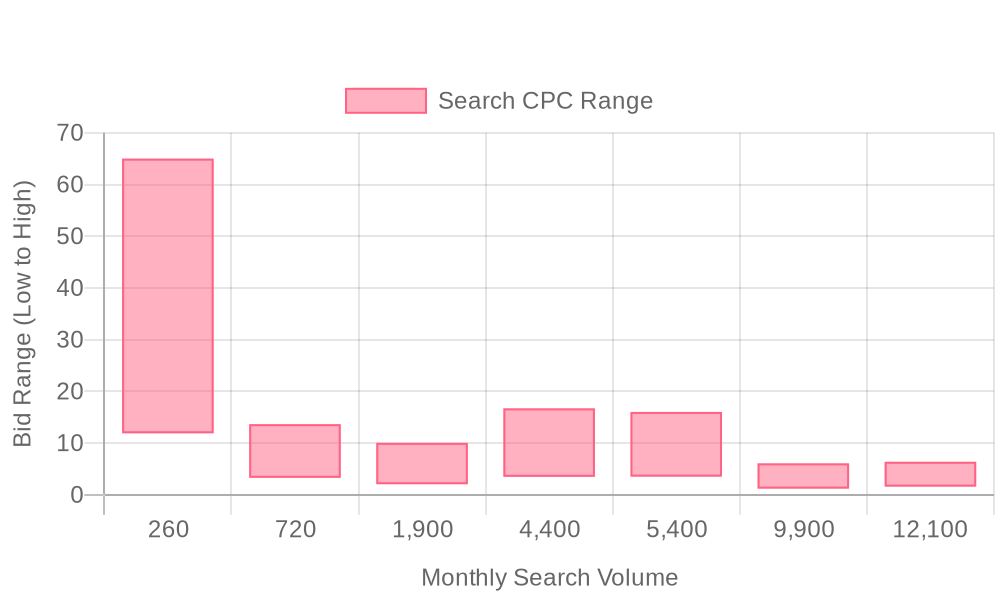
| Industry | Keyword | Monthly Search Volume | Competition Level | Low Bid | High Bid |
| Photography Schools | photography school online | 260 | HIGH | 11.91 | 65 |
| Photography Schools | photography schools | 720 | MEDIUM | 3.3 | 13.67 |
| Photography Schools | photography classes online | 1900 | MEDIUM | 2.06 | 10.06 |
| Photography Schools | photography school near me | 4400 | MEDIUM | 3.49 | 16.72 |
| Photography Schools | photography school | 5400 | LOW | 3.54 | 16.03 |
| Photography Schools | photography classes near me | 9900 | MEDIUM | 1.22 | 6.08 |
| Photography Schools | photography classes | 12100 | MEDIUM | 1.6 | 6.4 |
A robust keyword strategy is foundational for successful Google Ads for photography schools. The most effective campaigns begin by mapping your course offerings and program differentiators to search terms with clear educational intent, such as "photography school enrollment," "digital marketing for photography schools," and "Google Ads tips for photographers." Selecting keywords that reflect high purchasing or enrollment readiness, like "photography certification programs online" or "best photography school near me", ensures ads are shown to audiences most likely to convert. For an in-depth look at campaign setup, explore this comprehensive guide to setting up and optimizing Google Ads campaigns for photographers. These high-intent keywords not only increase relevance but also drive stronger ROI by aligning ad spend with real student interest.
Incorporating negative keywords is essential in filtering out irrelevant clicks, such as searches for “free photography tutorials” or “DIY camera classes.” This refinement prevents wasted budget and keeps focus on prospective students seeking paid, structured education. Utilizing ongoing search query analysis and Sona’s Audiences tool, marketing teams can update keyword lists in real time as new trends emerge or as student interests shift. When platforms like Sona are integrated, campaign managers benefit from dynamic keyword and audience intelligence, enabling rapid adjustment of targeting criteria and surfacing in-market signals that would otherwise be missed.
Step-by-Step Campaign Execution Framework
Step 1: Build Targeted Keyword Lists
Successful Google Ads for photography schools begin with precision keyword clustering. Organizing keywords by course specialty, such as "portrait photography classes," "digital photography workshops," or "commercial photography certification", creates tightly focused campaigns that match searcher intent. Adding local modifiers like “near me,” city names, or neighborhood references ensures ads reach prospects ready to enroll in nearby programs. This layered approach not only maximizes relevance but also improves Quality Score, lowering cost per click and boosting ad visibility. Marketers can further refine targeting by leveraging visitor identification technology to pinpoint which companies or individuals are most engaged, enabling dynamic audience segmentation that updates as users move from research to application.
The upgrade most photography schools advertisers miss is layering intent and identity signals on top of raw keyword volume. By connecting website-visitor data and CRM records with Sona Marketing Measurement, you can see which specific search terms, "photography certification programs" versus "free photography tutorials," for instance, bring in students who actually enroll, and weight bidding toward those terms instead of whichever has the highest volume.
Step 2: Develop Compelling Ad Copy
Ad copy for photography school marketing has to name what sets a program apart: a faculty roster with working photographers, a partnership with a camera manufacturer or stock agency, a job-placement track record. Testimonials and graduate outcomes build trust and give prospective students the proof they're weighing against tuition cost. Responsive search ads, an ad format within Search campaigns, test headlines and descriptions in real time and surface the best-performing combinations. Tracking in-market intent signals lets marketers shift budget toward ads resonating with high-converting segments, like career-changers versus hobbyists, without waiting weeks for statistical significance. For a practical step-by-step guide tailored to photographers, review this Google Ads for photographers DIY resource.
Step 3: Design Effective Landing Pages
A seamless transition from ad click to landing page is critical for converting interest into applications. Each landing page should be tailored to the specific course or program promoted in the ad, featuring concise overviews, engaging visuals, and clear calls to action such as “Apply Now” or “Book a Campus Tour.” Removing distractions and streamlining the enrollment path increases form completions and reduces bounce rates. Advanced solutions integrate CRM and ad platforms, ensuring that once a lead engages, their information is automatically enriched and routed to admissions teams for immediate follow-up. For more optimization strategies, visit our marketing best practices blog.
Step 4: Implement Data-Driven Optimizations
Ongoing optimization transforms good campaigns into exceptional ones. Smart bidding strategies, powered by predictive analytics, allow marketers to focus spend on keywords and audiences most likely to convert. Regular A/B testing of ad messaging, creative assets, and landing page layouts reveals which elements drive the highest engagement and enrollment rates. Enhanced conversion tracking, including both online form submissions and offline campus visits or calls, provides a complete view of campaign ROI. When campaign data from Google Ads is unified with CRM and sales platforms, teams gain actionable insights into which channels, keywords, and creative combinations produce the best enrollment outcomes, supporting continuous, data-driven improvement. Ready to take your campaign measurement to the next level? Get started for free with Sona.
Sona Marketing Measurement closes the gap between clicks and revenue. It captures ad clicks with first-party tracking, ties each one through UTM capture and ad-platform APIs to the actual record in your CRM, and reports ROAS by keyword and campaign instead of by last-click form fill. Feeding that revenue signal back into Smart Bidding and Performance Max compounds over time: the algorithms optimize toward booked photography schools revenue, not cheap leads.
Tips on Expanding Your Photography School Presence
Photography schools aiming for sustained enrollment growth benefit from strong integration between Google Ads campaigns and broader digital marketing efforts. Promoting workshops or open days through synchronized social media and paid campaigns captures interest at multiple touchpoints, leading to higher engagement and nurturing prospects from awareness through application. Schools looking to improve their Google Ads ROI can explore this step-by-step guide for photographers to create and manage their own Google Ads campaigns to generate leads.
Leveraging geographic targeting based on local insights enables schools to concentrate spend on regions with high potential student pools. By analyzing search behavior and trending queries, marketing teams can develop fresh content topics and promotions that resonate with evolving interests in photography, such as new genres, equipment, or career pathways.
A unified approach brings operational accountability by linking campaign performance directly to revenue impact. With Sona's Identity Resolution, marketers can move beyond anonymous web traffic by identifying the companies and known leads behind a visit and attributing their journeys, online and offline, back to ad spend. As audience segments update in real time, budget and creative can shift dynamically toward leads most likely to enroll. This keeps Google Ads spend for photography schools continuously measured, optimized, and tied to enrollment outcomes.
Beyond Google Ads: Winning the AI Answers Photography Schools Buyers Now Trust
Paid search captures demand at the moment someone types a query. But a growing share of photography schools buyers start their research somewhere else entirely, asking ChatGPT, Gemini, or Perplexity before they ever run a search, while Google's own AI Overviews increasingly summarize an answer above the traditional results. A school unreferenced in those AI answers is invisible at the exact moment a buyer builds their shortlist.
Sona AI Visibility shows where your business shows up across ChatGPT, Gemini, Perplexity, Google AI Overviews, and 10+ engines, and, much like a keyword report, which prompts actually send you buyers, so you can prioritize the ones that convert. Run the two together and you cover the entire buyer path: get cited where buyers research (AI Visibility), then prove which of that demand turns into booked revenue (Marketing Measurement).
Helpful resources
Conclusion
Google Ads works for photography schools because it meets prospective students at the moment they're comparing programs, not months later when the decision is already made. The schools that win the enrollment aren't necessarily spending the most, they're the ones whose keywords, ad copy, and landing pages speak directly to where a given student sits in that decision, from a curious hobbyist to a career-changer ready to apply.
The schools that get this right treat every campaign as a measurement problem as much as a creative one: which keyword, which ad, which landing page actually turned into a registered student, not just a form fill. That discipline compounds. Each enrollment cycle sharpens targeting for the next, and the budget that once spread thin across broad terms starts concentrating on the students most likely to show up on day one of class.
Take the next step. Start for free to see how it can sharpen your enrollment marketing.
FAQ
What are the best practices for using Google Ads for photography schools?
The best practices include targeting high-intent keywords, using audience segmentation, designing effective landing pages, and integrating CRM data for real-time targeting adjustments.
How can photography schools effectively target their audience with Google Ads?
Photography schools can effectively target their audience by utilizing precise audience intelligence, dynamic audience segmentation, and leveraging real-time intent signals to align ad messaging with the interests and intent of potential students.
What budget should photography schools allocate for Google Ads?
Photography schools should allocate their Google Ads budget strategically, aligning spend with high-intent moments and audiences most likely to enroll, ensuring each dollar contributes directly to filling seats and sustainable growth.
What keywords should photography schools use in their Google Ads campaigns?
Photography schools should target keywords that reflect high purchasing or enrollment readiness, such as 'photography school enrollment,' 'digital photography classes near me,' and 'best photography school online.'
How can photography schools measure the success of their Google Ads campaigns?
Success can be measured by implementing advanced attribution tracking to tie inquiries, applications, and enrollments back to their original ad interactions, providing a comprehensive view of true ROI and informing future budget allocation.







