


Metal cleaning contracts rarely close on a single click. A plant manager searching for "industrial degreasing service" at 11 p.m. after a line goes down is a different buyer than a procurement lead comparing quarterly maintenance vendors, and Google Ads can reach both, but only if the campaign is built to catch high-intent searches at the moment they happen. The common failure mode is losing prospects who visit the site, never fill out a form, and vanish from the CRM entirely. Tools that resolve anonymous visitors into named accounts and feed them into customer match lists close that gap, so spend goes toward facility managers and buyers who've already shown intent rather than anonymous traffic. Done well, Google Ads lets metal cleaning providers target the right decision-makers, measure ROI from click to closed deal, and reinforce whatever else the marketing mix is doing.
How to Generate Metal Cleaning Service Leads with Google Ads: A Step-by-Step Guide
Metal cleaning services operate in a specialized, relationship-driven market where every qualified lead moves revenue. Precision targeting and a fast response to in-market prospects separate stagnant campaigns from pipelines that scale.
A data-driven Google Ads strategy empowers marketing teams to reach decision-makers searching for metal cleaning expertise at the moment of need. Real-time insight into user intent and granular attribution metrics enable advertisers to allocate budget with confidence, focusing on channels and keywords that drive the greatest impact. For a practical walkthrough on campaign setup and optimization, see this step-by-step guide to Google Ads for cleaning businesses. For ongoing marketing analytics and attribution insights, explore our blog.
This step-by-step playbook details how to integrate Google Ads for Metal Cleaning Services into your broader digital marketing mix. Each section covers actionable tactics: from keyword and audience segmentation to landing page optimization and performance tracking. By leveraging real-time audience tools that unify visitor data and sync audiences across platforms, B2B revenue teams can maximize lead capture and accelerate pipeline velocity.
Modern solutions now let marketers identify anonymous website visitors, enrich profiles before conversion, and trigger engagement workflows without manual lag. Sales can reach out to high-value accounts while interest is still fresh, cutting lead decay and lifting conversion. To streamline your lead generation workflow, get started for free with Sona.
Why does Google Ads matter for Metal Cleaning Services
Metal cleaning services face a high-stakes B2B buying journey where reaching the right decision maker at the right moment is essential for winning profitable contracts. Digital channels, especially Google Ads, enable direct engagement with professionals actively searching for solutions, such as plant managers and procurement heads, at the precise time they signal intent. For a practical demonstration of how Google Ads strategies can drive results in the cleaning industry, watch this video tutorial on effective Google Ads strategies for cleaning businesses.
Traditional online marketing for metal cleaning often misses valuable prospects because visits arrive anonymously and audience data stays fragmented across tools. Platforms that resolve web traffic at the company level, identifying the businesses behind anonymous visits, let marketers reveal high-fit accounts and reach out with precision instead of guessing. That turns unnamed visitors into pursuable leads instead of lost ones.
Layering real-time behavioral insights onto Google Ads targeting sharpens campaign efficiency: in-market buyers get prioritized, and audience segments update as prospects move through the funnel. Marketers can respond to demand spikes in emerging regions and win high-margin projects faster, since enriched CRM data syncs across ad channels and sales workflows. Closed-loop measurement ties ad spend directly to pipeline and revenue, so optimization never stops at the click.
Common Types of Google Ads Campaigns for Metal Cleaning Services
- Search Campaigns: Capture high-intent prospects searching for metal cleaning solutions, industrial degreasing, or equipment restoration, including Responsive Search Ads formats that test multiple headlines and descriptions to find what resonates. These campaigns convert demand and connect directly with buyers ready to engage. Modern strategies use real-time intent signals to prioritize budgets toward accounts with active purchase needs, and B2B teams that automate keyword-to-account matching and sync enriched lead data into campaign audiences make sure every impression works toward pipeline.
- Display Ads: Maintain awareness and brand recall across sites frequented by manufacturing, industrial, and facility management decision-makers. Display campaigns excel at keeping your solution top-of-mind as prospects research process optimization, regulatory compliance, or equipment maintenance best practices. When connected to unified data platforms, display audiences can dynamically update as users engage or progress through research stages, preventing waste and driving consistent messaging across the funnel.
- Performance Max: Run a single campaign across Search, Display, YouTube, and Discover to find buyers wherever they research, useful for metal cleaning providers whose audience spans plant engineers researching compliance and procurement teams comparing vendors. Feeding it with enriched conversion data, rather than just form fills, keeps its automated bidding aimed at accounts that actually become customers.
- Video Ads: Visually demonstrate complex cleaning methods, safety protocols, and before-and-after results. Video campaigns engage engineers and plant managers who need assurance on process effectiveness or compliance standards. By identifying website visitors and syncing those high-value accounts with video retargeting lists, marketers can ensure tailored follow-ups that reinforce expertise and build trust with technical buyers. For a walkthrough of setting up video ads, check out this video tutorial.
- Remarketing: Re-engage past visitors and leads by serving personalized ads that reflect their specific interests and prior engagement. Remarketing creates multiple high-value touchpoints, moving prospects from research to RFP. Integrating CRM and website data allows for precise segmentation, such as targeting accounts that downloaded technical datasheets but haven’t requested a quote, resulting in more relevant outreach and increased conversion rates. One-size-fits-all campaigns dilute engagement, so leading teams segment audiences and optimize creative for each buying stage to maximize relevance and ROI.
Where to Find Growth Opportunities

Growth in the metal cleaning sector depends on identifying new, high-impact opportunities that align with your go-to-market strategy. Vertical keyword targeting provides a foundation for reaching specialized buyer segments, allowing teams to create campaigns around highly specific needs such as "industrial metal degreasing" or "precision parts cleaning." This approach extends your content footprint and ensures your Google Ads for Metal Cleaning Services reach buyers with urgent requirements.
Competitor gap analysis using auction insights helps you discover where competitors are winning or missing out on demand. By monitoring impression share, ad position, and lost opportunity data, teams can spot untapped segments or emerging trends in metal cleaning advertising. This intelligence enables revenue teams to reallocate budget from low-performing ad groups to areas with less competition and higher conversion potential, increasing efficiency and ROI. For more insights, explore our blog on marketing analytics.
Industry-specific placements on trade forums and niche directories drive qualified traffic from decision-makers actively researching solutions. Participating in these placements builds trust and positions your brand as an authority in metal cleaning. Coupled with content retargeting, such as offering whitepapers or case studies, you can re-engage visitors who show intent but are not yet ready to convert. AI-driven predictive models further refine this process by scoring leads based on real-time behavior and historical engagement. Marketing and sales teams can leverage visitor identification and intent data to avoid premature outreach and instead focus on high-priority accounts that are displaying genuine buying signals, improving pipeline velocity and deal quality.
Integrating advanced visitor identification and intent data ensures you are not limited to anonymous site traffic. You can pinpoint which companies are engaging with your cleaning service ads, segment them by readiness to buy, and sync enriched audience lists directly into your CRM and ad platforms. This unified approach ensures that every dollar spent on digital marketing for metal services is attributable, targeted, and driving measurable business outcomes. For additional tactics on maximizing account-based reach, review these retargeting strategies. If you’re ready to optimize your campaigns, get started for free with Sona.
How to Apply Audience Segmentation for Metal Cleaning Services

Effective audience segmentation is the foundation of high-ROI digital marketing for metal cleaning services. Modern B2B marketing teams that segment their audiences can personalize every touchpoint, improve lead quality, and direct budget only to accounts most likely to convert. Using real-time audience segmentation ensures each interaction is tailored, driving more relevant leads into your pipeline.
- Define Segments: Start by dividing your audience into precise categories: factories, manufacturing plants, industrial warehouses, and metal fabrication shops. Each segment carries different cleaning needs, decision-makers, and buying cycles. A factory often wants a standing maintenance contract with predictable billing; a fabrication shop is more likely to need a one-off deep clean after a major production run, and the search often reflects urgency, phrases like "same-day" or "emergency" rather than routine research terms. Compliance also varies by segment: facilities handling food-grade or aerospace metal often search with certification or regulatory language attached, which is worth building into ad copy and landing pages. For more actionable frameworks, explore this marketing strategy playbook.
- Overlay Intent Signals: Advanced segmentation uses intent signals to distinguish between prospects with routine maintenance needs and those facing urgent cleaning challenges. By analyzing keyword triggers, content interactions, and on-site behavior, marketers can dynamically adjust their targeting. When a manufacturing plant demonstrates high urgency, such as repeated searches for "emergency metal cleaning", the system can prioritize them, shifting spend and offers to capitalize on immediate demand. This approach ensures campaigns align with buyer readiness and maximizes pipeline velocity.
- Create Ad Groups by Segment: Build separate ad groups for each audience segment within your Google Ads for Metal Cleaning Services campaigns. Customize ad copy, landing pages, and value propositions for each group, reflecting their unique motivations and challenges. Allocate budgets strategically based on segment potential, observed engagement, and historical performance. With integrated platforms, B2B teams can go beyond surface-level segmentation: as leads progress or show new behaviors, audiences update in real time, keeping campaigns relevant and spend efficient. This enables continuous optimization of PPC for metal cleaning and more accurate attribution of which segments drive revenue impact. For practical campaign setup and optimization, review this step-by-step guide for Google Ads in cleaning businesses.
Segmented advertising is not just about who sees your ads, but about delivering the right offer to the right buyer at the ideal time. By unifying audience data, intent signals, and campaign management, metal cleaning service providers can outperform generic cleaning service ads, achieve higher conversion rates, and drive more valuable pipeline from their Google Ads strategies. To see how you can start segmenting and activating audiences instantly, get started for free with Sona.
This is also where measurement changes the economics. With Sona Marketing Measurement you can identify the companies and buyers behind your ad clicks, not just anonymous sessions, and segment audiences by who actually becomes a customer. That lets you build bid adjustments and audience signals around the segments that convert and de-prioritize the ones that don't, so you feed Google's algorithms "this click became a paying metal cleaning services customer" instead of just "someone filled out a form."
Keyword Strategy & Sample Target Terms
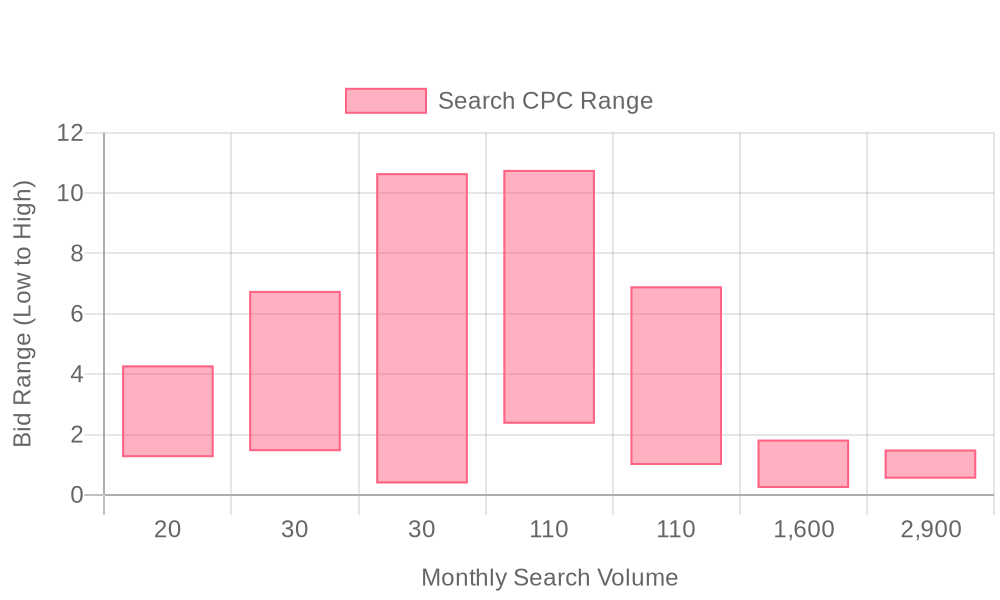
| Industry | Keyword | Monthly Search Volume | Competition Level | Low Bid | High Bid |
| Metal Cleaning Services | electrochemical cleaning stainless steel | 20 | MEDIUM | 1.25 | 4.29 |
| Metal Cleaning Services | metal cleaning services | 30 | LOW | 1.45 | 6.76 |
| Metal Cleaning Services | metal roof oxidation removal | 30 | HIGH | 0.38 | 10.66 |
| Metal Cleaning Services | industrial metal cleaning | 110 | MEDIUM | 2.36 | 10.77 |
| Metal Cleaning Services | refinishing stainless steel sink | 110 | HIGH | 0.99 | 6.91 |
| Metal Cleaning Services | silver polishing near me | 1600 | HIGH | 0.23 | 1.83 |
| Metal Cleaning Services | metal cleaning | 2900 | HIGH | 0.54 | 1.5 |
Precision in keyword strategy is essential for metal cleaning service providers seeking to capture high-intent leads and maximize every advertising dollar. The most effective campaigns rely on structured keyword clusters that reflect both service offerings and the specific needs of industrial and commercial buyers.
Strategically, start by grouping terms by service type: "industrial metal cleaning," "stainless steel restoration," "paint stripping for metal," and "oil removal metal surfaces." Each cluster should map directly to a core offering, ensuring ad relevance and landing page alignment. Enhance reach by localizing with "near me," city modifiers, and service area indicators, such as "metal cleaning services Houston" or "aluminum cleaning near Chicago." This approach taps into demand from buyers actively seeking vendors within their geographic footprint.
Long-tail queries such as “ISO-certified metal cleaning for manufacturers” or “eco-friendly metal degreasing services” deliver higher intent and lower competition, producing more qualified clicks. Prioritizing these detailed phrases boosts lead quality and reduces wasted budget. Address negative keywords by excluding unrelated queries, like “metal music cleaning” or “carpet cleaning,” which siphon budget without generating relevant opportunities.
Align keyword selection with broader content marketing initiatives by integrating target phrases into case studies, blogs, and landing pages focused on metal cleaning applications. This supports both paid and organic performance, reinforcing brand authority across digital channels. Sona's Identity Resolution helps marketers see which search terms generate the highest-value leads and adjust keyword bids in real time as intent signals shift. As leads progress through the funnel, dynamic audience lists can be refined based on evolving engagement and conversion data, keeping ads targeted to the most promising accounts.
For more on strategic retargeting and audience management, review retargeting strategies tailored to B2B cleaning and metal services. This integrated approach to keyword and audience strategy forms the foundation of high-performing Google Ads for metal cleaning services.
Step-by-Step Campaign Execution Framework
Step 1: Build Targeted Keyword Lists
Strategic keyword clustering is the foundation of high-performing Google Ads for Metal Cleaning Services. Segment keyword lists by service type, such as industrial degreasing, stainless steel restoration, or machinery cleaning, to ensure each ad group matches user intent and search behavior. Incorporate location-based modifiers like “near me” or specific city names to capture commercial leads in precise geographies.
Enhance reach and quality by including long-tail phrases and question-based queries that reflect how decision-makers research solutions. Negative keywords filter out irrelevant traffic, reducing wasted spend and focusing budget on high-likelihood conversions. Using a unified data platform, marketers can pinpoint which companies are searching and dynamically adjust keyword priorities as new buying signals appear, ensuring campaigns always align with active market demand. For a step-by-step Google Ads setup process tailored to cleaning businesses, explore this comprehensive guide.
The upgrade most metal cleaning services advertisers miss is going beyond raw keyword volume to layer in intent and identity signals. By connecting website-visitor data and CRM records with Sona Marketing Measurement, you can see which specific search terms bring in the accounts and customers that actually convert, and weight your keyword and bidding strategy toward those rather than the terms with the highest search volume alone.
Step 2: Develop Compelling Ad Copy
Effective ad copy for cleaning service ads must speak directly to industry pain points, think compliance, downtime avoidance, or environmental safety. Headlines should immediately address core challenges, while descriptions can highlight certifications, specialized equipment, or recent awards that set your service apart. Incentivize urgency with limited-time offers or fast response guarantees to drive conversions from high-intent prospects.
Ad assets, such as sitelinks, callouts, and structured snippets, expand your ad's footprint and add value points beyond the headline. Dynamic audience insights allow for hyper-personalized messaging: as leads progress or new signals emerge, ad copy can be refined in real time to reflect the prospect's current needs, increasing engagement and click-through rate.
Step 3: Design Effective Landing Pages
Landing pages for metal cleaning advertising must create seamless alignment from keyword to ad to page. Each landing experience should be purpose-built for its associated service or vertical, segmenting pages for industrial, commercial, or specialty cleaning increases relevancy and conversion potential. Integrate interactive FAQs and ROI calculators to address common objections and provide buyers with tangible value upfront.
A unified pipeline enables marketers to track how different audiences interact with landing content, surfacing which topics or offers drive the highest engagement. As visitor identities are resolved, landing pages can dynamically adjust messaging or present case studies tailored to the specific industry or company, further increasing conversion rates and accelerating the buying cycle.
Step 4: Implement Data-Driven Optimizations
Conversion tracking is essential to understanding true ROI from digital marketing for metal services. Leverage advanced attribution that connects online form fills, phone calls, and even offline sales activity to specific keywords or ad groups. Smart bidding strategies, guided by in-market intent signals and historical performance data, ensure that budget is automatically routed to the highest-converting segments.
A/B testing headlines, CTAs, and layouts uncovers what resonates best with each audience segment. With real-time pipeline data, marketers can quickly identify which campaigns are generating qualified leads and which need adjustment. As CRM and ad platforms synchronize, new enriched audiences are automatically updated in Google Ads, ensuring every campaign is always targeting the most relevant, sales-ready leads. For additional inspiration, watch this video tutorial on effective Google Ads strategies for service-based businesses.
Sona Marketing Measurement closes the gap between clicks and revenue. It captures every ad click with first-party measurement, ties that click through UTM capture and ad-platform APIs to the actual record in your CRM, and reports ROAS by keyword and campaign instead of by last-click form fill. Feeding that revenue signal back into Smart Bidding and Performance Max compounds over time: the algorithms optimize toward booked metal cleaning services revenue, not cheap leads.
Tips on Expanding Your Metal Cleaning Service Presence

Modern metal cleaning services operate in a landscape where digital presence directly influences offline business growth. A data-driven approach to marketing accelerates the shift from web visibility to in-person contracts, ensuring every click and impression translates into measurable pipeline impact. For ongoing insights on how to unify analytics and track revenue, explore the marketing analytics blog.
- Cross-promote educational assets using retargeting: Amplify the reach of technical guides, maintenance tutorials, or whitepapers by retargeting previous website visitors with compelling display ads. Leveraging advanced visitor identification, teams can pinpoint which companies engaged with high-value content and re-engage decision-makers with tailored messaging. This approach nurtures prospects already interested in metal cleaning solutions, increasing the likelihood of conversion and repeat visits.
- Utilize CRM data to upsell related services: Syncing enriched CRM segments into Google Ads enables targeted upselling and cross-selling. Updating audiences dynamically as customers move through service adoption or renewal stages means ads for add-ons, protective coatings, inspection packages, extended maintenance plans, reach existing customers exactly when they're likely to buy again.
- Partner with industry associations for referral traffic: Building relationships with trade organizations and industry groups offers a steady pipeline of referral leads. Featuring educational webinars or co-branded resources in association newsletters drives relevant, qualified visitors to your website, expanding network reach and reinforcing credibility in the sector. See how industry peers are discussing Google Ads for B2B steel fabrication companies to gain additional ideas for metal service marketing.
- Localize campaigns to grow targeted region share: Tailoring ad copy, visuals, and offers to specific regions increases resonance with local manufacturers, fabricators, and industrial facilities. By analyzing search data and conversion rates at the city or county level, marketers can reallocate budget to the highest-performing territories, maximizing ROI in core service areas. For a step-by-step approach to segmenting and activating local audiences, review the Destinations data sync guide.
- Use search data to identify new content opportunities: Regularly mining Google Ads search term reports and organic keyword insights uncovers gaps in the current content strategy. When a surge in queries emerges for a particular cleaning technique or compliance requirement, publishing authoritative resources around these topics positions the brand as a trusted advisor and attracts qualified search traffic. Utilize playbooks for marketing strategy to structure and launch new content initiatives efficiently.
By integrating these strategies, metal cleaning services can elevate their online marketing for metal cleaning and convert digital interactions into long-term, high-value customer relationships. Each tactic, when supported by unified intent signals and predictive analytics, sharpens campaign focus and accelerates revenue outcomes across the entire buyer journey.
Beyond Google Ads: Winning the AI Answers Metal Cleaning Services Buyers Now Trust
Paid search captures demand at the moment someone types a query. But a fast-growing share of metal cleaning services buyers no longer start at Google at all, they ask ChatGPT, Gemini, or Perplexity before they ever run a search, and Google's own AI Overviews increasingly summarize an answer above the traditional results. If your business isn't referenced in those AI answers, you're invisible at the exact moment buyers build their shortlist.
Sona AI Visibility shows where your business shows up across ChatGPT, Gemini, Perplexity, Google AI Overviews, and 10+ engines, and, much like a keyword report, which prompts actually send you buyers, so you can prioritize the ones that convert. Run the two together and you cover the entire buyer path: get cited where buyers research (AI Visibility), then prove which of that demand turns into booked revenue (Marketing Measurement).
Helpful resources
Conclusion
The metal cleaning providers who win with Google Ads treat it as one input into a larger measurement system, not a standalone channel. As buyer research increasingly starts with an AI prompt instead of a search bar, the advantage shifts to teams that can show up in both places and prove, in dollars, which touches actually built the pipeline.
Ready to take your Google Ads strategy to the next level? Start for free to see the platform's capabilities firsthand.
FAQ
What are the best Google Ads strategies for metal cleaning services?
The best strategies include search campaigns to capture high-intent prospects, display ads for brand awareness, video ads for demonstrating cleaning methods, and remarketing to re-engage past visitors.
How can I effectively target customers for metal cleaning using Google Ads?
Effectively target customers by using precise audience segmentation, integrating real-time audience tools, and syncing anonymous visitors into customer match lists to ensure ad spend targets decision-makers with actual intent.
What budget should I allocate for Google Ads in the metal cleaning industry?
Allocate your budget by focusing on channels and keywords that drive the greatest impact, using real-time insight into user intent and granular attribution metrics to ensure confidence in budget allocation.
What keywords should I use for Google Ads in metal cleaning?
Use keywords grouped by service type such as 'industrial metal cleaning,' 'stainless steel restoration,' and 'paint stripping for metal,' including long-tail queries and local modifiers to capture high-intent leads.
How do I measure the success of my Google Ads campaigns for metal cleaning services?
Measure success by tracking conversions from clicks to closed deals, using advanced attribution to connect online interactions to offline sales, and continuously optimizing campaigns based on real-time audience insights and conversion data.







