


Medical practices lose revenue every day to prospects who never fill out a form. A billing manager compares three EHR vendors, a clinic administrator researches scheduling software after hours, a hospital procurement team benchmarks compliance platforms, and most of that research leaves no trace in a CRM. Modern identification tools can now surface the companies behind that anonymous traffic, letting practices build Google Ads campaigns around the accounts actually in-market rather than guessing from form fills alone. Used well, Google Ads lets medical office administration services intercept decision-makers at the moment of need, target specific patient and practice-management segments with precision, and measure return on ad spend from the first click through to patient onboarding, tying online and offline marketing into one consistent pipeline.
How to Generate Medical Office Administration Service Leads with Google Ads: A Step-by-Step Guide

Medical office administration providers compete for a narrow pool of decision-makers, practice managers, physicians, and procurement staff, who move fast and expect vendors to already understand their compliance and workflow constraints. Paid search matches that pace: it lets a practice show up the moment someone searches for billing help or scheduling software, and it produces measurable outcomes instead of the guesswork common to referral-based outreach. For a deeper dive into optimizing marketing analytics and strategy, explore the expert articles available in our resource center.
High-performing teams use Google Ads to intercept healthcare administrators and practice managers when they actively search for solutions. Campaigns that leverage behavioral data and real-time intent signals consistently outperform traditional outreach or generic ad tactics, leading to improved lead quality and cost efficiency.
- Understanding the Google Ads landscape for medical practices: The healthcare sector operates under strict advertising compliance and privacy requirements. Google restricts ad content for medical office administration services, demanding rigorous adherence to Google Ads healthcare policies and industry standards. Success depends on knowing which services can be promoted, how to phrase value propositions, and which certifications are required to keep a campaign eligible.
- Leveraging patient search behavior data: Decision-makers for medical office administration services show clear intent through search queries and site interactions. By pairing tracking with Sona's Identity Resolution, marketers can move beyond anonymous clicks to see which organizations and roles are engaging with their ads at the company level. Real-time behavioral insight lets budget shift toward the segments actually converting, rather than the ones simply generating traffic.
- Aligning Google Ads strategies with medical services offered: Effective campaigns tie ad copy, landing pages, and keyword targeting tightly to the services on offer, appointment scheduling, EHR management, billing, or compliance support. That relevance raises Quality Scores, lowers Google Ads cost for medical offices, and pulls more qualified leads into the funnel.
- Aligning campaigns with the patient journey: Fragmented marketing efforts produce scattered touchpoints and diluted messaging. By mapping Google Ads campaigns to each stage of the decision-maker journey, awareness, evaluation, and conversion, teams close messaging gaps. Dynamic audience updates and advanced tracking keep prospects on a consistent, personalized path as they progress, cutting wasted spend and supporting long-term nurturing.
- Step-by-step Google Ads setup: Launching a medical office administration campaign requires a structured, data-driven approach. The setup process includes targeted keyword research, granular audience building, and meticulous campaign architecture. Real-time CRM and ad platform syncs ensure that high-intent leads are continuously identified, enriched, and routed into sales workflows.
- Creating focused campaigns targeting patient needs: Segmenting audiences by role, location, and practice size allows for hyper-focused messaging. Responsive search ads and tailored assets (sitelinks, callouts, structured snippets) keep messaging relevant, while live data syncs keep segments updated as prospects interact with other marketing channels or move deeper into the funnel.
- Setting up effective bidding strategies utilizing Google Ads features: Smart bidding leverages conversion data and intent signals to optimize spend in real time. Integrating offline and online conversion tracking provides a holistic view of which keywords and ads drive true ROI. Automated rules can prioritize budget for accounts showing the strongest buying signals, maximizing efficiency.
- Following up on high-intent visitors who don't convert: Many high-value prospects interact with ads or landing pages but never fill out a form. With Sona's Identity Resolution and CRM integration, marketers can identify the organizations behind that engagement and trigger timely follow-up, so high-intent accounts don't slip through the cracks.
- Integrating with other marketing efforts: Unifying Google Ads with broader demand generation ensures cohesive messaging and maximizes impact. Syncing campaigns with CRM systems unlocks deeper audience insights, while tools that deanonymize site traffic reveal hidden buying groups. Coordinated creative across email, social, and search channels delivers a seamless experience, increasing trust and accelerating the decision process.
Why Does Google Ads Matter for Medical Office Administration Services?
Medical office administration services operate in a landscape where audience complexity is the norm: decision-makers range from practice managers and physicians to hospital procurement teams, each with unique needs and search behaviors. Precision in paid outreach reduces wasted spend on low-intent contacts and ensures that high-value prospects are consistently prioritized.
Targeted ad delivery using Google Ads empowers these services to capture qualified leads efficiently, especially in moments of acute patient demand or urgent administrative need. Rapid campaign activation allows practices to respond to real-time events, ensuring visibility when patient queries spike or new services launch.
Enhancing service visibility in underserved regions and hard-to-reach demographics is critical for growth. Google Ads local targeting for healthcare enables granular geographic and demographic segmentation, allowing campaigns to surface in specific communities or zip codes where demand is high but competition is low. Marketers can leverage real-time visitor identification to pinpoint organizations engaging with ads, advancing outreach from generic impressions to actionable connections.
Closed-loop measurement, from first click to confirmed patient visit, changes what a campaign can tell you. Integration with advanced attribution enables syncing enriched leads and conversion data from Google Ads directly into CRM systems, so revenue teams see one unified view of performance as leads move through the funnel.
Common Types of Google Ads Campaigns for Medical Office Administration Services
Most medical office administration advertisers build their program around four campaign types, Search, Display, Video, and Performance Max, each suited to a different point in the buyer's research.

- Search Campaigns: Capture immediate patient service needs by targeting high-intent keywords that reflect specific administrative challenges or solutions. These campaigns are ideal for fields like medical billing, patient scheduling, or EHR support, where prospects are actively searching for providers. By leveraging real-time audience data, marketers can shift budget towards keywords that consistently drive high-quality leads and optimize campaign spend for measurable ROI. For more tips on campaign optimization, explore our step-by-step playbooks.
- Display Ads: Build brand awareness and reinforce trust by placing targeted ads across healthcare-specific sites and professional networks. Display campaigns address visibility gaps, ensuring your services remain top of mind for practice managers and decision-makers throughout their research process. Advanced visitor identification capabilities enable marketers to move beyond anonymous impressions, pinpointing which organizations are engaging with their ads and tailoring creative accordingly.
- Video Ads: Showcase complex services such as EHR solutions, compliance management, or appointment automation through engaging video content. Video campaigns not only educate but also help recapture prospects who abandon demo or contact forms by providing a compelling visual reminder. For healthcare marketers seeking step-by-step guidance on video campaign setup, see this video tutorial. Dynamic audience updates ensure that viewers who interact with key content are automatically added to tailored nurture streams, keeping them engaged and accelerating the decision cycle.
- Remarketing: Re-engage potential clients who have previously interacted with your website or landing pages, a critical step in converting consideration into action. Effective remarketing for medical office administration services leverages CRM and ad platform sync, allowing enriched audience segments to receive relevant messaging based on their stage in the buyer journey. With robust offline and online conversion tracking, marketers can accurately attribute every booked meeting or consultation back to the original touchpoint, closing the loop on campaign performance and maximizing patient acquisition efficiency.
Where to Find Growth Opportunities?
Growth in medical office administration services requires a blend of strategic expansion and rigorous data-driven targeting. B2B marketers who identify underserved patient needs can secure new revenue streams by aligning offerings with genuine demand and leveraging intent signals to prioritize high-value targets.
- Exploring new verticals and services: Analyzing adjacent medical administration sectors, such as billing, compliance, or patient engagement solutions, can reveal growth-ready opportunities. Using competitive analysis, teams can systematically uncover gaps in the local healthcare landscape, ensuring campaign investments are focused on less saturated, higher-potential segments.
- Targeting niche medical services: Precision targeting is essential for medical office administration practices that specialize in specific operational workflows for clinics, dental offices, or specialty practices. Google Ads targeting for medical practices should be fine-tuned with dynamic audience lists that update as leads engage across multiple touchpoints, maximizing relevance and reducing wasted spend. By enriching CRM data and syncing it directly to Google Ads, marketers can deliver tailored messaging to in-market accounts, accelerating conversion velocity while maintaining Google Ads compliance.
- Optimizing content retargeting: High-value prospects often require multiple engagements before converting. Delivering healthcare guides, educational videos, and compliance checklists through retargeting strategies converts initial interest into pipeline growth. Integrating real-time visitor identification with advanced conversion tracking ensures that unconverted but engaged visitors are retargeted with contextually relevant content, improving overall conversion rates and providing transparent ROI measurement.
How to Apply Audience Segmentation for Medical Office Administration Services
Audience segmentation drives greater efficiency for medical office administration services by ensuring advertising budgets focus on the right patient profiles. Using detailed segmentation, marketing teams can reduce wasted spend, accelerate patient acquisition, and deliver relevant messaging at every touchpoint. To explore additional strategies for driving demand and optimizing campaign performance, review actionable marketing playbooks.
- Segmenting patient demographics: Medical office administration services benefit from segmenting audiences by age, gender, insurance type, and geographic location. This approach enables teams to craft tailored offers and creative that resonate with the specific needs of distinct patient groups. For example, segmenting by insurance provider or self-pay status allows for more relevant ad copy and landing page experiences, directly increasing engagement and conversion rates.
- Specialty-based segmentation: Differentiating between specialties, such as pediatrics and geriatrics, prevents inefficient outreach and ensures messaging aligns with patient expectations. For pediatric services, focusing on parents searching for immunization schedules or wellness checks increases qualified clicks, while geriatrics may prioritize chronic care management and medication adherence. Precision in audience definition improves campaign ROI and supports regulatory compliance in healthcare advertising. For a detailed overview of healthcare ad policies, refer to Google Ads policies on healthcare.
- Service line-targeted ad groups: Tailoring ad groups to specific service lines, such as scheduling, billing inquiries, or telemedicine, ensures each audience receives highly relevant ads. Segmentation insights drawn from unified go-to-market data platforms enable teams to identify which patient segments are most likely to convert for each service line. By leveraging dynamic audience updates, as patient needs change or new data becomes available, ad groups remain tightly aligned to current demand.
- Syncing data for comprehensive targeting: Integrating CRM, EHR, and other first-party data sources empowers marketers to build comprehensive patient profiles and sync them across Google Ads and other channels. With enriched audience lists automatically updated based on real-time interactions, campaigns can target high-propensity patients while suppressing ineligible or non-compliant contacts. This approach not only increases lead quality but also simplifies multi-channel coordination.
- Overlaying intent signals: By overlaying real-time intent data, such as recent search queries, website engagement, or appointment scheduling behaviors, teams refine both targeting and budget allocation. Resources can be shifted toward audiences exhibiting high purchase or appointment intent, boosting conversion rates and reducing cost per acquisition. When intent signals trigger automated audience updates, medical office administration marketers maintain a competitive edge through agile, data-driven campaign management.
When unified data and audience segmentation are applied with modern platforms, medical office administration services achieve greater personalization, improved compliance, and measurable growth in patient acquisition efficiency. For further detail on optimizing retargeting and campaign performance, see retargeting strategies.
This is also where measurement changes the economics. With Sona Marketing Measurement you can identify the companies behind your ad clicks, not just anonymous sessions, and segment audiences by which of those accounts actually become customers. That lets you build bid adjustments and audience signals around the segments that convert and de-prioritize the ones that don't, so you feed Google's algorithms "this click became a paying medical office administration services customer" instead of just "someone filled out a form."
Keyword Strategy & Sample Target Terms
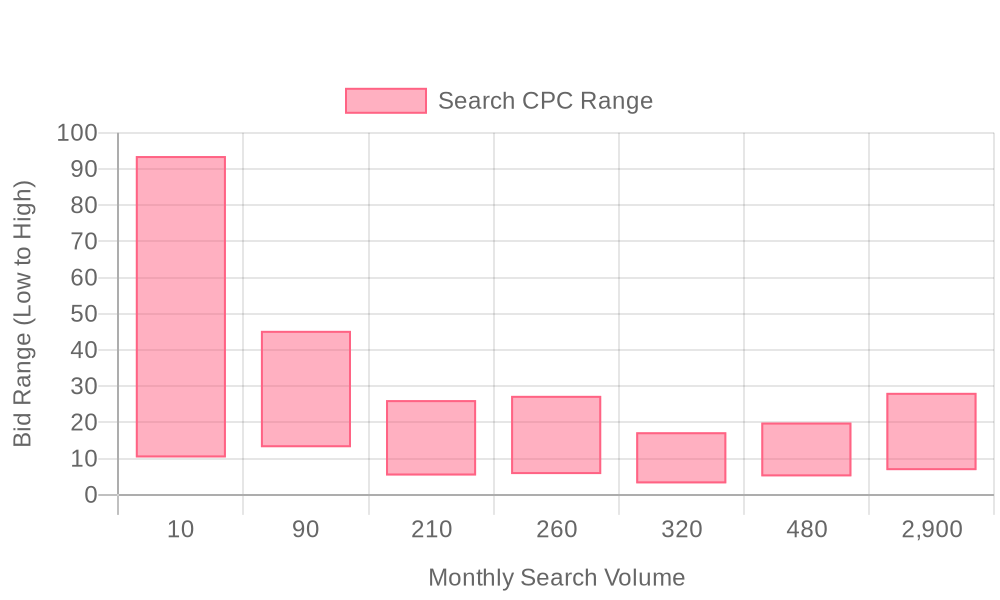
| Industry | Keyword | Monthly Search Volume | Competition Level | Low Bid | High Bid |
| Medical Office Administration Services | best online schools for medical office administration | 10 | LOW | 10.36 | 93.58 |
| Medical Office Administration Services | medical office administration online programs | 90 | MEDIUM | 13.17 | 45.29 |
| Medical Office Administration Services | medical office administration certificate program | 210 | MEDIUM | 5.37 | 26.17 |
| Medical Office Administration Services | medical office administration certificate | 260 | MEDIUM | 5.75 | 27.34 |
| Medical Office Administration Services | medical office manager certification | 320 | HIGH | 3.19 | 17.29 |
| Medical Office Administration Services | medical office management | 480 | LOW | 5.13 | 19.97 |
| Medical Office Administration Services | medical office administration | 2900 | MEDIUM | 6.83 | 28.18 |
A strategic keyword plan is foundational for medical office administration services aiming to drive qualified leads through Google Ads. Success hinges on selecting keywords that capture high buying intent while aligning tightly with the specific solutions and geographic reach of your practice management offerings. To explore more expert tactics, visit our marketing analytics blog.
- Developing a targeted keyword plan: Focus on high-intent search terms such as 'medical billing services near me', 'electronic health records software', and 'medical appointment scheduling solutions'. These phrases connect directly with prospects actively seeking administrative services. Incorporating local modifiers like city names or zip codes ensures ad spend is directed toward the most relevant and geographically viable prospects, optimizing campaign efficiency. For a detailed overview of healthcare ad policy compliance, see Google Ads healthcare policies.
- Monitoring and refining keyword lists: Continuous refinement is key. Implementing negative keywords such as 'free', 'jobs', or unrelated specialties eliminates irrelevant traffic, protecting your budget from low-value clicks. Regular keyword performance analysis allows for agile adjustments, ensuring your campaigns stay aligned with evolving search behavior and emerging service trends. When leveraging Sona’s Destinations, marketers can identify which keywords and search terms are most closely associated with high-value account activity, allowing for budget shifts toward the segments showing real buying intent.
- Sample target keywords: Integrate terms like Medical office management ads, healthcare administration PPC, and local variants such as 'medical office billing services in [city]'. Combining these with Sona’s Audiences and CRM integration enables richer segmentation and more precise retargeting throughout the funnel. As leads progress or convert, dynamic audience lists update in real time, allowing ad messaging and budget to follow the most engaged prospects for maximum ROI.
Step-by-Step Campaign Execution Framework
Step 1: Build Targeted Keyword Lists
Effective Google Ads campaigns for medical office administration services start with a highly focused keyword strategy. Organize keywords into service-type clusters, such as “practice management solutions,” “medical billing support,” and “patient scheduling software.” This cluster approach ensures relevance to prospective clients searching for specific administrative solutions. For a deeper dive into structuring keyword clusters and optimizing campaign relevance, explore our collection of actionable playbooks.
Localize keyword targets with geographical modifiers tailored to your service area, like “medical office management in Chicago” or “patient scheduling San Diego.” Consistently audit and update negative keyword lists. Removing irrelevant or low-intent search terms prevents wasted spend and hones in on high-value prospects, especially important when aiming to attract healthcare administrators with immediate decision-making power. Marketers leveraging advanced visitor identification can further refine keyword priorities by analyzing which organizations are actively searching for medical office solutions, allowing for real-time adjustments that prioritize high-intent segments. For more on Google Ads compliance in healthcare, see the Google Ads healthcare policies.
The upgrade most medical office administration services advertisers miss is going beyond raw keyword volume to layer in intent and identity signals. By connecting website-visitor data and CRM records with Sona Marketing Measurement, you can see which specific search terms bring in the accounts and customers that actually convert, and weight your keyword and bidding strategy toward those rather than the terms with the highest search volume alone.
Step 2: Crafting Compelling Ad Copy
Ad copy for medical office administration services should be direct, patient-centric, and built on trust. Headlines that focus on reducing administrative workload or improving patient flow resonate with healthcare teams under pressure to optimize efficiency. Including trust signals, such as compliance certifications, board credentials, or authentic testimonials, reinforces credibility in a sector where reputation is paramount. For inspiration on building credibility and leveraging industry best practices, visit our blog with expert marketing insights.
Use ad assets to drive immediate action, such as call, location, or sitelink assets that highlight demo scheduling or rapid support. Real-time audience insights let marketers adjust copy dynamically, so ads speak directly to the pain points and priorities of in-market healthcare administrators.
Step 3: Designing Matching Landing Pages
A seamless transition from ad click to landing page is critical for converting interest into booked appointments or product demos. Each landing page should mirror the language and promises of its corresponding ad group, ensuring continuity and user trust. Prioritize clear, conversion-centric layouts with prominent calls to action, such as “Request a Demo” or “Book a Consultation”, supported by visual trust elements like industry awards, HIPAA compliance badges, or customer success stories.
To maximize conversions, align landing page content with the lead’s stage in the buying process, leveraging dynamic audience insights. As leads progress, landing pages can update in real time to deliver more personalized messaging and relevant offers, increasing both conversion rates and lead quality. For step-by-step landing page and campaign alignment recommendations, explore our B2B marketing playbooks.
Step 4: Data-Driven Optimization
Optimizing Google Ads for medical office administration services hinges on continuous, data-driven refinement. Implement CPA smart bidding strategies that automatically adjust bids to maximize qualified patient inquiries or demo requests. Regular A/B testing of headlines, ad copy, and landing page elements reveals what resonates most with your audience, guiding budget allocation toward top-performing assets. For a comprehensive guide on connecting ad platform data with analytics tools, see how to import ad platform cost data into Google Analytics.
Integrate CRM systems to track patient or client acquisition from ad campaigns, connecting online activity with offline outcomes. This closed-loop attribution clarifies which channels and keywords yield the highest-quality leads, informing future spend and creative decisions. Platforms that sync enriched audience data into CRM and ad platforms streamline this process, giving revenue teams actionable insight for cross-channel optimization and ongoing alignment with strategic goals.
Sona Marketing Measurement closes the gap between clicks and revenue. It captures ad clicks with first-party measurement, ties that click through UTM capture and ad-platform APIs to the matching record in your CRM, and reports ROAS by keyword and campaign instead of by last-click form fill. Feeding that revenue signal back into Smart Bidding and Performance Max compounds over time: the algorithms optimize toward booked medical office administration services revenue, not cheap leads.
Beyond Google Ads: Winning the AI Answers Medical Office Administration Services Buyers Now Trust
Paid search captures demand at the moment someone types a query. But a fast-growing share of medical office administration services buyers no longer start at Google at all, they ask ChatGPT, Gemini, or Perplexity before they ever run a search, and Google's own AI Overviews increasingly summarize an answer above the traditional results. If your business isn't referenced in those AI answers, you're invisible at the exact moment buyers build their shortlist.
Sona AI Visibility shows where your business shows up across ChatGPT, Gemini, Perplexity, Google AI Overviews, and 10+ engines, and, much like a keyword report, which prompts actually send you buyers, so you can prioritize the ones that convert. Run the two together and you cover the entire buyer path: get cited where buyers research (AI Visibility), then prove which of that demand turns into booked revenue (Marketing Measurement).
Helpful resources
Conclusion
The practices that win in medical office administration advertising treat Google Ads as one input into a larger measurement system, not a standalone channel to set and forget. Pair tight, compliance-aware campaigns with company-level identification and closed-loop revenue attribution, and every dollar spent starts teaching your bidding algorithms what a real customer looks like, not just what a form fill looks like. As AI answer engines take a growing share of early-stage research, the practices that show up there too, not only in search results, will be the ones setting the terms of the shortlist before a competitor's ad ever loads.
To put these strategies to work, start for free with Sona.
FAQ
What are the best practices for setting up Google Ads for a medical office?
Best practices include targeting specific keywords related to medical services, aligning ad copy with landing pages, and using real-time audience insights for dynamic adjustments.
How can I target specific patient demographics with Google Ads for my medical practice?
You can target specific demographics by segmenting audiences based on age, gender, insurance type, and location, and tailoring ads to match the needs of these groups.
What are the Google Ads policies for advertising medical services?
Google Ads policies for medical services require compliance with healthcare advertising standards, including restrictions on certain content and the need for certifications.
How can I track and measure the success of my Google Ads campaign for a medical office?
Success can be tracked using CRM integration, real-time audience updates, and conversion tracking to connect online activity with patient acquisition.
What are some cost-effective strategies for Google Ads in medical office administration?
Cost-effective strategies include using smart bidding, integrating offline and online conversion tracking, and leveraging intent signals to optimize spend in real time.







