


A hospital short two ICU nurses on a Friday afternoon doesn't wait for Monday, it searches immediately, often from a phone in an administrator's office. That urgency is what makes Google Ads valuable for healthcare staffing: it puts an agency in front of hiring managers and facilities at the exact moment a shift needs covering, a contract needs renewing, or a compliance deadline is looming. The harder problem is that most of that traffic arrives anonymously. A facility's staff can browse a site, compare rates, and leave without ever filling out a form, and the agency never learns who they were. Solving that visibility gap, while still respecting licensing and privacy constraints specific to healthcare, is what separates staffing firms that convert search traffic into placements from those that just pay for clicks.
How to Generate Healthcare Staffing Leads with Google Ads: A Step-by-Step Guide

Healthcare staffing firms operate in a market where demand is high, competition is fierce, and decision-makers often stay hidden behind layers of organizational complexity. Maximizing lead quality and speed requires precise targeting and a strategy that adapts to shifting intent signals in real time. Successful teams use company-level identification and campaign orchestration so no opportunity is lost, even when a hiring window is brief. For actionable insights on identifying the organizations behind anonymous site visits and optimizing outreach, explore identification strategies.
This step-by-step guide provides a comprehensive framework for generating high-value healthcare staffing leads using Google Ads. Each section addresses a critical pillar: from data-backed keyword selection, advanced audience targeting, and landing page optimization, to real-time performance tracking and multichannel integration. When these elements work together, agencies can achieve higher conversion rates, reduce wasted spend, and confidently scale outreach. For additional tips, see best practices for Google Ads in healthcare.
- Data-Driven Keyword Strategy: Effective healthcare staffing campaigns start with keyword research tailored to both clinical and administrative roles, split cleanly between urgent, high-intent searches ("travel nurse jobs this week") and longer-consideration terms ("per diem staffing agency"). Teams should use search volume trends, intent data, and negative keyword mapping so ads reach people in hiring or decision-making positions, not job seekers browsing casually. By connecting visitor identity solutions, marketers can identify the organizations behind anonymous traffic, revealing which hospital systems or clinics are engaging with their ads. That granularity lets budget go toward the segments most likely to convert, improving ROI and cutting wasted spend.
- Audience Targeting Techniques: Reaching healthcare decision-makers takes more than basic demographic filters. Teams can combine job title targeting, company firmographics, and intent signals to hone in on the right facilities, credentialing offices, and staffing coordinators. Syncing CRM and enriched audience data into Google Ads enables real-time, dynamic segmentation. As leads move through the funnel, real-time audiences auto-update to keep messaging relevant, so a hot lead, like a facility facing a sudden coverage gap, gets timely, personalized follow-up even if the first touch went unanswered.
- Optimizing Landing Pages: Conversion rates in healthcare staffing ads rise dramatically when landing pages are tailored to the specific needs and roles of the target audience. Instead of generic forms, effective pages showcase role-specific benefits, trust signals, and frictionless application workflows. For key strategies on improving healthcare PPC landing page results, see healthcare PPC landing page optimization. By analyzing which audience segments visit which landing pages, marketers can adjust messaging and design to address engagement gaps and decrease abandonment. Integration with visitor identification tools further allows for personalized content and retargeting, increasing the likelihood of capturing qualified leads.
- Performance Tracking: Real-time insights into campaign performance are essential for maximizing ROI. Advanced conversion tracking connects ad clicks to both online and offline outcomes, mapping the complete candidate journey from initial interest to final placement. This enables teams to identify which campaigns generate high-value prospects versus low-value ones, and to shift budget or creative resources accordingly. With unified data, marketers can attribute revenue not just to initial leads, but to closed deals, ensuring continuous optimization and accountability.
- Multi-Channel Integration: In a fragmented market, disconnected signals across platforms can dilute marketing effectiveness. Integrating Google Ads with other channels, email, social, programmatic, ensures consistent messaging and consolidated intent signals. When CRM and ad platforms are in sync, lead and account data flows automatically, supporting coordinated outreach and reducing the risk of duplicate or missed engagement. This unified approach streamlines the process of nurturing healthcare staffing leads from first click to contract, amplifying the impact of every marketing dollar spent. Get started for free with Sona to experience seamless integration and real-time audience activation.
Why does Google Ads matter for Healthcare Staffing

Healthcare staffing organizations operate in a competitive landscape where timing, precision, and budget discipline directly affect placement outcomes. Digital advertising lets these teams connect with facilities actively seeking staffing solutions, turning anonymous web traffic into actionable leads. By using Sona's Identity Resolution, recruiters can reveal which hospitals or clinics are visiting their site, even without a form fill, and engage them before competitors do, closing the gap between online interest and actual placements.
- Precise Audience Identification: Google Ads enables healthcare staffing teams to directly target decision-makers at healthcare facilities, rather than casting a wide net and hoping for relevant inquiries. When paired with real-time audience segmentation and intent monitoring, marketers can pinpoint which organizations are actively searching for nurses, specialists, or allied health professionals. For proven strategies on running effective Google Ads campaigns, see best practices for Google Ads in healthcare. This intelligence drives personalized outreach and ensures every advertising dollar works toward engaging qualified prospects, not just generating generic traffic.
- High-Value Placement Opportunities: For staffing agencies, every placement represents significant revenue and long-term partnership potential. Google Ads supports granular targeting to promote critical openings, like crisis response nurses or hard-to-fill physician roles, only to those most likely to benefit. With dynamic audience updates, campaigns automatically adjust as prospects engage or move through the decision process, reducing wasted spend and maximizing high-value conversions.
- Fast Response Capability: The healthcare industry often faces sudden changes, policy shifts, seasonal surges, or unexpected gaps in coverage. With Google Ads, staffing agencies can launch or adjust campaigns in real time to address immediate demand, ensuring available talent is visible to facilities in need. By unifying audience data and campaign performance, teams can quickly shift budget and messaging to regions or specialties experiencing the highest need, resulting in faster placements and improved ROI.
- Geographical Targeting Flexibility: Effective healthcare staffing requires reaching the right facilities in specific markets, whether recruiting for rural hospitals or urban clinics. Google Ads makes it possible to deliver tailored messaging to precise locations, increasing relevance and improving response rates. When campaign and CRM data are unified, marketers can further refine geographic targeting based on past engagement, facility type, or hiring history, turning regional insights into more profitable campaign segments.
- Comprehensive Analytics: Closed-loop measurement is vital for optimizing healthcare staffing campaigns. Google Ads provides robust analytics to track which placements, keywords, and creatives drive actual hires, not just clicks. By implementing advanced conversion tracking, teams gain full visibility into the entire funnel, from first ad impression to successful placement, enabling continuous optimization and smarter budget allocation. For additional actionable guidance, explore more healthcare staffing insights on our Sona blog.
Common Types of Google Ads Campaigns for Healthcare Staffing Services

Healthcare staffing firms operate in a fast-moving, high-demand environment where timely engagement with qualified professionals is critical. Google Ads offers a flexible toolkit to address immediate hiring needs, nurture prospective talent, and build lasting brand equity among clinicians and allied health workers. A thoughtful combination of campaign types, tailored messaging, and precise targeting ensures agencies move beyond generic recruitment to create meaningful connections with in-demand healthcare candidates. For further strategies and actionable tips, explore this guide to healthcare PPC marketing and visit our blog for healthcare recruitment insights.
- Search Campaigns: Search campaigns respond to urgent recruitment needs by capturing high-intent candidates actively searching for healthcare staffing opportunities. These campaigns allow agencies to appear at the top of search results for keywords like "travel nurse jobs" or "contract physical therapist near me," ensuring leads are addressed when intent peaks. By leveraging real-time intent insights and connecting ad clicks to downstream hiring outcomes, agencies can allocate budget dynamically to the highest-converting search queries and specialties, reducing wasted spend and accelerating time-to-hire.
- Display Ads: Display ads keep your brand visible across relevant healthcare industry sites and forums, reaching passive candidates who may not be actively searching but are open to new roles. Visual banners and interactive creatives help reinforce brand presence, build trust, and introduce your staffing services to a broader pool of nurses, physicians, and allied health professionals. With advanced visitor identification, marketers can move beyond anonymous impressions, pinpointing healthcare professionals and decision-makers engaging with your ads for more personalized follow-up.
- Video Ads: Video campaigns elevate engagement by showcasing real-world success stories, testimonials, and day-in-the-life content from placed clinicians. These ads humanize your staffing brand and help candidates visualize their future with your agency, boosting application rates and fostering emotional connection. For step-by-step guidance on building effective video campaigns, check out this YouTube guide to Google Ads for healthcare. To connect video ad engagement with broader buyer journeys, see how Sona can provide a full view of multi-touch attribution.
- Remarketing: Remarketing campaigns re-engage visitors who interacted with your website, job board, or talent portal but did not complete an application. This channel addresses intent disconnects by delivering tailored ads based on past behaviors, such as viewing specific job categories or partially completing a registration. Dynamic audience segmentation ensures that as candidates move deeper into the funnel or become active job seekers, remarketing ads evolve to match their latest interests, maximizing relevance and conversion potential.
- Assets: Ad assets provide additional context and trust signals, such as agency certifications, referral programs, and expedited hiring pathways. Sitelink assets can direct candidates to specialty pages or FAQs, while call and location assets make it easy for urgent applicants to connect instantly. By syncing CRM data and automating audience data activation, assets can be customized for different audience segments, so each touchpoint aligns with candidate needs and reinforces your value proposition throughout the healthcare staffing journey.
Where to Find Growth Opportunities in Healthcare Staffing

Healthcare staffing firms can achieve rapid growth by targeting underserved market segments and leveraging data-driven tactics that drive precision and scale. Marketers who prioritize vertical keyword targeting, competitor analysis, strategic placements, and advanced retargeting consistently outperform traditional recruitment campaigns in both cost and quality of candidate acquisition.
- Vertical Keyword Targeting: Success in healthcare staffing advertising begins with granular keyword strategies. By focusing on niche segments such as travel nurses, allied health specialists, or locum tenens physicians, advertisers can refine their campaigns to capture highly qualified leads. This level of specificity reduces wasted spend and boosts conversion rates as ads are delivered to professionals actively searching for specialized roles. Integrating real-time search intent data ensures your budget is dynamically routed to high-converting queries, eliminating guesswork and optimizing for the most valuable candidate traffic.
- Competitor Analysis: Conducting auction insights and share-of-voice assessments helps identify opportunities where your brand can gain visibility over competitors. For healthcare staffing, monitoring keyword overlap and ad impression share uncovers specific verticals or geographic regions with lower competition and higher intent. These insights allow you to strategically adjust bids and ad copy to fill gaps that rival agencies have overlooked. Enhanced visitor identification capabilities further empower you to pinpoint the exact companies and decision-makers engaging with your ads, translating anonymous clicks into actionable leads with contextual follow-up.
- Placement Tactics: Strategic ad placements on prominent healthcare information and industry platforms can dramatically increase the quality of inbound leads. By situating ads within trusted medical associations, certification bodies, or job boards frequented by qualified healthcare professionals, staffing firms ensure their opportunities are seen by candidates with the right credentials and intent. Leveraging audience-sync technology, marketers can keep these placements dynamically updated as leads move through the funnel, maintaining relevance and maximizing exposure precisely when candidates are most receptive.
- Retargeting Strategies: Retargeting is essential for nurturing healthcare talent who may not convert on their first interaction. By deploying educational content, such as salary benchmarks, credentialing tips, or career progression guides, marketers can re-engage prospects who previously expressed interest in staffing solutions. Dynamic retargeting lists, enriched with CRM and behavioral data, ensure your messaging adapts as candidates move from passive research to active job seekers. This approach maintains engagement, reduces drop-off, and drives higher-quality conversions across every stage of the recruitment journey.
How to Apply Audience Segmentation for Healthcare Staffing

Effective healthcare staffing campaigns depend on precise audience segmentation to maximize engagement and return on investment. Differentiating between key audience groups, such as hospitals, clinics, and community health centers, ensures that every ad dollar is directed toward the prospects most likely to convert.
- Define Audience Groups: Start by segmenting audiences based on organization type (hospitals vs. clinics) and staffing model (temporary placements vs. permanent hires). This foundational step reduces wasted impressions and elevates relevance, as tailored messaging reaches HR teams or department heads with the most immediate needs. Segmentation here also improves budget efficiency: ads targeting larger hospital systems can emphasize scale and compliance, while those for clinics highlight flexibility and fast placement. Explore how ICP fit scoring can help prioritize your most promising targets.
- Integrate Intent Signals: Identifying urgency in staffing needs is critical. By monitoring behavioral cues, such as repeated visits to high-intent landing pages or engagement with crisis staffing content, marketers can prioritize leads most likely to convert quickly. Leverage intent signals for real-time lead prioritization and ensure dynamic budget allocation drives maximum conversions where demand is highest.
- Create Focused Ad Groups: Building granular ad groups for each audience segment allows for hyper-relevant messaging. For example, ads directed at travel nurse candidates should highlight assignment benefits and mobility, while those for permanent placements can focus on long-term incentives and organizational culture. Aligning ad creative and offers with the specific journey stage of each segment not only boosts click-through rates but also improves application quality. Sync audience data into your CRM and ad platforms to automatically update campaign targeting as prospects engage across channels.
- Validate Conversion Paths: Ensuring that the conversion journey is seamless across channels is essential for attribution and lead management. A robust integration between ad platforms and CRM systems guarantees that every application and inquiry is tracked, followed up, and enriched with actionable insights. For strategies on tracking marketing’s role in recruitment, see measuring marketing’s influence on the sales pipeline.
This is also where measurement changes the economics. With Sona Marketing Measurement you can identify the companies and buyers behind your ad clicks, not just anonymous sessions, and segment audiences by who actually becomes a customer. That lets you build bid adjustments and audience signals around the segments that convert and de-prioritize the ones that don't, so you feed Google's algorithms "this click became a paying healthcare staffing customer" instead of just "someone filled out a form."
Keyword Strategy & Sample Target Terms
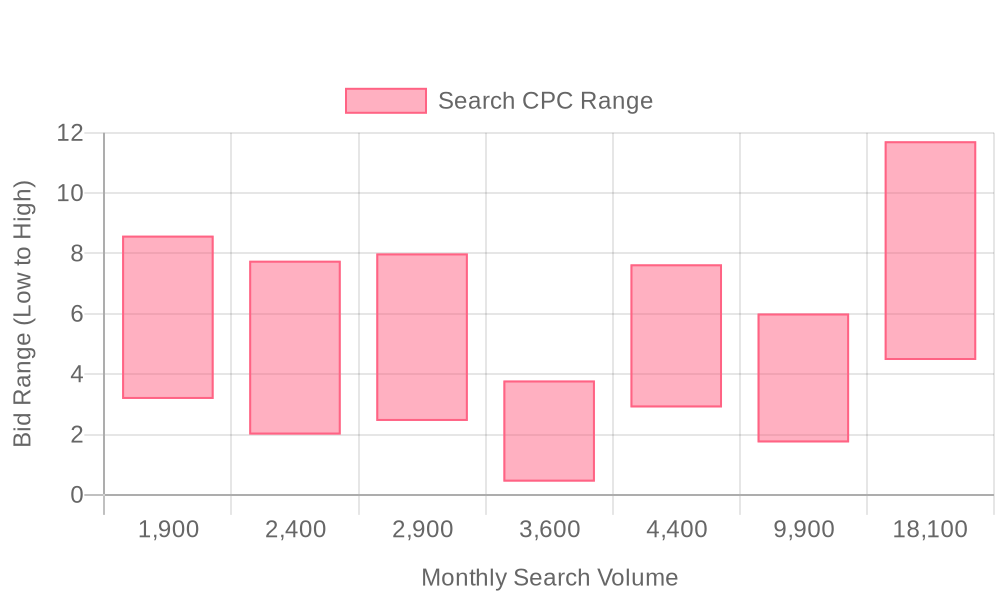
| Industry | Keyword | Monthly Search Volume | Competition Level | Low Bid | High Bid |
| Healthcare Staffing | nurse staffing agency | 1900 | MEDIUM | 3.18 | 8.59 |
| Healthcare Staffing | medical staffing solutions | 2400 | LOW | 2 | 7.76 |
| Healthcare Staffing | healthcare staffing | 2900 | LOW | 2.45 | 8 |
| Healthcare Staffing | maxim healthcare staffing | 3600 | LOW | 0.44 | 3.79 |
| Healthcare Staffing | medical staffing agencies | 4400 | MEDIUM | 2.9 | 7.64 |
| Healthcare Staffing | cross country healthcare | 9900 | LOW | 1.74 | 6.01 |
| Healthcare Staffing | travel nurse agencies | 18100 | MEDIUM | 4.47 | 11.72 |
A precise keyword strategy is foundational for healthcare staffing companies aiming to drive high-quality leads through Google Ads. The most successful campaigns center on intent-rich search queries such as "healthcare staffing agencies near me," "nurse staffing jobs," "temporary healthcare jobs," and "locum tenens physician roles." These terms surface when healthcare professionals or hiring managers are actively looking for staffing solutions, ensuring that ad spend is directed toward users most likely to convert. Leveraging long-tail variations, like "emergency RN contract positions" or "travel nurse jobs with housing", enables further refinement, reducing wasted clicks and improving applicant quality. For more inspiration, review real-world healthcare Google Ads campaign examples to benchmark your keyword approach.
Integrating keyword targeting with compliance is critical in healthcare industry advertising. Every chosen keyword must respect HIPAA guidelines, avoiding sensitive health-related phrases that could inadvertently reveal or solicit protected information. Marketers benefit by layering negative keywords such as "free training" or "unlicensed caregiver" to exclude irrelevant traffic, thus sharpening campaign efficiency. For staffing agencies, aligning ad groups tightly around roles, specialties, and geographic availability ensures relevancy and higher Quality Scores, directly impacting ad visibility and cost-per-click. Explore additional best practices for Google Ads in healthcare for further insights on compliance and campaign structure.
Optimizing Google Ads budgets in this sector requires constant monitoring of keyword performance and intent signals. Real-time analytics, fueled by platforms capable of identifying visitor companies and in-market behaviors, allow marketers to shift spend dynamically toward the best-converting search terms and audiences. As leads interact with ads and move through the recruitment funnel, dynamic audience lists update automatically, focusing remarketing and nurture efforts on the most engaged prospects. This closed-loop approach, with enriched lead data synced seamlessly into CRM and marketing automation platforms, enables healthcare recruitment teams to track both online and offline conversions, delivering a true picture of ROI and supporting data-driven budget allocation for ongoing growth. To see how this works in practice, get started for free with Sona.
Step-by-Step Campaign Execution Framework
A well-executed Google Ads strategy for healthcare staffing delivers measurable pipeline, not just site traffic. By pairing precise intent signals with unified audience data, revenue teams move from guesswork to systematic candidate and client acquisition, whether the campaign type is Search, Performance Max, or a mix built around seasonal surge staffing.
Step 1: Build Targeted Keyword Lists
Success in healthcare staffing advertising depends on designing keyword lists that mirror the real-world needs of both candidates and hiring organizations. This involves segmenting keywords by role type, specialty, and geographic relevance, capturing intent from searchers looking for specific job categories. With advanced visitor identification, marketers can map keywords not only to high-volume searches but also to companies and individuals showing recent in-market signals. To explore proven keyword and campaign strategies in healthcare, review these best practices for Google Ads in healthcare.
The upgrade most healthcare staffing advertisers miss is going beyond raw keyword volume to layer in intent and identity signals. By connecting website-visitor data and CRM records with Sona Marketing Measurement, you can see which specific search terms bring in the accounts and customers that actually convert, and weight your keyword and bidding strategy toward those rather than the terms with the highest search volume alone.
Step 2: Develop Ad Copy
Ad copy in healthcare staffing must address candidate motivations and client pain points with clarity and precision. Each segment, from travel nurses to allied health professionals, requires bespoke messaging that aligns with their unique needs and expectations. Using real-time behavioral data, teams can tailor language to resonate with active jobseekers, highlighting benefits like signing bonuses, flexible schedules, or location-specific perks. For additional inspiration on campaign messaging, see these healthcare Google Ads campaign examples.
Step 3: Design Landing Pages
Effective landing pages are purpose-built for each staffing campaign, maintaining message alignment and visual continuity from ad to form submission. Instead of relying on generic career pages, healthcare staffing teams develop unique experiences for each audience segment, optimizing conversion rates. Integrating CRM and ad platforms allows enriched audience data to flow seamlessly, pre-filling forms and personalizing content for repeat visitors. To further boost conversions, learn how PPC landing pages improve healthcare marketing.
Step 4: Implement Optimizations
Continuous optimization is essential for maximizing the ROI of healthcare staffing campaigns. By using granular performance metrics and intent signals, marketers shift budget toward top-converting accounts and suppress spend on low-value segments. Advanced conversion tracking, including online and offline attribution, shows which channels and touchpoints produce real hires, not just clicks or form fills. As the funnel evolves, syncing enriched leads and audience data with Google Ads, HubSpot, or Salesforce keeps follow-up immediate and relevant, closing the loop on every qualified interaction.
Sona Marketing Measurement closes the gap between clicks and revenue. It captures ad clicks with first-party measurement, ties each one through UTM capture and ad-platform APIs to the matching record in your CRM, and reports ROAS by keyword and campaign instead of by last-click form fill. Feeding that revenue signal back into Smart Bidding and Performance Max compounds over time: the algorithms optimize toward booked healthcare staffing revenue, not cheap leads.
Tips on Expanding Your Healthcare Staffing Presence
Expanding your healthcare staffing presence requires precision in targeting, continuous audience engagement, and data-driven decision-making. Top-performing staffing organizations combine digital marketing innovation with industry-specific strategies to reach and convert high-intent healthcare professionals and clients. For ongoing strategies and case studies, explore our healthcare staffing PPC insights.
- Utilize cross-promotional retargeting strategies to reconnect with previous contacts: Effective retargeting extends beyond simple ad impressions. By leveraging visitor identification, marketers can pinpoint returning healthcare administrators or clinicians who previously engaged with your site but did not convert. Dynamic audience segmentation updates in real-time as candidates and clients move through recruitment stages, ensuring your Google Ads for Healthcare Staffing consistently reach the most relevant individuals. This approach reduces wasted spend and increases the likelihood of re-engagement with those already familiar with your brand.
- Upsell supplementary services based on CRM data insights focusing on high-value client needs: Integrating CRM data with your digital ad platforms allows marketing teams to identify which hospital systems or clinics have previously expressed interest in premium staffing solutions. By syncing enriched lead profiles into advertising channels and tailoring messaging to their historical interactions, you can present targeted upsell opportunities. This not only maximizes revenue per client but also ensures that ad creative and offers directly address urgent staffing gaps or compliance requirements unique to each organization.
- Form alliances with healthcare associations that align with targeting efforts for better engagement: Strategic partnerships with relevant healthcare associations grant access to member lists, events, and co-branded marketing opportunities. These alliances amplify your reach within specialized segments, such as travel nursing or allied health, and provide third-party credibility. For inspiration, review this nurse recruitment marketing case study. Customized healthcare staffing ads can be delivered to members based on association data, improving engagement rates and positioning your firm as a trusted industry resource.
- Customize ads for state or regional markets to tackle geographical targeting pain points: Healthcare staffing demand varies significantly by region due to licensing, local shortages, and regulatory factors. By utilizing geo-targeting within your Google Ads campaigns, you can adapt messaging and offers to reflect state-specific incentives, compliance requirements, or urgent hiring needs. Regional personalization also enables granular budget allocation, shifting spend dynamically to markets with the highest conversion potential based on real-time in-market behavior.
- Use search data to inform new content development for comprehensive marketing, addressing the core challenge of understanding your audience: Analyzing search queries and on-site behavior reveals emerging job roles, trending certifications, and unmet client needs in healthcare staffing. This intelligence guides the creation of landing pages, blog posts, and recruitment resources that directly answer candidate and client questions. Deepen your strategy with actionable Google Ads campaign examples and unify insights with attribution best practices to prioritize content with the greatest potential to attract high-quality leads and strengthen domain authority in healthcare staffing advertising.
Beyond Google Ads: Winning the AI Answers Healthcare Staffing Buyers Now Trust
Paid search captures demand at the moment someone types a query. But a fast-growing share of healthcare staffing buyers no longer start at Google at all, they ask ChatGPT, Gemini, or Perplexity before they ever run a search, and Google's own AI Overviews increasingly summarize an answer above the traditional results. If your business isn't referenced in those AI answers, you're invisible at the exact moment buyers build their shortlist.
Sona AI Visibility shows where your business shows up across ChatGPT, Gemini, Perplexity, Google AI Overviews, and 10+ engines, and, much like a keyword report, which prompts actually send you buyers, so you can prioritize the ones that convert. Run the two together and you cover the entire buyer path: get cited where buyers research (AI Visibility), then prove which of that demand turns into booked revenue (Marketing Measurement).
Helpful resources
Conclusion
The staffing firms winning in Google Ads right now aren't the ones with the biggest budgets, they're the ones who can tell which click became a filled shift and which one was noise. That distinction, not a bigger spend, is what compounds over a year of campaigns.
The near-term shift to watch is where buyers start their search at all. As more facility administrators and staffing coordinators ask AI tools for recommendations before they ever type a query into Google, the agencies that show up in those answers, and can prove which of that traffic actually converts to placements, will out-compete those still optimizing for clicks alone.
To fully realize the benefits of this approach, start for free to see the platform's capabilities firsthand. Combine data-driven targeting with identity resolution and measurement built for a market where every placement counts.
FAQ
What are the best practices for Google Ads in healthcare staffing?
Best practices for Google Ads in healthcare staffing include precise keyword targeting tailored to clinical and administrative roles, using advanced audience targeting techniques, optimizing landing pages for specific roles, and integrating multi-channel marketing for consistent messaging and improved lead conversion.
How can I ensure my Google Ads are HIPAA compliant?
To ensure HIPAA compliance, avoid using sensitive health-related keywords that could inadvertently reveal protected information and utilize negative keywords to exclude irrelevant traffic, maintaining a focus on compliance and campaign efficiency.
What budget should I allocate for Google Ads in healthcare staffing?
Budget allocation should be dynamic and based on real-time analytics and intent signals, focusing on high-converting search terms and audiences while regularly monitoring keyword performance for optimal spend.
What are the key metrics to track for Google Ads in healthcare?
Key metrics to track include conversion rates, ROI, audience engagement levels, search query performance, and the effectiveness of multi-channel integration to ensure that marketing efforts translate into high-quality leads.
How do I apply for Google Ads healthcare certification?
The article does not provide specific steps for applying for Google Ads healthcare certification, and further research or contacting Google Ads support may be necessary for guidance.







