


A food wholesaler's best prospects rarely fill out a form. A procurement manager comparing suppliers at 11pm, a chef scrambling to replace a canceled delivery, they search, click, and often leave without a trace, which makes conventional Google Ads tracking nearly useless for judging what's working. Closing that gap requires matching keyword and audience strategy to how bulk buyers actually search, then connecting ad spend to the accounts that eventually place orders. This guide walks through optimizing Google Ads for food wholesalers, from campaign structure to the identity and attribution tools that reveal which clicks turn into customers.
How to Generate Food Wholesaler Leads with Google Ads: A Step-by-Step Guide

Food wholesalers operate in a fast-moving and competitive marketplace where high-value relationships are driven by speed, trust, and data precision. Leveraging Google Ads enables these businesses to reach B2B buyers and procurement professionals precisely when they are searching for new suppliers, specialized products, or urgent fulfillment solutions, as outlined in this overview of Google Ads for foodservice marketing.
Effective lead generation in this sector demands a data-driven approach that integrates paid search into the broader marketing mix. Many high-potential buyers never fill out a form or call directly from an ad, so tracking engagement and intent signals beyond last-click conversions matters. Enriched tracking and intent modeling help marketers identify and prioritize accounts that signal real buying readiness, not just those who click through to a landing page.
Targeting B2B customers in the food industry means deploying keyword and audience strategies that reflect the language of bulk purchasing, compliance, and logistics. Company-level identification lets marketers see which businesses and roles are visiting their site, even without a form fill, rather than treating that traffic as anonymous. Revenue teams can then update audience segments as buyers move through the funnel, so high-value prospects get timely, relevant messaging at each stage.
Aligning landing pages and ad creative is essential for maximizing conversion rates. Food wholesalers need uncluttered, clearly defined pathways that make it easy for busy buyers to request catalogs, set up sample deliveries, or open negotiations. Real-time lead routing and enriched profile data hand every inbound inquiry to the right sales rep without delay, closing the gap between digital engagement and sales action and shortening the sales cycle.
Continuous performance optimization sustains ROI over time. Predictive insights drawn from both online behavior and offline sales data inform real-time budget shifts toward campaigns and keywords most likely to convert. True closed-loop attribution replaces static reporting, measuring every dollar spent on Google Ads for food wholesalers against actual revenue, not just clicks or form fills, so teams can demonstrate impact and justify ongoing investment.
Cross-channel integration further amplifies results by connecting Google Ads with CRM, email, and sales platforms. Delays between platforms are minimized through real-time data sync, ensuring that every new lead or audience update is immediately actionable across the marketing stack. Food wholesalers benefit from unified lead management, more efficient remarketing, and faster response times, critical advantages in a sector where speed to engagement often determines who wins the deal.
This guide delivers a step-by-step framework for B2B marketers and business owners in the food wholesale industry to generate high-quality leads with Google Ads. Each section focuses on strategies that drive qualified demand, supported by data enrichment and real-time audience management, to help food wholesalers achieve measurable growth. If you're ready to put these strategies into action, you can get started for free with Sona.
Why Does Google Ads Matter for Food Wholesalers?
Food wholesalers operate in a landscape where timing and precision drive growth. The ability to connect with decision-makers at the precise moment they search for solutions is what sets leading distributors apart from their competition. Google Ads gives food wholesalers a platform to reach procurement managers, chefs, and retail buyers as they actively seek new suppliers or urgent inventory, capturing high-value opportunities that traditional outreach often misses. For a detailed overview of how Google Ads can attract more customers and grow your brand online, see this guide to Google Ads in foodservice marketing.
Reaching complex, specialized audiences is a core challenge in food wholesale marketing. Google Ads allows wholesalers to segment and directly target buyers by intent, region, and business profile, so ad spend focuses on those with purchasing authority. Marketers who use Sona's Identity Resolution can go beyond anonymous website traffic, pinpointing companies and roles actively researching bulk food procurement. This lets sales and marketing teams prioritize and engage the most promising accounts with personalized outreach.
Securing high-margin accounts requires more than just visibility; it demands a strategy that prioritizes leads based on their readiness to buy. Leveraging intent signals and in-market behavior, advertisers can dynamically shift budgets toward accounts that show intent, such as those browsing high-volume SKUs or comparing supplier certifications. With these insights, sales teams can respond precisely when urgent supply needs or seasonal peaks drive immediate demand, ensuring no opportunity is lost.
Entering new markets or expanding into underserved regions is another area where Google Ads excels for food wholesalers. Granular geographic targeting and local keyword strategies help pinpoint emerging demand, letting businesses establish a presence before competitors saturate the space. Sona's Audiences tool keeps segments synced as leads move through the buying journey, so marketing efforts stay relevant at every stage.
Integrated measurement and attribution is essential for food wholesalers who need to justify every marketing dollar. By tracking the entire journey from ad click to closed sale, whether online or offline, teams can close the loop on campaign effectiveness, identify which keywords and audiences drive the highest ROI, and reallocate budget accordingly. To explore best practices for tracking and maximizing ROI from offline marketing channels, visit our offline attribution guide. For teams ready to streamline wholesale lead generation and optimize campaigns, get started for free with Sona and see how seamless measurement can drive business growth.
Common Types of Google Ads Campaigns for Food Wholesalers

- Search Campaigns: Search campaigns are essential for food wholesalers ready to capture urgent, high-intent leads. These campaigns appear when business buyers are actively seeking bulk ingredients, emergency deliveries, or new distribution partners, meeting them at the critical decision stage. With Sona's Identity Resolution, marketers can identify not only anonymous traffic but the specific companies making these queries, enabling dynamic budget allocation that prioritizes accounts showing real buying intent and maximizes return on ad spend. For a step-by-step playbook on leveraging this data, visit the Sona playbooks.
- Display Ads: Display ads provide persistent brand visibility on food industry sites, procurement forums, and business publications. Consistency across these touchpoints reinforces your reputation as a reliable wholesale supplier, especially when buyers are comparing multiple vendors. By leveraging Sona Audiences, you can automatically update display targets as prospects move deeper into the buying funnel, ensuring that your messaging evolves to match each stage of the decision process. Explore digital marketing tips for wholesale food distributors to further optimize your approach.
- Video Ads: Video campaigns excel at illustrating the complexities of food supply logistics, certifications, and large-scale fulfillment capabilities. For B2B buyers, seeing operational scale and safety practices in action builds trust and accelerates the path to inquiry. Enhanced Sona Audiences makes it possible to serve video ads only to procurement teams who have engaged with specific products or downloaded key resources, driving meaningful engagement from stakeholders with real purchasing authority.
- Remarketing: Remarketing campaigns are highly effective for re-engaging previous site visitors or leads who have shown interest but delayed decision-making. By reinforcing your brand and addressing common objections, you increase touch frequency and remain top-of-mind when buyers are ready to finalize supplier agreements. Sona Destinations ensures that remarketing lists are always current, automatically adding new leads and suppressing converted accounts for precise budget use. For more on maximizing campaign impact, see the Sona blog.
- Assets: Ad assets, such as location and call extensions, offer immediate proof of legitimacy and facilitate direct communication. For food wholesalers, these assets can highlight regional fulfillment centers, certifications, or direct sales lines, making it easier for buyers to reach out quickly. With Sona Buyer Journeys, every asset engagement is tracked and attributed, giving clear insight into which details drive qualified inquiries and where to focus optimization efforts.
Where to Find Growth Opportunities
Food wholesalers ready to scale their digital advertising efforts must pinpoint where their Google Ads investments can yield the highest impact. Identifying these opportunities requires a nuanced understanding of industry dynamics, competitor positioning, and evolving buyer intent across the wholesale food supply chain. For a deeper dive into marketing analytics and how it supports these efforts, explore our collection of articles on attribution and revenue optimization.
- Leveraging Vertical Keywords: Wholesalers can capture specialty demand by developing keyword portfolios tailored to niche services such as organic produce sourcing, halal-certified distribution, or emergency restaurant restocking. This approach connects campaigns directly to high-value market segments, aligning with broader food industry advertising strategies and driving engagement with decision-makers who seek precise solutions. When platforms update Audiences in real time based on in-market activity, marketers can swiftly reallocate budget to verticals that show the strongest conversion momentum, ensuring ad spend always supports the most promising revenue streams.
- Conducting Competitor Gap Analysis: Auction insights and competitor benchmarking reveal untapped keyword and placement opportunities. By comparing share of voice and impression metrics, food wholesalers can spot regions or product lines where rivals are underrepresented. Addressing these gaps with tailored campaigns increases visibility and positions the brand as a first-choice supplier in underserved areas. When Sona's Identity Resolution surfaces the companies behind anonymous ad clicks, sales teams can prioritize outreach, closing the loop between ad investment and qualified wholesale lead generation.
- Targeting Industry-Specific Placements: Strategic placement on trade sites, restaurant procurement platforms, or foodservice management resources guarantees exposure when organic reach is limited. This approach ensures that ad creative lands in front of procurement officers and executive chefs at the precise moment they evaluate new vendors. When CRM and ad accounts remain in sync, enriched lead profiles can be delivered directly to sales and marketing teams, enabling personalized follow-ups and reducing the friction from click to contract.
- Content Retargeting: Utilizing digital assets such as whitepapers, case studies, and supplier comparison videos keeps the brand top-of-mind throughout the B2B buying journey. Retargeting campaigns anchored in content consumption data can nurture hesitant leads with new information, helping to overcome objections and reinforce value. Advanced conversion tracking, including both online and offline touchpoints, allows teams to measure the true influence of these efforts, optimizing future retargeting flows for higher ROI and more predictable deal cycles.
How to Apply Audience Segmentation for Food Wholesalers
Beyond these formats, Performance Max campaigns are worth testing for food wholesalers with established conversion data, since they let Google's automation combine Search, Display, and other inventory to find buyers across channels from a single feed of products and creative.
Food wholesalers operate in a complex B2B environment where customer needs, purchase cycles, and deal values can vary significantly between target groups. Precision audience segmentation is the foundation for increasing campaign relevance, improving engagement rates, and ensuring every marketing dollar reaches the right account at the right buying stage. Segmenting audiences based on real business attributes and in-market behaviors allows food wholesalers to move beyond generic outreach and deliver messaging that resonates with each unique buyer type.
- Define Distinct Customer Segments: Differentiating between restaurant chains and independent grocers is essential to avoid wasted spend and deliver tailored value propositions. Restaurant chains may seek consistency, negotiated pricing, and streamlined logistics, while independent grocers often prioritize local sourcing and flexible order minimums. Mapping account-level traits and aligning ad messaging with each segment's operational priorities ensures budget goes to the audiences most likely to convert. Enriched Identity Resolution lets marketers pinpoint not only the company but the decision-maker engaging with the content.
- Overlay Intent Signals: Recognizing where companies are in their buying journey transforms campaign effectiveness. Tracking intent signals, such as restocking cycles or seasonal spikes, enables the delivery of timely offers and content. When a buyer demonstrates in-market behavior, such as multiple visits to high-margin product pages or requests for compliance documentation, ad budgets can shift to focus on those ready to make high-value purchases. Platforms that update audience segments in real time allow marketers to act on these signals quickly, ensuring that high-converting accounts receive personalized attention as their intent evolves.
- Segment Ad Groups: Tailoring creative assets and offers to well-defined groups drives higher engagement and conversion rates. For example, emergency fulfillment messaging appeals to restaurants facing last-minute shortages, while value bundle promotions resonate with grocers preparing for holiday demand. Segmenting ad groups by customer type and stage in the funnel ensures that each prospect sees the content most relevant to their immediate needs. Dynamic audience management tools automatically update these groups as leads progress or change status, keeping creative aligned with actual buyer journeys.
- Validate Conversion Paths: Seamless integration between ad platforms and CRM is critical for accurate attribution and efficient follow-up. Ensuring that every lead generated by Google Ads for Food Wholesalers is tracked from click to closed deal provides the full-funnel visibility revenue teams demand. When conversion data, including both online and offline actions, flows directly into CRM, sales can prioritize the hottest accounts while marketing optimizes campaigns using true revenue outcomes, not just form fills. This level of data symbiosis eliminates blind spots and enables smarter budget allocation for ongoing Google Ads optimization. To see how seamless segmentation and tracking can transform your pipeline, get started for free with Sona.
This is also where measurement changes the economics. With Sona Marketing Measurement you can identify the companies and buyers behind your ad clicks, not just anonymous sessions, and segment audiences by who actually becomes a customer. That lets you build bid adjustments and audience signals around the segments that convert and de-prioritize the ones that don't, so you feed Google's algorithms "this click became a paying food wholesalers customer" instead of just "someone filled out a form."
Keyword Strategy & Sample Target Terms
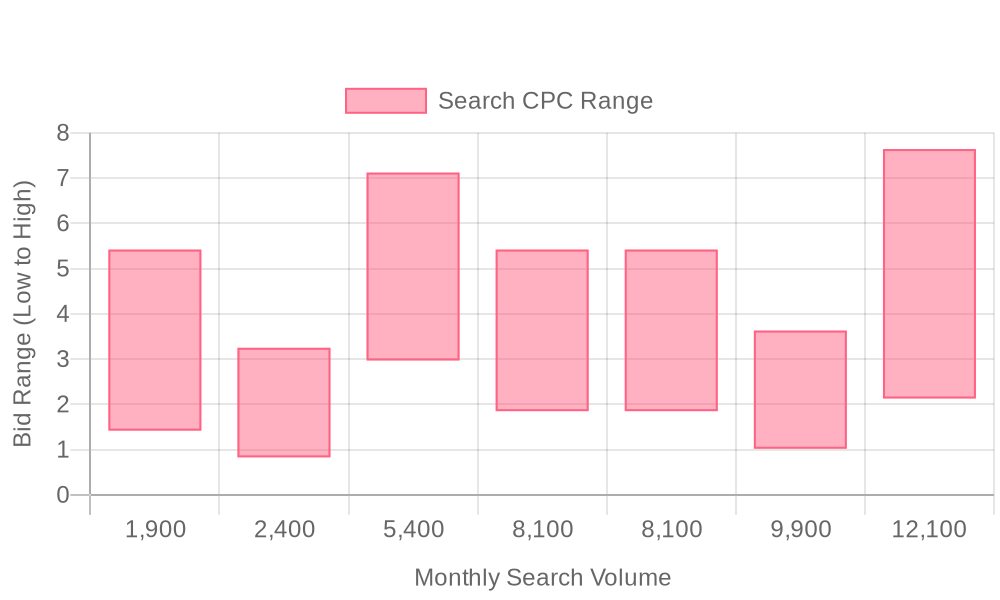
| Industry | Keyword | Monthly Search Volume | Competition Level | Low Bid | High Bid |
| Food Wholesalers | restaurant wholesale | 1900 | HIGH | 1.42 | 5.42 |
| Food Wholesalers | bulk food online | 2400 | HIGH | 0.83 | 3.25 |
| Food Wholesalers | wholesale food distributors | 5400 | MEDIUM | 2.97 | 7.12 |
| Food Wholesalers | food wholesalers | 8100 | MEDIUM | 1.85 | 5.42 |
| Food Wholesalers | wholesale food | 8100 | MEDIUM | 1.85 | 5.42 |
| Food Wholesalers | wholesale meat | 9900 | MEDIUM | 1.02 | 3.63 |
| Food Wholesalers | food distributors | 12100 | LOW | 2.13 | 7.64 |
Maximizing ROI from Google Ads for food wholesalers begins with a focused keyword strategy that aligns closely with how actual buyers search online. B2B food purchasing is distinct: procurement professionals, chefs, and grocery managers rely on highly specific queries to source bulk ingredients, specialty products, and reliable distribution partners. By targeting search terms that directly reflect real-world sourcing needs, food wholesalers can ensure their ads reach decision-makers when intent is at its highest. For additional insights on leveraging Google Ads in the foodservice sector, see this overview of Google Ads for foodservice marketing.
Targeting precise local modifiers is essential for wholesalers serving defined territories or regional markets. Terms such as “food wholesalers near me” or “bulk food distributor [city/region]” capture buyers searching within your logistical footprint. This approach not only increases local relevance but also ensures your Google Ads budget is spent reaching prospects most likely to convert. For more strategies, explore this collection of marketing analytics articles.
Long-tail and niche keywords reduce wasted ad spend by filtering for high-intent searches unique to food distribution. Examples include "organic bulk rice supplier," "restaurant food service distributor," or "wholesale gluten-free snack provider." These terms attract buyers with urgent needs and clear specifications, often corresponding to higher-value transactions. Accurate keyword grouping within campaigns allows for tailored messaging and landing pages, creating a frictionless experience from first click to inquiry. Sona's Identity Resolution can help reveal which companies and people are visiting your website, even if they don't fill out a form.
Negative keywords play a critical role in budget optimization. Filtering out terms such as “recipes,” “retail,” or “home delivery” prevents irrelevant clicks from non-B2B shoppers, protecting your Google Ads budget for wholesalers. This level of precision ensures that every ad impression is an opportunity to engage a relevant commercial buyer, not a general consumer.
A robust keyword strategy for food wholesalers should include a mix of foundational terms such as ‘food wholesalers near me,’ ‘bulk food supply,’ and ‘B2B food distribution.’ Continually refining these lists with real search data enables agile adjustments as buyer preferences shift seasonally or in response to supply chain dynamics. Sophisticated platforms can further enhance performance by identifying anonymous site visitors, surfacing which keywords drive engaged traffic, and dynamically syncing in-market audiences to keep your targeting sharp as leads progress through the funnel. To put these strategies into action, get started for free with Sona and align your Google Ads campaigns with real-time market demand.
Step-by-Step Campaign Execution Framework
Step 1: Build Targeted Keyword Lists
Constructing a keyword strategy for Google Ads for food wholesalers starts by clustering terms around food service segments, such as restaurant supply, institutional catering, or specialty grocery, and layering in precise regional modifiers, since most B2B food searches carry a location or delivery radius. This approach is detailed in this overview of Google Ads for foodservice marketing, which highlights how segmentation and intent-based targeting drive higher-value leads. Marketers can also watch for seasonal and compliance-driven query spikes, holiday restocking, allergen or certification requirements, sudden supply disruptions, and use intent signals to catch these surges and align spend with real buyer activity.
Company-level identification lets marketers move beyond anonymous clicks and see which organizations are engaging with each keyword group. This supports dynamic budget allocation: when a cluster starts attracting buyers from target accounts, marketers can shift more spend into those segments, aligning investment with real-world opportunity.
The upgrade most food wholesalers advertisers miss is going beyond raw keyword volume to layer in intent and identity signals. By connecting website-visitor data and CRM records with Sona Marketing Measurement, you can see which specific search terms bring in the accounts and customers that actually convert, and weight your keyword and bidding strategy toward those rather than the terms with the highest search volume alone.
Step 2: Develop Compelling Ad Copy
Effective ad copy for food wholesale marketing speaks directly to the operational pain points of business buyers: supply reliability, pricing flexibility, and regulatory compliance. A distributor scrambling to replace a no-show supplier or a buyer needing proof of a specific certification before they'll even consider a vendor responds to messaging that offers an immediate answer, like "Fastest bulk delivery for restaurants" or "Certified organic wholesale, next-day shipping." For more inspiration on industry-specific messaging, explore these PPC tactics for food products to differentiate your value proposition and prompt urgent engagement.
Real-time intent insights, derived from behavioral data, enable creative teams to adjust messaging based on what matters most to buyers in each stage of their journey. If analytics reveal that a segment is increasingly focused on sustainability or local sourcing, ad copy can pivot to emphasize those differentiators, ensuring relevance and higher engagement rates.
Step 3: Design Effective Landing Pages
High-performing landing pages in Google Ads campaigns for food wholesalers align tightly with their respective ad messages and keyword groups. Each page should feature clear, industry-specific calls to action, such as “Request B2B pricing,” “Download bulk catalog,” or “Book a wholesale consultation”, and remove any unnecessary steps that could disrupt the conversion flow. For practical tips on optimizing landing pages and integrating with ad platforms, see this guide to Google Ads for restaurants. Mirroring the buyer’s journey progression, these pages must offer tailored information, including certifications, logistics capabilities, and bulk ordering tools that address the specific needs highlighted in the ad.
For B2B advertising, seamless CRM and ad platform integration enables dynamic audience updates: as leads submit forms or interact with key landing page elements, they are automatically segmented and nurtured through relevant follow-up campaigns. This ensures every high-intent visitor receives timely, personalized engagement based on their position in the sales funnel.
Step 4: Implement Data-Driven Optimizations
The foundation of Google Ads optimization for food wholesalers is leveraging conversion data and smart bidding tools to refine outreach strategies. By analyzing which keywords, creatives, and landing pages drive the highest quality leads and closed deals, revenue teams can confidently reallocate budget toward the best-performing assets. Learn more about conversion tracking for food and beverage manufacturers to maximize your campaign ROI and maintain competitiveness.
With advanced conversion attribution, food wholesalers gain a clear view of which touchpoints influence wholesale lead generation and customer acquisition. Seamless sync between enriched CRM data and Google Ads enables continuous audience refresh: as prospects move from research to negotiation, their ad experience evolves, increasing the likelihood of conversion and improving overall campaign ROI. This feedback loop creates a foundation for sustainable growth and superior market positioning in the digital marketing landscape for food wholesalers.
Sona Marketing Measurement closes the gap between clicks and revenue. It captures ad clicks with first-party measurement, ties them through UTM capture and ad-platform APIs to the matching record in your CRM, and reports ROAS by keyword and campaign instead of by last-click form fill. Feeding that revenue signal back into Smart Bidding and Performance Max compounds over time: the algorithms optimize toward booked food wholesalers revenue, not cheap leads.
Tips on Expanding Your Food Wholesale Presence
Food wholesalers can extend their market reach by harnessing data-driven strategies that foster both initial engagement and sustained growth. Maximizing impact requires a proactive blend of content, targeted campaigns, and continuous optimization rooted in actionable insights.
- Cross-Promoting Content: Leveraging educational resources and in-depth guides keeps your brand relevant beyond the first conversion. By consistently delivering valuable information, you reinforce your expertise and stay top-of-mind for wholesale buyers considering repeat or expanded purchases. Post-conversion nurturing through tailored content can significantly increase customer retention and average order value.
- Upselling Related Services: Segmented audience data unlocks opportunities to present high-value offers at the ideal moment in the buyer’s journey. When enriching your CRM with detailed account-level insights, you enable dynamic audience updates and precision targeting. This means your upsell and cross-sell messages reach the right stakeholders, such as procurement managers or executive chefs, precisely when they are most likely to convert, leading to more efficient advertising spend and higher deal sizes.
- Localizing Campaigns: Food wholesale markets often vary dramatically by geography. Creating state or metro-specific campaigns allows you to tailor messaging, offers, and bid strategies to align with local demand, regulations, and competitive dynamics. By analyzing granular, real-time location data, you can optimize Google Ads budget for wholesalers at the regional level and ensure your resources are allocated to the highest-potential territories.
- Enhancing Content Strategy: Integrating search data into your broader marketing initiatives ensures every asset is informed by actual market demand and buyer intent. Keyword trends and performance insights from Google Ads can guide your blog topics, landing page messaging, and sales collateral, resulting in more relevant and persuasive communications that resonate with wholesale decision-makers.
Implementing Google Ads for food wholesalers successfully depends on intelligent keyword management, a clear read on audience segments, creative that speaks directly to B2B buyers, and ongoing optimization. Tightly integrated with your overall digital marketing for food wholesalers, these tactics compound: sharp creative captures attention and drives qualified leads at critical decision points, while Identity Resolution lets you act on high-intent opportunities as they arise. Testing and refining these approaches consistently positions your wholesale operation for measurable growth.
Beyond Google Ads: Winning the AI Answers Food Wholesalers Buyers Now Trust
Paid search captures demand at the moment someone types a query. But a fast-growing share of food wholesalers buyers no longer start at Google at all, they ask ChatGPT, Gemini, or Perplexity before they ever run a search, and Google's own AI Overviews increasingly summarize an answer above the traditional results. If your business isn't referenced in those AI answers, you're invisible at the exact moment buyers build their shortlist.
Sona AI Visibility shows where your business shows up across ChatGPT, Gemini, Perplexity, Google AI Overviews, and 10+ engines, and, much like a keyword report, which prompts actually send you buyers, so you can prioritize the ones that convert. Run the two together and you cover the entire buyer path: get cited where buyers research (AI Visibility), then prove which of that demand turns into booked revenue (Marketing Measurement).
Helpful resources
Conclusion
The wholesalers pulling ahead right now are the ones treating identity and attribution as core infrastructure, not an add-on: they know which companies are browsing before a form is filled, and which keywords actually produce customers rather than clicks. As more buyer research shifts into AI tools and away from a visible search box, that same infrastructure, first-party measurement tied to real revenue, is what will let you prove and defend ad spend no matter where the query happens.
To unify your go-to-market data and see which campaigns are actually producing customers, start for free with Sona.
FAQ
What are the best practices for Google Ads in the food wholesale industry?
Best practices include using enriched tracking and intent modeling, aligning landing pages and ad creative, integrating data-driven optimizations, and ensuring continuous performance optimization to enhance targeting and sales.
How can food wholesalers effectively target B2B customers using Google Ads?
Food wholesalers can target B2B customers by deploying tailored keyword and audience strategies, tracking intent signals, and using real-time data to dynamically update audience segments and deliver relevant messaging.
What budget should food wholesalers allocate for Google Ads?
Budgets should be dynamically adjusted based on predictive insights and real-time data to focus on campaigns and keywords that show the highest likelihood to convert and drive ROI.
What keywords should food wholesalers use in their Google Ads campaigns?
Food wholesalers should use long-tail and niche keywords like 'organic bulk rice supplier' and 'wholesale gluten-free snack provider,' along with local modifiers to capture high-intent searches.
How can food wholesalers measure the success of their Google Ads campaigns?
Success can be measured by using closed-loop attribution to track the entire journey from ad click to closed sale, allowing teams to see actual revenue outcomes and adjust budgets accordingly.







