


A cracked hull, a spiderwebbed pool shell, a chip in a shower pan, fiberglass damage rarely waits for a convenient time, and the person searching for a fix is usually ready to book. Google Ads lets fiberglass repair businesses show up in that exact moment, ahead of the slower work of word-of-mouth or organic rankings. Done well, it bridges the gap between someone's search and their first phone call. Done poorly, it burns budget on clicks from people who were never going to become customers. The businesses that win are the ones that can tell which prospects are real, even when those prospects never fill out a CRM form, and target their spend accordingly.
How to Generate Fiberglass Repair Services Leads with Google Ads: A Step-by-Step Guide

Fiberglass repair companies compete for a narrow band of shoppers who are often searching under pressure, a cracked boat hull before a weekend trip, a damaged tub before a home sale closes, a fleet vehicle panel that needs fixing before it's back on the road. A data-driven Google Ads program lets these businesses prioritize visibility with the customers who are actually ready to buy, rather than spreading budget thin across casual browsers. For a broader look at Google Ads mechanics in adjacent repair trades, see this guide on Google Ads for auto repair shops.
Aligning paid search within a broader marketing strategy ensures that campaigns are not siloed, but instead work in tandem with organic, referral, and outbound efforts. When revenue and marketing teams unify their demand generation tactics, they achieve a holistic view of customer journeys and can allocate budget precisely where it has the highest impact. Learn more about unifying your approach with actionable playbooks for B2B marketing and sales strategies.
- Data-first campaign alignment: Start by mapping your Google Ads initiatives to current pipeline stages and revenue goals. Use unified data sources to identify high-intent segments, so your ads focus on prospects most likely to convert. Marketers leveraging granular insights can shift spend in real time as new buying signals emerge, ensuring optimal cost per lead and increasing campaign ROI.
- Tailored keyword and audience targeting: Avoid generic targeting that wastes budget on low-intent clicks. Instead, segment audiences by service type, urgency, and location. With the right platform integrations, marketers can enrich Google Ads with CRM, website, and offline engagement data, moving beyond anonymous impressions to directly target decision-makers at companies identified as in-market for fiberglass repair. Audience segments automatically refresh as leads progress, so remarketing and lookalike campaigns always reflect your most promising opportunities.
- Landing page and creative synchronization: Campaigns that drive traffic to generic or mismatched landing pages see poor conversion rates. High-performing fiberglass repair advertisers ensure landing pages mirror ad messaging, highlight trust signals, and streamline the path to quote requests or consultations. Dynamic content adapts offers and visuals based on real-time visitor data, personalizing the experience for each prospect and improving conversion rates.
- Performance optimization and predictive targeting: Continuously monitor which keywords, ads, and landing pages yield the highest lead quality. Use advanced attribution to connect Google Ads conversions with CRM and offline sales, eliminating guesswork from ROI reporting. With intent data and predictive analytics, marketers can automatically prioritize budget toward campaigns and keywords that consistently generate qualified leads, reducing wasted spend and increasing deal velocity.
- Cross-channel integration for cohesive strategy: Siloed campaigns send mixed signals to prospects and fragment brand impact. Integrate Google Ads with email, organic search, and other digital marketing efforts to create unified journeys. When visitor identification and audience sync are tightly managed, every touchpoint reinforces the next, so no intent signal is lost and digital campaigns contribute more to total pipeline.
Why Does Google Ads Matter for Fiberglass Repair Services?

Fiberglass repair services face a unique set of marketing challenges, from pinpointing high-intent customers to responding rapidly to urgent service requests. Digital ad platforms like Google Ads allow these businesses to focus on individuals actively researching repair solutions, ensuring every ad dollar is invested in audiences with a genuine need. For a deeper look at how fiberglass repair companies can reach their ideal market, explore this overview of fiberglass repair services.
- Specialized Audience: Google Ads enables fiberglass repair companies to target homeowners, boat owners, and facility managers at the exact moment they're searching for repair services. This precision means marketing budgets reach decision-makers ready to act, improving lead quality and conversion rates. With company-level identity resolution, marketers can move beyond anonymous clicks to see which companies are engaging with their site, unlocking more personalized follow-up and faster deal velocity.
- Urgent Service Needs: Demand for fiberglass repair is often time-sensitive, making speed a competitive advantage. Google Ads delivers instant visibility for emergency and same-day repair queries, positioning your business as the first call when damage occurs. By capturing real-time in-market behavior, revenue teams can dynamically allocate budget toward high-converting segments, ensuring those most likely to convert receive immediate attention.
- Emerging Markets: The fiberglass repair industry is not static, new regions and verticals emerge as property development and recreational boating trends shift. Targeted Google Ads campaigns allow businesses to efficiently test and penetrate new markets, using geo-targeting to serve ads only where capacity and opportunity align. With dynamic audience capabilities, campaigns stay current as leads move from initial inquiry to closed opportunity, enabling seamless expansion without wasted spend.
- Data Integration: Traditional advertising often leads to fragmented reporting and missed insights. Google Ads provides robust, closed-loop analytics that unify campaign performance data with sales outcomes, closing the gap between marketing activities and revenue generation. With advanced conversion tracking and CRM synchronization, teams can attribute every lead, online or offline, back to its source, optimizing budget allocation and proving true return on investment for every advertising initiative.
Common Types of Google Ads Campaign For Fiberglass Repair Services

- Search Campaigns: Search campaigns connect fiberglass repair specialists with customers who need immediate solutions, leveraging high-intent keywords to appear at the top of search results precisely when urgency peaks. By directly targeting phrases like “fiberglass repair near me” or “emergency fiberglass crack repair,” these campaigns consistently capture prospects in active buying cycles. Paired with enriched audience insights and real-time intent data, marketers can prioritize budget for accounts showing strong purchase signals, resulting in higher lead quality and reduced acquisition costs. For in-depth tips, explore effective advertising strategies for fiberglass repair services.
- Display Ads: Display ads deliver sustained brand visibility by reaching potential clients as they browse relevant websites, industry forums, or local news platforms. Visual banners reinforce your expertise in fiberglass repair, keeping your business top-of-mind during the research phase. Advanced visitor identification tools allow marketers to refine targeting, ensuring ads reach facility managers, yacht owners, or commercial fleet operators most likely to require specialized repair services.
- Video Ads: Video campaigns highlight skilled repair processes, certifications, and real project outcomes, fostering credibility and trust. These visual stories educate buyers on the intricacies of fiberglass restoration, making complex services approachable and differentiating your offering from the competition. Dynamic audience segmentation ensures these videos appear for users actively researching “how fiberglass repair works,” aligning messaging with real-time buyer interests and maximizing educational impact. For more campaign optimization ideas, check the Ultimate Guide on Google Ads for Auto Repair Shops.
- Remarketing: Remarketing campaigns enable fiberglass repair businesses to reconnect with users who previously visited their website but did not submit a lead or request a quote. By re-engaging these warm prospects across search, display, and YouTube, businesses increase conversion rates and prevent lost opportunities. Integration with advanced CRM systems allows for automatic audience updates as leads progress through the funnel, ensuring remarketing efforts are always relevant and timely. Online and offline conversion tracking further attributes every booked repair to the precise campaign and audience segment responsible, enabling full-cycle ROI measurement for every remarketing touchpoint.
Where to Find Growth Opportunities?

Forward-thinking fiberglass repair service providers consistently achieve growth by identifying untapped market segments and aligning digital strategy with evolving customer needs. Unlocking new avenues for customer acquisition requires a methodical approach rooted in data-driven targeting and resource allocation.
- Vertical keyword targeting: Expanding beyond core repair terms into related service keywords, such as "marine gelcoat restoration" or "fiberglass pool crack repair," enables advertisers to capture audiences seeking ancillary solutions. This approach avoids the pitfalls of generic targeting that often leads to wasted ad spend and low-quality leads. For actionable tips on how to reach specialized audiences in this space, review this guide to advertising fiberglass repair services online.
- Competitor gap analysis: Utilizing auction insights from Google Ads, marketers can systematically analyze where competitors are heavily investing and where they are absent. This granular visibility helps pinpoint underserved regions or service lines, allowing for strategic reallocation of budget toward high-potential opportunities. Integrating visitor identification and real-time intent data, teams can further refine this analysis to highlight segments most likely to convert, ensuring every dollar is spent against genuine demand.
- Industry-specific placements: Advertising on directories and specialized platforms that cater directly to marine, automotive, or industrial repair audiences ensures visibility in the places that matter most. For emerging players, this strategy builds immediate credibility within niche communities while driving targeted traffic that is more likely to engage. When combined with CRM synchronization, these placements enable ongoing campaign refinement as leads move through the funnel, maximizing both reach and conversion efficiency.
Ready to uncover new customers and drive measurable growth? Get started for free with Sona.
How to Apply Audience Segmentation for Fiberglass Repair Services

Effective audience segmentation is essential for maximizing ROI in fiberglass repair advertising. Segment targeting enables precise alignment of messaging and offers with the intent and needs of each customer group, resulting in higher engagement and conversion rates. By leveraging advanced segmentation within Google Ads for Fiberglass Repair Services, marketers can move beyond generic outreach and deliver personalized experiences at scale. For further strategies on refining your segmentation and campaign approach, explore the latest marketing insights and playbooks.
- Define Segments: Begin by classifying your audiences according to their specific needs and attributes. Typical segments for fiberglass repair include residential clients seeking home or pool repairs, commercial property managers needing structural maintenance, and marine operators requiring boat or vessel restoration. Avoid blending these groups into a single campaign. Craft messaging that speaks to the unique priorities of each segment, such as rapid turnaround for commercial jobs or long-term durability for homeowners. Using robust segmentation tools, marketers can pinpoint the organizations or individuals visiting their site, transforming previously anonymous traffic into known opportunities for personalized outreach and lead nurturing.
- Overlay Intent Signals: Incorporate real-time intent signals to prioritize and respond to high-value queries. For example, segment audiences based on urgency, such as those searching for “emergency fiberglass repair near me” versus those researching “routine fiberglass maintenance.” By overlaying these signals onto existing audience lists, marketers can dynamically adjust budgets and bids to focus on prospects most likely to convert. Enhanced platforms enable revenue teams to shift spend in real time, ensuring that campaigns are always targeting accounts demonstrating immediate purchasing intent.
- Create Customized Ad Groups: Once segments and intent levels are defined, develop tailored ad groups with messaging, offers, and creative assets that resonate with each audience. Personalization increases relevance and click-through rates, particularly when ads highlight segment-specific benefits, like certified marine repair for boat owners or safety compliance for commercial projects. Dynamic audience syncing ensures that as leads progress through the funnel, their audience membership and ad exposure automatically update, delivering consistent and timely touchpoints that support each stage of the customer journey.
- Ensure Conversion Path Validation: It’s vital to connect every segment and ad group to a well-defined conversion path. Integrate marketing automation and CRM platforms to ensure all lead actions, whether online form submissions, phone calls, or offline consultations, are tracked and attributed accurately. Advanced conversion tracking enables marketers to measure true ROI across both online and offline channels, identifying which segments and messages drive the highest value conversions. Audience and lead data can be synced directly into Google Ads and CRM systems, streamlining nurture workflows and ensuring that follow-up communications are informed by real-time engagement and campaign insights.
This audience segmentation framework helps fiberglass repair organizations unify their digital marketing, act on real-time insights, and engage high-value prospects with precision. Combining granular targeting, intent data, and CRM integration lifts efficiency and delivers measurable business impact at every stage of the customer lifecycle.
This is also where measurement changes the economics. With Sona Marketing Measurement you can identify the companies behind your ad clicks, not just anonymous sessions, using first-party data, and segment audiences by who actually becomes a customer. That lets you build bid adjustments and audience signals around the segments that convert and de-prioritize the ones that don't, so you feed Google's algorithms "this click became a paying fiberglass repair services customer" instead of just "someone filled out a form."
Keyword Strategy & Sample Target Terms
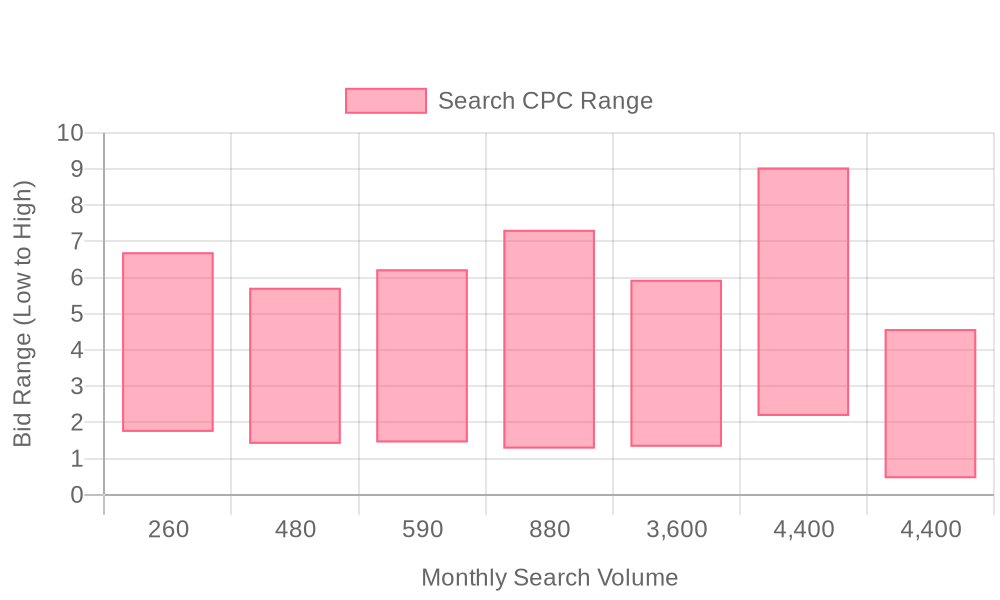
| Industry | Keyword | Monthly Search Volume | Competition Level | Low Bid | High Bid |
| Fiberglass Repair Services | mobile fiberglass repair near me | 260 | LOW | 1.74 | 6.7 |
| Fiberglass Repair Services | gel coat repair near me | 480 | LOW | 1.41 | 5.72 |
| Fiberglass Repair Services | gelcoat repair near me | 590 | LOW | 1.45 | 6.23 |
| Fiberglass Repair Services | fiberglass repair services | 880 | LOW | 1.28 | 7.32 |
| Fiberglass Repair Services | fiberglass boat repair near me | 3600 | LOW | 1.33 | 5.94 |
| Fiberglass Repair Services | fiberglass repair near me | 4400 | LOW | 2.18 | 9.04 |
| Fiberglass Repair Services | fiberglass boat repair | 4400 | HIGH | 0.46 | 4.58 |
A precise keyword strategy is a foundational element for successful Google Ads for Fiberglass Repair Services. High-intent, industry-specific keywords like "emergency fiberglass repair," "fiberglass restoration services," or "marine fiberglass repair near me" attract users who are actively looking for fast solutions and are more likely to convert. For a deeper dive on keyword analysis, see this keyword analysis for 'fiberglass materials' and explore our blog for marketing and attribution insights.
Filtering out irrelevant traffic is equally important. Negative keywords such as "DIY fiberglass repair," "fiberglass repair kit," or "fiberglass insulation" prevent ads from being triggered by users who are not seeking professional help. This targeted approach reduces wasted spend and improves lead quality, as budgets are directed to searches that matter. By continuously monitoring search query reports and updating negative keyword lists, advertisers keep campaigns focused on their ideal audience and maintain a steady stream of qualified inquiries.
For revenue teams using advanced platforms, keyword targeting can be dynamically refined based on Sona's intent signals. When enriched data identifies that a visitor is actively researching commercial repair projects rather than consumer DIY solutions, campaigns can automatically prioritize and shift budget to those higher-conversion opportunities. Integrating CRM data into audience lists also ensures remarketing reaches only people who have engaged meaningfully, rather than generic site visitors. This pairing of keyword strategy and dynamic audience management helps fiberglass repair providers get more from their budget while cutting manual oversight.
Step-by-Step Campaign Execution Framework
A focused, data-driven advertising approach delivers superior results in the fiberglass repair industry. Modern revenue teams benefit most from a structured execution framework that blends precise targeting, high-impact creative, and adaptive performance measurement. Explore additional insights and actionable advice for B2B marketing teams in our collection of playbooks.
Step 1: Build Targeted Keyword Lists
- Service-specific keywords: Campaign success starts with exhaustive research into high-intent, service-specific terms. Phrases like "fiberglass hull repair," "emergency fiberglass crack repair," and "mobile fiberglass repair" attract prospects with immediate needs. Using keyword analysis for 'fiberglass materials' helps refine your list and improve targeting with data-driven precision.
- Locality modifiers: Including location-based modifiers such as city names or "near me" enhances campaign precision. This approach ensures ads appear for users searching within the business’s actual service area, reducing wasted spend and driving higher lead quality. By syncing real-time visitor data, marketers can dynamically update keyword lists and prioritize spend on locales demonstrating heightened buying intent.
The upgrade most fiberglass repair services advertisers miss is going beyond raw keyword volume to layer in intent and identity signals. By connecting website-visitor data and CRM records with Sona Marketing Measurement, you can see which specific search terms bring in the accounts and customers that actually convert, and weight your keyword and bidding strategy toward those rather than the terms with the highest search volume alone.
Step 2: Develop Compelling Ad Copy
- Industry challenge headlines: Effective ad copy resonates by addressing common pain points like structural damage, urgent repairs, or warranty needs. Headlines should make the value proposition explicit, such as "24/7 Fiberglass Repair" or "Certified Gelcoat Restoration." For more inspiration on crafting high-performing ads, review this guide to Google Ads for auto repair shops.
- Trust-building elements: Incorporating certifications, customer reviews, and evidence of past success within ad copy fosters immediate credibility. When ad accounts are fueled by dynamic audiences, teams can tailor messaging to mirror the concerns and motivations of different segments, further increasing conversion potential. Continuous audience enrichment ensures ads speak directly to the evolving needs of both new and returning prospects.
Step 3: Design Effective Landing Pages
- Content alignment: Each landing page must tightly align with its associated ad group, reflecting the specific service or solution promised in the ad. This removes friction from the user journey and sustains engagement from the initial click through to inquiry or booking. For industry-specific landing page inspiration, visit this overview of fiberglass repair services.
- Seamless navigation: High-performing landing pages minimize distractions and guide users through a clear conversion path. Features like pre-filled forms for returning visitors and context-aware calls-to-action can be powered by unified data platforms, ensuring every touchpoint is optimized for conversion. The ability to sync user journey data from ad interactions to CRM systems provides granular attribution, allowing marketers to refine page design based on true downstream outcomes.
Step 4: Implement Data-Driven Optimizations
- Smart bidding strategies: Conversion-focused bidding fueled by actual lead outcomes outperforms manual bid management. Integrating CRM conversion data and predictive lead scoring into bidding algorithms allows budget to flow toward the highest-value prospects in real time.
- Continuous refinement: Advanced platforms enable B2B teams to monitor which keywords, ads, and audiences yield the greatest ROI across both online and offline channels. Automated audience sync keeps remarketing lists fresh as leads move through the funnel, while integrated attribution reveals the full customer journey from ad click to closed deal. This end-to-end visibility lets marketers double down on tactics that drive measurable business outcomes in fiberglass repair advertising.
Sona Marketing Measurement closes the gap between clicks and revenue. It captures every ad click with first-party tracking, ties that click through UTM capture and ad-platform APIs to the actual record in your CRM, and reports ROAS by keyword and campaign instead of by last-click form fill. Feeding that revenue signal back into Smart Bidding and Performance Max compounds over time: the algorithms optimize toward booked fiberglass repair services revenue, not cheap leads.
Tips on Expanding Your Fiberglass Repair Presence
Expanding your presence in the fiberglass repair industry requires a blend of tactical advertising, data-driven segmentation, and localized strategy. Businesses that leverage advanced digital targeting see measurable boosts in lead quality and market coverage, translating directly to higher revenue and increased share in both established and emerging territories.
- Cross-promotion through retargeting: Integrating cross-promotion into retargeting campaigns amplifies the reach of your content marketing, ensuring prospects remain engaged across multiple touchpoints. Retargeting visitors who interacted with your repair service content or educational resources keeps your brand top of mind, while synchronizing audience updates from your CRM ensures messaging adapts as intent signals shift. This seamless data flow enables marketers to nurture prospects with relevant offers, driving return visits and higher conversion rates.
- Upsell opportunities via segmentation: Using segmentation data from your CRM, you can unlock targeted upsell opportunities by identifying customers most likely to need additional repair services or premium upgrades. By mapping engagement signals and service history, you can trigger timely, personalized campaigns that increase average deal size. When platforms facilitate CRM-to-ad sync, these high-value segments can be pushed directly into Google Ads audiences, optimizing spend toward the most lucrative prospects and ensuring no upsell opportunity is missed.
- Localized campaign execution: Localizing ad campaigns is critical for capturing demand in key metros or fast-growing markets. Advanced targeting features allow you to zero in on high-conversion zip codes, adjust bids in real time based on in-market behaviors, and tailor ad messaging to resonate with local repair needs or regional pain points. With unified tracking, marketers can attribute lead quality and revenue impact by location, refining campaigns to concentrate budget where growth potential is highest.
Efficient execution of Google Ads for Fiberglass Repair Services hinges on the precision of your keyword targeting, audience segmentation, and integration across digital channels. For a deeper dive into effective campaign strategies, check out this guide to advertising fiberglass repair services online. By connecting enriched audience insights and real-time intent data, businesses can minimize wasted spend, tighten follow-up cycles, and deploy campaigns that consistently outperform slower, less targeted approaches.
Beyond Google Ads: Winning the AI Answers Fiberglass Repair Services Buyers Now Trust
Paid search captures demand at the moment someone types a query. But a growing share of fiberglass repair services buyers no longer start at Google at all, they ask ChatGPT, Gemini, or Perplexity before running a search, and Google's own AI Overviews increasingly summarize an answer above the traditional results. If your business isn't referenced in those AI answers, you're invisible at the exact moment buyers build their shortlist.
Sona AI Visibility shows where your business shows up across ChatGPT, Gemini, Perplexity, Google AI Overviews, and 10+ engines, and, much like a keyword report, which prompts actually send you buyers, so you can prioritize the ones that convert. Run the two together and you cover the entire buyer path: get cited where buyers research (AI Visibility), then prove which of that demand turns into booked revenue (Marketing Measurement).
Helpful resources
Conclusion
The businesses that pull ahead in fiberglass repair advertising won't be the ones bidding highest on "fiberglass repair near me." They'll be the ones who can trace a click all the way to a booked job, then feed that signal back into their bidding so Google's algorithms learn to find more of the same. As AI tools increasingly shape where buyers start looking, that same discipline, know who converts, prove it, and double down, will matter even more.
To fully realize these opportunities, consider taking the next step. Start for free and see how Sona can sharpen your Google Ads campaigns with the insights and identity data you need to compete.
FAQ
What are the best Google Ads strategies for fiberglass repair services?
The best strategies include data-first campaign alignment, tailored keyword and audience targeting, creative synchronization with landing pages, performance optimization, predictive targeting, and cross-channel integration.
How can I effectively target customers using Google Ads for fiberglass repair?
Effectively target customers by avoiding generic targeting, segmenting audiences by service type, urgency, and location, and using CRM, website, and offline engagement data to directly target decision-makers. Measure geographic performance across your campaigns to refine local targeting and maximize impact in high-opportunity markets.
What is the average cost of Google Ads for fiberglass repair services?
The article does not provide specific cost details for Google Ads in the fiberglass repair industry.
What keywords should I use for Google Ads in the fiberglass repair industry?
Use high-intent, industry-specific keywords like 'emergency fiberglass repair,' 'fiberglass restoration services,' and 'marine fiberglass repair near me,' while avoiding irrelevant traffic with negative keywords such as 'DIY fiberglass repair.'
How can I measure the success of my Google Ads campaigns for fiberglass repair services?
Measure success by connecting Google Ads conversions with CRM and offline sales, using advanced attribution to eliminate guesswork from ROI reporting, and employing conversion tracking to attribute every lead back to its source.







