





Navigating the world of digital marketing can be complex, especially for crawl space contractors who often face challenges in tracking high-value prospects. Missing these opportunities leads to significant revenue loss. Google Ads offers a valuable opportunity to bridge this gap by enhancing visibility when clients are searching for specific services. This ensures that your investment in online advertising results in actual leads. Contractors can leverage advanced tools to identify prospects early and craft tailored ads that speak directly to their intent, ultimately driving lead generation and increasing their bottom line.
How to Generate Crawl Space Contractor Leads with Google Ads: A Step-by-Step Guide

Digital marketing for crawl space services demands accuracy and speed, as homeowners seek immediate solutions for urgent structural and moisture issues. Effective Google Ads strategies for contractors combine data-driven targeting with real-time engagement, ensuring that high-intent leads are captured and nurtured before competitors respond. For more insights on maximizing campaign efficiency and converting urgent homeowners, visit Google Ads strategies for home services.
Maximizing lead generation for crawl space contractors starts with a tailored approach to PPC for crawl space contractors. By leveraging intent signals within Google Ads, marketers can rapidly identify decision-ready prospects, refine audience segments, and allocate budgets to the most promising opportunities—delivering a powerful edge in crawl space advertising.
Delayed or generic outreach can result in lost revenue and wasted spend. By integrating predictive analytics, dynamic audience management, and advanced attribution, crawl space contractors can unify fragmented data and focus on the accounts most likely to convert. This method not only streamlines demand generation but also powers crawl space business growth with measurable ROI improvements.
The following step-by-step guide outlines how to execute high-performing contractor PPC campaigns. From keyword selection to landing page optimization, each tactic is designed to drive qualified leads, maximize ad spend, and build sustainable pipelines with online advertising for contractors. To see these strategies in action, get started for free with Sona.
Why Does Google Ads Matter for Crawl Space Contractors

Crawl space contractors operate in a market where homeowner urgency and local competition demand precise, agile marketing. Google Ads enables these businesses to appear exactly when high-value prospects search for encapsulation, waterproofing, or mold remediation, capturing intent at its peak and turning search activity into qualified leads.
Generic digital campaigns can waste budget on irrelevant clicks, but Google Ads allows for granular audience segmentation and targeting. By leveraging real-time data and behavioral signals, contractors can align their messaging with specific homeowner concerns and property needs, driving higher engagement and maximizing project margins within targeted service areas.
Segmented campaigns tailored to different service lines or urgency levels yield stronger results for crawl space business growth. For example, remarketing lists can focus on homeowners who abandoned a quote request, while custom audiences target those researching seasonal moisture issues. When combined with unified data across the funnel, this approach streamlines demand generation and supports ongoing lead generation for crawl space contractors.
Integrated tracking and attribution further distinguish Google Ads in crawl space marketing. By connecting online actions—such as form submissions or calls—with offline sales outcomes, contractors can measure genuine ROI and optimize budget allocation. Real-time syncing of enriched audience data into Google Ads and connected CRMs ensures that marketing and sales teams can quickly identify high-intent leads, personalize outreach, and accelerate the sales cycle for contractor PPC campaigns. To experience unified tracking and optimization, get started for free with Sona.
Common Types of Google Ads Campaigns for Crawl Space Services

Contractors in the crawl space industry face unique challenges in reaching motivated homeowners who are ready to take action. Deploying the right mix of Google Ads campaign types ensures visibility at every touchpoint, from initial research to final decision. Effective campaign orchestration not only captures high-intent demand but also builds long-term brand authority in a competitive home services market. For additional inspiration on how PPC advertising drives growth for home service providers, review this PPC advertising overview for home services, which highlights strategies tailored to businesses seeking more customers.
- Search Campaigns: Search campaigns are the foundation of PPC for crawl space contractors, targeting high-intent queries such as “crawl space encapsulation near me” or “emergency crawl space repair.” These campaigns prioritize appearing when homeowners signal urgent problems, driving qualified leads that are more likely to convert. Integrating real-time visitor identification allows marketers to go beyond anonymous clicks, pinpointing which companies or property owners are engaging with ads and shifting spend to the highest-value opportunities.
- Display Campaigns: Display Ads extend reach across home improvement and local news sites, providing persistent brand presence to homeowners researching foundation and moisture issues. These campaigns build awareness with visually engaging creative, ensuring crawl space contractors stay top-of-mind throughout the decision cycle. Dynamic audience segmentation enables automatic updates to target lists as new prospects enter or move down the funnel, maximizing ad relevance and efficiency.
- Video Campaigns: Video Ads help contractors explain complex crawl space solutions, such as encapsulation processes or mold remediation, through compelling storytelling. Demonstrating expertise via before-and-after project footage or expert walkthroughs increases trust and boosts engagement. Contractors can leverage real-time intent data to prioritize video placements for in-market audiences, scaling reach with those most likely to request an inspection or quote.
- Remarketing Campaigns: Remarketing re-engages past website visitors who showed interest but did not convert, offering a crucial second touch for lead generation for crawl space contractors. Personalized ad sequencing reminds prospects of unique offers, testimonials, or seasonal promotions, driving them back to conversion-optimized landing pages. By syncing CRM data and offline actions (such as completed inspections), remarketing lists become more precise and impactful, ensuring that contractors invest retargeting budget on genuinely sales-ready leads.
Utilizing campaign extension options like location, call, and structured snippet extensions further boosts credibility and conversion rates. Predictive engagement models, fueled by unified online and offline data, help contractors score leads and allocate budget toward those segments most likely to convert, optimizing the entire digital marketing for crawl space services ecosystem. This integrated approach transforms crawl space advertising into a predictable, high-ROI growth engine for contractors looking to scale. If you want to see how these strategies can work for your company, get started for free with Sona.
Where to Find Growth Opportunities
Identifying growth opportunities in crawl space advertising requires precision in both digital targeting and message placement. By leveraging intent-rich keyword strategies and strategic content distribution, contractors can drive sustainable lead generation and build a defensible market position.
- Specialized keyword targeting: Focusing on long-tail, service-specific search terms such as "crawl space encapsulation near me" and "emergency crawl space repair" enables contractors to reach homeowners with immediate needs. These high-intent queries convert at a higher rate because they reflect urgent demand rather than general research. Building keyword lists around local terminology and pain-point phrases ensures campaigns attract the right audience and maximize ad spend efficiency.
- Competitor gap analysis: Evaluating the digital footprints of other local crawl space contractors uncovers missed opportunities in both paid and organic search. By identifying which keywords or service offerings are underrepresented, businesses can quickly claim market share in less saturated segments. Analyzing ad copy and landing page experiences further reveals messaging gaps that can be filled with unique value propositions or service guarantees.
- Niche directory placements: Listing crawl space services in industry-specific directories and home improvement platforms increases visibility among homeowners actively seeking solutions. Enhanced directory profiles with reviews, certifications, and service details reinforce credibility and support omnichannel acquisition. These placements drive referral traffic and support branded search growth.
Content retargeting amplifies reach by re-engaging website visitors who have shown interest in crawl space services but have not taken action. Distributing educational resources such as moisture control guides or video case studies positions contractors as trusted advisors, nurturing prospects until they are ready to convert. Using dynamic retargeting audiences, marketers can ensure that messaging evolves as leads progress through the funnel, delivering the right content at the right time.
Technology-driven marketing enables crawl space contractors to capture real-time intent signals from web visitors and shift budget toward accounts exhibiting high buying likelihood. By identifying the companies behind anonymous traffic and syncing enriched audience data into Google Ads, HubSpot, or Salesforce, contractors can build CRM-integrated campaigns that prioritize the most valuable leads. This approach also empowers revenue teams to measure true ROI with unified online and offline attribution, ensuring that every advertising dollar supports crawl space business growth. To see how you can transform your marketing strategy, get started for free with Sona.
How to Apply Audience Segmentation for Crawl Space Contractors

Effective audience segmentation is foundational for crawl space contractors looking to accelerate qualified lead generation and maximize marketing resources. By tailoring campaigns to specific property types and decision makers, contractors can deliver relevant messaging that aligns with actual service needs, accelerating the sales cycle and increasing conversion rates. Segmenting by residential and commercial customers ensures each group receives offers and creative that reflect their unique pain points, driving higher engagement and more efficient budget use. For actionable PPC campaign ideas tailored to contracting, review these PPC advertising strategies for general contractors.
Disconnected intent signals, such as mismatched keywords or non-specific landing pages, often undermine campaign performance. Modern segmentation strategies connect the dots between search intent, on-site behavior, and CRM data, enabling contractors to shift spend to high-converting segments. Leveraging intent signals empowers teams to identify urgent in-market actions—like repeated searches for “emergency crawl space repair”—so dynamic audience rules can immediately prioritize budget and messaging to those prospects.
Customizing ad groups after segmentation allows for highly focused ad copy and landing experiences. Each segment can be tracked throughout the customer lifecycle, from first click to scheduled inspection and final project close. With advanced attribution, including integrated online and offline conversion tracking, contractors gain clear visibility into which audience segments consistently drive revenue. When platforms sync enriched audience data and conversion outcomes back into ad channels in real time, every campaign iteratively improves, ensuring that marketing dollars are spent where they matter most for crawl space business growth. Get started for free with Sona.
Keyword Strategy & Sample Target Terms
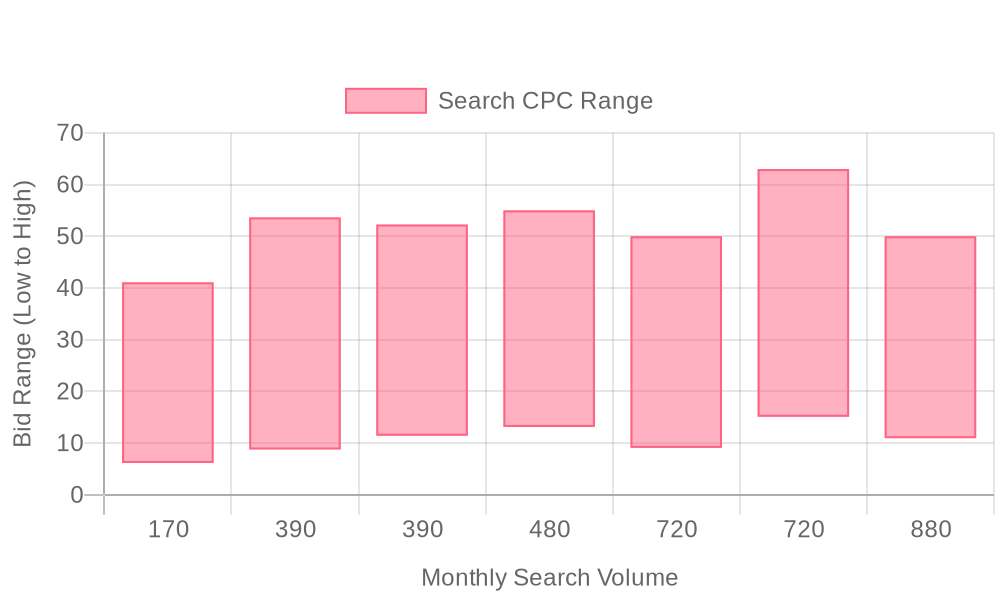
| Industry | Keyword | Monthly Search Volume | Competition Level | Low Bid | High Bid |
| Crawl Space Contractors | best crawl space encapsulation companies near me | 170 | MEDIUM | 6.18 | 41.09 |
| Crawl Space Contractors | crawl space foundation repair near me | 390 | LOW | 8.78 | 53.64 |
| Crawl Space Contractors | crawl space experts near me | 390 | MEDIUM | 11.44 | 52.26 |
| Crawl Space Contractors | crawl space services near me | 480 | MEDIUM | 13.14 | 55 |
| Crawl Space Contractors | crawl space contractors near me | 720 | MEDIUM | 9.09 | 50 |
| Crawl Space Contractors | crawl space companies near me | 720 | MEDIUM | 15.1 | 62.99 |
| Crawl Space Contractors | crawl space contractors | 880 | LOW | 10.96 | 50 |
Keyword selection shapes the effectiveness of every digital marketing initiative for crawl space contractors. High-value search terms like "best crawl space encapsulation company," "affordable crawl space repair," and "crawl space moisture removal near me" capture prospects who are ready to make decisions, not just browse for information. Prioritizing these high-intent phrases consistently delivers higher conversion rates and more qualified leads, as highlighted by conversion rate benchmarks, especially when campaigns cluster keywords by specific services and local intent signals.
Grouping keywords by service category—such as "crawl space encapsulation," "mold remediation," or "vapor barrier installation"—allows for more relevant ad messaging and tailored landing page experiences. Adding local modifiers like city names or "near me" ensures the ads appear only to homeowners seeking immediate solutions in target service areas. For strategies on effective ad grouping and local targeting, explore our ultimate guide to B2B marketing reports. This type of precise targeting lowers wasted ad spend and increases the chance of connecting with homeowners who have urgent crawl space concerns.
- Service-based keyword clustering: Organize keywords to reflect each core offering, aligning ad copy and landing pages to user intent.
- Local intent modifiers: Use geographic terms and "near me" variants to improve ad relevance for in-market homeowners.
- Long-tail opportunity keywords: Target phrases such as "emergency crawl space repair [city]" or "crawl space waterproofing cost estimate" for increased conversion rates with lower competition.
- Negative keyword implementation: Exclude irrelevant or DIY-related searches to prevent budget leakage on unqualified clicks.
Modern platforms now enable marketers to go beyond traditional keyword targeting. By identifying the companies and visitors engaging with specific terms, campaigns can prioritize spend toward high-value accounts and segments using Sona. Real-time intent signals help shift budget dynamically to keywords that consistently generate leads deep in the funnel. As prospects engage with site content—requesting quotes, downloading guides, or booking inspections—audiences automatically update, ensuring remarketing efforts reach only those moving toward purchase. With advanced attribution, contractors can trace every form submission or call back to the originating keyword, measuring true ROI from both online and offline conversions. To see how this works in practice, get started for free with Sona.
Step-by-Step Campaign Execution Framework
Precise execution is essential for crawl space contractors to extract maximum value from Google Ads. Industry leaders see measurable gains by combining hyper-targeted campaigns, relevant messaging, and unified data flows to create a seamless prospect experience that delivers higher lead quality and reduced acquisition costs. For hands-on strategies tailored to home service providers, review this Google Ads guide for home services, and explore additional insights on marketing analytics and growth.
The following framework outlines actionable steps for building, optimizing, and scaling Google Ads for crawl space contractors, supporting business growth through advanced targeting, creative alignment, and performance analysis.
Step 1: Build Targeted Keyword Lists
Effective keyword targeting starts with a blend of high-intent service terms and local modifiers. Contractors benefit from pairing core offerings like "crawl space encapsulation" and "basement waterproofing" with geographic qualifiers such as city names or “near me.” This approach ensures ads reach homeowners actively searching for crawl space solutions in your actual service area. Negative keywords are critical—excluding DIY, informational, and unrelated queries keeps spend focused on prospects ready to buy.
Tracking engagement and conversions on high-value pages, such as service request forms or booking calendars, informs ongoing keyword refinement. Revenue teams leveraging Sona can move beyond anonymous clicks, capturing granular data on which organizations are engaging with key services. This real-time intelligence helps prioritize spend for keywords that drive not just clicks, but legitimate sales opportunities.
Step 2: Develop Audience-Specific Ad Messaging
Compelling ad copy should clearly address homeowner pain points—think persistent moisture, mold risks, or property value concerns—while offering credible solutions. Including trust signals like years in business, guarantees, and review ratings establishes authority and reassures prospects. For crawl space contractors, tailoring messages to reflect the urgency of issues (“emergency repair available”) or unique differentiators (“family-owned, certified technicians”) increases relevance for each audience segment.
Segmenting audiences by intent or stage in the buying journey allows for tailored messaging that speaks directly to those most likely to convert. Dynamic audience capabilities enable real-time updates as leads progress, ensuring retargeting efforts remain tightly aligned with each prospect’s current needs. This precision drives higher click-through and conversion rates across all touchpoints.
Step 3: Align Landing Pages with Ad Intent
Landing pages must deliver on the promises made in ad copy, guiding visitors through a logical, frictionless experience. For crawl space contractors, this means immediate reinforcement of the service offered, clear calls-to-action, and visible trust markers like local awards or certification badges. Service-specific forms should be streamlined for mobile users, supporting the fast response times that high-intent prospects expect.
Maintaining messaging consistency from ad to landing page protects quality scores and reduces bounce rates. Revenue teams using unified tracking and CRM integrations can monitor which landing pages convert best, enabling rapid A/B testing and content iteration. For more on landing page experience best practices, consider integrating with Sona for seamless data activation across marketing systems.
Step 4: Optimize with Real-Time Data and Automation
Smart bidding strategies, informed by conversion data and real-time intent signals, drive continuous improvement in campaign performance for crawl space contractors. Automated bid adjustments allocate budget to search terms, audiences, and geographies with proven high returns. By layering in advanced conversion tracking—including both online form fills and offline sales outcomes—contractors can calculate true ROI, not just surface-level lead volume.
Seamless CRM and ad platform sync means enriched audiences are always up to date, helping marketers retarget prospects who have engaged with high-value pages or moved deeper into the funnel. This ongoing feedback loop supports agile optimization, allowing teams to pivot quickly based on actual prospect behavior, market shifts, and seasonal demand patterns. Get started for free with Sona.
Tips on Expanding Your Crawl Space Contractor Presence

Crawl space contractors can accelerate business growth by orchestrating coordinated content and ad strategies that target both current and untapped audiences. Leveraging segmented audience insights and localized messaging produces higher conversion rates, while upselling related services increases customer lifetime value.
Cross-promotion is essential for maximizing the impact of digital marketing for crawl space services. By sharing educational content, customer testimonials, and before-and-after project visuals across platforms, contractors reinforce expertise and stay top-of-mind with homeowners considering upgrades or repairs. This approach supports crawl space advertising goals and keeps prospects engaged throughout the decision cycle—see how PPC advertising drives leads for basement waterproofing contractors for inspiration on cross-channel strategies.
Localization is critical for penetrating target regions and driving quality leads for crawl space contractors. Tailoring Google Ads campaigns to specific service areas and zip codes ensures that budgets are spent attracting homeowners most likely to convert. Using real-time visitor identification, marketers can pinpoint companies or households engaging with ads, allowing dynamic audience expansion as new data emerges.
Extracting and analyzing search query data from Google Ads campaigns provides a feedback loop that informs future content and campaign strategy. High-performing queries reveal customer pain points and trending service requests, guiding both PPC for crawl space contractors and organic content planning. When enriched CRM data and online behavior are synced back into Google Ads, contractors can build dynamic audiences that update as leads progress through the funnel, enabling precise retargeting and more relevant upsell offers.
Advanced conversion tracking and unified attribution reveal the true ROI of each campaign and keyword. By connecting online ad interactions with offline consultations and closed deals, crawl space contractors can confidently invest in the strategies that drive measurable business results. Get started for free with Sona to transform your crawl space campaign performance and ensure every dollar spent contributes directly to business growth: Get started for free with Sona.
Conclusion
In today's competitive digital landscape, harnessing the power of Google Ads is not just an option, but a necessity for crawl space contractors aiming to enhance their online presence and drive lead generation. As we've explored, crafting a well-structured advertising strategy tailored specifically for your industry can significantly boost your visibility and attract the right clientele.
Throughout this article, we've delved into the core challenges faced by crawl space contractors, such as reaching niche markets and optimizing ad spend. We've outlined key strategies, including targeted keywords, compelling ad copy, and leveraging location-based advertising. These tactics, when executed effectively, can transform your online advertising efforts and yield tangible results.
Imagine the impact of a streamlined, data-driven approach to your Google Ads campaigns—one that not only increases your reach but also maximizes your return on investment. By implementing the insights shared, you are well on your way to achieving this transformation, positioning your business for sustained growth and success in the digital arena.
Now is the time to take action and elevate your advertising strategy. Start for free to experience our platform and its capabilities today, and discover how we can help you unify your go-to-market data and drive actionable insights for a more successful advertising journey.
FAQ
What are the best Google Ads strategies for crawl space contractors?
Effective Google Ads strategies for crawl space contractors include using data-driven targeting and real-time engagement to capture high-intent leads, leveraging intent signals to refine audience segments, and integrating predictive analytics to focus on the most promising opportunities.
How can crawl space contractors optimize their Google Ads campaigns?
Crawl space contractors can optimize their Google Ads campaigns by segmenting audiences based on intent and service needs, aligning ad messaging and landing pages with high-intent keywords, and utilizing real-time data and automation for continuous performance improvement.
What budget should crawl space contractors allocate for Google Ads?
The budget allocation for Google Ads should focus on high-intent keywords and segments that are most likely to convert, ensuring efficient use of ad spend and maximizing ROI.
What keywords should crawl space contractors target in their Google Ads?
Crawl space contractors should target high-intent keywords such as 'crawl space encapsulation near me,' 'emergency crawl space repair,' and include local modifiers like city names to ensure relevance to homeowners seeking immediate solutions.
How can I measure the success of my Google Ads for crawl space services?
Success can be measured by connecting online ad interactions with offline sales outcomes using integrated tracking and attribution, allowing contractors to assess true ROI and optimize budget allocation.