


Communication consultants sell judgment under pressure, and most prospective clients start looking for that judgment quietly, long before they pick up the phone. A CEO facing a leadership transition, a comms director bracing for a product recall, an internal team stuck rewriting the same memo, all of them search first and call second. Google Ads puts your firm in front of that search, at the moment someone types "crisis communication consultant" instead of waiting for a referral to surface. This article walks through setting up and optimizing Google Ads campaigns built specifically for communication consultants, so you can attract the right clients without wasting spend on the wrong ones.
How to Generate Communication Consultant Leads with Google Ads: A Step-by-Step Guide

The demand for communication consultants continues to rise as organizations recognize the value of expert guidance in crisis management, internal alignment, and reputation strategy. Google Ads delivers a direct channel to decision-makers seeking consultancy services, allowing professionals to surface at the precise moment prospects search for solutions. When executed with precision, these campaigns generate high-value leads, accelerate sales cycles, and improve the overall efficiency of business development efforts. For additional industry insights, see this Google Ads consultant overview.
Building a robust Google Ads program for communication consultant lead generation requires a strategic approach tailored to the nuances of B2B professional services. Success hinges on a combination of targeted keyword selection, seamless user experiences, and data-driven optimization. Using company-level fit scoring and real-time audience segmentation, consultants can focus resources on the most promising prospects and minimize spend on unqualified clicks.
- Identify key objectives and KPIs: Begin by clarifying the primary business outcomes your campaigns should drive, such as booked consultations, RFP submissions, or resource downloads. Define KPIs like cost per qualified lead, conversion rate, and deal velocity. This ensures every activity is measured against tangible results, not just impressions or clicks. Explore more B2B marketing reports to guide your KPI planning.
- Develop a tailored keyword strategy using communication-centric terms: Research high-intent phrases specific to your consulting specialty, such as "crisis communication consultant" or "executive messaging coach." Prioritize keywords that signal urgent need or decision-ready intent, as these often yield the highest conversion rates. Continually refine your keyword lists by analyzing search term reports and excluding irrelevant queries with negative keywords. For actionable tips, refer to the essential guide to account-based marketing.
- Align ads with landing pages for seamless experiences: Ensure every ad group directs prospects to a dedicated landing page that addresses their needs and mirrors your ad messaging. This alignment increases trust and relevance, directly improving lead quality. Testimonials, case studies, and concise service descriptions on these pages further establish credibility. For examples of optimized landing pages, review this Google Ads case study.
- Implement conversion tracking for closed-loop measurement: Configure conversion tracking to capture both online and offline lead actions, such as form fills, calls, and contract signings. Advanced attribution links ad interactions to actual pipeline revenue, providing a clear view of Google Ads ROI for consultants and informing future budget allocation. Learn more about offline attribution.
- Fit scoring for high-value targeting: Use firmographic signals, company size, sector, and prior engagement, to score incoming accounts and prioritize those matching your ideal client profile. This lets you allocate sales resources efficiently instead of chasing every download. Discover how ICP fit scoring can refine your targeting.
- Leverage unified data and audience sync for improved targeting: Sync enriched audience segments directly into Google Ads to dynamically update targeting as leads progress through your funnel. By unifying CRM, web, and ad data, you can react in real time to in-market signals, prioritize high-intent accounts, and orchestrate retargeting that adapts to each prospect’s engagement stage. Seamless data activation ensures your targeting remains relevant and timely.
Each of these tactics, run on a unified data foundation, lets communication consultants operate lean: fewer wasted clicks on job-seekers and students, more budget on organizations mid-crisis or mid-rebrand who need help now. The payoff is a steadier pipeline and a clearer read on which campaigns actually produce signed engagements. Ready to streamline your lead generation? Get started for free with Sona.
Why Does Google Ads Matter for Communication Consultants
Effective advertising for communication professionals depends on the ability to place your consultancy in front of the right decision-makers at the exact moment they are searching for expertise. Google Ads provides unmatched access to these stakeholders through highly targeted search campaigns, ensuring your services appear when organizations face urgent communication needs or sensitive reputation challenges. This immediate visibility is essential for consultants managing high-stakes projects, where timing and relevance directly impact contract wins and client outcomes.
Communication consultants benefit from Google Ads' data-driven insights, which allow for rapid adaptation to industry shifts, seasonal spikes, or emerging crises. Advanced analytics empower consultants to refine messaging and allocate budget based on real-time search trends, maximizing the relevance and impact of each campaign. When insights from Google Ads are seamlessly synced into your CRM, sales teams gain valuable context about prospect behaviors, enabling more personalized and strategic outreach that speaks directly to client priorities. For more on marketing analytics and attribution, explore our marketing blog.
Integrating enriched analytics, such as company-level identification, dramatically amplifies targeting efficiency. Communication consultants can move beyond generic audience segments to identify which organizations are actively engaging with their ads and website, even before those organizations fill out a form. This view enables consultants to shift budget toward high-intent, high-value accounts, while dynamically updating audience lists as leads progress through the pipeline. By leveraging unified data and real-time intent signals, consultants can drive more effective engagement, optimize campaign ROI, and ensure that outreach is always relevant to the current needs of each prospect.
Common Types of Google Ads Campaigns for Communication Consultants

- Search Campaigns: Search campaigns deliver immediate visibility to communication consultants when potential clients are actively searching for solutions to their communication challenges. By aligning ads with high-intent keywords such as “crisis communication consultant” or “executive presentation coach,” consultants can intercept urgent needs with relevant messaging and service offerings. Within Search, Responsive Search Ads let you test multiple headlines and descriptions so Google can surface the combination that best matches each query. Layering in Sona's Identity Resolution helps marketers pinpoint not just what companies are searching, but which ones are most likely to convert, making every impression more meaningful. For deeper insights, explore the role of a Google Ads consultant in driving effective PPC performance.
- Display Campaigns: Display ads help consultants maintain a steady presence across leading industry publications, blogs, and professional forums. This sustained exposure keeps your brand top-of-mind for decision-makers researching communication best practices or vendor options. When Sona Audiences are enriched and dynamically updated as leads engage with your content, display targeting becomes significantly more precise, ensuring your ads reach the right professionals at the optimal stage of their buyer journey. For tactical guidance on campaign optimization, visit our marketing blog.
- Video Campaigns: Video ads provide a platform for communication consultants to showcase expertise through case studies, client testimonials, and educational insights. These visual narratives build trust and credibility, especially when tailored to industries or pain points relevant to your ideal client profile. With Sona’s intent signals, marketers can prioritize budget on video campaigns reaching accounts demonstrating active research behavior, which enhances both engagement rates and downstream conversions.
- Remarketing Campaigns: Remarketing campaigns are essential for re-engaging website visitors who have shown prior interest but have not yet converted. For communication consultants, this means keeping your name in front of prospects evaluating multiple providers or comparing services. Sona Destinations ensure remarketing lists remain current, automatically adding or removing contacts based on their latest interactions, while advanced CRM-ad sync capabilities allow for lead nurturing across both digital and offline touchpoints. This approach not only increases the relevance of each follow-up but also directly ties re-engagement spend to actual pipeline and revenue outcomes.
Where to Find Growth Opportunities

B2B communication consultants operate in a crowded market, so finding growth means precision, not volume. The strongest consultants find room by targeting underserved segments, tracking intent signals, and making sure every touchpoint is actionable rather than decorative.
- Vertical keyword targeting: Focusing ad spend on vertical-specific keywords allows communication consultants to capture demand for specialized services, such as “internal crisis communication for fintech” or “executive speech coaching for healthcare.” This approach pulls in higher-intent prospects who are actively searching for tailored expertise, rather than broad solutions. Google Ads for Communication Consultant campaigns that use vertical targeting consistently outperform generic campaigns because they intersect with a buyer’s true needs at the right moment.
- Competitor gap analysis: Analyzing competitors’ keyword strategies and ad placements reveals untapped niches. By identifying service areas where competitors are absent or underperforming, consultants can allocate budget to fill those gaps, capturing incremental share. This tactic is especially effective when paired with first-party data activation, allowing marketers to cross-reference gaps with in-market account activity and adjust bids accordingly.
- Industry-specific forums and placements: Consultants gain an edge by advertising in places where organic content is scarce. Placing ads on industry-specific forums, association websites, or thought leadership platforms can create brand presence where peers have little or no representation. These placements often deliver better engagement rates and more qualified leads, since they reach professionals already immersed in communication challenges. For more strategies, explore our marketing and sales playbooks.
- Content retargeting: Extending the reach of educational assets through content retargeting keeps consultants top of mind for prospects who consume guides, playbooks, or on-demand webinars. Instead of letting high-value content visits go cold, consultants can retarget those visitors with follow-up offers or case studies, increasing conversion rates at every stage. Advanced systems enable dynamic audience updates, so as leads download new resources or interact with emails, audiences refresh automatically, ensuring that ad creative and budget always match the latest prospect behavior.
- CRM and activity sync: The challenge of delayed follow-up is mitigated by syncing CRM tasks with prospect signals. When a lead downloads a whitepaper or returns to a landing page, the system can immediately flag sales and trigger Google Ads retargeting sequences. This real-time integration ensures that hot leads are never missed, accelerating the sales cycle and preventing revenue leakage. Enriched audience data flows seamlessly into both ad platforms and sales tools, so marketing and sales teams can coordinate outreach with complete visibility.
These growth tactics empower communication consultants to uncover new business, differentiate from competitors, and deliver measurable ROI by connecting every marketing action to pipeline impact. Ready to unlock these strategies in your own business? Get started for free with Sona.
How to Apply Audience Segmentation for Communication Consultant Services

Audience segmentation is crucial for communication consultants who want to maximize efficiency and relevance in their Google Ads campaigns. By targeting specific segments, such as corporate communication leads and public relations experts, consultants can ensure messaging resonates with unique business challenges and communication priorities.
Success begins with defining clear client segments. For example, corporate communication leads often prioritize change management and internal alignment, while PR experts focus on media relations and reputation strategy. Segmenting these groups allows communication consultants to tailor ad copy, landing pages, and offers to directly address the pain points and objectives of each audience. For actionable ideas on campaign optimization, see this Google Ads strategies for consultants in 2025 guide.
Intent signals further refine this approach. By analyzing user behavior, such as content consumption, search queries, and engagement with industry-specific resources, consultants can identify prospects actively researching solutions. Targeting these in-market audiences allows for dynamic budget allocation toward accounts most likely to convert, preventing wasted spend on low-intent clicks and boosting overall ROI. When intent data is fragmented or disconnected from campaign targeting, conversion rates drop, highlighting the importance of unified intent attribution.
Ad groups should be built around the characteristics and needs of each audience segment. For instance, a campaign targeting executives interested in crisis communication will require different messaging and value propositions compared to those aimed at HR professionals seeking employee engagement strategies. These tailored groups enable consultants to deliver hyper-relevant ads that stand out in a crowded market and foster stronger brand authority within each niche.
Ensuring audience data is always current is essential for sustained performance. As contacts progress through the funnel, their needs and readiness to engage shift. Leveraging auto-updating CRM audiences removes manual data lag and guarantees Google Ads always reflect the most recent lead status, behaviors, and segment membership. This dynamic synchronization between CRM and ad platforms enables communication consultants to retarget website visitors who have shown high purchase intent, nurture mid-funnel prospects with educational content, and exclude existing clients from acquisition campaigns.
This is also where measurement changes the economics. With Sona Marketing Measurement you can identify the companies behind your ad clicks, not just anonymous sessions, and segment audiences by which accounts actually become customers. That lets you build bid adjustments and audience signals around the segments that convert and de-prioritize the ones that don't, so you feed Google's algorithms "this click became a paying communication consultant customer" instead of just "someone filled out a form."
Keyword Strategy & Sample Target Terms
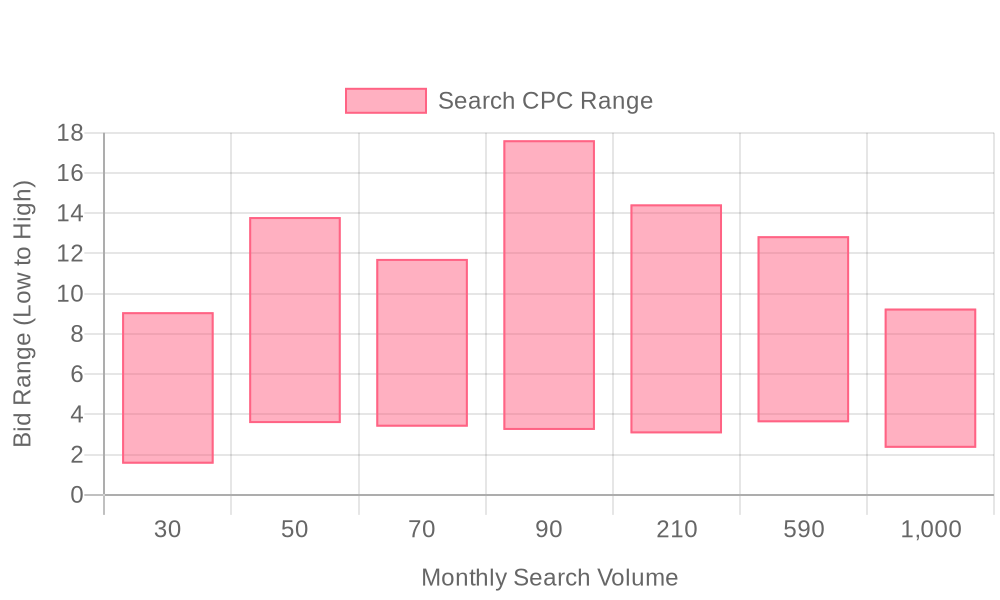
| Industry | Keyword | Monthly Search Volume | Competition Level | Low Bid | High Bid |
| Communication Consultant | freelance communications consultant | 30 | LOW | 1.55 | 9.08 |
| Communication Consultant | freelance public relations consultant | 50 | MEDIUM | 3.57 | 13.81 |
| Communication Consultant | crisis communication consultant | 70 | LOW | 3.39 | 11.73 |
| Communication Consultant | internal communications consultant | 90 | LOW | 3.23 | 17.63 |
| Communication Consultant | strategic communications consultant | 210 | LOW | 3.06 | 14.44 |
| Communication Consultant | public relations consultant | 590 | LOW | 3.61 | 12.86 |
| Communication Consultant | communication consultant | 1000 | LOW | 2.34 | 9.26 |
A sophisticated keyword strategy is central to driving qualified leads for communication consultants. Dominating search results in this sector requires a focus on long-tail, high-intent terms that reflect both industry expertise and the specific challenges potential clients are actively seeking to solve. Keywords such as "Google Ads for Communication Consultant," "Google Ads strategies for communication," and "communication consultant marketing" directly capture searchers with commercial intent, while variants like "advertising for communication professionals" and "Google Ads ROI for consultants" ensure coverage across the entire decision journey. For more insights into optimizing your keyword strategy, explore our marketing analytics blog.
To maximize campaign efficiency, it is essential to build keyword lists that align closely with buyer pain points and service offerings. For instance, targeting phrases like "Google Ads management for consultants" or "Google Ads targeting for services" isolates prospects looking for actionable solutions rather than general information. Employing negative keywords such as "jobs," "certification," or "free templates" further refines audience quality, preventing budget waste on irrelevant searches and boosting overall conversion rates. For actionable Google Ads strategies tailored to consultants, review this expert resource.
Advanced platforms now empower consultants to prioritize keywords using Sona’s intent signals. This technology helps identify not only which search terms drive the most qualified visitors but also which companies and professionals are demonstrating in-market readiness. As a result, communication consultants can dynamically adjust their keyword focus, shifting budget to terms that are actively converting high-value prospects. This data-driven approach ensures that every keyword bid is informed by both historical performance and current audience intent, supporting sustainable growth and measurable improvements in Google Ads ROI for consultants. When audience data is synced with ad accounts, marketing teams can ensure top-performing keywords are not only generating leads but also driving engagement throughout the sales funnel.
Step-by-Step Campaign Execution Framework
Step 1: Build Targeted Keyword Lists
Precise keyword selection sets the foundation for any successful Google Ads for Communication Consultant campaign. Start by researching local intent terms and service-specific phrases that mirror the real challenges your buyers face. Instead of broad terms, focus on combinations like “corporate communication training in Boston” or “crisis PR consultant for tech startups,” capturing high-value searches from decision-makers ready to engage. Using enriched visitor and engagement data, marketers can pinpoint which search terms drive the right types of leads, moving beyond anonymous traffic by leveraging Sona's Identity Resolution to reveal and score intent from visiting companies. By integrating real-time behavioral data, teams can dynamically update these lists as new trends emerge, ensuring campaigns always align with the latest market demand. Explore additional strategies in our marketing blog for ongoing keyword optimization.
The upgrade most communication consultant advertisers miss is going beyond raw keyword volume to layer in intent and identity signals. By connecting website-visitor data and CRM records with Sona Marketing Measurement, you can see which specific search terms bring in the accounts and customers that actually convert, and weight your keyword and bidding strategy toward those rather than the terms with the highest search volume alone.
Step 2: Write Compelling Ad Copy
Ad copy is the first impression for potential clients, so it must address communication pain points with clarity and authority. Highlight how your consulting addresses specific issues, such as internal misalignment or executive messaging gaps, and tie these to measurable business outcomes. Use headlines that speak directly to the urgency and stakes of communication challenges, then reinforce credibility with concise proof points or client outcomes. Leveraging real-time intent signals, marketers can test multiple messaging frameworks and instantly shift spend toward top-performing copy. For more inspiration, see how consultants are staying competitive with advanced Google Ads strategies for 2025.
Step 3: Design Conversion-Optimized Landing Pages
Landing pages must present a seamless extension of your ad message, converting interest into action with minimal friction. Each page should be tailored to the targeted service and audience segment, featuring testimonials, case studies, and concise forms to capture high-quality leads. Clear alignment between ad promise and page content reduces bounce rates and supports higher conversion rates for Google Ads management for consultants. With integrated advanced conversion tracking, marketers can attribute every lead, whether booked online or closed offline, back to the precise campaign and keyword that drove the interaction. To see this in action, review a relevant Google Ads case study that reveals campaign tactics and measurable results.
Step 4: Optimize Using Performance Data and Lead Scoring
Optimization is a continuous process that depends on actionable data and smart allocation of resources. Review campaign metrics weekly, focusing on cost-per-lead, conversion rates, and ultimate deal value to ensure your investments are producing real ROI for Google Ads for consultants. By incorporating lead scoring models, you can prioritize bids and budgets towards segments or accounts showing the strongest buying signals, maximizing impact across the funnel. Sona Destinations enables real-time syncing with CRM and marketing automation platforms, allowing enriched lead and account data to inform both ad targeting and sales follow-up, driving sustained improvements in Google Ads ROI for consultants. If you’re ready to streamline your campaign execution, get started for free with Sona today.
Sona Marketing Measurement closes the gap between clicks and revenue. It captures every ad click with first-party tracking, then ties that click through UTM capture and ad-platform APIs to the actual record in your CRM, and reports ROAS by keyword and campaign instead of by last-click form fill. Feeding that revenue signal back into Smart Bidding and Performance Max compounds over time: the algorithms optimize toward booked communication consultant revenue, not cheap leads.
Tips on Expanding Your Communication Consultant Presence

Expanding your reach as a communication consultant requires more than traditional networking. High-performing consultants combine digital visibility, targeted outreach, and data-driven engagement to consistently attract and retain high-value clients. To dive deeper into effective strategies, explore the Sona blog for expert guidance tailored to consulting professionals.
- Cross-promote educational content: Publishing webinars, downloadable guides, or case studies across multiple platforms positions you as a trusted authority. Sharing content through LinkedIn, industry newsletters, and targeted Google Ads campaigns ensures that your expertise is seen by decision-makers precisely when they are seeking solutions. Using real-time audience insights from your ad platform, you can identify which topics resonate, allowing you to double down on formats and messages that drive qualified engagement.
- Leverage local targeting: Building a strong regional presence is crucial for consultants who want to dominate specific markets. By using Google Ads targeting for services, you can focus campaigns on geographic areas with the highest demand for communication consulting. Advanced location targeting, combined with intent signals, helps shift budget to regions where in-market buyers are most active. This approach ensures your ad spend delivers maximum ROI by connecting your brand with organizations seeking local expertise.
- Deploy CRM-driven upsell campaigns: Existing clients represent your warmest audience and the highest potential for service expansion. Integrating your CRM with Destinations enables rapid syncing of enriched audience segments, so upsell campaigns reach the right contacts with relevant offers. As client needs evolve, dynamic audience updates let you retarget those showing new interest, increasing conversion rates and driving repeat business. Enhanced conversion tracking, covering both online and offline interactions, provides a clear view of true campaign impact, supporting ongoing optimization efforts.
Adopting these strategies sets a foundation for sustainable growth, helping communication consultants stand out in a crowded market. If you're ready to scale your presence and strengthen your professional brand, get started for free with Sona to unlock unified data and targeted outreach.
Beyond Google Ads: Winning the AI Answers Communication Consultant Buyers Now Trust
Paid search captures demand at the moment someone types a query. But a fast-growing share of communication consultant buyers no longer start at Google at all, they ask ChatGPT, Gemini, or Perplexity before they ever run a search, and Google's own AI Overviews increasingly summarize an answer above the traditional results. If your business isn't referenced in those AI answers, you're invisible at the exact moment buyers build their shortlist.
Sona AI Visibility shows where your business shows up across ChatGPT, Gemini, Perplexity, Google AI Overviews, and 10+ engines, and, much like a keyword report, which prompts actually send you buyers, so you can prioritize the ones that convert. Run the two together and you cover the entire buyer path: get cited where buyers research (AI Visibility), then prove which of that demand turns into booked revenue (Marketing Measurement).
Helpful resources
Conclusion
Google Ads works for communication consultants because it puts your firm in front of someone at the exact moment they need help, not months later when a referral finally comes through. That timing advantage compounds once you can see which keywords and campaigns actually produce signed clients, not just form fills.
The firms winning right now are the ones treating Google Ads as a measurement problem as much as a media-buying one, tying clicks to closed engagements so every dollar of budget shifts toward what actually books consultations. That discipline, more than any single keyword or headline, is what separates a steady pipeline from a noisy one.
To further streamline your efforts and unlock the full potential of your advertising strategies, consider integrating a platform that unifies your go-to-market data and provides actionable insights. Start for free to see it in action.
FAQ
What are the best Google Ads strategies for communication consultants?
The best Google Ads strategies for communication consultants include targeted keyword selection, seamless user experiences, data-driven optimization, and aligning ads with dedicated landing pages to improve lead quality.
How can a communication consultant benefit from Google Ads?
Communication consultants benefit from Google Ads by targeting high-intent prospects, gaining immediate visibility with decision-makers, and leveraging data-driven insights for campaign optimization and relevance.
What budget should a communication consultant allocate for Google Ads?
The article does not specify an exact budget, but communication consultants should allocate their budget based on targeted keywords, conversion tracking, and audience segmentation to ensure efficient use of resources and maximize ROI.
What are common mistakes communication consultants make with Google Ads?
Common mistakes include not aligning ads with landing pages, failing to use conversion tracking, and not segmenting audiences effectively, which can lead to wasted spend on unqualified clicks.
How do I measure the success of my Google Ads campaigns as a communication consultant?
Success can be measured by defining KPIs such as cost per qualified lead, conversion rate, and deal velocity, and using conversion tracking to link ad interactions with actual pipeline revenue.







