


Check printing sits at an odd intersection: a mature, paper-based product sold through a digital sales cycle. Buyers, accounts payable managers, payroll administrators, financial controllers, tend to search only when a real trigger hits: a bank switch, a fraud incident, a new payroll system, an audit finding. That narrow window makes Google Ads valuable and unforgiving at once. Many high-intent visitors never fill out a form, so they disappear from the CRM and the pipeline never reflects the true demand. Modern tracking now lets a business flag those visitors before they convert, feed intent-based segments back into Google Ads, and put a relevant offer in front of a buyer while the trigger is still fresh. Done well, Google Ads becomes a way to reach decision-makers at the moment of urgency, not just a line item in the marketing budget.
How to Generate Google Ads for Check Printing Leads: A Step-by-Step Guide

Modern check printing providers can achieve measurable lead growth by leveraging a structured, data-driven Google Ads strategy tailored for their unique industry needs. B2B revenue teams benefit from pinpointing ready-to-buy prospects, rapidly iterating creative, and aligning paid search with broader marketing efforts. For a deeper dive into optimizing B2B marketing, explore the Sona blog for actionable insights.
A high-performing Google Ads plan for check printing focuses on harnessing granular buyer intent signals and optimizing every campaign element for revenue impact. This process ensures no budget is wasted on unqualified clicks while maximizing the conversion potential of each engaged visitor.
- Data-Driven Paid Search: Integrating data insights across all marketing channels equips revenue teams with the visibility needed to refine spend allocation and keyword focus. Real-time analytics reveal which search terms and ad placements correlate with high-value customer actions, allowing for rapid iteration. When marketers unify company-level visitor identification with cross-channel engagement data, they can move beyond anonymous clicks and target specific companies that match their ideal customer profile. This capability enables dynamic budget shifts toward accounts showing in-market intent, ensuring paid search investments drive measurable pipeline growth. Learn how to track print ad campaigns with Google Analytics for improved offline attribution.
- Audience Targeting: Focusing keyword strategies on industry buyers means moving past basic demographics to reach business users searching for check printing solutions. Custom intent audiences and tailored keyword lists help isolate commercial buyers from consumers or job seekers. By dynamically updating audiences as leads engage across digital touchpoints, teams can keep messaging relevant and continually route ads to the most promising prospects. Automated CRM and ad platform syncs ensure that enriched audience segments seamlessly flow into Google Ads, powering precise retargeting and lookalike campaigns.
- Conversion Optimization: Aligning landing pages and creative assets with the needs of check printing customers increases conversion rates and reduces acquisition costs. A dedicated page for payroll check printing reads differently than one for secure check mailing or MICR compliance, and that specificity improves both ad relevance and Quality Score. Marketers unlock even more value by connecting online and offline conversion data, capturing the full customer journey from ad click to closed deal. This approach enables true ROI measurement and rapid optimization of messaging, forms, and offers.
- Performance Enhancements: ROI-focused optimization is achieved through continuous A/B testing of headlines, calls to action, and offers, as well as by segmenting campaigns based on audience signals. Real-time intent data helps marketers adjust bids for visitors actively researching check printing, while suppressing spend on low-value segments. Live campaign reporting surfaces which campaigns generate qualified pipeline, allowing teams to double down on top performers and pause underperformers with confidence.
- Cross-Channel Synergy: Remarketing amplifies the impact of other marketing efforts by re-engaging visitors who have shown interest but not yet converted. Seamless integration with CRM and marketing automation platforms enables synchronized messaging across email, display, and paid search, driving higher conversion rates and shortening sales cycles. Advanced tools further enhance campaign precision by layering account enrichment and intent signals, ensuring ads reach decision-makers at every stage of the buying journey. For the latest trends, see PPC strategy insights.
Executing this systematic approach transforms Google Ads for check printing services into a predictable engine for qualified lead generation and revenue acceleration. Ready to elevate your paid search results? Get started for free with Sona.
Why Does Google Ads Matter for Check Printing?

The check printing industry must address fragmented buyer journeys and complex decision cycles. Google Ads offers a direct channel to procurement teams and finance leaders exactly when they seek new solutions, enabling check printing providers to intercept purchase intent at the moment it matters most. This level of targeting reduces wasted impressions and makes it possible to allocate spend where it has the highest probability of driving revenue. For more details on tailoring account-based outreach, explore real-time audience segmentation and stay updated with actionable insights from our blog.
High-value check printing services, such as custom secure checks or enterprise-scale fulfillment, face stiff competition and fluctuating demand. Google Ads ensures these offerings remain highly visible during peak buying windows, while the platform’s flexible controls let marketers dial up or down based on real-time opportunity. Leveraging intent data and automated bidding, companies can efficiently reach segments ready to commit, maximizing both lead quality and average contract value. Learn how integrating intent signals can boost your campaign performance.
Emerging markets and underserved regions often require specialized outreach. Google Ads' geo-targeting and audience filters help providers extend their reach into new territories where traditional channels might be ineffective. With integrated analytics and closed-loop attribution, revenue teams can trace digital interactions back to offline conversions, quantifying ROI and informing future strategy. For practical methods to track offline results, see this step-by-step guide to tracking print ads with Google Analytics. When platforms unify web activity, CRM records, and ad engagement, marketers can identify which accounts are showing intent, even before a form is submitted, and shift budgets to high-converting audiences, ensuring every dollar is invested in genuine business growth.
Common Types of Google Ads Campaigns for Check Printing

- Search Campaigns: Search campaigns remain the most direct route for check printing providers to capture high-intent buyers. These campaigns target users actively searching for solutions such as "Google Ads for Check Printing," "business check printing," or "print checks online." By focusing on search intent, marketers can engage buyers who are further along in the decision process, driving qualified leads and maximizing budget efficiency. With granular insights revealing visiting companies, sales teams can prioritize follow-up with real prospects instead of anonymous web traffic.
- Display Ads: Display campaigns extend your brand’s reach across industry-relevant websites, accounting forums, and procurement platforms. These visual placements help reinforce your messaging, nurture top-of-funnel audiences, and build brand familiarity. Traditionally, display channels suffered from limited data on visitor identity. Modern platforms surface engaging organizations, quantifying hidden demand so you can focus spend on the most promising accounts and inform your outbound teams in real time.
- Video Ads: For check printing services, video ads are powerful for demonstrating expertise, software workflows, and secure printing processes. Explainer videos can visually clarify what sets your solution apart, speed, compliance, or ease of integration, while building trust with decision-makers. As you analyze video engagement, intent signals help shift budget to audiences that progress from awareness to consideration, ensuring resources are invested where return is highest.
- Remarketing: Remarketing campaigns keep your brand top-of-mind for users who have previously engaged with your website or digital content but have not converted. By delivering tailored ads to these warm leads, you encourage repeat visits and increase the likelihood of conversion. Dynamic audience updates ensure your remarketing lists reflect real-time user behavior, automatically excluding those who have already converted and prioritizing those showing renewed interest.
- Ad Assets: Leveraging ad assets such as location, call, and sitelink assets is essential for credibility within check printing advertising. These enhancements provide extra context for prospects, such as office locations, direct phone numbers, or links to compliance resources. When assets are used in conjunction with unified CRM and ad data, marketers can sync updated business details and offers, further personalizing the customer journey and streamlining the path to conversion. For more on optimizing Google Ads for check printing, see this step-by-step guide to tracking print ads with Google Analytics.
Where to Find Growth Opportunities

Growth in check printing advertising requires expanding well beyond current acquisition channels. Most businesses in this sector rely on a narrow mix of paid search and standard directories, missing rich opportunities to reach decision-makers who are actively evaluating new payment and print solutions. By targeting industry-specific forums and directories, marketers can position their brand in front of operations managers, finance leads, and business owners at the precise moment they are seeking check printing guidance or solutions.
Auto-updated industry placements allow teams to maintain a persistent presence on high-intent touchpoints such as B2B finance communities or procurement directories. Leveraging real-time audience data about where buyers are researching check printing services, marketers can prioritize placements that are consistently refreshed with the latest audience insights. This approach ensures that campaign investments are directed toward environments with proven engagement from qualified buyers, rather than static listings that quickly become obsolete. When combined with advanced visitor identification, revenue teams can move from anonymous ad impressions to pinpointing which companies are engaging with their brand across these channels, giving sales a faster path to high-value accounts.
Embracing vertical keyword targeting unlocks overlooked segments within the check printing landscape. Instead of broad, high-cost terms, focusing on niche phrases like “secure payroll check printing” or “MICR check software for banks” enables marketers to capture in-market leads who are much closer to a purchasing decision. This granular keyword approach not only reduces wasted spend but also increases ad relevance, improving both Quality Score and conversion rates. Using unified data, teams can quickly identify rising keyword trends within specific industries and shift budget to capitalize on emerging demand before competitors react. For deeper insights into advanced PPC strategies tailored for check printing, see this PPC best practices guide.
Content retargeting creates an always-on engagement engine for check printing marketing strategies. By promoting educational resources, such as fraud prevention guides, compliance checklists, or print-on-demand explainer videos, marketers nurture prospects who have demonstrated initial interest but are not yet ready to convert. Dynamic audience segmentation allows these retargeting pools to refresh automatically as leads move through the funnel, ensuring that messaging always matches the prospect’s current level of intent. With advanced attribution capabilities, teams can track the full impact of content touchpoints, connecting online resource downloads and webinar signups to eventual sales outcomes, and fine-tuning campaigns for maximum Google Ads ROI for printing.
How to Apply Audience Segmentation for Check Printing

B2B revenue teams in check printing face a complex buyer landscape, with financial institutions, payroll vendors, and commercial firms demanding tailored engagement. Powerful audience segmentation turns generic ads into highly relevant touchpoints that drive stronger conversion rates and maximize the impact of every marketing dollar. For more advanced strategies, explore our B2B marketing playbooks to discover actionable frameworks for your industry.
- Define Segments: Differentiate between sectors such as financial institutions and commercial clients.
Precision in segmentation starts with clearly identifying the primary sectors your check printing solution serves. Financial institutions care most about regulatory compliance and multi-layered security, while commercial clients often focus on ease of integration with existing accounting platforms and operational efficiency. By mapping these segments, marketers create the foundation for targeted advertising and messaging that speaks directly to the unique pain points and procurement cycles of each audience.
Disconnected intent signals can leave sales teams without the actionable insight needed to personalize their outreach or prioritize the most promising leads. By leveraging visitor identification technology, marketers can break through anonymity and pinpoint exactly which companies are engaging, what pages they view, and how deeply they interact with high-value content.
- Intent Signal Overlay: Apply signals to identify stages like procurement or upgrades.
Overlaying real-time intent signals on defined segments enables marketers to distinguish between prospects in the early research phase and those actively evaluating check printing upgrades or procurement. This alignment ensures that sales and marketing investments are focused on accounts most likely to convert, while also giving teams the context to tailor follow-up with precision. For example, in-market behavior such as repeated visits to pricing or compliance documentation can automatically trigger increased bids or targeted retargeting, ensuring that budget is allocated to the highest-converting accounts.
Some companies are solving this challenge through the use of intent data, allowing their ads to speak directly to key stakeholders. As leads move through the funnel, dynamic audiences update in real time, enriching Google Ads targeting for printing services with the latest engagement and firmographic data. Learn how to analyze Google Ads performance to maximize engagement and return on ad spend.
- Segmented Ad Groups: Customize creative and bids to align with distinct segments.
Segmented ad groups empower marketers to develop custom creative and bidding strategies tailored for each audience. Financial institutions may see ads emphasizing SOC 2 compliance and advanced fraud prevention, while commercial clients are served creative that highlights integration with payroll software and rapid onboarding. Bid adjustments ensure that higher-value or high-propensity segments receive greater visibility in competitive auctions, while less engaged audiences are managed with cost efficiency in mind. For more guidance on optimizing segment targeting, see the ultimate guide to account-based marketing.
- Conversion Path Validation: Track performance with CRM integration for improved targeting.
Conversion path validation closes the loop between segmented ads and actual sales outcomes. By syncing enriched audience and lead data directly into CRM and sales platforms, marketers can monitor which segments deliver the best pipeline and revenue results, not just clicks or form fills. This integration supports both online and offline attribution, providing a true measure of Google Ads ROI for printing and informing ongoing budget allocation and campaign optimization. The result is an agile, data-driven check printing marketing strategy that continuously refines itself for maximum effectiveness. To see these strategies in action, get started for free with Sona.
This is also where measurement changes the economics. With Sona Marketing Measurement you can identify the companies behind your ad clicks, not just anonymous sessions, and segment audiences by who actually becomes a customer. That lets you build bid adjustments and audience signals around the segments that convert and de-prioritize the ones that don't, so you feed Google's algorithms "this click became a paying check printing customer" instead of just "someone filled out a form."
Keyword Strategy & Sample Target Terms
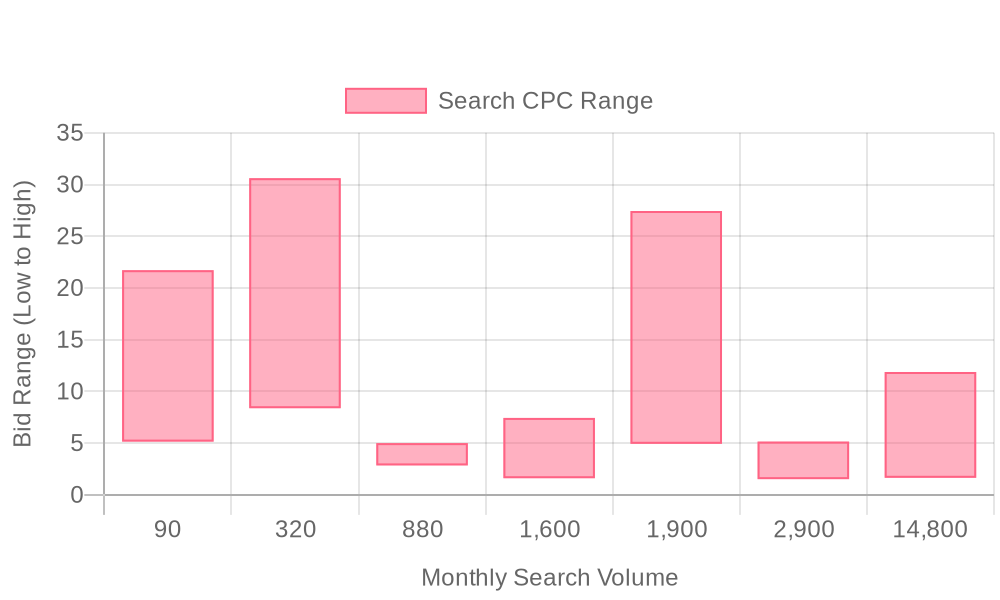
| Industry | Keyword | Monthly Search Volume | Competition Level | Low Bid | High Bid |
| Check Printing | checks for quickbooks printing | 90 | HIGH | 5.15 | 21.72 |
| Check Printing | laser checks for quickbooks | 320 | HIGH | 8.38 | 30.61 |
| Check Printing | costco check printing | 880 | HIGH | 2.85 | 5 |
| Check Printing | check printing companies | 1600 | HIGH | 1.61 | 7.44 |
| Check Printing | business check printing | 1900 | HIGH | 4.94 | 27.44 |
| Check Printing | vistaprint checks | 2900 | HIGH | 1.52 | 5.15 |
| Check Printing | check printing | 14800 | HIGH | 1.65 | 11.88 |
A precise keyword strategy is instrumental for check printing businesses aiming to maximize the value of their Google Ads spend. Modern revenue teams face a common barrier: incomplete or outdated account data often leads to wasted impressions and missed opportunities for personalization. Data enrichment solutions solve this by ensuring that search intent, firmographic detail, and buyer readiness signals inform every keyword decision.
- High-Intent Queries: Focusing on transactional keywords like “Google Ads for Check Printing,” “print business checks online,” or “secure check printing service” enables teams to capture prospects with immediate purchase intent. By identifying visitors down to the company level, marketers can match ad copy and landing experiences to the specific needs of financial departments or SMB owners ready to convert.
- Local Modifiers: Geographic derivatives such as “check printing services New York” or “business check printer Chicago” help segment campaigns for regional relevance. Enriched account data allows for more granular targeting, connecting not only by city or state but by industry clusters or enterprise locations, which boosts match rates and ad efficiency for B2B providers. For a deeper dive into advanced PPC keyword research techniques, consider exploring current strategies to refine your targeting.
- Negative Keywords: Proactively excluding irrelevant terms such as “free printable checks” or “personal check templates” prevents budget waste and improves lead quality. Advanced audience syncing ensures that keyword exclusions update dynamically as lead and account profiles evolve, maintaining campaign precision over time.
Real-time intent signals and dynamic audience updates are now essential for staying ahead in competitive check printing advertising. Leveraging unified, enriched datasets allows marketers to automatically adjust keyword lists as leads move through the funnel. This approach supports seamless retargeting and ensures ad dollars are continuously allocated to the segments most likely to convert, delivering measurable improvements in Google Ads ROI for printing and reducing manual segmentation work. If you're ready to take the next step, get started for free with Sona to unlock real-time keyword and audience optimization.
Step-by-Step Campaign Execution Framework
Modern check printing services can achieve measurable growth by leveraging a disciplined, data-driven Google Ads execution framework. Aligning digital campaigns with industry-specific needs empowers marketers to prioritize high-impact segments, address security concerns, and deliver targeted messaging that resonates with financial decision-makers. Success hinges on coordinated keyword strategy, persuasive ad creative, seamless landing page experience, and closed-loop analytics that illuminate every stage of the buyer journey.
Step 1: Build Targeted Keyword Lists
Effective keyword list development starts with clustering terms by specific check printing services, such as "business check printing," "secure check mailing," and "online check printing software", and layering in local modifiers to capture regional demand. By segmenting keywords according to both service type and geographical relevance, campaigns can reach business buyers where urgency and intent are highest. Integrating real-time visitor data ensures you identify the organizations and personas behind each search, allowing for rapid iteration of keyword lists as demand signals shift.
Audience enrichment through unified go-to-market data means marketers no longer rely on anonymous traffic patterns. Instead, you can pinpoint high-value accounts actively searching for check printing solutions, updating keyword clusters dynamically as these businesses progress through the buying funnel. This approach transforms Google Ads for Check Printing from a broad spray-and-pray tactic into a precision-targeted engine for qualified lead generation.
The upgrade most check printing advertisers miss is going beyond raw keyword volume to layer in intent and identity signals. By connecting website-visitor data and CRM records with Sona Marketing Measurement, you can see which specific search terms bring in the accounts and customers that actually convert, and weight your keyword and bidding strategy toward those rather than the terms with the highest search volume alone.
Step 2: Write High-Impact Ad Copy
Ad copy for check printing must speak directly to the pain points of finance and operations leaders: fraud risk, compliance, turnaround times, and cost control. Using language that highlights tamper-evident features, secure data handling, and seamless software integration builds trust and differentiates your offering in a crowded market. Incorporate trust signals, such as regulatory certifications and customer testimonials, to reinforce credibility and overcome skepticism common in financial services purchasing.
As your data platform enriches contact records and surfaces intent signals, copy can be dynamically tailored to each audience segment. For example, ads shown to prospects who previously visited security pages can emphasize bank-level encryption, while those exploring integrations receive messaging about compatibility with accounting platforms. This granular personalization boosts relevance and dramatically increases both click-through and conversion rates.
Step 3: Design Seamless Landing Pages
Landing page design for check printing advertising must ensure message consistency from ad to conversion. Each landing page should mirror the promise made in the ad copy, with clear headlines, concise value propositions, and prominent calls to action. Highlighting features like instant check creation, secure cloud storage, and compliance with financial regulations alleviates buyer hesitation and streamlines the path to sign-up or demo request.
Unified tracking of both online and offline conversions enables you to attribute closed deals back to specific landing pages and ad variations. By monitoring how different audiences interact with landing experiences, you can test and refine layouts, such as multi-step forms for enterprise buyers or quick-access demos for SMBs, continually optimizing for engagement and outcomes that matter most to your pipeline. To learn more about tracking print ad campaign performance with Google Analytics for improved offline attribution, see this step-by-step guide.
Step 4: Apply Predictive Targeting and Bidding
Using predictive analytics, marketers can map customer journeys and identify which segments are most likely to purchase check printing solutions at each stage of the funnel. This insight allows for strategic budget allocation: increasing bids where high-intent buyers emerge and pulling back spend in lower-conversion cohorts. Dynamic audience syncing ensures that as prospects move from research to consideration, targeting and messaging adapt in real time, maximizing efficiency and return on ad spend.
Real-time intent data empowers you to recognize when a key account signals buying readiness, such as repeated visits to pricing or security pages, and immediately escalate ad visibility with tailored offers or expedited demo options. This level of responsiveness ensures your Google Ads for printing services are always aligned with the moments that drive business outcomes. Get started for free with Sona.
Sona Marketing Measurement closes the gap between clicks and revenue. It captures every ad click with first-party tracking, then ties that click through UTM capture and ad-platform APIs to the actual record in your CRM, and reports ROAS by keyword and campaign instead of by last-click form fill. Feeding that revenue signal back into Smart Bidding and Performance Max compounds over time: the algorithms optimize toward booked check printing revenue, not cheap leads.
Step 5: Integrate Conversion Data for Continuous Improvement
The final component of this execution framework is relentless performance measurement. By integrating advanced attribution models from your CRM, website, and offline channels, you gain a holistic view of campaign ROI. Advanced attribution models illuminate which touchpoints contribute most to revenue, guiding future investments and creative decisions. Continuous feedback loops powered by enriched data ensure every campaign cycle is more effective than the last, with learnings rapidly deployed across all channels.
Syncing enriched leads and audience data directly into Google Ads and connected platforms closes the attribution loop, enabling both granular reporting and real-time campaign optimization. This integrated approach to Google Ads ROI for printing allows revenue teams to demonstrate impact, justify budget, and scale winning strategies for sustainable growth in the check printing market.
Tips on Expanding Your Check Printing Presence
Expanding your check printing presence requires a blend of smart digital marketing tactics and data-driven insight. By prioritizing strategic audience targeting and creative differentiation, companies can ensure their services remain visible in a crowded financial services landscape.
- Educational Asset Cross-Promotion: Elevate brand authority and drive organic demand by integrating educational content into your marketing funnel. Publishing in-depth guides, security checklists, and process tutorials not only supports SEO for check printing keywords but also nurtures leads with valuable information. When these assets are cross-promoted through paid channels, marketers can use advanced visitor identification to retarget high-intent readers with relevant offers. For more on key features that improve business efficiency and security, see this online check printing essentials list.
- CRM-Based Audience Upselling: Harness the depth of your existing customer database by creating hyper-targeted upsell and cross-sell campaigns. When audience lists are continuously enriched with behavioral and firmographic data, segmentation becomes dynamic. For example, as clients move from single-user to multi-user check printing subscriptions, dynamic audiences automatically update in Google Ads, allowing you to deliver timely, personalized messages. Real-time CRM and ad campaign sync ensures that messaging evolves with each customer’s lifecycle stage, maximizing upsell opportunities and minimizing wasted impressions.
- Local Optimization: Targeting key regions with tailored messages significantly improves campaign efficiency for check printing providers serving specific areas or industries. Geo-targeted Google Ads campaigns can be precision-tuned using real-time intent signals, so spend is prioritized on the most promising local prospects. For details on security best practices, review these check printing and mailing guidelines.
- Search Data Insights: Proactively analyzing search trends and performance data uncovers new expansion opportunities and content topics. By unifying paid and organic search insights, marketing teams spot emerging demand for features such as mobile check printing or integrations with popular accounting software. These findings inform both keyword expansion and creative development, ensuring campaigns address real-time audience interests. Continuous feedback loops between search data and creative assets keep your check printing advertising agile and closely aligned with buyer intent.
To succeed in Google Ads for check printing, marketers must go beyond static targeting and conventional reporting. Unified data platforms empower teams to identify in-market accounts, dynamically adjust audiences, and measure true ROI across both online and offline channels. As a result, check printing providers can connect with the right buyers at the right moment, driving measurable growth in a highly competitive sector. If you’re ready to enhance your digital campaigns, get started for free with Sona.
Beyond Google Ads: Winning the AI Answers Check Printing Buyers Now Trust
Paid search captures demand at the moment someone types a query. But a fast-growing share of check printing buyers no longer start at Google at all, they ask ChatGPT, Gemini, or Perplexity before they ever run a search, and Google's own AI Overviews increasingly summarize an answer above the traditional results. If your business isn't referenced in those AI answers, you're invisible at the exact moment buyers build their shortlist.
Sona AI Visibility shows where your business shows up across ChatGPT, Gemini, Perplexity, Google AI Overviews, and 10+ engines, and, much like a keyword report, which prompts actually send you buyers, so you can prioritize the ones that convert. Run the two together and you cover the entire buyer path: get cited where buyers research (AI Visibility), then prove which of that demand turns into booked revenue (Marketing Measurement).
Helpful resources
Conclusion
Google Ads works for check printing when it's treated as a precision instrument, not a megaphone: narrow keyword sets tuned to the moment a payroll switch or fraud scare sends someone searching, ad copy that speaks to compliance and turnaround, and landing pages built for the specific service in question.
The bigger shift ahead is that buyers increasingly research check printing options through AI assistants before they ever touch a search box, which means the campaigns that win going forward will be the ones tied to measurement that proves real revenue, not just clicks. Start for free and put that measurement in place now.
FAQ
What are the best practices for Google Ads in check printing?
The best practices for Google Ads in check printing include leveraging intent-based audience segments, integrating CRM data for precise targeting, optimizing landing pages for conversion, and using real-time analytics to refine spend allocation and keyword focus.
How can I effectively target customers for check printing using Google Ads?
You can effectively target customers by using custom intent audiences, updating keyword lists dynamically, and syncing enriched audience segments into Google Ads for precise retargeting and lookalike campaigns.
What budget should I allocate for Google Ads in the check printing industry?
The budget should be allocated based on real-time analytics that reveal high-value customer actions, allowing for dynamic budget shifts toward accounts showing in-market intent to ensure investments drive measurable pipeline growth.
What keywords should I use for Google Ads related to check printing?
Use high-intent queries like 'business check printing,' 'secure check mailing,' and 'online check printing software,' along with local modifiers to capture regional demand and ensure relevance.
How do I measure the success of my Google Ads campaign for check printing?
Success can be measured by integrating conversion data from CRM and offline channels to track performance, using advanced attribution models, and continuously optimizing campaigns based on real-time feedback.







