


Carpool riders search with urgency: they need a seat for tomorrow's commute, not someday. Google Ads lets carpool services meet that moment directly, showing up when someone types "carpool near me" at 7am rather than hoping a billboard gets noticed. For operators in this space, that means intercepting decision-makers at the exact point of need, spending only on high-intent searches, and tracking every click through to a booked ride. This guide covers the strategies and setup steps for running Google Ads campaigns built specifically for carpool services, so you can capture and convert traffic in a crowded field.
How to Generate Google Ads for Carpool Services Leads: A Step-by-Step Guide
Effective lead generation for carpool services with Google Ads starts by aligning campaign structure to the unique demands of shared mobility. Professionals in this space must prioritize strategies that attract high-quality prospects, streamline ad spend, and convert intent-driven traffic into actionable leads. Leveraging data-driven audience segmentation not only uncovers where potential riders and drivers are in their journey but also delivers messaging that resonates at the right moment, maximizing every touchpoint.
Success in online marketing for carpool services hinges on a granular understanding of your target audience and the evolving search landscape. Marketers benefit by mapping out keyword intent, tailoring creative assets to address commuter pain points, and optimizing campaigns for mobile-first users. For a deeper dive into campaign setup and optimization, review this step-by-step guide to Google Ads for ride-sharing services. Cost-effective Google Ads execution requires balancing reach with local relevance, ensuring every dollar drives genuine interest and measurable results.
Identifying target keywords is foundational for any Google Ads campaign setup in the transportation sector. Start with high-intent search phrases such as "carpool service near me," "commute together," and "eco-friendly ride options." Expand to niche queries that reflect the unique selling points of your offering, including sustainability, cost savings, and convenience. Structured keyword planning must account for seasonal shifts and local commuting patterns, ensuring campaigns remain agile and relevant as user behavior changes. Explore our blog for additional guidance on keyword research and campaign strategy.
Ad copy optimization transforms search intent into engagement by addressing commuter pain points directly. Highlight benefits like reduced travel costs, fewer emissions, and community-driven experiences. Incorporate urgency and credibility elements, such as limited-time discounts or verified testimonials, to prompt immediate action. Trust signals, including industry certifications or partnership badges, can further distinguish your carpool advertising strategies in a competitive landscape.
Landing page alignment is critical for converting ad clicks into qualified leads. Every landing page should accurately reflect ad messaging, showcase clear value propositions, and provide a frictionless path to conversion. Use social proof, like rider and driver testimonials, alongside visible safety certifications to build trust. Focus on mobile optimization, as most carpool service seekers engage while on the go; streamlined forms and tap-to-call features can significantly increase conversion rates.
Performance data is a powerful lever for ongoing optimization. Regular analysis of Google Ads performance metrics, impressions, click-through rates, conversion rates, and customer acquisition cost, enables marketers to fine-tune budget allocation and refine audience targeting. Dynamic audience segmentation, enhanced by Sona's Identity Resolution, allows you to move beyond anonymous traffic. By identifying the companies and contacts visiting your site, you can import these leads directly into Google Ads customer match lists, ensuring remarketing efforts focus on real, high-intent prospects rather than broad, unqualified audiences.
Integrating enriched audience data into your advertising workflow streamlines campaign execution and boosts ROI. With platforms that sync CRM and ad audiences in real time, carpool services can update targeting lists as leads progress through the funnel. This supports precision retargeting, more accurate online and offline attribution, and a clearer view of which channels and messages drive results. Ready to take your campaigns further? Get started for free with Sona.
Why Does Google Ads Matter for Carpool Services

Carpool services operate in a fast-moving market where user intent and timing determine campaign success. Leveraging Google Ads enables these businesses to capture commuters and drivers actively searching for ride-sharing solutions, yielding high-quality, in-market leads when they are most likely to convert. For a step-by-step walkthrough on setting up and optimizing campaigns, check out this guide on Google Ads for ride-sharing.
With Google Ads, carpool platforms gain the agility to quickly scale outreach, refine messaging, and adapt to local or seasonal demand shifts. Dynamic ad placement combined with intent-driven targeting helps maximize efficiency, ensuring budget is allocated to the highest-converting audiences. Modern measurement tools deliver real-time insights into campaign impact, empowering marketing teams to optimize spend, test new offers, and make data-backed decisions that fuel growth.
The ability to granularly target ads by geography, commuter demographics, and behavioral signals positions carpool services to fill gaps in underserved regions and reach new clusters of riders and drivers. Local advertising for carpool services is particularly effective when paired with robust audience insights and personalized messaging. By identifying site visitors who view demo or sign-up pages but fail to convert, marketers can retarget those individuals with tailored Google Ads, reigniting interest and driving them back into the funnel.
Integrating account-level intelligence and real-time intent signals allows teams to go beyond anonymous web traffic. Marketers can identify high-value companies visiting their site, update audience lists as prospects engage, and sync enriched data directly to Google Ads or CRM platforms. This orchestration ensures advertising reaches the right accounts and follows them through their journey with relevant, cost-effective campaigns. To see how you can implement these strategies for your business, get started for free with Sona.
Common Types of Google Ads Campaigns for Carpool Services

- Search Campaigns: These campaigns deliver ads to users actively searching for ride-sharing and carpool solutions, making them highly effective for capturing high-intent leads, the commuter looking for a Monday-morning seat, or the HR manager researching a company carpool benefit. Focusing on keywords like "carpool near me" or "commuter ride share" maximizes budget on users most likely to convert. Integrating Sona's Identity Resolution lets you move beyond generic analytics, identifying which companies are searching for commuter solutions, useful when B2B fleet or employer-sponsored carpool programs are part of your funnel. This enables you to build segmented audiences around those showing the strongest buying signals and tailor follow-up messaging accordingly.
- Display Campaigns: Display advertising builds brand recognition by placing visually engaging ads across websites relevant to commuters, workplaces, or local communities. This approach works well for introducing your carpool platform to passive audiences who aren't yet searching for a transportation alternative, but who might be swayed by rising gas prices or a new employer return-to-office mandate. Using Sona's Intent Signals, platforms can shift spend toward companies interacting with high-value content, keeping your brand visible during their decision-making process. For a tactical guide on campaign setup, see this Google Ads for ride-sharing services resource.
- Video Campaigns: Video ads excel at storytelling, highlighting the unique benefits of your carpool service, such as cost savings, environmental impact, or seamless booking through your app. Showcasing real commuter experiences or step-by-step ride booking builds trust and emotional engagement. As leads interact with your video content, dynamic audiences update in real time, allowing you to nurture prospects who watch, engage, or revisit your site with tailored follow-ups.
- Remarketing Campaigns: Remarketing keeps your brand visible to users who previously visited your site but did not convert. With advanced audience segmentation, you can retarget those who abandoned sign-ups or app downloads, delivering personalized incentives or reminders that increase conversion rates. When synced with your CRM and ad platforms, enriched audience data flows directly into your remarketing strategy, ensuring ads are always relevant to each customer’s stage in the buying journey.
- Ad Assets: Leveraging location, sitelink, and call assets boosts user engagement and reinforces trust. For local advertising for carpool services, location assets let commuters see nearby ride options or pick-up points instantly. Integrated conversion tracking attributes leads to specific campaigns, providing granular performance metrics so you can validate ROI and refine tactics based on what resonates with your target audience for carpool ads.
Where to Find Growth Opportunities

Growth in carpool service marketing means going past standard keyword targeting. Vertical keywords such as "eco-friendly commuting" or "green carpool options" capture urban professionals and environmentally conscious commuters, a segment that skews toward sustained, habitual bookings rather than one-off rides. Refining keyword sets to include these variations addresses a broader spectrum of user intent and reaches higher-value segments seeking alternative transportation. For more on how carpooling networks affect sustainability, see this analysis of carpooling networks.
Conducting competitor analysis uncovers market gaps and localities with underserved demand. Reviewing ad placements, messaging, and seasonal spikes in competitor activity helps pinpoint opportunities to outperform rivals in specific ZIP codes or city corridors. This research-driven approach allows for the strategic allocation of budget to regions experiencing event-driven surges or seasonal commuting shifts, such as back-to-school periods or major infrastructure projects causing detours. In these scenarios, activating hyper-local Google Ads campaigns for carpool services ensures messaging is timely and relevant.
Retargeting efforts can be enhanced when paired with content strategies focused on user education and value demonstration. For example, aligning retargeting ads with fresh blog posts or informative videos on sustainable travel options keeps engagement high and shortens the consideration window. With platforms capable of dynamic audience management, retargeting lists automatically adapt as leads interact with content, ensuring only the most relevant segments see follow-up ads. This fluid approach supports more cost-effective Google Ads outcomes and maximizes the impact of every touchpoint, while enriched CRM integrations enable real-time syncing of audiences and intent signals into active campaigns for precise re-engagement.
How to Apply Audience Segmentation for Carpool Services
Effective audience segmentation transforms carpool service marketing from generic outreach into tailored engagement that speaks directly to specific traveler needs. By strategically grouping users according to travel frequency, trip intent, or proximity to high-traffic corridors, carpool brands position themselves as indispensable solutions for both daily commuters and occasional event travelers. For a comprehensive approach to optimizing campaigns in this space, explore this guide on setting up Google Ads for ride-sharing services.
Segmenting audiences for Google Ads for Carpool Services begins with defining clear intent signals. Daily commuters, for example, often search for recurring ride options near business hubs or transit centers, while event-driven travelers exhibit bursts of high intent around concerts, sports events, or conventions. Marketers achieve greater precision by layering demographic data, device type, and behavioral signals: this enables campaign messaging that addresses each segment’s challenges, such as cost savings for regular riders or convenience for one-time users. To further sharpen your segmentation strategies, review our library of actionable playbooks.
Technology now enables revenue teams to act on these segments in real time. As soon as a visitor shows in-market behavior, such as clicking through a carpool pricing page or using a route estimator, automation can trigger CRM workflows and add the account to a remarketing cohort instantly. Synchronized platforms identify the companies behind that behavior, syncing enriched profiles directly into Google Ads and connected CRMs. This keeps sales and advertising teams working from one dataset, so high-intent prospects receive timely, personalized follow-ups and ad creative. As audiences evolve, dynamic segmentation keeps campaigns relevant by updating lists automatically as users progress through the funnel.
This is also where measurement changes the economics. With Sona Marketing Measurement you can identify the companies and buyers behind your ad clicks, not just anonymous sessions, and segment audiences by who actually becomes a customer. That lets you build bid adjustments and audience signals around the segments that convert and de-prioritize the ones that don't, so you feed Google's algorithms "this click became a paying carpool services customer" instead of just "someone filled out a form."
Keyword Strategy & Sample Target Terms
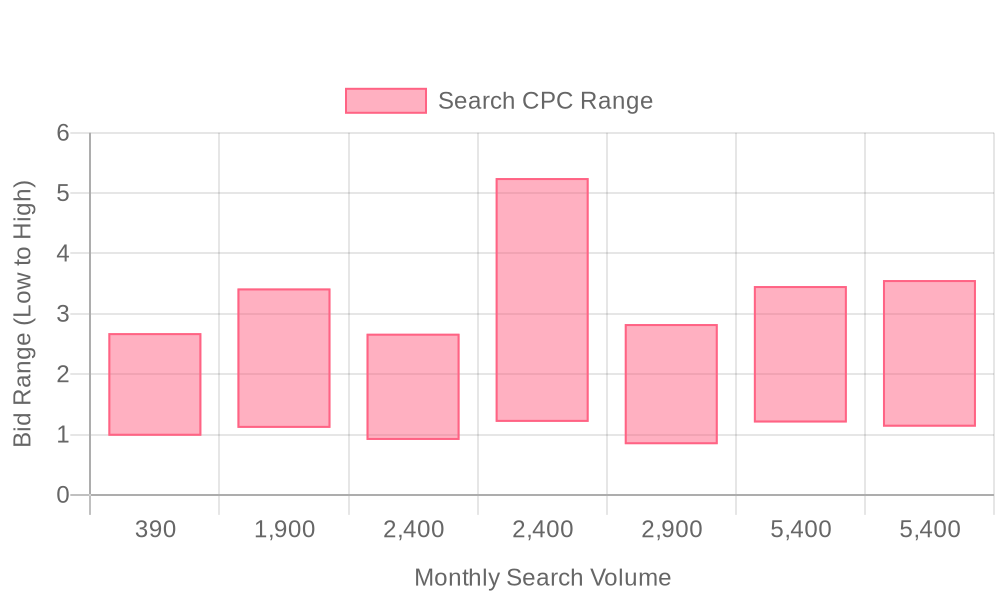
| Industry | Keyword | Monthly Search Volume | Competition Level | Low Bid | High Bid |
| Carpool Services | carpool services | 390 | LOW | 0.98 | 2.68 |
| Carpool Services | rideshare rental | 1900 | MEDIUM | 1.11 | 3.42 |
| Carpool Services | rideshare near me | 2400 | LOW | 0.91 | 2.67 |
| Carpool Services | lyft rideshare | 2400 | LOW | 1.21 | 5.25 |
| Carpool Services | uber rideshare | 2900 | LOW | 0.84 | 2.83 |
| Carpool Services | rideshare apps | 5400 | LOW | 1.2 | 3.46 |
| Carpool Services | rideshare rental cars | 5400 | MEDIUM | 1.13 | 3.56 |
Carpool services thrive on capturing intent-driven traffic from commuters searching for immediate ride solutions. A strategic approach to keywords ensures that every ad dollar targets prospects who are most likely to convert, supporting both acquisition and long-term growth. Explore our marketing analytics blog for data-driven strategies to maximize your carpool ad campaigns.
Precision targeting is at the core of effective Google Ads for Carpool Services. High-value keywords like “carpool ride near me,” “commute sharing app,” and “daily carpool partner” directly connect with users expressing actionable intent. For a comprehensive breakdown of how to set up and optimize Google Ads for ride-sharing, see this guide to Google Ads for ride-sharing services.
Google Ads excels at measurable ROI by tracking every step from search to booking, ensuring full visibility into the customer journey. When powered by unified go-to-market data, revenue teams can attribute both online and offline actions, like phone inquiries or in-person ride signups, back to originating keywords. This closed-loop attribution allows for precise budget allocation, deeper insight into which terms drive actual bookings, and more accurate reporting of campaign effectiveness.
Channel synergy multiplies results when Google Ads is integrated with local SEO and other paid channels. By syncing dynamic audience segments and enriched lead data directly into Google Ads, marketers can continually refine target lists as prospects engage across multiple touchpoints. This real-time audience management ensures ad spend focuses on the commuters most likely to act, while also adapting to shifts in market demand and user behavior.
A crucial tactic is prioritizing keyword themes that map to both common commuter search behaviors and emerging trends in transportation. Combining intent-based keywords with geo-targeted modifiers (e.g., "carpool to downtown Chicago") helps optimize for local advertising for carpool services. Regular analysis of Google Ads performance metrics, paired with dynamic audience updates, empowers teams to shift bids and messaging toward the highest-performing segments. This approach underpins cost-effective Google Ads and supports scalable carpool service promotion in any urban market.
Finally, capturing the full value of each lead requires attribution that goes beyond digital conversions. By integrating advanced conversion tracking and CRM sync, marketers can connect offline events, like new driver onboarding sessions or group ride demos, directly to their paid search efforts. Ready to see how unified data can drive better campaign results? Get started for free with Sona.
Step-by-Step Campaign Execution Framework
Step 1: Build Targeted Keyword Lists
Effective carpool service campaigns start with keyword lists tailored to both rider and driver intent. Focus on phrases that reflect daily commuter needs, local neighborhoods, and benefits like "carpool near me," "affordable ride sharing," or "eco-friendly commute options." Negative keywords such as "bus schedules" or "taxi service" prevent wasted spend on irrelevant queries. Integrating these lists with your content marketing ensures that ad messaging remains consistent across search, landing pages, and blog content, reinforcing relevance at every touchpoint.
To further refine targeting, leveraging real-time audience data enables marketers to identify which visitors are actively researching ridesharing solutions. For a comprehensive walkthrough on setting up and optimizing Google Ads for ride-sharing, explore this step-by-step guide for ride-sharing services. When platforms sync these enriched audiences directly into campaign workflows, teams ensure their ads reach commuters most likely to convert, maximizing efficiency and budget allocation.
Most carpool advertisers stop at keyword volume. The upgrade is layering in intent and identity signals: connecting website-visitor data and CRM records with Sona Marketing Measurement shows which specific search terms bring in the riders and accounts that actually convert, so you can weight keyword and bidding strategy toward those terms rather than the ones with the highest raw search volume.
Step 2: Develop Compelling Ad Copy
Ad copy for carpool services must quickly communicate tangible benefits that resonate with commuters. Headlines focusing on cost savings, such as "Cut Your Commute Costs," and environmental advantages like "Reduce Your Carbon Footprint," address common motivations without overpromising a specific figure. Adding urgency with phrases like "Join Today, Limited Spots" encourages action, while ad assets such as sitelinks, callouts, and structured snippets give users quick access to additional value propositions and features.
Incorporating dynamic audience insights allows creative teams to test and adapt messaging based on real-time commuter needs and localized events. For creative inspiration and marketing strategies, check out this Pinterest board of carpool campaign ideas. This approach ensures that every ad impression is contextually relevant, increasing both click-through rates and downstream conversions.
Step 3: Design Effective Landing Pages
Landing pages for carpool campaigns should directly mirror ad messaging and focus on conversion. Use bold, mobile-optimized layouts with clear calls-to-action like "Book Your Ride" or "Find a Carpool Partner." Visual elements, such as real commuter photos and simplified route maps, help to establish trust and authenticity. Highlighting social proof, like testimonials or user ratings, adds credibility and reassures new users about the safety and reliability of the service.
Seamless CRM integration is essential for efficient lead management. By automatically syncing form submissions and user data into your CRM or marketing automation platform, teams can accelerate follow-up and personalize communications. This unified workflow not only improves response times but also helps sales and marketing teams close the loop, feeding valuable conversion data back into ongoing Google Ads optimizations and broader online marketing for carpool services.
Step 4: Implement Data-Driven Optimizations
Continual optimization is key to sustainable growth in carpool advertising strategies. Leverage granular performance data to test ad creatives, adjust bidding strategies, and identify the best-performing audience segments. Running A/B tests on headlines, visuals, and calls-to-action surfaces what resonates most with each commuter segment. Importing offline conversion data, such as actual ride bookings or driver applications, enables full-funnel attribution, revealing which campaigns are driving real business outcomes beyond just clicks and impressions.
Sophisticated platforms empower marketers to sync these attribution insights with digital ad accounts, ensuring that budget is consistently allocated to high-performing audiences and creative variants. For a deeper look at best practices in Google Ads optimization, review this list of Google Ads best practices. This closed-loop system not only boosts ROI but also sharpens future content and campaign strategies for carpool service promotion, making every touchpoint smarter and more cost-effective.
Sona Marketing Measurement closes the gap between clicks and revenue. It captures ad clicks with first-party measurement, ties that click through UTM capture and ad-platform APIs to the actual record in your CRM, and reports ROAS by keyword and campaign instead of by last-click form fill. Feeding that revenue signal back into Smart Bidding and Performance Max compounds over time: the algorithms optimize toward booked carpool services revenue, not cheap leads.
Tips on Expanding Your Carpool Service Presence
Carpool service growth depends on a sophisticated mix of educational outreach, strategic partnerships, and data-driven targeting. Presenting clear, actionable information about sustainable transportation and cost savings establishes trust while positioning your service as a forward-thinking solution for commuters. For inspiration on creative campaign ideas, explore this Pinterest board of carpool marketing campaigns, or dive deeper into proven strategies on our marketing and analytics blog.
Integrating educational content into retargeting campaigns is essential for nurturing hesitant prospects and elevating your brand’s relevance. When these campaigns are dynamically fueled by audience behavior, such as recent website visits or engagement with specific carpool topics, you can deliver tailored resources that convert interest into action. By leveraging precise audience intelligence, marketers can craft retargeting lists that automatically update as users move through the decision journey, ensuring each touchpoint is timely and personalized.
Upselling complementary services, such as premium ride options or group commute packages, becomes more effective when audience segments are kept current and deeply profiled. When your campaign audiences sync in real time with your CRM and advertising platforms, it becomes possible to identify upsell candidates based on their past booking patterns, company affiliation, or even their likelihood to need additional features. This type of closed-loop marketing improves ROI by focusing spend on the most receptive segments.
Establishing collaborations with local businesses, employers, and associations can unlock referral networks that drive highly qualified leads into your funnel. When these partnerships are supported by precise attribution and conversion tracking, you can measure which referral channels and offers deliver the highest lifetime value. If you want to see how leading ride-sharing brands approach their Google Ads strategy, review this guide to Google Ads for ride-sharing services.
Geographic targeting should never be static. As new commuter trends and search behaviors emerge, such as spikes in eco-friendly travel queries or rising demand in suburban corridors, your campaigns should shift budget and messaging accordingly. Using Sona's Identity Resolution, marketers can identify the organizations engaging from specific regions, not just anonymous traffic. This enables rapid adjustment to local demand, keeping you ahead of shifting market dynamics.
Beyond Google Ads: Winning the AI Answers Carpool Services Buyers Now Trust
Paid search captures demand at the moment someone types a query. But a fast-growing share of carpool services buyers no longer start at Google at all, they ask ChatGPT, Gemini, or Perplexity before they ever run a search, and Google's own AI Overviews increasingly summarize an answer above the traditional results. If your business isn't referenced in those AI answers, you're invisible at the exact moment buyers build their shortlist.
Sona AI Visibility shows where your business shows up across ChatGPT, Gemini, Perplexity, Google AI Overviews, and 10+ engines, and, much like a keyword report, which prompts actually send you buyers, so you can prioritize the ones that convert. Run the two together and you cover the entire buyer path: get cited where buyers research (AI Visibility), then prove which of that demand turns into booked revenue (Marketing Measurement).
Helpful resources
Conclusion
Google Ads works for carpool services when targeted keywords, sharp ad copy, and clean performance data pull in the same direction. Get that alignment right and you're not just running ads, you're building a system that finds commuters at the moment they need a seat.
The carpool services that win aren't the ones with the biggest budgets, they're the ones that connect ad spend to actual bookings and keep refining from there. Treat every campaign as a feedback loop: better data in, sharper targeting out, more riders and drivers on the platform.
To put data-driven insights to work in your own campaigns, start for free with Sona today.
FAQ
What are the best practices for using Google Ads in carpool services?
Best practices include targeting high-intent keywords, optimizing ad copy for commuter pain points, and ensuring landing page alignment with ad messaging to convert clicks into leads.
How can I optimize my Google Ads for carpool services?
Optimization involves tailoring campaigns to mobile users, using data-driven audience segmentation, and continually analyzing performance metrics to refine targeting and budget allocation.
What budget should I allocate for Google Ads in carpool services?
Budget allocation should focus on balancing reach with local relevance, ensuring funds are directed towards high-intent audiences and measurable outcomes.
What keywords should I target for carpool services in Google Ads?
Target high-intent keywords like 'carpool service near me,' 'commute together,' and 'eco-friendly ride options,' while considering seasonal and local commuting patterns.
How do I measure the success of my Google Ads for carpool services?
Success is measured by analyzing metrics such as impressions, click-through rates, conversion rates, and customer acquisition cost, using these insights to adjust campaigns for better ROI.







