


A slipping transmission rarely waits for business hours, and the driver who feels that shudder on the highway is usually searching for a repair shop within minutes. Google Ads lets automotive transmission repair businesses meet that urgency head-on, intercepting high-intent customers at the exact moment they search for a fix. Many shops still lose these prospects because the leads never make it into a CRM, so the call or click disappears without a trace. Integrated ad campaigns close that gap, connecting online searches to offline bookings and giving local shops a clearer read on ROI. This guide covers how automotive transmission repair companies can put Google Ads to work strategically.
How to Generate Automotive Transmission Repair Leads with Google Ads

Automotive transmission repair businesses compete in a market where rapid response and precise targeting can mean the difference between a missed opportunity and a high-value customer. Digital marketing for auto repair has evolved, with Google Ads for auto repair offering a direct path to customers who are actively searching for transmission services in their area.
By leveraging Google Ads, shops can target high-intent keywords, capture urgent demand, and drive qualified leads to conversion-optimized landing pages. Real-time tracking and attribution now enable businesses to connect online engagement with offline revenue, making every advertising dollar accountable, learn how to improve your marketing attribution for better ROI.
Campaigns succeed when they move beyond generalized outreach and focus on relevance. Advanced audience segmentation allows marketers to serve tailored ads to drivers in need, increasing relevance and lowering cost per acquisition. With solutions that unify marketing and sales data, shops gain the ability to identify website visitors, instantly qualifying leads for follow-up and retargeting.
Modern platforms also enable dynamic audience updates, meaning as prospects interact, their stage in the funnel is reflected in real-time. This ensures that remarketing ads remain relevant, nurturing leads who may need more time to decide on a major repair. When CRM and ad channels are tightly synced, enriched lead data flows seamlessly into Google Ads and major CRMs, making follow-up both timely and informed.
Automotive repair service marketing powered by Google Ads continues to evolve. From pinpointing in-market behaviors to syncing campaign data across channels, these advancements empower repair shops to maximize every lead, optimize spend, and grow local market share.
Why Does Google Ads Matter for Automotive Transmission Repair?

Automotive transmission repair shops encounter a unique set of challenges in digital marketing, including the struggle to identify and engage high-intent leads at the precise moment of need. Rapid response and precision targeting are essential, as most car owners seek immediate solutions when facing transmission issues, making the ability to capture and convert these leads a critical differentiator.
Utilizing Google Ads for Automotive Transmission Repair provides a direct channel for reaching customers actively searching for transmission services, increasing the chance of intercepting in-market prospects before they turn elsewhere. When enriched with data-driven audience insights, Google Ads campaigns become more than just pay-per-click investments, they evolve into highly targeted tools that drive measurable ROI by prioritizing visibility in the local market and ensuring each ad impression is delivered to those most likely to convert.
Modern shops no longer have to settle for anonymous website visits that slip through the cracks. By leveraging advanced visitor identification, marketers can pinpoint which companies are browsing their site, dynamically update audiences as prospects move through the sales funnel, and synchronize these enriched profiles directly with ad platforms and CRMs. This approach empowers automotive repair teams to maximize every advertising dollar, close the gap between online engagement and offline revenue, and maintain a competitive edge in a crowded market. To see how these strategies can transform your shop's marketing results, get started for free with Sona.
Common Types of Google Ads Campaigns for Automotive Transmission Repair
Most automotive transmission repair advertisers run some combination of Search, Display, Remarketing, Video, and Performance Max campaigns, each suited to a different stage of the buyer's decision. Search still carries the heaviest weight for transmission repair specifically, since so many searches are triggered by an active mechanical problem rather than routine maintenance planning.

- Search Campaigns: Search campaigns are the core of automotive transmission repair PPC advertising. These ads run within a format Google calls Responsive Search Ads, which test combinations of headlines and descriptions to match urgent queries like "transmission repair near me" or "car won't shift into gear." Because so many of these searches follow a breakdown or a dashboard warning light, ad copy that promises same-day diagnostics or towing assistance tends to outperform generic branding. When enriched with unified visitor identification and behavioral data, these campaigns can prioritize spend on audiences with higher propensity to convert, maximizing return on ad spend.
- Display Campaigns: Display ads serve to reinforce brand presence across websites and apps your target customers visit. For automotive repair service marketing, visually compelling banners remind car owners of your expertise before transmission issues escalate, useful during the slower shoulder seasons when fewer drivers are searching with urgent intent. Integrated real-time intent signals can dynamically adjust bidding and placements, ensuring ads reach users who have shown in-market behaviors for repair services. For more best practices on display and Google Ads for auto repair, refer to this guide.
- Remarketing Campaigns: Remarketing is vital for recapturing leads who may have researched your transmission services but did not book an appointment. With advanced audience management, remarketing lists update automatically as leads move through the funnel, allowing for timely and relevant follow-up. Connecting CRM and ad platforms ensures your messaging is aligned with each prospect's engagement history, increasing the likelihood of conversion before they consider competitors.
- Video Campaigns: Video campaigns expand reach and educate potential customers on complex transmission issues and your shop's unique capabilities. These campaigns drive awareness and trust, especially when targeting audiences who have interacted with previous search or display ads. By leveraging online and offline conversion tracking, performance data from video campaigns can be directly attributed to booked appointments and completed repairs, providing full-funnel insight into campaign effectiveness.
Where to Find Growth Opportunities?

Growth in automotive transmission repair marketing hinges on identifying untapped segments and deploying precision targeting. Niche keyword targeting for specific repair services, such as "automatic transmission rebuild" or "transmission fluid flush," attracts high-intent customers who are actively searching for specialized solutions. By focusing on these granular search terms, marketing teams avoid wasted spend and put their message in front of prospects ready to convert. For more best practices on segmenting your market, explore building real-time audiences.
Analyzing competitor gaps with advanced tools like SEMrush or proprietary data platforms reveals where competitors are underinvested or missing entirely. This approach surfaces overlooked keywords, underserved locations, and content themes yet to be saturated in the market. Companies that regularly audit these gaps can quickly pivot budget to campaigns with less competition and higher returns. For actionable techniques on market analysis, visit the essential guide to account identification.
Segmentation is crucial for moving beyond one-size-fits-all campaigns. By leveraging real-time intent data and CRM-enriched audience lists, marketers tailor messaging based on lifecycle stage, previous service history, or engagement with past campaigns. For example, dynamic audiences that update as leads move from inquiry to booked appointment enable service reminders, upsell offers, and targeted promotions without manual list management.
Content retargeting ensures prospects who visit your website but do not convert remain engaged. Serving display ads, email sequences, or custom content based on recent browsing behavior keeps your brand top of mind. Visitor identification tools, integrated with ad platforms, allow you to pinpoint which companies are engaging with your site, enabling precise follow-up and sales outreach.
Expanding presence on special-interest forums and directories for automotive transmission repair increases discoverability among enthusiasts and local customers. Participating in these platforms with educational content or sponsored listings drives referral traffic and establishes credibility. For a practical overview of using Google Ads to drive more auto repair business, see this guide.
Looking to unlock these growth opportunities with less manual effort? Get started for free with Sona.
How to Apply Audience Segmentation for Automotive Transmission Repair
Audience segmentation is essential in digital marketing for auto repair, especially when driving results with Google Ads for Automotive Transmission Repair. By leveraging segmentation, repair shops can deliver relevant messaging to distinct groups, improving the likelihood of engagement and conversions. For actionable insights on segmenting and targeting B2B audiences in real time, explore how Sona empowers marketers to personalize outreach and boost results.
To maximize results, marketers define segments by demographic data, geographic location, vehicle make or model, and specific service needs such as diagnostics, fluid exchange, or complete transmission rebuilds. Segmenting audiences in this way means campaigns are no longer one-size-fits-all: each ad group can feature service-specific benefits and address pain points unique to a segment. For related strategies and expert tips, visit our blog.
Advanced segmentation goes beyond static lists. Modern platforms enable real-time updates to audience groups as prospects interact with landing pages, schedule consultations, or engage with service content. With unified data, marketers can pinpoint which leads are showing in-market intent for transmission services and shift budgets accordingly. Dynamic audience management ensures that messaging and offers are always aligned with each segment's stage in the buyer journey, whether they're first-time visitors or returning customers ready to book. By tying online signals to offline appointments, automotive repair shops can attribute ad spend directly to completed repairs, closing the loop on ROI and fueling smarter campaign optimization. If you want to experience dynamic segmentation and data-driven campaigns, get started for free with Sona.
This is also where measurement changes the economics. With Sona Marketing Measurement you can identify the companies behind your ad clicks, not just anonymous sessions, and segment audiences by who actually becomes a customer. That lets you build bid adjustments and audience signals around the segments that convert and de-prioritize the ones that don't, so you feed Google's algorithms "this click became a paying automotive transmission repair customer" instead of just "someone filled out a form."
Keyword Strategy & Sample Target Terms
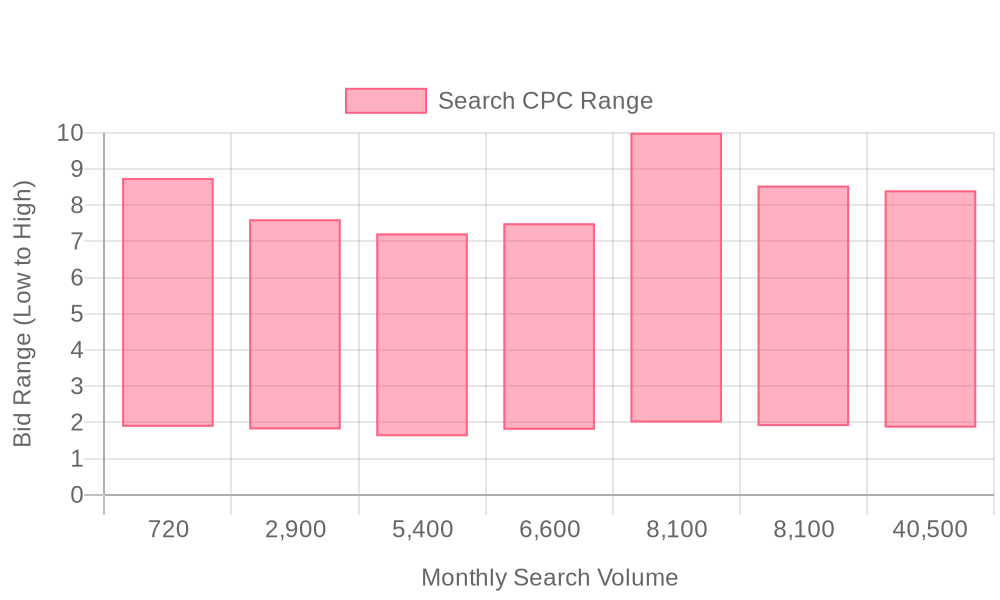
| Industry | Keyword | Monthly Search Volume | Competition Level | Low Bid | High Bid |
| Caulking Contractors | exterior caulking services near me | 30 | MEDIUM | 4.51 | 7.97 |
| Caulking Contractors | caulking contractors | 140 | LOW | 3.07 | 11.23 |
| Caulking Contractors | caulking contractors near me | 260 | MEDIUM | 3.23 | 13.25 |
| Caulking Contractors | caulking services | 320 | LOW | 2.97 | 13 |
| Caulking Contractors | caulking company | 320 | MEDIUM | 3.45 | 16.8 |
| Caulking Contractors | caulking companies near me | 480 | MEDIUM | 4.47 | 21.84 |
| Caulking Contractors | window caulking services near me | 480 | MEDIUM | 2.23 | 9.73 |
A robust keyword strategy for automotive transmission repair advertising ensures campaigns reach users actively searching for solutions. High-value keywords such as "transmission repair cost," "transmission troubleshooting," and "transmission repair near me" intercept intent-rich queries that typically lead to appointments or phone calls. Incorporating geographic modifiers, such as city or neighborhood names, further improves local relevance and ad visibility for searchers needing immediate service. For a practical look at how auto repair shops can drive more customers through Google Ads targeting, see this guide to Google Ads for auto repair.
Comprehensive keyword planning also includes negative keyword lists to filter unrelated traffic, such as research queries about DIY transmission fixes or jobs in auto repair. This approach prevents wasted ad spend and keeps messaging consistent across campaigns. By unifying intent signals and keyword lists across Google Ads, CRM, and website analytics, revenue teams can maintain highly targeted, efficient campaigns without siloed data.
Marketers leveraging unified go-to-market data platforms gain a competitive edge by identifying not just anonymous clicks, but also the companies and individuals showing purchase intent. Dynamic audience building enables teams to automatically refine keyword targets and negative lists as prospects move from initial research to high-intent actions, ensuring every dollar of spend is directed toward the most conversion-ready leads. This data-driven approach aligns digital marketing for auto repair with business outcomes, supporting campaign agility and maximizing overall ROI.
Step-by-Step Campaign Execution Framework
A high-performing Google Ads strategy for automotive transmission repair requires precise targeting, compelling messaging, and seamless integration with broader marketing efforts. Each phase of campaign execution should deliver measurable value, from capturing intent-driven leads to closing the loop between ad spend and booked service appointments. By leveraging unified data, revenue teams can make smarter decisions that drive both efficiency and growth. For more on integrating unified marketing data, explore our comprehensive B2B marketing blog.
Step 1: Build Targeted Keyword Lists
- Service-Specific and Local Terms: Prioritize keywords that reflect core services such as "transmission repair near me," "auto transmission shop," or "automatic transmission diagnostics." Integrate geographic modifiers for each service area to ensure ads appear only for the most relevant searchers. For additional keyword guidance, see this Google Ads strategy for auto repair.
- Long-Tail and Negative Keywords: Use long-tail keywords like "manual transmission replacement cost in [city]" to capture high-intent prospects. Employ negative keywords to filter out traffic unlikely to convert, such as DIY queries or unrelated repair categories. This focused approach lowers wasted spend and raises conversion rates, learn more in our targeting and segmentation playbooks.
- Dynamic Audience Identification: With real-time audience data, marketers can pinpoint both individual visitors and the companies researching transmission repair. This allows for audience lists that update in real time as prospects move from early research to purchase consideration, ensuring campaigns remain tightly aligned with active demand.
The upgrade most automotive transmission repair advertisers miss is going beyond raw keyword volume to layer in intent and identity signals. By connecting website-visitor data and CRM records with Sona Marketing Measurement, you can see which specific search terms bring in the accounts and customers that actually convert, and weight your keyword and bidding strategy toward those rather than the terms with the highest search volume alone.
Step 2: Develop Compelling Ad Copy
- Pain Point Messaging: Headlines should address urgent needs such as "Transmission Slipping? Book a Free Diagnostic Today." Messaging that acknowledges common frustrations establishes instant relevance and urgency. For tips on message optimization, check out our ad copy best practices.
- Highlight Trust and Offers: Incorporate certifications (ASE-certified, BBB-accredited) and customer ratings directly in ad copy. Offer time-sensitive promotions, like "10% off transmission service this week", to encourage immediate action and differentiate from less proactive competitors.
- Intent-Driven Creative: Audience segmentation powered by real-time behavioral data enables tailored ad copy. Messaging can shift automatically to emphasize repair speed for those who visited emergency service pages, or warranties for those comparing multiple providers.
Step 3: Design Effective Landing Pages
- Alignment with Ad Groups: Each landing page should precisely match the ad group's keyword and message. If an ad targets "transmission rebuild in [city]," the landing page must feature that service, location, and benefit, removing ambiguity and friction. For inspiration on optimizing landing pages, review this Google Ads landing page guide for auto repair.
- Trust Symbols and CTAs: Boost credibility by displaying trust badges, certifications, and recent customer testimonials. User-friendly calls to action, such as "Schedule Your Free Inspection" or "Get a Same-Day Quote," simplify next steps and reduce drop-off.
- Personalized Experience: When visitor data is unified using Sona, landing pages can dynamically display content based on prior onsite behavior or CRM attributes, such as showing a "welcome back" message or pre-filled service forms for returning leads.
Step 4: Implement Data-Driven Optimizations
- Comprehensive Conversion Tracking: Capture every valuable action, not just online form fills but also phone calls, appointment bookings, and even offline service completions. Attribution models should connect digital ad clicks with real-world revenue outcomes, guiding smarter budget allocation. Learn more about best practices for tracking automotive leads with this YouTube walkthrough.
- Smart Bidding Strategies: Use automated bidding options like Max Conversions or Target CPA, which adjust in real time based on which keywords, ads, and audiences are driving the most profitable service bookings. For advanced conversion tracking, see Sona's Ad Conversions.
- Cross-Channel Insights: The integration of Google Ads insights with CRM and email platforms provides a full-funnel view of campaign performance. Teams can identify which tactics are moving leads through the funnel fastest and apply these learnings to other channels like retargeting strategies, ensuring a unified and scalable approach to automotive repair service marketing.
Ready to maximize your campaign results? Get started for free with Sona.
Sona Marketing Measurement closes the gap between clicks and revenue. It captures every ad click with first-party measurement, then ties that click through UTM capture and ad-platform APIs to the actual record in your CRM, and reports ROAS by keyword and campaign instead of by last-click form fill. Feeding that revenue signal back into Smart Bidding and Performance Max compounds over time: the algorithms optimize toward booked automotive transmission repair revenue, not cheap leads.
Tips on Expanding Your Automotive Transmission Repair Presence

Automotive transmission repair providers see measurable gains when they proactively broaden their digital presence across multiple online channels. Cross-promotion of content, such as sharing blog posts, service updates, and customer testimonials on both your website and social media, multiplies visibility and drives sustained engagement from target audiences. For further guidance on elevating your digital strategy, explore the Sona blog for marketing best practices.
Targeting specific geographic locations is crucial in local auto repair advertising. By running ads tailored for auto repair, shops connect directly with drivers searching for repairs nearby, maximizing every ad dollar. Advanced platforms further optimize this by identifying which companies are visiting your site, whether known or previously anonymous, enabling teams to personalize outreach and prioritize high-intent leads with Sona's Identity Resolution for measuring geographic performance. Analyzing regional search trends and mapping those insights to ad copy or landing pages ensures your messaging resonates with local prospects and remains consistent across channels.
Partnering with industry associations extends authority and trust within the automotive repair ecosystem. Joint webinars, guest blogs, and event sponsorships build credibility and unlock new referral networks. To unify marketing and sales efforts, modern digital marketing for auto repair relies on tools that harmonize messaging and automatically sync audiences between systems. By monitoring search data and online performance, repair shops can identify content gaps and optimize campaigns for the keywords and topics that matter most to their market. To streamline your own digital marketing efforts, get started for free with Sona.
Final Thoughts
Incorporating Google Ads into your automotive transmission repair marketing strategy offers direct access to high-intent customers searching for immediate, local repair solutions. Strategic keyword targeting, robust audience segmentation, and ongoing performance optimization drive measurable results for revenue teams aiming to maximize every advertising dollar, see how auto repair shops use Google Ads for practical tips.
Disconnected campaigns often result in wasted ad spend and unclear messaging, reducing overall impact. Unified, data-driven insights ensure alignment between sales and marketing, allowing for seamless transitions from ad engagement to lead capture. When campaign data is integrated across platforms, teams can identify which companies are visiting and dynamically update audience lists as leads progress through the pipeline.
Advanced conversion tracking bridges the gap between digital engagement and offline repair bookings, providing true attribution and empowering smarter budget decisions. Syncing enriched audiences and CRM data into Google Ads prevents lost opportunities, promotes consistent messaging, and supports a holistic approach to automotive repair service marketing. For a step-by-step approach to integrating data and maximizing ROI, explore our marketing blog.
Beyond Google Ads: Winning the AI Answers Automotive Transmission Repair Buyers Now Trust
Paid search captures demand at the moment someone types a query. But a fast-growing share of automotive transmission repair buyers no longer start at Google at all, they ask ChatGPT, Gemini, or Perplexity before they ever run a search, and Google's own AI Overviews increasingly summarize an answer above the traditional results. If your business isn't referenced in those AI answers, you're invisible at the exact moment buyers build their shortlist.
Sona AI Visibility shows where your business shows up across ChatGPT, Gemini, Perplexity, Google AI Overviews, and 10+ engines, and, much like a keyword report, which prompts actually send you buyers, so you can prioritize the ones that convert. Run the two together and you cover the entire buyer path: get cited where buyers research (AI Visibility), then prove which of that demand turns into booked revenue (Marketing Measurement).
Helpful resources
Conclusion
Throughout this piece, we've covered the specific pressure automotive transmission repair shops face online: buyers arriving mid-emergency, tight local competition, and the need to prove which clicks turn into booked repairs. Keyword precision, ad assets, and closed-loop tracking are the levers that address each of those pressures directly, not abstractions but concrete adjustments to how a campaign is built and measured.
The shops pulling ahead right now are the ones treating Google Ads as one input into a larger measurement system, not a standalone spend line. Pair keyword-level intent data with closed-loop revenue tracking, and every dollar spent on a slipping-transmission search starts teaching your campaigns which queries actually turn into paying customers, start for free to put that system in place.
FAQ
How can I set up a successful Google Ads campaign for my automotive transmission repair business?
To set up a successful Google Ads campaign, focus on precise targeting with high-intent keywords, create compelling ad copy that addresses urgent repair needs, and optimize landing pages to align with ad groups. Utilize audience segmentation and real-time data integration to ensure your campaigns are relevant and efficient.
What are the best keywords for Google Ads targeting automotive transmission repair services?
The best keywords include high-intent terms like 'transmission repair near me,' 'transmission troubleshooting,' and 'automatic transmission diagnostics.' Incorporate geographic modifiers to enhance local relevance and visibility.
How much should I budget for Google Ads for my automotive transmission repair shop?
The budget should reflect the competitive nature of your local market and the keywords you choose. Consider focusing on precise targeting to maximize ROI and adjust based on ongoing performance analysis.
What are some effective ad copy examples for Google Ads in the automotive transmission repair industry?
Effective ad copy should address urgent needs, such as 'Transmission Slipping? Book a Free Diagnostic Today,' and highlight trust elements like certifications or customer ratings to encourage immediate action.
How can I track and measure the success of my Google Ads for automotive transmission repair?
Implement comprehensive conversion tracking to capture actions such as online form fills, phone calls, and offline service completions. Use attribution models to connect ad clicks with revenue outcomes for smarter budget allocation.
Are there any specific Google Ads features that are particularly useful for automotive transmission repair businesses?
Features like dynamic audience updates and real-time tracking are useful as they ensure your ads remain relevant by reflecting prospects' stages in the sales funnel for effective remarketing.
What is the average cost-per-click for Google Ads in the automotive transmission repair niche?
The cost-per-click can vary based on competition and location. It's important to focus on high-intent keywords and optimize your campaigns to keep costs manageable.
How can I target local customers effectively with Google Ads for my automotive transmission repair business?
Use geographic modifiers in your keywords and focus on local search terms. Run ads tailored for your service area to connect with drivers searching for repairs nearby.
How do I create a Google Ads campaign that highlights the expertise of my automotive transmission repair services?
Highlight your expertise by including certifications, customer testimonials, and specific service offers in your ad copy. Use audience segmentation to tailor messages that resonate with different customer needs.
What are some common mistakes to avoid when running Google Ads for an automotive transmission repair business?
Common mistakes include using generalized outreach, not integrating CRM data, failing to track conversions, and neglecting to use negative keywords to filter irrelevant traffic.







